
Meet a Woman of Asphalt: Rogers Group’s Brianna Overstreet
BY Sandy Lender
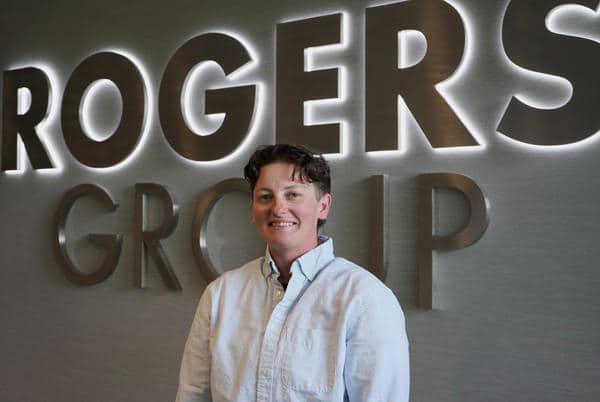
Workforce development includes advancing women of asphalt at Rogers Group
To celebrate the asphalt industry’s commitment to workforce development this month, we take a look at a woman of asphalt who is not only excelling within her chosen profession, but who is also being recognized with advancement. The Rogers Group, Nashville, Tennessee, has recently promoted Brianna Overstreet, who joined the company in 2013 as an asphalt plant operator, to assistant corporate asphalt plants manager. Overstreet took some time to share her experience and encourage others.
AsphaltPro: Please share your career path since high school. What challenges or roadblocks have you overcome along the way, and which parts of your education have been most relevant to your career?
Brianna Overstreet: After high school, I began my career working at a factory that built solar panel systems. I started on the production line, assembling components. After a year, I was promoted to maintenance technician for that department, and eventually I became a maintenance tech responsible for the entire factory.
In 2013, I joined Rogers Group as an asphalt plant operator, and I spent 12 years in that role before taking a promotion to Assistant Corporate Asphalt Plants Manager.
Along the way, one of the biggest challenges was stepping into technical roles without having any background in the industry. I learned quickly by doing, asking questions, and not being afraid to step into unfamiliar territory. While I am currently pursuing a degree in construction management, the most relevant parts of my education weren’t necessarily classroom-based—it was the hands-on problem-solving skills, the ability to understand mechanical systems, and the discipline I developed early in my working life that set the foundation for my career.
While I did not participate in an official apprenticeship program with Rogers Group, the company does a great job at succession planning and preparing the next generation of managers and leaders.
Maryland Women of Asphalt Launches “Paving & Pastries” Series
AsphaltPro: Why did you choose to become a plant operator? What did you enjoy most about that position?
Brianna Overstreet: I chose to become a plant operator because I’ve always enjoyed technical work and solving mechanical problems. The role allowed me to work with my hands, think critically, and see the real time results of my work every day.
What I enjoyed most was the sense of responsibility—running a plant smoothly is both a challenge and an accomplishment. I also loved the teamwork and the fast-paced environment.
AsphaltPro: Let’s talk about teamwork. What is the most challenging project you’ve worked on, and how did you and your Rogers Group team overcome the difficulties?
Brianna Overstreet: One challenging project involved meeting a tight paving schedule while dealing with equipment issues and fluctuating mix demands. The team collaborated closely—we adjusted mix designs on the fly, coordinated maintenance to minimize downtime, and communicated constantly between the plant, QC, and the paving crew. We overcame the challenges because everyone stayed focused on solutions rather than obstacles.
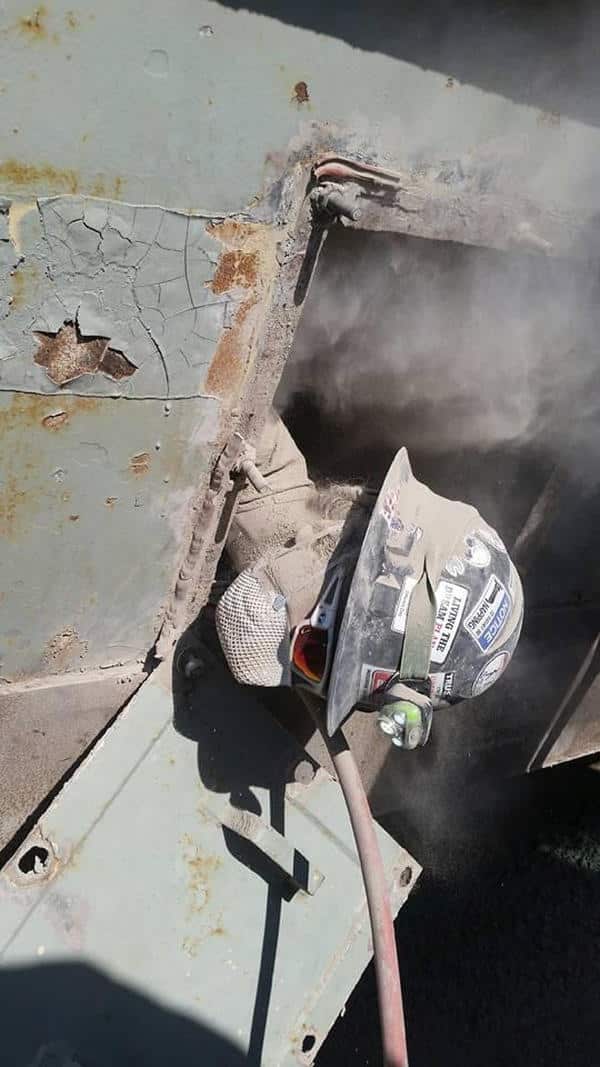
Brianna Overstreet began her career assembling components for a solar panel system factory. Today she uses those skills, and more, in plant maintenance and asphalt production.
AsphaltPro: As a woman on the asphalt team, what has been the most challenging obstacle you’ve faced? How did you overcome it, and how might other women apply that same skill or mindset in their own careers?
Brianna Overstreet: One of the biggest challenges was proving myself in an environment that has historically been male dominated. I overcame it by showing my ability to do the job. I stayed consistent, showed up, put in the work, and let the results speak for me.
Other women can do the same: trust your abilities, jump in and do the work, and don’t let assumptions about who “belongs” in this field define you.
AsphaltPro: What is the most important skill you have brought to your role as a plant operator? How would you encourage other women entering the industry to develop similar skills, whether they want to become operators or pursue other roles?
Brianna Overstreet: The most important skill I brought was problem-solving—being able to assess equipment issues quickly, think logically under pressure, and keep production moving safely.
For women entering the industry, I’d encourage building confidence in technical skills, asking questions freely, and allow yourself room to grow. Mentoring and hands-on learning are crucial to developing skills that allow you to be successful in this field.
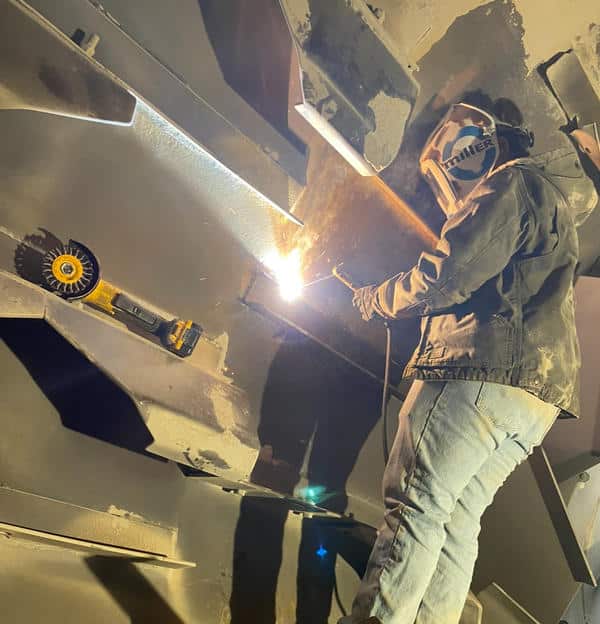
Here Brianna Overstreet changes the drum flights to optimize production.
AsphaltPro: Congratulations on the promotion to assistant corporate asphalt plants manager. Could you describe this current role at Rogers Group? What does the job require of you, particularly when supporting the asphalt team? How do these responsibilities differ from those of a plant operator?
Brianna Overstreet: As assistant corporate asphalt plants manager, I support multiple plants and teams rather than operating a single site. My role involves troubleshooting production issues, helping plants optimize efficiency, supporting mix design adjustments, ensuring safety and environmental compliance, and mentoring operators and supervisors.
I also project-manage the setup of new and used asphalt plants on new or existing sites when needed.
Some daily responsibilities include:
- Visiting plants to review production performance and address challenges
- Coordinating with quality control to ensure mix consistency
- Supporting operators with equipment issues or process changes
- Reviewing maintenance schedules and advising on repairs or upgrades
- Ensuring the team has resources and guidance to meet project deadlines
A plant operator oversees operations for one site, monitors individual plant performance and mixing process, and works closely with customers to coordinate mix orders and deliveries to the job site. My current role is broader and focuses on supporting multiple teams, improving systems, and ensuring consistency across plants.
AsphaltPro: How do you respond to people who say asphalt work is a “dirty job?”
Brianna Overstreet: I acknowledge that it can be dirty, hot, and demanding—but I also explain that it’s skilled work that builds critical infrastructure. It’s a career that offers stability, advancement, and pride. Most importantly, the industry has evolved with better safety standards, better equipment, and better technology than people realize.
AsphaltPro: Let’s talk about perceptions. What do you think is an incorrect perception that we, as an industry, can re-educate young people about to encourage more women to consider a career in the asphalt business?
Brianna Overstreet: Well, I think the most common misconception is that the asphalt industry—and the construction industry in general—is a field only men can do. I think this discourages many women for even applying for these roles. They do not realize how many opportunities exist for women in this industry.
It’s important that we highlight this in our recruiting efforts and promote the women who are already thriving in these roles. Representation matters. When women see other women succeeding in construction, it breaks down stereotypes and encourages more women to join the industry.
That’s why organizations like NAWIC and Women of Asphalt are so important—they provide visibility, support, and community for women in the field.
AsphaltPro: What message would you share with young women to encourage them to consider a career in the asphalt business?
Brianna Overstreet: I would tell them that the asphalt industry offers real opportunity—great pay, steady work, advancement, and the chance to build something meaningful. If you like learning, working with a team, and challenging yourself, there’s a place for you here. Don’t let stereotypes limit your potential.
AsphaltPro: What is the most rewarding aspect of working in the asphalt industry for you?
Brianna Overstreet: The most rewarding part is seeing the impact of our work—roads, communities, and infrastructure that people use every day. It’s a great feeling knowing that your work is important and impacting so many people.
AsphaltPro: Tell us about someone who has served as a mentor in your career. How did this person encourage or influence you? Is there a piece of advice from this mentor you would share with other women or operators in the industry?
Brianna Overstreet: Steven Bennett, the current asphalt plant manager over our northern Middle Tennessee plants, has been one of the most influential mentors in my career. He was the one who recruited me to Rogers Group and essentially launched my path in this industry. At the time, he was a plant operator, and over the years he became my manager. Steven taught me how to run my first asphalt plant and continued to guide me with countless lessons as I grew in the field.
Steven encouraged me by believing in my abilities even before I fully believed in them myself. He pushed me to take on new challenges, to ask questions, and to stay curious and committed to learning.
The advice I’d share—something I learned through him—is this: Don’t be afraid of making mistakes. You will mess up. Sometimes the mistakes will be small, and sometimes they’ll feel catastrophic. Stay humble, learn from them, and use it as an opportunity to grow and get better.