
Celebrating Richard Warren’s Retirement Highlights Workforce Warning
BY Sandy Lender
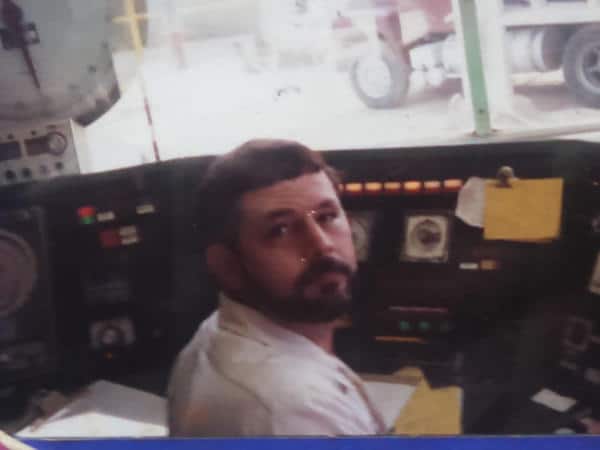
Rogers Group’s Richard Warren shares workforce development legacy of institutional knowledge
Gone are the days when mechanically inclined laborers lined up outside the main office of Pike Industries or Luck Stone to fill out an application for one open job. The asphalt industry has adapted over the years to attract individuals whom we then teach a variety of skills for the most basic of positions. Even when bringing skilled labor to the industry, asphalt companies put time and money into training and molding these new workers into powerhouses for their companies and crews.
Then comes the day when the worker we’ve invested in will retire, taking years of institutional knowledge out of the company and industry. When we’re paying attention, we can encourage new hires, younger workers and less-experienced employees to work alongside these veterans to learn and hopefully capture some of the knowledge base before they go.
According to the Associated Builders and Contractors (ABC) analysis of data released Jan. 9 by the U.S. Bureau of Labor Statistics, the construction industry lost 11,000 jobs on net in December. On a year-over-year basis, industry employment grew by 14,000 jobs, which is an increase of 0.2%. One might look at these numbers as less indicative of the industry’s employment health than numbers reported in a month like June, but the fact is unemployment for the industry was hovering near 2024’s.

Richard Warren retires from Rogers Group Inc., Nashville, Tennessee, in May 2026, but not before he shares ideas and knowledge with a grateful industry.
ABC Chief Economist Anirban Basu shared, “the industry’s unemployment rate remains relatively low, down 0.2 percentage points from the same time last year.” Basu had more to break down for different sectors of the construction workforce, and you can see all of those on the ABC press site.
While unemployment numbers in December can be attributed to far more than retirement figures, this gives us an opportunity to visit this aspect of workforce development. The asphalt industry is facing a loss of key individuals who take with them vital institutional knowledge, and Mike Mauzy, sales manager of Reliable Asphalt Products, Inc., Shelbyville, Kentucky, spoke of the predicament.
“Retiring long-tenured industry professionals are leaving a knowledge void that is nearly impossible to replace,” Mauzy said.
At this year’s CONEXPO-CON/AGG tradeshow at the Las Vegas Convention Center, Reliable Asphalt Products is stressing the importance of bringing new workers to the asphalt community while also recognizing the value of what we have in place. The company will host a workforce development signing ceremony on the stage in its booth in the central hall—booth C32804—to do just that at 9:30 a.m. Wednesday, March 4. The original equipment manufacturer (OEM), alongside AsphaltPro Magazine, will welcome the Rogers Group Inc. (RGI), Nashville, Tennessee, to highlight and honor a new worker joining our industry, a current worker who is being promoted within the industry, and a retiring worker who is willing to share some of his institutional knowledge right here.
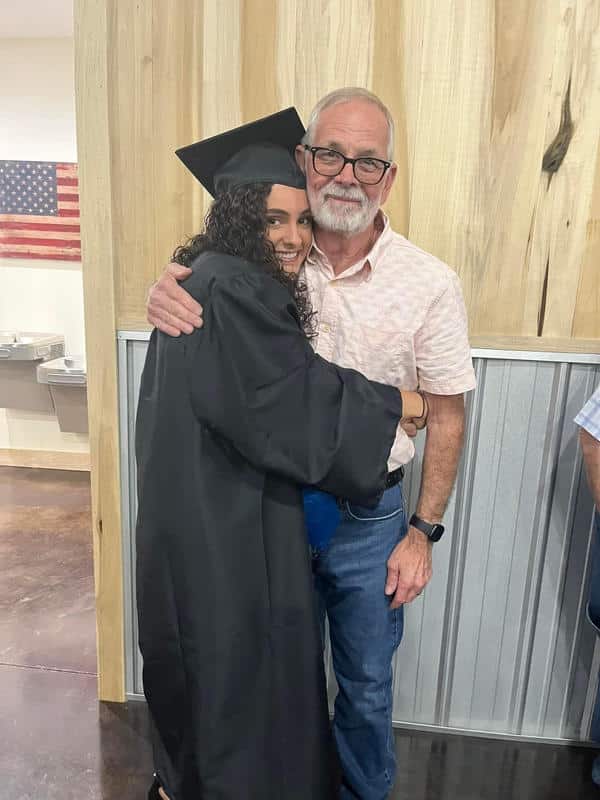
Warren and his granddaughter Lacey Ray Wilson are more proof this is a family industry. Wilson has joined the Tuscumbia location of RGI as Administrative Support 1.
The new hire being signed during the ceremony will be announced from stage. The worker being advanced is the February issue’s Women of Asphalt feature and newly promoted Assistant Corporate Asphalt Plants Manager Brianna Overstreet. The worker retiring after 49 years in the asphalt industry is Richard Warren, the asphalt plants manager for the southern half of Middle Tennessee.
As Mauzy stressed, bringing new workers to our industry in time to let them train alongside our veteran workers is key to our industry’s survival. “Finding qualified industry newcomers to learn as much as possible from long-tenured industry veterans before they retire is the priority,” Mauzy said. “Retaining and training existing employees throughout their careers is a key workforce development component. Lastly, recognizing employees’ accomplishments throughout all career phases not only yields retention dividends, but it also is the right thing to do and communicates respect and appreciation. Recognizing retiring professionals is respectful, while at the same time, creates a culture of appreciation.”
Workforce Development Signing Ceremony at CONEXPO-CON/AGG Highlights Three Employee Levels
Words of Wisdom
Warren is in a position today to highlight the advantages the asphalt industry can offer to a new worker that a corporate desk job cannot. He’s also seen the industry, as a whole, transform and grow through concepts that make it more attractive to the modern worker. He listed human resources ideas first and foremost.
“Safety and benefits,” Warren began. “When I started my career after high school in 1977, safety wasn’t in the forefront as it is today. Most hourly employees didn’t get vacations or holiday pay, no 401-K. There wasn’t a work-life balance as it is today.”
What the industry did offer back then, and still does today, is something with multiple career paths and options. It offers something that could be, or could be beyond, an indoor 9 to 5.
“Not everyone is attracted to construction or being a construction worker,” Warren explained. “I wasn’t an inside type of person or into doing the same thing day after day. Around the asphalt plants, you learn many different skills, metal work, concrete, woodworking, mechanical and electrical skills, operating equipment and operating asphalt plants. The skill level of many trades, plus with Rogers Group, you have benefits like vacations, 401-K, paid holidays for all employees, along with the assurance of a safe working environment at all times, with the training you need to do your job to the best of your ability.”
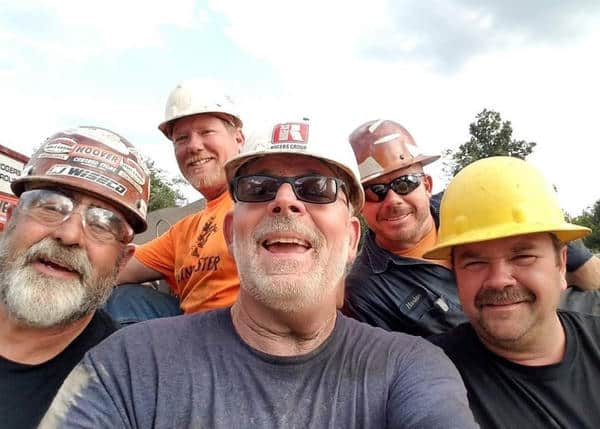
Warren takes a selfie with the crew at the Lawrenceburg, Tennessee, asphalt plant.
He suggested that if he were starting an asphalt business in 2026, he’d place top priority on those same elements. “Have a strong safety culture, hire seasoned employees in key positions, and have a strong training program for new employees without experience in the industry.”
During his nearly five decades in the industry, Warren has been a part of the changes and growth around him. He described the challenges and opportunities to problem-solve with the team as the most exciting parts of his career.
“New adventures,” he said. “I have, over my career, been asked to do special projects outside my area. For example, I went to Lacey Springs to install an Astec Double Barrel asphalt plant. We rebuilt the drag and transverse conveyors, installed a trunnion on the dryer, and installed flights in the dryer. I had local employees there to help. We got the plant maintenance complete, plant erected and didn’t have anyone get hurt.
“Another adventure, or should I say challenge, was in Mississippi. I went there to help the local employees get the plants in order. With the skills I’ve learned over the years, we got most problems solved.”
After 49 years, there are a lot of memories and lessons Warren can share with the team before he retires. One of his favorite memories is of recognition, like we’re discussing today, proving the importance of this mission for other companies. He shared the importance of Randy Butler—who was the division vice president over Northern Middle Tennessee, Southern Middle Tennessee and north Alabama for RGI—trusting him and his skills to assign him such projects as the ones in Lacey Springs and Mississippi.
“There were a lot of hard, long hours in both of those projects, but I guess Mississippi was the most memorable because I, along with Joan Knowis were called to come to Nashville one day for a meeting. We didn’t know why or what for, but upper management gave each one of us the President’s Performance Award. We were very humbled by this award.”
Industry professionals like Warren aren’t grown on trees. Companies do well to grab onto these workers and let them know how much they’re valued. Assigning them a mentor hasn’t been the industry’s standard operating procedure for the past five decades, but we’re lucky that construction lends itself to a mentorship mentality. For Warren, that started close to home.
“First, my dad. He told me when I was still in high school, ‘Son, when you get out on your own and get a job, whatever the job is, stick with it. Don’t do like I have done and move from job to job. Every time you move from one job to another, you have to start over again.’ After 49 years in the same field and 48 in the same location, I can say that was good advice.
Louisville Paving and Rogers Group Inc. Build Strong Community Ties
“Another mentor was Arley Howell. He taught me to put God first in my life. Most all of my trade skills come from working with him at a young age.
“Howard Nutt had a big influence on dealing with people from day to day—employees and customers.
“Randy Butler also made an impact on me. Randy was stern but fair. I always told him he might not always agree with me, but he would listen. Randy taught me a lot about the P&L side of the business.”
To visit with a veteran of the industry is to give yourself a chance at an education that’s not a formal, classroom-based lecture. By visiting with the RGI honorees during the Reliable Asphalt Products’ workforce development signing ceremony in Vegas, you offer yourself not only the opportunity to discuss ideas for your career and company, but also the opportunity to learn from individuals with the institutional knowledge we’re blessed to have for just a little while longer.