
How to Grow Your Paving Business in the Golden Age of Opportunity
BY Bill Stanley

Bill Stanley thinks we’re entering a “Golden Age of Paving” that will provide ideal conditions for taking your company to the next level.
Welcome to the Golden Age of Paving! As I write this in early March, American Pavement Specialists hasn’t even started paving yet and our books are 50% full. I’ve never had this much work lined up at the start of a year! I’m so bullish that I just bought two new pieces of equipment totaling more than $1 million, even though I could have gone another year or two without them.
Don’t get me wrong, the last few years have been very good to us. But I have a strong feeling the next few years will be even better—and I’m not alone in this sentiment. Most of the manufacturers I’m talking to are saying they’re building machinery like crazy because they think demand’s going to be through the roof these next few years.
Thankfully, the decision [to focus on commercial] was like flipping a switch and the commercial work rolled in.
If my gut is correct, I want to be ready to make the most of these next few years. That’s why we’re spending the rest of this spring bracing ourselves. We want our equipment ready, our parts shelves stocked and our crew prepared for what we anticipate is going to be a very good season for us. That’s also why I’m going to spend this month’s column sharing what I’ve learned about growing wisely, in bad times and good.
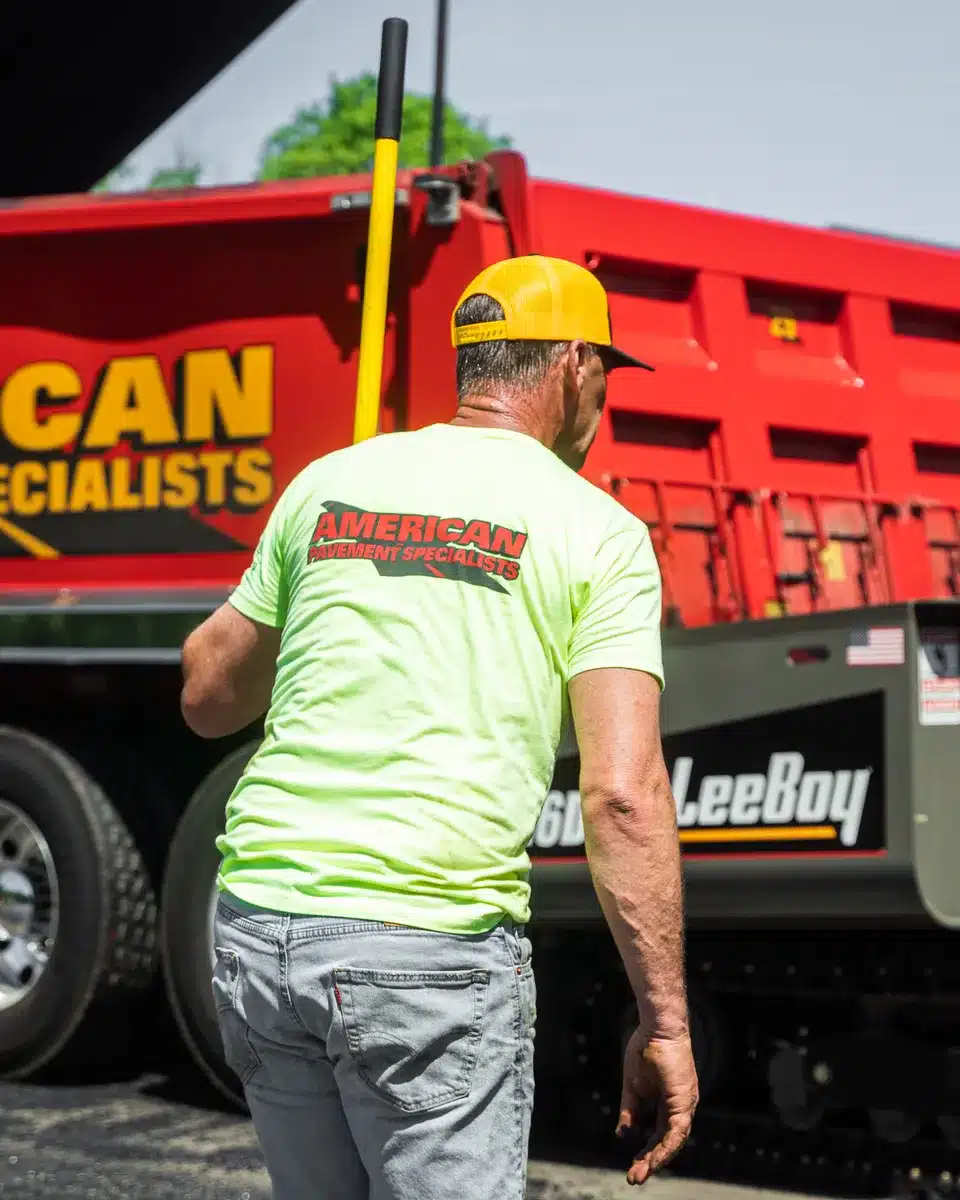
Stanley decided 15 years ago that he was ready for APS to become a commercial paving contractor. Now, the company only takes on residential projects for a small number of select customers.
How I Knew APS Was Ready to Grow
About 15 years ago, I walked into the American Pavement Specialists office with an important announcement: “No more driveway calls, starting today.” My estimators were shocked. They swore we wouldn’t be able to fill our schedule, we wouldn’t be able to make payroll, we’d go out of business.
But, I didn’t want to pave driveways anymore. I felt like I was treading water, paving multiple driveways per day, drowning in phone calls and estimates, and haggling with customers who wanted the work done for $100 less than we bid it.
I wanted to work on bigger projects. I wanted to deal with one client over the course of a three-day project instead of three clients in one day. I wanted to sell more asphalt to fewer customers.
Bad financial management is the easiest way to go back a level, even as you try to move up to the next level.
Thankfully, we’d already been in business for 15 years, building up our capabilities to do commercial work. Thankfully, our book of work was already 50% commercial on the day I said “no more driveways.” Thankfully, that decision was like flipping a switch and the commercial work rolled in.
If that feels a little too scary for you, maybe you start off trying to fill your book with 25% of whatever type of work you’re hoping to grow into this year, 50% in 2026, 75% in 2027 and 100% in 2028. You have to do what you’re comfortable with.
Even if you’re comfortable with quite a bit of risk like I am, you still need to be sure you’re prepared for the growth you have planned. One thing I’ve learned—and a big factor in APS’s successful transitions to bigger and bigger projects—is that I don’t take on work unless we’re equipped for it, we have the manpower for it and we can securely finance it. Let’s take a closer look at each of those key areas you’ll need to secure to grow in the Golden Age of Paving.
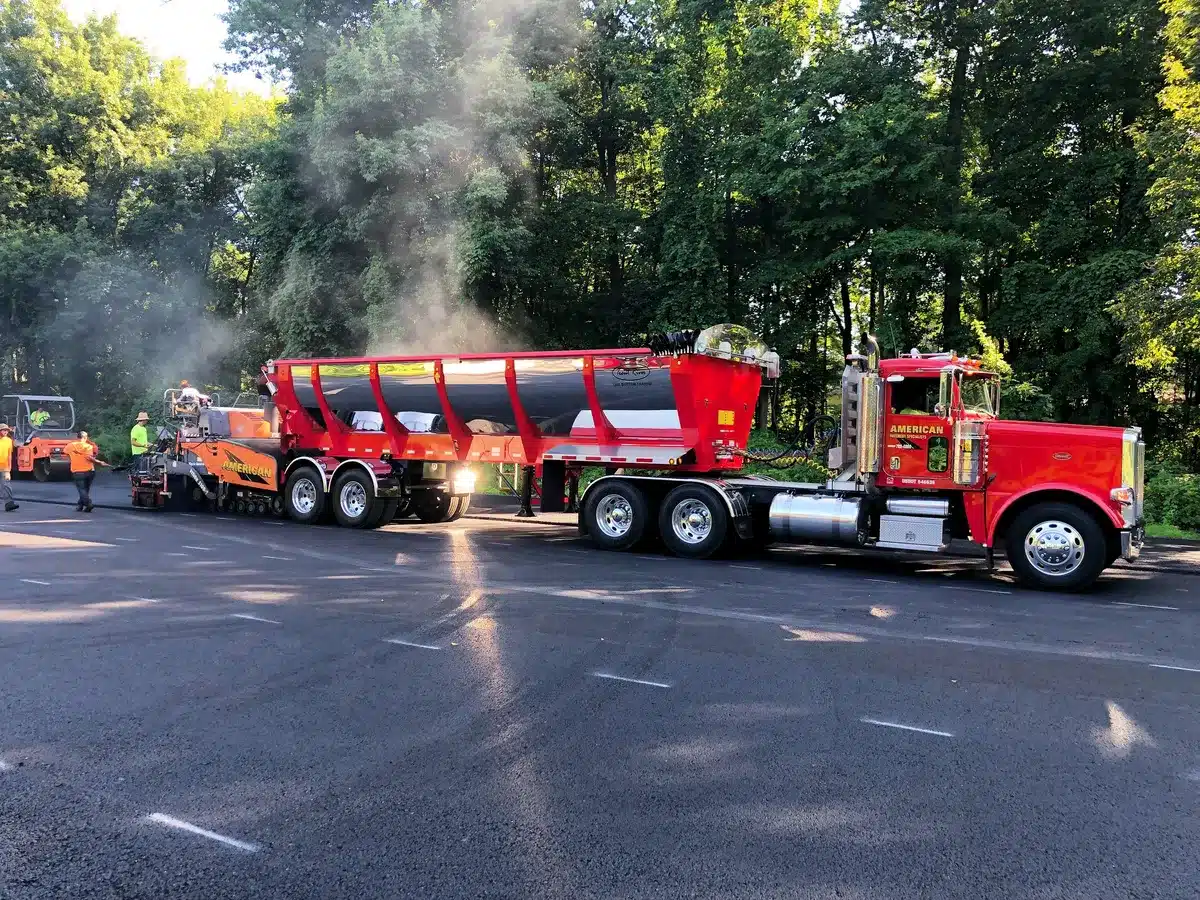
Stanley stresses the importance of having the right equipment for the types of jobs you plan to perform.
Are Your Finances Ready for Growth?
The reason my decision to go 100% commercial seemed crazy is that for many small paving contractors, it’s the residential projects that enable you to make payroll and pay your asphalt bill because driveway work pays quickly. Back when I did residential, I’d usually walk away from those projects with a check in hand.
Commercial work is different. It isn’t uncommon to take almost 60 days to get paid. This can cause some financial strain when employees need to get paid at the end of the week and your suppliers’ terms are usually 30 days.
Even a small company like ours can have very large material bills by the end of the week or the month. I never want to rely on money coming in on time in order to pay those bills. I’ve been there, I’ve done that, and I’m not doing it again.
Give the Crew a Refresher on Best Practices for a Successful Season Startup
Quite a few years ago, we had an exceptional year. Despite all the work we accomplished, customers were slow to pay. On Jan. 30, we had a $300,000 asphalt bill due with only $25,000 in the checkbook. I ended up having to sell perfectly good equipment and mortgage our house to pay the asphalt bill. We did get the money we were owed, but I vowed I would never again over-leverage myself. Never again would I take a job I couldn’t afford to lose.
That’s one of the reasons we’ve been hesitant to move into highway work. You need to be sure you have the finances to back multi-million dollar projects and I’m not sure we’re ready for that level of bonding. I’ve seen many companies fail not because their work wasn’t high quality, but because they couldn’t handle their finances. Bad financial management is the easiest way to go back a level, even as you try to move up to the next level.
During the Great Recession, we were one of the few companies that grew. All around us, paving companies were eliminating overtime, cutting the workweek down to four days, etc. Instead, we went pedal to the metal; 2008 ended up being a banner year for us. In February 2009, I asked my wife, Colleen, how much money was still outstanding. “None,” she said. “Everyone’s paid.” It was the first year in APS’s history where our customers were completely paid up by February. That’s because the only companies that were investing in paving were companies that felt very confident they could afford the investment. Even in a bear market, there’s always room for growth if you’re willing to double down, stay focused and make the right moves. While others were scaling back, we leaned in and it paid off.
Is Your Equipment Ready for Growth?
You don’t want to pave a highway with driveway equipment, or vice versa. As your projects grow, your equipment will need to grow with it.
For me, it’s not necessarily about the size of the equipment but the wear factor. My driveway paver will pave a road, but I’ll be running that machine hard to do so. If I’m regularly running that paver at 100% capacity, it’s going to wear out fast.
Let me give you an example. We have a 40,000-pound paver that’s 10 years old. In those 10 years, we’ve spent around $80,000 on equipment repairs, so it’s $8,000 per year to run it. We also have a 3-year-old machine that’s 8 tons lighter. In those 3 years, we’ve already spent $80,000 on equipment repairs. That means that piece of machinery is more than three times more expensive to run per year than its larger counterpart.
Now, the smaller machine is just as good a machine as our bigger one, it’s just that we’re constantly maxing it out and that’s stressful for the machine. The same is true for pavers, trucks, trailers, everything.
As you upgrade your equipment for growth, you might be surprised to find you aren’t as competitive on the smaller projects anymore. This turned out to be true for us. A contractor once told me, “As you grow and the infrastructure you have around you changes, you’re going to find you can’t do cheap work anymore.” If you find your bids are regularly coming up 5-10% higher than the market price, this might be an indication that you’re ready to move up to the next level.
However, it’s important to invest in the right equipment at the right time. I have a good friend who’s been growing his company and does great work. Let me tell you, he is well equipped. You name the piece of equipment, he’s got it. Lately, he’s found that his prices are two low for his cost of doing business. He’s overequipped for the work he’s doing. To solve this problem, he’s going to have to do some soul-searching about what he’s equipped for to either move up a level or sell off some of what he doesn’t need.
Most people are creatures of habit. The first thing they say when they try a new piece of equipment is “I like the old one better.” They may get a new piece of machinery and never use the buttons and features they aren’t already familiar with. This person may be a hard worker and an excellent employee, but they’re probably not the right person to try out the new technology you’ll be investing in as you grow. That’s why it’s important to find the person on your crew that really digs new technology. At APS, that’s my son Josh. Whenever we have a new piece of machinery or technology, he’s the one who reads the manual and figures it out. He’s the type of person who has to know what all the buttons do. That’s why he’s the one who learns from the manufacturer when they deliver a new piece of equipment. Then, he trains our crew how to use that new technology on the job.
Are Your Employees Ready for Growth?
To make the next jump—from small to mid-sized to large projects—you need to make sure all your ducks are in a row. As much as I don’t want to be underequipped, even more important is to avoid being understaffed. Before I move up to the next level of projects, I need to make sure my crews are properly trained to run larger and higher-tech equipment, and that they’re physically and mentally prepared to take on larger projects and work at a faster pace.
When a builder is putting up a bigger project than they’ve ever done before, they can always stop the project to order more supplies or handle whatever bottleneck they’re facing. Because asphalt is a perishable product, we don’t have that luxury. Once you start paving, asphalt is like an assembly line. If you have any weak spots in the process, the process is not going to go well.

This is why it’s so important that the crew is ready to move up to the next level. My approach starts with ensuring my crew buys into my vision for the company. Before I’d make any major moves, I’d sit down with my top few people to discuss where I’d like the company to go, why we’re going there, and what that would mean for them.
Maybe they’ll be excited at the prospect, but maybe they like things the way they are. Is your best employee going to be okay with more hours, more travel, more responsibility? Maybe they want to be close to home so they can watch their kid’s little league games. Maybe you’re going to lose a few good employees along the way. It’s important to have that conversation beforehand to make sure you’ll still have the staff to get through the growing pains.
This is the second reason we at APS are planning to stay in our current lane awhile longer. We don’t have the manpower to move up to the next level. We’d need more middle management before we move into the highway paving business—and that’s going to be expensive. The overhead of this middle management is why my larger competitors who have 20 office employees have a hard time competing with me on some of my projects. But, this will be a bottleneck we’ll need to solve if and when we decide to move to the next level.
Should I Stay or Should I Grow Now?
Whether you’re crack sealing, line striping, paving driveways or paving highways, if you like what you’re doing and you don’t want to step up to the next level—don’t! If growth isn’t your goal, maybe you can take advantage of the Golden Age of Paving in another way. For example, find ways to increase your profit margin for your existing services. I talk about this in my March/April article in AsphaltPro, “What’s Your Why?”
As APS overcomes the bottlenecks of bonding and middle management in order to grow wisely, that doesn’t mean we aren’t going to make the most of these next few years. With our books as full as they are already this year, we’re going to be more selective with what we fill the rest of our books with, going after the types of projects that are the most profitable for us and working for stable, established customers.
Although I don’t know exactly what the future holds for APS, I have to admit my eyes aren’t as big as they were when I was in my 20s, 30s, 40s. I’m glad my sons share my vision and my ambition to grow APS—whether that growth means bigger projects or just bigger profits.
Regardless of whether you’re going after bigger projects or bigger profits, I’ll tell you what I’ve always told my sons: Listen to your gut! Don’t let anyone tell you that you can’t do it. You’ve got to try to know if you can do it. If you try to take a step forward and it doesn’t work out, you can always go back and try again later. Either way, you’ve learned something valuable.
If you have the piss and vinegar to grow, now may be the time to go for it.