
What’s Your Why?
BY Bill Stanley

When I started American Pavement Specialists over 30 years ago, we had what I call an “AFB” mentality—Anything For a Buck. Earthwork, stonework, any work. Most paving companies were doing whatever they could to make a buck, whatever it took to be successful.
Back then, success was about size—how many trucks and employees you had and how much work you did per year. But that mentality didn’t align with what I wanted for myself and my company.
I didn’t just want to be busy—I wanted to be the best at something. Over time, I realized the one thing I could do better and faster than my competition was paving. So, I wrote my own definition of success: to be the best asphalt paving contractor in our area with the highest standards of quality.
Usually, I spend these columns sharing the nuts and bolts of what I’ve learned about laying the best blacktop. As everyone sets goals for the season ahead, I wanted to spend this column talking about the nuts and bolts of building a successful career in the asphalt industry.
In today’s market, maximizing profits has less to do with volume than it does offering the specific services you can do better than anyone else.
Know Your Niche
The world of asphalt in 2025 is very different from what it was when I started APS in the ’90s. Everything and everyone has become more specialized. If you want proof, look no further than the World of Asphalt trade show. It used to be a handful of brands showing a few general types of equipment. Now, there are also tons of small booths showing all kinds of specialized attachments, products and equipment.
This is equally true on the job site. Back in the day, general contractors used to do everything from laying the foundation to seeding the front yard. Now, it’s a totally different ballgame. When we recently built our shop, we had four different masonry companies on site—one for the foundation, another for blocks, a third for brickwork, and a fourth for curbing. Why? Because each specialist could do their job more profitably than the next guy.
Maximize Your Margins
If a customer asks me to cut down a tree, I could do it. But the guy who does it every day will finish before my crew even finds the ladder. It would also cost the customer more and be less profitable for me. Similarly, if a customer asks me to dig a ditch on a paving project, we might spend three of five days on that task. That’s three days we’re not laying asphalt, three days our paver’s just sitting there, and three days I’m not maximizing my profitability.
Because we know our profit margins, we know exactly which projects are right for us. When a perfect project comes up, we can aggressively go after it, knowing we’ll perform it profitably. The more of those projects we do, the higher our profits.
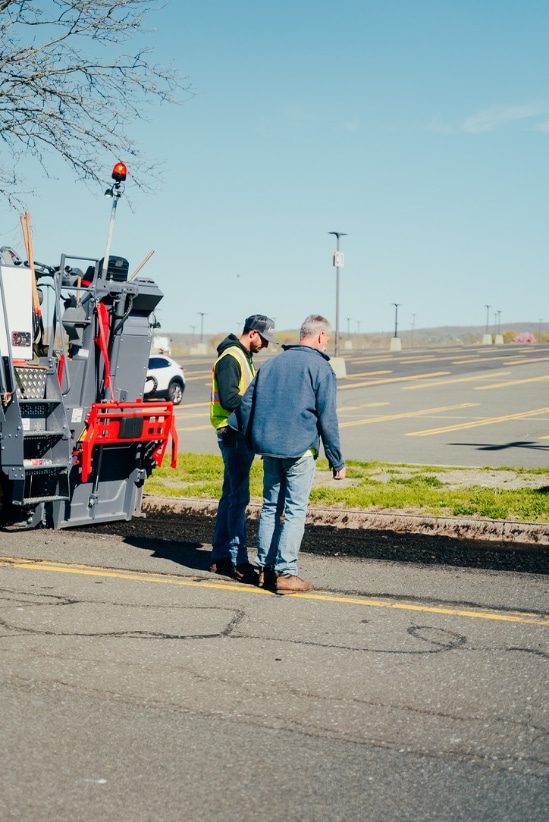
Early on in APS’s history, Stanley realized that his profit margins were highest for asphalt paving because it was what he was best at. “Any day I’m not paving is a day I’m not maximizing my profits,” he said.
Success ≠ Same
I know a carpenter who does great work and makes a great living. He charges $1,000 per day, pays his one employee $400, spends $100 on gas, and pockets $500. He’s done by 2:30 every day and is the happiest guy in the world. He could grow his business, but when I asked why he didn’t, he looked at me like I was crazy. He was happy with his two-man operation.
I have about 20 employees. I like the work we do and think I’m a good boss. But if I had 40 employees, I’m not sure if we’d maintain the same quality or if I’d be happy managing that many people. Growth for growth’s sake isn’t the goal. Whether we grow or not, we want to be intentional about it.
A smaller company might be tempted by a big, profitable contract—I sure was when I was younger! I remember taking on a $50,000 project before I was ready. When the money was slow to come in, someone wise told me: Never take a job you can’t afford to lose every dime on. Sometimes saying no today means keeping the company around to say yes tomorrow.
Nowadays, it’s possible to do only milling, only line striping, only sealcoating, and be successful doing just that one thing. It isn’t about size anymore, it’s about specialization.
What’s Your Why?
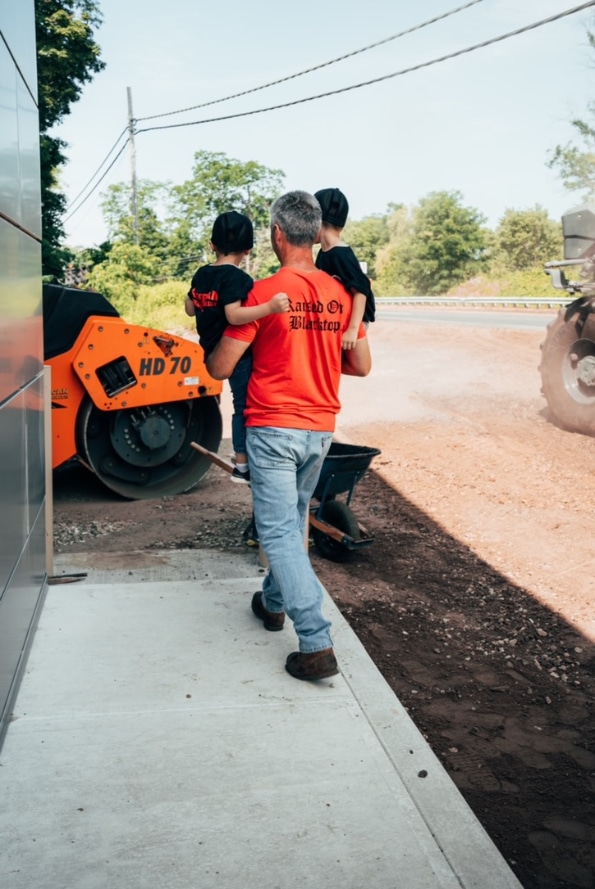
When I started APS, my ultimate goal was to build a business to pass on to my children and grandchildren. Thankfully, my kids want to continue what I’ve built. This impacts every decision I make. I’d never have invested in a $1 million milling machine if APS wasn’t going to be around long enough to recoup that expense. I might also care less about finding employees who want to be with us for a long time if I didn’t think our company was going to be around for many years to come.
These day-to-day decisions are going to be different for folks my age who aren’t passing their business on to the next generation. If they’re thinking about closing up shop or selling the company to one of these private equity firms that are snapping up small paving operations, investing in an expensive piece of machinery is probably a foolish thing to do.
Whether you’re a business owner or a laborer, nearing the end of your career or just getting started, you need to know your why in order to know your how. The world of asphalt can be a tough industry. Conditions aren’t always the best, there’s no such thing as a summer vacation, and most nights you’ll be asleep before your head hits the pillow. It’s going to be a whole lot easier to get up the next morning knowing what you’re doing it for.