
Overcoming Common Fears: Why Asphalt Companies Avoid Social Media
BY AsphaltPro Staff
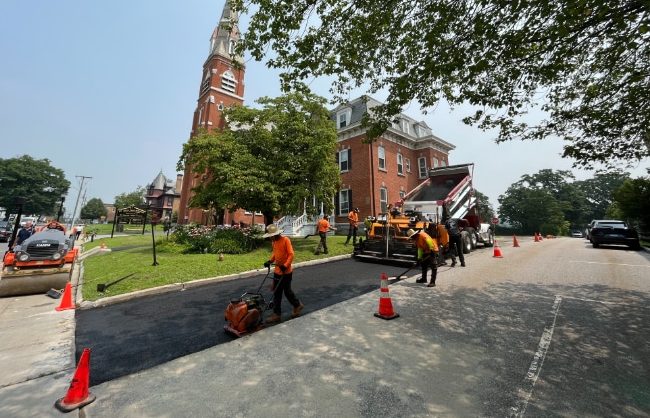
Despite the potential benefits of social media for asphalt pros, many companies hesitate to join the conversation online. If you think there isn’t much of a conversation happening online in our industry, look no further than the popular Facebook group “Asphalt Life,” which has more than 270,000 followers posting and commenting dozens of times each day. Or, from March 25-27, follow the hashtag #WorldOfAsphalt on Instagram and realize those conversations are happening year round.
The stakes may be even higher for OEMs who avoid social media. As one respondent to AsphaltPro’s recent survey said, “If a manufacturer says they want to be closer to their customers but they don’t have an active social media presence where they’re actually engaging with their customers…I don’t really believe they want a closer relationship with me.”
Then, there are companies who would like to have a stronger social media presence, but are concerned about the content of their posts (attracting OSHA scrutiny, facing online trolls or sharing company secrets with competitors) or the logistics of doing so. Let’s take a closer look at these fears and how they’re handled by some of the asphalt industry’s leading voices on social media and companies just like yours.
If there is a safety issue captured in a social media post, realize that the picture isn’t the problem—the problem is the safety violation.
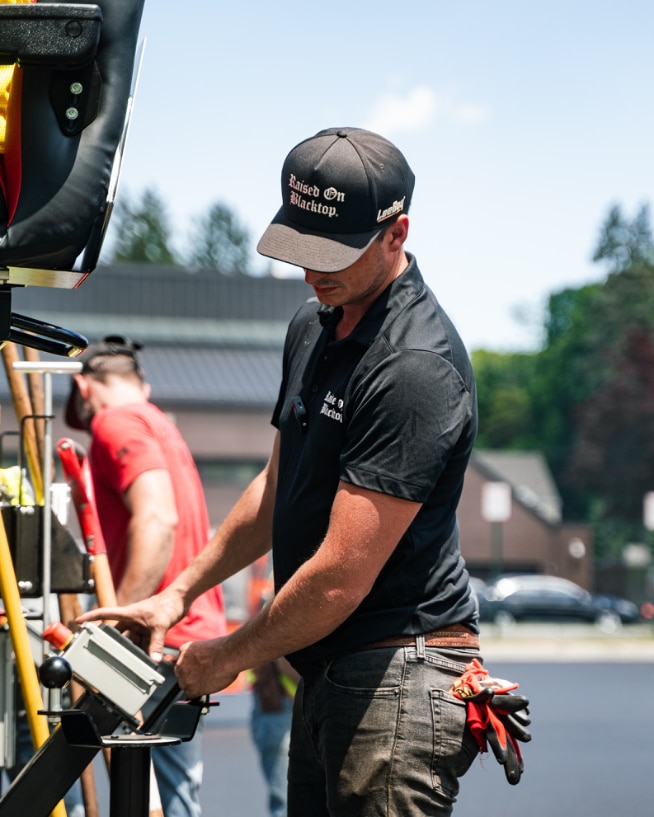
“I ignore the negative comments. The positive feedback always outweighs the negative,” said Matt Stanley. Photo courtesy of Matt Stanley, American Pavement Specialists
Fear #1: Handling Online Criticism
In AsphaltPro’s social media survey, respondents rated their concern about employees not following best practices in photos and videos highly. That concern makes sense. A single post can invite scrutiny, whether from industry veterans or armchair experts who think they know better. But criticism—when handled the right way—can be an opportunity.
The key is recognizing when a comment is worth engaging with and when it’s just internet noise. As Matt Stanley of American Pavement Specialists and Raised on Blacktop puts it, “I ignore the negative comments. The positive feedback always outweighs the negative.” Engaging with trolls rarely helps, and deleting or blocking people can escalate things. Instead, focus on the valuable feedback from customers, peers and even critics who raise valid points. “Sometimes, the negative feedback is constructive, like if someone has a complaint about equipment.”
“My favorite response to criticism is, ‘We are always hiring’,” said James Kelly, grading superintendent at C.W. Matthews, Marietta, Georgia. “If you think you can do it better, join our team! I’m genuine about that. We do it this way because we think it’s best. We’re not perfect, but we’re open to change, and we’re always hiring.”
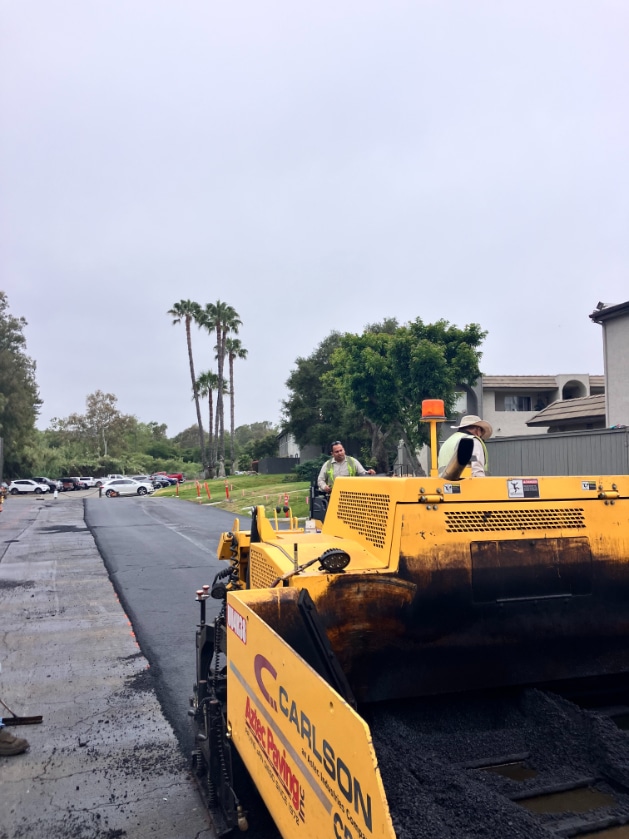
“Social media offers a valuable opportunity to showcase the quality of our work at no cost,” said Pat Ferry. Photo courtesy of Pat Ferry, Aztec Paving Inc.
And, remember, there’s more than one right way to pave. “If you ask 10 guys how to do a job, you’re going to get 10 different answers,” said Jake Fragale, the fourth generation behind J. Fragale & Sons Paving Inc., Torrington, Connecticut. “Every job has its budgets and variables, and people don’t see all the behind-the-scenes work.”
However, not everything needs to go on social media. “You’ve got to pick wisely what you post and don’t post,” Fragale said. “We’ve had some real issues happen on the job. A driver broke a driveshaft on a truck, and a tow truck ended up pulling the truck as it finished dumping mix into the paver. It doesn’t look professional to a customer, but people in the asphalt world understand that we needed to keep the job moving.”
The key is knowing your audience. If your goal is to attract business, certain images might not give the impression you want. But if you’re speaking to industry insiders, showing how you problem-solve in real time can build credibility.
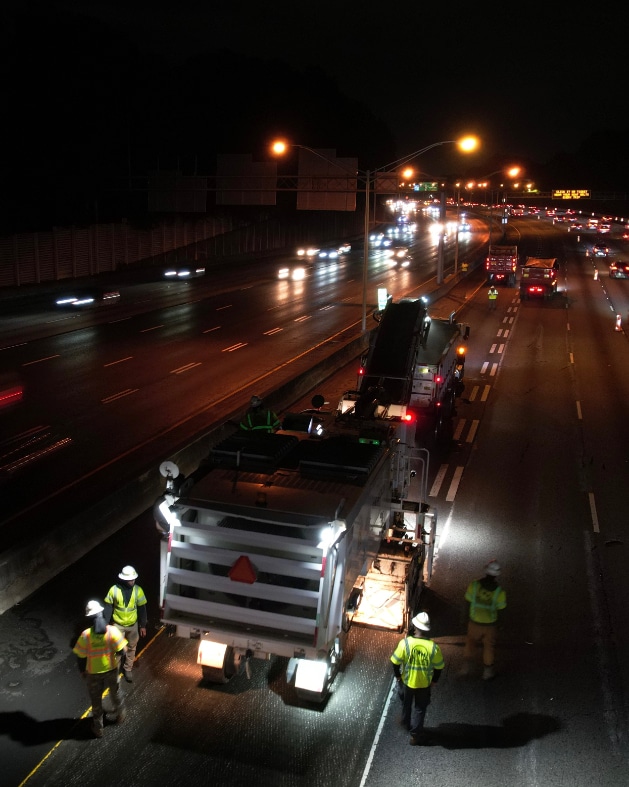
“My favorite response to criticism is, ‘We are always hiring’,” said James Kelly. “If you think you can do it better, join our team! I’m genuine about that. We do it this way because we think it’s best. We’re not perfect, but we’re open to change, and we’re always hiring.” Photo courtesy of James Kelly, C.W. Matthews
Fear #2: Posting Safety Slip Ups
According to AsphaltPro’s survey, concerns about potential safety issues in posts were also above average. While this isn’t keeping everyone up at night, it’s certainly on the radar for many. The good news is, avoiding problems is simple with a little common sense and the right approach.
“We haven’t had any issues with safety violations in our posts, but I know it’s a concern for others,” said Kesmond Willert, marketing manager at Bowes Construction Inc., Brookings, South Dakota. “For safety, we’ve made it a point to have someone review posts before they go live to ensure they’re safe and appropriate. If they are not acting safely, we utilize this as a teaching moment for upcoming training as well as addressing the concern immediately on the job site.”
If there is a safety issue captured in a social media post, realize that the picture isn’t the problem—the problem is the safety violation. “If I see a glaring safety issue [in one of my pictures], I wouldn’t post it—I’d go to CWM superintendent or foreman onsite to correct it,” Kelly said. “If there’s an OSHA violation captured in any photo, I’d hope the company would focus on fixing the issue before worrying about social media. That’s what we do at CWM.”
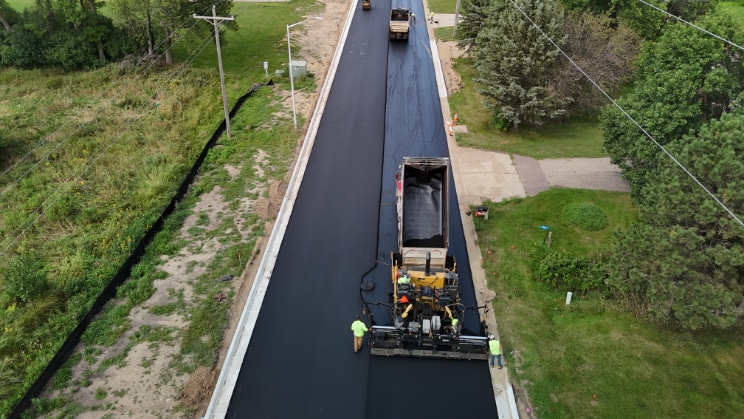
“If I take a photo or video that shows anything unsafe, I inform the foreman,” said Kesmond Willert. “We’ve started saving those photos and videos to help train our crews on what not to do. We can show the photo or video to our crews and ask them what’s wrong with it, and that usually starts a good discussion about safety. Repurposing that content in that way has actually made us safer.” Photo courtesy of Kesmond Willert, Bowes Construction Inc.
In fact, social media snapshots have improved safety and efficiency at C.W. Matthews. “I’ve taken internal photos and shared them with managers when we’ve seen inefficiencies or safety improvements to make,” Kelly said. For example, he captured a time-lapse video showing a project where they could switch from having trucks back up to making U-turns to maximize project efficiency.
Willert added that photos and videos have even become part of their training. “If I take a photo or video that shows anything unsafe, I inform the foreman,” he said. “We’ve started saving those photos and videos to help train our crews on what not to do. We can show the photo or video to our crews and ask them what’s wrong with it, and that usually starts a good discussion about safety. Repurposing that content in that way has actually made us safer.”
Nicholas Pickrel, co-owner of Kingsway Services, Millersburg, Ohio, agrees with this. “If anything, social media has made us more intentional about our safety program because it keeps us accountable at all times,” he said. “We work hard to create a safe culture and provide our guys with the tools and training necessary to do so.”
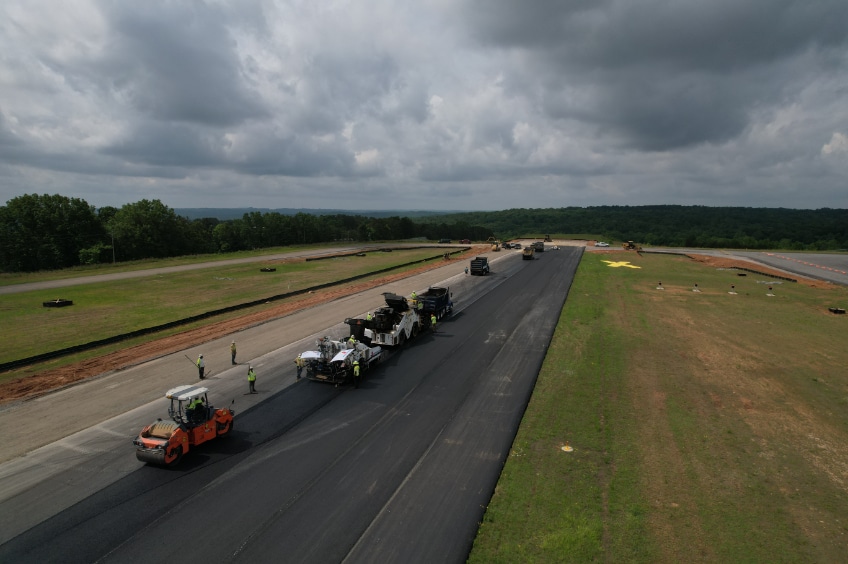
“My favorite response to criticism is, ‘We are always hiring’,” said James Kelly. “If you think you can do it better, join our team! I’m genuine about that. We do it this way because we think it’s best. We’re not perfect, but we’re open to change, and we’re always hiring.” Photo courtesy of James Kelly, C.W. Matthews
Fear #3: Sharing Company Secrets
According to AsphaltPro’s survey, asphalt companies rated their worry about helping competitors with shared information below average, meaning it’s a moderate concern for many. For those who are more cautious, it’s important to find a balance between being open and protecting your own interests. As Pat Ferry, owner of Aztec Paving Inc., San Diego, California, puts it, “I avoid disclosing sensitive information, such as bidding strategies or details about customers. That’s our ‘secret sauce.’”

“If you ask 10 guys how to do a job, you’re going to get 10 different answers,” said Jake Fragale. “Every job has its budgets and variables, and people don’t see all the behind-the-scenes work.” Photo courtesy of Jake Fragale, Fragale & Sons Paving
On the other hand, Bill Stanley, founder of American Pavement Specialists (@AmericanPavement, 168k followers), shares that initially, he too was hesitant about revealing too much online. “I grew up in an era when the mantra was ‘Don’t give the competition anything, not even a kind word,’” he recalled. But over time, he realized that sharing knowledge with the competition could benefit the entire industry. To learn more about Stanley’s approach, read his article “Know Your Worth To Get Paid Your Worth.”
In the end, sharing doesn’t mean giving away all your secrets. It’s about improving the industry as a whole, and understanding that we all benefit when we help raise the bar.

Tyler Spano relies on social media for equipment research. He is active in Facebook groups like Paving Nation and Asphalt Life, where he gathers insights from industry professionals. Photo courtesy of Tyler Spano, Intercounty Paving Company
Fear #4: Limited Manpower
According to AsphaltPro’s survey, nearly half of company owners handle social media themselves, often balancing it with other responsibilities. As Tyler Spano, project manager at Intercounty Paving Co. (IPC), Carmel, New York, puts it, “I capture and post all of the content, so if we haven’t been posting, you know who to blame!”
But there are other ways to get it done. In addition to the nearly half of respondents who reported the company owner handled their social media, the remaining respondents said:
- 25% rely on their company’s internal marketing department.
- 17% assign it to another employee.
- 11% outsource to a third-party marketing company.

“If you ask 10 guys how to do a job, you’re going to get 10 different answers,” said Jake Fragale. “Every job has its budgets and variables, and people don’t see all the behind-the-scenes work.” Photo courtesy of Jake Fragale, Fragale & Sons Paving
Ferry used to manage his company’s social media on his own, but when his responsibilities became too much to balance, he began to share social media responsibilities with his foreman. Pickrel uses a mixed approach to social media. His crew uses the app CompanyCam so they can source many photos and videos from their crew members. “We also utilize a professional videographer and photographer periodically to capture projects,” he said.
Other companies opt for outside expertise, but Willert recommends choosing a company that understands the asphalt industry. “It drives me nuts when companies hire marketing agencies that don’t know the roadbuilding industry, much less construction,” he said. “They might know how to do social media for a retail store or doctor’s office, but they aren’t suited for our industry.”
If you go this route, he recommends hiring a marketing firm that specializes in construction to ensure accurate, relevant content. And if you do work with a general marketing agency, he suggests having a project manager, estimator or foreman review posts before they go live to prevent mistakes.

Tyler Spano relies on social media for equipment research. He is active in Facebook groups like Paving Nation and Asphalt Life, where he gathers insights from industry professionals. Photo courtesy of Tyler Spano, Intercounty Paving Company
Fear #5: Shortage of Content
According to AsphaltPro’s survey, when asked how difficult it is to create and post content, asphalt companies rated the task below average. This shows that for many, it’s not as tough as it may appear—but even so, there are still times when ideas run dry.
During the off season when there’s less content to post, Spano and Fragale both post less frequently (1-3 times per week). When they’re paving and content is ample, they strive to post more frequently (3-5 times per week). However, Spano said, the exact number per week isn’t as important as posting consistently. “Consistency, consistency and consistency,” he said. “I can immediately see engagement drop exponentially when I post after a five-day hiatus.”
Willert posts five times per week during the construction season, but tries to mix it up with a variety of videos and photos of their projects and materials. They also do educational content, giveaways and community outreach. “When we started, we were on a rigid posting schedule, but now we try to be more fluid and creative,” he said. “We’ve learned that mixing up social media content helps keep things fresh.”

Tyler Spano relies on social media for equipment research. He is active in Facebook groups like Paving Nation and Asphalt Life, where he gathers insights from industry professionals. Photo courtesy of Tyler Spano, Intercounty Paving Company
And if you ever feel stuck for ideas, Willert suggests using AI to generate fresh concepts. “One thing that’s really helped is using AI to generate new ideas, especially when a marketing team runs out of steam,” he said. You can also look around at what others in the industry are posting to draw upon their content for inspiration or remix it (if allowed).
Lastly, don’t worry about making every post perfect. “I’ll put a lot of effort into a post and it won’t perform well,” Fragale said. “Then I’ll post a quick sentence with a funny picture and get tons of likes. Don’t try to reinvent the wheel—some posts will take off, and others won’t.”
Tyler Spano relies on social media for equipment research. He is active in Facebook groups like Paving Nation and Asphalt Life, where he gathers insights from industry professionals. Photo courtesy of Tyler Spano, Intercounty Paving Company
Final Thoughts
If your company has been hesitant to get involved in social media, you’re not alone. Many asphalt professionals share concerns about online criticism, safety issues and the time commitment required to manage an active presence. But as the companies featured in this article have shown, the benefits of engaging on social media far outweigh the risks—and those concerns can be managed with the right approach.
The conversation about asphalt is already happening online, every day, all year long. The only question is—will your company be a part of it?
This conversation will continue on AsphaltPro’s social media pages. If you want to take part, follow us on Facebook, LinkedIn, Instagram, X and YouTube.