
Assess the Feeds at Your HMA Plant
BY Rick Rees
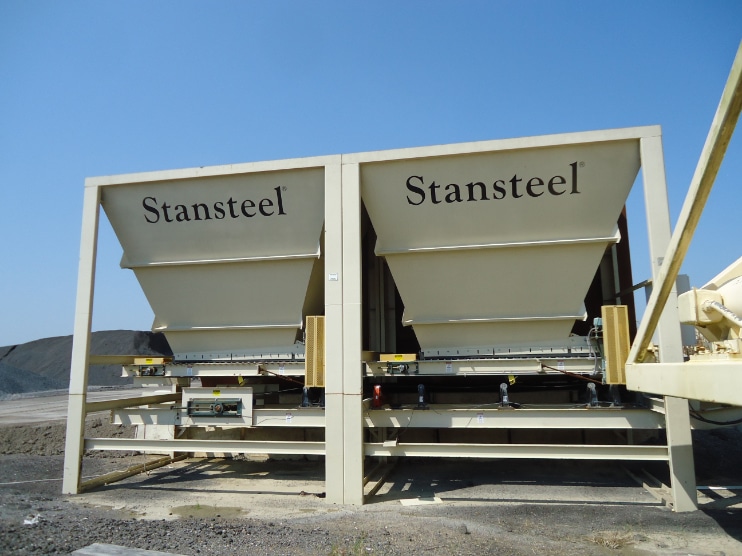
Here’s how to inspect the collecting scale and feed conveyors for RAP and virgin aggregate systems
Assessing components at the hot-mix asphalt (HMA) plant is only one step in the overall picture of plant health. The continuous drum mix plant has its best chance at optimum, clean production when all components and electronics are functioning properly without signs of wear or damage. If a duct, bin, flight, bag or other component develops a shiny surface, small leak or other problem, more than production suffers. Let’s continue this new series of assessing the asphalt plant for maintenance purposes with the reclaimed asphalt pavement (RAP) and aggregate feed components.
Step Up Hot-Mix Production with Your Facility’s Own Crushing Plant
Safety Notes
The first step with any plant maintenance is to make sure all inspections, markings or repairs happen while using proper OSHA Lockout/Tagout procedures. Ensure you have complete power disengagement before performing any inspections or repairs. For observations that require belts, idlers, motors or other components to be operating, listen or watch for vibration and noises from a safe distance or rely on controls systems to provide feedback on specific parameters. In this situation, you will observe and document, but do not touch the operating equipment.
For this series on assessing your asphalt plant for upcoming repairs and to avoid unplanned downtime, plant owners are reminded that only fully trained personnel should be allowed to conduct work on or around the equipment. For safety’s sake, the worker(s) should be fully trained on and act in accordance with all federal, state, county and local laws and regulations, and that includes OSHA and MSHA laws. You want your workers to be familiar with and act in accordance with the equipment specifications and manuals as well as your site-specific safety rules and regulations.
Workers have to take responsibility for their own actions, inactions, consequences and results, but you can ensure the best possible outcome for their safety and your operation’s success when you take the time to train and educate each worker who has access to the equipment and material at your facility.
Always use OSHA Confined Space procedures.
Feed Conveyor Belt
Starting with the collecting conveyor today, let’s inspect the collecting and feed conveyor belting. You want to perform a visual inspection of the entire unit to look for any noticeable issues. Make a note of all areas that are damaged and mark them for immediate repair or replacement. See “How to Fix a Torn Conveyor Belt” in the May 2020 issue for tips on repairing a worn or torn conveyor belt.
- Check for cracks or dry rot
- Check for rips or tears
- Check for damaged seams
- Check for proper (2-ply, 3-ply, etc) thickness
- Check for signs of proper tracking
- Inspect all rubber skirting for holes
- Inspect all air lines for damage
- Inspect all wiring/junction boxes/terminal strips
- Check for any frayed, burned, broken, melted wires
- Reinstall any guards that have been removed during inspection/repair
- Check that the zero speed sensors operate correctly
- Check that the load cells operate correctly
- Check that tachometer zero speeds operate correctly

A well-maintained and properly functioning cold feed system is integral to the success of your plant. Keeping it in good working order keeps your operation safe as well as efficient.
Feed Conveyor Belt Scale
Moving on to the belt scale inspection, start with its calibration. You want to ensure it has been calibrated correctly for low, medium and high production. Make sure the test weights have been tested as well. Inspect the gravity take-up.
Make sure spare components for the belt scale are in stock since this is critical to the operation. Certainly, a load cell can fail for many reasons, and you should always have a back-up available.
Of special note: Please investigate advances or upgrades in electronics that can help fast daily belt scale calibration and verification since 100% of the blending and gradations of materials depend on proper belt scale function and matching to liquid additives—including liquid asphalt—chemical additives, dynamic foaming and more.
Feed Conveyor Bearings
To inspect the bearings on the collecting/feed conveyor, look down. If you see signs of leaking oil or other signs of damage, your task may require a closer inspection.
- Are the bearings properly lubricated?
- Are their operating temperatures normal?
- Is there visual abnormal coloration? (blackened grease)
- Is there any excessive grease/oil escaping the bearings?
- Are the bearing mounting bolts tight?
- Has there been excessive vibration while in operation?
- Has there been any excessive bearing noise while in operation?
- Are there any cracks in bearing housings?
Eagle Crusher Company Displays UltraMax® 1600X-OC Portable Impactor Plant
Feed Conveyor Idlers
- Do the idlers spin freely?
- Are all idlers properly “string-lined” and aligned?
- Is there excessive noise from idlers during operation?
- Are all guards in place?
- Are all idler brackets tight against the frame?
Feed Conveyor Drive Components
For the collecting/feed conveyor drive components, you’re looking at the motors, reducers, sprockets and guards. You want to ensure all motors are operating at normal temperatures and are properly ventilated. You also want to inspect the head shaft rubber lagging as well as the tail/wing pulley for wear. Any element showing signs of wear needs to be pointed out to the grounds crew or mechanic for repair.
- Is there excessive noise/vibration during motor operation?
- Have gearbox/motor oil samples been taken?
- Are there any unusual odors from motors during operation?
- Are all wiring connections tight? (you don’t want loose wires)
- Are all motors connected to drive couplings.
- Have you checked for proper oil levels in motors/reducers?
- Are drive or drive sprockets showing signs of wear?
- Are there any cracks in the shafts?
- If applicable, are drive belts cracking?
- Are sheaves showing signs of wear?
- Are the drive couplings working properly?
If you have comments on any of the elements you’ve inspected, make those notes for your grounds crew or mechanic and set a date by which you’ll check back on the progress of repairs. A well-maintained and properly functioning cold feed system is integral to the success of your plant. Keeping it in good working order keeps your operation safe as well as efficient.