
Naloxone is the New AED in Workplace First-Aid
BY Cal Beyer

Workplace opioid risk and overdose prevention includes naloxone kits in your first-aid response
Editor’s Note: A version of this article first appeared in the Fall 2024 Colorado Public Works Journal. This article was updated for the national readership of AsphaltPro. AsphaltPro has been a longtime supporter of Cal Beyer’s efforts in workplace mental health and suicide prevention. He was first featured in AsphaltPro in 2017 and many times thereafter, as he has been a leading force in workplace mental health, suicide prevention, addiction treatment and recovery, opioid risk reduction and overdose prevention.
In today’s ever-evolving work environment, the concept of safety has expanded far beyond hard hats, high visibility vests and steel-toed boots. There’s a new tool that’s quickly becoming essential in first-aid kits on job sites and in workplaces: naloxone. Just like an automated external defibrillator (AED) is used to revive a person during sudden cardiac arrest, naloxone is the lifesaving medication used to reverse the effects of an opioid overdose.
As the opioid crisis continues to affect communities nationwide, the inclusion of this life-saving medication in workplace first-aid kits is a crucial step toward protecting lives. It’s a small addition that could make a major difference in the construction and aggregates industries, where the opioid epidemic has taken a significant toll.
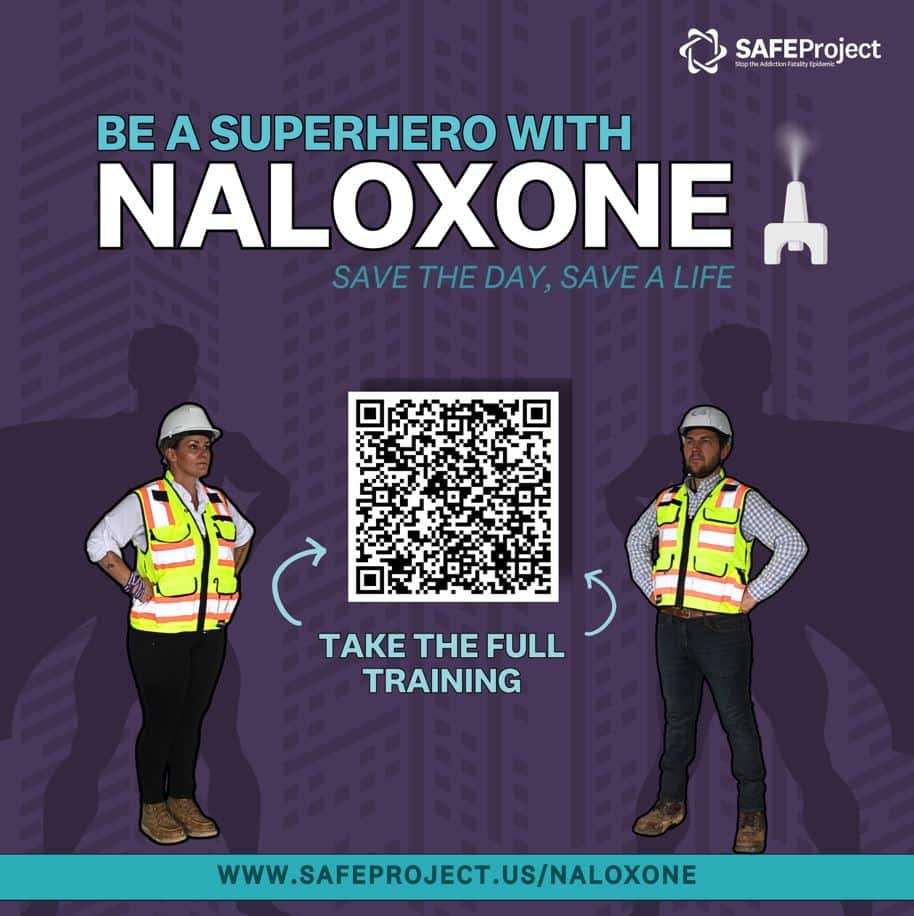
What is Naloxone and Why Does It Matter?
Naloxone, often referred to by the brand name Narcan, is a medication designed to reverse an opioid overdose. Naloxone works by quickly binding to opioid receptors in the brain, displacing the harmful substances and reversing their effects. Naloxone is simple to administer—with minimum training, anyone can use it effectively in an emergency.
Having naloxone readily available in first-aid kits is critical because overdoses can happen anywhere, including the workplace. This is particularly true in physically demanding industries like aggregates mining, asphalt production and paving operations. These operations have experienced higher rates of opioid use due to the potential for injury and subsequent pain management.
Construction and Mining Battle Against the Opioid Crisis
The opioid crisis is in its third decade. This crisis cuts across every demographic of society. This author has described opioids as an “equal opportunity destroyer” of lives, families and hope. The construction and mining industries have been hit hard by the opioid crisis sweeping the nation.
According to the National Vital Statistics Reports, affiliated with the Centers for Disease Control and Prevention (CDC), the combined construction and extraction industries have the highest rate of fatal overdoses among 22 major industries analyzed. Specifically, the overdose death rate for the combined construction and extraction industries is 162.6 per 100,000 workers.
The rate for construction alone was reported as 130.9 per 100,000 workers compared to 60.9 per 100,000 workers for mining functions. One possible explanation for the difference is that mining uses heavier machinery, automation and conveyors to move materials more than construction, which relies on more human effort to perform heavy work operations and material handling tasks.
For industries like construction, mining, manufacturing and transportation, the risk of musculoskeletal injuries is particularly pronounced. Workers in these fields often face physically demanding tasks that increase the likelihood of injury and, subsequently, opioid prescriptions. The line between treatment and dependency can be thin, making the workplace a critical setting for overdose prevention. That’s where naloxone comes in—equipping first-aid kits with this medication could mean the difference between life and death in an emergency.
Why Naloxone is a Game-Changer in Workplace Safety
The availability of naloxone as an approved over-the-counter medication since March 2023 rapidly expanded its availability. Moreover, there are laws in all 50 states and the District of Columbia pertaining to the accessibility of naloxone and/or Good Samaritan provisions that generally reduce the liability of administering naloxone in the workplace. It is always prudent to check with legal counsel if questions remain.
The major benefits of stocking naloxone in the workplace include the following considerations:
- Quick Action Can Save Lives: In the event of an opioid overdose, time is everything. Naloxone can restore normal breathing within minutes, providing a critical window for emergency responders to arrive. Having naloxone in first-aid kits ensures that workers can act quickly, potentially saving a life right there on the job site.
- Empowering Your Team: When employees are trained to use naloxone, they’re equipped to act decisively in a crisis. This training not only saves lives but also fosters a culture of safety and responsibility in the workplace. It shows that everyone has a role to play in keeping the workplace safe.
- Challenging Stigma: By including naloxone in your first-aid kits, you send the powerful message that your workplace is a safe space where employees’ health and well-being are prioritized. This move helps reduce the stigma around opioid use and encourages workers to seek help without fear of judgment or reprisal.
- Staying Ahead of Regulations: As awareness of the opioid crisis grows, a selected number of states are considering enacting regulations allowing or even requiring naloxone availability in certain settings. Being proactive in adding naloxone to first-aid kits not only prepares your workplace for potential regulations but also shows your commitment to employee safety.
- Reducing Human Capital Risks: In the unfortunate event of an overdose at work, having naloxone on hand demonstrates that you took reasonable steps to protect your employees, which can enhance your company’s reputation as a responsible and caring employer.
Spotlight on SAFE Project: A Partner in Workplace Safety
SAFE Project, a national nonprofit dedicated to ending the addiction fatality epidemic, is leading the charge in making naloxone accessible in workplaces across the country. Through the SAFE Workplaces initiative, SAFE Project provides businesses with the resources, training and support needed to tackle substance use issues head-on.
SAFE Project offers tailored solutions that help businesses create safe and supportive environments for their employees. Whether it’s providing naloxone kits, offering training on how to use them or helping companies navigate the complex landscape of substance use prevention, SAFE Project is a crucial ally.
Their approach isn’t just about reacting to overdoses—it’s about creating a culture of prevention and care. By partnering with trade associations, businesses, unions and other related organizations, SAFE Project ensures that workplaces are better prepared to handle the challenges posed by the opioid crisis.
How to Implement Naloxone in Your Workplace
Adding naloxone to your workplace first-aid kits is a small step that can have a huge impact. By taking this proactive approach, you’re protecting your employees, reducing your risk and contributing to the larger fight against the opioid epidemic.
If you’re considering adding naloxone to your first-aid kits, the process is straightforward but essential. Here’s how to get started.
- Assess Your Needs: Evaluate your workplace environment, considering factors such as the number of employees, locations, distances between worksites and expected response time by emergency first responders. This will help determine how many naloxone kits you need and where to place them.
- Train Your Team: Make sure your employees are trained to recognize the signs of an overdose and know how to administer naloxone. SAFE Project offers customizable training programs that can fit the needs of any organization.
- Communicate Clearly: Let your employees know that naloxone is available and encourage open conversations about substance use and overdose prevention. This can help reduce stigma and ensure that everyone feels supported.
- Maintain Your Kits: Regularly check your naloxone kits to ensure they are in good working order and have not expired. Establish a protocol for replacing used or expired kits promptly.
- Partner with Experts: Consider working with organizations like SAFE Project to access additional resources and support. Collaboration with experts can enhance the effectiveness of your naloxone program and ensure that you’re taking all the right steps.
Naloxone in first-aid kits isn’t just about compliance; it’s about caring for your team and making sure everyone goes home safe at the end of the day.
Cal Beyer, CWP, is the senior director of SAFE Workplaces for the national nonprofit SAFE Project. He’s been dedicated to construction risk and safety management since 1996. From 2014-2020, he was director of risk management for a paving contractor in the Pacific Northwest. He is a member of the executive committee of the National Action Alliance for Suicide Prevention. Cal was instrumental in the launch of the Construction Industry Alliance for Suicide Prevention. For more information, contact Beyer at cal@safeproject.us or (651) 307-7883.
References for More Information
Beyer, Cal. (Sept/Oct 2024). Reversing Opioid Overdoses in Construction: A Jobsite Imperative. Construction Financial Management Association (CFMA). Building Profits.
Beyer, Cal. (August 17, 2024). Overcoming Challenges to Stocking Naloxone in Workplaces & Jobsites.
Beyer, Cal and Kubiszewski, Scott. (January 15, 2024). Forming the Alliance for Naloxone Safety In The Workplace.
Billock RM, Steege AL, Miniño A. Drug Overdose Mortality by Usual Occupation and Industry: 46 U.S. States and New York City, 2020. National Vital Statistics Reports; vol 72 no 7. Hyattsville, MD: National Center for Health Statistics. 2023. DOI.