
11 Best Practices for Winter Paving
BY Bill Stanley
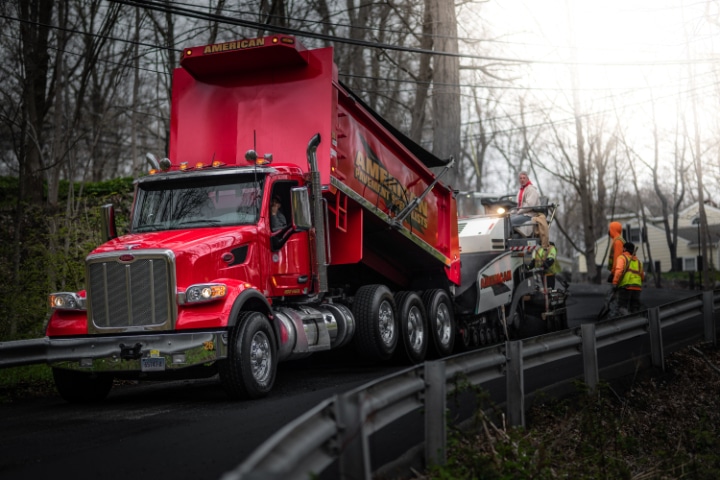
Best Paving Practices (When Conditions Aren’t the Best)
Part 2: Weather Challenges
Just about anyone can pave a project well when they’re picnic paving. But achieving a quality pavement when you’re laying asphalt in 30° weather is what separates the asphalt Joes from the asphalt pros.
What’s better than working outside when it’s sunny and 70 degrees? I call this ‘picnic paving’. If anything goes wrong on a paving project like this, you certainly can’t blame the weather.
But what about when it drops below freezing overnight, the wind’s fierce, and it barely reaches 50 in the afternoon? Sure, the weather isn’t on your side, but sometimes you’ve got to pave anyway.
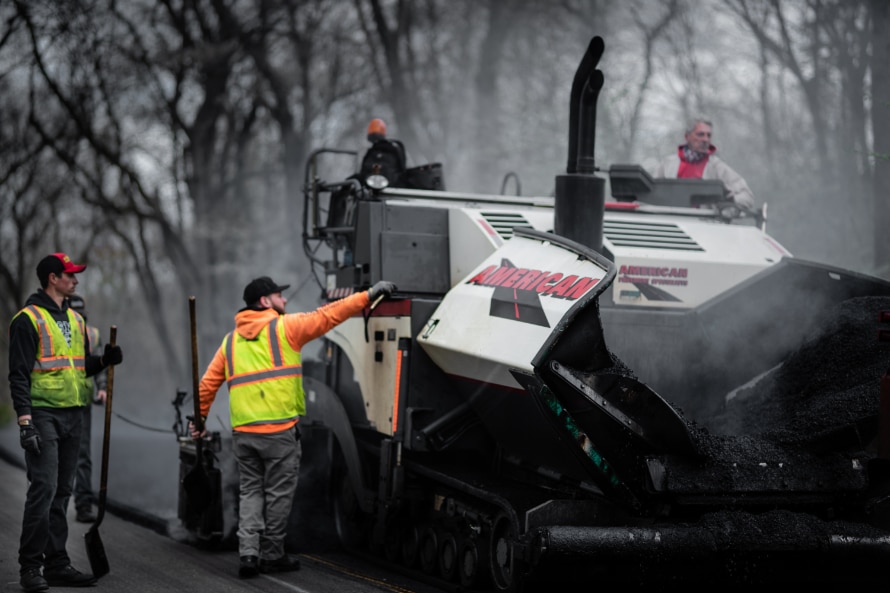
“The more you understand how weather impacts your product, the more you can adjust your methods so every pavement you lay looks like it was paved in picnic weather,” Stanley said.
[When it’s cold], we’re going to want to start paving and work our way to the shaded parts when it’s warmed up in the afternoon. When it’s that cold, you have to work with the sun as much as you can.
The industry standard in our area is 50 degrees and rising. That’s what they’ll say in the classroom, anyway. But based on many years of experience on the job, that’s the first thing the inspector throws out the window.
Come fall, when you get to the job site and it’s not quite warm enough to pave, the inspector might wait for it to warm up a little and then tell you to go ahead and pave—because he knows as well as I do that sometimes you’ve just got to pave if you plan to stay on schedule.
This may be the reality out there, but that doesn’t mean we have a free pass to sacrifice on quality. Here are some of the best practices my crew follows when we’re paving on days when the weather is no picnic.
1. Start At the Right Time
At the very beginning and end of the season, we might show up to the job at 8 a.m. and the sun’s not even up. In just a couple months, we’ll be able to work 10- to 12-hour days, but on the fringes of the season, we might be lucky to get a 7-hour workday. There’s no point telling the crew to be there at 7 a.m. if we won’t be able to start paving until 9 or 10 a.m.
2. Take Care of Your Equipment
Cold mornings equal cold starts. The day before, you need to set yourself up for success by making sure you can fire up your equipment quickly and efficiently the next morning. You don’t want to leave water in any of the machines that could freeze overnight. You don’t want to leave your equipment on the side of the road where the batteries might die, the diesel might gel or the body’s covered in ice or frost. If you park your equipment in the shed overnight, it’ll be that much closer to being warmed up when you start in the morning.
3. Take the Time to Warm Up
Even though we store our equipment in our shed overnight, the roller wheels are still going to be cold, the paver’s still going to be cold. It’s important to build in enough time in the morning to let that equipment get warm before the first load of mix arrives at the job site.
This might mean we go over to a corner of the parking lot that’s supposed to be 3 inches thick and we might pave an inch of asphalt, sort of like a scratch course, to get the paver and rollers warmed up before we place the rest of the desired thickness.
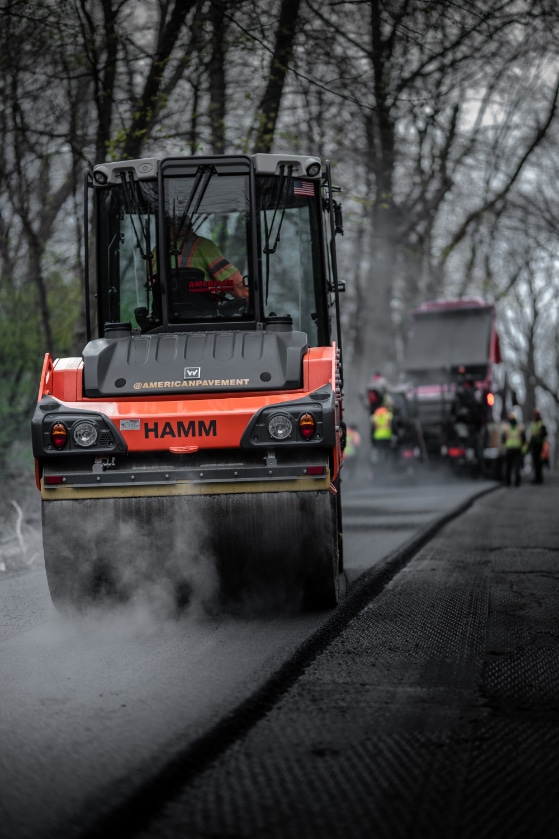
It’s important to build in enough time in the morning to let that equipment get warm before the first load of mix arrives at the job site.
4. Work With the Sun
Let’s say I show up to a warehouse job and the building is 50 feet tall and 1,000 feet long. The north side of that building might be dark until 2 p.m. in the fall. The ground on the shaded side might be frozen solid but the sunny side might be just fine to pave.
I’ve seen it firsthand where the north side of the building has 3 inches of frost on the ground and the other side has nothing because it gets full sun all day, every day. That’s where we’re going to want to start paving and work our way to the shaded parts when it’s warmed up in the afternoon. When it’s that cold, you have to work with the sun as much as you can.
5. Save Important Spots for Better Weather
Let’s say we’re paving a Walmart. At the front of the building, there are walkways, handicap parking stalls, slopes and tight tolerances to meet, not to mention it’s the area everyone’s going to see all the time. We definitely don’t want to do that when the ground’s frozen, the equipment’s cold and the crew is stiff first thing in the morning.
The paver has to be hot and the tires or drums of the roller have to be warmed up. If not, you’re going to have problems with pickup.
Nope, we’re going to head over to the area where they keep the dumpsters in the back of the building until conditions are better to pave the most important, complicated or heavily trafficked parts of the project. Let’s face it, behind the building in front of the dumpster pad doesn’t have to be as perfect as the pavement right in front of the entrance. If I’m going to have a blemish or a flaw, I’d rather it be back there where few people are going to go.
6. Hold Off on Handwork
It’s not just the important spots that I save for warmer parts of the day; I also save areas that require handwork. Every project is going to require some handwork. With mainline paving, the asphalt will be coming out of insulated or even heated haul trucks, into a paver that’s heated up, and getting compacted immediately.
The mix that needs to be raked by hand has a lot more opportunity to cool, and it’s getting compacted by smaller machinery, so we have to do what we can to maximize quality under those conditions. In November, it may be a beautiful day by 4:30 p.m. That brief window of decent weather is when we want to tackle that handwork.
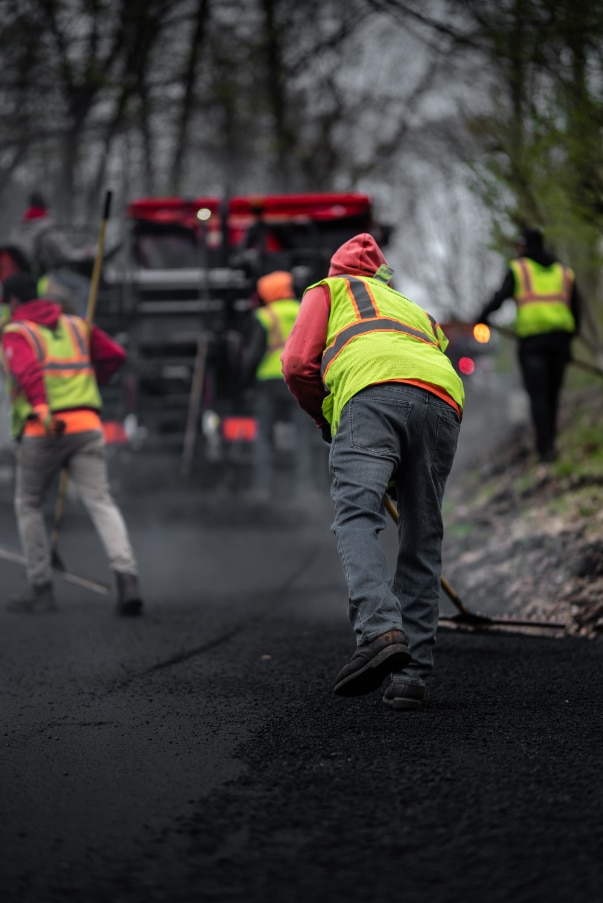
Stanley also saves areas that require handwork for the warmer parts of the day.
7. Keep the Mix Hot…
In the fall, we don’t take the cover off the truck body except when it’s being loaded at the plant. Otherwise, we leave the canvas on the whole time to keep the heat in the mix on its way to the job site, but also to retain whatever heat we can in the truck body on its way back to the plant. Let’s say there’s 20 miles between the job and the plant—if the canvas is off, that steel body is going to be a whole lot colder when the next load gets dropped into it.
Not only is the 300° mix going to cool quite a bit when it drops onto 20° steel, but it’s also going to stick to that cold steel. By the time that load arrives at the job site, the driver’s going to dump it out and a bunch of it’s not going to come out of the truck because it’s stuck. Leaving the tarp on while the empty truck heads back to the plant keeps things just a little bit warmer.
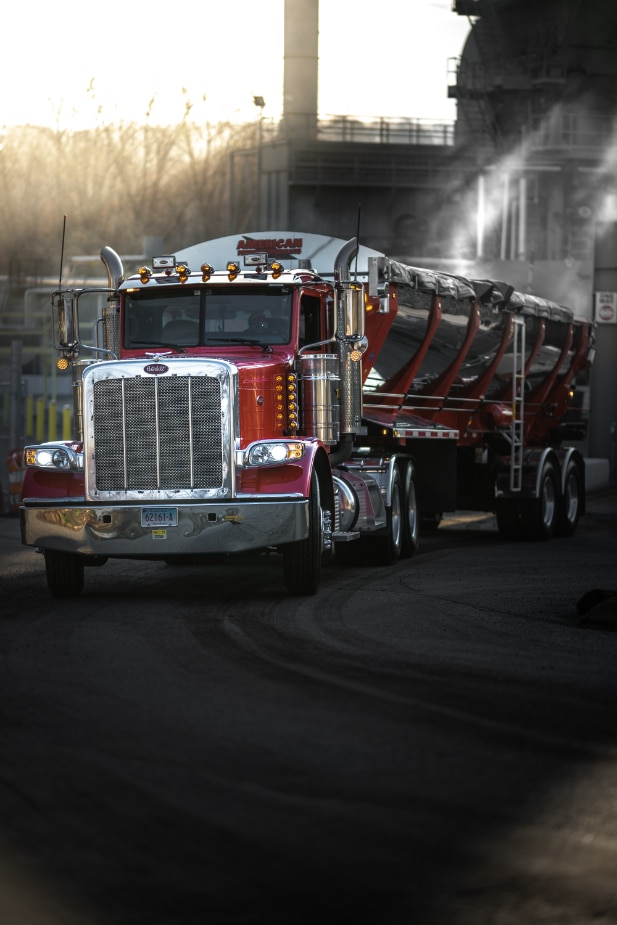
At the very beginning and end of the season, we might be lucky to get a 7-hour workday.
8. And the Rollers Close!
If you want to hit your compaction numbers, you have to make sure that the rollers are right behind the paver. A paver operator who’s interested in quality is going to be constantly looking for the rollers to make sure he’s not outpacing them. If the roller has to stop to refill the water tanks, the paver’s got to slow down or even stop until it’s got a roller right behind it again.
Best Paving Practices (When Conditions Aren’t the Best): Customer Budgets & Expectations
9. It’s Not Just About Temps
Temperature is one factor, but it isn’t the only factor that matters. We already talked about shade. Now let’s talk about wind. It may be pretty cold and still not be a bad day to pave. A warmer day that’s very windy might be much worse, because that wind will cool your asphalt off fast.
If you’re in the middle of an empty parking lot on a windy day, that wind might be ripping across the lot and taking away any heat that asphalt might have. Under these conditions, it’s going to be particularly important to be checking the temperature of the mat with your temp gun and paving at the same speed as your rollers.
10. What About Rain?
We’d rather pave in snow than in rain. But, sometimes you have to do what you have to do. Even when we’re paving in rain (or after rain), we apply best practices for that situation. If the slope of the parking lot goes left to right, we’re paving it left to right so we aren’t paving into puddles. If the ground is wet, we’re only paving the base course and will pave the top course when the weather’s better.
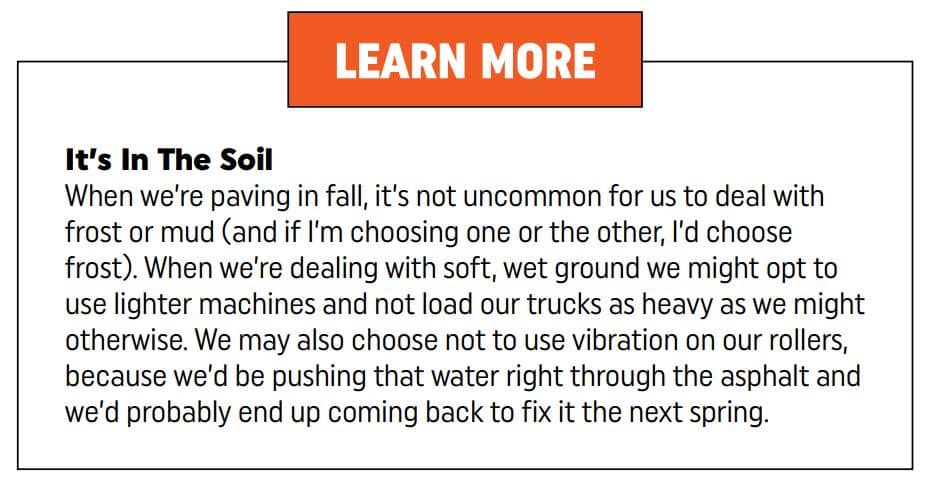
11. Reassess as You Go
Let’s say you’re paving that warehouse I was talking about earlier, the one where the north side is frozen solid and the south side is ready to pave. An experienced paving crew is going to approach each side completely differently because they know that if they don’t, the owner’s going to come back to them and say ‘It looks like two different companies did this job.’ One side of the project will be perfect and the other—not so much. ‘What happened?’ the owner will ask.
You can blame the weather all you want, but the truth is that it’s your job to know how to pave a quality product in different conditions. The more you understand how weather impacts your product, the more you can adjust your methods so every pavement you lay looks like it was paved in picnic weather.