Pave More Tons

All year long, we bring you paving project stories and paving tips to assist in training your workforce on paving best practices. Twice a year, we devote the edition’s theme to asphalt paving. You could say we place high importance on the best way to “implement” the mix you design and produce. This month, I want to suggest there’s more than one way to increase your tonnage for the department of transportation (DOT) in your state, whether the DOT’s funding increased recently or not.

Track with me here.

When you place a top quality, high-performing, long-lasting road—be it for the DOT, county, city, residential property manager—the owner pays a specific price for the completed work and does not have to pay exorbitant maintenance costs in the future. An asphalt pavement designed with perpetual pavement performance in mind is likely to last in excess of 50 or 65 years with minimal preservation treatments at year 15 or so. That’s a one-time investment up front with some minimal dollars for preservation later on. That’s smart.

If you’re a paving contractor or mix producer, you might be thinking, wait. Where’s the big benefit for me? Here it comes.

The agency that saves big maintenance dollars in years three, four, five, six and so on, has big dollars at its disposal. Those dollars can be used for maintenance or upgrading of sub-par pavements (I’m looking at the concrete industry, of course) or for building much-needed infrastructure in new or developing areas. That’s where the asphalt community can step in and provide, again, a long-lasting pavement system that saves dollars down the road, again.

It’s like a wise-money-use cycle when asphalt professionals pave with perpetual pavement designs and best paving practices. Indulge me for a moment while I tell you AsphaltPro magazine has an online course that teaches the back-to-basics for best paving. It’s designed to reach the new members of your crew and to give a refresher to the veterans on your crew. Check that out under our Training tab on theasphaltpro.com.

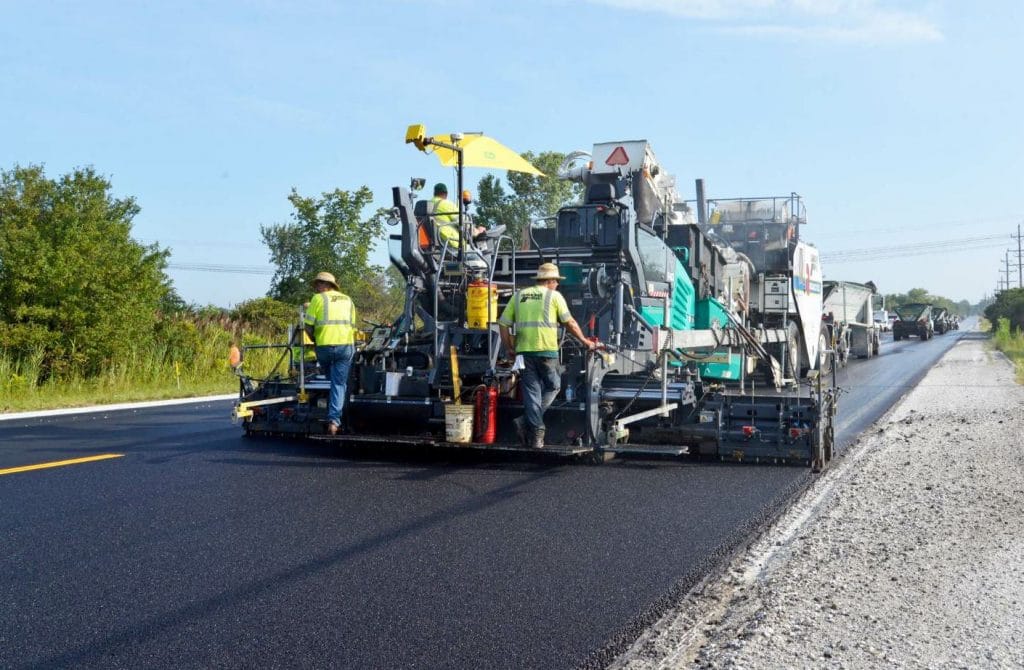
Best paving practices run the gamut from in-place recycling and paving along rural highways to pavement maintenance and striping of commercial lots. We’ve taken a look at a number of paving projects in this month’s issue and welcome you to use any or all of them to talk to your crews about the tips and tricks you see as training and growth opportunities.

Stay Safe,

Sandy Lender

5 Key Takeaways from the AEM Workforce Solutions Summit

As equipment manufacturers prepare for the workforce of the future, they need to be armed with smart change management and talent management strategies.

Presenters at the second annual AEM Workforce Solutions Virtual Summit offered several ideas. Here are 5 key takeaways.

1. ADOPT FORWARD-LOOKING EMPLOYMENT STRATEGIES TO MEET THE CHANGING NATURE OF WORK

Bryan Hancock, global leader of McKinsey & Co.’s global management practice, told the AEM Workforce Solutions Virtual Summit that companies are adopting automation and digitization much more quickly, largely driven by the COVID-19 pandemic. Sixty-eight percent of companies McKinsey surveyed said they had increased their use of automation since the start of the pandemic.

Introduction of automation can be met with a chilly reception by employees, who believe it can lead to job losses. However, automation is largely replacing workers for competitive tasks, freeing workers for those tasks that require cognitive skills. Although about 5 million current manufacturing jobs will be lost between now and 2030, the firm believes about 4.7 million new jobs will be developed due to industry growth.

Hancock urged conference attendees to identify the skills that they need more of in their organizations, then to determine the training investments needed as well as looking for more creative and diverse ways of finding employees with the desired skills.

Today’s employees also want flexibility in how often they come into the workplace, going in only when necessary for training, team collaboration or hands-on work that can’t be done remotely, Hancock said.

2. LEADERS DON’T SHY AWAY FROM CONFLICT

“The most effective, most highly admired leaders in an organization are those who deal with conflict early and head on,” said Janyne Peek-Emsick, president of Your Executive Coach at the AEM Workforce Solutions Virtual Summit. “According to a Stanford Business School study, conflict is the number one reason CEOs seek out executive coaches, and it’s why boards seek out coaches for their CEO.”

Conflict can result in employees wasting as much as three hours of each work week, so stopping conflict early makes for much more productive organizations, Peek-Emsick said.

Peek-Emsick added that conflict at the relationship level is a symptom of a misalignment in goal clarity or role clarity – which results in people stepping on one another’s toes.

3. A CULTURE OF DIVERSITY AND INCLUSION STRENGTHENS COMPANIES

“We truly believe in the transformative nature and power of diversity and inclusion,” said Lauren Gardner, Microsoft’s vice president for talent acquisition to attendees of the AEM Workforce Solutions Virtual Summit. “It’s only by actively engaging the different perspectives can we challenge and stretch our thinking and reduce the experience of our employees and we’ll talk at a quick moment about our own mission, which is empowering every person and every organization on the planet to achieve more.”

Organizations that don’t follow diversity and inclusion practices can lose many of their valued employees, Gardner cautioned. “Seventy percent of millennial employees now as well as Gen Z’s would leave an organization for a more inclusive one.

“There are billions of people who want to achieve more, but they have a different set of circumstances, abilities, skills and experiences that can often lock them out of participating in the world that is happening around them.”

The diversity effort doesn’t stop at the hiring stage, Gardner cautioned. All of Microsoft’s divisions seek to bring on people with diverse backgrounds but won’t matter if they don’t feel value for the work that for the experiences they bring or aren’t respected for who they are, or don’t experience opportunities for further growth and development.

4. LEVERAGE LOCAL WORKFORCE ALLIANCES

With their connections to businesses, local elected officials, labor, economic development agencies, educators and community leaders, local workforce alliances foster high growth career opportunities for workers, and help to meet the needs of businesses seeking qualified workers to meet their present and future needs, said Keith Lawing, president and CEO of the Workforce Alliance of South Central Kansas.

Through such agencies, workers acquire skills for employment opportunities to meet a region’s workforce talent and employer skill needs, Lawing said.

Funding priorities for these agencies, which have been supported by Democratic and Republican administrations alike, are based on a broad range of worker issues that consider wages, job mobility, access and equity by analyzing data and working with local businesses workforce to understand what skills are most in demand. Then each local agency develops the necessary training and credential programs, using outcome data to advise employers, policymakers and communities about what approaches are successful, Lawing added.

5. GET STRATEGIC ABOUT EMPLOYEE SOURCING

The current labor shortage will continue for at least the next seven years as more than 10,000 Baby Boomers retire each day, leaving employers searching for workers with the necessary skills to meet their employment needs.

Chris Czarnik, CEO of Career Research Group, told the AEM Workforce Solutions Virtual Summit that organizations should consider the following ways to source great employees. First off, he advised it’s important to understand why job seekers contacted your company. It could be they’ve acquired new skills or now have the experience to seek out your company, or a host of other factors. If you like what they have to offer, ask about their previous job. This can help you identify ways to recruit similar candidates, but also the types of companies that provide the skills sought.

Interview the best employees hired over the last 18 months to learn why they sought your company out as an employer; the preconceived notions they had about the company; what they think it takes to be successful with your firm; and why they choose to stay with the organization.

TODAY’S THE DAY TO START SHAPING THE WORKFORCE OF TOMORROW

The skillset and the mindset of tomorrow’s employee base is radically different than that of today. The efforts needed to build your future workforce must start now.

Quick Primer on the Measuring Wheel

Not all members of the paving crew are at the same experience level. During this week’s toolbox talk, introduce the new guys (or everyone) to the measuring wheel.

It’s not just for lining out the paving job prior to haul truck arrival.

For example: If everyone on the crew knows how to figure yield and double-check it, you have a better chance of hitting your target each day. That means everyone on the crew should be able to grab the measuring wheel and walk the length of one haul truck’s pull. If you know how many tons the truck delivered and how far the paver placed it, you’ll be able to tell if you’re laying the lift a little thin or a little thick or if you’re hitting it just right.

This is a great way to double-check automation, double-check deliveries, double-check best practices. Check out the articles linked below for more information on figuring yield and giving your crew the best chance at getting a bonus-worthy job.

How to Train New Operators to Pave

Train Paving Laborers to be the Best Superintendent Ever

Asphalt Paving 101: Train Online, Anywhere, Anytime, Rain or Shine

Quick Tip: To figure yield, you want to know the width you’re paving, the length you’ve pulled, and the depth you’re supposed to be paving. If the truck holds 20 tons and you ran out before you got to the “mark” you “should” have reached, you’re running too high and costing the company money. You’ll be calling for extra mix and an extra truck at the end of the shift if you don’t fix the problem. Use these equations:

Width in feet X length in feet = A

Then A ÷ 9 = B

B X depth in feet = your tonnage

For example:

12 ft wide X 132 ft long / 9 = 176 X .1133 = 19.94 tons


To get tips like this delivered to your inbox each week, subscribe to our Toolbox Tips newsletter. 

How to Participate in the First-Annual Construction Inclusion Week

October 18 to 22, 2021, marks the inaugural Construction Inclusion Week.

Construction Inclusion Week is the first effort to harness the collective power of general contractors, specialty contractors, subcontractors, and suppliers  to build awareness of the need to improve diversity and inclusion in the construction industry by providing content and resources.

“We recognize and understand that each of our firms may be at different places in our diversity, equity, and inclusion journeys,” reads the Construction Inclusion Week website. “Our intent is that Construction Inclusion Week fosters conversations that create alignment and take us further on this journey for our people and industry partners. If we genuinely want to attract, retain, and develop the best talent for our industry and maximize the diversity of our suppliers, we must grow our industry’s culture to be truly inclusive.”

Construction Inclusion Week is organized by Time for Change, a consortium of six general contractors in the U.S.: Gilbane, DPR, Turner Construction, Mortenson, McCarthy, and Clark Construction Group.

“Our leaders recognized the need to influence, champion change, and cultivate a more inclusive construction industry,” said Time for Change, which aims to identify ways to advance diversity, equity, and inclusion in construction. “Through this effort, Construction Inclusion Week was born.”


Click here to learn more about how you can get involved in Construction Inclusion Week.

Prevent Staggering Transverse Joints

One of the more obnoxious sounds and sensations for me as a driver is the thump-thump, thump-thump, thump-thump experience of driving along a jointed concrete pavement. Crossing county lines onto a smooth asphalt roadway brings an audible sigh of relief.

One way to ensure an asphalt roadway remains smooth along the entire lane is to avoid transverse joints. If you can’t avoid them, you can build them to be smooth as butter and bonus worthy. The trick is to check and double-check what you’re building. I’ll list below a couple of articles that dive into best practices for building the joint, but here’s one quick tip.

Quick Tip: Use a four-foot (or longer) straight edge parallel to the long joint to double-check the transverse joint you’re building. With fluff factor compacted down, the straight edge should not wobble and tilt and act like a seesaw. It should indicate a flat surface worthy of a bonus from the agency.


Subscribe to our Toolbox Tips newsletter to receive tips like this to your inbox each week. 

Get AsphaltPro’s Pumpkin Carving Template!

Halloween is just around the corner!

There are many ways to celebrate the spooky season in style, from construction-themed costumes to pumpkin carving templates.

Get AsphaltPro‘s own pumpkin carving template here!

URL: https://theasphaltpro.com/wp-content/uploads/2021/10/AsphaltPro-pumpkin-template.pdf