Prevent Suicide Among Your Construction Crew

The construction/extraction industry ranks in the top five industry categories for the highest numbers of suicide, according to the Centers for Disease Control and Prevention’s Occupation and Suicide report.

According to this article by Sally Spencer Thomas, the construction industry is a perfect storm of risk factors for suicide: the demographics of our workforce, the transitory nature of our work, and the likelihood of constant pain or injury.

Demographics of Suicide Risk

“Contrary to conventional wisdom, teens are not the group most at risk for suicide death,” writes Thomas. “While certainly suicidal thoughts and behaviors often begin in adolescence, the group most at risk for suicide is men in the middle years. In fact, it’s often our toughest, bravest and most stoic people that become most at risk for suicide death.”

Transitory Work Situations

In the asphalt industry, most folks around the country are used to finding other employment outside of paving season. Secondly, the construction industry is generally hit hard by economic downturns. And, our workers may not have the same sense of belonging when they’re constantly heading to a new “work place” every time they start a new job. All of these factors can lead to stress, anxiety and other mentally and emotionally taxing challenges.

Injury and Chronic Pain

Lastly: injury. The physical demands of construction work can lead to chronic and acute pain problems. This can reduce sleep, harm well-being, and even diminish social circles when the person dealing with chronic pain gives up activities they enjoy that may contribute to their pain.

All of these factors contribute to the overall suicide rate among the men and women working in the construction industry. Although understanding these factors is important, it’s even more important to learn how to identify employees who may be struggling with these challenges and link them to appropriate care. For a blueprint to guide you in these efforts, check out ConstructionWorkingMinds.org.

We must address the mental health crises in our workplace, and it’s important we do so with compassion and empowerment.

Suicide Prevention in the Construction Industry

Construction Safety’s Next Frontier: Suicide Prevention

Build Protective Factors Against Mental Health Crises, Suicide Risk
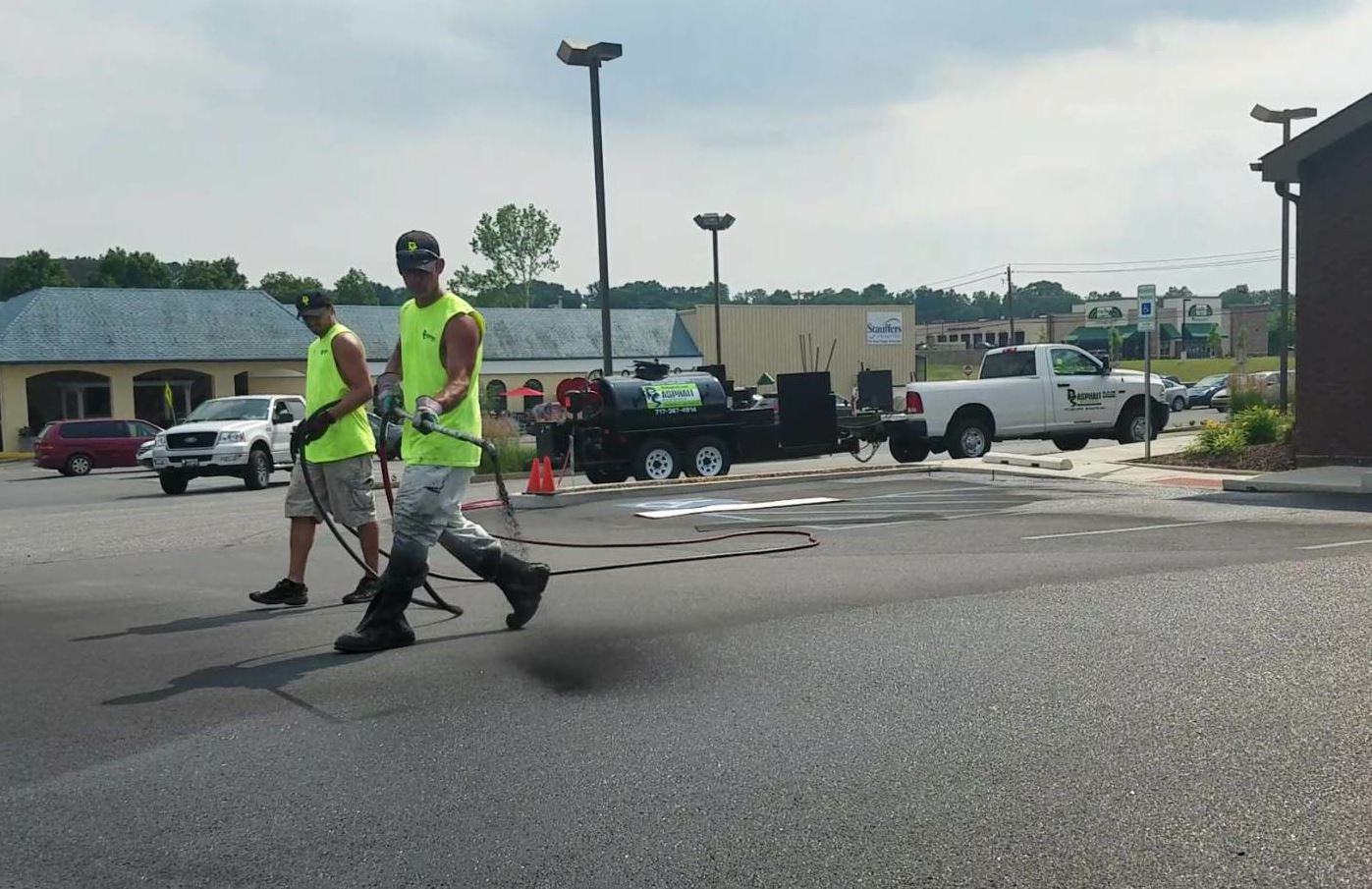
4 Steps to Good Surface Friction When Sealcoating

To perform pavement maintenance such as sealcoats, you need warm enough ambient and ground temperatures (and sunshine, of course) for the material to cure. If the day promises sun and ambient temperatures above 48 or 50 degrees, which should be no problem in August, it’s time to get to work. You can check with your sealant material provider for its specific ambient temp suggestions.

One of the reasons you’ll mix sealer and sand prior to each individual job is to avoid it settling in the working tank. Here are the steps to make your sealant with good friction properties.

Step 1. Pump the concentrated sealer from the holding tank to the working tank on your trailer.

Step 2. Add water at a ratio of about 15 percent and mix thoroughly.

Step 3. Start adding sand at about 4 to 5 pounds per gallon of sealant with the tank’s agitator turning at 8 revolutions per minute.

Step 4. With the sand in suspension, you can reduce the revolutions to 4 per minute.

If you’ll be using the sealer for more than one day, you don’t have to leave the agitator on overnight, but you will want to start it up for 20 minutes or so prior to pumping material into a sprayer the next morning. The sand that is in suspension won’t stay that way for days on end. Once the sand settles, the agitator can get stuck, and you’ll have a mess for the mechanic to clean.


Don’t miss tips like this delivered to your inbox every Monday. Sign up for our Toolbox Tips newsletter.

Label Asphalt Sustainable

Numbers tell a story. They provide clarity, something measurable and something objective. This article from long-time plant manager Ken Monlux drives this point home for assessing, monitoring and possibly revamping plant operations, but let’s look right here at some specific types of numbers that can be used to boost the very selection of an asphalt pavement mix for a project.

The asphalt industry finds itself called upon to use environmental labels and declarations concerning our mixes, and the National Asphalt Pavement Association (NAPA) sustainability committee has assembled a program to assist. The Emerald Eco-Label is NAPA’s verified Environmental Product Declaration (EPD) tool, designed to allow asphalt mix producers to develop plant-specific, mix-specific EPDs that comply with the product category rules (PCR) for asphalt mixtures. That’s a lot of acronyms to track, so stay with me here.

The road-building industry is being called upon to label and assess data that is seen as impactful to the environment. Joseph Shacat, the director of sustainable pavements at NAPA, explained that green rating systems, such as LEED v4, are the primary market drivers behind this movement. At this time, he shared; the city of Portland is now requiring EPDs for concrete. It is in our best interest to be ready to show the EPD of a mix coming out of an asphalt plant at a moment’s notice.

Asphalt Industry Incorporates Sustainability at Asphalt Production Plants – Part I

Industry Incorporates Sustainability at Asphalt Production Plants – Part II

Industry Incorporates Sustainability At Asphalt Production Plants – Part III

Think about what elements go into an asphalt pavement mix. Each of those elements can be tracked and can be assigned a level of energy use or environmental sustainability—a footprint, if you will. That measurable and objective data can then be placed on a label and shared with customers who earn credit for being environmentally responsible when making positive pavement choices for their projects.

To earn credits for a green construction project, a contractor has to provide information on—declare—the environmental impact of his product. The mechanism by which he submits the information is the EPD—the Environmental Product Declaration. This has been standardized. It’s the way to communicate the performance or environmental impact of the product. It will quantify the potential environmental impact based on the lifecycle assessment, which is an ISO standards-based method for analyzing the materials, energy use and emissions of a product.

This reality is here. The good news is asphalt mixes do tell an environmentally sustainable story. Our industry is not the big bad wolf. By getting on board with EPD labeling, you can make sure your facility is part of the positive narrative. As Shacat explained, the Emerald Eco-Label is a user-friendly, web-based system that is cost-effective. Thus, ours is not a difficult story to tell.

Stay Safe,
Sandy Lender

You can read more about the genesis of and use of product declarations for asphalt in the article “Quantify Environmental Benefits of Asphalt” on www.TheAsphaltPro.com.

Keep Back-to-School Shoppers from Running You Over During Pavement Repairs

It’s August 19th and parents are on a deadline. When you step out of the work truck to perform a pavement repair, you become one more aggravation for them—if they even notice you. During this morning’s toolbox talk, remind crew members to stay visible and stay behind traffic cones.

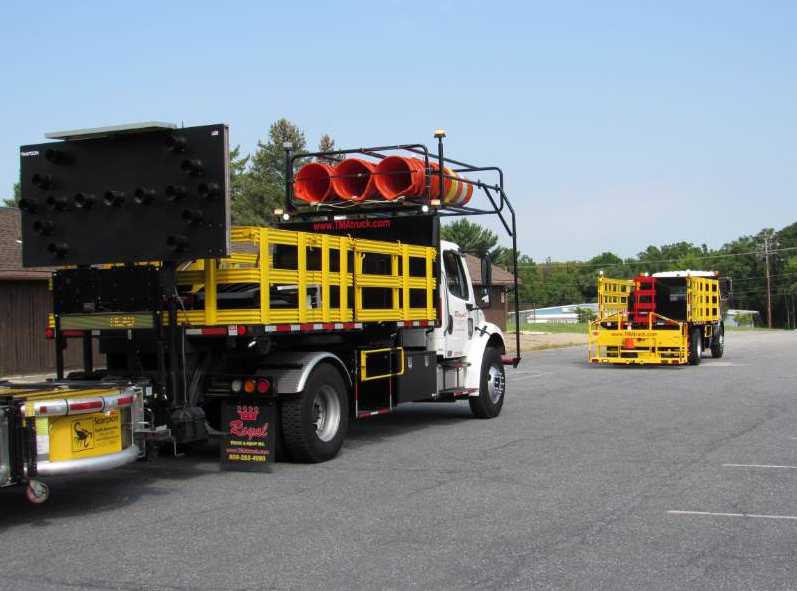
Even if your pavement repair isn’t on a main thoroughfare, put on the extra ANSI Class 2 and 3 safety apparel. Make sure you take the time to put down bright, clean safety cones to delineate your work area or work zone. If you are on a roadway, consider the use of a crash attenuator. The MUTCD tells you when such equipment is mandatory—why not use life-saving devices all the time? Tow a light trailer with you to projects that might run long; be ready for night conditions.

You may be in a hurry to perform pavement repairs quickly, and then get off the road again. Maybe you want to fill a certain quota of potholes or sawcut-and-fill a specific number of bird-baths before the end of the shift. Let’s face it: Production means profit. Make sure you take the time to clean, tack, overfill and compact properly so you won’t be called back next month. Now while one or two crewmembers have their eyes on the quality job, you may wish to assign a flagger to have her eyes on heavy traffic. Give her an airhorn or high-decibel whistle to sound the alarm if a driver enters the work zone.

Whether your pavement repair is in a roadway or parking lot, make sure you’ve taken the time to safeguard the workers making the repair. While you must consider the pavement surface and its cleanliness for a quality job, as we discussed the last two weeks, you must put the team’s safety ahead of all else. Step one should be to secure the work area.


Sign up for our Toolbox Tips newsletter to receive tips like this to your email every week!

CPWR Shares Heat Safety Graphics (English & Spanish)

Did you now that construction workers accounted for more than 1/3 of all occupational heat-related deaths between 1992 and 2016, despite only making up 6 percent of the total workforce?

Face it: YOU are at RISK. That risk continues to increase with each summer’s record-breaking temperatures.

That’s why CPWR has released four new infographics (examples below), developed through the OSHA-CPWR Alliance, that show workers how they can protect themselves against the heat. The infographics can be downloaded at full resolution here, in English or Spanish.

Check out these articles for more information about staying safe in the heat.
How to Recognize Heat Exhaustion

7 Hot Weather Safety Tips for Construction Workers

Stay Cool During Summer Paving

Woman of Asphalt: Weiler Engineering Manager Megan Weiler Green

Weiler has appointed Megan Weiler Green as Engineering Manager for the Knoxville, Iowa based manufacturer.

Green joined Weiler in August of 2017 as in-house counsel and procurement manager. As engineering manager, Green will plan, organize and direct the company’s engineering activities to meet customer expectations for design, new product development and improvement of existing product lines. Green will continue to serve as  in-house counsel and will participate in strategic planning and organization as a member of the senior management team.

Green is the daughter of Pat Weiler, owner and founder of Weiler, and is the first member of the second generation of the Weiler family to become part of the senior management team. “Megan has done a tremendous job as procurement manager and counsel in her time with the company,” said Pat Weiler. “Her passion and dedication to our customers will be vital to our success as the company continues to grow and evolve in the future.”

Green graduated from Iowa State University with a finance degree and received her Juris Doctor degree from the University of Iowa College of Law. Prior to joining Weiler, Megan worked for State Farm as in-house counsel for 9 years. Green joins Bill Hood, Vice President, Lynette Hoke, Director of Human Resources and Finance, and Matt Patterson, Director of Operations, as members of the Weiler senior management team.