It’s in the Production

At an industry meeting in 2018, a contractor bemoaned the high cost of aggregate materials. He especially hated it when incoming rock was watered down to increase its weight, thus the price of actual product received in the truck. He was tired of being charged for water.

Of course the concept of an aggregate supplier risking a business relationship with such poor business practices startled me. Whatever dust control measures a site has in place, it should be common knowledge that aggregate suppliers work to keep moisture out of materials just as hard as asphalt mix producers do. All segments of the construction industry have stormwater runoff regulations to which they must adhere, thus keeping rainwater and condensation from contaminating stockpiles is to each company’s benefit. Delivering wet material to any mix-production customer wouldn’t drive up an aggregate supplier’s profit—it would alter liquid percentages in all types of mixes during their production, resulting in the contractor/customer seeking more reliable material elsewhere.

Here’s my point: Look at your job mix formula. In a perfect world, your lab team submits a glorious JMF that the letting agency applauds and accepts, and your plant team produces a mix (or two) within spec for the duration of the project.

We can design a mix with a tight spec band for each of the aggregates to be used and we can program the plant controls to feed the exact weight of each material to meet the accepted JMF. But the real world is not a constant. If you discover the material from Stockpile A built from material delivered by Supplier ABC has 25 percent moisture content, you’re going to see a discrepancy on the feed belt and in the mix. Suddenly the amount of binder needs to change. The drying time and temperature is in flux. I dare say it’s all wacky.
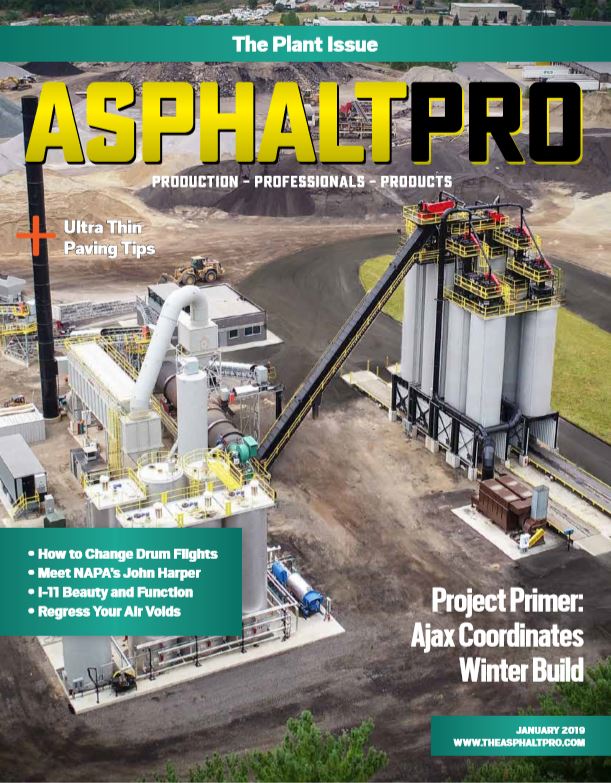
January 2019 issue of AsphaltPro magazine

If you can build Stockpile A with material delivered by Supplier XYZ and find it has a more consistent 4 percent moisture content, you’re going to stick with the supplier who has better quality control. You will also look at your own quality control, won’t you? You’ll cover the labeled and clearly divided stockpiles from which you pull the tested, on-spec material that goes into the PWL mix. You’ll train your loader operator to scoop material from the dry part of the pile. You’ll set controls to detect moisture content variations and so on.

Because the real world throws variables such as rainy days, lost truck drivers, new loader operators, failed sensors, broken weigh scales, or any number of oddities at you, plant operators have to stay on their toes during hot-mix asphalt production. The JMF may dictate perfect parameters to blend the most perfect performing pavement known to your DOT, but that doesn’t mean the stars aligned for that perfect production last night.

Instead of counting on the JMF to do all the work, make sure you’re ready for something unexpected to happen. Make sure you know what to do if a truckload of aggregate arrives with a waterfall cascading out the tailgate. (Turn that mess around and send it back.) Make sure you know what to do if a belt scale alarm goes off. Common sense, best practices not only keep contractors from grumbling about the bottom line at industry conferences, these good practices keep the JMF on target.

Stay Safe,
Sandy Lender
EPA and Army Propose New “Waters of the United States” Definition

On December 11, 2018, the U.S. Environmental Protection Agency (EPA) and the Department of the Army (Army) are proposing a clear, understandable, and implementable definition of “waters of the United States” that clarifies federal authority under the Clean Water Act. The proposal contains a straightforward definition that would result in significant cost savings, protect the nation’s navigable waters, help sustain economic growth, and reduce barriers to business development.

“For the first time, we are clearly defining the difference between federally protected waterways and state protected waterways,” said Andrew Wheeler, the EPA’s Acting Administrator. “Our simpler and clearer definition would help landowners understand whether a project on their property will require a federal permit or not, without spending thousands of dollars on engineering and legal professionals.”

The agencies’ proposal is the second step in a two-step process to review and revise the definition of “waters of the United States” consistent with President Trump’s February 2017 Executive Order entitled “Restoring the Rule of Law, Federalism, and Economic Growth by Reviewing the ‘Waters of the United States’ Rule.” The Executive Order states that it is in the national interest to ensure that the nation’s navigable waters are kept free from pollution, while at the same time promoting economic growth, minimizing regulatory uncertainty, and showing due regard for the roles of Congress and the states under the Constitution.

“EPA and the Army together propose this new definition that provides a clear and predictable approach to regulating ‘waters of the United States.’ We focused on developing an implementable definition that balances local and national interests under the Clean Water Act,” said R.D. James, Assistant Secretary of the Army for Civil Works. “I have heard from a wide range of stakeholders on Clean Water Act implementation challenges. This proposed definition provides a common-sense approach to managing our nation’s waters.”

The agencies’ proposed rule would provide clarity, predictability and consistency so that the regulated community can easily understand where the Clean Water Act applies—and where it does not. Under the agencies’ proposal, traditional navigable waters, tributaries to those waters, certain ditches, certain lakes and ponds, impoundments of jurisdictional waters, and wetlands adjacent to jurisdictional waters would be federally regulated. It also details what are not “waters of the United States,” such as features that only contain water during or in response to rainfall (e.g., ephemeral features); groundwater; many ditches, including most roadside or farm ditches; prior converted cropland; stormwater control features; and waste treatment systems.

The agencies believe this proposed definition appropriately identifies waters that should be subject to regulation under the Clean Water Act while respecting the role of states and tribes in managing their own land and water resources. States and many tribes have existing regulations that apply to waters within their borders, whether or not they are considered “waters of the United States.” The agencies’ proposal gives states and tribes more flexibility in determining how best to manage their land and water resources while protecting the nation’s navigable waters as intended by Congress when it enacted the Clean Water Act.

Robust, publicly accessible data is also a key component of common-sense, cost-effective environmental protection. In response to requests from some states, EPA and the Army are exploring ways the agencies can work with our federal, state, and tribal partners to develop a data or mapping system that could provide a clearer understanding of the presence or absence of jurisdictional waters.

The agencies invited written pre-proposal recommendations and received more than 6,000 recommendations that the agencies have considered in developing this proposal. The agencies listened to those directly affected by the regulations, and this proposal balances the input the agencies received from a wide range of stakeholders.

The agencies will take comment on the proposal for 60 days after publication in the Federal Register. EPA and the Army will also hold an informational webcast on January 10, 2019, and will host a listening session on the proposed rule in Kansas City, KS, on January 23, 2019.

More information including a pre-publication version of the Federal Register notice, the supporting analyses and fact sheets are available at: https://www.epa.gov/wotus-rule.

How to Store your Drone Properly for Winter

It’s that time of year to perform equipment maintenance. Have you thought about how to shut down and store the new drone and its software? You may be using your drone (or drone fleet) for stockpile management, project progress management, public relations, or a combination thereof. Whatever your goals, you want it in good working order next spring. Sources shared the most vital component to protect: the battery.

After you’ve gotten your final stockpile counts for the season, check your drone manufacturer’s battery storage recommendations. Some OEMs prefer you completely discharge the battery. Some have you fully charge the battery and store it with a “drip” current, draining power down to no lower than 70 percent over time. Some say discharge the battery to between 40 and 65 percent. The level of power also depends on the length of storage time, so you’ll want to follow your particular OEM’s guidance.

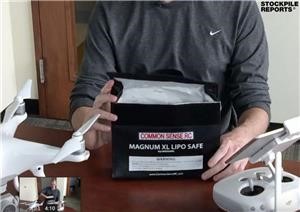
Then store the battery, unplugged, in a fireproof container, in a cool, dry room. The Lipo-bag in the picture provided by Stockpile Reports is one type of container you can use.

This doesn’t mean you’re done for the winter! Check on those hibernating batteries every two to three weeks. You’ll double-check the battery levels and look for any signs of corrosion or swelling.

You can share your drone storage tips on our Facebook page discussion. The articles referenced below give you additional information about drone and stockpile management.

Store Your Drone Properly

This is What Matters to Your Bottom Line from Recent Record-Breaking Show

Use Drones for Materials Management

ARTBA estimates 4.2 percent transportation infrastructure construction growth

The U.S. transportation infrastructure market is expected to grow 4.2 percent in 2019, according to latest economic forecast from the American Road & Transportation Builders Association (ARTBA).

In exact numbers, transportation construction and related activities are expected to reach $278.1 billion, up from $266.9 billion in 2018. The market also grew by 4.2 percent from 2017 to 2018, most of which was driven by airport terminal and runway construction.

The anticipated growth for 2019 is expected to be driven mostly by increased transportation investment by federal, state and local governments, said ARTBA Chief Economist Dr. Alison Premo Black.

However, Black said, the anticipated increase in transportation construction could be cut short if states delay projects ahead of the scheduled 2020 re-authorization of the FAST Act and Congress’s attempt to find additional revenue for the Highway Trust Fund.

Other risks to the overall market growth include material prices, increased labor costs and potential labor shortages in some regional markets.

Black also said the growth could vary significantly regionally and from state to state. Activity is expected to increase in 20 states and Washington D.C. remain steady in five states, and may slow down in the remaining 20 states.

Among the other findings in Black’s forecast:

Public & Private Highway, Street & Related Construction 

  • The real value of public highway, street and related work by state DOTs and local governments—the largest market sector—is expected to increase by 5 percent to $66.5 billion after growing 4.5 percent in 2018.
  • Work on private highways, bridges, parking lots and driveways will increase from $65.9 billion in 2018 to $69.1 billion in 2019 and will continue to grow over the next five years as market activity increases in those sectors.

Bridges & Tunnels 

  • The pace of bridge and tunnel work slowed in 2018, but is expected to grow 1.5 percent next year to $31.7 billion, with the pace increasing to over 2 percent annually in 2020 and beyond.

Light Rail, Subways, & Railroads 

  • Public transit and rail construction is expected to increase from $19 billion in 2018 to $20 billion in 2019, a 5.7 percent increase.
  • Subway and light rail investment is expected to reach a new record level, increasing from $7.7 billion in 2018 to $8.2 billion in 2019.

Airport Runways & Terminals 

  • After growing 38 percent in 2018, airport terminal and related work, including structures like parking garages, hangars, air freight terminals and traffic towers, is expected to increase from $18.4 billion in 2018 to $19.2 billion, an increase of 4.5 percent.
  • Runway work, which was up 18 percent in 2018, is forecasted to increase from $4.9 billion in 2018 to $5.1 billion in 2019.

Ports & Waterways 

  • The value of port and waterway investment is expected to grow 3 percent to $2.6 billion in 2019. Construction activity in 2018 was $2.5 billion, up from $2.2 billion in 2017.

The full forecast can be purchased at www.artbastore.org.