Improve Flagger Safety on National Traffic Directors’ Day

November 2 is National Traffic Directors’ Day, a day to thank anyone and everyone who makes our morning commute a bit better.

Although that includes all of us in the asphalt industry, whose main job is to improve America’s transportation network, perhaps those of us in most direct contact with the traveling public are our flaggers.

Here are a few ways to keep him or her safe while we make America’s roads better:

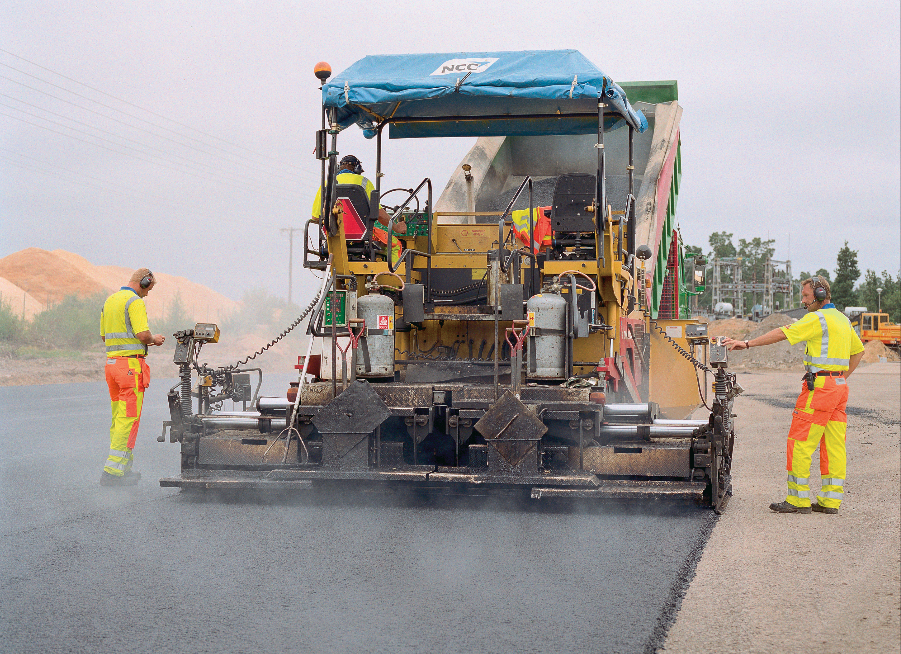
1. Encourage the flagger–as well as everyone else on the crew–to wear as much reflective clothing as possible.

Every bit of safety yellow, safety orange, safety green, reflective tape and bright white outlining a worker’s presence is an extra bit that can catch a passing motorist’s eye. The crews of Brannan Sand and Gravel in Denver take that “extra bit” seriously, and management requires roadway workers to wear a simple garment called the Safety Gator—or mesh shin reflector. Read more about that here:

Stand Out

2. Equip them with halos for night paving jobs.

ILLUMAGEAR’s Halo Light is a personal active safety system that produces a ring of light around the wearer, allowing him to see and be seen in all directions, at all times, without requiring their hands to operate. Read all about it here:

Wear Your Light Wherever You Go

3. Use technology to alert crew of collision risks.

After experiencing a handful of fatalities in 2013 and 2014, Oldcastle Materials–the largest asphalt manufacturer in North America–started to develop its AWARE system. The system, which stands for Advanced Warning And Risk Evasion, tracks traffic and crew members within a work zone and sounds alarms and alerts both to drivers and to workers at risk of a collision. Read all about it here:

Oldcastle’s AWARE System Makes Every Second Count

4. Use technology to keep the traveling public more aware and alert.

Reith-Riley implemented a real-time message board to inform the traveling public of traffic issues on a recent 73-mile-long reconstruction project on the Indiana Toll Road. The system relies on smart construction safety cones, known as iCones, which monitor the speed and number of passing vehicles to determine real-time traffic conditions and then transmit this information to the two message boards. Read all about it here:

Rieth-Riley Controls Traffic with iCones

5. Follow best practices, regardless of the traffic flow.

Even when traffic volume is low, as it often is on rural roadways, that doesn’t mean flaggers are any safer than they would be alongside a high-speed, high volume roadway. In fact, rural roads present other safety challenges, including hills, curves, vegetation, and the potential for harvest operations overlapping with road work. Read about how flaggers can stay safe during paving operations on low volume roads:

Use Best Practices for Low Volume Road Flagging

These are only a handful of ideas to help flaggers stay safe on our job sites. Visit our Facebook page to share your own ideas for improved flagger safety!
Superior’s Safety Committee Innovates with Ease

All of Superior’s safety devices and initiatives are born from the company’s safety committee, which includes about 20 to 25 employees from various segments of the company.

The committee includes people from laborers to executives and everyone in between, Atkins said.

The safety committee was originally formed 12 years ago when Superior joined a captive insurance group in which a condition of inclusion was having an active safety committee with regular meetings, members, and taking minutes.

In addition to EPIC, the committee has also thought up a number of other safety initiatives and devices.

Other ideas include implementing a color-coded hard hat for employees who have worked for the company for less than a year. “In five months into the paving season, a veteran employee might forget who’s new to the crew,” Ellis said, “but you might be going into a new environment or experiencing a unique challenge and that hard hat reminds the veteran that the rookie might need some help.”

They’ve also implemented safety whistles to use to notify crew members past the point where someone might be able to yell for help. “You can only yell for maybe 10 minutes, but you can blow a whistle for hours,” Ellis said. It can also be helpful for situations such as heart attacks. Although they haven’t had to use the whistles yet, it’s one more level of safety embedded into Superior’s required PPE.

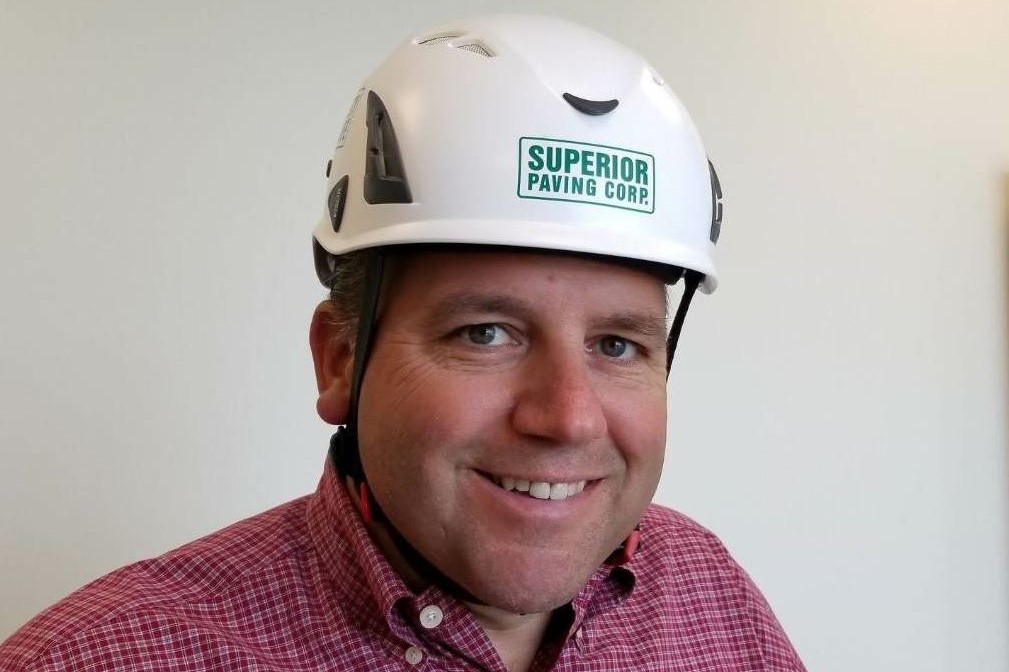
Just this year, Superior has implemented a new hard hat more similar to a rock climber’s helmet, with shock prevention and a chin strap.

Some of Superior’s safety ideas come from things they see other paving companies doing. Some come from other industries entirely.

“We’re happy to steal good safety ideas from other companies and other industries,” Ellis said. “At the end of the day, we’re all brothers and sisters and we want everyone to go home safely at the end of the night.”

Texas Cordia Brings the Plant and the Parts Together

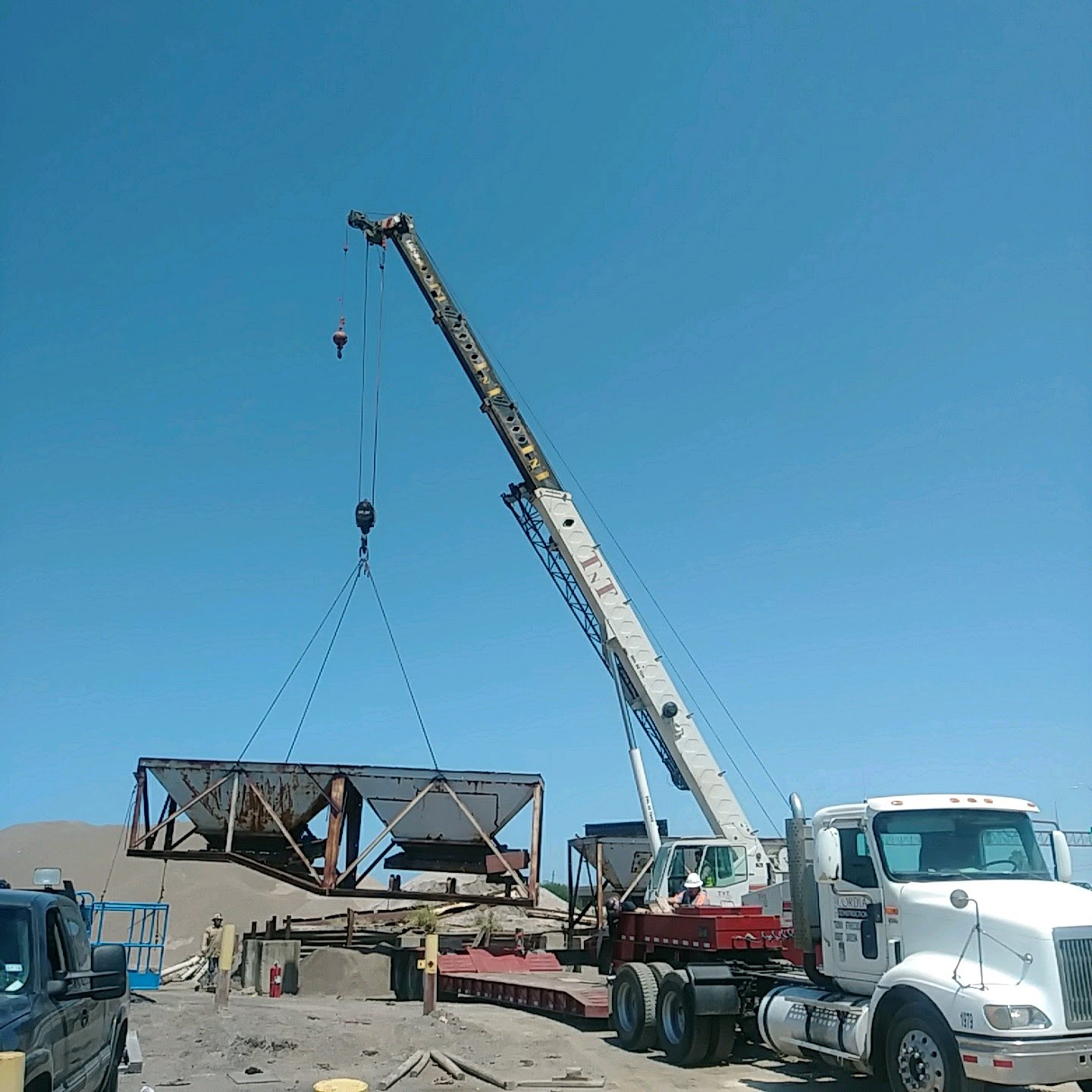
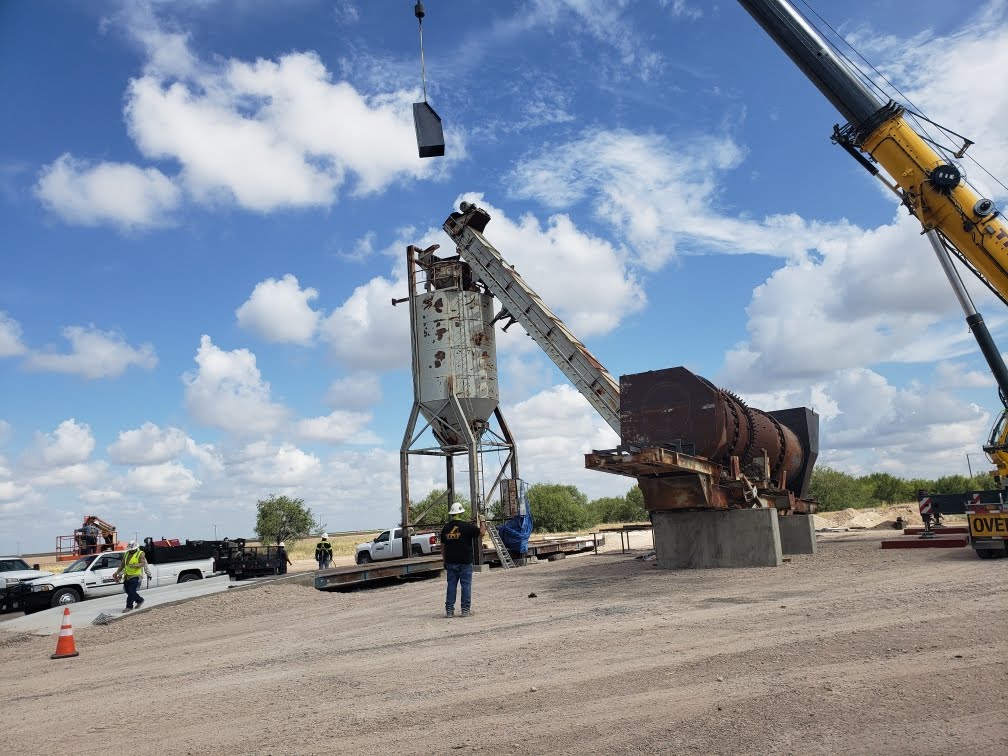
Over the past few months, you learned about Texas Cordia’s plans to establish their first asphalt plant, including how they found a plant and a property, how they financed the project, and how they handled permitting hurdles. In this month’s blog post, we talk about the logistics of bringing the plant and all of its parts from all over the country to its new home in Texas.

According to Texas Cordia CEO Yara Corbitt, one of the most significant challenges during the process of opening their first asphalt plant has been finding and moving all the parts needed to upgrade the used plant they purchased from an asphalt producer in Corpus Christi, Texas.

Time to Accessorize

“We have to search for all these parts–baghouses, silos, drags, burners–in different parts of the state and in other states,” Corbitt said. “We have to take the time to make sure it’s compatible, verify the state that it’s in, and do the logistics of bringing it down here. Right now, our challenge is making sure all the pieces fit in one puzzle.”

To check out parts and pieces across the country, Corbitt’s business partner Isaac Heredia asked his contacts located nearby a particular piece to go check it out. David Cline, a retired plant operator who had helped them find their asphalt plant, was also instrumental in finding the right parts for the plant, based on their production needs.

“The key for us was not jumping the gun,” Corbitt said. “We just had to be patient about what we were purchasing. Not just, ‘I found a baghouse! Let’s buy it!”

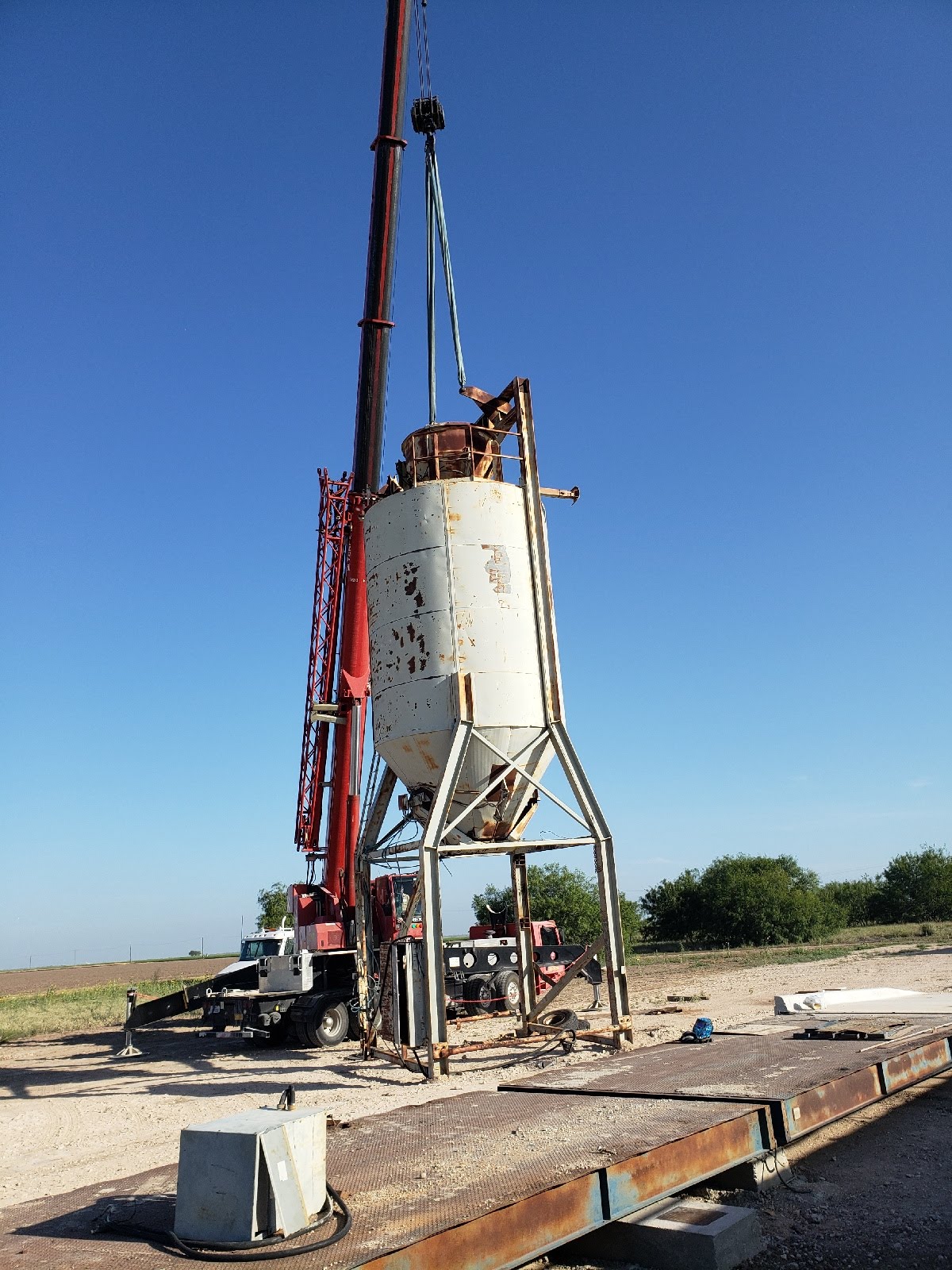
The silo, conveyor and baghouse were purchased through Swisher Machinery. The baghouse is a reverse airflow CMI baghouse Cline had recommended. The silo is a used Standard Havens 100-ton portable silo with insulation–another recommendation from Cline. The 36-inch-wide dual chain portable flat conveyor is also a Standard Havens piece.

The drum, silo, and cold feed bins came with the plant they purchased in Corpus Christi, Texas, and are also Barber Greene, and they’re planning on also adding a RAP system and a drag system rather than an elevator, as well as another silo.

They’re also currently looking at an Accutrack total plant control house, a recommendation from Janie Lyons at Stansteel.  

“Because our plant has the ability to grow with us, Janie took that into consideration,” Heredia said. “We will be able to add more control panels so the control house can also grow with us.”

Logistics, logistics, logistics

In addition to finding the right pieces to bring their plant up to spec, Corbitt and Heredia have also had to navigate the logistics of bringing those pieces of equipment from all over the country down to Texas.

And, that hasn’t been easy. For example, they have a baghouse coming from South Carolina and a silo coming from Minnesota. Bringing the piece down from Minnesota has been slowed by the state’s laws restricting the movement of heavy equipment along Minnesota’s roads during inclement weather.

“Things don’t freeze down here,” Corbitt said, “so that was an unfamiliar challenge.”

In the end, they decided on a baghouse from North Carolina that was in better shape and made more sense, logistically.

“Getting the parts down to Donna has been difficult,” Corbitt said. “We’re talking oversize, overweight, wide load, alternate routes, in addition to finding reliable drivers.”

Another risk is incidents on the road. “That’s out of your control, but we have to ensure that the drivers and logistics companies we use are safe and certified and moving those large pieces of equipment safely on the road,” Corbitt said.

Thus far, they haven’t locked any drivers, but will be finalizing quotes and proposals in the near future.

Only a few short months after making the decision to open their first asphalt plant, Corbitt and Heredia have already secured financing, closed on the land and begun clearing it, and purchased the plant and a number of accessories.

“It all sort of happened the way we planned it to,” Corbitt said. They’ve hit nearly every target they set for themselves. “I think that comes back to us leading by example. We tell our crews they have to hit their deadlines and goals, so we had to make sure we were doing the same.”

Although it’s been a long time coming, Heredia estimates that all the pieces of the puzzle will be in place at their plant location by the end of May.


Now that everything is on its way to Texas Cordia’s asphalt plant property in South Texas, we’re taking a break from this series so they can set up their new plant, stockpile materials and start testing mix designs. We’ll continue to follow their progress in a few months! Stay tuned…

October is National Protect Your Hearing Month

October is National Protect Your Hearing Month!

Are you doing what you should be doing on the job site to protect your hearing?

Around half of construction workers have some job-related hearing problem, including hearing loss or tinnitus (hearing a ringing, whistling, buzzing or humming noise all the time), according to the Centers for Disease Control and Prevention.

In fact, it’s common for a construction worker to have the hearing of a worker twice his age, meaning a 25-year-old construction worker has the hearing of a 50-year-old.

But, because hearing loss happens slowly over time, it’s often difficult to get workers to care about this important safety issue from their first day on the job site.

Here is what you need to do to protect your hearing today.

Step 1: Identify your own hearing loss.

The first step to protect your hearing is to identify to what degree you may already be suffering from hearing loss.

Ask yourself these questions:

  • Do you have trouble hearing people talking when there is background noise?
  • Do people sound like they’re mumbling?
  • How often do you have to ask people to repeat what they say?
  • Do you turn up the radio or TV a lot?
  • Do you have trouble hearing people talking on the phone?
  • Do you have a constant ringing in your ears?

Another sign of hearing loss is difficulty hearing high pitch frequencies and differentiating words that sound similar to one another.

Take action:

Right before work, turn down the radio in your car to the lowest volume at which you can still hear it. If you need to turn the radio up to hear it when you hop back into your car after work, it’s a sign that you’ve been exposed to hazardous noise levels throughout the day.

Step 2: Identify noise hazards on the job.

Although there are a number of causes of hearing loss, including age, heredity and headphone use, the number one cause is exposure to loud noises. The damage to your hearing depends on how loud the noise is and how long you’ve been exposed to it.

Although one in four construction workers needs to shout on the job site “often” or “all the time”—signs that the job site is too loud—nearly two thirds don’t wear personal protective equipment (PPE) during these times, reported a recent study by the Center for Construction Research and Training.

There are a number of tests you can perform at your job site to determine if it’s too loud.

Ask yourself these questions:

  • Do you have to shout to be heard at arm’s length away?
  • Do you have to turn off equipment to be heard?
  • Do you have to move to another location to talk and be heard?
  • Do you turn up the car radio at the end of the day?

Take action:

Use NIOSH’s Sound Level Meter app for iPhones of the Sound Meter app for Android devices to get a reading on the noise levels on your job site. For a more accurate reading, use a personal dosimeter, an in-ear dosimeter or a sound level meter to measure the noise.

Step 3: Limit noise on the job site.

“Most [construction] workers think too much noise is just part of the job and that nothing can be done about it,” said CWPR’s Director of Environmental Hazard Training Gary Gustafson, “but we know that’s not the case.”

There are a number of ways to control construction noise. In decreasing levels of effectiveness, methods include eliminating the noise, buying quieter equipment and tools, controlling the noise hazard by isolating the source of the noise away from as many workers as possible, limiting how long any employee can work on a task above the recommended exposure time limits, and wearing appropriate PPE.

Ask yourself these questions:

  • What are the noisiest tasks on our job sites?
  • Is this volume safe for our employees?
  • If not, what methods listed above could we use to limit the noise exposure?

Take action:

Visit NIOSH’s powertools database here to learn how loud the tools you are using may be.

Do a walk-around every day to ensure the methods you’ve outlined to limit noise exposure are being followed. This includes ensuring employees are wearing appropriate hearing protection, in the form of foam earplugs, reusable plugs, custom molded plugs or earmuffs.

provide hearing protection, and conduct training on said hearing protection.

And remember: It’s never too late—or too early—to start protecting your hearing.


More resources to protect your hearing:

Protect Your Hearing Now

How New OSHA Noise Limits Could Affect Your Crew