‘One Day’ Becomes Today
Texas Cordia Asphalt Plant Permitting Case Study
Part 1: The Decision
Over the next few months, we’ll be sharing the story of Texas Cordia, a heavy highway civil contractor currently working to establish their first asphalt plant. In our first blog post, we get to know the company and how their hopes for an asphalt plant came to be.
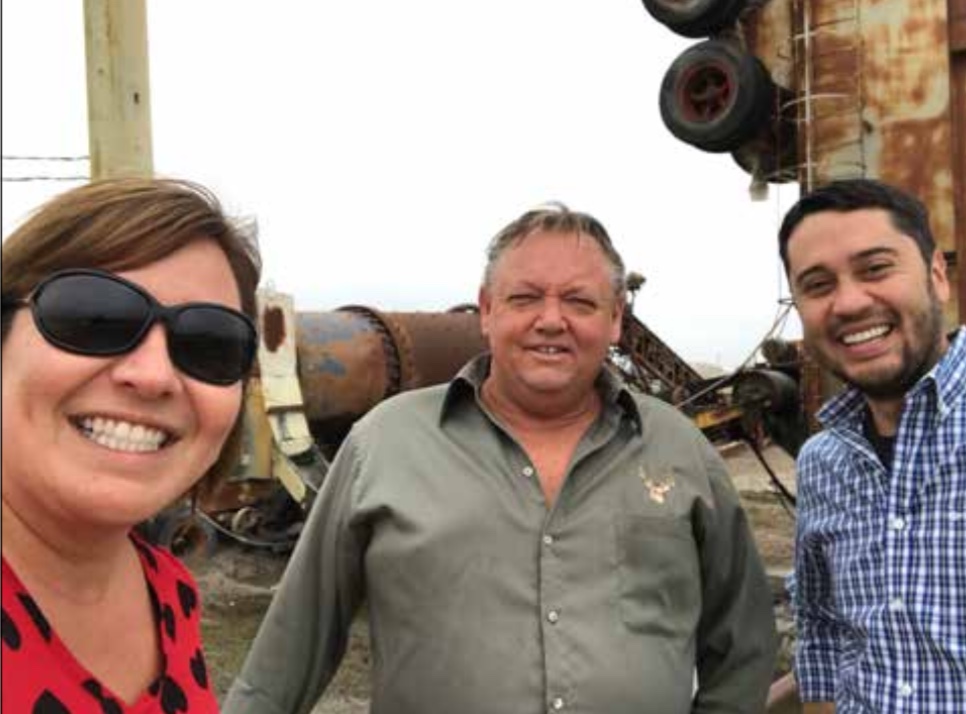
Owning their own asphalt plant was something Yara Corbitt and Isaac Heredia of Texas Cordia Construction had always talked about, ever since the pair started the Edinburg, Texas-based heavy highway/civil construction company in 2011.
“We dreamt big, we set goals, and we’d say, ‘One day, one day, one day…,” Corbitt said. Until ‘one day’ became today.
“We’d been talking the idea back and forth and we got to the point where we decided we needed it, even if we didn’t know if we were 100 percent ready for it,” Heredia said. “But we had to put our foot down.”
“It’s like having a baby,” Corbitt added. “You’re never 100 percent ready.”
Starting a Plan for a Plant
In January of 2018, Corbitt and Heredia started off the new year returning to an old desire: to establish their own asphalt plant.
“Down here in the valley, a lot of local contractors have their own plant,” Corbitt said. “We try to compete with them, yet we’re asking them for prices on hot mix.”
In addition to being a matter of remaining competitive, operating their own asphalt plant is also a matter of flexibility, reliability, and financial reason.
“We’re a construction company,” Corbitt said. “We really want to ensure that we produce for ourselves so we can keep our projects moving forward. If I want to lay mix on a Saturday at 2 p.m., then I want to lay mix on a Saturday at 2 p.m. That’s the simple version of it. We just got tired of running on someone else’s schedule.”
In the last three years, Texas Cordia has laid close to 60,000 tons of asphalt. In 2018, Corbitt estimates that they’ll lay at least 40,000 tons and an additional 50,000 tons in 2019.
“And those are contracts already in hand,” Corbitt said. “We’re bidding this week, so we might have more, but we know those are in the bag.” Combined, these contracts are valued right around the $5 million in hot mix.
“Instead of giving that business to someone else, we thought it was something we should do for ourselves,” Corbitt said.
Do It Yourself
That DIY attitude is nothing new for Corbitt and Heredia. When Texas Cordia first began, they had a staff of four: Corbitt, Heredia, and two additional employees.
Corbitt acted as the project engineer, receptionist, accounting department, payroll clerk and janitorial departments. Heredia was the construction manager, the foreman, the inspector, and, on occasion, the lute man and water truck driver.
“Heredia and I work hard and lead by example,” Corbitt said. “We don’t expect anyone to do anything we haven’t done ourselves.”
Today, Corbitt serves as the company’s CEO and Heredia is the COO running daily operations in the field. They now employ 95 people–a number that will only grow with the addition of the company’s first asphalt plant.
“For us, we see that as a commitment to 95 families,” Corbitt said. “If we fail, we’ve failed 95 families.”
Thankfully, Texas Cordia, along with Corbitt and Heredia, have made no habit of failing. Instead, they look forward to the next step of their big dream: buying a plant and a property to put it on.
Stay tuned for the next chapter of Texas Cordia’s process of establishing their first asphalt plant, where we uncover how they found the perfect asphalt plant and property.