Stay Cool During Summer Paving
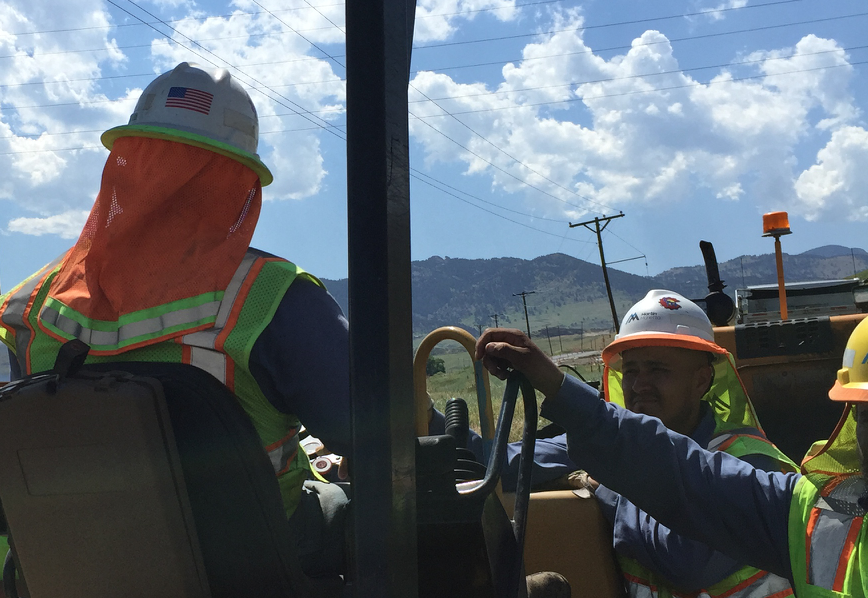
Heat is a constant concern in our industry. But we’re usually concerned with retaining it, as we deliver and lay a perishable material under tight timelines. Even in paving, there is such a thing as too hot. As temperatures across the country hit the high 90s—and, in some places, well into the triple digits—it’s important to know how hot weather can affect your mix, your machinery and your crew.
Keep Your Mix Hot
Asphalt that’s 300 to 325 degrees will take a long time to cool in 90- or 100-degree temperatures. As a result, it’s important your crew takes its time and maintains a certain pace.
“Your roller men have to be patient, especially the finish roller man,” said Ray Eisner, paving superintendent with Martin Marietta Denver Metro Paving Division. “A lot of times they’ll want to hurry, but you have to be really patient in this heat—especially for an overlay on an existing mat where the surface temp is hot to begin with, the mix is hot, and the weather’s hot.”
In addition to the temperature of the mat, John Ball, proprietor of Top Quality Paving & Training, Manchester, New Hampshire, said the amount of time you’ll need to wait will also depend on the texture of the mix and the thickness of the mat. For example, you’ll have to move more slowly when using sandy mixes, but coarser mixes could be rolled a lot sooner, even at high temperatures.
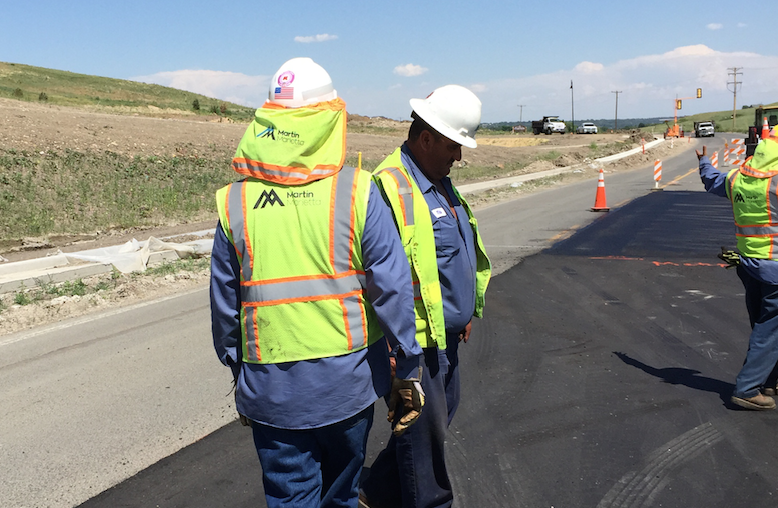
Although it might seem counter-intuitive, long sleeves are the option of choice when working outside in the hot sun. Just be sure to choose an option that is lightweight and breathable. Photo courtesy of Ray Eisner.
Keep Your Machines in Working Order
When weather spikes above 90 degrees, your maintenance routine could make or break you.
“Your machines are working a lot harder in high heat,” Eisner said. Keep them in top condition by checking batteries and air filters, regularly cleaning radiators and oil coolers, using a high-temp grease, and paying close attention to fan belts.
“The big thing is to keep up with your maintenance, and try to fix the problem before it becomes a problem,” he said. “We try to alleviate anything that might cause the machine to overheat.”
One key step is to regularly clean your radiators and oil coolers. “Those getting plugged is one of the biggest causes of pavers overheating,” Eisner said. “During the hot months, we clean them more frequently to keep the dust out.” He also recommends checking air filters for dust buildup. Ball recommends checking the hydraulic lines, as well, because severe temperatures can cause them to crack and burst if you’re not up-to-date with your maintenance.
During the summer, Eisner also recommends using a high-temperature grease, so it won’t break down in the extreme heat of the asphalt and the ambient temperature.
Additionally, if the crew pauses, Eisner will shut off any machine idling for long periods of time. “When it just sits there in that heat, it’s going to overheat. Plus, it saves fuel,” he said.
Although keeping up with maintenance will alleviate a lot of issues, Eisner recognizes that some things are simply out of his crew’s control. “When you’re pushing a truck with a paver on a 90-degree day, sometimes what you do doesn’t even matter.”
Keep the Crew Cool
Perhaps the most common effect of hot weather is on the crew. According to OSHA, in 2014, 2,630 workers suffered from heat illness and 18 died of heat stroke.
“Management of heat-related concerns resides at the top of [our safety] list,” said Dave Sulkin, vice president of sales and marketing at American Asphalt Solutions. The company regularly discusses safety, including how to handle hot weather, during its daily toolbox talks. “Every component of heat management is critical; however, we emphasize the OSHA mantra of water, rest and shade.”
The mantra mandates that water should be consumed in continual small drinks, encourages rest, and recommends taking advantage of breaks as an opportunity to go find shade.
“If you’re not drinking a lot of water and you’re sweating a lot, you’re going to get heat exhaustion,” Ball said.
“I always stress the importance of staying hydrated,” said Casey Greinermiller, owner of RS Asphalt Maintenance, Elizabethtown, Pennsylvania. “The type of fluids are important, as well. No iced tea, soda, or juice. Just water or Gatorade.” Greinermiller himself brings a 1-gallon thermos of half ice, half water to keep it cold throughout the day. <Inset 1>
What you wear can also be a big factor in keeping cool. Ball recommends long-sleeved shirts to avoid getting a sunburn. And, of course, apply sunscreen to any exposed skin. “Just because you’re not at the beach doesn’t mean you don’t need to protect yourself from the sun,” Ball said.
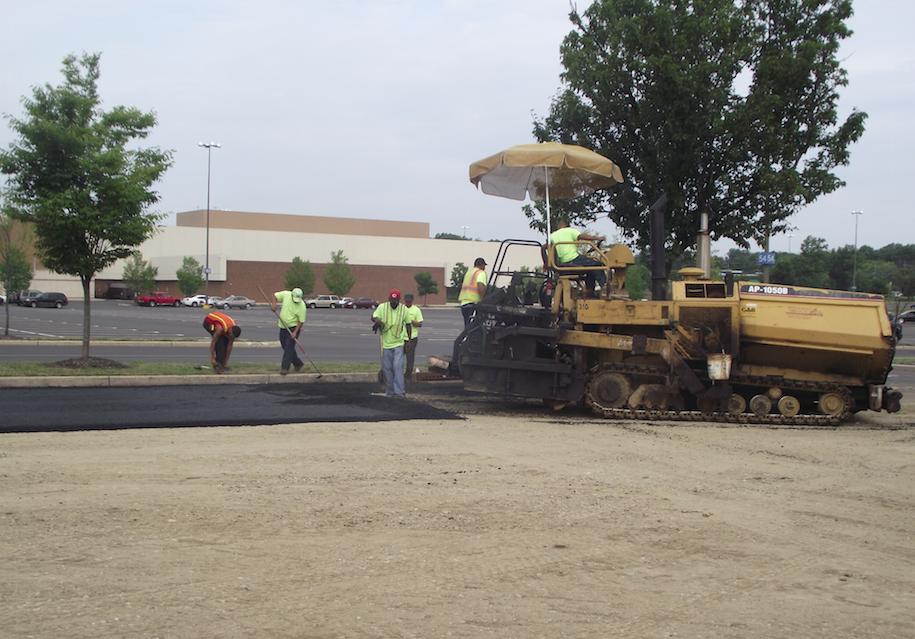
Shade is the third tenet of OSHA’s mantra: water, rest and shade Most equipment manufacturers are providing shade for operators, like you see here. Photo courtesy of American Asphalt Company.
The crew at C.E. Hughes Milling Inc., Jeffersonville, Indiana, recommends using a dry sunscreen so dust doesn’t stick to you, and going for light-colored, breathable clothing.
Ball also suggests wearing a hat, preferably one that shades your face, ears and neck. Wet handkerchiefs and other cooling tools, like the ones featured in our “Get it in Gear” sidebar, can also help. Many of the guys on Eisner’s crew wear removable hardhat brims that provide a bit of personal shade. He also recommends tinted safety glasses.
It’s also important to protect your hands. Although it may seem counterintuitive to wear gloves in the heat, Ball warns that the metal on your equipment will get very hot. Gloves will prevent you from potentially severe burns.
Ball also warns that you may need to move a bit more slowly in 100-degree weather.
“Working in that heat might take you 30 minutes or an hour longer to do the job, but you have to pace yourself,” Ball said. “You need to be healthy first and profitable after. You can’t kill yourself for one day on the job to be out for one week.”
He suggests taking regular breaks. For example, for every 45 minutes in the heat, take 10 minutes to sit in the shade. If a fellow gets overheated, let him sit in the air conditioned work truck for a few minutes to catch his breath and recover.
“This profession is a hot and dirty job to begin with, so having vehicles with functioning air conditioning is like the light at the end of the tunnel,” Greinermiller said. “There are few things better than jumping into the cold cab of a truck after baking in the sun for a few hours on a 100-degree day!”
“Communicating to the team that we encourage these things removes the angst that they will be reprimanded for down time,” Sulkin said. “Once the worker realizes that you genuinely care about them and want them safe, they tend not to abuse ‘down time.’”
Another way to stay cool is to make your own shade.
“A lot of manufacturers have put umbrellas on the operating pedestals for the paver operator, and on the back of the screed,” Ball said. “And roller operators have rollover bars with roofs.”
Ball also suggests using small DC-powered 12-inch fans to circulate air. “I remember eight years ago, I was on a job with a guy who wouldn’t run the paver without the fan, and I thought, ‘That’s a great idea!’ He’s looking out for his health and he’s making the air less stagnant.”
It’s also important to keep an eye on each other for signs of heat exhaustion, too. To recognize the signs, read the sidebar, “Stay Healthy in the Heat.”
American Asphalt also makes sure its vehicles have a quick reference guide for heat stroke and heat exhaustion.
It’s also especially important to keep an eye on the new guy. According to OSHA, the majority of victims of heat-related death were new hires that weren’t acclimated to constant exposure to the heat and sun.
“The team knows to watch over each other, and be responsive as well as responsible to take swift action where and when necessary,” Sulkin said. “And everyone is encouraged to err on the side of caution when it comes to calling for medical attention.”
One last recommendation? Keep a positive attitude.
“If you start your day thinking about how hot and miserable it’s going to be outside, guess what? You’re going to be hot and miserable all day,” Greinermiller said. “Attitude is everything, and positive thinking can go a long way.”
—
Stay Healthy in the Heat
Dehydration, sunburns, and leaving behind a perfect mat aren’t your only worries when the weather gets warm. The heat can also cause heat cramps, heat exhaustion and heatstroke. Although hot weather provides a hospitable environment for your perishable asphalt, it’s not so hospitable to the crew.
Symptoms of heat exhaustion include heavy sweating, cool skin with goose bumps while in the heat, faintness or dizziness, fatigue, a weak and rapid pulse, headache, nausea, muscle cramps and low blood pressure after standing up.
If you think you’re experiencing heat exhaustion, take a break to move to a cooler place and drink some cool water. Loosen any restrictive clothing and put cool, wet towels on your skin.
If you follow those precautions and don’t feel better within one hour, or your temperature exceeds 104 degrees, seek medical attention. At that temperature, you are at risk of heatstroke, a life-threatening condition that can result in permanent damage to your brain and other vital organs.
To avoid heat exhaustion, wear loose, lightweight, light-colored clothes, wear sunscreen and drink plenty of water.
—
Get It In Gear
You already know all the PPE to bring to the job. But when temperatures rise, you might want to bring some extra gear with you to beat the heat.
Cooling caps
Many manufacturers make evaporative cooling caps that soak up water and provide five to 10 hours of cooling relief. There are plenty of coverage options, from caps with sunshades to hooded options, like the Mission Enduracool, and simple bandanas.
One popular option is a sun shield, which tucks under your hard hat to protect your neck from the sun. Another option is a removable hardhat brim, which encircles your hardhat, providing shade for your neck, ears and face.
Cooling towels
These work much the same way as the caps and wrist wraps. Cooling towels are exceptionally absorbent for long lasting coolness. For example, Frogg Togg’s Chilly Pad cooling towel can absorb eight times its weight water, and has an internal polyester mesh material to keep you dry while cooling you down.
Evaporative cooling vest
Now, this one was made for the construction industry! Made by Ergodyne, the Chill-Its evaporative cooling vest comes in gray and neon yellow. Simply soak in cold water and enjoy for up to 4 hours.
Cooling wrist wraps
These wrist wraps help lower overall body temperature. Simply soak the wraps and enjoy a full shift’s worth of relief.