Performance Equipment Mills with Diamond Teeth
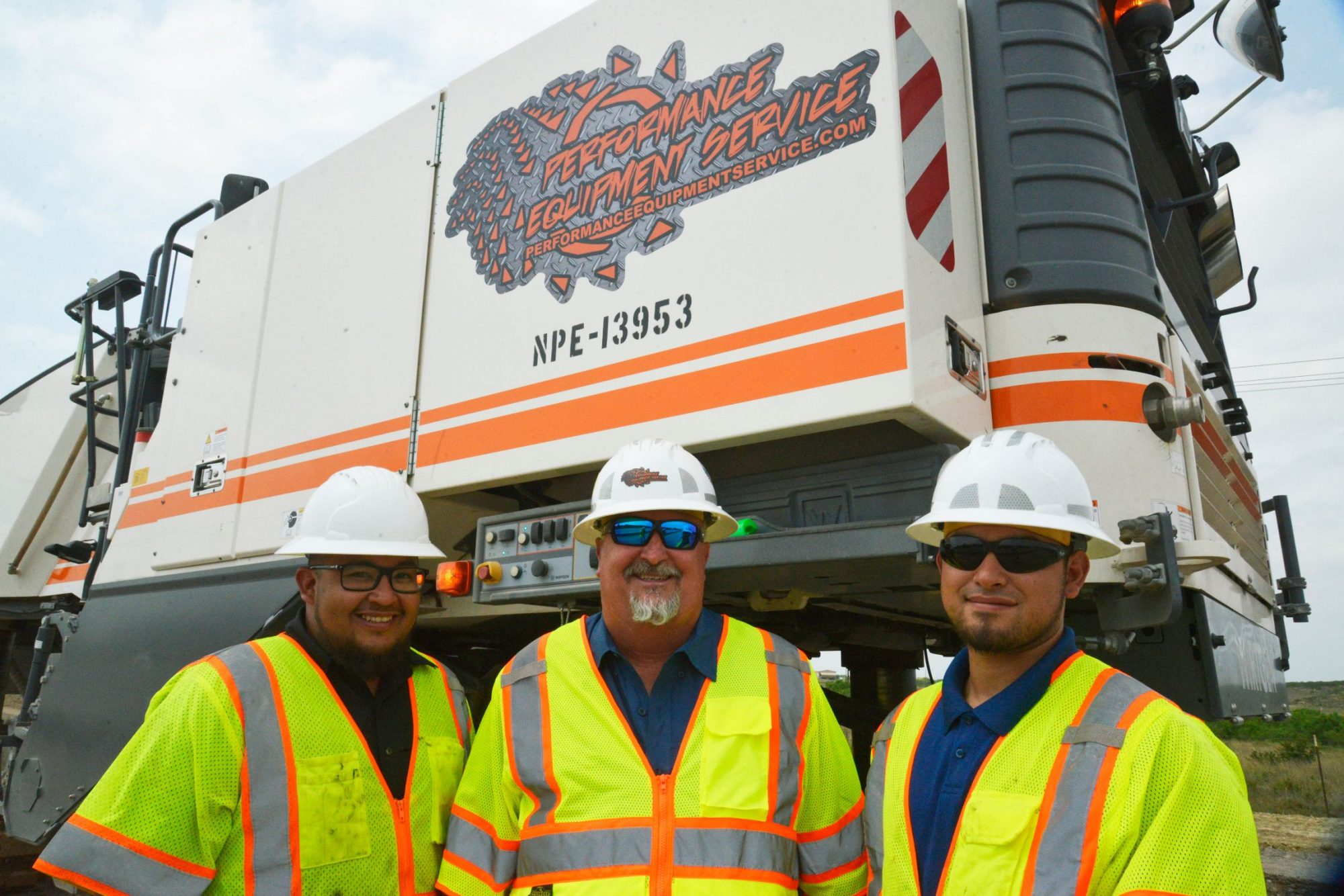
Performance Equipment Service, San Antonio, performs only asphalt milling and soil stabilization, and its motto of No Ugly Milling is fulfilled by its dedication to performance.

“Our newer fleet of equipment allows for high production with fewer breakdowns,” President Kelly L. Durham said. “We provide high production profile milling with diamond teeth. We are still a soil stabilization and milling contractor, with ten cold mills and four recycler/reclaimers. We work all over Texas in support of any of the large contractors in the state of Texas who need milling and reclaiming services.”
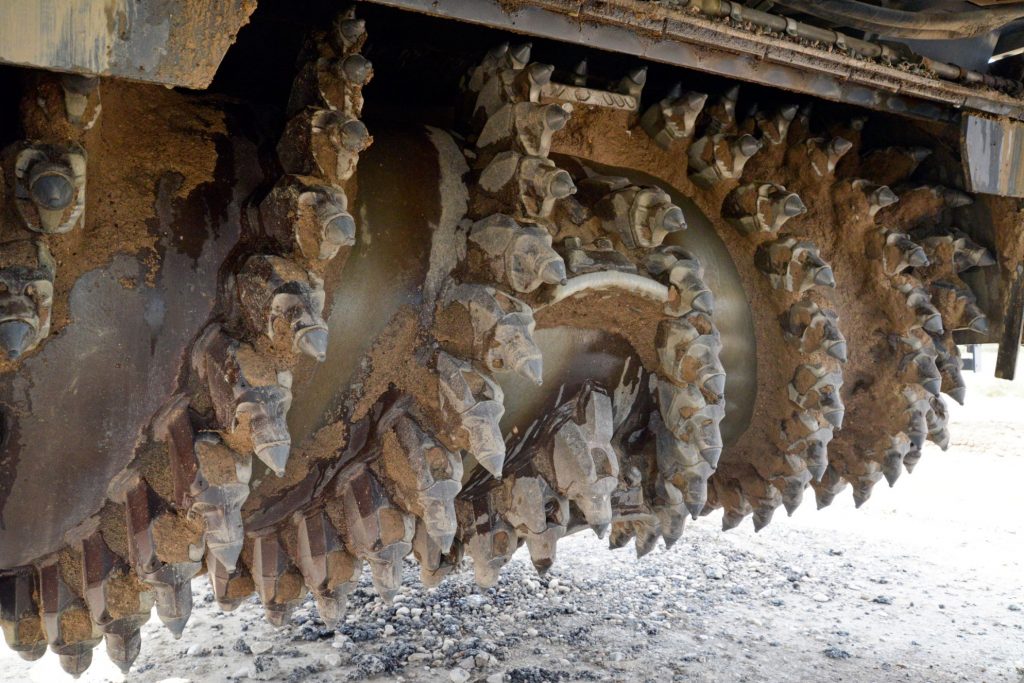
Polycrystalline diamond (PCD) teeth are mounted on conventional W 220i drum of Performance Equipment

“Our corporate campaign is ‘No Ugly Milling,’” Operations Manager Lauren Durham said. “It’s what we live by. We won’t go out there and perform just any job or any quality of work. That would be less than perfect. It’s our standard and we support it in meetings, with bumper stickers, and our social media.”

While most of its work is in south Texas, in fact Performance Equipment mills and stabilizes all over the Lone Star State. While Polycrystalline diamond (PCD) teeth are more expensive than conventional carbide-tip teeth, Performance Equipment uses the PCD cutting tools to enhance milling across the state.
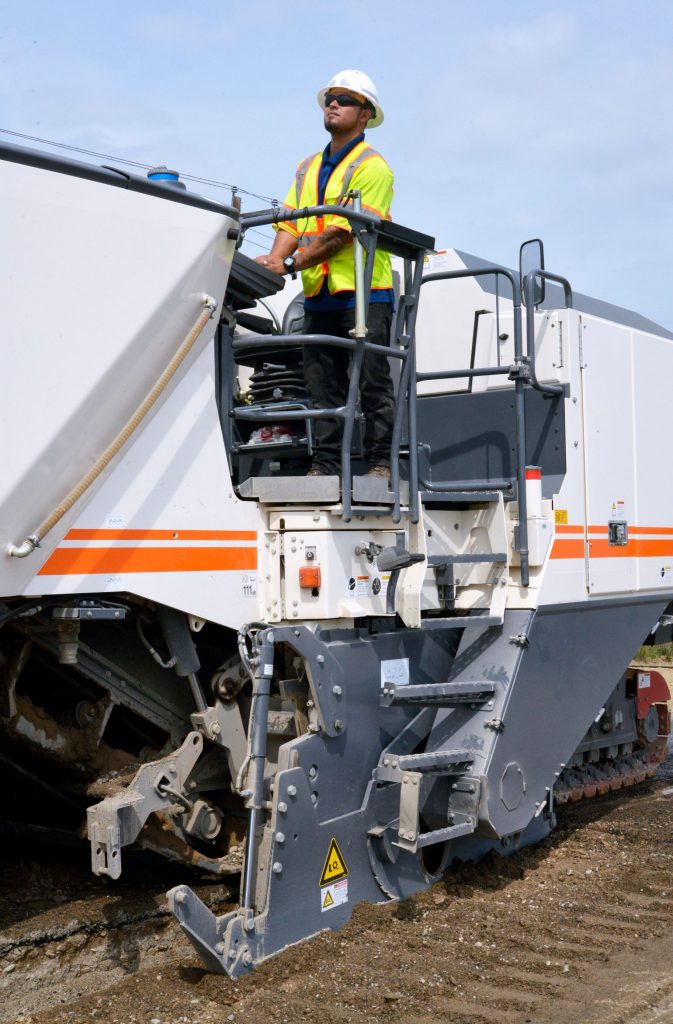
Foreman Juan Cortez at helm of Performance Equipment Service’s W 220i in Eagle Pass, Texas, in support of Reece Albert Construction

“Getting teeth that will keep performing is problematic, especially in Texas,” Kelly Durham said. “We have good roads in Texas, but materials are different from one end of the state to the other. We found out milling down in south Texas that the roads have a lot of river rock in them. It’s a very hard, very abrasive material that would wear the carbide teeth out sometimes in as little as 50 feet. We had to do something, which is why we went to the PCD teeth.”

When visiting Performance Equipment Service, three of their large mills were using PCD teeth, while the remainder of their fleet had carbide teeth mounted. “We are able to pick and choose where we send those diamond teeth,” Lauren Durham said.

At Performance Equipment headquarters outside San Antonio are C.J. Carroll, CFO; Dustin Durham, chief estimator; Kendall Durham-Kersh, human resources manager; Kelly L. Durham, president; James Butcher, service manager; Eric Apolinar, IT manager; Lauren Durham, operations manager; and Justin Garcia, safety manager.

“The PCD teeth have really saved us a lot of wear and tear, especially down in areas such as Corpus Christi,” Kelly Durham said. “The roads are very hard down there, but on our first set of PCDs we ended up getting 273,000 tons. That’s a huge deal, especially when we were only getting 50 feet out of conventional teeth that first year.

“Then you have the time spent changing all those teeth…That down time is a big deal, so the diamond teeth have really helped us in that aspect. They are expensive, we understand that. We know the expense, but the savings off the backside are tremendous.”
“PCDs are not appropriate for cutting on concrete, nor for urban applications like San Antonio, with buried streetcar tracks and manhole covers,” Service Manager James Butcher said. “We also have slowed down the speed at which the operators lower the drum into the cut,” he said.

“Basically, we ease the drum and teeth into the cut. We understand that they have a place, we understand that downtown San Antonio where railroad tracks and cobblestones are, they can break,” Butcher added. “They won’t work everywhere. But we also know that in the right environment, they save us money, save us time, and make a huge difference to what we do on a day-to-day basis.”

Having options for teeth is one way Performance Equipment distinguishes itself from the competition.

“One thing that sets us apart is that we know PCD teeth won’t work in city streets, and places that we know there’s concrete,” Lauren Durham said. “Yet we are able to work on places like the tire test tracks, where few milling contractors in the area have the ability to be as specialized as us.”
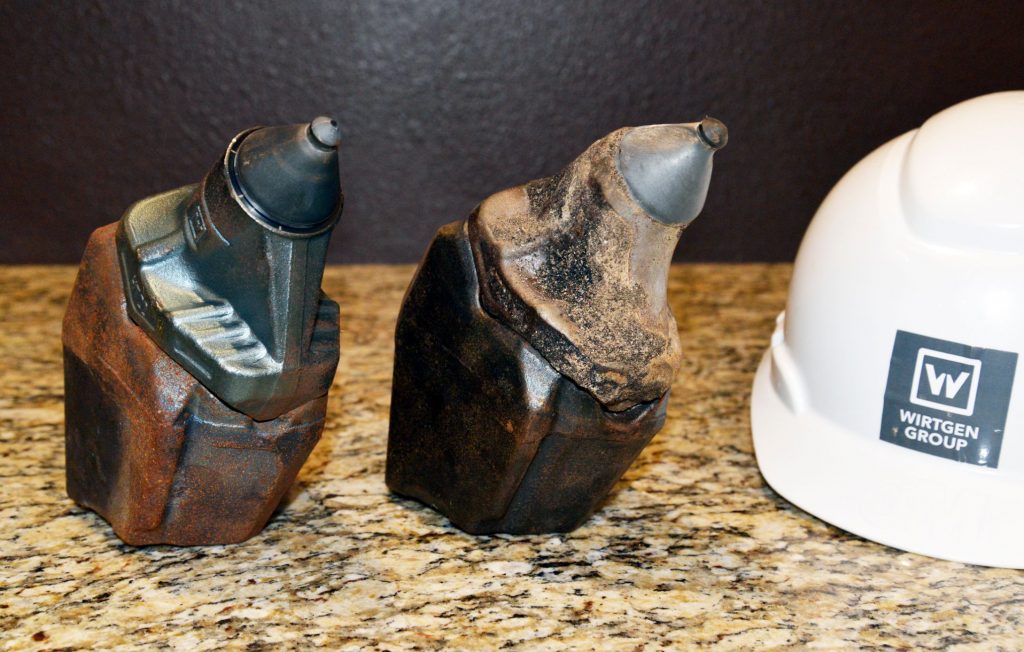
Here is a new PCD tooth (left), compared to same with 150,000 tons behind it. Polycrystalline diamond (PCD) cutting tools are a synthetically manufactured strong mass of carbon and carbide. A PCD tip is a crystalline diamond-coated carbide tip. This tip consists of differing layers: A concentrate of diamond particles in the upper layer; a series of interlayers; and a tungsten carbide substrate. Interlayers in the PCD bit dampen the impact stresses between the tungsten carbide substrate and the highly wear-resistant PCD contact surface. The interlayers subsequently enhance the durability and reliability of the PCD contact surface.

The numerous tire test tracks in Texas typically require specialized milling. “PCDs give us a perfect pattern every time,” Kelly Durham said. “And that’s an important deal for us. They’re going to have very critical milling specs, and fine milling or profile milling to cut to grade in which they can be confident they are placing 2 inches of asphalt down and they’re at grade.”

The firm expects to get 250,000 tons out of a set of teeth. “There are things in the roadway that won’t allow us to get that all the time,” Kelly Durham said. “It can be a new operator or haul truck driver setting the drum down on a metal trailer that breaks the teeth.

“The good news is when you put a set of diamonds in, they wear evenly,” he added. “The biggest wear we see is in the body wash on the sides of the teeth. They hold the same pattern throughout the life of the teeth, so it doesn’t kill us if we have to spot one or two teeth in then as we go through the life of the PCDs.
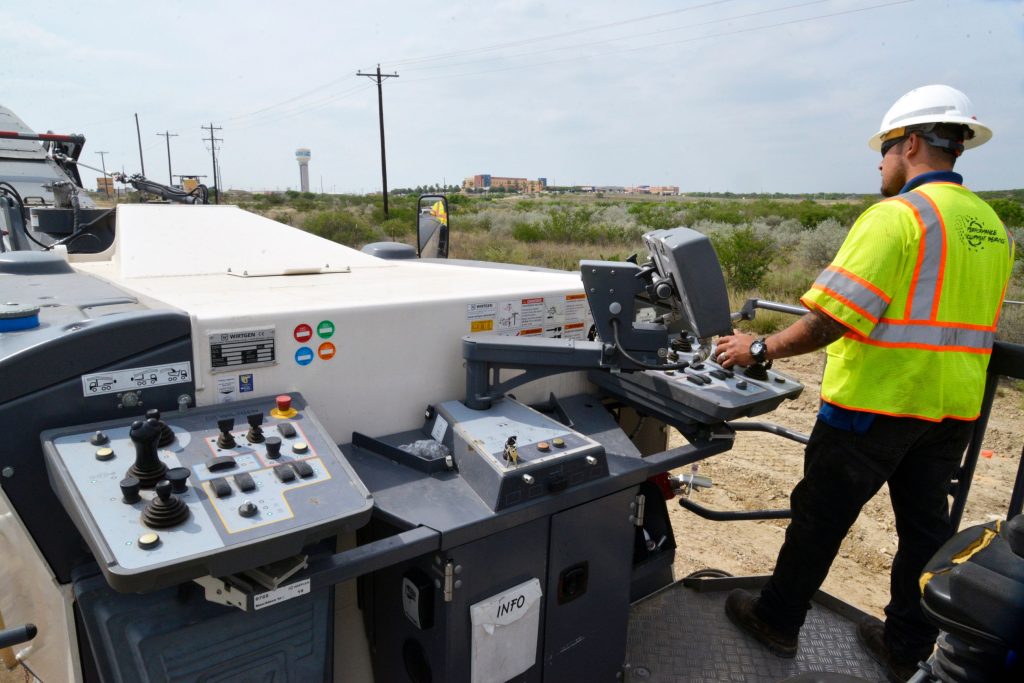
Foreman Juan Cortez at helm of Performance Equipment Service’s W 220i in Eagle Pass, Texas, in support of Reece Albert Construction

“The payback is substantial,” he added. “Long-term, we see a lot more tonnage come through the machine than we would if we were using regular carbide teeth, especially in the south Texas area,” Kelly Durham said. “It equates to cost savings in time, materials and labor hammering teeth. It also provides better results for happy customers, like the test tracks, who now call us all the time. They want us there because of the time, the teeth, the pattern, and the technically advanced operator skills that we bring to the table.”

For more information, contact Matt Graves at matt.graves@wirtgen-group.com or visit www.wirtgen-group.com/america.
How to Protect the Loader Bucket

Visit our main Training Directory article to see more training-related resources and discover more about opportunities to train your crew. You can also check out our Partner Courses listing for additional training opportunities.


When producing asphalt, few items around the plant are more versatile and flexible than the plant’s front end loader. Yes, it loads the plant’s bins with aggregate for production, but it also must maintain the stockpiles, grade the road (in most cases), as well as load customer trucks. The bucket on the plant’s front end loader is the business end of this machine and protecting the bucket is truly protecting an important investment.

Buckets come in many shapes and sizes. You can have a permanently mounted bucket or a quick-disconnect; you can have a straight-lipped bucket or a spade-nose; you can have straight cutting edges or teeth and segments. For the purpose of this discussion, we will concentrate on the most common arrangement of a pinned on straight-lip bucket with standard cutting edges.

The steps required to maintain and protect a front end loader bucket will begin with an evaluation of the individual plant’s situation. How abrasive is the material being used? What is the annual tonnage that this plant produces?

Does the loader run primarily during daytime hours or does this plant run around-the-clock operations? The answers to these questions will determine how often a bucket must be examined as well as how heavily it must be protected.

Let’s start with an overall visual inspection:

• Are there cracks in the structural components?
• Are the attachment points solid or are they worn with cracks visible?
• What is the condition of the moldboard? Is it solid and strong or scalloped and weak?
• How about the vertical corners? Are they still thick and strong or worn thin and weak?
• Is there a bucket liner and, if so, what is its condition?
• Are the side walls solid or worn with holes present?
• Is the bucket floor flat and serviceable or worn thin, wavy and cracked?

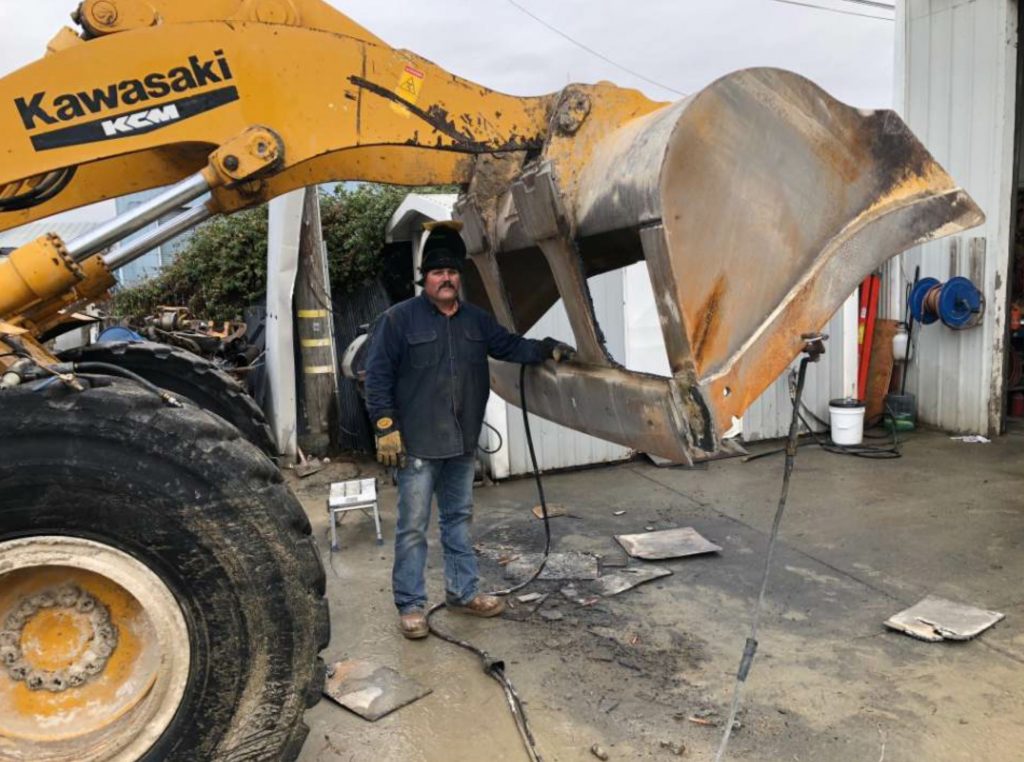
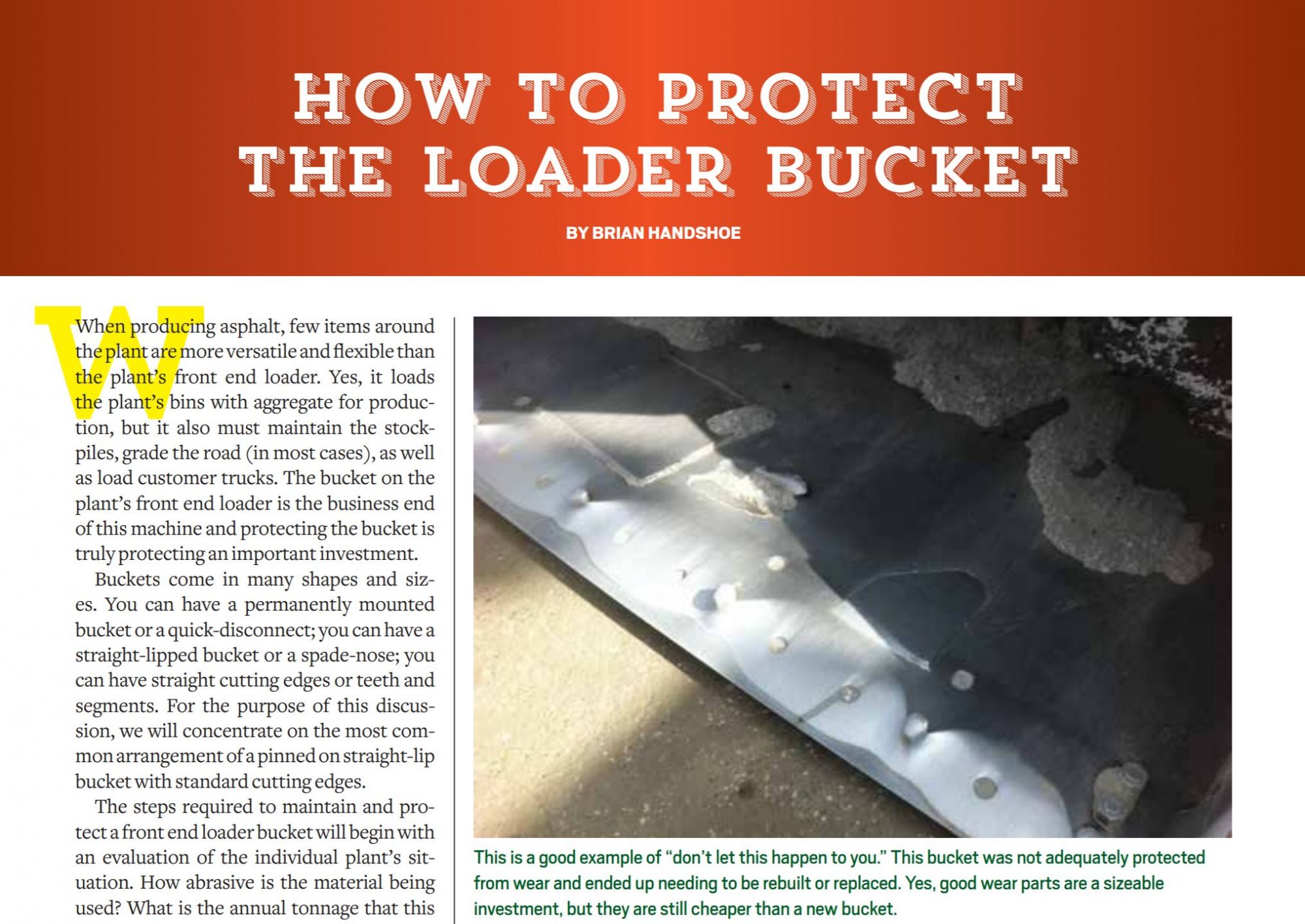
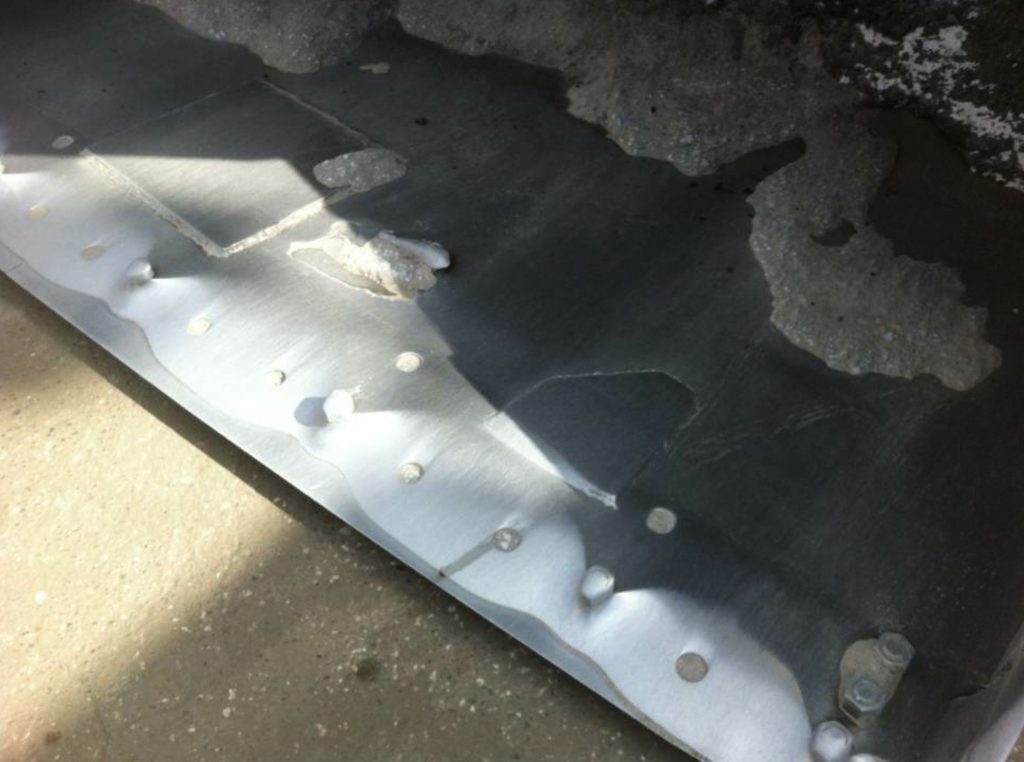
This is a good example of “don’t let this happen to you.” This bucket was not adequately protected from wear and ended up needing to be rebuilt or replaced. Yes, good wear parts are a sizeable investment, but they are still cheaper than a new bucket.

Now let’s evaluate the bucket’s normal wear parts:

• What condition is the cutting edge in? Is it still projecting in front of the moldboard enough to protect the moldboard from excessive wear? Is the cutting edge wearing flat from proper use of the loader’s flotation or is the edge wearing mainly on the front portion indicating the bucket is being run with a raised bucket? A new cutting edge is one of the quickest ways to enhance the effectiveness of any bucket.
• How do the heel plates look? Are they even present? I have seen many cases where a bucket required a rebuild because it was run without heel plates for so long the bolt holes were worn away. In many cases a loader manufacturer has calibrated the bucket leveling system to work best when a new set of heel plates is mounted to the bucket.
• Is the moldboard in good condition? Does it have “scalloped” wear between the bolts or is it warped from hardfacing? We often find buckets where the heat introduced by hardfacing or other welding has warped the moldboard so badly the end blades are resting on the ground, yet the center of the bucket sets proud by 1.5 inches or more. In this condition the cutting edges will wear very unevenly. The end blades will wear quickly while the center blades will be barely touched.

One of the primary issues to consider is the fact that the point where the moldboard welds to the vertical wall represents one of the highest stress points on the bucket. If this juncture is weak then the entire bucket is weak. Protecting this corner is essential to ensuring long bucket life.

How can we prevent some of these issues and extend the life of a front end loader bucket? Armoring that bucket with the proper combination of easily replaceable wear parts is one good way. When it comes to protecting loader buckets, size doesn’t matter, according to Micky Brewer, owner of MKB Welding.

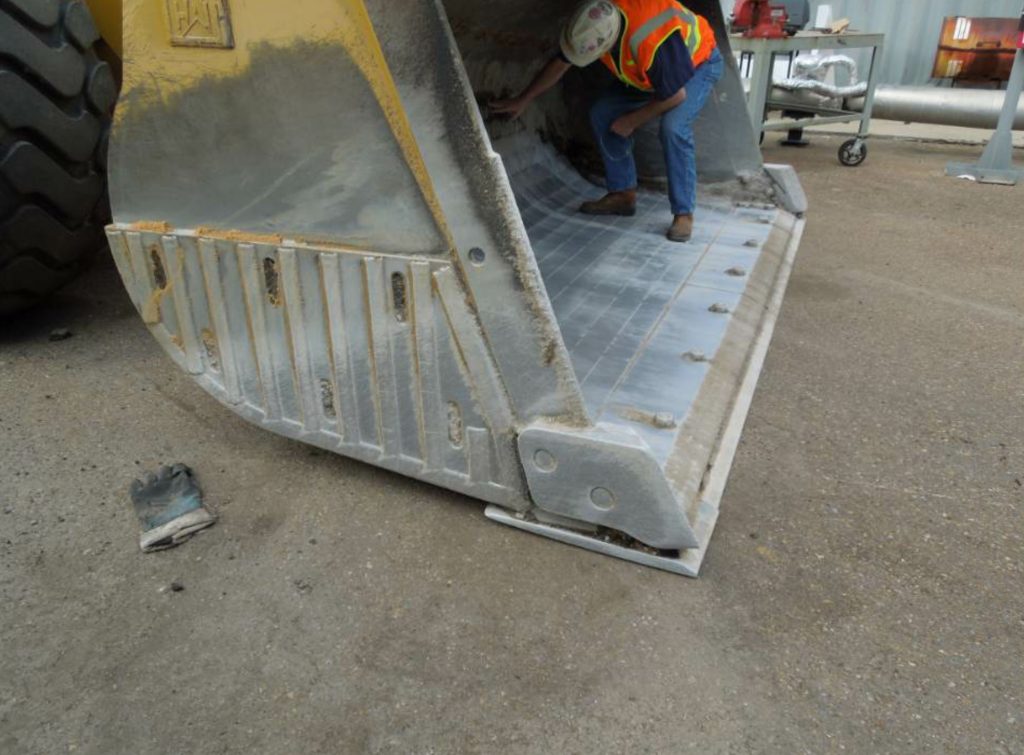
“Buckets moving rock and sand all day take a beating,” he said. “Large or small, they need liners. All too often, we are replacing bucket floors when a liner kit should have been installed from the start. Side plates also need protection.”

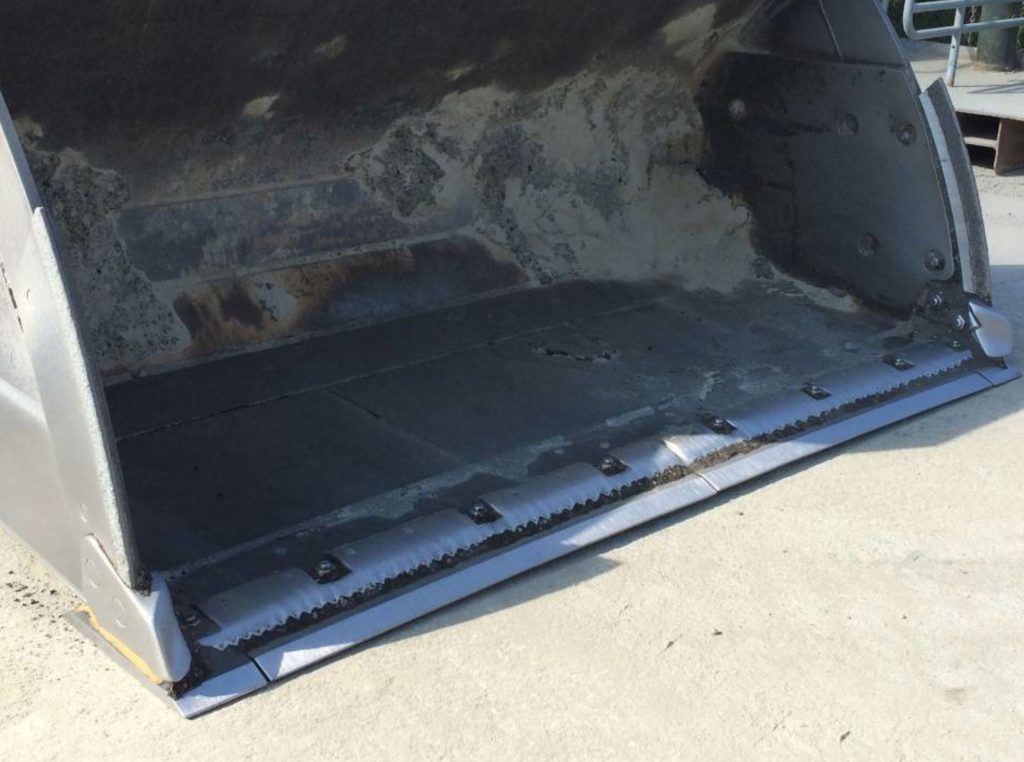
Here are some of the replaceable wear parts that can help extend bucket life.

• A high quality cutting edge is paramount. A standard heat-treated steel will suffice in general conditions. If your wear factor is higher you should consider a Tungsten Carbide Impregnated version.
• Moldboard base edge cap systems are a great way to prevent the heavy “scalloping” type wear seen on moldboards. They are easily replaceable, mounting with only the cutting edge bolt yet completely preventing wear to the moldboard.
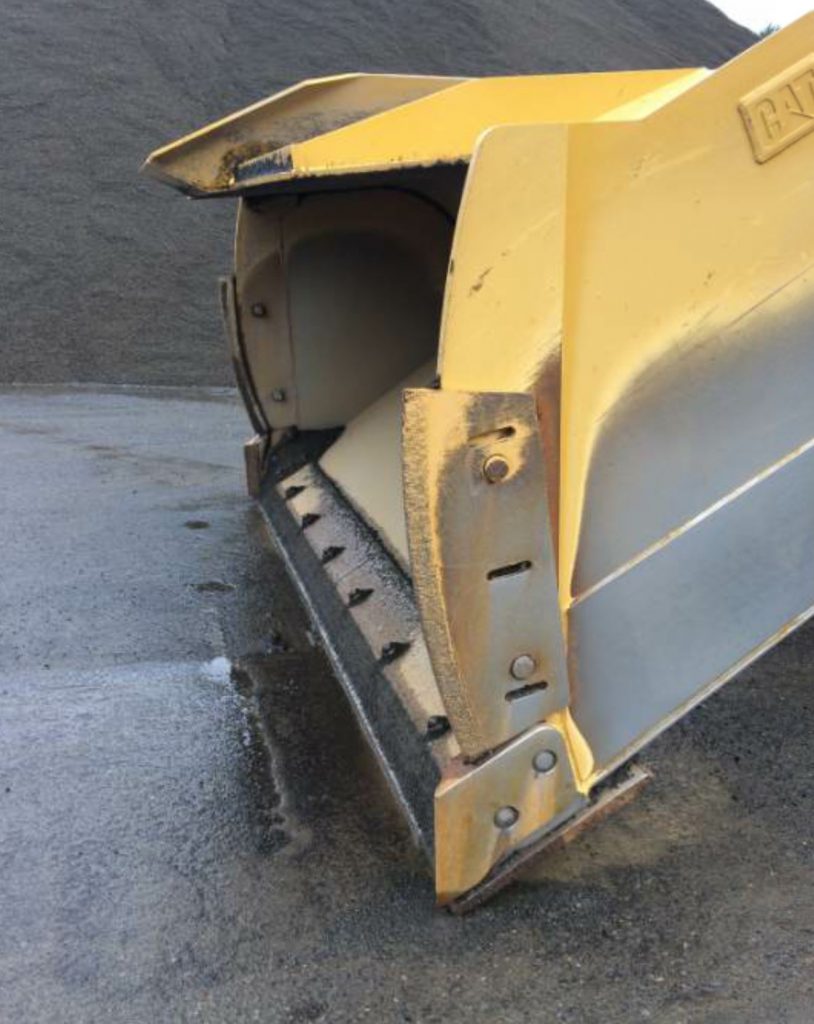
• Vertical wall side cutters are a critical element of the bucket protection arsenal. By extending in front of and across the face of a vertical wall, these side cutters will prevent the verticals from getting thin and weak.
• Side wall wear plates, cut to fit each individual bucket, can prevent the need to cut out and replace a bucket side wall.
• Bucket liners. While not necessary in all materials and environments, a bucket liner system will prevent holes that weaken a critical bucket area.

Now let’s look at some best practices to help extend the life of your bucket:

One of the quickest and most cost-effective ways to extend bucket life is to simply replace wear parts when they are worn. A wear part’s job is to serve as a sacrificial component—it wears away instead of the base steel. Let it. Replacing these parts on time will protect the underlying bucket component.

Armor your bucket when it is new and still in great condition thus allowing the wear parts to take the beating. Doing so will ensure a bucket remains strong throughout its life and that of the loader.

Avoid hardfacing when possible. The heat introduced into the bucket’s steel will inherently weaken the very metallurgical properties that you have spent a lot of money on. Plus, you risk warping the moldboard and reducing cutting edge life.

Invest in an ultrasonic thickness tester if your company does not own one. They are by far the quickest and easiest way to get an accurate measurement of a component’s remaining life. Just remember that you are only measuring the top layer of steel. For example, if you use one of these to measure a bucket liner, it cannot also measure the thickness of the base steel underneath.

If your loader has an automatic levelling system, use it. Running your bucket at the proper angle provides the proper alignment of components and will ensure maximum efficiency and wear life of components.

We have learned that, nationwide, an asphalt plant’s wear needs fall along a continuum. Some plants need a lot of protection while others need very little. Consequently, you can look at these bucket protection ideas with an “a la carte” mentality—use the items necessary for your location but forget about the rest.

Trouble-Shooting Tips for Roller Operators

Every piece of equipment in the paving train—the truck delivering the asphalt, the paver laying it and the rollers compacting the mat—must work at optimum efficiency to keep the train rolling, achieve spec densities, and finish the job on time and within budget. If just one machine in that train isn’t working properly, it can cause downtime or delays that potentially cost the contractor thousands of dollars a minute.

Today’s asphalt rollers are some of the most advanced and reliable ever built. Technology can map a jobsite, tell the operator if “soft spots” exist in the mat and alert key service personnel of upcoming maintenance requirements before they are due. Even with all this technology built into a roller, there still is potential for things to go wrong in the field.

Bert Erdmann, product manager—heavy compaction for BOMAG Americas Inc., talks about the importance of having back-up plans and redundant components on rollers, so a problem in the field doesn’t affect compaction results. He mentioned working in an area where GPS-based systems don’t work, specifically.

Having a back-up compaction measurement system in place can help determine progress, he explained.

When buying a roller, he recommends looking for redundancies of critical system components to reduce the chance of a downtime occurrence. “Some mainline rollers are built with a back-up water pump for the spray system, since water is critical in preventing asphalt material pick-up on drums or tires,” Erdmann said.

Thinking beyond designed machine redundancies, there are several practices the roller operator can implement into his or her daily routine to prevent or reduce downtime at the jobsite. One key practice begins before the roller even makes it to the jobsite.

Prepare for Success

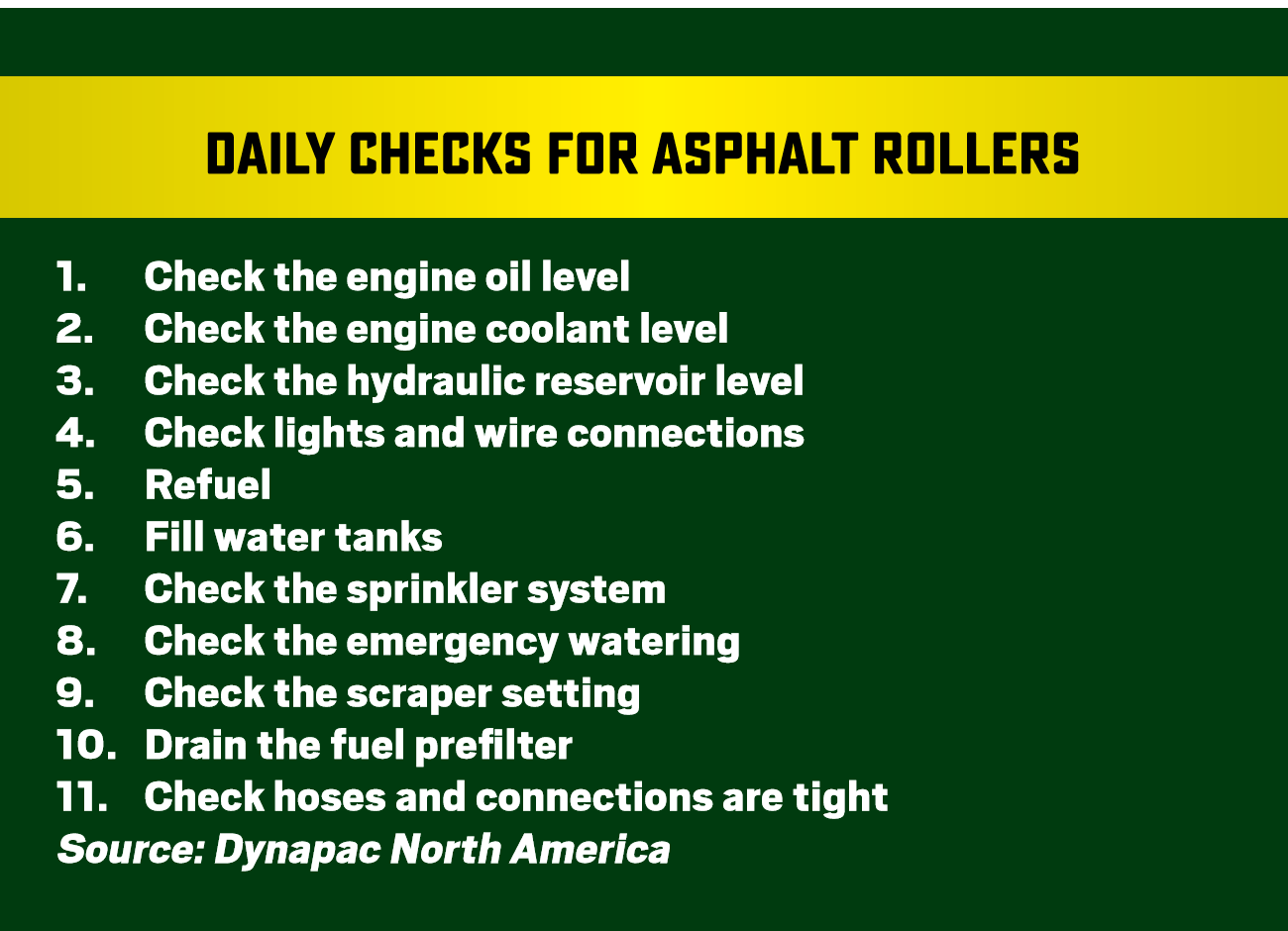
It cannot be stressed enough that establishing and conducting daily routine maintenance checks at the start of the shift will go a long way in preventing roller downtime. From the engine oil to the water tanks, operators should ensure all the fluids are topped off.

“Water tanks, especially those in rollers with pressurized spray systems, should have enough capacity to operate a full shift if filled prior to starting, which reduces downtime to refill while paving,” Erdmann said. “The operator should test the water pumps to ensure they are working properly to reduce the chance of both going down in the field and stopping the train.”

Operators of pneumatic tire rollers should check the release agent tank level and make sure the water spray system is operating correctly, as these systems prevent material pick-up before the tires heat up. The ballast compartments should be inspected and filled with the correct type and amount of ballast material to meet specified tire pressure loading. Also, if equipped, the roller’s tire inflation system compressor should be checked for proper operation.

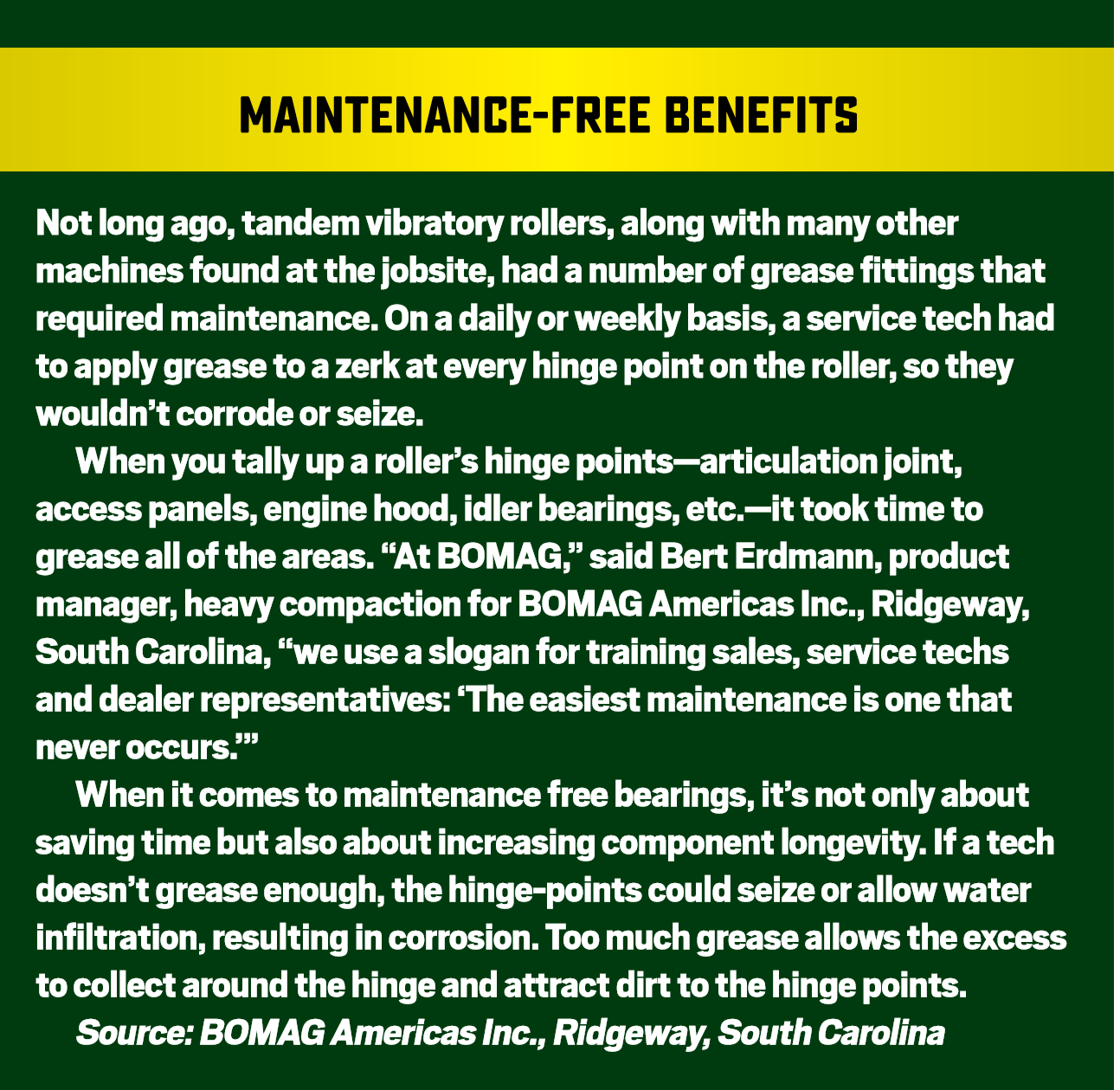
The articulation joint and pivot points on many older rollers will require daily greasing. Operators should ensure that the proper amount of grease is applied, so material build-up doesn’t occur at the joint, which can lead to excess wear and premature failure. “Alternatively, companies can purchase rollers that have no “grease daily” fittings like BOMAG tandem rollers, allowing crew members to reduce daily maintenance requirements and get to work faster,” Erdmann said.

Flip It Up

The roller operator should have on hand spare small parts such as spray nozzles and fuses.

The roller operator should have on hand spare small parts such as spray nozzles and fuses.

One common item to slip the operator’s mind when roading a roller, according to Erdmann, is leaving the scraper bars against the drum. This bar is an integral part of the spray system, evenly spreading water on the drum to prevent material pick-up. Not pivoting the bar away from the drum when roading longer distances can lead to premature wear, uneven water distribution, or, in the extreme, “the bar could be sucked back into the drum, which will require the scraper bar to be replaced,” he said.

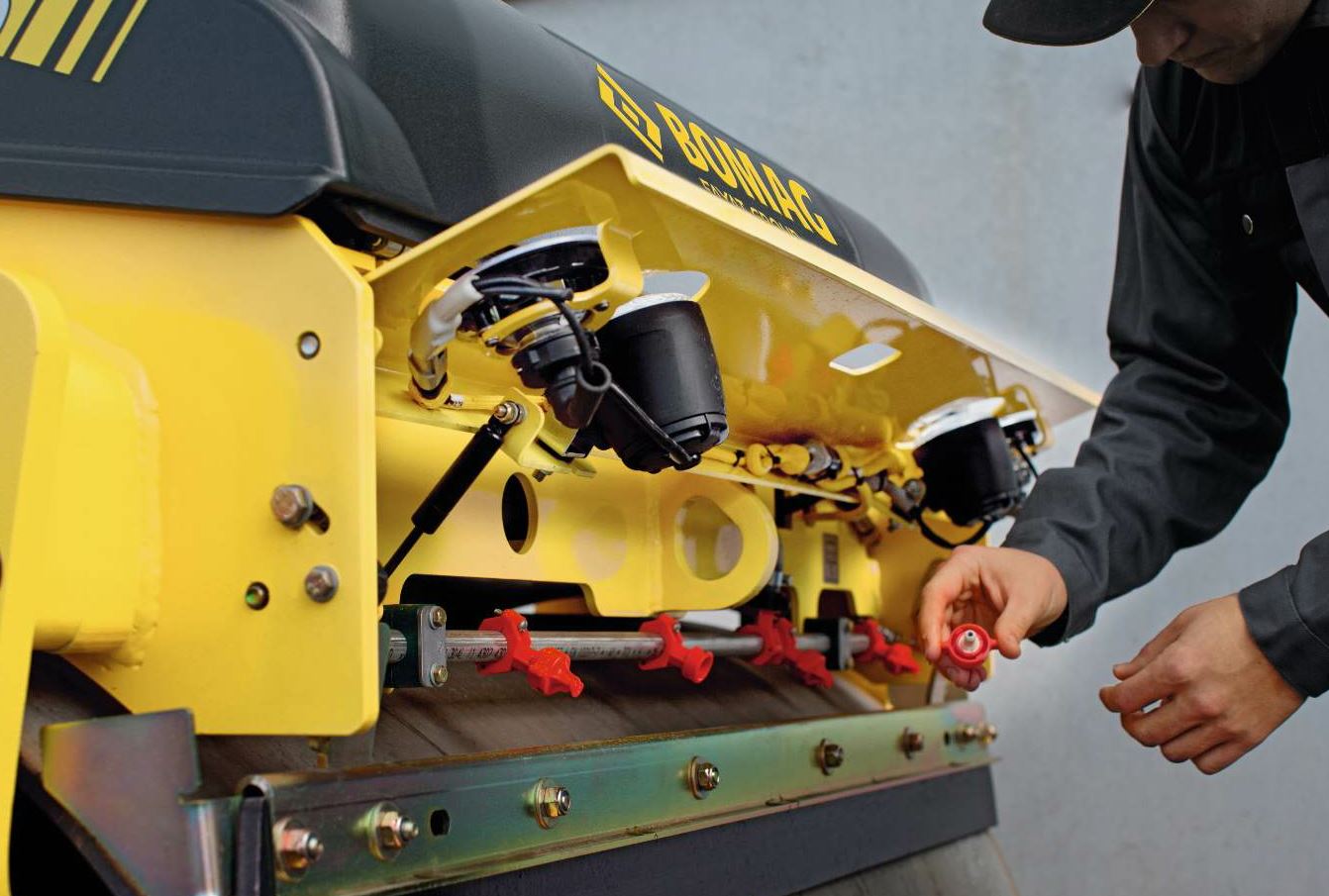
Spray bar and nozzle clogging can occur during operation. This will lead to uneven water distribution across the drum and asphalt material pick-up. If the operator notices a clog in the water system, most of today’s bar designs include a quick-disconnect nozzle that can be removed and reconnected at the jobsite. End caps on the spray bar can be removed by the operator to flush larger pieces of debris that get stuck in the bar.

To reduce system obstructions, a best practice is to fill the tank with clean water. Be sure to regularly inspect the water tank and remove any debris. Also, make sure the screen at the fill cap is in place and in good condition to strain out any particles transferred by the water truck.

Keep It Clean

Today’s engines operate at much higher pressures and temperatures to meet environmental regulations. As part of roller design, manufacturers have worked with engine suppliers to ensure there is enough cooling capacity for reliable operation, even during extreme summer heat while compacting mats in excess of 250 degrees Fahrenheit.

Checking the air filter’s condition at the start of the day will go a long way to keeping the engine running within the designed temperature operating range. Also, if the operator notices the temperature gauge rising while compacting the mat, the radiator should be checked for debris to prevent overheating.

“Especially when working during the fall harvest on county highways or at dry and dusty jobsites, the operator should pay close attention to the temperature gauge,” Erdmann said. “Clean the radiator immediately to prevent overheating and damage to engine components.”

Got a Spare?

Rolling in the elements. Advancing machine age. Higher levels of technology. More electronic components. Today’s roller relies and puts more pressure on the electrical system more than at any time in the past.

While roller manufactures like BOMAG design the system for years of dependable operation, machine age and harsh operating conditions can take their toll.

This is why Erdmann recommends keeping spare fuses within the operator’s reach. “Having a few spare fuses on the roller can allow the operator to perform a quick-fix versus waiting for a service truck to make it to the jobsite,” he said. This simple practice could save thousands in lost-time productivity.

Companies should consider having spares of other small parts that could be conveniently stored on the roller and quickly replaced by the operator to avoid a downtime event. “I recommend having a handful of extra spray nozzles on board as well,” Erdmann said. “That way if a nozzle cannot be cleared or gets damaged, it’s a quick and easy replacement.”

Eagle Eye

The operator spends the most time on a roller and probably knows it best. Therefore, he or she will know when the machine is working properly and when something isn’t quite right. As soon as the operator notices something not working right, he or she should notify the service department, so it can be addressed during off hours or before a small repair turns into a major downtime issue. This practice is especially critical if the roller isn’t equipped with a telematics system that offers early detection of operating issues.

To aid the operator’s eye of the machine’s condition, roller manufacturers equip the dashboards with multiple gauges for critical components. These gauges provide a quick-glance of critical operating parameters such as engine temperature, oil pressure and charge control.

Fluid level indicators and gauges inform the operator when items like the fuel, water or DEF tanks need to be filled. “This allows the operator to signal someone, so the tank can be topped off at a convenient time to keep the paving train rolling,” Erdmann said.

Solve: Refilling the Roller

Is your roller running out of water too often during the paving shift?

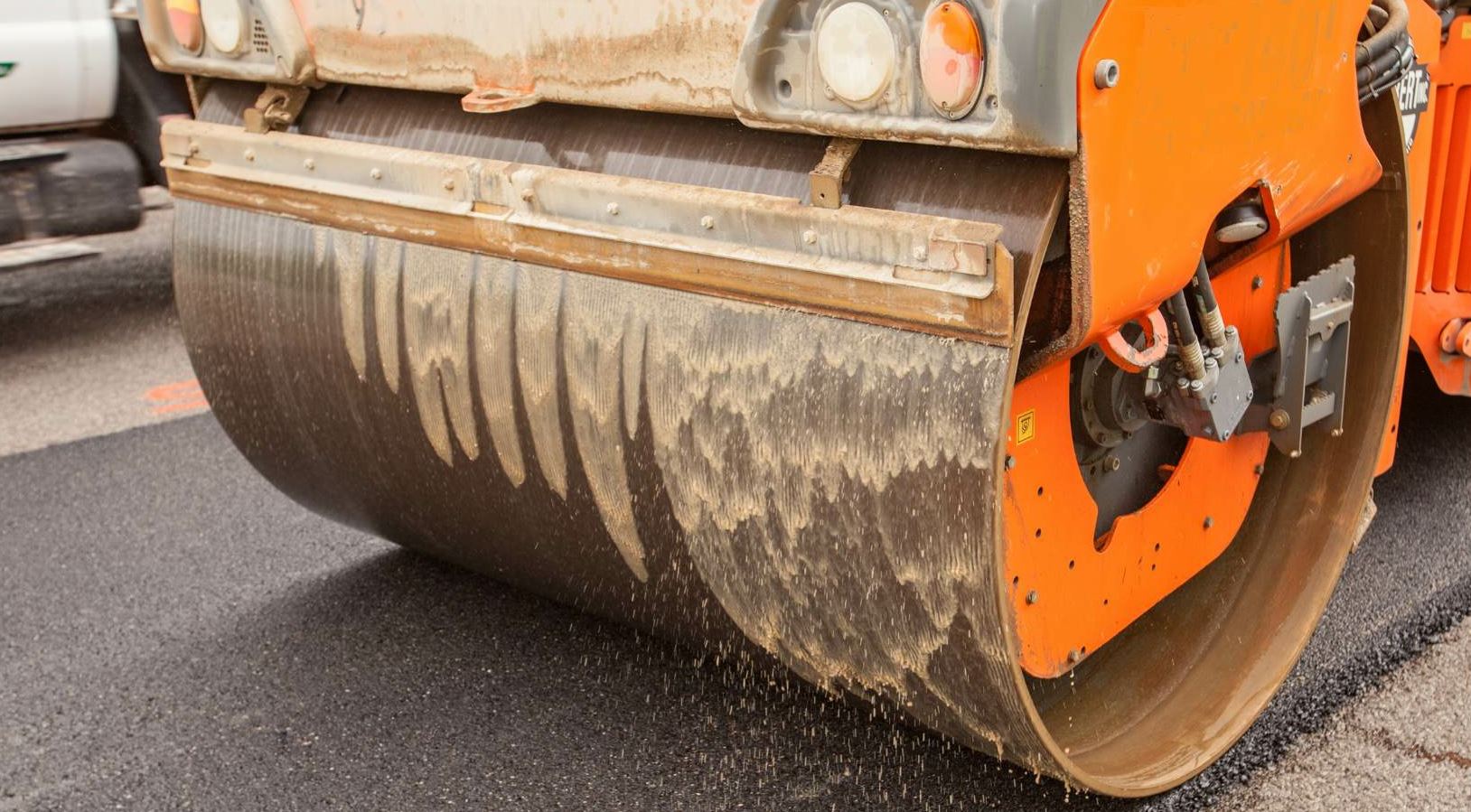
When a spray nozzle is plugged or when the scraper bar is not held against the drum properly, you will get poor water coverage on the drum.

It costs time to refill water tanks again and again. Letting the roller run with dry drums is not an option, so you must pay laborers to drive water trucks around the job site and refill frequently. Stop the madness.


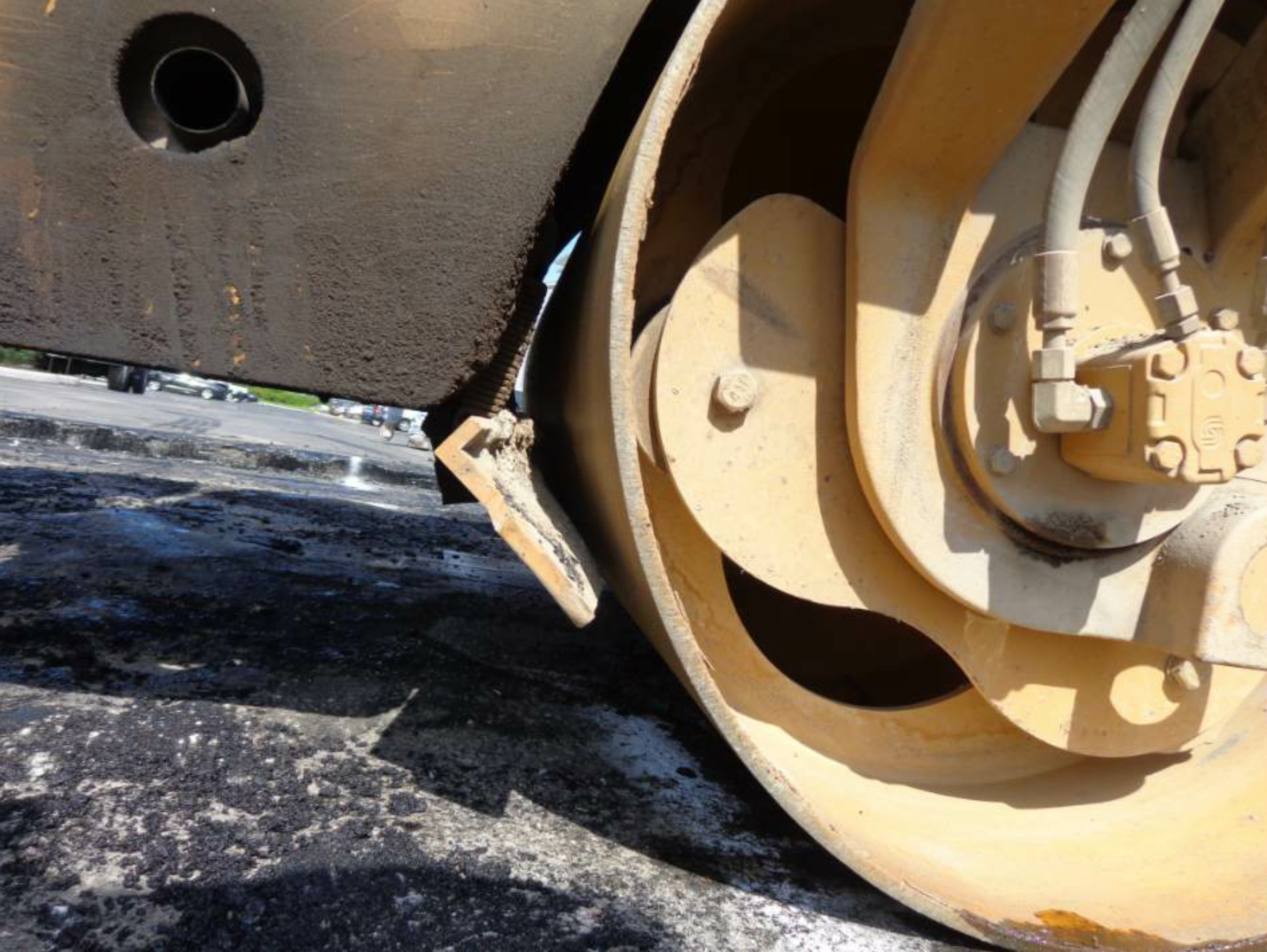
Check the spring to ensure it holds the scraper bar against the drum correctly. Photo courtesy John Ball of Top Quality Paving & Training, Manchester, New Hampshire.

When the water spreads across the drum properly, it lubricates the drum to prevent material pickup.

Solution: Look at the position of the scraper bars.

Are the scraper bars positioned optimally against the drums? Ensure the springs have proper tension to hold the bars in place to spread water across the surface of the drum properly. If the scraper bars are loose or positioned off the drum during operation, you’re wasting water. You’re probably getting poor performance with material pickup as well. Solve this problem by replacing broken springs and worn scraper material, and then positioning bars to trough water optimally.

How to Roll for Bonus, Part 1—New Ideas in Roller Maintenance

If the screed leaves a line in the mat, the roller operator is called on to smooth it out. Mat imperfections, divots, cool spots, anything that isn’t perfect gets left to the breakdown, intermediate and finish rollers to take care of. That means the compaction equipment must be in perfect working order, so the first half of this two-part series for bonus-worthy compaction practices includes a close-up view of the equipment. Here are some updated ideas—as well as some tried and true maintenance tips—for keeping the roller in good condition for every shift.

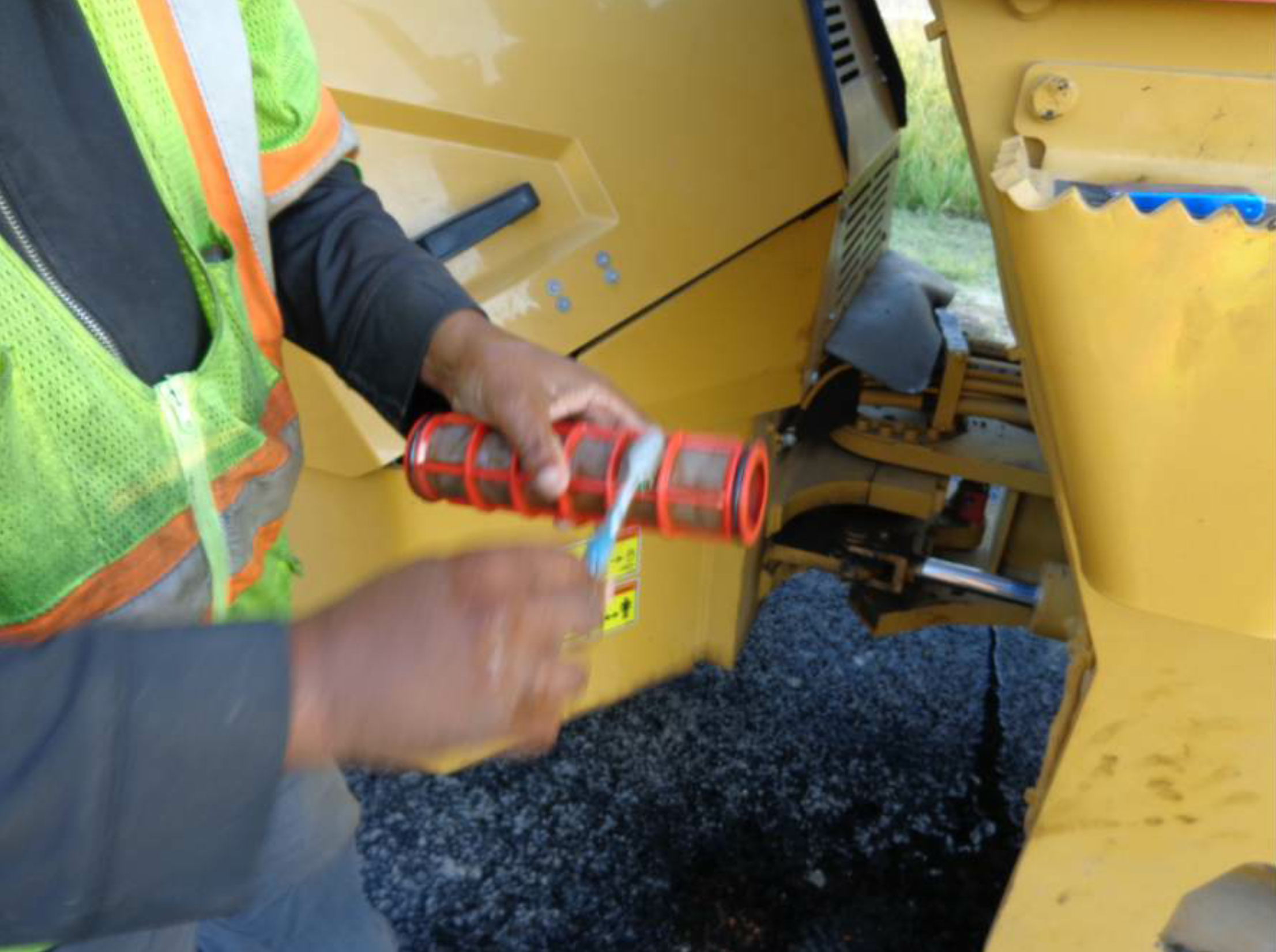
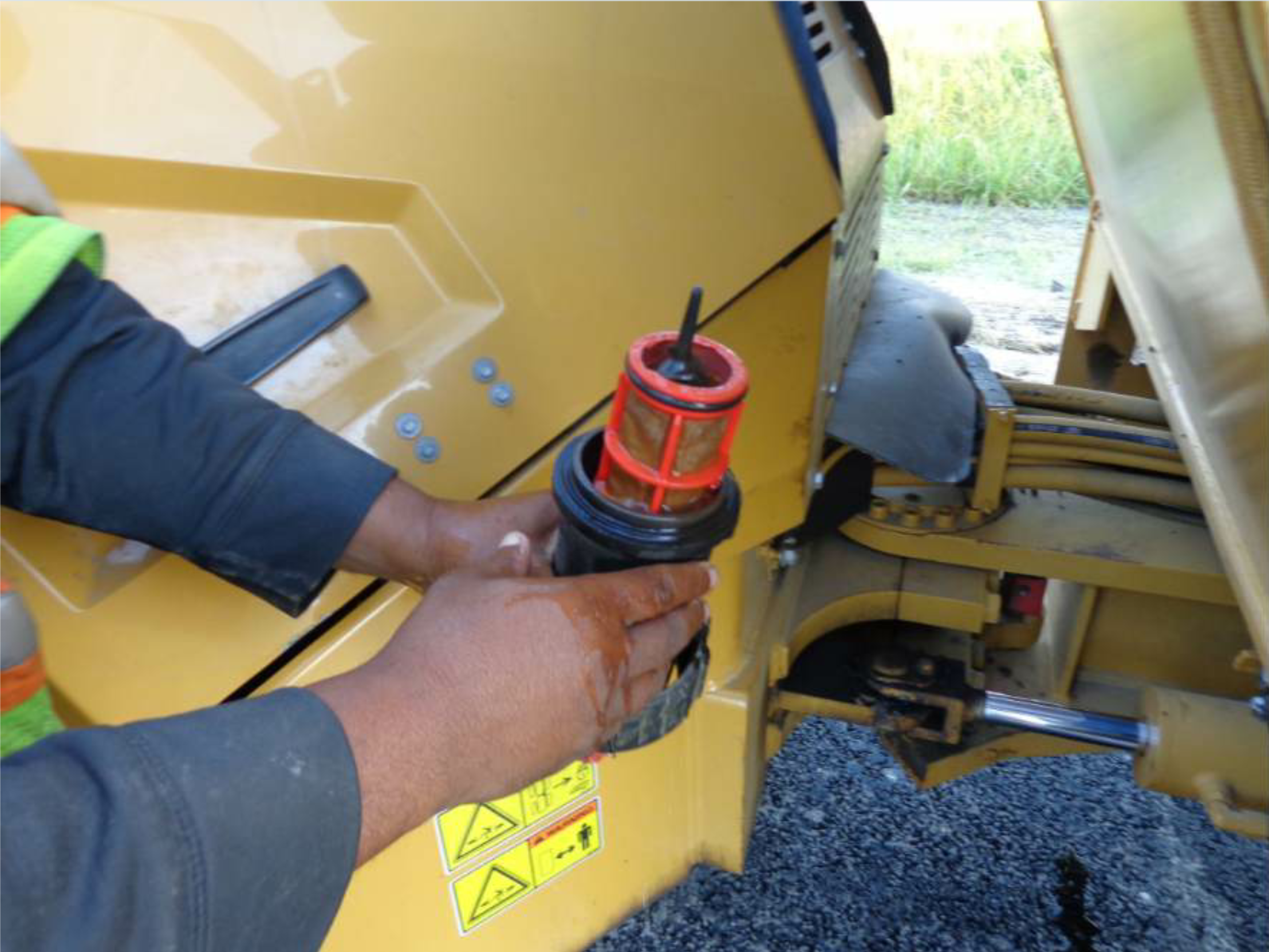
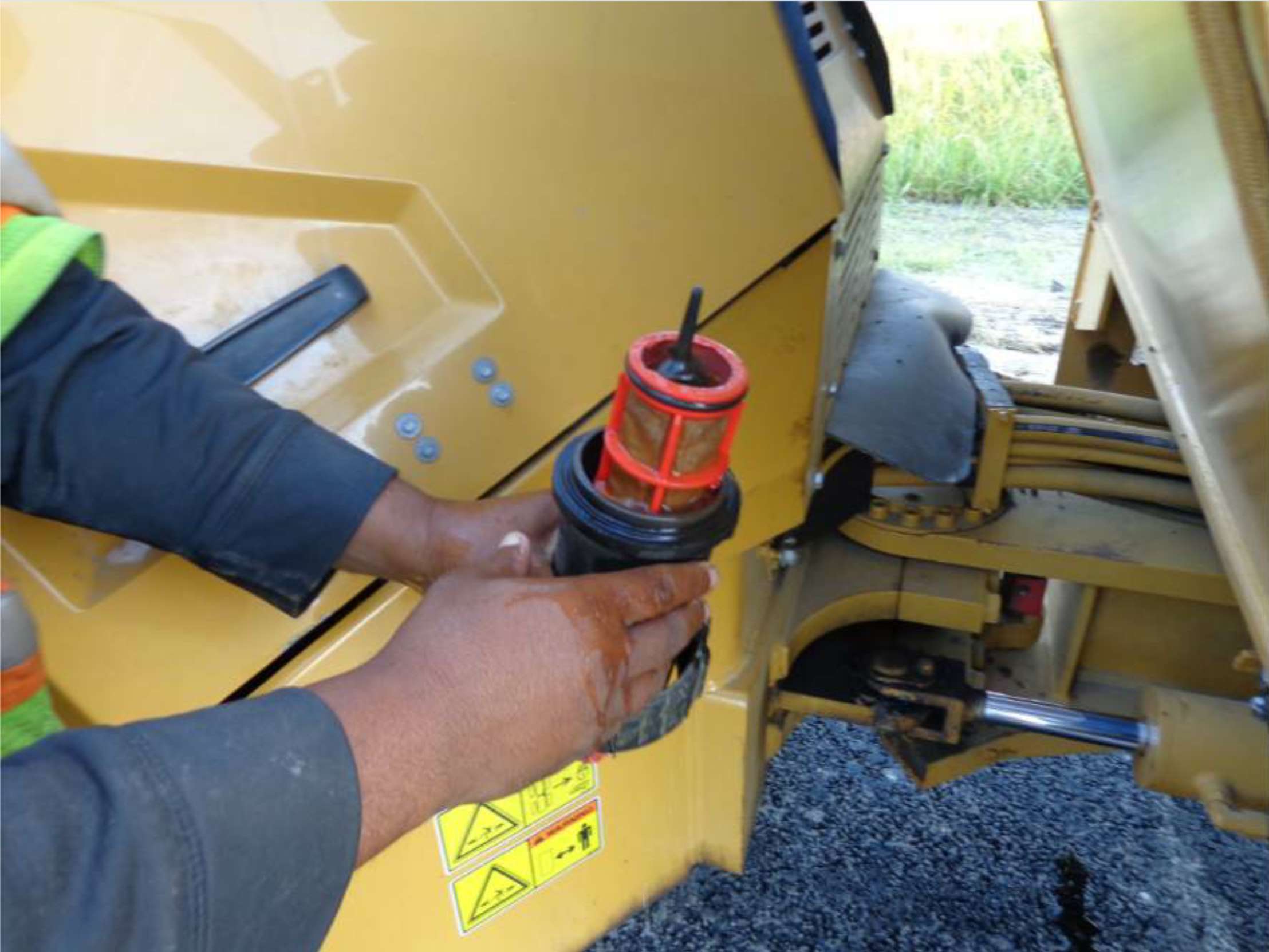
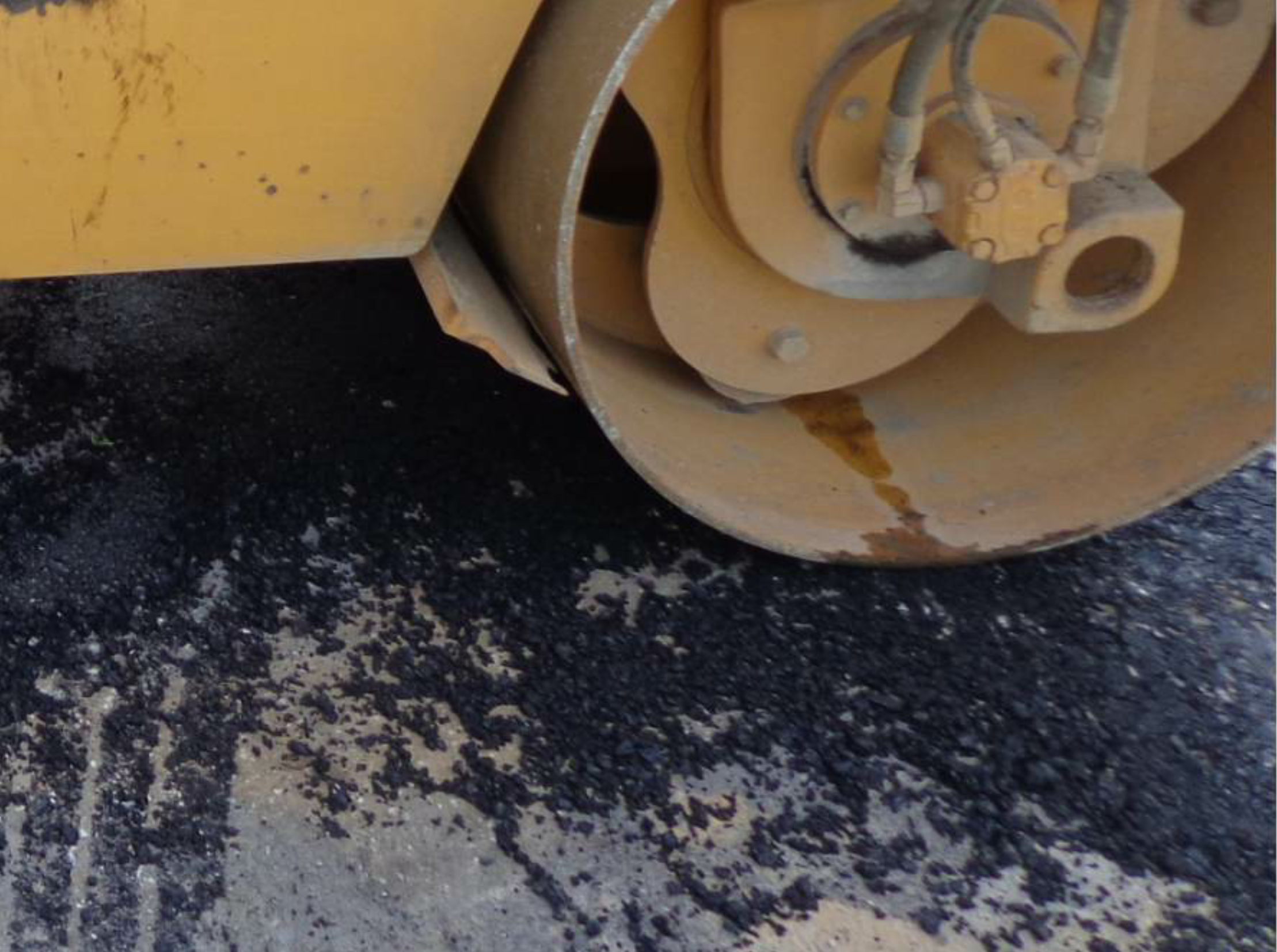
In these three pictures from John Ball of Top Quality Paving & Training, you can see the filter from the bottom of the tank fits inside a canister. Ball explained that you’ll first drain the tank, and then remove the filter. Take the filter out of the canister. In the middle photo, you can see fungus inside the filter, growing on the screens. Use a toothbrush dipped in a chlorine-and-water solution to scrub away fungus and other particulates. Run clear water over the screens to ensure they’re clean before reassembling the filter. Double-check the O-ring you see in the third photo before putting everything back together. If the O-ring is damaged, the tank water will not pump through the filter properly.

Let’s start with a new trend that original equipment manufacturers (OEMs) have embraced for you. Fewer mechanics are entering the work force each year.During the CONEXPO-CON/AGG  tradeshow in March, Preston Ingalls, the president and CEO of TBR Strategies, took the stage as part of the CASE Construction Equipment “What’s Now” Speaker Series to share ideas for developing a proxy mechanic system to leverage the employees you already have on hand. He shared information with the audience that paints a grim picture of worker shortfalls—as it relates to trucking and construction technicians—over the next five years. “There’s less emphasis on pursuing a blue collar or trades job,” Ingalls said. “So with the shortfall of programs to attract people, or even prepare or train them, and not a lot of interest from the families to pursue that, we’ve got a reduced pipeline on the front end. That has a significant impact that’s only going to get worse.

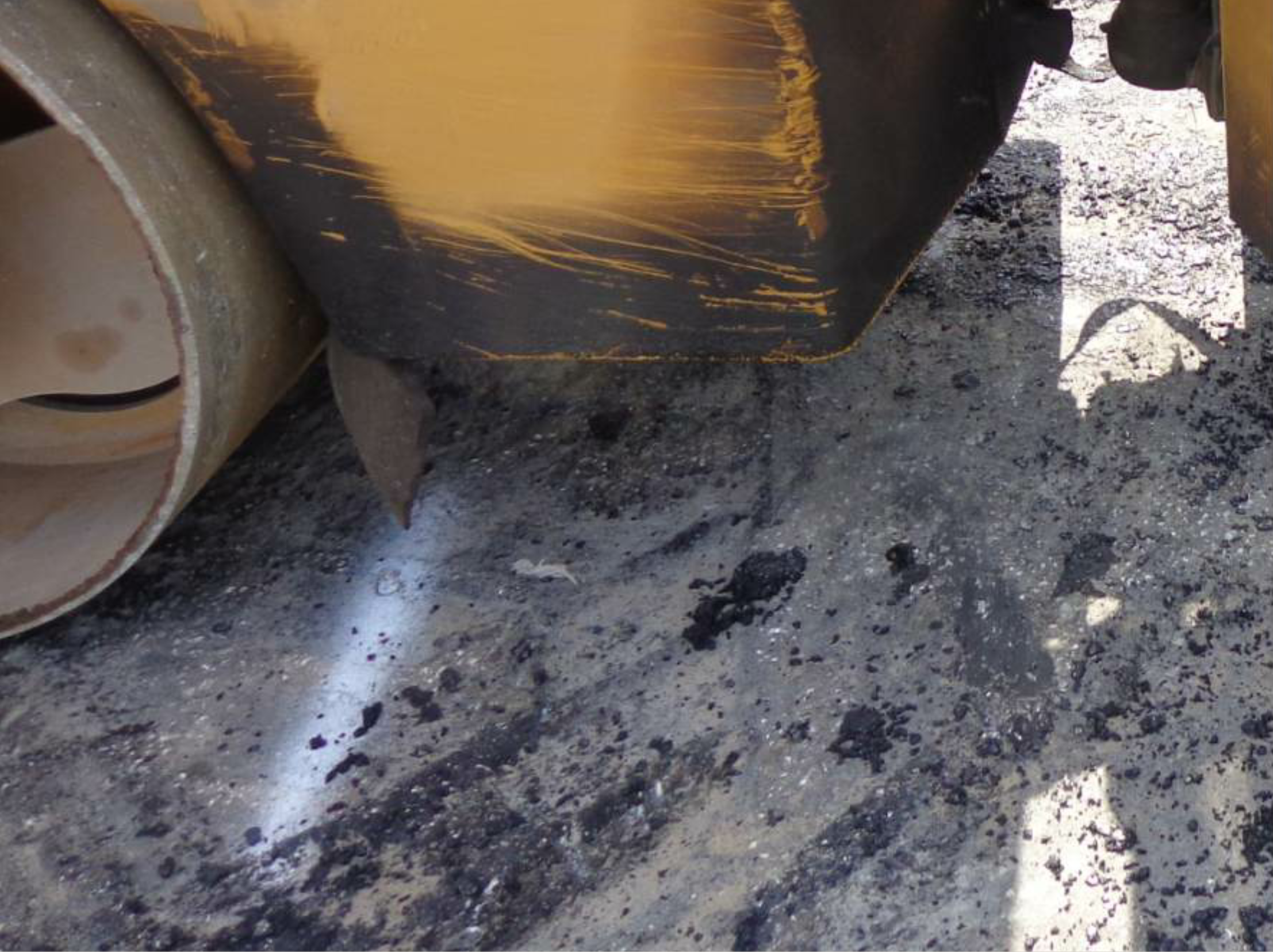
The broken scraper bar no longer spreads water efficiently. It will cause you to lose water in a hurry, which means you’re spending time at the water truck and not on the mat. The good scraper bar rests the rubber portion against the steel.

The broken scraper bar no longer spreads water efficiently. It will cause you to lose water in a hurry, which means you’re spending time at the water truck and not on the mat. The good scraper bar rests the rubber portion against the steel.

“According to the Bureau of Labor Statistics, the construction and trucking industry will need to recruit 67,000 new technicians by 2022 just to meet the demand and replace retiring baby boomers. My generation….This number does not include the 75,000 new diesel engine specialists that the Bureau anticipates will be needed by then just for growth reasons.” What Ingalls showed was the vocation programs we still have in the United States graduate a little more than 10,000 aspiring technicians each year, which is far short of the 67,000 plus 75,000 we will soon need.

OEMs have responded by designing machines that require less routine maintenance, and by creating technologically advanced vehicles and systems that let operators and fleet managers know when they require attention. OEMs such as BOMAG, CASE, Caterpillar, Dynapac, Hamm, Topcon, Volvo and more offer telematics software that alerts the operator or owner or dealer—or a combination thereof—when routine and surprise roller maintenance is coming up. Predictive maintenance is now a buzzword.

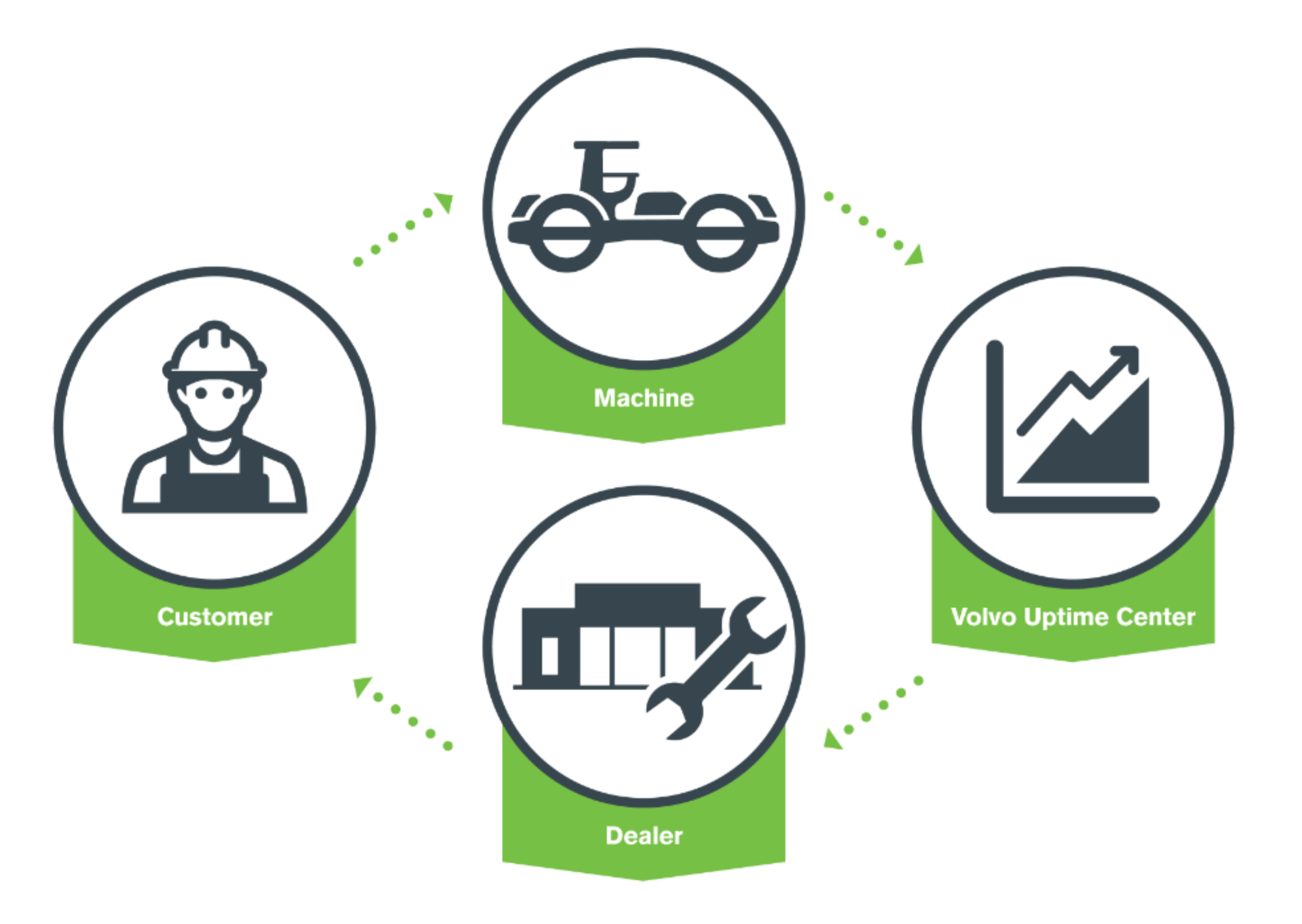
The team at Volvo Construction Equipment offers ActiveCare Direct on a number of its compactors, as well as other machines. The OEM has made ActiveCare Direct available free for one year on new purchases of a wide range of Volvo Construction Equipment models. Here’s how it works: As this diagram shows, the software first monitors the machine. When there’s a need for repair or routine maintenance, the software alerts the Volvo Uptime Center, which is able to contact the appropriate dealership. That dealer then can communicate with the contractor, letting him know of pending problems before they occur or alerting him to scheduled maintenance items. Image courtesy Volvo Construction Equipment.

The team at Volvo Construction Equipment offers ActiveCare Direct on a number of its compactors, as well as other machines. The OEM has made ActiveCare Direct available free for one year on new purchases of a wide range of Volvo Construction Equipment models. Here’s how it works: As this diagram shows, the software first monitors the machine. When there’s a need for repair or routine maintenance, the software alerts the Volvo Uptime Center, which is able to contact the appropriate dealership. That dealer then can communicate with the contractor, letting him know of pending problems before they occur or alerting him to scheduled maintenance items. Image courtesy Volvo Construction Equipment.

Contractors can respond, Ingalls pointed out, by using a proxy tech. He defined a proxy tech as the equipment operator who also has responsibilities for performing certain maintenance or repair tasks.For many contractors, that’s been standard operating procedure since Day One. The roller operator performs a pre-shift cleaning and inspection of the asphalt compactor, greasing the grease points and cleaning the water system filters and spray nozzles. But Ingalls took that routine maintenance concept a step further.“Instead of waiting for the mechanic to arrive, we’re actually going to do something a little more creative,” Ingalls told the CONEXPO-CON/AGG audience. He shared how to create a proxy tech program by first developing:

  • the tasks and boundaries each operator/proxy tech will be responsible for and limited to;
  • the skills and knowledge the proxy tech will require for his tasks;
  • the process to train and elevate proxy techs;• a screening and selection process to get the right talent;
  • a tools/parts storehouse of appropriate resources;
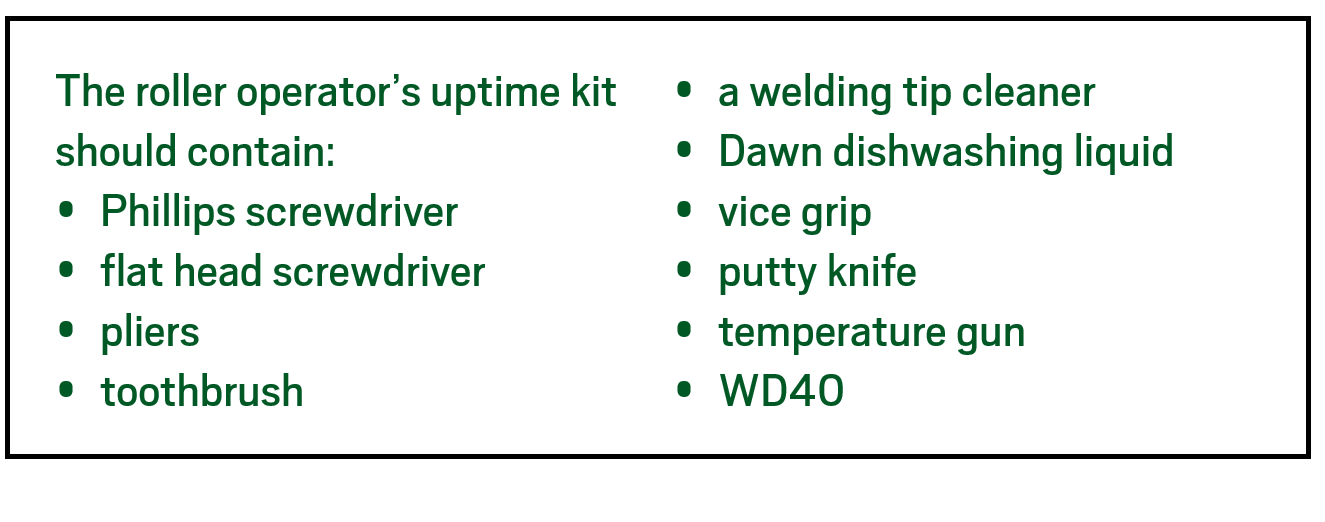
  • the appropriate parts to carry—the “uptime kit”;
  • a means to evaluate how the proxy tech program is going;
  • a way to “capture” what work has been performed;
  • key performance indicators (KPIs) with baselines to prove the program’s value; and
  • compensation packages/bonuses for proxy techs.
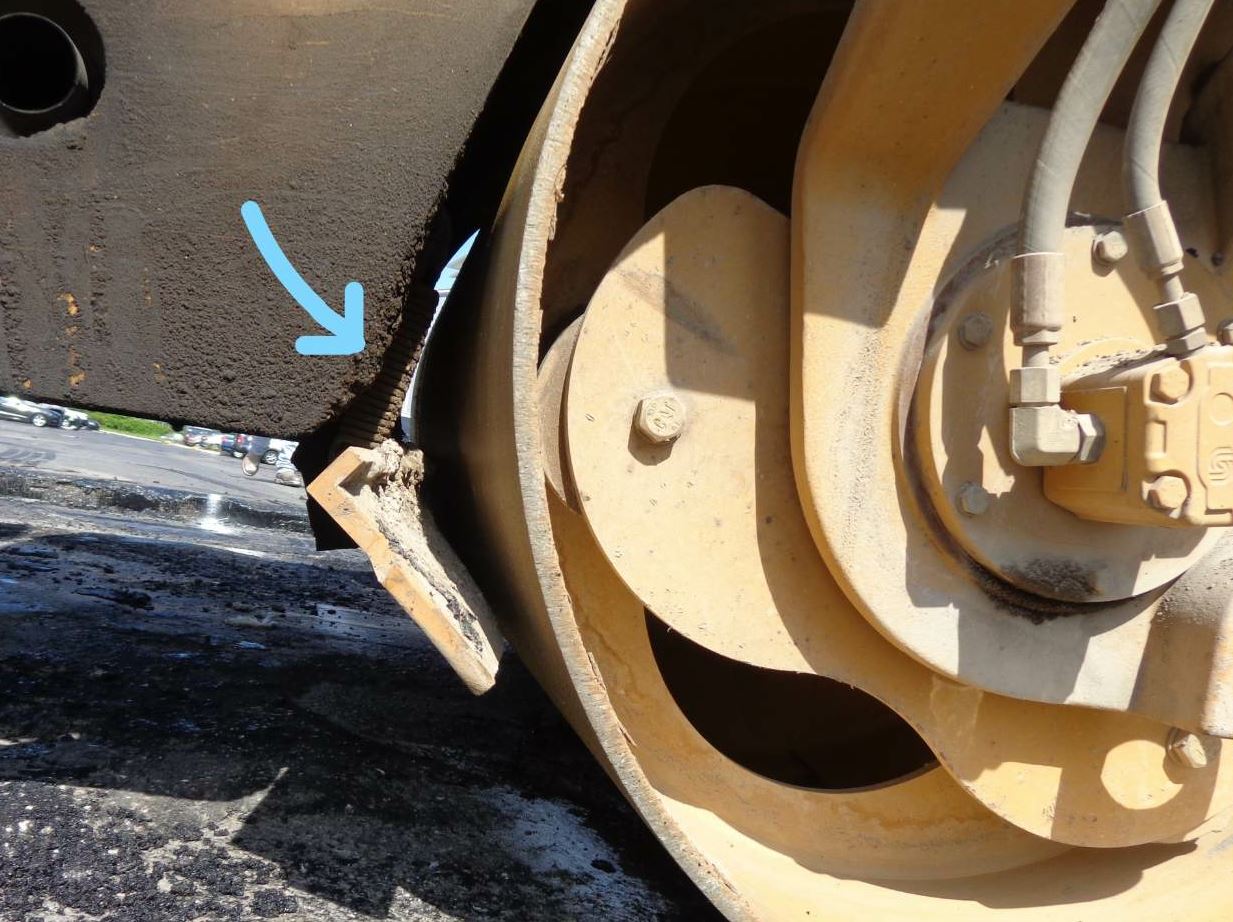
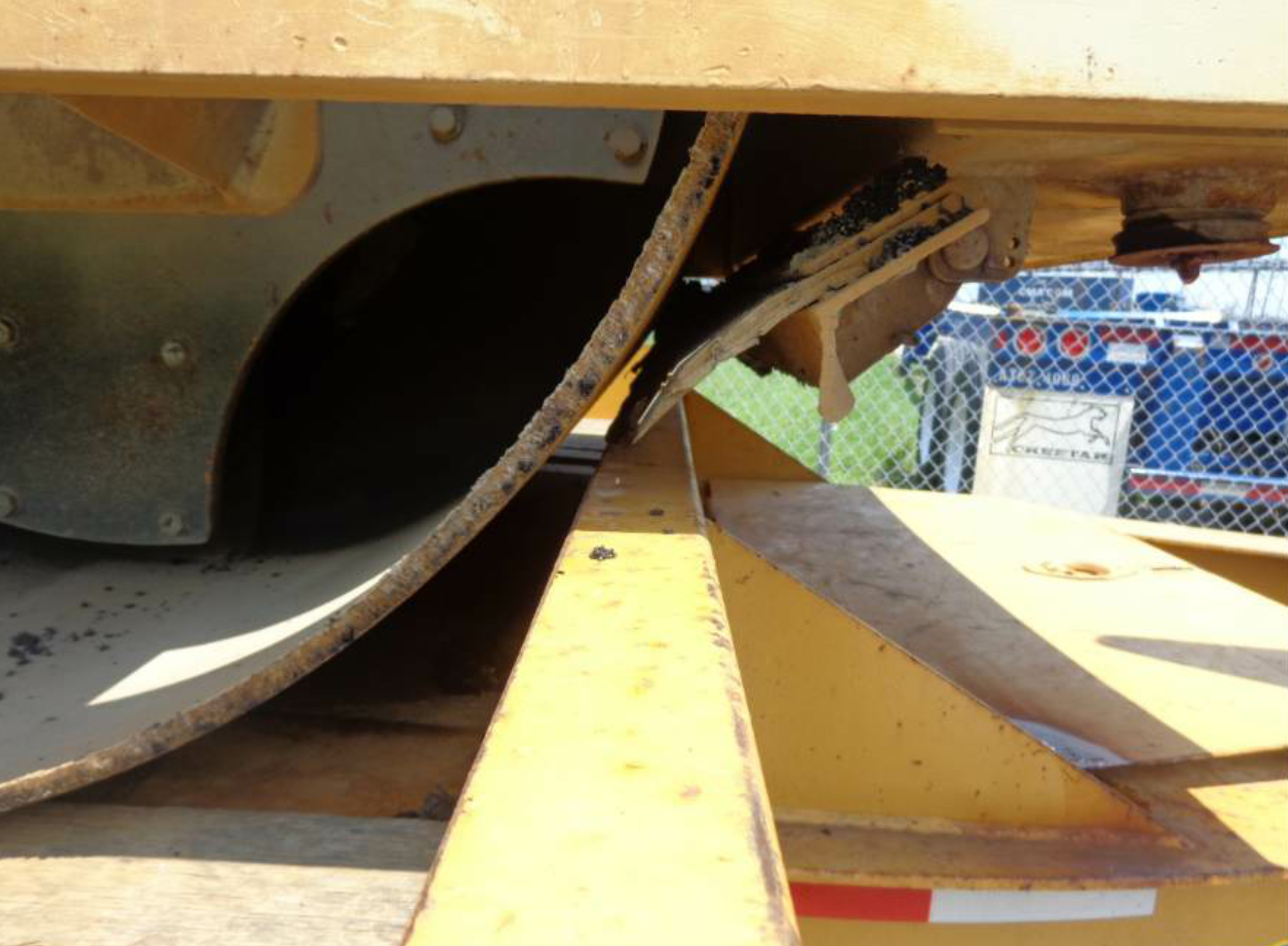
This scraper bar is completely worn out. Consider using a material such as neoprene synthetic rubber for the rubber portion to get good wear life. Photo courtesy John Ball, Top Quality Paving & Training, Manchester, New Hampshire.

This scraper bar is completely worn out. Consider using a material such as neoprene synthetic rubber for the rubber portion to get good wear life. Photo courtesy John Ball, Top Quality Paving & Training, Manchester, New Hampshire.

When Ingalls listed examples of tasks proxy techs can be trained to do, the list for roller operators looked familiar. The items we tell roller operators to check each day are already on his list. The same was true for pavers and milling machines, by the way. Asphalt professionals are already leaning toward the use of operators as proxy techs. When you ask the roller operator to replace a bent scraper bar and worn out cocoa mats, you’re getting work done without calling on a mechanic who may be dispatched to another site at that moment. The operator who knows how to clear a plugged spray nozzle saves the company time and money.

“Checking the scraper and sprinkler system is the step always missed by most operators,” Tim Hoffman, product manager for Dynapac Compaction Equipment, said. “But it is one of the most important things to remember. Having all the nozzles spraying and the scrapers adjusted correctly will ensure that the drum stays wet and will keep asphalt from sticking to the drum.”

Here are some tasks the valuable roller operator needs to take care of.

To Grease or Not to Grease

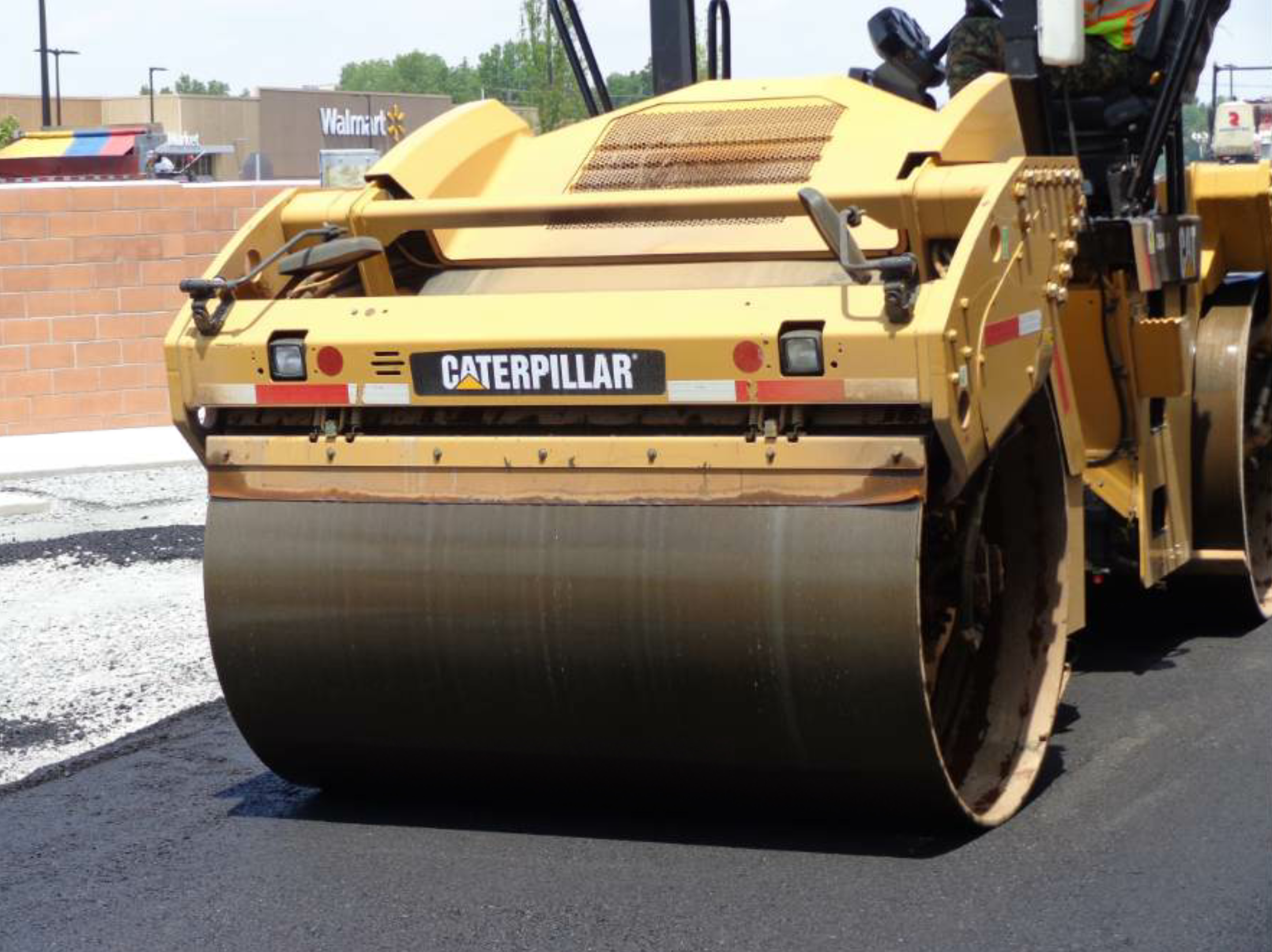
While a number of OEMs offer telematics for predictive maintenance, the savvy roller operator still performs the pre-shift inspection. Contractors who put a proxy tech program into practice need equipment operators who not only recognize pending problems, but can resolve minor problems and perform basic maintenance in the field to get a smooth and efficient rolling pattern like the one happening in this image. Photo courtesy John Ball, Top Quality Paving & Training, Manchester, New Hampshire.

While a number of OEMs offer telematics for predictive maintenance, the savvy roller operator still performs the pre-shift inspection. Contractors who put a proxy tech program into practice need equipment operators who not only recognize pending problems, but can resolve minor problems and perform basic maintenance in the field to get a smooth and efficient rolling pattern like the one happening in this image. Photo courtesy John Ball, Top Quality Paving & Training, Manchester, New Hampshire.

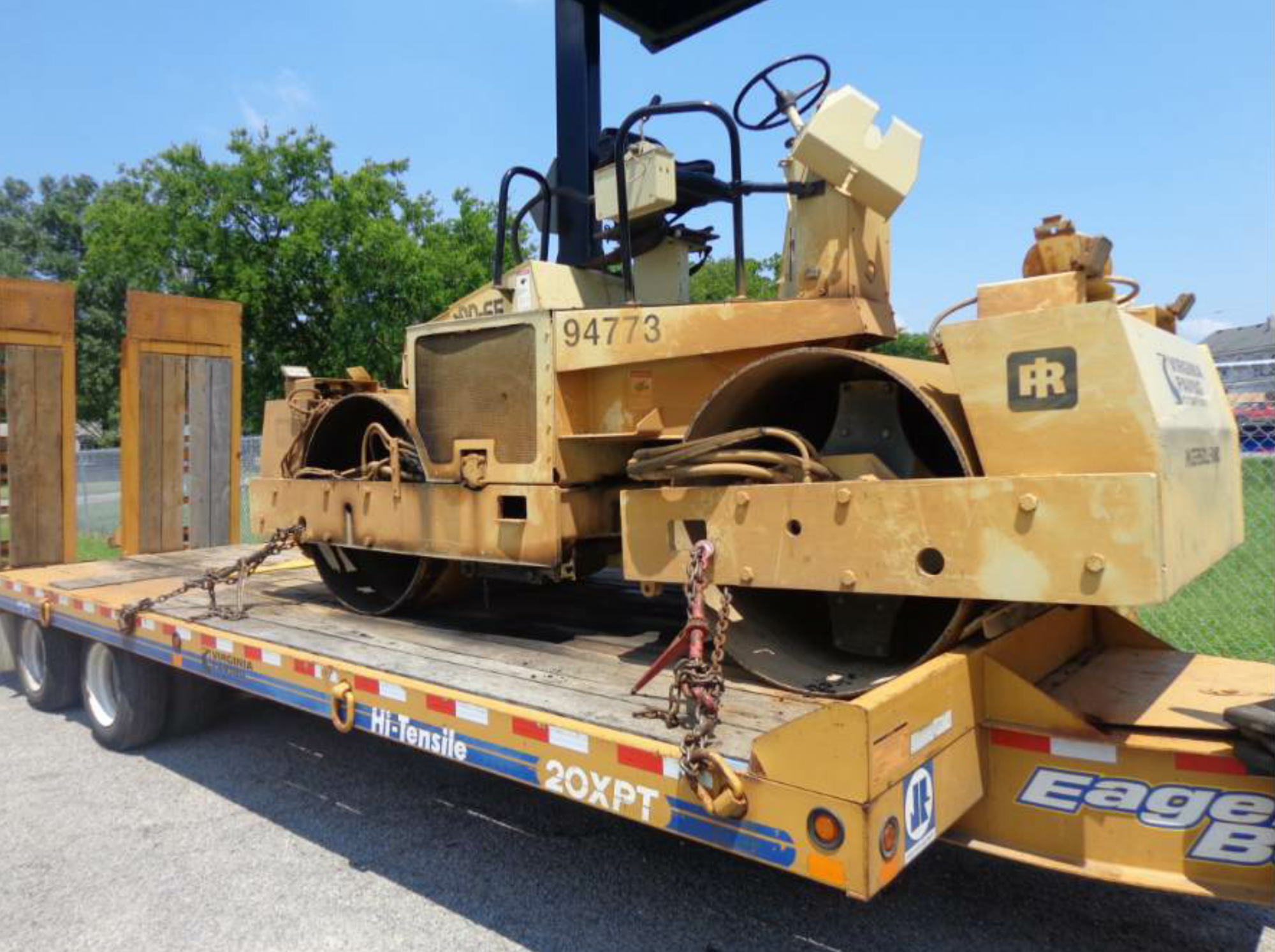
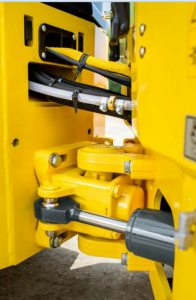
An older roller may have a point to be greased on its articulating joint. Grease the nipple fitting on the top once a week. Notice in this picture that the seal has leaked hydraulic oil. This attracts dirt and pulls it into the joint. This is a maintenance item to take care of so the older model backup roller doesn’t fail the team. Photo courtesy John Ball, Top Quality Paving & Training, Manchester, New Hampshire. This tandem roller from BOMAG Americas features a sealed bearing that does not require greasing. Photo courtesy BOMAG Americas Inc., Ridgeway, South Carolina.

An older roller may have a point to be greased on its articulating joint. Grease the nipple fitting on the top once a week. Notice in this picture that the seal has leaked hydraulic oil. This attracts dirt and pulls it into the joint. This is a maintenance item to take care of so the older model backup roller doesn’t fail the team. Photo courtesy John Ball, Top Quality Paving & Training, Manchester, New Hampshire.
This tandem roller from BOMAG Americas features a sealed bearing that does not require greasing. Photo courtesy BOMAG Americas Inc., Ridgeway, South Carolina.

Newer models of compaction equipment offer fewer routine maintenance points than older models when it comes to greasing. In the real world, contractors have older machines on the job still putting in hour after hour of reliable service. Those old workhorses have maintenance needs, and if they include an articulating joint, there’s at least one point where greasing requires some caution.

John Ball of Top Quality Paving & Training, Manchester, New Hampshire, spent eight years as a roller operator for Pike Industries before he became the company’s director of training for 10 years. He shared that you will grease the nipple fitting on the top of the articulating joint at least once a week, if your machine has one. Don’t over-grease it, he cautioned, or you’ll have an area that attracts and pulls dirt and sand into the bearing. In fact, beware of over-greasing any points on older rollers for that reason.

Stop Mold Growth

“The water system is probably the most neglected maintenance item, yet the simplest thing to take care of,” Tim Kowalski said. He’s the applications support manager for Hamm, a Wirtgen Group Company, Nashville, Tennessee. He and Ball outlined the three-part filtering that water systems use to help operators keep sand, dirt or other impurities from mucking up the all-important spray nozzles. They also discussed how to maintain these areas.

  1. The first stop-gap measure is a sock-like filter in the filling tube, through which the water is pumped when you fill the tank. Kowalski warned that sometimes operators will want to remove this filter because it restricts flow. He advised against that. Saving a few minutes while you fill the tanks is not worth the hassle of extra cleaning and possible downtime due to big clogs later. Take the time to do things right and let the first filter do its job.
  2. Next, there’s a canister filter in the bottom of the tank, or on the side of the machine, which Kowalski referred to as the main filter for the system.
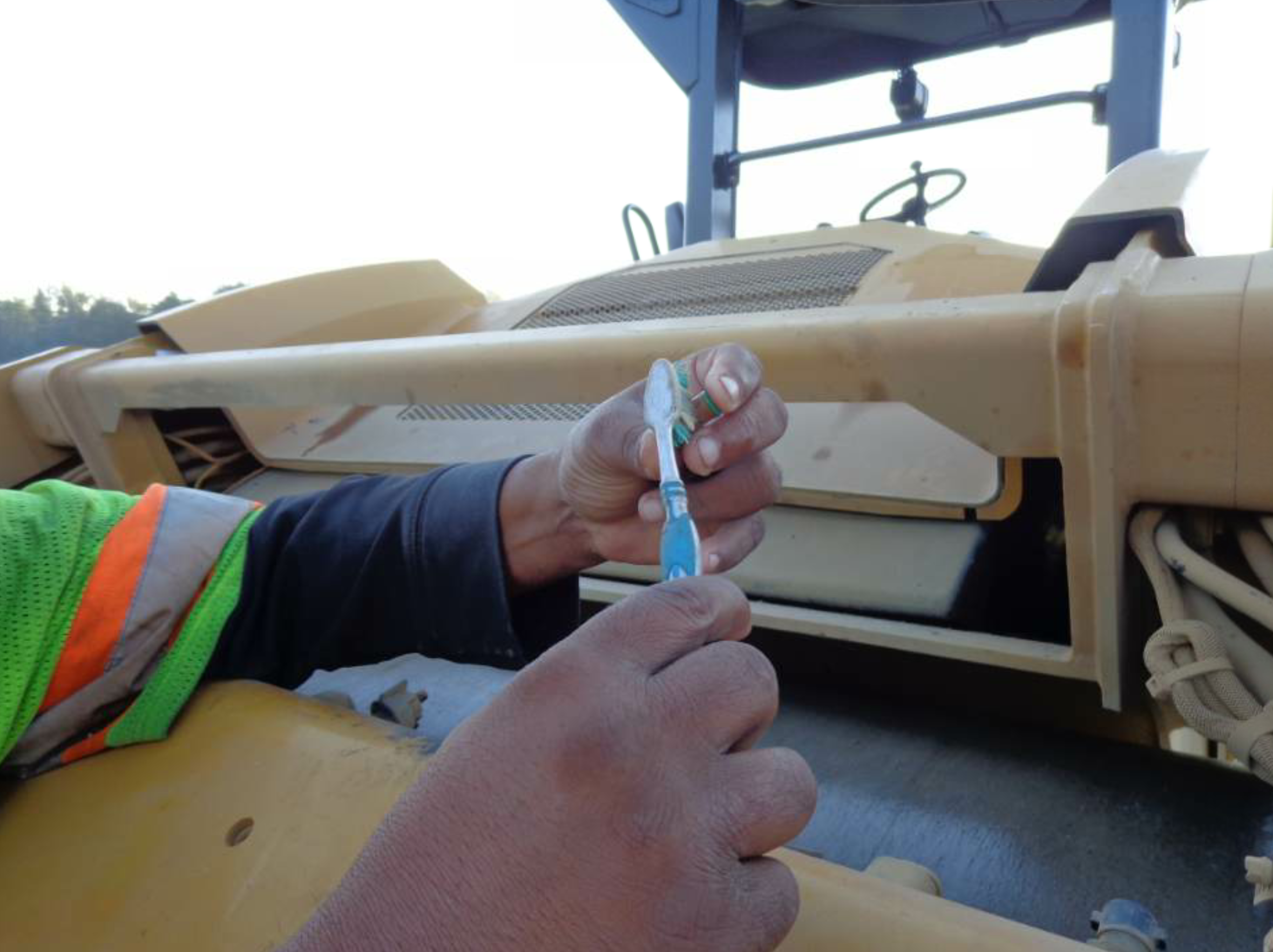
  3. Finally, there are micron filters on the spray tips. If water sits here too long, Kowalski said, it gets gummy or slimy. Keep these tips clean and clear by keeping the filters clean and clear. Ball recommended the operator remove the tips from the spray bar. Then make up a bottle of soapy water with a drop or two of Dawn dishwashing liquid. Dip a toothbrush into this solution to clean the filters. Run clear water over them and replace them for work. When the tips themselves need cleaning, use a welding tip cleaner to get into the crevices.
Clean the 10-micron screen filters in the spray nozzles with a toothbrush.

Clean the 10-micron screen filters in the spray nozzles with a toothbrush.

Even the tanks need cleaning. Kowalski reminded readers that the connecting tube between the tanks can clog as well. It seems logical when you look at it on paper, but when you’re in the field, the hustle and bustle of production can make an operator forget the simplest of tasks. For example, “If you have more than one pump on a roller, make sure you turn both on,” Kowalski said.

Both Ball and Kowalski wanted readers to think about water sources. “Water from fire hydrants has rust in it,” Kowalski said. “Water from ponds has algae that clogs up hoses.” They recommended the best way to keep rust or algae from doing its worst damage is to drain the tanks and clean them out.“If the roller’s going to be sitting for a while, drain it,” Kowalski said. “Especially in cold weather, treat the water with anti-freeze and drain it at the end of the shift.”

For cold weather, once the tanks are empty, Ball reminded operators to undo the hose, suck the anti-freeze up through the nozzles through the tips and into the lines.For regular maintenance: “Treat the water with chlorine about once a month, just like you would clean your swimming pool, and drain that out,” Ball said. “For some of the sticky mixes we have to compact, pour a bottle a Dawn in the full water tank to help lubricate the drum.”Experts advised operators use caution when selecting cleaning supplies.

“Chemicals in the tank often cause problems with the seals in the water pumps,” Dynapac’s Hoffman warned. He advised operators “check to make sure that anything put in the tank is safe for any kind of water pump.”

“The plastics used for the tanks are pretty chemical-resistant,” Kowalski said. “But you don’t want to use a petroleum-based product.”

Scrape It

The next area that experts agreed was vital for proper roller operation was the scraper system, and they agreed that operators need to pay more attention to the scrapers. Let’s start with the springs holding the scrapers against the drum. A savvy roller operator will have in his uptime kit a can of WD40 to lubricate the springs—or shock absorbers—at any point during the shift.

“You want the scrapers to move freely on and off the drum,” Kowalski said. This is vital when moving a dry drum. When it’s time to take the roller from one part of the job to another, you won’t run in vibratory mode and you’ll turn off the water system. At this time, why would you hold the scraper against a dry drum? To lift the scraper off the drum, you need enough play in the spring to release some of the tension or pressure.

Of course, the spring’s function is to put tension on the scraper bar. Ball warned readers that if it loosens, it won’t hold the bar in place. If the spring should fail, it must be addressed. “Either get a new one or tighten it,” Ball said. “If it’s too far sprung, just replace it. Keep a box of springs or small shock absorbers in the mechanic’s shed.”

For operation, the four scrapers work as a team. “When we’re rolling in one direction, two of the scrapers work as a water trough to put a thin film of water across the face of the drum,” Kowalski said. “The other two are keeping material off the drum. When we change direction, the scrapers change jobs.”

If a scraper is bent, it obviously can’t do its job. Ball spelled it out: “If the scraper bar is bent out of shape, the rubber part won’t be touching the steel drum, so it won’t be troughing the water anymore. You’ll run out of water.”

The rubber on the scraper bar is a wear item, so the operator will want to adjust it once a month, whether there’s a problem with the metal bar or not. To solve the problem of a bent scraper bar or worn rubber, follow these steps from Ball.

  1. Take out the holding pins.
  2. Take the scraper bar off the roller.
  3. Remove the rubber from the bar.
  4. Heat up the metal.
  5. Straighten the metal, if possible. If the metal cannot be unbent, replace it with a new scraper bar.
  6. Replace the rubber, if necessary.
  7. Reverse the steps to put the scraper bar assembly back in place.
The spring puts tension on the scraper bar, holding it against the steel drum. If the spring has lost its tension, you will need to replace it. Keep a box of springs in the mechanic’s shop at headquarters.

The spring puts tension on the scraper bar, holding it against the steel drum. If the spring has lost its tension, you will need to replace it. Keep a box of springs in the mechanic’s shop at headquarters.

Not all roller manufacturers install cocoa mats these days, but you can add them, and there are variations of the mats still in use in the field. They work in a similar fashion to the scraper bar, helping to lubricate the drum with water they absorb and distribute, and to scrape material from the drum’s surface. One type of roller that uses a cocoa mat is the pneumatic tire roller, and it has an important maintenance routine to remember. Think about the original material of a rubber tire and the original material in the asphalt mix—petroleum.

“At the end of the shift, when the tires are hot and the fibers of the cocoa mat have hot, sticky material embedded in them, lift the mat up off the tires before turning off the machine for the night,” Ball warned. “Do not leave the cocoa mats resting against the rubber tires while they cool off. The next morning, you will have a congealed mess to separate before you can work.”

Avoid Complacency

The system AsphaltPro would like to draw attention to before we complete this installment of the “roll for bonus” series is the lights. Of course lighting is vital for nighttime paving, but even daytime projects benefit from strobe and beacon lights that catch the eye of the motorist speeding past your work zone. Ensure the lights on your drum edges, on the top of the canopy/ROPS, on the back and front of the machine, etc., are functioning properly. If a bulb is out, replace it before it’s a crisis.
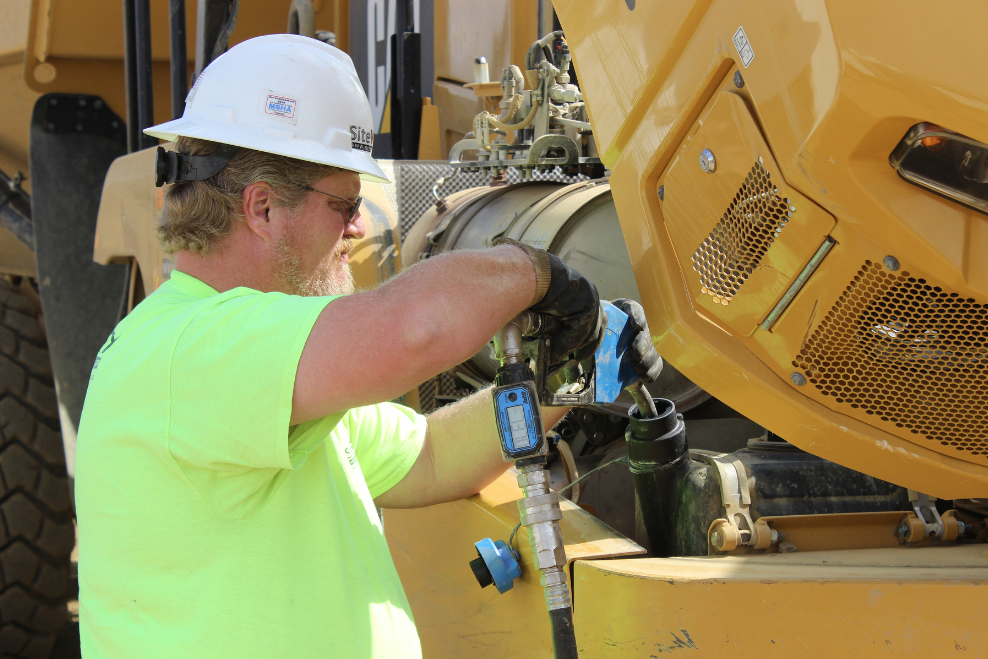
Kowalski said, “Check these before you get out on the job.” He’s absolutely right. Once the rest of the paving and compaction train is half a mile up the road is no time to realize the finish roller has no strobe light to alert motorists to his presence.

While there are many routine maintenance points that roller operators instinctively know to check, such as the surface of the drums and the level indicators for all fluids, there are other areas that can slip a person’s mind when racing production. With the use of telematics and predictive maintenance systems, it’s easier to let the machine tell us what’s going on. Don’t let technology lull you into a state of complacency. Instead, put technology to work to get all the maintenance points checked each day. Use technology as one more tool in the uptime kit.

Next month, we’ll take the well-maintained roller into the field for best practices for bonus-worthy compaction.

How You Should Handle DEF

Most paving contractors know exactly how to handle their equipment for winter storage. They know they need to apply lubricants, prepare the batteries and schedule maintenance and inspections.

What many of us may not know is how to handle our Tier IV equipment—both for winter storage and for general upkeep throughout the paving season. Many contractors still have questions and misconceptions about diesel exhaust fluid (DEF), especially about shelf life, winter weather procedures and general storage.

“There are a lot of lingering questions about DEF in the marketplace,” said Luke Van Wyk, general manager of Thunder Creek Equipment. For example, expired DEF and contaminated DEF can harm the catalytic converter in your engine. But, that isn’t something an operator can see.

“Most operators don’t know how these new systems work,” Van Wyk said. “They just see the light on the dash come on telling them to refill the tank. But they don’t know how the material is handled inside the tank.”

For example, Van Wyk was at a jobsite where the crew picked up discarded jugs and bottles to use to store DEF.

“There are still a lot of questions about the proper handling of DEF,” he said. “We need to address these issues now instead of years down the road when contractors are paying for the things they don’t know now.”


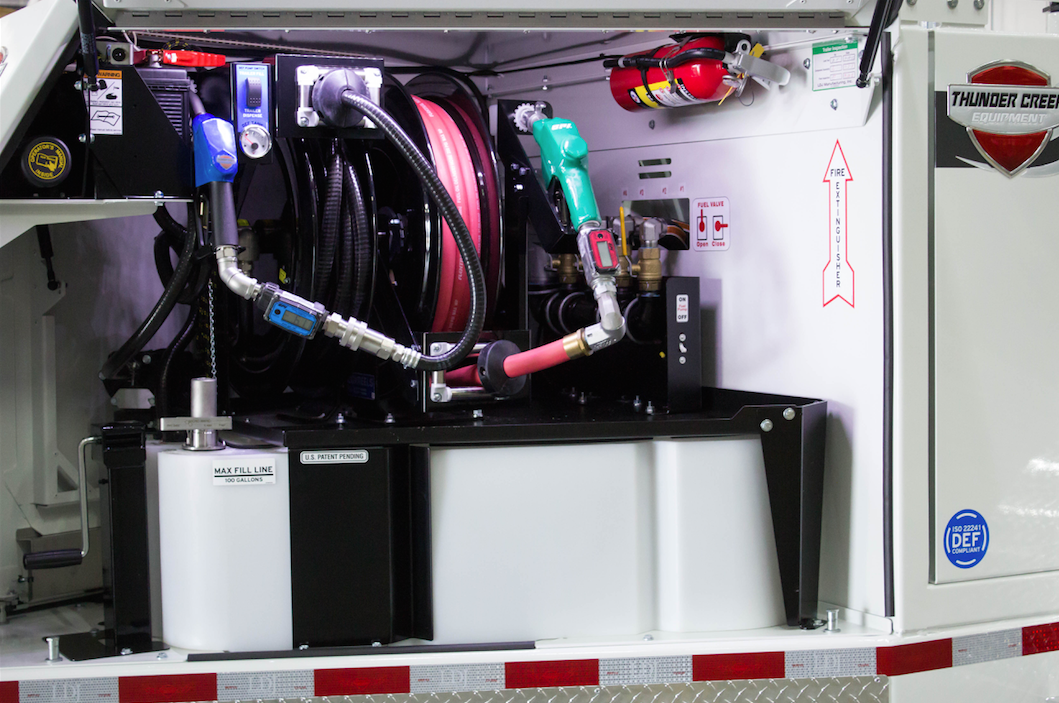
A two-in-one enclosed DEF system on a fuel trailer, like you see here, is one way to avoid contamination of your DEF.

A two-in-one enclosed DEF system on a fuel trailer, like you see here, is one way to avoid contamination of your DEF.

What is DEF?

Diesel exhaust fluid, or DEF is 32.5 percent pure automotive-grade urea and 67.5 percent de-ionized water.

“That’s all it ever is,” Van Wyk said. “There are no additives and no different blends to take it away from that spec.”

Unlike urea used in the agriculture industry in fertilizers, the urea in DEF has no preservatives. “If the urea in DEF had preservatives, it would cover the catalytic converter in a gummy material,” Van Wyk said. The absence of that preservative gives DEF a shelf life of 36 months in climates where the average ambient temperature is 60 degrees Fahrenheit or below, and six months in places where average ambient temperatures are above 95 degrees. “With prolonged exposure to heat over long periods of time, the water will begin to evaporate and take the DEF out of spec.”

“Some people think DEF is like milk, that’s it’s only good for a couple of weeks,” Van Wyk said. “In many cases, shelf life isn’t an issue.” Another common misconception is that freezing temperatures will harm the DEF, but Van Wyk said freezing doesn’t affect the shelf life or the chemistry of the DEF. “It will freeze at 12 degrees Fahrenheit,” he said. “But that just turns it from a liquid into a solid and it expands by 7 percent.”

That expansion creates some concern that it could harm the equipment system, but Van Wyk said most, if not all, systems are engineered to manage this.

“Most DEF systems flush the DEF from the aftertreatment system back into the tank every time you turn the key off,” Van Wyk said. “In almost every case, that tank has been built with joints to withstand that expansion.”

For example, said Jon Sjoblad with Caterpillar, Cat machines purge DEF from the aftertreatment system every time the engine is shut down. “Every time the engine is shut off, the pump will reverse and pull all the DEF from the aftertreatment system and lines back into the tank.”

Additionally, like most equipment, Van Wyk said original storage containers are built to expand with the DEF. However, intermediate handling systems may not be designed to automatically flush DEF from the system back into the tank. In this case, operators may need to manually flush DEF from the pumps, hoses and nozzles before winter storage to avoid ruptures after DEF expands.

When storing your equipment over winter, Van Wyk said it isn’t necessary to drain the DEF, but cautions that it is always important to refer back to your equipment manufacturer’s guidelines.


When contractors need to refuel more than a couple Tier IV Final machines, single-use 2.5-gallon jugs simply won’t cut it. One hundred gallon closed DEF systems outfitted on a diesel trailer, like you could see here, offer a bulk storage and refueling solution.

When contractors need to refuel more than a couple Tier IV Final machines, single-use 2.5-gallon jugs simply won’t cut it. One hundred gallon closed DEF systems outfitted on a diesel trailer, like you could see here, offer a bulk storage and refueling solution.

How to Handle DEF

If DEF exceeds its shelf life, Van Wyk warns that it will become less effective.

“We use DEF to reduce nitrogen oxide,” he said. When urea is sprayed into the exhaust system, it turns into ammonia, which will break down the NOx into water vapor and nitrogen. “If the urea isn’t as potent, it’s going to take more DEF to get that NOx output down to the levels the engine is programmed to get it to.”

It can also cause degradation of the catalytic converter. “If the DEF is contaminated, what can happen over time is that urea can start to break down the reactive coating of the catalytic converter,” Van Wyk said.

However, using DEF beyond its shelf life isn’t a very common concern. Van Wyk said it’s far more common to see contractors using contaminated DEF rather than expired DEF. The number one cause of this contamination is improper handling.

“Keeping DEF contaminant-free is paramount,” Sjoblad said. He recommends storing it only in its original container to prevent cross-contamination and making sure the DEF container and machine tank area are dust-free before transferring, adding that Cat machines are equipped with a series of strainers and filters as added protection against debris contamination.

“The biggest challenge we’ve seen is contractors buying larger packages of DEF and refilling small containers, like oil jugs, and antifreeze containers—you name it—with DEF,” Van Wyk said. “That introduces contaminants into the DEF.”

Those contaminants become an issue because, over time, they will build up on the catalytic converter and the urea will begin to corrode the contaminants, which will rust the catalytic converter, Van Wyk said.

“You may not see the effects immediately, but you will see them down the road,” he said. “It’s like salt on your car. Eventually, your car is going to rust.”

To combat this issue, DEF should only be handled in sealed or closed containers or systems. Two and a half gallon jugs and drums are sealed containers intended only to be used one time, and then disposed of. Larger containers of DEF, such as 275- and 330-gallon IBC totes, can be reused because they are designed with a closed point for filling and emptying the container. Although he estimates that less than 10 percent of the off-highway industry’s fleets are Tier IV-compliant at this time, that number will only increase as old equipment is retired and new equipment is purchased.

“The natural progression we see is when contractors only have a couple machines that require DEF, they buy the 2.5-gallon jugs,” Van Wyk said. “As they acquire more Tier IV equipment, they’re going to buy DEF in larger and larger quantities, but should always be sure they maintain that closed system.”

He equates it to handling beer. “When the beer comes out of the keg, you have a tapper. You don’t just open the keg,” he said. “We need to handle DEF in the same way.”

That’s where contractors need to discover new solutions.

“Fuel and DEF go hand-in-hand like peanut butter and jelly,” Van Wyk said. For example, Thunder Creek’s MTT trailer can hold up to 920 gallons of diesel fuel and 100 gallons of DEF in a closed system. They also have a smaller 50-gallon DEF skid tank for pickup trucks that is also equipped with a closed handling system.

Van Wyk warns that beyond paying attention to your machine’s efficiency, there’s no way to test for DEF contamination, beyond a $1000 sample sent to a lab. So, the best way to combat contamination is education and proper handling.

“Most of these issues—like shelf life and contamination–aren’t a big deal if you understand the material and implement the right practices,” Van Wyk said. “It’s just a matter of being educated and intentional about how we manage and incorporate DEF into our businesses.”

4 Ways Your Tier IV Final Engine Can Change Your Maintenance Routine

Now that you know how to handle DEF any time of year, it’s important to know how things might change when it comes to maintaining your Tier IV Final engine. Here are four things you may need to do differently on your Tier IV Final equipment.

1) More sensors, more potential problems

“On Tier IV Final machines, there are quite a few more sensors and more emission control modules that are distributed throughout the engine compartment—most of which have to be incorporated into our harnesses,” said Robert Bauer, with Carlson Paving Products. “All of the new sensors are for components that didn’t exist at previous tiers, so there are just plain more parts to go bad, more wires to have bad connections, etc.”

Additionally, in Carlson’s case, these sensors are installed by the OEM, so the likelihood of routing inconsistencies that could lead to a failure is higher, he added. “If it was a Cummins engine and a certified Cummins mechanic comes out, each piece of equipment is different,” Bauer said. “Before, all the sensors were on the engine and in the same relative places. Now, with components scattered through the engine compartment, it takes techs longer to orient themselves in a particular piece of equipment.”

Bauer recommends inspecting harnesses and connectors more frequently to look for tightly pulled or fraying wires, damaged connectors, broken connector locks, etc. “It’s more important than ever,” he said.

However, according to Roadtec Service Manager Joshua Jones, any issues with the sensors will still provide the operator with a code to make it easier to find sensors that are acting up.

2) DEF is corrosive (for some materials).

“DEF is caustic and will damage or destroy paint if not cleaned,” Bauer said. So, it’s important to clean up spills promptly. Bauer also recommends inspecting the brackets under the DEF tank for corrosion periodically.

If you spill a small amount of DEF, you can wash it away with water or simply wipe it up. If the DEF is left to dry, it will turn into white crystals that can also be washed away with water. However, if you spill a significant amount of DEF, it’s important to call your DEF supplier for advice on how to handle it.

Although DEF can corrode materials like carbon steel, aluminum, copper and zinc, it isn’t toxic and wearing protective clothing is not necessary when handling DEF.

3) Beware of new engine service procedures.

According to Bauer, many of the new engines have “oil life” counters built into the software that need to be reset when the oil is changed.

“Just like new cars, the check engine light will come on if the oil life counter isn’t reset,” he said. If you ignore the warning on your paving equipment, your machine will go into derate mode. If the crew doesn’t know the cause, they might need to call in an engine service tech for this preventable issue.

To make sure you fully understand engine service procedures, including how to reset your oil life counter, Bauer recommends thoroughly reading your operator’s manual.

“That’s always been a good idea, but more so now than ever,” he said. “Anybody can do this and it doesn’t require special tools, you just need to know what exactly to do.”

4) Change the filter at proper intervals.

“The diesel particulates filter is capturing soot,” Jones said. “When you do your regeneration, it cooks out all the soot. But at a certain point, all the soot buildup that hasn’t burned off starts restricting your power.”

He recommends changing your diesel particulate filter, or DPF, every 5,000 hours.

“You can either service them at an engine manufacturer,” Jones said, “or you can replace it with a new one.” In his experience, DPFs cost anywhere between $3,000 and $8,000.

“That’s just the world we live in now with the exhaust filters,” he said. “But, the truck industry brought everything up to speed before the equipment world got involved, and that really helped.”