
Wearable Technology Makes Construction Safer, More Efficient
Although our equipment gets smarter each and every innovation cycle, the PPE those in the construction industry have worn hasn’t changed much over the past half-century. With the development and growth of wearables, that may soon change.

According to a report from ABI Research, the wearable market–including both consumer and enterprise devices–is expected to grow from 202 million in 2016 to 501 million by 2021. The report also estimates that, although enterprise devices work for work account for only 17 percent of today’s wearables, they will count for more than one third of 2021’s 501 million devices.

That prediction seems clear when you consider all of the benefits of wearables in the workplace. According to Rackspace, wearable technology in the construction industry can increase productivity by 8.5 percent and workplace satisfaction by 3.5 percent. And OSHA believes these devices could also help lower insurance rates and improve employee health and safety.

In an industry where we can’t often speak directly to one another–either because it’s too loud or due to long distances on the jobsite–wearables can improve communication, in addition to their promising safety benefits.

Here are some of the most interesting wearables built with the construction industry in mind. Whether they’re five years down the road or 50, they sure make the future look a bit brighter–and that isn’t just the gleam of your Lockhead Martin wearable exoskeleton.

XOEye Smart Glasses

XOEye Technologies has developed safety-certified smart glasses that can help reduce the amount of time it takes to make a decision, clearly communicate what’s happening in the field, and train new employees.

The glasses are equipped with a camera and microphone that can capture photos, video and audio, as well as make audio and video calls. The chief benefit of this hands-free system is the opportunity to call the home office–or anywhere around the world, for that matter–and relay the realities of the field, both to receive a faster decision and to communicate with expert technicians who may not be able to visit the jobsite in person. Instead, technicians receive a first-person point-of-view on the situation and can walk the wearer of the glasses on the jobsite through a solution.

The system can also be used to teleconference and record safety inspections, document the workzone, and send videos of equipment performance to the mechanic. It can also be used to capture first-person videos that can then be used for training purposes.

Unlike smart glasses like Google Glass, XOEye’s smart glasses are safety-certified to protect your eyes, in addition to enabling communication.

Spot-r Wearable Sensor
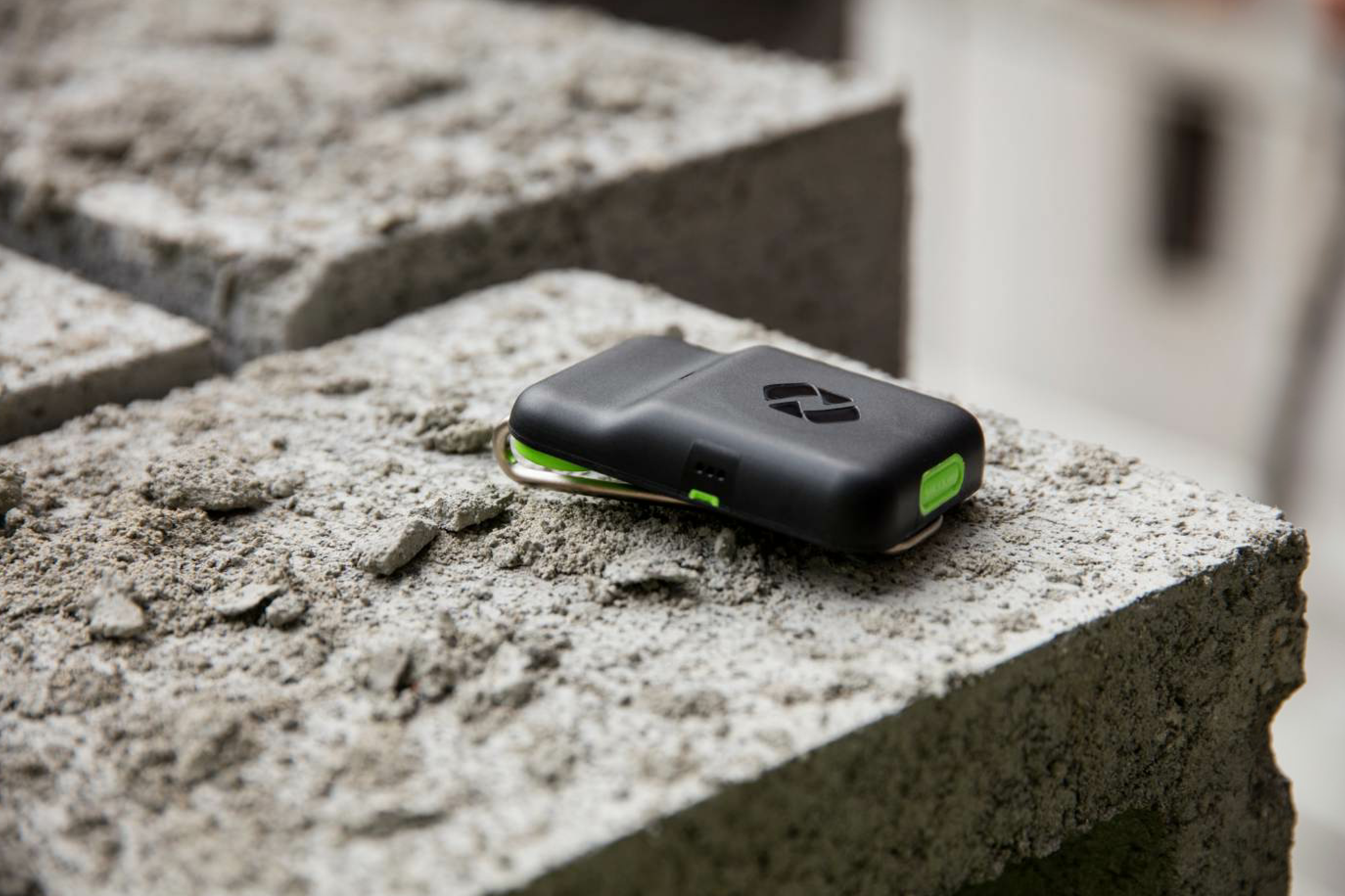
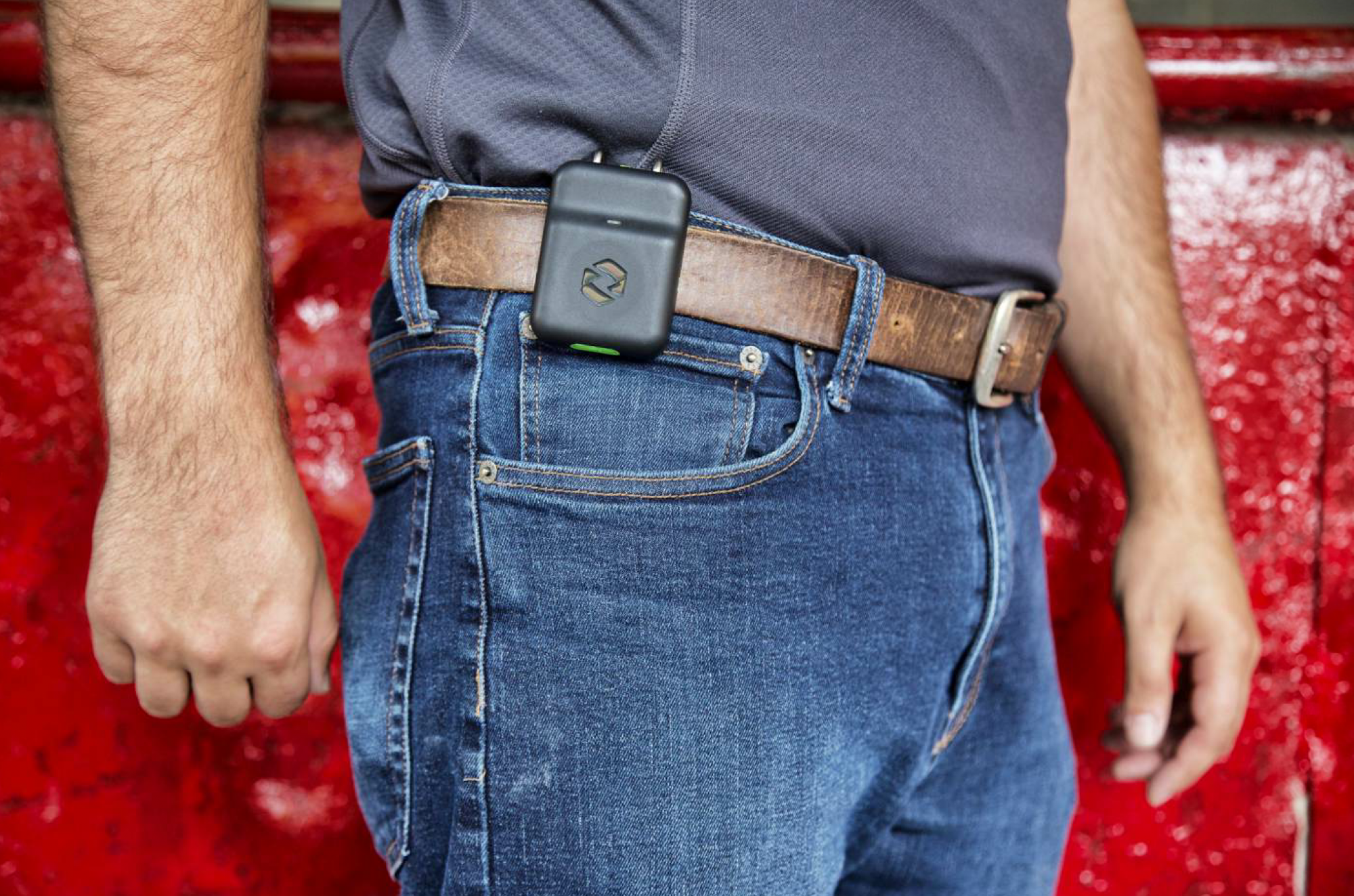
Spot-R\r is a wearable sensor from Triax that promises workers “always have a partner on the job.”

About the size of a pack of gum, the sensor must be worn on the workbelt. In the event that a worker slips, trips or falls on the jobsite, the sensor will alert your safety supervisor of the event. It then provides that worker’s general location so the supervisor can send help.

The sensor is also equipped with a self-alert button that, when held for 2 seconds, will beep to indicate that an alert has been sent to the safety supervisor. This means, if the wearer sees a safety issue, he doesn’t have to leave his workzone to find help. If the sensor beeps continuously, all personnel should evacuate the workzone immediately.

The sensors are connected using a closed, secure mesh network connecting only one specific jobsite, with no option for offsite monitoring.

Spot-r sensors can be used to check workers in when they arrive, and auto-disconnect when a worker leaves the jobsite’s network, giving supervisors a live headcount, recording of manhours, and general knowledge of workers’ positions while on the job. When the worker is no longer on the job, the sensor, which is waterproof and has a 1-year battery life, enters sleep mode.

Redpoint Positioning Safety Vest Sensors
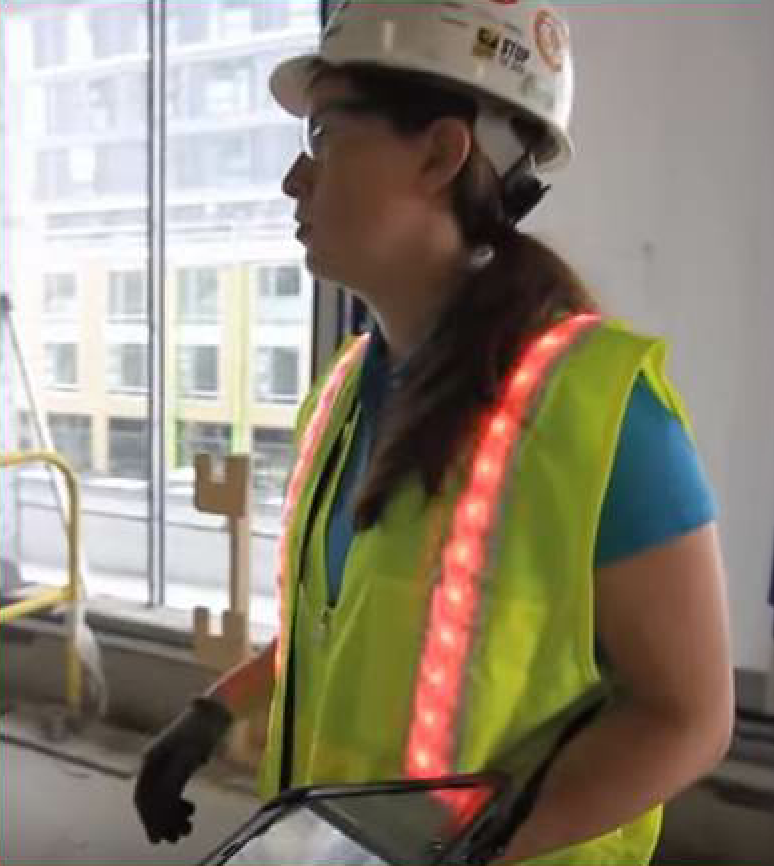
The most high-tech part of your safety vest may no longer be its reflective tape. Redpoint Positioning is placing sensor tags within safety vests that will help workers stay safer on the jobsite.

When the wearer enters a danger zone on the worksite, whether that be an off-limits area or behind a piece of moving machinery–also denoted by Redpoint sensors–the vest will light up and sound an alarm. It will also notify the equipment operator of the wearer’s presence and instruct the operator to slow down or deactivate the machine.
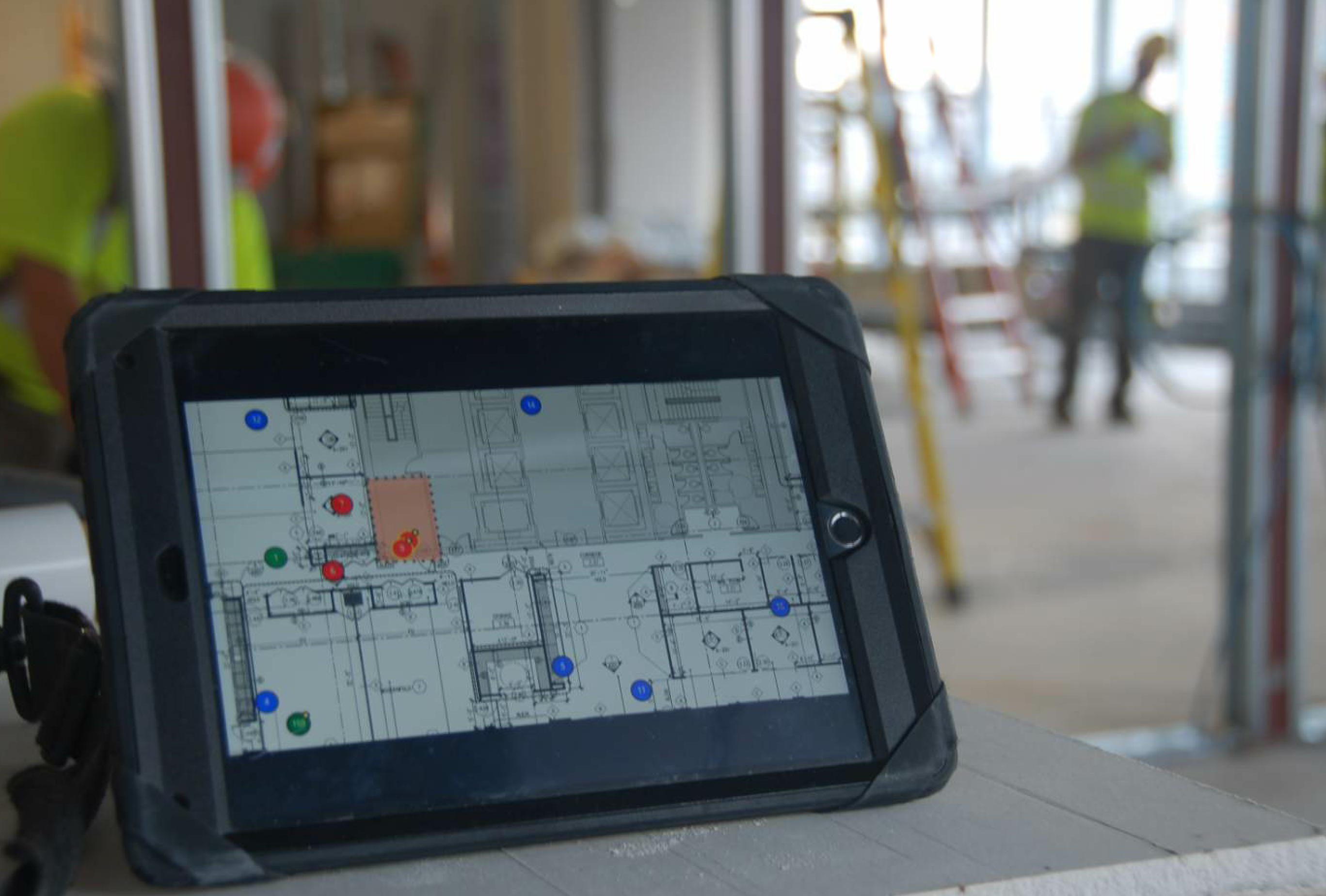
The sensor will also notify the wearer’s supervisor. If a wearer continuously puts himself in harm’s way, a supervisor can outline the dangers of that activity before an incident occurs.

The sensors can also measure workers’ biometrics, including heart rate and stress.

DAQRI Smart Helmet

The smart helmet from DAQRI, Los Angeles, brings augmented reality to the industrial working world. The helmet, equipped with a camera and clear optical display, allows the user to see instructions and data visualizations overlaid on top of the real environment.

In addition to capturing photos, videos and audio, and offering live video calls, the helmet can also deliver guided work instructions on top of the user’s activity. Users will also be able to see vital stats of machinery from within the headset, like rotation speed and efficiency of a generator, the temperature of a machine, or the last time a piece of equipment was checked out by the mechanic. It’s also equipped with a thermal camera so users can visualize, passively record and analyze temperatures in their environment–from hot spots on the machinery to the temperature of the mat being laid–as they work.

The smart helmet, DAQRI’s flagship product, is already available for purchase, but DAQRI has also announced smart glasses that offer the same capabilities as the helmet in a smaller, lighter form factor, as well as the DAQRI Qube motion tracking sensor and Smart HUD for data overlays on vehicle windshields.

DAQRI has also launched its own proprietary software, DAQRI 4D Studio Suite, to enable customers to create their own work instructions and data visualizations, incorporating 3D models, videos, audio and photos, without any coding experience.

Although similar to a more mainstream solution, like Microsoft’s Hololens, DAQRI products are specifically built to withstand the demands of industrial and construction jobs.

Hexoskin Smart Shirts
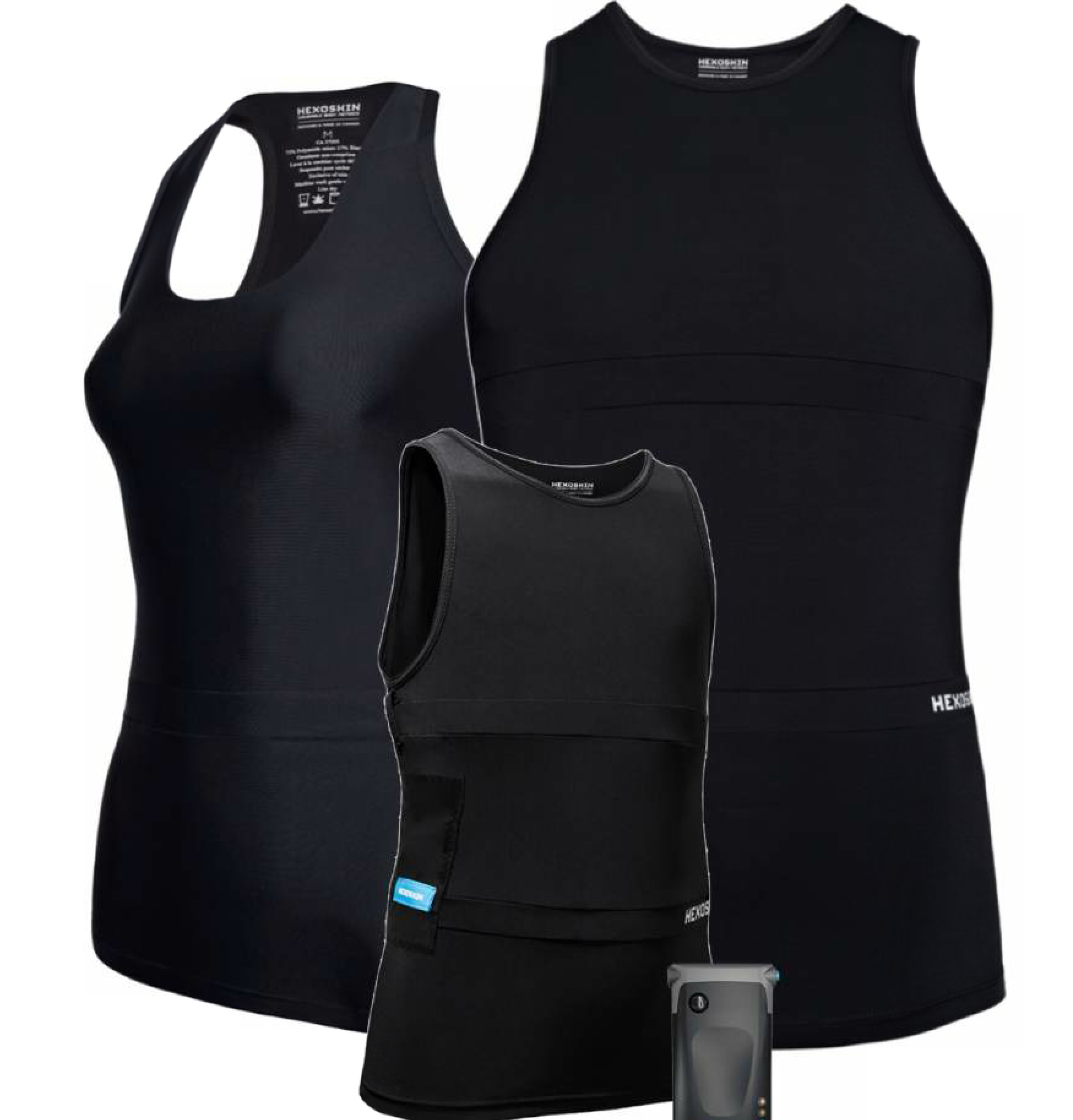
Marketed towards runners, Hexoskin still has its place in the work zone. The smart shirts monitor heart rate and heart rate variability, which can be used to estimate stress and fatigue, as well as breathing rate, steps, and activity intensity.

They hold a charge for 14 hours and can capture 600 hours of data. They can be connected to a smartphone or tablet to read and analyze the data. Hexoskin shirts are also machine washable, lightweight and offer UV protection.

SolePower Work Boots

With all of these battery-powered wearable devices, you might be wondering where exactly the extra energy will come from. SolePower Work Boots aims to use your body’s own kinetic energy to power it and other smart devices, one step at a time.

The workboots can power their own location tracking device every couple of steps, which can be used to track worker hours and identify ways in which a job site could be better organized, but they can also be used to power lights, sensors, GPS devices and other wearables.

The boots could also be used to sense temperature and motion, falls and fatigue, and illuminate with every step for an added safety boost in nighttime work zones.

The U.S. Army is currently testing the technology in an effort to reduce the amount of backup batteries soldiers must carry, which often reaches 20 pounds of backup batteries per person for a one-day mission.

SolePower boots can now power one hour of talk time on an iPhone with two hours of walking. According to SolePower CEO Hahna Alexander, that’s around 10 times more powerful than a comparable wearable kinetic charger.

Myo Armband
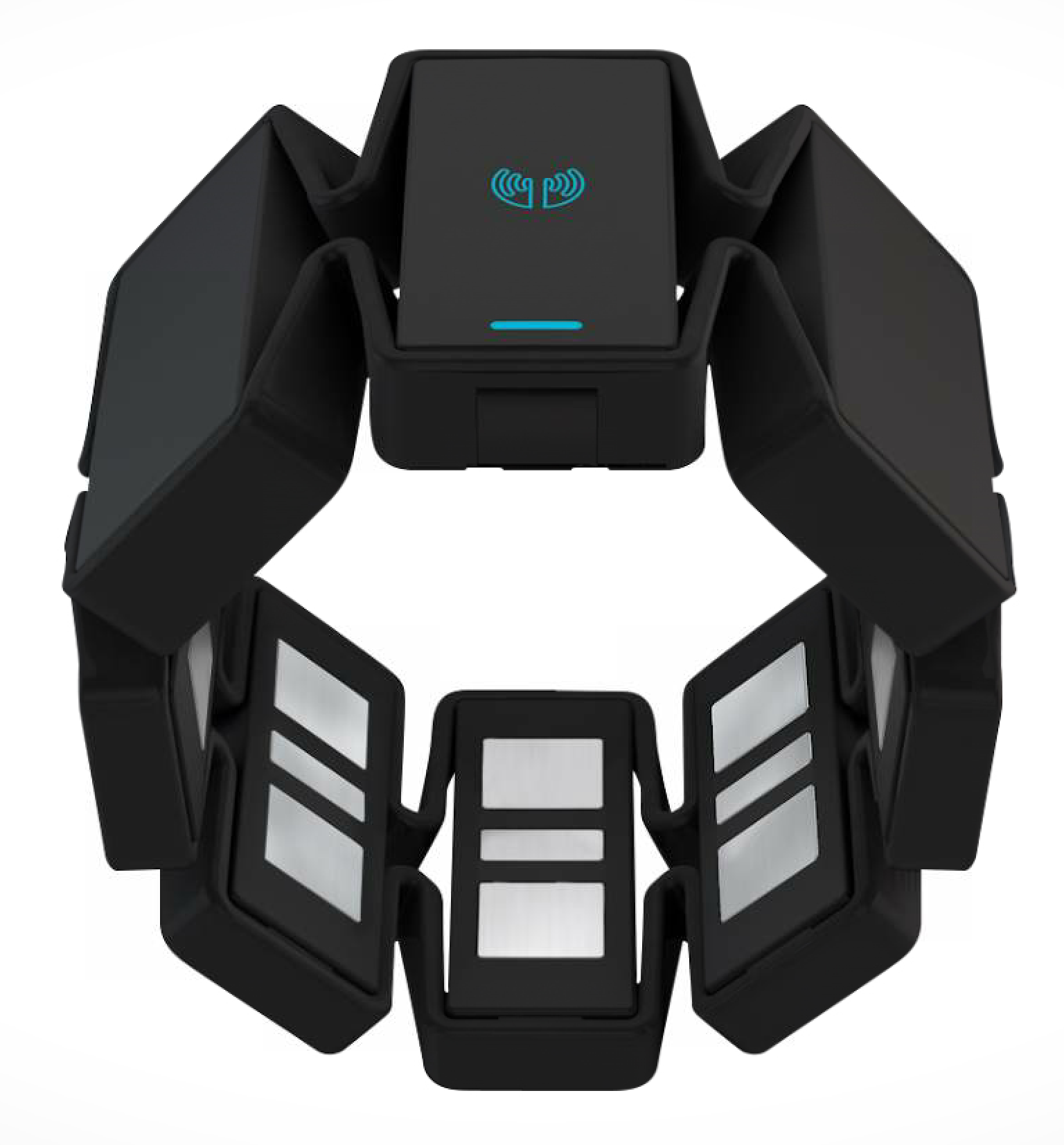
Myo armband is the missing link between body and brain, when it comes to head-mounted displays and smart glasses.

The touch-free, voice-free device slides onto the wearer’s forearm and enables him to use various gestures to control technology. For example, a user can extend all five fingers to snap a photo on smart glasses like XOEye, or wave his hand back and forth to move forward or backward in a training video he’s watching on, say, the DAQRI smart helmet.

ViSafe Wireless Adhesive Electrodes

Although not something your crew would wear to the job on a daily basis, ViSafe wireless adhesive electrodes from DorsaVi, London, are also worth mentioning. The devices analyze motion to create detailed movement profiles measuring proportion of time spent in challenging postures, repetition of movement, sustained movement and muscle activity.

This data, which can be captured and streamed from a person’s body to a mobile device for up to 24 hours at a time, is then run through the movement algorithm of DorsaVi to determine injury risk scores for various jobs.

Ekso Bionics Robotic Exoskeletons
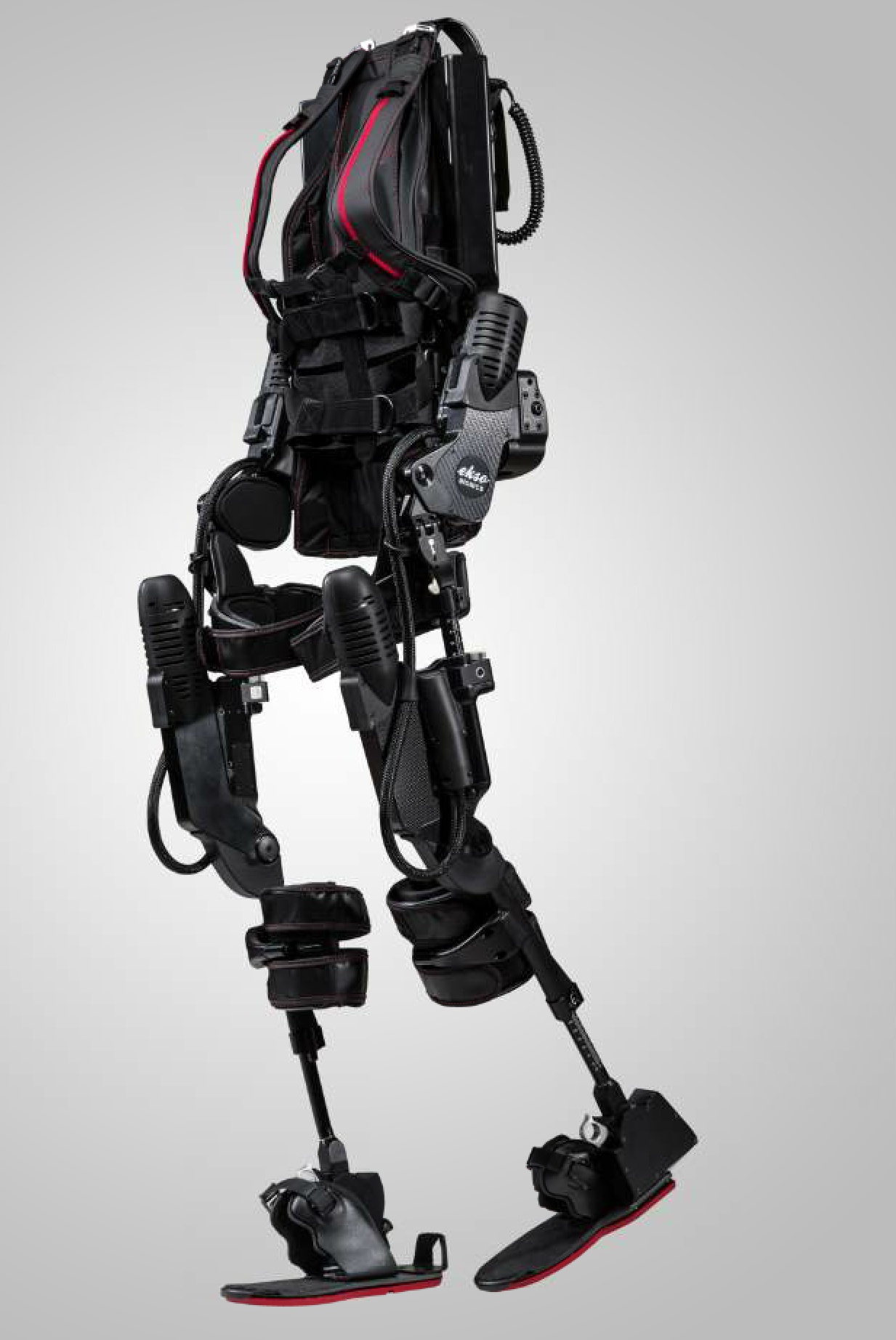
You are Ironman. Or, may be…soon. For the past 10 years, Ekso Bionics has been developing robotic exoskeletons to “unlock human strength, endurance and mobility potential,” but in 2016, the company received the first FDA clearance exoskeleton for use with stroke and spinal cord injuries. In addition to its medical potential, Ekso Bionics’ exoskeletons could also greatly impact industrial markets.

For example, the company compared two workers’ productivity and fatigue levels while doing the same job–one, just a man and his jackhammer; the other, a man, his jackhammer, and an extra robotic arm to assist. The worker with the robotic arm, unsurprisingly, finished the task 25 percent faster with significantly less fatigue.
Lockhead Martin is also working on exoskeleton technologies, including its Fortis exoskeleton, which allows wearers to use heavy tools without having to bear 100 percent of the burden.
How New OSHA Noise Limits Could Affect Your Crew

In May, the Occupational Safety and Health Administration (OSHA) published its spring semiannual regulatory agenda, which included potential changes to acceptable noise levels and solutions in construction work zones.

“When OSHA noise regulations were crafted in the 1970s and 1980s, the construction industry was specifically exempted from the broader general industry standards,” said Brad Witt, director of hearing protection for Honeywell Safety Products. “This was due to unique conditions within the industry, such as a transient workforce, changing worksites and intermittent noise levels that are very task-dependent.”

As a result, OSHA limits noise exposure to 85 decibels over an eight-hour period for employees in manufacturing and service sectors, but caps noise exposure at 90 decibels over an eight-hour shift for the construction industry. This limit of 85 decibels for an eight-hour shift is also recommended by the National Institute for Occupational Safety and Health (NIOSH).

OSHA also requires that workers of all industries who are exposed to hazardous noise levels be included in a hearing conservation program. However, OSHA requires certain standards for hearing conservation programs for general industry, such as annual audiometric testing, “But in the OSHA standard for construction, no such requirement exists,” Witt said.

Changes to noise regulations for the construction industry could affect a variety of areas, from noise limitations to employer responsibilities.

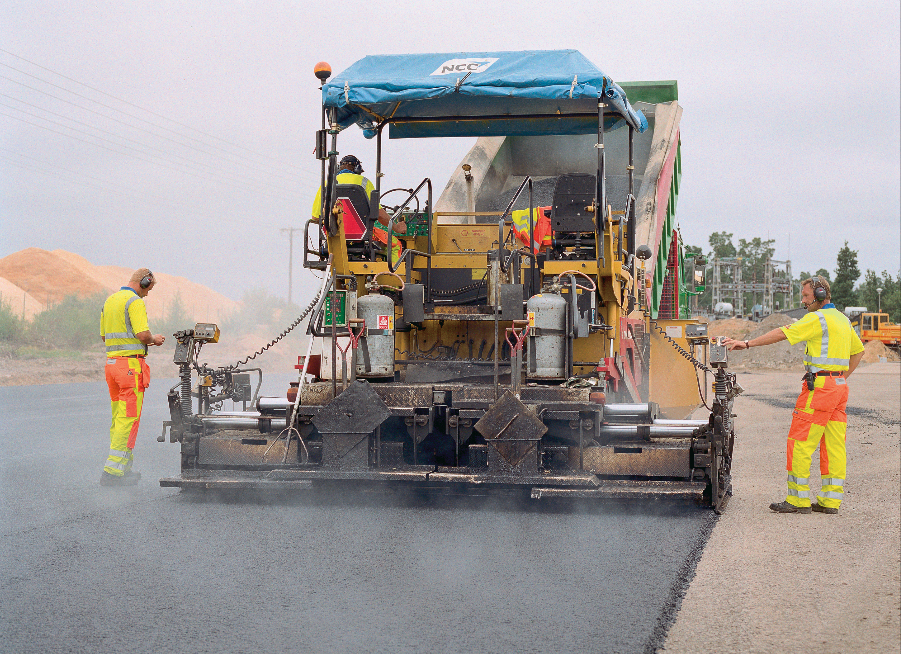
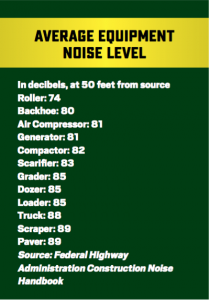
Screen Shot 2016-08-22 at 3.21.44 PMAccording to the Federal Highway Administration’s Construction Noise Handbook, the average paver runs at 89 decibels, and the average truck, 88 decibels. Changes of even a few decibels could require some changes for asphalt paving crews.
“OSHA has long desired to update the noise standard for construction to provide more guidance to employers in terms of hearing conservation,” Witt said, adding that several models at the state level have proven quite effective in reducing workplace hearing loss.

Some states, such as Washington, have already mandated more stringent noise standards. Washington limits construction employees’ exposure to 85 decibels over an eight-hour shift. In 2004, a worker’s compensation report showed that construction workers, which made up 7 percent of the state’s workforce, filed 21 percent of all accepted worker’s compensation hearing loss claims.


Loss of Hearing, Explained

According to the Bureau of Labor statistics, noise-related hearing loss is one of the most prevalent occupational health concerns. Loud noise can also make communication difficult, as well as make it hard to hear warning signals, such as backup alarms.

Signs that a workplace may be too noisy include hearing ringing or humming or experiencing temporary hearing loss after you leave work, and needing to shout to be heard by a coworker an arm’s length away, according to OSHA.

“One of the best indicators of noise damage is to take a hearing test regularly,” Witt said. However, thus far, “it’s up to workers to take the initiative to monitor their own potential hearing loss.”

Even a small change in the number of decibels results in a significant difference in volume. For example, a vacuum produces 70 decibels, while a chain saw produces 120 decibels. However, 120 decibels is actually 32 times louder than 70 decibels.

OSHA mandates that for every 5-decibel increase above the required limit, the amount of time a person can be exposed would be cut in half. NIOSH recommends a 3-decibel exchange rate, so every increase of 3 decibels above the required level halves the recommended exposure time.

For example, if OSHA limited noise exposure of construction workers to 85 decibels—the average volume of a milling machine—to eight hours, it would limit exposure to a jackhammer at 100 decibels to only one hour. NIOSH’s 3-decibel exchange rate would allow 8 hours near the milling machine, but only 15 minutes near the jackhammer.


What Would It Mean?

In November, OSHA will be requesting information to gauge how effective and feasible a lower noise standard would be in the construction industry. Depending on that information, a variety of new requirements could potentially come to light.

Screen Shot 2016-08-22 at 3.21.32 PMEmployers may be required to reduce noise levels to new limits, either by enclosing the noise source or placing a barrier between it and the employee, buying quieter equipment and properly maintaining and lubricating the equipment, rotating employees from louder jobs to quieter jobs, providing quiet areas, or restricting worker presence to a certain distance away from noisy equipment. According to the OSHA website, hearing protection is another option that is “acceptable, but less desirable” than other solutions.
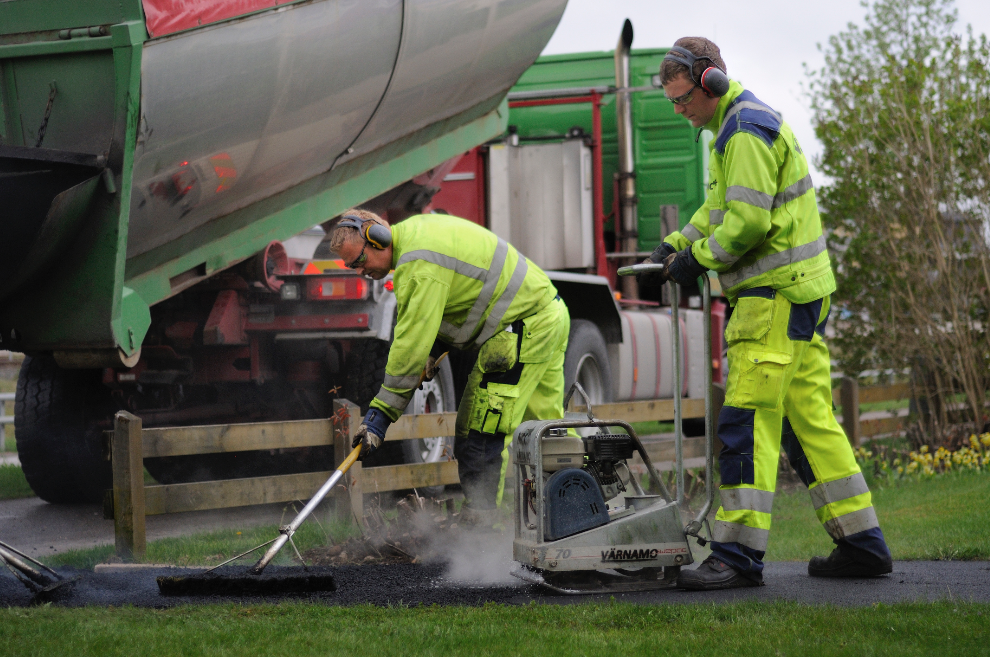
Although hearing protection can reduce noise to lower levels, it comes at a risk.

“While the main concern with hearing protection is too little protection, it’s also critical to avoid overprotection—the earplugs or earmuffs are blocking noise so well, that critical communication or warning signal detection is impaired,” Witt said. “In a paving operation, with constantly moving equipment and hazards coming from a variety of directions, a worker who loses situational awareness is a safety liability.”

“When employees are exposed to high levels of noise, OSHA requires employers to provide hearing protectors and to train their employees to wear them correctly,” said Tim Chismar, technical service specialist with 3M. “Failure to do so can lead to noise induced hearing loss, OSHA fines and increased insurance costs. The reality of the situation is that many employers go out and buy the highest level of hearing protection available thinking that they may be erring on the side of caution.”

If employees are exposed to noise levels beyond OSHA limits, employers in the construction industry could be required to follow more stringent hearing conservation programs, specifics of which could include measuring noise levels, providing free annual hearing exams, as well as training and evaluations of hearing protection.


Find the Right PPE

According to Witt, it’s important to offer your employees the right hearing protection solutions from the start so they’ll be more likely to wear them. He first suggests determining the best hearing protector for the situation.

“Where noise levels are extremely high and continuous, most workers find conventional foam earplugs to be the most comfortable,” Witt said. “They are excellent noise-blockers when they are inserted correctly (deeply), and they are comfortable enough to be worn all day.” This type of protection also only requires a few seconds of preparation—roll down, pull back the ear, insert and hold.

For short-term noise, Witt recommends banded earplugs or earmuffs. “They can be quickly inserted for short-duration exposure, like saw cuts or brief power tool use, and then can hang conveniently around the neck when not in use,” he said. However, banded earplugs don’t block as much noise as foam earplugs, as they aren’t inserted as deeply into the ear canal.

“Convenience is the main benefit of banded earplugs, as a hearing protector is more likely to be worn when it’s readily available.”

Witt recommends reusable earplugs for intermittent noise sources. “Ease of insertion is the main benefit of these earplugs,” he said. “They have the added benefit of being ideal for dirty-hands environments. The worker inserts them by pushing on a stem, without touching any part of the earplug that goes inside the ear.

“Dirty hands are the norm in a paving operation, so a roll-down foam earplug might not be the best choice,” Witt said of hearing protection that would need to be used multiple times throughout a shift. He recommends a pre-molded earplug with a stem, or a push in earplug like Honeywell’s TrustFit Pod.

Another key component of choosing the right ear protection is ensuring a proper fit.

“A number of hearing protector manufacturers now provide fit-test systems, training aids, posters and video tutorials to ensure workers understand how to properly fit their protection,” Witt said. “The goal is not simply to pass out earplugs. The goal is to protect the worker, so that nobody needs to leave the job with less hearing than when they arrived.”

To verify protection levels, Honeywell offers VeriPRO, which allows workers to check the fit of any earplug from any manufacturer. He also suggests offering a variety of sizes to provide options to your crew that are both comfortable and do not interfere with hard hats and eyewear, which can “break the acoustic seal” of hearing protection.

A very important last piece of the hearing-protection-as-PPE puzzle is maintaining communication and situational awareness with earplugs or earmuffs in place.


Other members of the crew may not require communication capabilities. For these employees, level-dependent earmuffs will allow them to maintain situational awareness while offering protection.

Other members of the crew may not require communication capabilities. For these employees, level-dependent earmuffs will allow them to maintain situational awareness while offering protection.

Innovations in Noise Reduction

“In the past, it was not uncommon to hear workers say, ‘I don’t wear the earplugs because I’d rather lose my hearing than be hit by a hazard I didn’t hear coming,’” Witt said. “Fortunately, hearing protector manufacturers have responded with a variety of styles and features that take this into consideration.”

“There are no magic valves that block hazardous noise but allow ‘good noise’ to pass through,” Witt said. However, there are a few hearing protection options that try to manage sound while still offering workers much-needed situational awareness.

The two options Witt suggests are passive hearing protectors and electronic protection. Passive speech-friendly earplugs have filters or design features that give them a very flat frequency response, allowing speech and warning signals to be heard more naturally, Witt said. “Here’s an analogy: A stereo will often have both a volume control and a tone control. A conventional earplug reduces both volume and tone, by clipping the high frequencies of the surrounding noise, making understanding speech difficult.” However, a speech-friendly earplug “turns down” the volume without affecting tone control, Witt said. “Speech sounds more natural, and warning signals are more audible.”

The second suggestion, electronic protection, is level-dependent.

“When noise levels are relatively quiet, surrounding sound is slightly amplified in the earmuff to optimize situational awareness,” Witt said. “But as soon as surrounding sound reaches hazardous levels, the earmuff circuitry instantly detects and adjusts to optimize protection. In an environment with fluctuating noise levels, that kind of balance between protection and situational awareness is critical—and we now have hearing protectors that can do both.”

The bottom line of these technological advances means the paving crew worker does not need to sacrifice hearing in order to keep situational awareness,” Witt said.

According to Chismar, this type of hearing protection is already popular in hunting and shooting sports circles, as well as with law enforcement and the military. Level-dependent electronic hearing protection is available both as earmuffs and in-ear devices.

“Level-dependent hearing technology can be great for environments where there are intermittent loud sounds, such as in the construction industry,” Chismar said.

The 3M level-dependent earmuffs are also equipped with volume control, so any quieter noises can be amplified by up to around 10 decibels. The earmuffs’ electronics can also be turned off to provide traditional hearing protection.

Screen Shot 2016-08-22 at 3.21.56 PM3M also provides other hearing protection and communication solutions, like two-way radio and Bluetooth® capabilities, and AM/FM radio, as well as many combinations of these options. For example, the paver operator, dump man and haul truck driver may want to use level-dependent hearing protection that also offers two-way radio communication so they can coordinate mix delivery. Alternatively, the foreman might want hearing protection that offers Bluetooth® compatibility so he/she can talk on a mobile phone without having to leave the noisy environment.

“Many times falls, struck by, and eye injuries are the first priorities for construction companies as those hazards may seem more immediate,” Chismar said. “However, noise-induced hearing loss has been one of the most widespread occupational health concerns for the past few decades. When hearing protection is needed on the job site, selecting the most appropriate hearing protector for the application is critical for worker compliance and protection. Newer technologies, such as level-dependent hearing protection and wireless communication, may require a higher upfront investment, but these types of protectors can help improve a worker’s situational awareness and ability to communicate, which may ultimately help to improve the safety and productivity of the work crew.”


A Case Study on Today’s Job Site

According to Paving Superintendent Ray Eisner, crewmembers in Martin Marietta’s Denver Metro Paving Division are already required to wear hearing protection. However, this is part of the company’s policy, not an OSHA requirement.

“Most of our crews actually prefer [the hearing protection],” Eisner said. They are presented with a variety of options for hearing protection at the beginning of each paving season. “We go through a lot of earplugs out there.”

To maintain communication on the job site, Eisner said it’s easy to hear someone talking near you, as long as you’re not right next to the paver. “If you’re too close to the paver, you might have to take one earplug out to be able to hear someone talking to you,” he said. Additionally, he said, his crew has had no issues hearing backup alarms and other audible warnings while wearing hearing protection.

The paver operator, dump man and Shuttle Buggy operator wear noise-suppressing headphones equipped with radios so they can continue to communicate effectively.

“They really come in handy when we’re paving at night, which we’re doing a lot of right now,” Eisner said. “During the day, though, they may wear them as needed, but they still use hand signals to communicate with each other, too.”

Eisner has noticed job sites getting quieter over time as equipment gets quieter. “I ran rollers for 17 years and they were noisier than heck, but now they’re a lot quieter and more comfortable,” he said. “The equipment has gotten significantly quieter, even just in the past 5 years.”


Look To The Future

Witt said that it’s important to note that any change to OSHA noise regulations would be a lengthy process with multiple levels of input and review. The agency plans to issue a request for information this November.


Noise Reduction Ratings

Most earplugs and earmuffs have a noise reduction rating (NRR) between 20 and 35 decibels. However, that doesn’t mean wearing earplugs with a 33-decibel NRR would reduce the sound of a paver running at 89 decibels to 56.

According to Tim Chismar, technical service specialist with 3M, although it’s possible for an individual to obtain the full NRR value and reduce the paver volume in our example from 89 decibels to 56, actual achieved NRR value will depend on a variety of factors.

“Due to many factors, such as selecting the proper size of protector, the variation of fit, fitting skill, and the motivation of the user, many people may receive less protection than the NRR value,” he said. “It’s important to understand that the NRR value is an accurate measure of noise reduction of a hearing protection device in a laboratory setting (as set forth in government standards), but not necessarily an accurate reflection of noise reduction for an individual user in a workplace setting.”

OSHA recommends taking the NRR number, subtracting seven and then dividing by two. For our previous example, that means those NRR 33 earplugs would conservatively reduce the paver’s noise to 76 decibels.

Equation:

(33 – 7)/2 = 13

(NRR # – 7)/2 = Noise reduction in decibels

“[That equation] is a derating method recommended by OSHA to help employers select adequate protection for their employees,” Chismar said. “In addition, 3M recommends fit testing of individual workers by their employers to validate that each worker receives an adequate level of protection.”

If your job site is louder than required limits, even with earplugs, your crew may be required to wear both earplugs and earmuffs. Earplugs generally cannot offer attenuation ratings higher than the mid-30s, due to physical limitations, reduction in comfort and general effectiveness.