Fuel-Resistant Asphalt Binder Resists Asphalt Breakdown in St. Augustine

FDOT uses StellarFlex FR asphalt binder and Evotherm M-1 warm mix asphalt technology to combat pavement issues presented by horse-drawn carriage traffic.

One of the main attractions in St. Augustine, Florida, is the horse and carriage rides. Every day the horse-drawn carriages line up on State Road 5A (SR 5A) along the bayfront waiting for visitors to book a historic, romantic or haunted tour around the city. The tours follow the same routes day after day in a concentrated area, so the pavement is highly abused. The chemistry of the horses’ urine softens and breaks down the asphalt. The combination of the soft asphalt, the concentrated loading of the carriage wheels and horse-shoed hooves, creates an abusive environment for the pavement. It’s ideal for rutting.

The Florida Department of Transportation (FDOT) sought a solution to extend the pavement’s lifespan. During its research, FDOT learned about a job completed in Central Park (New York City) in 2007. The carriage rides through Central Park caused the same issues to the pavement that SR 5A in St. Augustine was experiencing. The New York City Department of Transportation used a fuel-resistant asphalt binder, which it found also resists the asphalt breakdown from the horse urine.

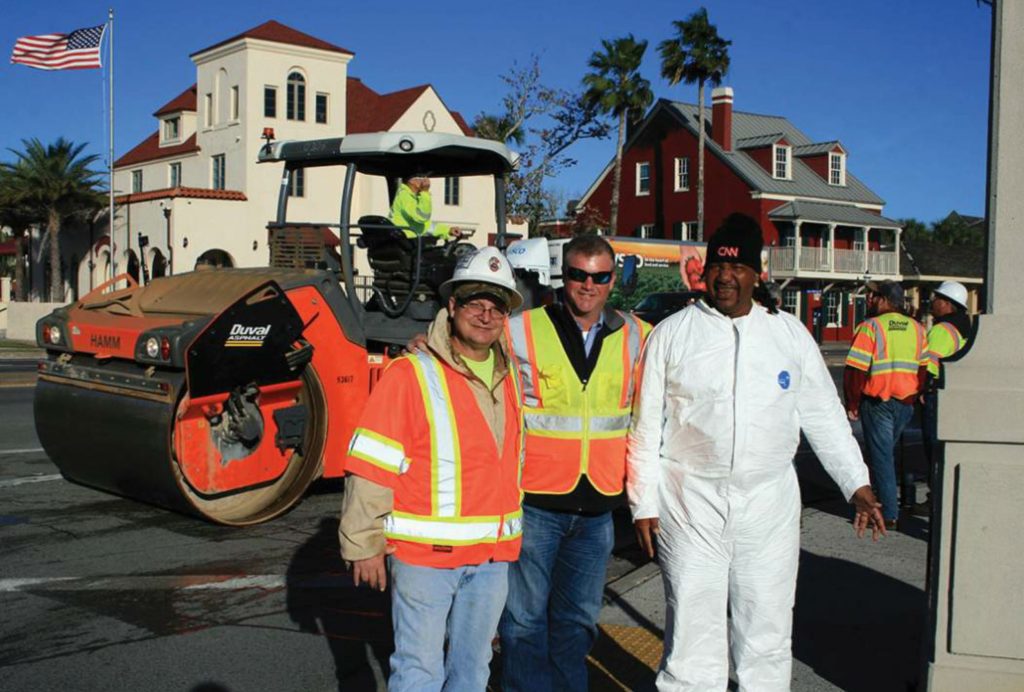
From left, Mike Durst, Bill Nowak and Ken Galvin

FDOT decided to use the same asphalt binder in St. Augustine on SR 5A on two projects; a maintenance job in 2015 and a reconstruction job in 2019. The fuel-resistant asphalt mix contained StellarFlex FR asphalt binder (PG88-22FR) from NuStar Asphalt, now Associated Asphalt, as well as Evotherm M-1 Warm Mix Asphalt technology and anti-strip from Ingevity.

The components already have history. For example, StellarFlex FR was first used in the United States in 2002 at La Guardia airport on Taxiway GG. Asphalt binder can dissolve when exposed to the lighter-end fuels such as diesels and jet-fuels. Since then FAA Standard Specifications for the Construction of Airports Item P-601 (2014)—which was updated to P-404 in 2018—outlines the requirements for a fuel-resistant asphalt mix pavement where pavements are likely subjected to fuel spills. The first section of pavement constructed in 2002 at LaGuardia is still in service today. After a pavement survey of the entire airport was conducted fall 2018, Taxiway GG was the only portion of the airport not rutted.

The Superpave mix design included StellarFlex FR asphalt binder (PG88-22FR) and Evotherm M-1 Warm Mix Asphalt technology and anti-strip.

Ingevity’s Evotherm M-1 Warm Mix Asphalt technology and anti-strip was used in the mix as a dual-purpose additive. The warm-mix technology is designed to promote a smooth, uniform texture of the pavement surface and acts as a compaction aid, providing additional construction time with thin lifts and in cool weather.

For the SR 5A projects, the fine friction course mix was designed to target 2.5 percent air voids. The modified Superpave design is intended to create an impermeable asphalt pavement that resists the horse urine from penetrating the asphalt pavement and maximize the asphalt content (6.3 percent); both of which increase the durability of the mix.

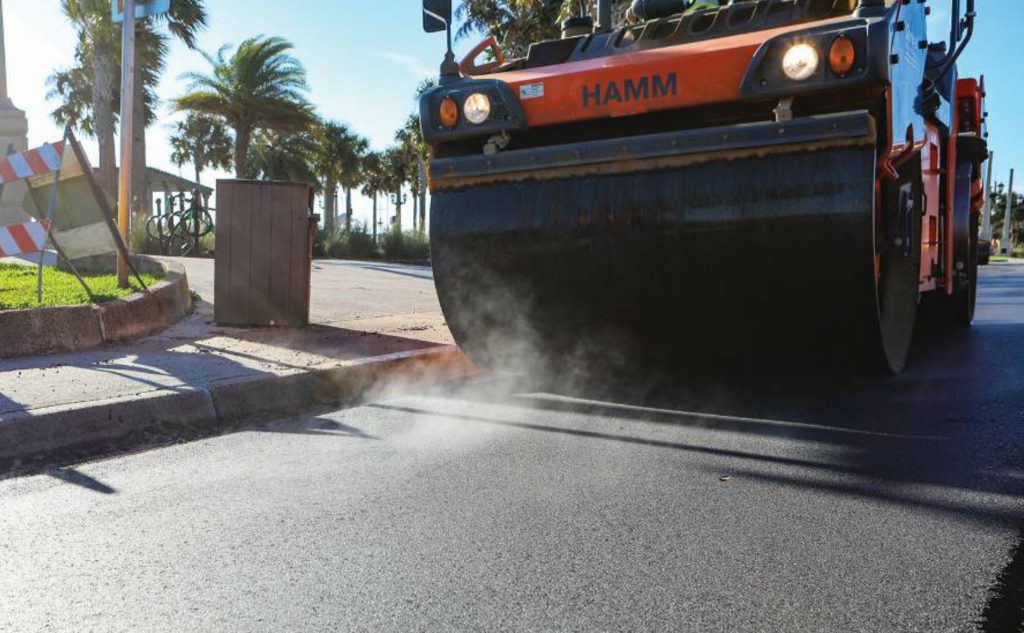
Duval Asphalt crewmembers pave along the beautiful and historic State Road 5A.

Steve McReynolds, director of operations for Asphalt Testing Solutions & Engineering LLC (ATS), formerly with FDOT, contributed to the development of the fuel-resistant specifications and determined the limits for the SR 5A maintenance project in 2015. “Fuel-resistant mixes are typically used at airports and weigh stations; anywhere fuel spills are common,” he said. “It’s unusual to use a fuel-resistant mix on a main roadway, so adjustments were made to the specification for use on an artillery road as opposed to an airport.”

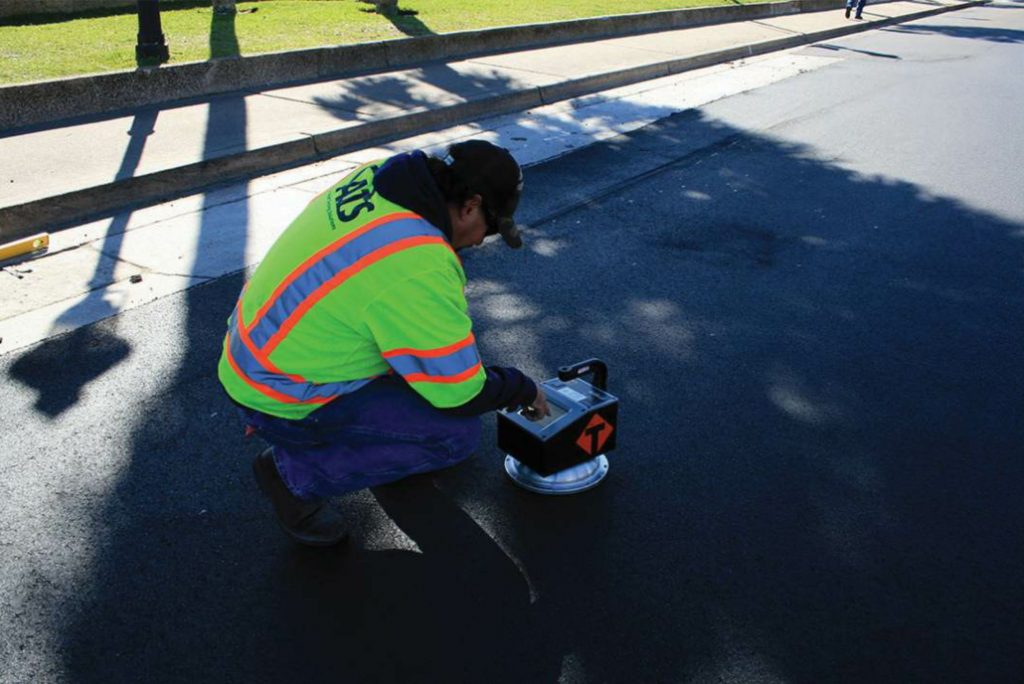
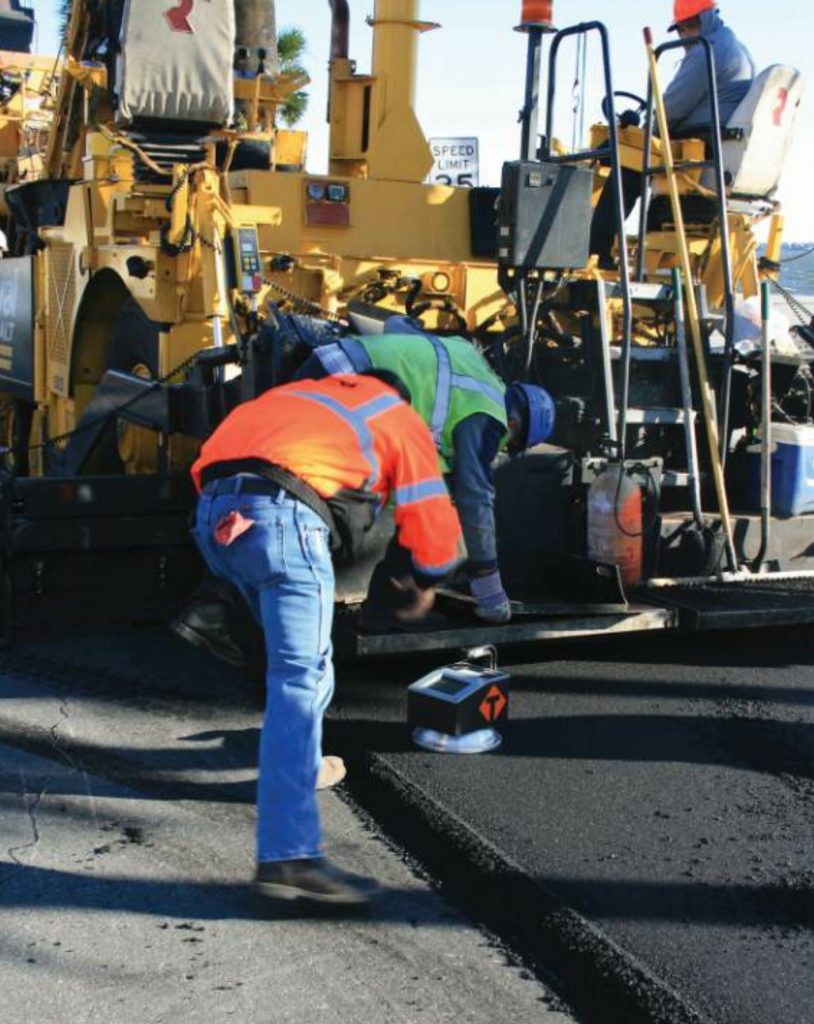
Quality control/quality assurance (QC/QA) included getting density measurements immediately behind the screed and after breakdown rolling. The team from Asphalt Testing Solutions & Engineering LLC (ATS) used non-nuclear density gauges from TransTech Systems, Latham, New York, along the mat.

Duval Asphalt was awarded the SR 5A maintenance job in 2015. The purpose of the maintenance job was to test the performance of the fuel-resistant mix. The project included milling 1.5 inches of friction course and replacing it with the new fuel-resistant mix. Since this mix is considerably more expensive to create and anticipating a reconstruction project a few years later, McReynolds took care in determining the project limits. The horses follow a very specific route through the St. Augustine streets, and McReynolds mapped the routes carefully to ensure the fuel-resistant mix was only applied where needed.

The asphalt placed in 2015, as part of the maintenance project, held up so well under the horse and carriage conditions, FDOT approved a full reconstruction this year using the fuel resistant mix. Duval Asphalt was again awarded the project. ATS was hired for quality control with McReynolds overseeing mix production and placement on the job.

“I’m very familiar with the specs and the desired performance, since I helped develop these parameters the last time this mix was used on this road.”

Duval Asphalt milled a total of 3 inches and replaced 1.5 inches of structural course and 1.5 inches of friction course along SR 5A.

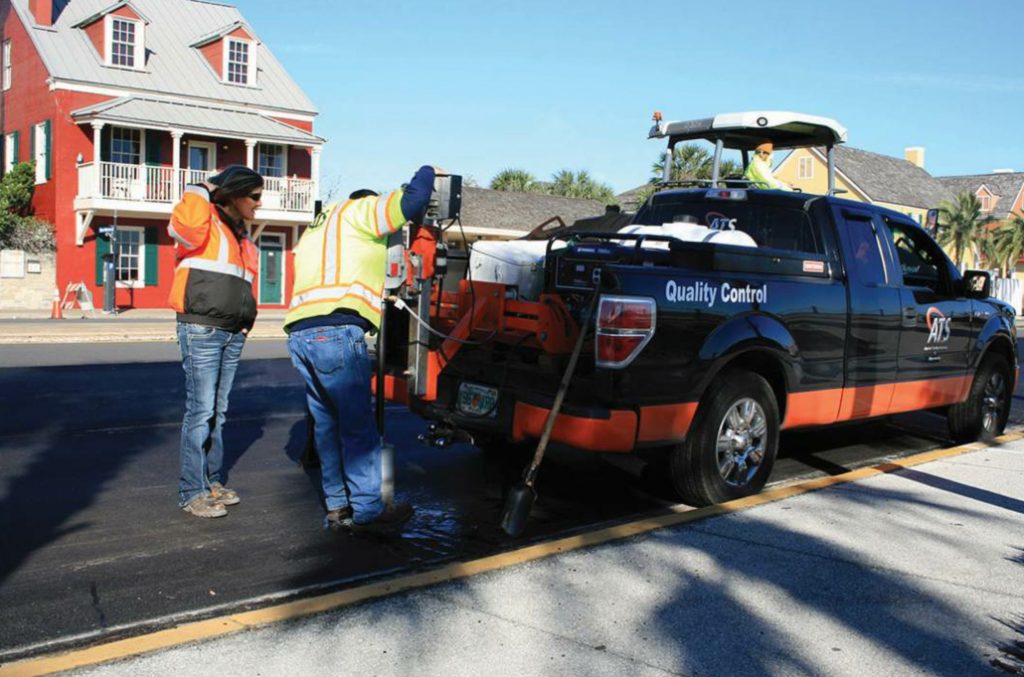
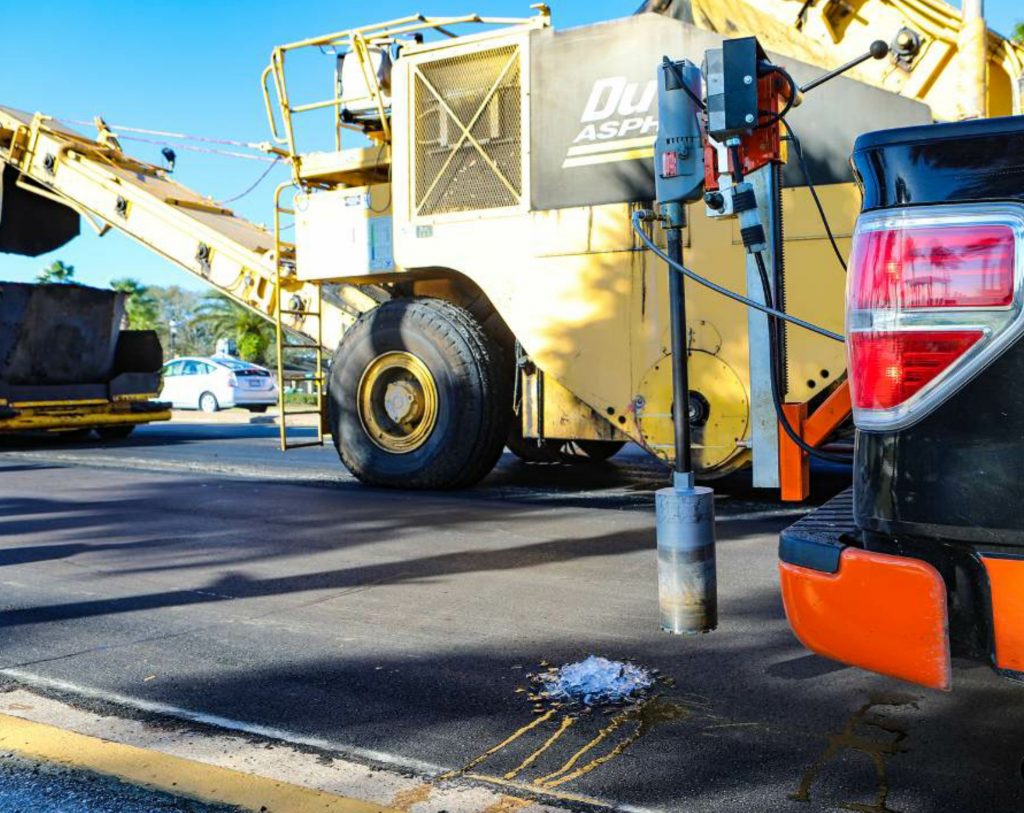
ATS grabbed core samples to prove quality as well.

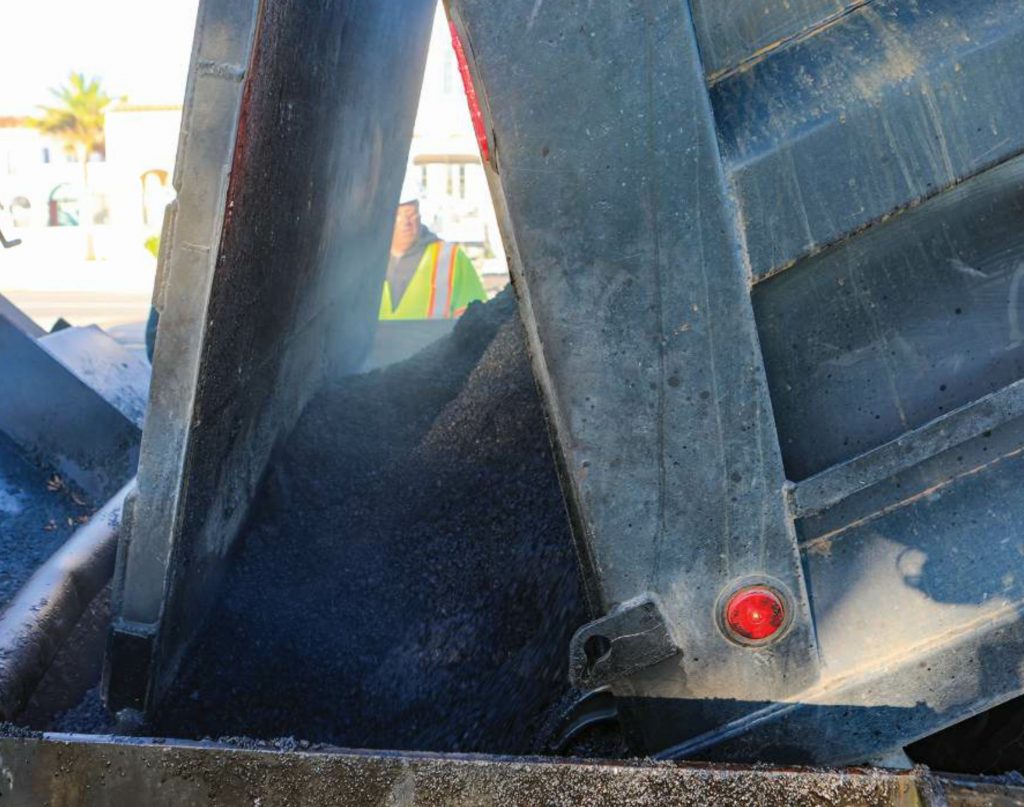
The fuel-resistant mix was placed over the horses’ paths and a typical FDOT 12.5-mm friction course mix was placed in the areas untouched by the horses. A total of 350 tons of fuel-resistant mix was placed. They used a material transfer vehicle (MTV) to keep the paving process continuously moving, keep the polymer-modified mix homogenous and to prevent segregation.

One 12-ton oscillating roller and an 8-ton finish roller were used to compact the mix. ATS worked closely with the roller operators to ensure smoothness and proper density was achieved. Lab testing of the cores confirmed an average 93.5 percent in-place density.

A smooth, gorgeous mat

Performance testing was completed on the fuel-resistant mix to identify performance standards and predict the future of the pavement. ATS Pavement Materials Engineer Tanya Nash confirmed the lab performance results of the mix are positive.

“Since the performance distresses seen in the past were primarily rutting as a result of softening of the asphalt from the consistent exposure to the horses’ urine, rut testing and fuel-resistance testing was performed,” Nash said. “Both tests met the industry standard and the FDOT specification requirement, indicating that the mixture will resolve the performance issues of the past and ultimately perform well.”

The project began with milling 1.5 inches of friction course, then used a material transfer vehicle to deliver two lifts in smooth fashion, and included coring to prove excellent compaction in the end.

Although the mix was developed to combat the rutting ultimately caused by the horses, residents and tourists alike will enjoy the new, smooth ride. With an average of 500,000 visitors to St. Johns County each month, shutting down lanes to pave is not an easy nor convenient feat. Although this mix has a high cost up front, in this particular application, it extends the pavement’s lifespan. Rather than requiring frequent maintenance and resurfacing, construction will take place approximately every 15 to 17 years. This helps alleviate the higher cost and inconvenience.

Quality control/quality assurance (QC/QA) included getting density measurements immediately behind the screed and after breakdown rolling. The team from Asphalt Testing Solutions & Engineering LLC (ATS) used non-nuclear density gauges from TransTech Systems, Latham, New York, along the mat.

Asphalt pavement provides a smooth ride. Now, a smooth ride can be enjoyed via horse and carriage through the beautiful streets of the nation’s oldest city for many years to come.

Ajax Materials Corporation Manages New Plant Build

Not every project a contractor takes on involves a paving crew on a highway or rural route. Sometimes a multi-month project moving equipment, earth, mix and materials happens right at the asphalt production site. For example, the team of Ajax Materials Corporation, headquartered near Detroit in Troy, Michigan, offers a case study in how to manage and build a new asphalt plant during the winter with multiple vendors, scads of components and frigid winter temperatures.

Ajax Vice President Mark Boden shared, “Ajax has been in business since 1951. Over the years, we’ve grown from a small paving contractor to a large, fully integrated paving company and materials supplier. We continually upgrade our asphalt plants with the latest technology.”

Boden explained that the Brighton, Michigan, plant was completely replaced with new state-of-the-art asphalt manufacturing equipment after the 2017 paving season and the project required all hands on deck.

Dave Grabowski, the operations manager for Ajax, was the project manager for this undertaking. “Support from upper management was key,” Grabowski said. “Any equipment or service required to get the job done was evaluated and approved by management without delay.”

Travis Mick, the vice president of CWMF, Waite Park, Minnesota, was a key vendor who developed the CAD layout of the site. Boden explained, “CWMF worked with us to lay out the new Brighton plant. That was a huge feather in their cap.” Boden talked about the process’s beginning. “We used aerial views of the property and evaluated all possible layouts. After several iterations, we were rewarded with a really nice layout.”

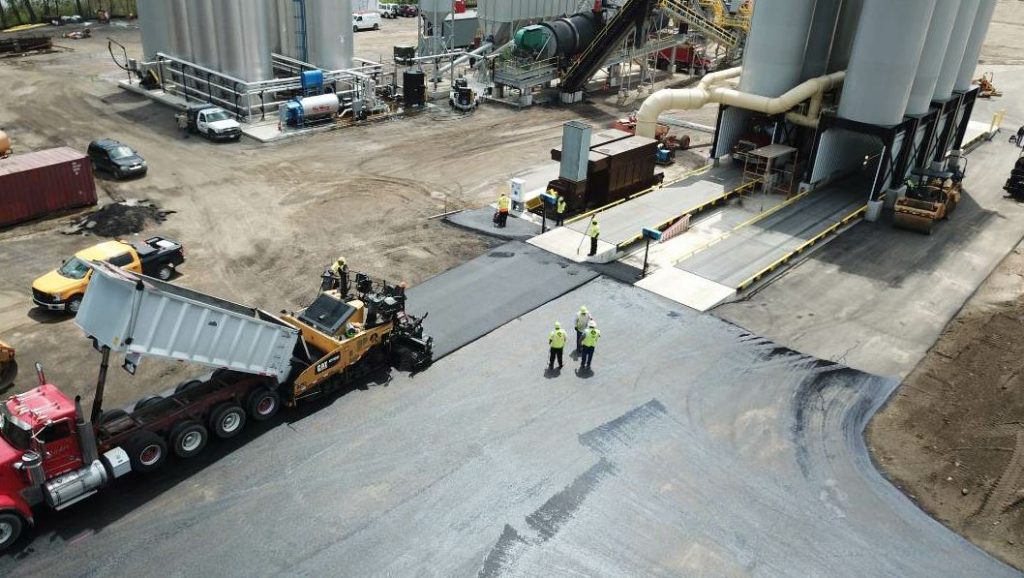
Here you see the crew paving the site with a number of the components visible. The tank farm and piping from Meeker are at the top left; the drum and baghouse from CWMF are at the top right; the blue smoke capture ducts and housing are from Blue Smoke Control, a division of Butler Justice Inc.; and everything will work in concert with the SYSTEMS blend and TSC plant controls installed by Delta Services, who captured and provided this image.

Here you see the crew paving the site with a number of the components visible. The tank farm and piping from Meeker are at the top left; the drum and baghouse from CWMF are at the top right; the blue smoke capture ducts and housing are from Blue Smoke Control, a division of Butler Justice Inc.; and everything will work in concert with the SYSTEMS blend and TSC plant controls installed by Delta Services, who captured and provided this image.

Grabowski takes up the story from there: “That was something else we did with the plant employees. We presented the proposed layouts to them for their opinions. When we get a concept from any vendor, we seek input from our plant personnel because we value their insight and opinions.”

With input from Ajax plant employees, management, CWMF and other vendors, Ajax decided on the optimum layout and was ready to overhaul the Brighton site.

Safe Layout

One of the vital aspects of any Ajax project is safety. Grabowski and Boden discussed this in depth.

“We were very particular about how we designed our truck traffic routes on a ring around the perimeter,” Grabowski said. “Because we started with a clean sheet of paper for the site, we could lay out the plant exactly how we needed to maintain the flow of traffic the way we wanted it for safety and efficiency.”

“Line of sight at this plant is excellent,” Boden agreed.

In fact, line of sight at the Brighton facility impressed the controls installer as well. Dave Enyart Jr., the vice president at Delta Services Corp., provider of SYSTEMS Equipment Corp. controls for the project, shared his thoughts. “The layout of this plant is very well done. The operator has a 360 view of everything from the control tower. We don’t see this often. This layout, combined with the advanced SYSTEMS blend and TSC plant controls that were installed, provide the operator with unparalleled visual and audible indications on the entire plant, allowing the operator to know where the trucks are, where the loader is, and a bird’s eye view of the running plant equipment and plant personnel.

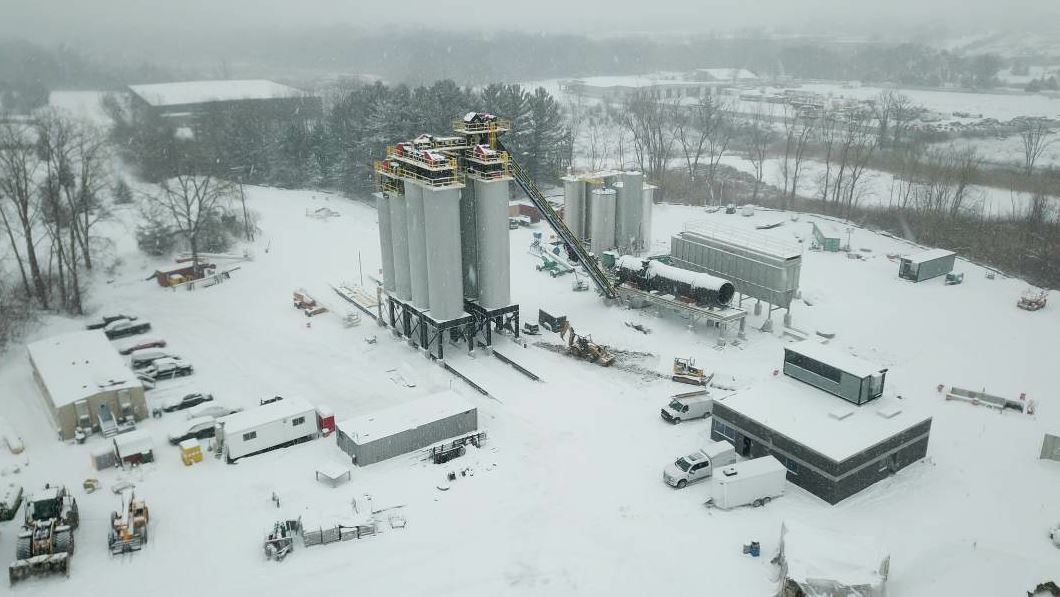
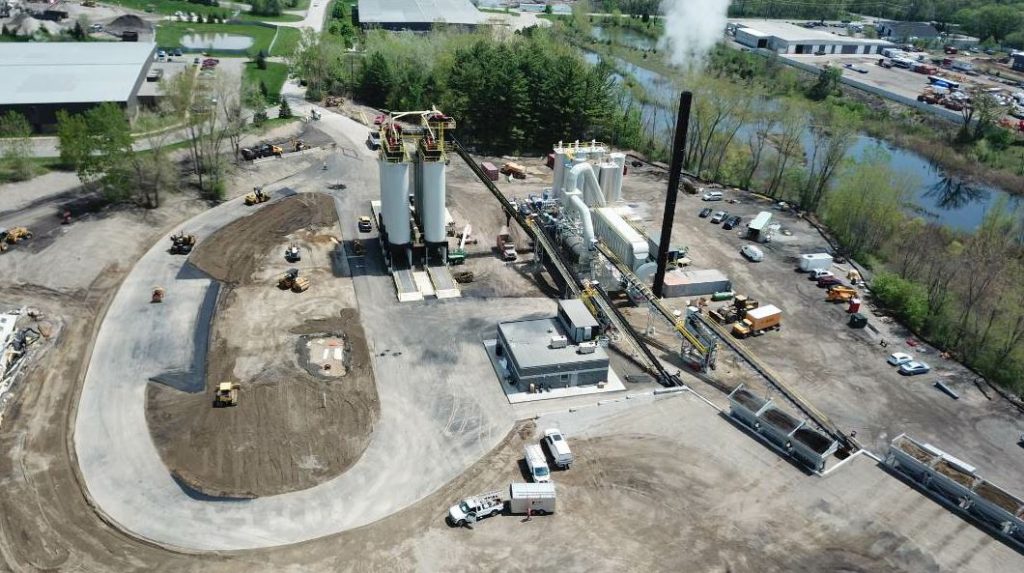
Ajax Materials’ Brighton, Michigan, plant was completely replaced with new state-of-the-art asphalt manufacturing equipment after the 2017 paving season and the project required all hands on deck. Photo courtesy Delta Services

Ajax Materials’ Brighton, Michigan, plant was completely replaced with new state-of-the-art asphalt manufacturing equipment after the 2017 paving season and the project required all hands on deck. Photo courtesy Delta Services

“Let’s say we show an alarm,” Enyart continued. “The operator can look out the window and see exactly what’s going on and what personnel may be in the vicinity. If the screen shows him it’s the feeder that is in error, he can look out and see what’s going on at that feeder, contact appropriate personnel and oversee the process. Without that view, it might take a ground man several minutes to report the problem and find a cause and report that back to the operator.”

The extra safety features Ajax requested of the controls systems, along with the increased visibility, increased plant safety.
Enyart explained Delta Services installed SYSTEMS Equipment’s TSC plant control touchscreen, which gave Ajax more flexibility in the configuration of the safety systems and alarm annunciation. “Ajax wanted more detailed visual indication of the plant safeties,” Enyart said.

“If a conveyor stop switch is tripped, the operator knows which conveyor has an issue while the TSC automatically shuts down the rest of the conveyor line.

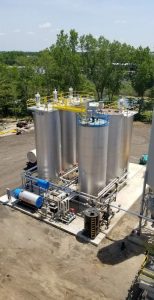
Meeker Equipment, Belleville, Pennsylvania, was consulted during the summer of 2017 to conceptualize the tank farm layout. Steve Meeker shared, “To Ajax’s credit, they were able to make some early decisions with respect to the tanks and plumbing system so that we could deliver and install the tanks and plumbing by early February 2018.” Photo courtesy Meeker Equipment

Meeker Equipment, Belleville, Pennsylvania, was consulted during the summer of 2017 to conceptualize the tank farm layout. Steve Meeker shared, “To Ajax’s credit, they were able to make some early decisions with respect to the tanks and plumbing system so that we could deliver and install the tanks and plumbing by early February 2018.” Photo courtesy Meeker Equipment

“For the eight-silo system, Ajax wanted positive proof for which way the flop gates are going. Using the TSC, we gave them additional limit switch indicators and visual indicators on the screens to prove the flop gates have moved to the correct location. We have done the same thing with their six AC tanks. We installed automatic valves with limit switches so we’re proving that the valve is open and proving when the valve is closed.”

At the silos, another vendor installed cameras that Delta Services tied into so the camera feed shows on the screens in the control house. The loadout process is a step above as well. “The operator selects which silo the truck is to go to, which flashes a light and changes the camera view, allowing them to see when the truck is in position,” Enyart explained. “They can then open the safety gate when ready. Additional safety steps are there for their safety and the drivers’ safety as well. When selecting a different silo, all safety gates will close and return the camera system to a

view looking down the loading lanes.”

The Ajax team asked for safety features above and beyond standard operating procedures from CWMF, too. Mick explained: “Ajax takes pride in doing things the right way. In efforts to keep a safe working environment, the equipment was elevated to allow for ease of cleaning and access. We also incorporated service catwalks around all sides of the drums to allow for safe maintenance.”

The team at Meeker Equipment Company, Belleville, Pennsylvania, provided tanks, piping and jacketing, and Steve Meeker spoke about the safety considerations Ajax added in. “While much of the design was somewhat fixed due to the fitting locations of the existing tanks, a generous amount of space was provided between the rows of tanks to make them easily accessible and serviceable.”

That consideration extended to many areas of the site.

“We have a very extravagant conveyor system on top of the silos, but we went over and above such as straps on a barrel ladder just to make sure it’s 100 percent safe up there,” Grabowski said. “The silos have sheeting on the side to capture and evacuate blue smoke so we had four additional cameras installed for 100 percent view of what’s going on at the scales.”

What the team takes pride in is not only the safety worked into the finished site, but the safety record during the project.

“I put up a board to track our progress,” Grabowski said. “We went the entire project without an injury. We had days with 20 people working to days with 60 people on the project for four and a half months.”

And that’s only half the story.

Compress Time

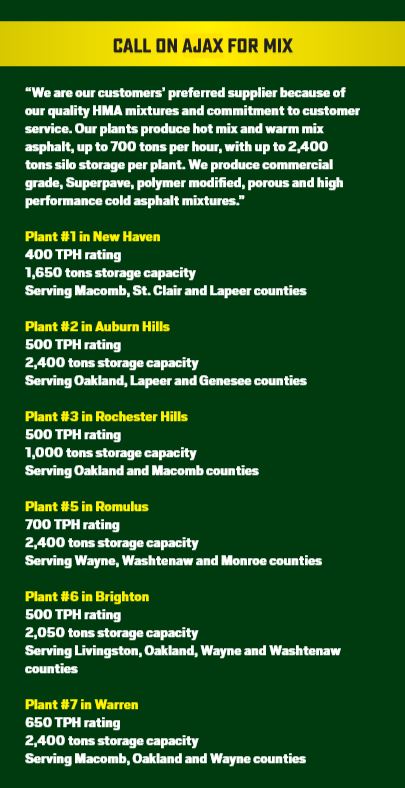
Now that Plant #6 in Brighton is up and running, it offers up to 500 TPH and over 2,000 tons of storage capacity. During the winter of 2018, it produced mix for its own crews to pave the site for dust control and other best practices. Photo courtesy Delta Services

Now that Plant #6 in Brighton is up and running, it offers up to 500 TPH and over 2,000 tons of storage capacity. During the winter of 2018, it produced mix for its own crews to pave the site for dust control and other best practices. Photo courtesy Delta Services

“As far as the compressed schedule, we had a huge US-23 paving project running until the end of November before we could shut down the old plant,” Boden said.

The team was ready.

“Ultimately, they needed to replace their parallel flow technology with counterflow at both facilities,” Mick said. “At the Bald Mountain and Brighton facilities, we supplied a 10-foot, 6-inch by 60-foot drum and 100,000 CFM baghouse package. The 60-foot drum allows for extended drying and mixing times, resulting in high efficiency output. In addition, VFDs were incorporated on the drums for achieving optimal efficiencies with the multitude of mix designs.”

“Our relationship with Ajax started small, just providing parts,” Mick said. “I supplied flighting for their drums to help solve some of their problems in the past, then replaced a drum at the Crooks site. I built a good relationship where they could trust me; I listened to their concerns and needs. The business was built over time.”

When the time came to rebuild the Brighton site, Mick worked with Ajax to put together a layout that guided the rest of the process. The tank farm piece of the puzzle went to Meeker.

“Bill Garrett, Nick Dolyk and I were consulted during the summer of 2017 to generate a conceptual layout of the tank farm,” Steve Meeker explained. “Starting early allowed us plenty of time for budgeting to develop preliminary designs for the project. To Ajax’s credit, they were able to make some early decisions with respect to the tanks and plumbing system so that we could deliver and install the tanks and plumbing by early February 2018. There were multiple meetings reviewing the design of the plumbing system to ensure proper flow of thermal fluid and to ensure that the system was safe and serviceable.

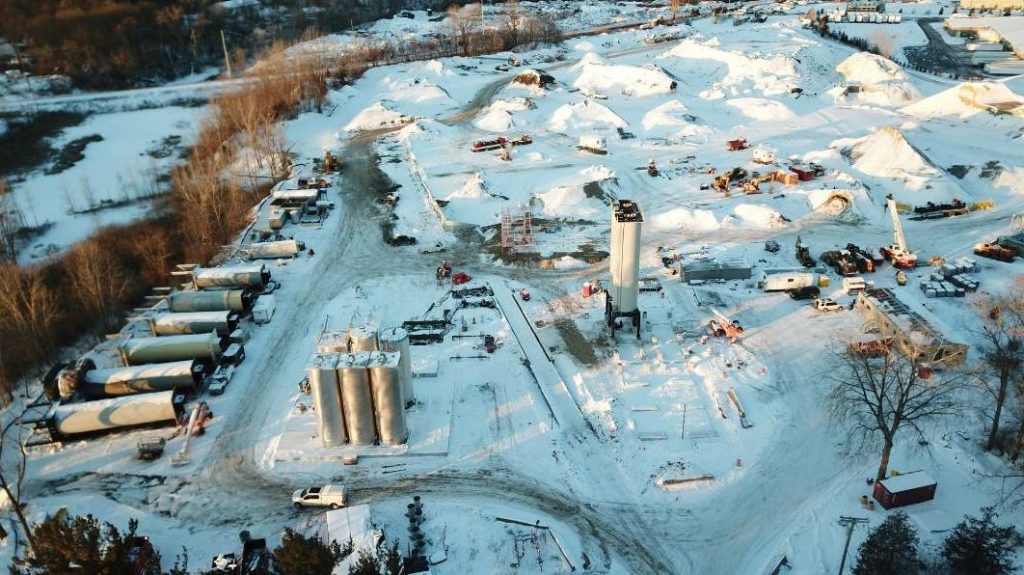
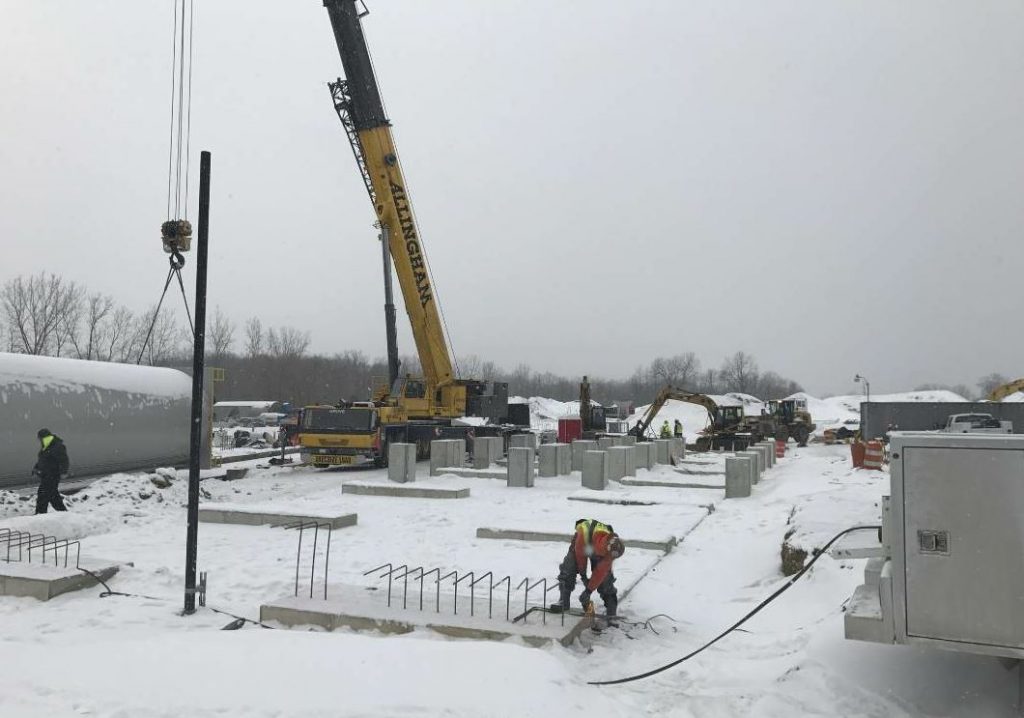
The team sometimes had to heat the ground before pouring concrete to create the forms and footings for plant components. Here the crew gets the silo structure ready. Photos courtesy Ajax Materials

The team sometimes had to heat the ground before pouring concrete to create the forms and footings for plant components. Here the crew gets the silo structure ready. Photos courtesy Ajax Materials

“This was a challenging project as we were tasked with designing a new asphalt and thermal fluid plumbing system for three existing asphalt storage tanks and three new asphalt storage tanks. Meeker Equipment manufactured the three new tanks and one of the existing tanks so drawings were available for four of the six. Given the large number of tanks and considerable asphalt lines that needed to be heated, we elected to design the system with a three-pump manifold and our balanced thermal fluid pumping technology. Incorporating the asphalt and thermal fluid system was not real challenging once the drum and metering skid were located on the drawings and we knew the points we had to connect to.”

Connecting proved challenging due to the weather. It gets mighty cold in Michigan during December and January and so on, as the whole team could attest. They even had to schedule equipment moves around frigid days when frost laws were in effect.

Ajax had a civil engineer in charge of land balancing who helped keep everything on track. Tim Hay is a project manager on the paving side of the company, but “we brought him to this project to serve as civil engineer,” according to Boden. “He took on a lot of the earthmoving,” Boden said. “He took the paving and earth duties.”

“He would check measurements of the forms before we poured concrete bases,” Grabowski said. “There were days when we had to heat the ground before we could pour the concrete. The weather was a huge challenge that Tim met head on.”

“The winter of 2017/2018 was particularly challenging in Michigan with heavy rain and snow,” Meeker concurred. “Ajax worked as the GC pulling all suppliers’ responsibilities together to make the entire plant. From our end, we had some plant connections to hit and some controls tie-ins and that part went smoothly. The biggest benefit of working with Ajax is their ability to commit early to a project. Proper time allotted and planning helped make our piece of the project a success.”

“I’m proud of the teamwork and safety that went into building this plant under the worst winter conditions I’ve ever seen,” Boden said.

The team included upper management and ground personnel all along the way. “Vince Iafrate is our maintenance manager,” Grabowski said. “He covers all the bases and was an invaluable part of this project.”

Both Boden and Grabowski spoke of Chris Edwards, a new employee in 2017/2018, who “was onsite continually. A major part of this project included a new lab, scale control center, tool room and operator’s control room all housed within one building, and Chris helped to track tasks and schedules to help keep the project on time.”

Boden mentioned the vital role Kathleen Anderson, the Ajax environmental manager, played in the Brighton project. “Kathleen handles all our environmental issues and was instrumental with project permits and helping the team with whatever else was needed.”

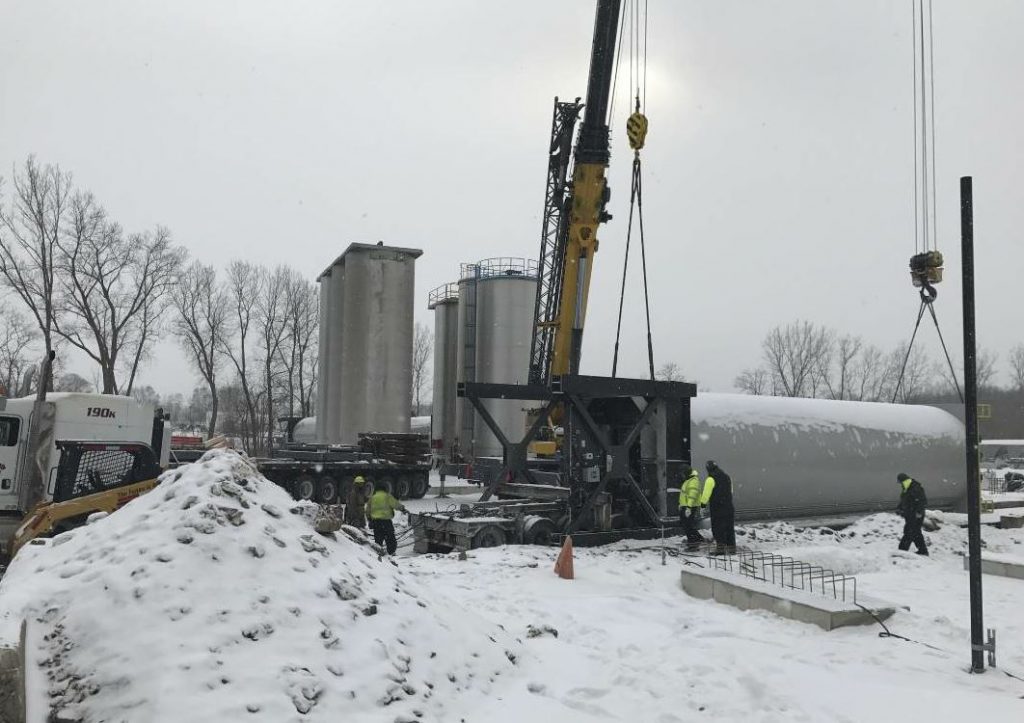
With footings in place and cured, the crew could erect the silos, even in the snow. Photo courtesy Ajax Materials

With footings in place and cured, the crew could erect the silos, even in the snow. Photo courtesy Ajax Materials

The Ajax Materials team was rounded out by a dedicated group of employees who decided to forego their typical winter break and work on this special project. They included Steve Niefert, Mike Herzfeld, Chuck Goff and Nick Armbruster. Support was also provided by Brandon Fuller, Kelly Schwall and Justin Mclachlan to create an efficient and functional testing lab. In addition, approximately 35 Ajax Paving employees, including Randy Deer, Jose Galindo, Joe Guigar and Paul Resky, provided important equipment operation and support labor.

From step one to the final step, the whole team brought a massive undertaking together in less than five months—within budget and in time for spring 2018 startup. Enyart bragged on their efficiency.

“The size of the project was the same as a plant in Wisconsin that took nine months, and they ended up with the latest technologies like VFDs on the drag slats, dryers and so on. It’s going to help them with their energy consumption, with their production, and with their maintenance. Over time, that’s going to be a big payoff for them.”

On a blank sheet of paper, the payoff can be written down in numbers, tons per hour or environmental goals. But a safe project delivery goes a long way toward the Ajax company philosophy. Ajax has remained a family owned business since Founder Herb Jacob opened its doors in Madison Heights, Michigan, in 1951. The company’s philosophy was then, and is today, to value its employees and dedication to a job well done.

Now the company has six modern, high-capacity hot-mix asphalt plants in Michigan and eight mobile concrete plants performing work in multiple states. Ajax of Florida has seven asphalt plants and is a foremost paving company in its region. This lets them provide material for high-end, high-spec paving projects over a wide geographic area. The company’s website states: “In more than 66 years of operation, we have paved thousands of miles of highways; repaved and reconstructed numerous race tracks and test track facilities for industry leaders including the Michigan International Speedway, Phoenix International Raceway, Chrysler Group Chelsea and Chrysler Arizona proving grounds, General Motors, Ford Michigan Proving Ground; and built the runways for major metropolitan airports including Detroit Metropolitan, Tampa International, Gerald R. Ford International and Fort Wayne International Airports.”

Green Asphalt Produces 100 Percent RAP

Michael Capasso is first and foremost a contractor. As such, he tends to think that nothing is impossible.

That can-do attitude is what led him to launch Green Asphalt Co. in Long Island City, New York, in 2011 with one goal in mind: to produce 100 percent RAP asphalt mix with quality equal to or surpassing that of conventional asphalt.

Today, Green Asphalt’s 100 percent RAP asphalt mix is approved for use in New York DOT and New York City Department of Design and Construction projects, and Capasso has a new goal in mind.

“By 2038, our goal is to have all asphalt be 100 percent RAP,” he said. “Eventually, conventional asphalt will be green asphalt.”

Changing Mindsets

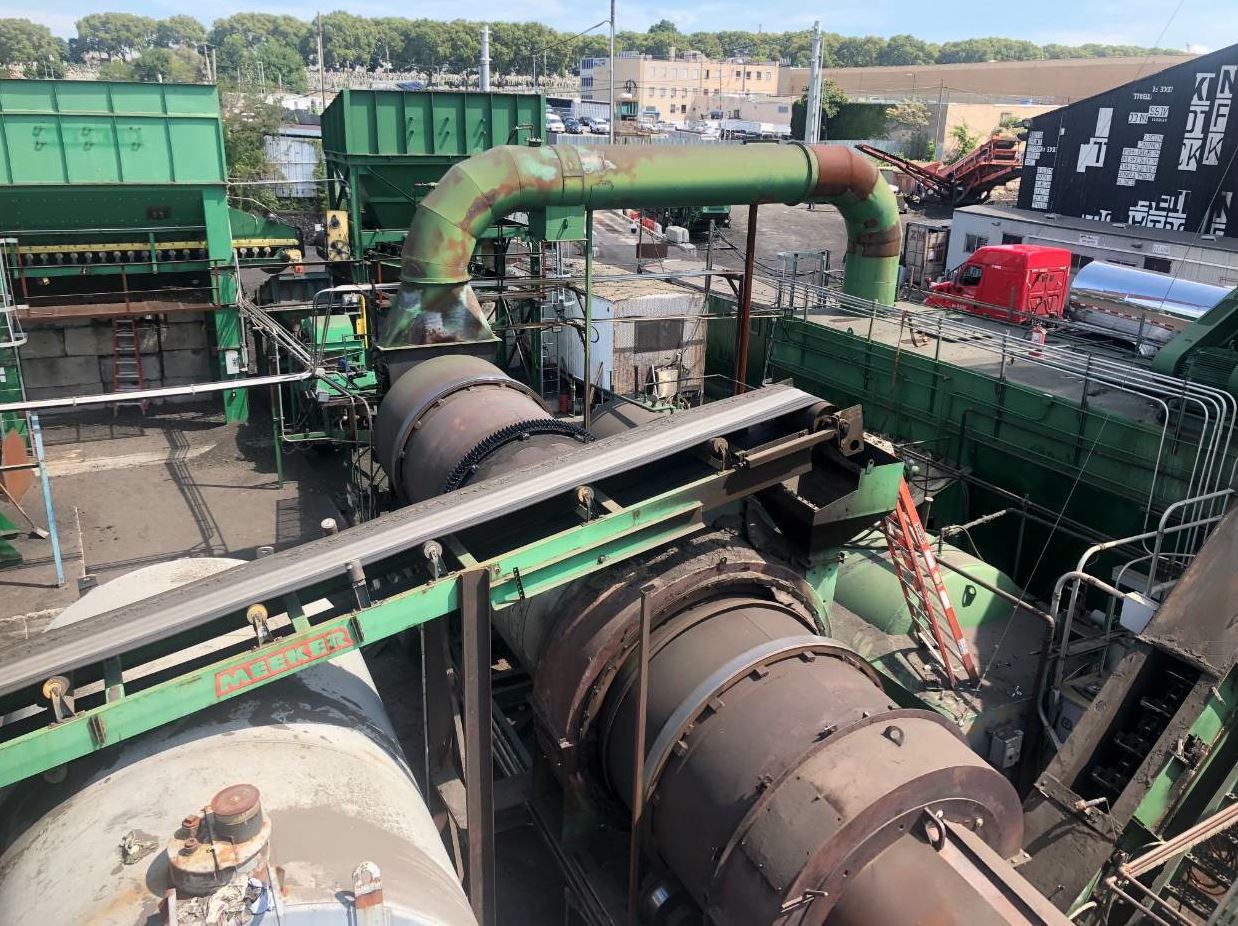
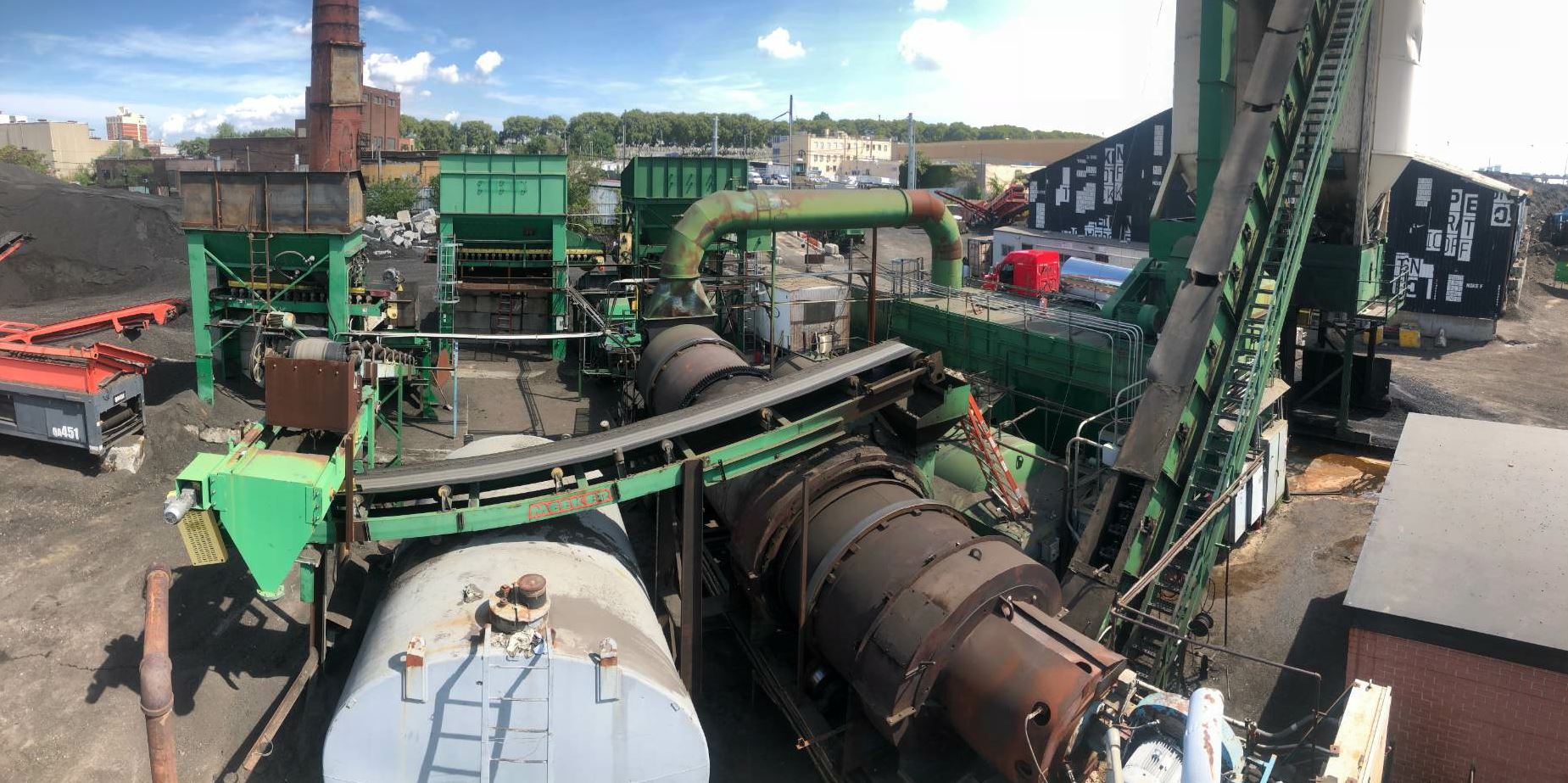
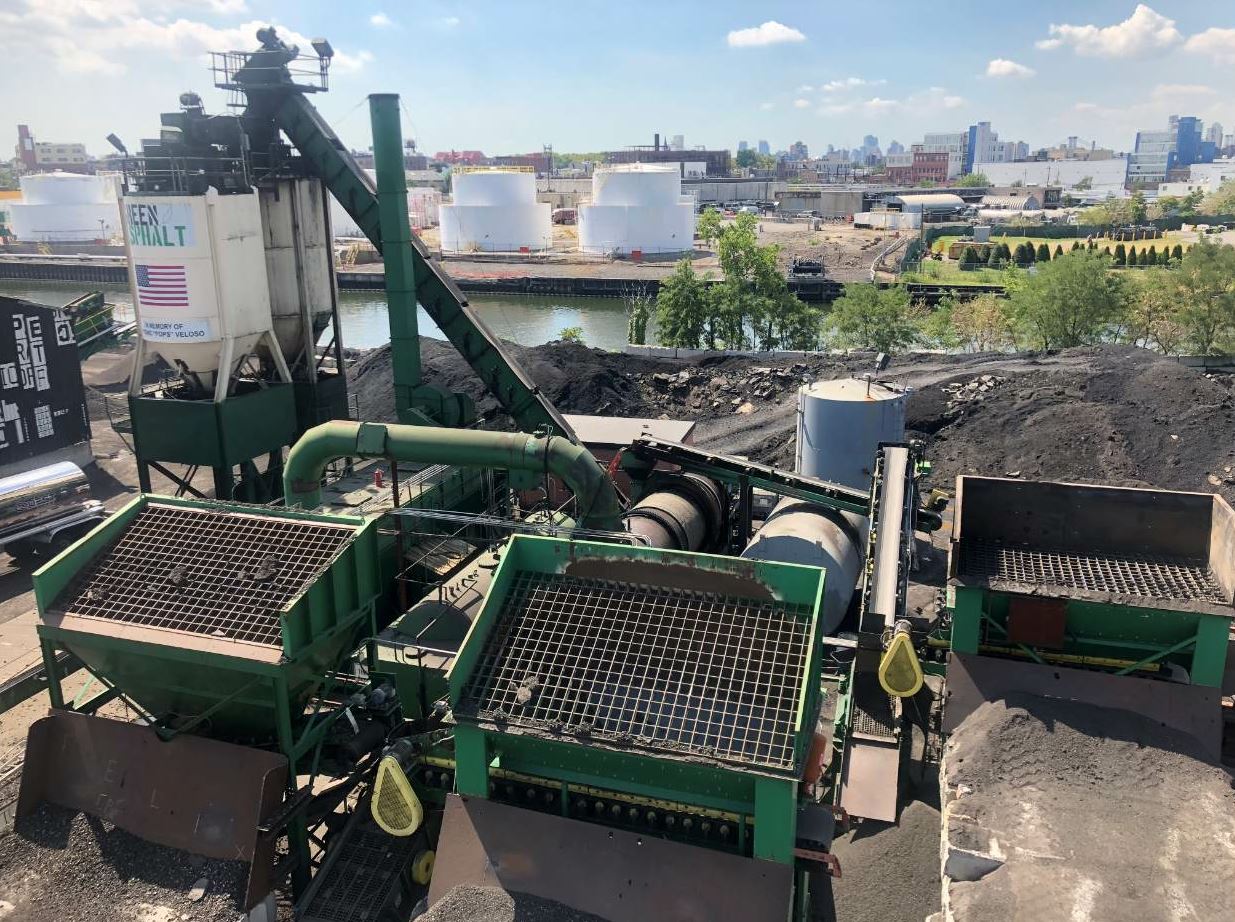
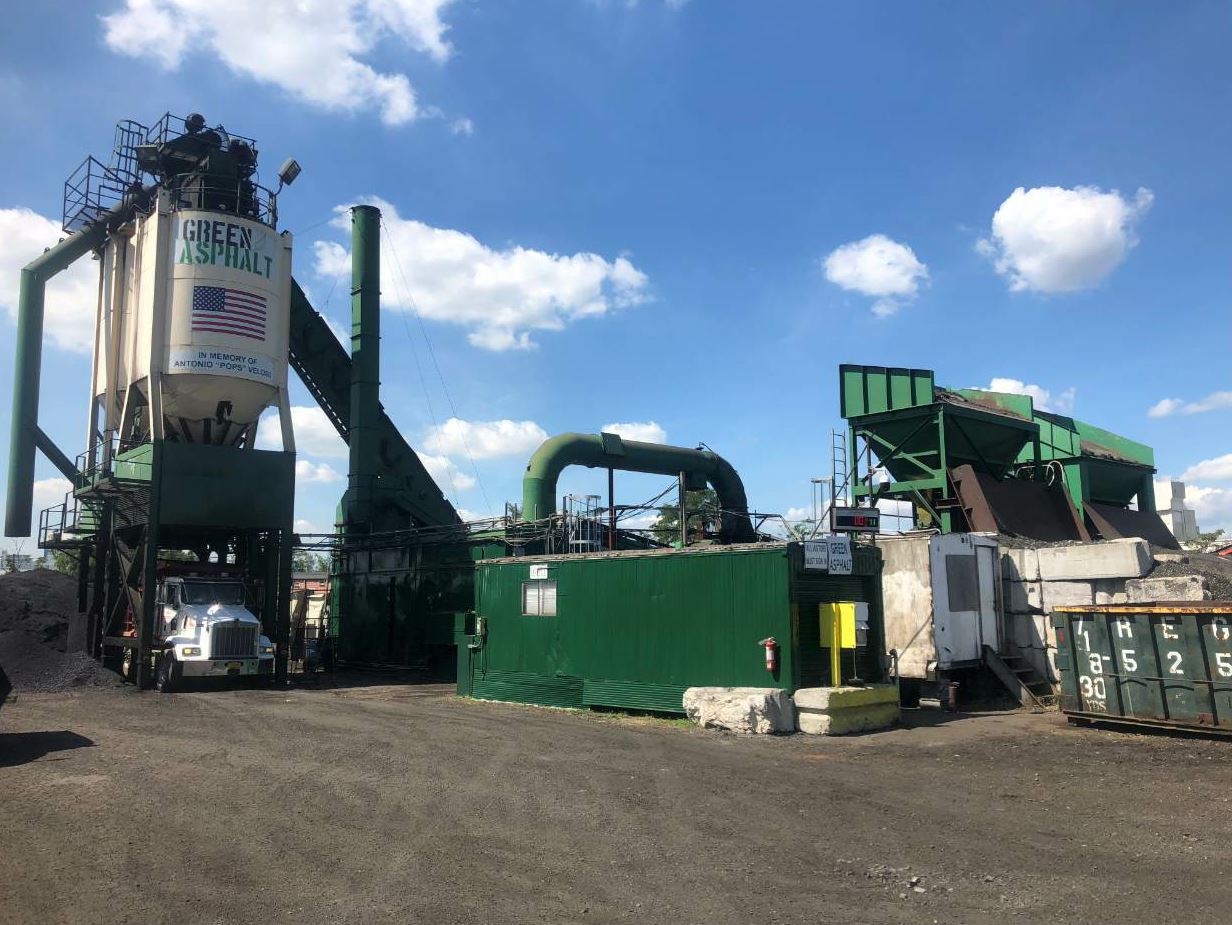
Changes to the plant include ensuring the material isn't exposed to a direct flame, but still heats to an appropriate temperature, experimenting with rejuvenators, and changing the baghouse setup.

Changes to the plant include ensuring the material isn’t exposed to a direct flame, but still heats to an appropriate temperature, experimenting with rejuvenators, and changing the baghouse setup.

Capasso’s motivations for producing 100 percent RAP mix were simple. “The environmental impact was number one,” he said, “but also addressing the issue of excess millings in the city and lowering production costs.”

The process of achieving that lofty goal was a bit more complex. The team at Green Asphalt quickly realized that they’d have to make significant changes to the way asphalt is produced.

“The perception that recycled asphalt means diminished quality is a result of producing recycled asphalt without changing the process of production,” said Nima Roohi Sefidmazgi, Green Asphalt’s vice president and head of business development. “We had to reinvent the wheel to determine what will work for 100 percent RAP.”

For example, asphalt plants have traditionally crushed RAP to one size in the past. That size was usually ½-inch minus, so it could be stored in a single stockpile. “If the quality of the aggregate isn’t very high, that will generate a lot of fines and dust in the crushed RAP, which introduces problems with the dust to binder ratio,” Sefidmazgi said.

Asphalt plants designed to run virgin material, which isn’t coated with AC, don’t have to worry about exposing that material to high temperatures over a direct flame, Sefidmazgi said, because that won’t generate any smoke and it doesn’t damage the material. “When using RAP, the material is already coated in AC, so the general process isn’t an option because it damages the valuable liquid AC coating the aggregates,” Sefidmazgi said. “The process has to be redesigned in a way to handle the high percent RAP.”

Additionally, Sefidmazgi said, it’s common to rely on super-heated virgin aggregate to then heat up the RAP. However, that doesn’t work as efficiently as RAP percentages increase.

“If you go over 30 or 40 percent, you’re relying on a much smaller mass of virgin aggregates to heat that RAP,” Sefidmazgi said. “Secondly, it’s very difficult to melt down that AC to consistently coat the RAP and virgin aggregates.”

“We are changing that mindset,” Sefidmazgi said. “Instead of trying to get 40 or 50 percent RAP with the old process, let’s invent an entirely new process where we can use all of the valuable AC in the mix.”

Changing Processes

Green Asphalt’s 100 percent RAP asphalt mix is approved for use in New York DOT and New York City Department of Design and Construction projects.

Green Asphalt’s 100 percent RAP asphalt mix is approved for use in New York DOT and New York City Department of Design and Construction projects.

Green Asphalt first reached out to a couple of consultants who’d had experience with high percent recycled asphalt and began putting together a plant in Long Island City.

“The original plant was put together like a puzzle, with each piece coming from a different manufacturer,” Sefidmazgi said. “The plant that we built, you couldn’t buy off the shelf.” Each of the pieces is ‘off the shelf’, however Green Asphalt has changed the general process and plant configuration.

That process included a lot of trial and error, Sefidmazgi said.

They had to experiment with material processing, crushing, screening and stockpiling. They had to experiment with the heating system, temperature, buckets and flights. They had to experiment with handling less airborne particles and more fumes. And that was only the beginning.

“During this research and development state, we’d do things one way and fail, then another way and fail, and finally find success,” Sefidmazgi said. “A lot of what we do had to be invented as we went along.”

For example, Green Asphalt separates its RAP into various sizes, much like fractionating RAP into different stockpile sizes. However, most of the changes were to the burner, mixing and drying system, and the baghouse. The way they heat the RAP is different.

Instead of having a drying zone in which virgin material is superheated and a mixing zone in which it is then mixed with RAP under no direct heat, Green Asphalt heats RAP stone and sand throughout the whole drum at temperatures between 300 and 350 degrees Fahrenheit.

“The RAP gets heated by the hot gas coming from the flame,” Sefidmazgi said. “We pay attention not to let the flame touch the RAP.” To do this, they use refractory tubes and physically change the burner position to prevent the flame from touching the material.

“The last step on the equipment and production side was the development of a new baghouse system,” Sefidmazgi said. When virgin aggregate tumbles around in the drum, it creates airborne particles that must be captured in the baghouse. However, when heating RAP in the drum, the particles aren’t an issue, but fumes are, according to Sefidmazgi. “The filtering system in our baghouse is designed to take those fumes in,” Sefidmazgi said.

Also key to ensure mix quality is adding a rejuvenator. “We had to do a lot of research and experimentation on that to figure out what would work for 100 percent RAP,” Sefidmazgi said. They tried a variety of options and performed cracking and other tests before landing on the rejuvenator they now use.

“Most of what we’ve discovered, we own the intellectual property on,” Sefidmazgi said. “We were very fortunate to have the opportunity to take this risk, and invest the time and money to do this.”

Changing Specifications

Green Asphalt was also fortunate to have its sister company, CAC Industries, to test its 100 percent RAP mixes on its temporary paving jobs and provide feedback on product quality and performance.

CAC is a construction company working on infrastructure in New York City.

As Green Asphalt perfected its mix design, CAC was able to guarantee roads for a certain duration for its agency jobs. “They wanted us to prove it out,” Capasso said. “So if something went wrong, we were responsible for fixing it.”

That was the biggest challenge, Capasso said: convincing state and municipal agencies that a high-quality 100 percent RAP mix was possible.

Green Asphalt performed many test sections and pilot projects before its mix was approved by local and statewide agencies. Although New York state doesn’t allow high RAP mixes on the roads, they do allow it on shoulders, Sefidmazgi said. City agencies, he adds, allow use of 100 percent RAP on any application.

For example, they performed a pilot project on College Point Boulevard in Queens with two sections side by side, one with 30 percent RAP mix and the other with Green Asphalt’s 100 percent RAP mix. Six months after the job’s construction, Green Asphalt took cores and ran Hamburg and semi-circular bend (SCB) tests.

“Mixes showed satisfactory results using these tests,” Sefidmazgi said. “At the time, since there was no I-FIT test for SCB, we used Louisiana DOT’s method and criteria.”

“The proof is in the pudding,” Capasso said. “We’ve put our mix down all over the place and we’ve tested it in labs and on the streets. We’ve watched the wear and tear, we’ve done side-by-side road strips, and we don’t see any difference.”

In 2015, four years after the company was founded, it got approval for its mixes from New York DOT and New York City Department of Design and Construction.

“The majority of production in New York City is designed with the Marshall Method rather than Superpave, so we really had to work with agencies to look at performance-based mix design versus volumetrics,” Sefidmazgi said. “The state had to think about the process of approving a plant like ours.”

In the end, it was determined different enough to get a unique plant code, R0001, whereas other asphalt plant codes are typically an H followed by a five-digit number.

“The bottom line is you can design 100 percent RAP for any type of performance you want if you produce it the right way,” Sefidmazgi said. “The perception is that recycled material is low quality and leads to premature failures, but we’re making the industry understand that doesn’t have to be the case.”

Changing Materials

The team at Green Asphalt realized that they’d have to make significant changes to the way asphalt is produced to achieve their goal of producing asphalt with 100 percent RAP.

The team at Green Asphalt realized that they’d have to make significant changes to the way asphalt is produced to achieve their goal of producing asphalt with 100 percent RAP.

Green Asphalt doesn’t have any virgin material in its operation.

“When you think about it, when you’re running 100 percent RAP plant, you’re really running an aggregate quarry and asphalt plant all in one because you’re making your raw materials that you’re using for production,” Sefidmazgi said. “Most places are making 30 percent or below RAP mixes, so that means if you mill up 100,000 tons of asphalt, only 30,000 is going back into your mix and 70,000 tons is going into a pile.”

“We’ve kicked the stockpiling issue in urban areas down the road and we need to deal with that,” Capasso said. And deal with it they did. In addition to alleviating the issue of stockpiles in New York City, Green Asphalt’s 100 percent RAP approach has also become a revenue stream.

In fact, Green Asphalt has a contract with New York City’s DOT to receive their millings.

“I know plants in less densely populated areas pay for millings, but here it’s the other way around,” Sefidmazgi said. “They pay us per ton of material. That’s really the case in a lot of urban areas because there’s nowhere to put those millings. It’s not valuable to put a pile of asphalt on the real estate here when you could do something more lucrative.”

According to Sefidmazgi, Green Asphalt accepts material for around half the cost of alternative options.

Sefidmazgi estimates that the DOT contract brings them around 85,000 tons each year. The remaining tonnage comes from Green Asphalt’s contractor customers.

“In the future,” Sefidmazgi said, “we will need to go back to our old roads as our quarries and refineries, and use that to make our new roads.” Green Asphalt, he added, is preparing for that not-too-distant tomorrow today.

Changing the World

Today, Green Asphalt has 15 employees and produces between 100,000 to 150,000 tons of mix per year, which is maximum capacity for their mix-and-match plant.

Today, between 70 and 80 percent of Green Asphalt’s mix is for public work, the rest, private. Prior to its approval in 2015, Sefidmazgi estimates that 90 percent of its production was private and the 10 percent that was public was exclusively test sections. And CAC continues to be Green Asphalt’s biggest customer, purchasing between 20 and 30 percent of its mix.

The next step in Green Asphalt’s master plan is to license its technology to convert existing plants to 100 percent RAP plants, Capasso said.

“The point we’re at right now is we’ve perfected our model in New York City and we’re going around the country to license this technology to other producers in metro areas: Boston, Chicago, LA, Seattle, Dallas,” Sefidmazgi said. That process also involves working with agencies to put in place quality control/quality assurance (QC/QA) processes they can trust to ensure that these products can be used on those agency jobs.

Sefidmazgi estimates that, depending on the type of plant, the cost to retrofit an existing plant to producing 100 percent RAP ranges from $750,0000 to $1.5 million.

“As fuel prices rise, the value proposition becomes much greater for what we’re doing,” Capasso said. “There’s this idea that if it isn’t broke, don’t fix it. People have been making money in our industry doing things one way for generations. There needs to be a willingness to change.”

Patience and Persistence Pay for U.S. Paving and Stone

If you walk up to Yeager Asphalt’s paving crew for a chat, you might be talking to the company’s CEO without even knowing it. Even after 40 years, 70 employees, and the addition of an asphalt plant, CEO Mark Yeager still runs the Leeboy 8515 paver on most of the company’s jobs in and around Carrollton Township, Michigan.

“With an asphalt plant and a company of this size, that’s unheard of,” Yeager said. “But being on the crew is where I want to be and what I want to be doing.”

After all, it’s where he got his start.

A Teenager, a Truck and a Barrel of Sealer

Yeager grew up familiar with the asphalt industry. He began sealcoating driveways the summer before his senior year of high school with nothing more than a pickup truck and a 55-gallon barrel of sealer in 1978.

By the following year, he’d starting offering asphalt paving, first by hand, then with a Layton pull paver the following year, and then with a used Leeboy paver he bought in 1981.

These early years were a time of industriousness and investment.
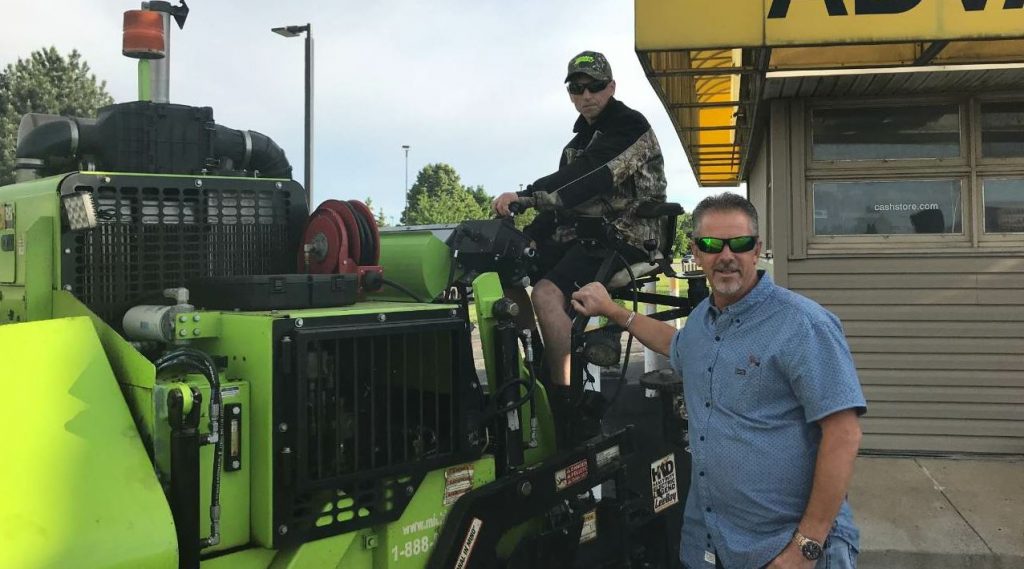
Mark Yeager, left, runs the more technical side of the business, while Brad Lewinski, right, runs the “more political side” of the business, Lewinski said.

Mark Yeager, left, runs the more technical side of the business, while Brad Lewinski, right, runs the “more political side” of the business, Lewinski said.

During the Michigan winters, Yeager would head to Clearwater, Florida, and sealcoat there. He continued to live with his parents and save every penny to reinvest in his business. It was a strategy that paid off.

“By the mid-80s, I was starting to make really good money and I’d wanted to buy a Lamborghini,” Yeager said, but he instead invested the money in a sealer plant. Year after year, he continued to invest in the future of Yeager Asphalt while quietly laboring alongside the paving crew.

“All of our employees have great respect for Mark, because he’s always there, right alongside them on the job,” said Brad Lewinski, Yeager Asphalt’s vice president and a part owner of U.S. Paving and Stone–the company under which their asphalt plant operates. “If someone came up to the crew and asked for the owner, Mark himself would say he’s just the paver operator and point them in my direction.”

“I love going out on the crew and people don’t know who I am,” Yeager said. “Brad will pull up on the job and the customer won’t believe him when he tells them that I’m the CEO. I don’t want to be at the forefront, I want to be behind the scenes.”

That’s what makes their dynamic tick. As Lewinski puts it, he’s the “political” side of the business, while Yeager is the “tactical” side of the business. “Mark makes the wheels turn,” Lewinski said. “He’s out on the paver, he’s out grading, he’s making sure that what I and my sales guys have promised actually happens.”
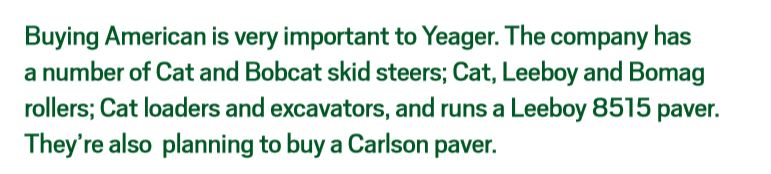
At Yeager Asphalt, just as the CEO can run the paver, a mechanic can become vice president.

In 2002, Lewinski started working for Yeager Asphalt as a mechanic after answering an ad in the local paper. Now, he’s the vice president of the company and a partial owner in the new asphalt plant.

After three years as a mechanic, Lewinski saw an opportunity to try something new when the company’s estimator had left for another job. “Mark took me under his wing,” Lewinski said, and soon he was doing all of the estimating and sales. “I was doing it a bit differently than a lot of people in our industry did things back then. Instead of just dropping off a bid in the mailbox, I’d call and make appointments to listen to what they wanted rather than tell them what they needed.”

That strategy worked. Three years later, the company added another sales person, promoting Nick McGuire from within. Then, six years ago, John Manti, had come into Yeager’s office to sell them something and left with a job. And two years ago, they hired George Menard.
In the span of two decades, gross revenue expanded from $2 million to $13 million, Lewinski had transitioned from mechanic to vice president, and Yeager could cut back on his own sales activities and return to what he loved most: riding alongside his crew atop an asphalt paver.

Yeager Today

Today, Yeager Asphalt has four sealer crews, one striping crew, a patching crew, two prep crews and one paving crew. Most of its work is paving and maintaining parking lots, but they also continue to pave and maintain private roads and driveways.

“If you work hard and focus on good customer service, it’s not rocket science,” Lewinski said. “Every single customer deserves our attention and respect. It doesn’t matter if we’re paving for a $5,000 mobile home or a million-dollar house, it’s that person’s castle and they both deserve respect and attention.”

“Very few customers don’t deal with me personally at some point in the process,” Lewinski said, adding that he racks up about 5,000 minutes on the phone with customers each month. “I’m communicating with them, going over the scope of the work, letting them know when vehicles will be showing up and what the timeline is. If there’s a problem, I want them to know who to call. Every single customer gets my personal cell phone number.”

Applying these principles, Lewinski said, also often turns some of the worst jobs into the company’s best advertisements. For example, on one job, the crew put on too much crack sealer on one of the hottest summer days on record.

“It got tracked into the business, it got on cars, it was just a mess,” Lewinski recalls. Not only did the crew fix their mistake, but Lewinski also waived the customer’s bill. “We’ve made our money back on that job in referrals alone.”

Doing right by its customers and community was also integral to Yeager Asphalt’s expansion into asphalt production.

Patience Pays Off

Yeager and Lewinski had wanted to buy an asphalt plant since before the 2008 economic recession. But, just as it wasn’t the right time for Yeager to buy a Lamborghini in the mid-80s, it wasn’t the time to invest in an asphalt plant.

“I could tell where things were going,” Yeager said. “I knew no one would be able to afford asphalt, but that people would want to save their investment.”
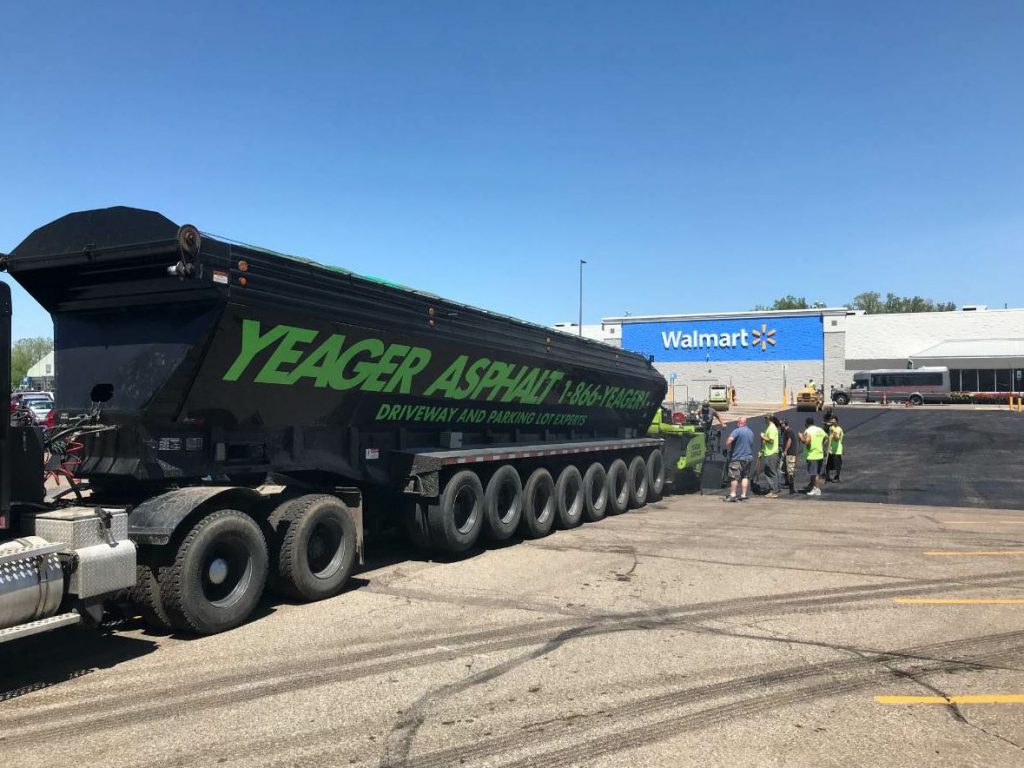
Branding is also important to the company. Its black and lime green equipment has become well-known in the area.

Branding is also important to the company. Its black and lime green equipment has become well-known in the area.

So they bought the best sealer equipment available and got ready to weather the storm.

“Sure enough, the asphalt market went down to nothing and I flourished while a lot of other companies went out of business,” Yeager said. “People would be trying to sell a doctor on resurfacing or tearing out his lot whereas I would offer to come in and patch and seal it. I’d be honest with him and say that, yes, it does need to be resurfaced or replaced, but that we could do this now and he could resurface when economic times get better. I had a couple of the best years ever.”

It turned out there were other factors that made it wise to wait for the right time to invest in an asphalt plant.

For twenty years, Yeager had his eye on the perfect property for an asphalt plant.

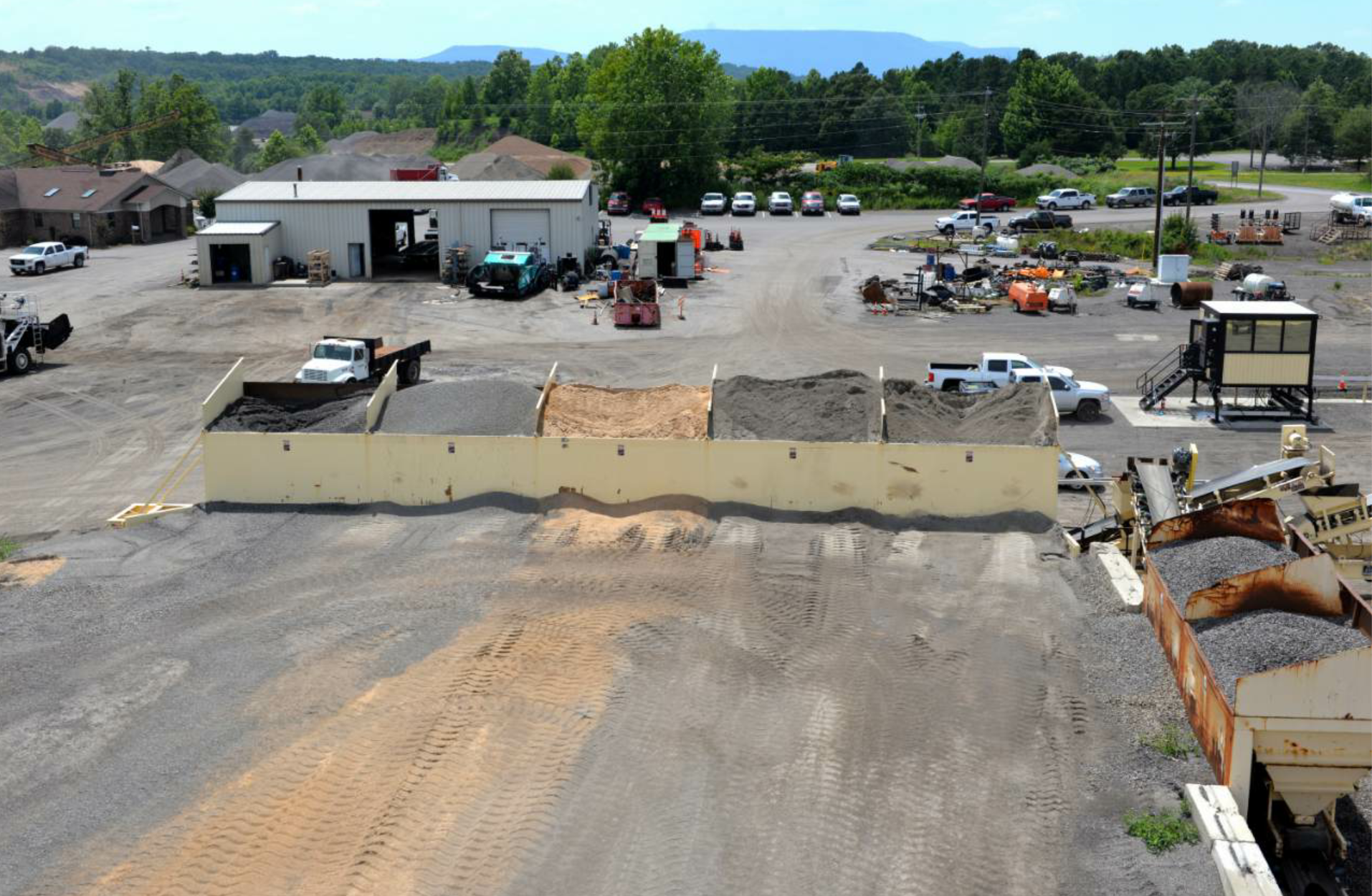
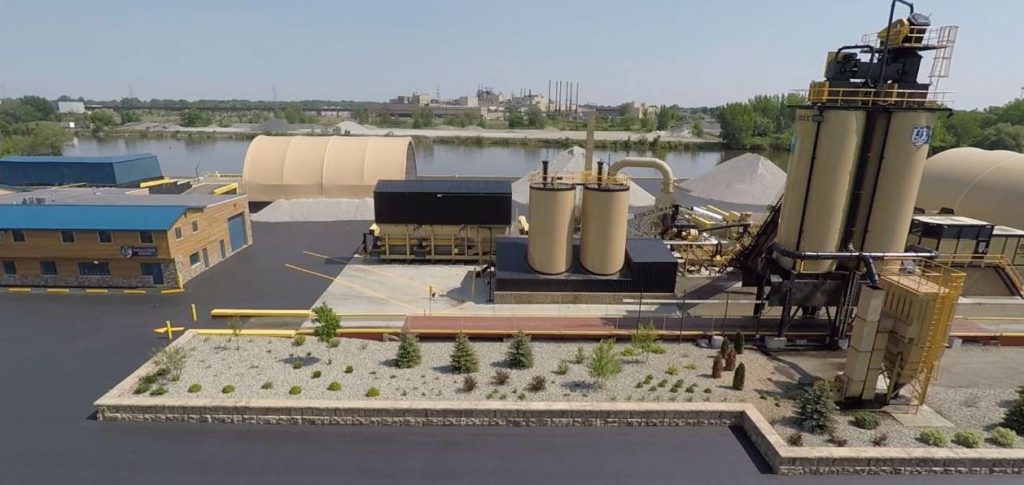
The 50-acre parcel of land was only a couple blocks from the Yeager Asphalt office and right across the street from Yeager’s sealer plant. It was close to the expressway, which made it convenient for customers and expanded its operating distance. And, it was located on the Saginaw River so aggregates could be shipped by boat rather than trucked in.

However, 20 years ago, the title on the property stated that there could be no stone piles on the property. Plus, the asking price was too high and the land was contaminated.

But, over time, each of those negatives turned out to be in Yeager’s favor.

“Other people had wanted to buy that property in the past, but that clause about stone piles kept them from buying it,” Yeager said. He kept an eye on the property and when the termination date of that clause came up, Yeager quickly purchased the property.

“After we signed the purchase agreement, other asphalt companies called the realtor and said, ‘I hope you know Yeager isn’t allowed to have stone piles on that property,’ and the realtor let them know that the clause was up a few months ago,” Yeager said. “It was perfect timing.”

Additionally, the parcel’s status as a contaminated property also turned out to be a benefit to the company during the permitting process in that they qualified for tax exemptions for having purchased contaminated grounds and creating jobs.
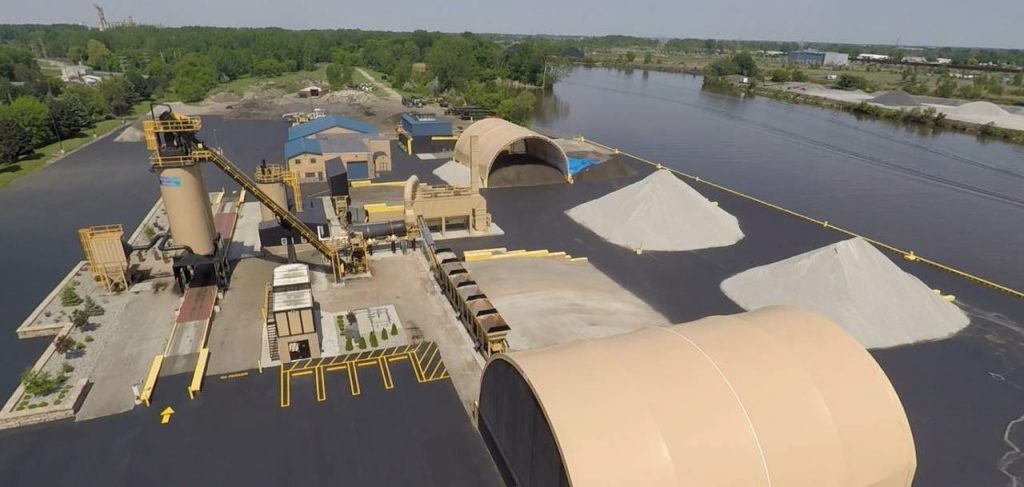
Yeager Asphalt bought a drone to take photos and videos of their jobs that they share on social media. “Facebook is a great way to market,” Lewinski said, “and it’s free.”

Yeager Asphalt bought a drone to take photos and videos of their jobs that they share on social media. “Facebook is a great way to market,” Lewinski said, “and it’s free.”

“Years ago, people steered away from contaminated properties because the DEQ used to require you to clean the property up before developing on it,” Lewinski said. “But that lead to a lot of vacant properties that were too expensive to develop on due to the environmental cleanup involved.”

However, that’s no longer the case. Instead, prior to any of the assembly, U.S. Paving and Stone hired an environmental company to do a phase one and phase two analysis of the grounds to determine their level of contamination. Then, U.S. Paving and Stone just had to ensure that they would contain the contamination and not contribute to any further contamination.

“We discharge directly into the Saginaw River, so we put a lot of precautions in place to ensure not a single drop of contaminated water from our site enters the river,” Lewinski said, mentioning that the ground had been paved over to cover the contaminated soil and multiple catch basins were installed, among other precautions. “If you put all due care measures in place, you’ll be good to go.”

When they first began the permitting process for the asphalt plant, Lewinski recalls the sentiment among the community.

“There was a lot of distrust because other companies in the area had made promises that never came to fruition,” he said. But, he took the time to get to know the planning commission and answer questions from the community during and after meetings.

“I promised them they wouldn’t smell anything nasty or see anything unsightly,” Lewinski said. “I promised we were going to make it look good and comply with every regulation. I told them I was a man of my word.”

Although some skepticism remained, the plant was approved and U.S. Paving and Stone kept its word.
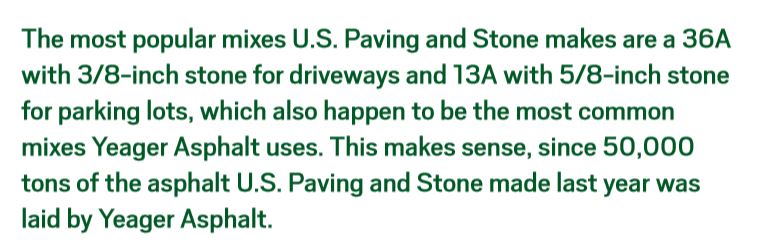
The company spent around $200,000 beautifying the property.

“We wanted it to have that curb appeal,” Lewinski said. So, they added trees, flowers, bushes and landscaped walls. “I employ a man every day at the plant who does nothing but clean the plant and the grounds.”

“Now, when the community sees our property, they realize how much of an improvement it is over what it was like before,” Lewinski said. “Our whole community is behind us.”

“When you create jobs and improve a distressed property, those are good things,” Lewinski said. “Our crews have a positive impact on our community. They eat at local restaurants for lunch, they stop by the hardware store in town on their way home, there’s a trickle down effect for the businesses in Carrollton Township.”

Although the community grew to support the plant eventually, the permitting process still wasn’t easy.

“It was two years before we could put a shovel to the ground,” Lewinski said. They had to resolve issues with soil erosion, air permits and the property’s location on a floodplain. By the end of it all, Lewinski knew everyone in the DEQ office on a first-name basis.

“We’ve become a showcase for the DEQ,” Lewinski said. “They bring their people to our yard and say, ‘This is how you’re supposed to do it.’”

Since the property has an international dock–it’s located along the Saginaw River less than 20 miles from Lake Huron–they also had to work with Homeland Security and the U.S. Coast Guard.

“That in and of itself was quite an ordeal,” Lewinski said. “It was difficult and certainly a learning process and awfully time consuming.”

But, the process paid off. Now they can receive aggregates by commercial vessel rather than by trucking the material in, which Yeager said is a huge cost savings.

“Already the value of the plant is four or five times what it cost us because of all the things we had to go through to get it up and running,” Yeager said, adding that they’ve already been contacted by companies wanting to buy them out.

In fact, U.S. Paving and Stone is already looking to expand south of Saginaw County.

Mix Masters
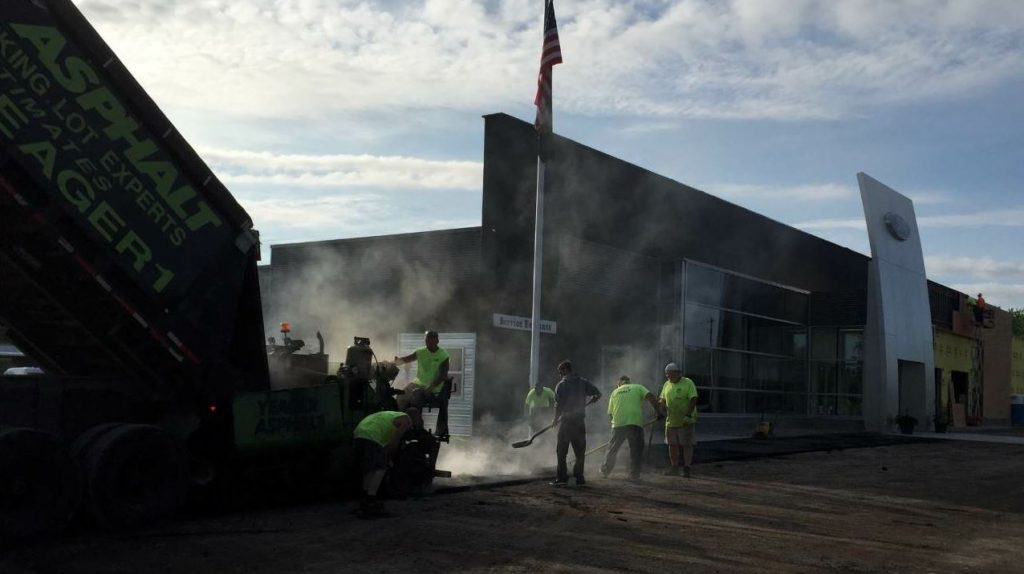
Yeager Asphalt has four sealer crews, one striping crew, a patching crew, two prep crews and one paving crew.

Yeager Asphalt has four sealer crews, one striping crew, a patching crew, two prep crews and one paving crew.

When the time came, U.S. Paving and Stone purchased a brand new ALmix plant with a maximum capacity of 200 tons per hour.

“I’d gone to a couple other plant manufacturers who didn’t take me seriously,” Yeager said. “It felt like when you pull into a car dealership and the sales guy assumes you can’t afford this car or that car. But ALmix and Mike [Shurtz, the owner of ALmix] treated me like I was serious–which I was–from the very beginning.”

According to Shurtz, Yeager and Lewinski initially leaned upon the advice of an ALmix plant owner in Michigan before deciding to contact ALmix directly. “As a contractor mostly tied to the private work sector, mix appearance was of supreme importance to them,” Shurtz added. “That lead them to the decision to go with the longer mixing times associated with Duo Drum technology.”

“I knew this would be the first asphalt plant we’d purchase,” Lewinski said, “so we got all the bells and whistles.”

Those bells and whistles meant not skimping on cold feed, RAP and RAS bins. The company has six cold feed bins, two RAP bins, and one RAS bin, with a screen associated with each bin rather than one screen for virgin materials and one for RAP. “This allows sizing the screen cloth to the aggregate in the particular bin,” Shurtz said. “This is particularly important in the thinner lifts often associated with private work.” Additionally, all-weather hoods protect the RAP/RAS bins such that mix design percentages are not limited by sudden rainfall.

For example, even though U.S. Paving and Stone doesn’t run warm mix through the plant, they do inject their mix with water via a static blender prior to entering the mixing drum–like they would a warm mix–but they run it at hot mix temperatures.

They also do all of their own crushing and screening of RAP on demand.

“Most asphalt plants crush everything they need for the season in the spring,” Yeager said. “We think it’s better to do it as we need it so it doesn’t harden over the summer.”

Going the extra mile on their mix design is vital for U.S. Paving and Stone.

“A lot of companies were buying from big conglomerates and they were happy with their material,” Lewinski said. To compete, U.S. Paving and Stone hired an award-winning engineer to create their mix designs.
“I knew there would be tremendous scrutiny from our competitors, so we really put ourselves through a battery of testing before opening to the market,” Lewinski said. “We tested not only to meet specifications, but also to appeal to the laborer. We want the guy putting a shovel in our mix, the guy spreading it, to think, ‘This is good mix.’ I want them to tell the foreman to get mix from us.”

“Our RAP percentage is low–like 15 to 20 percent–because we want our mix to be easier to work with,” Yeager said. “To me, the cost savings aren’t enough compared to how much easier the job is going to be for our crew. Doing high RAP isn’t such a big deal on road work, but private jobs require so much more handwork, around islands and curbs and on handicap ramps. I don’t want to make our job harder.”

The amount of RAP the company uses in its mix depends on the job. For Michigan DOT jobs, the cap is set to 20 percent. On private work, they usually run 15 to 20 percent RAP, Yeager said.

“I hate saying this because everyone says it and it’s become a cliche–whenever I read others saying that I think, ‘Ok, whatever’–but our mix really is the best,” Yeager said. “I have customers who’ve laid asphalt a long time who say the same thing about our mix. It’s easy to work with.”

Another thing that sets them apart from the competition are their relationships.

Lewinski’s son, Trevor, is the plant operator. He started working at the company at the age of 16 and rose through the ranks of the sealer division before becoming U.S. Paving and Stone’s plant operator.
“Trevor talks to all the truck drivers coming through on the CB,” Lewinski said. “He’s developing relationships with all of them. ‘Hey Tom, how are you doing today? How much do you need?’–that sort of thing–not just ‘Get over in this line.’ It’s a personal touch.”

They’re also willing to meet the unique needs of their customers because they know what their customers are going through

“With big box suppliers, if we wanted to pave on a Saturday they’d have a 300-ton minimum,” Lewinski said. “Or, they wouldn’t want to fire up the plant at night. Or, we’d be fighting to get the mix designs we needed on a particular day.”

Now, that’s not an issue–for Yeager’s crews and the crews of U.S. Paving and Stone’s customers.

“We know how frustrating that can be, so we try to be very accomodating to our customers,” Lewinski said. “They aren’t a number when they buy from us. If they need 200 tons on a Sunday, we can say, ‘No problem, Bob. What time do you want to pull?’”

Leap of Faith, Look to the Future

“Buying the asphalt plant was a big leap of faith for us,” Lewinski said. “There are thousands upon thousands of paving companies, but the asphalt plant world is small.”

In fact, Lewinski recalls, some companies in the area tried to discourage them from making such a large purchase. But, with good timing and hard work, that leap of faith was the right call.

In 2016, U.S. Paving and Stone manufactured around 40,000 tons of asphalt and last year, they manufactured 65,000 tons.

“I foresee producing 75,000 tons of asphalt this year and 100,000 tons of asphalt next year,” Yeager said. “We aren’t in a big metropolitan area. I think our market could support around 100,000 tons.”

According to Lewinski, the plant has never lost money. “It’s been profitable since day one.” And, with the ALmix plant they chose, they also have room to grow. The plant could support between 100,000 and 120,000 tons per year at maximum capacity.

“We don’t want to be a grow a monster company,” Lewinski said. “There comes a point where you get so big that you lose focus on how you got to where you are. We never want to get to that point.”

Despite its growth, Yeager Asphalt and U.S. Paving and Stone continue to be family businesses. In addition to Trevor Lewinski running the plant, Brad Lewinski’s wife, Sherry, is the office manager and Yeager’s wife, Shannon, is the company’s CFO.

“I’ve also got twin sons who are now 12 years old,” Yeager said. “Maybe they’ll want to get into the business. That would be the ultimate dream. Maybe they’ll want to pave roads or open three more plants, but I’m leaving that up to them. It’s there if they want it.”

When asked what’s next for the company, Lewinski said it’s difficult to say.

“Whatever God puts in front of us,” he said. “Whatever challenge or opportunity that might be, we will always do right by our customers, our employees and our community.”


Wabash Valley is All Asphalt, All the Time

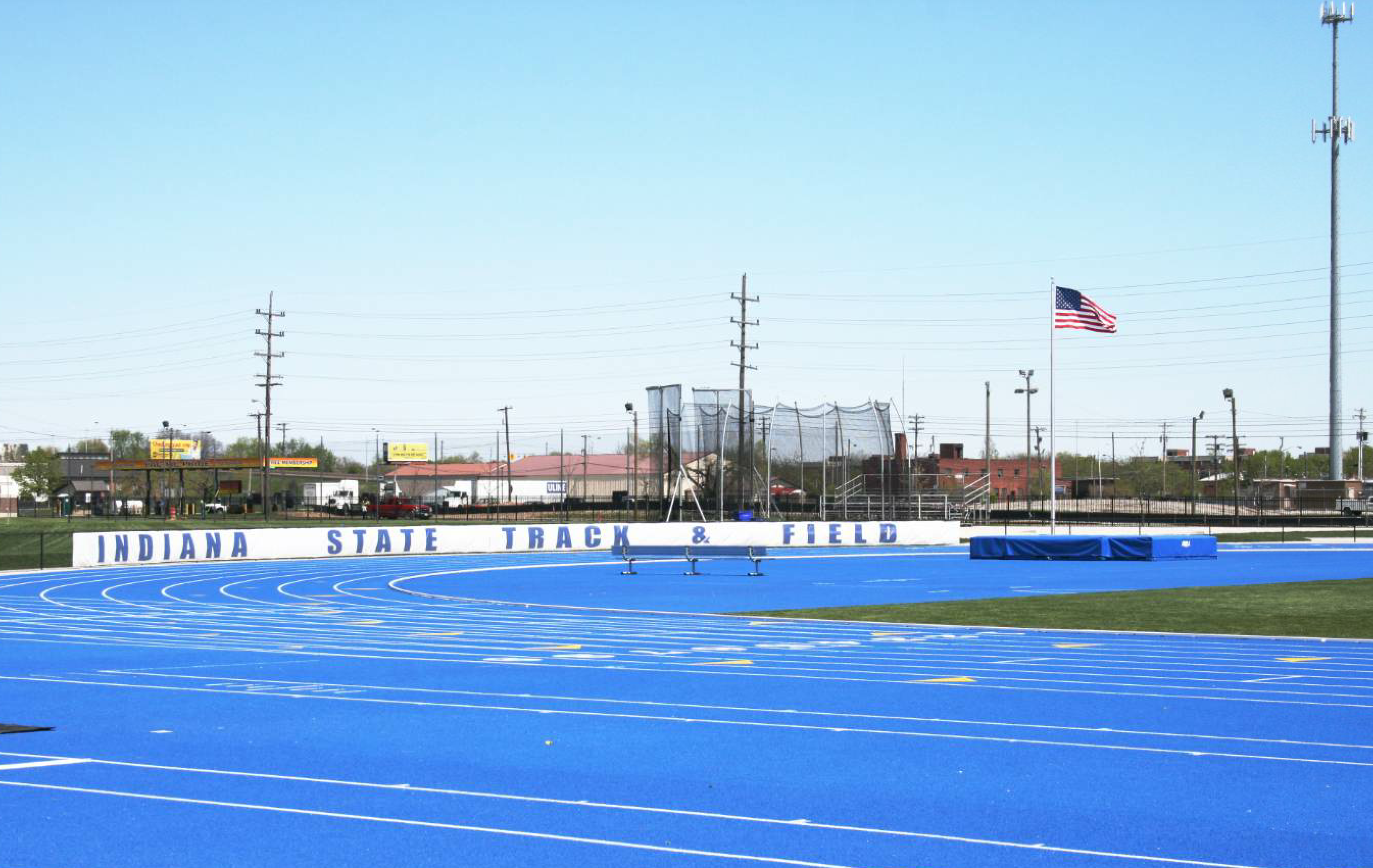
Whether it’s a two-lane highway, work along I-70, a college track or a parking lot, if it’s asphalt and it’s in west central Indiana, Wabash Valley Asphalt Company, Terre Haute, Ind., is after it.

Although the company does some light excavation and its own stone work, its true focus is–and has always been–asphalt.

“We were set up to be an asphalt producer and paving contractor and we’ve been doing that for 80 or 90 years now,” Wabash Valley President John Collett said.

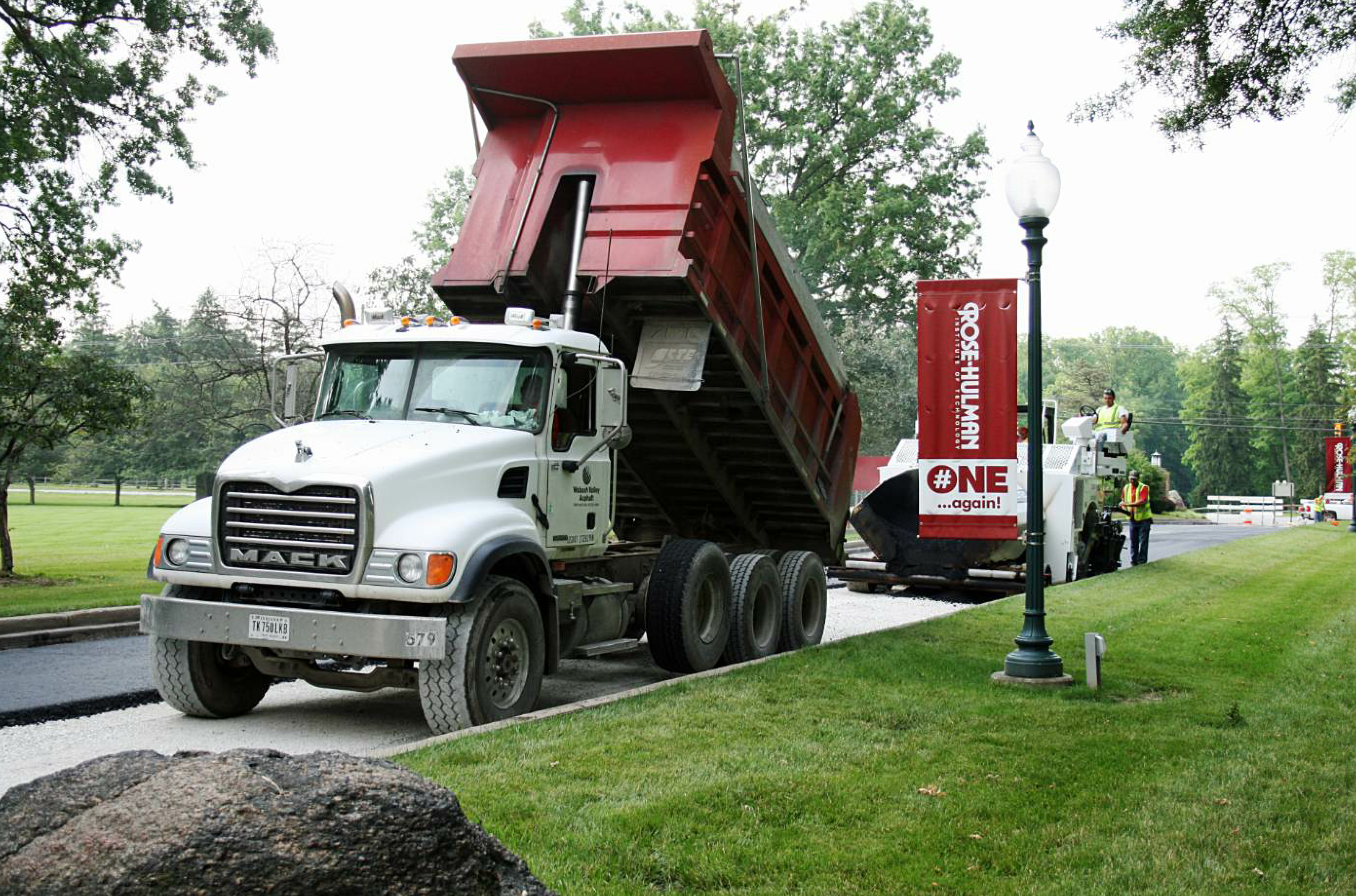
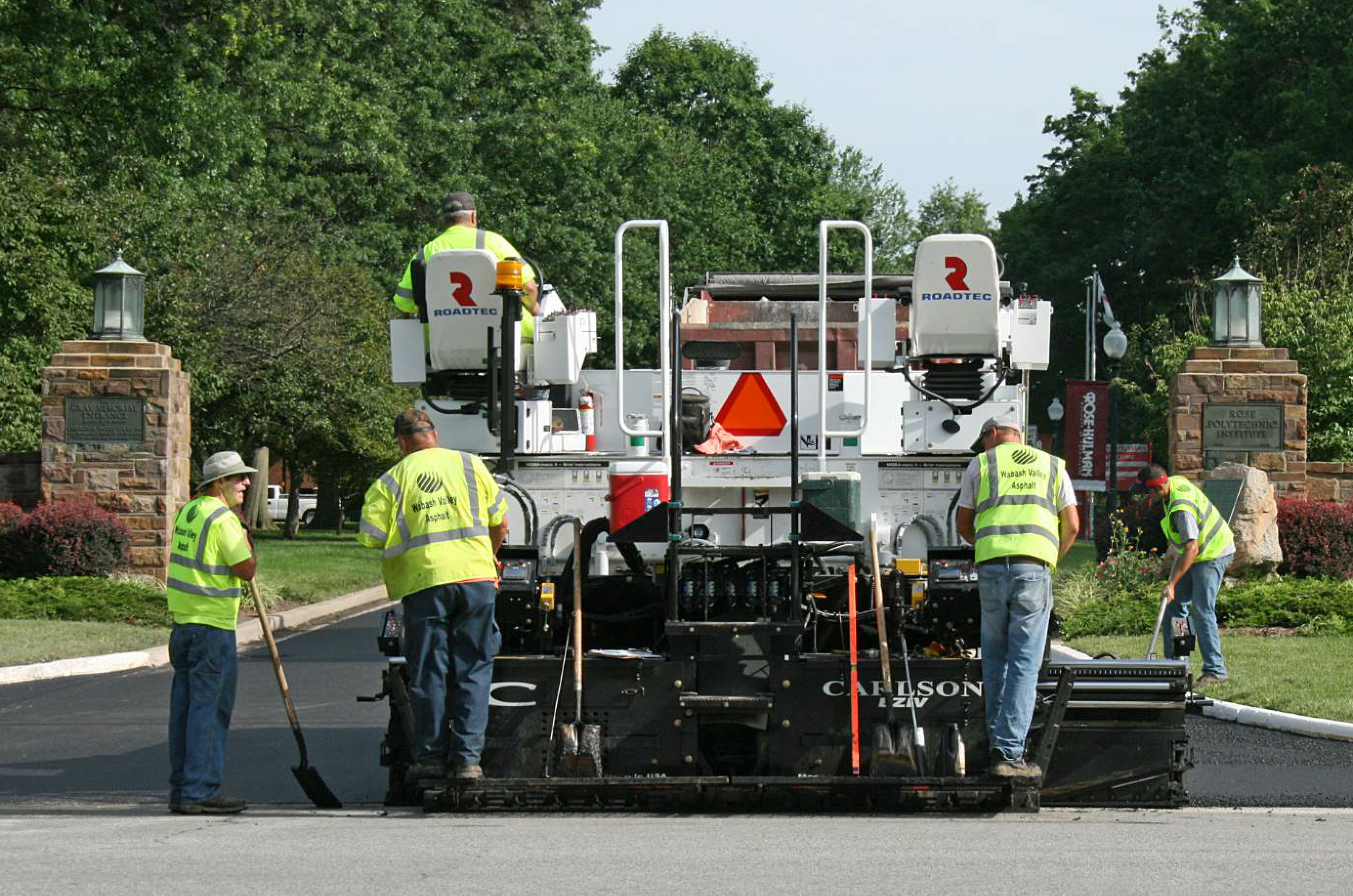
The Wabash crew paves at Rose-Hulman Institute of Technology, Collett's alma mater.

The Wabash crew paves at Rose-Hulman Institute of Technology, Collett’s alma mater.

Wabash Valley Asphalt’s roots trace all the way back to 1933, when John Kelly and John White founded the company. In the 1960s, the Kelly family bought out John White and in 2001, the company became part of The Heritage Group, which also traces its roots back to the early 1930s.

Collett himself got his start in 1991. After he graduated from Rose-Hulman Institute of Technology in Terre Haute with a degree in civil engineering, he was commissioned as an officer in the U.S. Army.

“After I completed my service, I wanted to come back home,” he said. So, he interviewed at Wabash. “I didn’t have any experience in the industry, but I was lucky enough to get hired.”

Wabash, and the asphalt industry in general, worked out well for him. A few years ago, he became the president of Wabash Valley and he will also be the 2018 president of the Asphalt Pavement Association of Indiana.

Traditional Values, Modern Approach

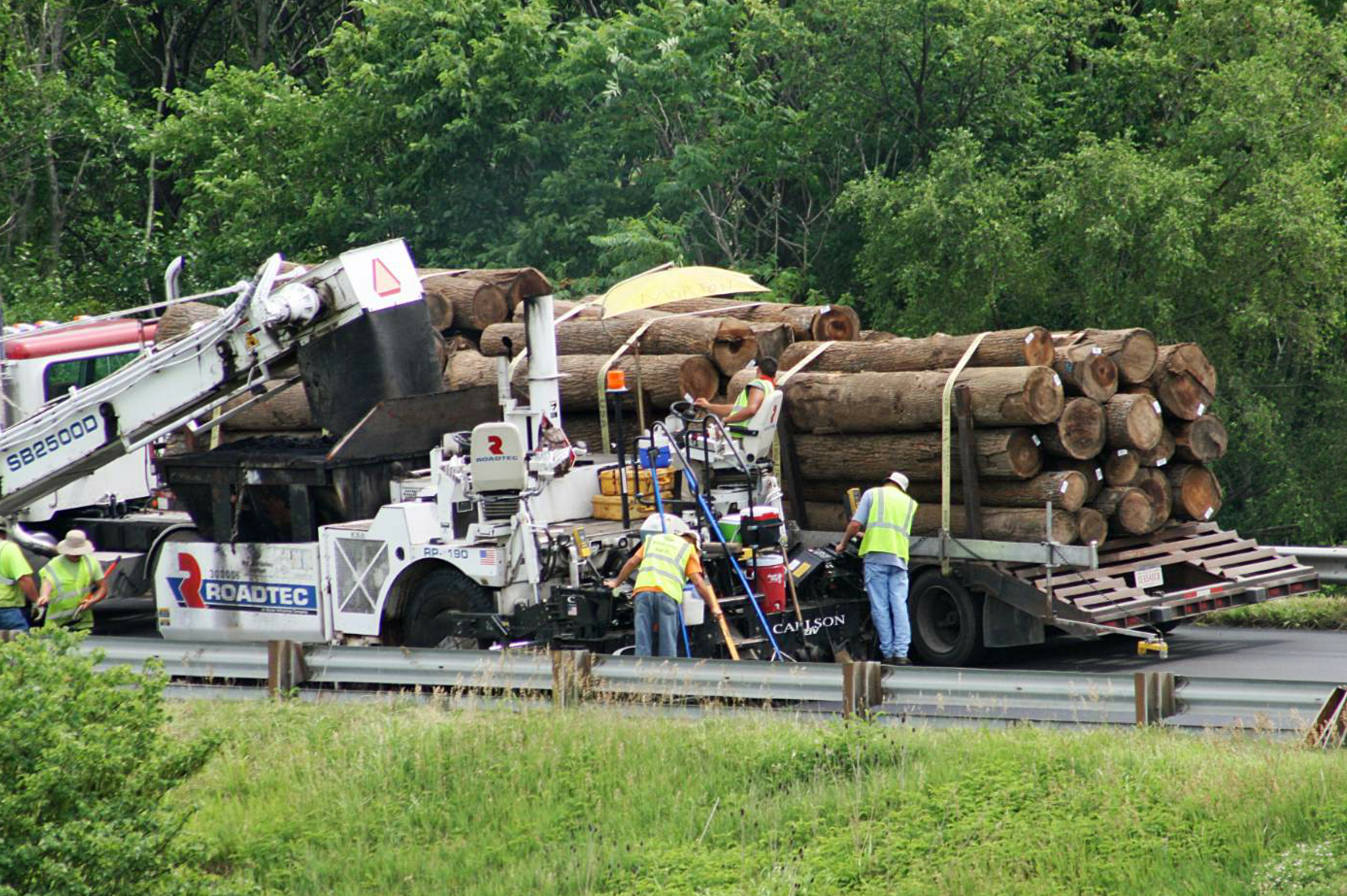
Wabash Valley's crew paves in close quarters with a wide load on a two-lane road.

Wabash Valley’s crew paves in close quarters with a wide load on a two-lane road.

Today, Wabash Valley has two asphalt plants–one in Terre Haute and one in Cloverdale about 30 miles from its other plant along the I-70 corridor–both of which are CMI plants with Dillman drums.

The two plants supply all of Wabash Valley’s crew’s’ needs, as well as supply asphalt to other contractors. About 85 percent of its mix is used by the company’s own crews, which run Cat, Roadtec and Vogele pavers, as well as Cat, Volvo and Hamm rollers.

The Terre Haute plant produces between 200,000 and 300,000 tons of mix annually, while the Cloverdale plant production varies widely based on the volume of INDOT work in the area.

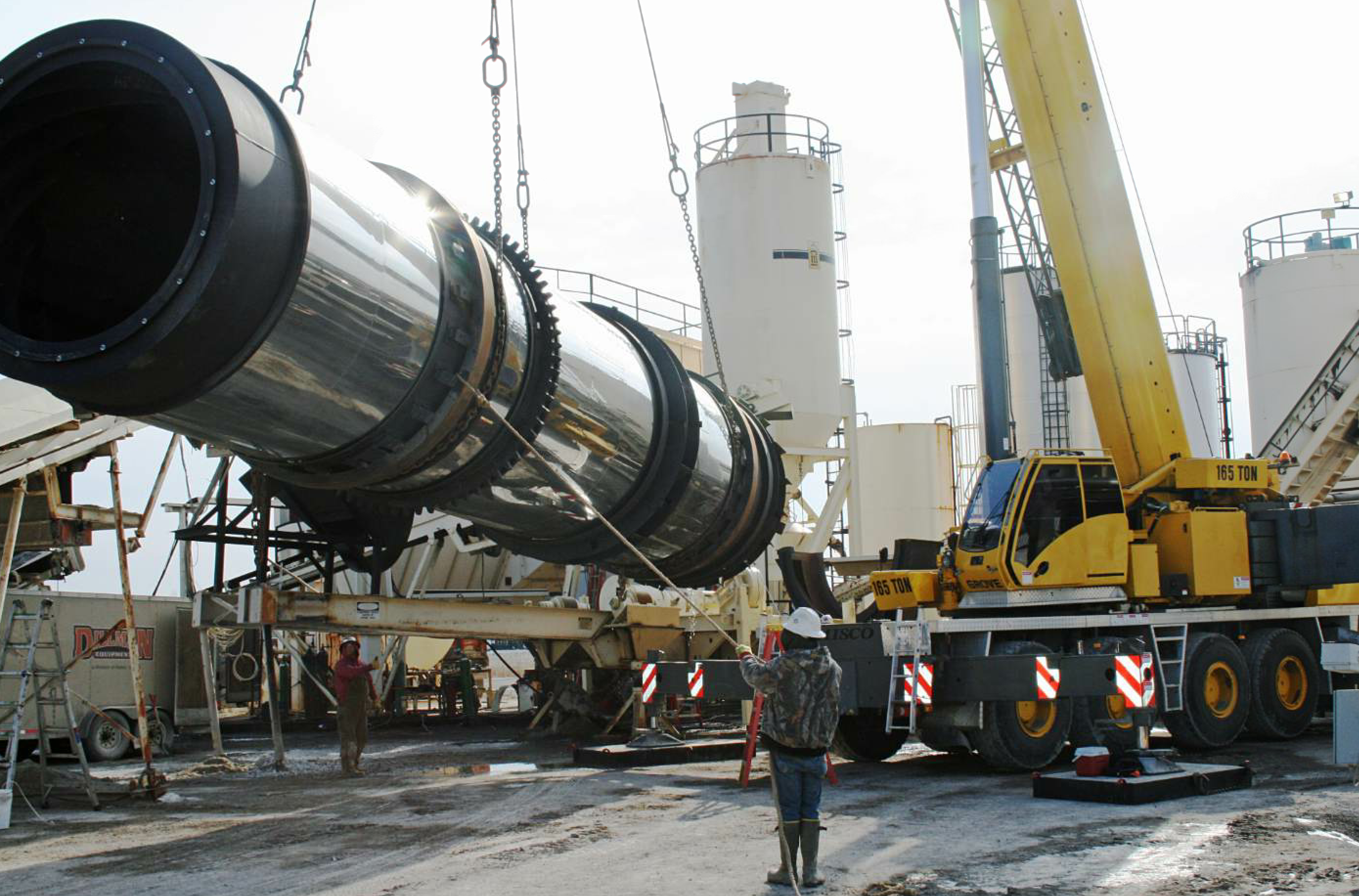
Both of Wabash's plants are CMI plants with Dillman drums.

Both of Wabash’s plants are CMI plants with Dillman drums.

Although Wabash’s current plant in Terre Haute was built in 1997, the company has had plants in the area from the very beginning. The location of its second plant has moved a few times in the company’s history, but it’s been in Cloverdale since 2004.

Wabash Valley, a union employer, has around 60 employees when it’s busy but drops to around 20 during the winter. Its paving season runs from April to November.

“Winter is maintenance and bidding work,” Collett said. “That’s when the mechanics are busy taking care of the equipment and we do most of our INDOT bidding.”

For Wabash, INDOT work accounts for nearly half of all the work the company does. Collett estimates another 20 percent goes toward city and county jobs, and then the remaining portion consists of commercial projects, churches and schools.

“If it’s in our area and it’s an asphalt pavement, we specialize in it,” Collett said. “We are an asphalt paving contractor and that is our wheelhouse.”

In addition to its “all-asphalt, all the time” mentality, the company also sets itself apart with a dedication to training and a no-nonsense, no-surprises approach.

All Asphalt, All the Time

“That’s another reason we focus on paving,” Collett said. “We want our crews to be really, really good at what they do.”

When Wabash Valley shuts down its paving operation in late November or early December, it sends its mechanics to service schools. Paving foremen/superintendents go to schools offered by NAPA or APAI or a supplier school.

“We really take advantage of the fact that our associations and suppliers provide excellent training opportunities,” Collett said. “Every year, we look at what didn’t go so well the previous year and determine where we should focus our training.”

INDOT work accounts for nearly half of all of Wabash's work. Collett estimates another 20 percent goes toward city and county jobs, and then the remaining portion consists of commercial projects, churches and schools.

INDOT work accounts for nearly half of all of Wabash’s work. Collett estimates another 20 percent goes toward city and county jobs, and then the remaining portion consists of commercial projects, churches and schools.

The specific training an employee will receive will depend on their individual needs, so before the season closes and training begins, Collett will sit down with the company leadership and determine what they need help with. That’s one benefit of having additional time during the winter.

“We’re not just bulk training everyone,” Collett said. “We try to train our employees with their individual needs in mind. Not every employee is at the same stage of their career.”

Wabash Valley puts a lot of stock in training its crew. Each winter, key crew members attend APAI’s conference, manufacturers’ schools and in-house training events to improve their skills and move up in their careers.

In addition to sending crew members to training opportunities through associations and manufacturers, Wabash Valley also utilizes its own internal resources. “We have some pretty experienced people,” he said. The company has had its own internal rolling and paving schools and brings outside experts to speak directly to its crews.

For example, to learn paver electronics, Wabash Valley called on two of its foremen and one outside expert to teach everyone on its crews how to use the electronics systems.

“That way, we can train all of our crew members on more advanced things in the winter, because you never know when you’re going to lose someone and it’s also good for their own professional development,” Collett said.

When it comes to training, one of Wabash Valley’s greatest partners has been APAI.

“They have sessions on many topics at their annual conference,” Collett said. Wabash usually sends around 10 employees to the conference to learn each December.

No Spec Surprises, No Nonsense

The crew paves with Cat, Roadtec and Vogele pavers. Wabash Valley often sends its operators to manufacturer schools in the off-season.

The crew paves with Cat, Roadtec and Vogele pavers. Wabash Valley often sends its operators to manufacturer schools in the off-season.

“What also sets us apart is our no-nonsense approach,” Collett said. “We’re quick and efficient and we pay a lot of attention to detail. Most of the time, we quote it, we build it, and that’s just the way it goes. No surprises.”

Although every contractor goes in with a plan, Wabash cuts back on potential surprises by returning to survey the job prior to the start of the job. “We want to go check the lay of the land and make sure the job’s ready to go when we touch the ground,” Collett said.

The employees pay special attention to drainage issues, which tend to be among the most significant surprises.

Despite this revisit, most of Wabash Valley’s bidding work is completed in the winter. Collett estimates that around 90 percent of the time, the company–despite being relatively small–will check out its jobs before even bidding them.

“It’s very rare that we don’t have feet on the ground before we bid something, unless it’s brand new and there’s nothing to look at,” Collett said.

APAI also helps Wabash achieve its goal of no-nonsense and no surprises by keeping the company aware of upcoming spec changes.

“What normally happens as a new spec works its way through INDOT, APAI’s technical committee shares its input along the way and keeps their members informed so there are no surprises,” Collett said. “If I wasn’t involved in APAI, INDOT usually doesn’t talk about changes until they hit the spec book and I’d be trying to bid with a spec that I might not understand. As a member, I know it’s coming, I can plan for it, I can investigate the new specification in regard to economics and ease of production. Essentially, I get advance notice of any changes within the industry.”
For example, when INDOT released new specs regarding asphalt properties and volumetrics, Collett and Wabash were well informed that they needed an updated mineral filler system on its Cloverdale plant.

“Any question about any spec, any new issues, they usually have already done the research, interacted with INDOT about it, and understand the intentions behind the spec,” Collett said. “Even though INDOT has final say, they really stay involved so that they understand everything and know in advance how it’s going to affect all of our jobs.”

Blackstone Construction Recycles School Assets

In 2016, the Russellville School District in Arkansas awarded a large contract to reroof its middle school facility. As part of the project, the general contractor took 120 tons of shingles off the roof in late December, and wisely partnered with a local roadbuilding contractor that kept the material for future use.

“There was some unusual stuff going on here, and that’s part of what makes this interesting,” Bob Hiegel said. He’s the proprietor of Bob Hiegel, Architect, of Russellville, Arkansas, which is the go-to design firm for much of the Russellville School District work. “This is only the third or fourth project for the school district that involved asphalt. It was just over 210,000 square feet of roofing shingles that were torn off and replaced with a metal roof. It was an example of roadbuilders and roofers getting together to help an owner save some money. The savings were in the neighborhood of $40,000 on the dumping fees alone.”
In June 2017, Blackstone Construction was the low bidder and awarded the contract to repave the Center Valley and London elementary schools within the Russellville School District. July 24 through 28, Blackstone’s two paving crews mobilized to taper-mill some areas and overlay the parking lots using the recycled asphalt shingles (RAS) from the middle school in the environmentally friendly asphalt mix.

“We ground up those shingles for their parking lots,” Paul Mlakar said. He’s the general manager for Blackstone and shared that not only was the process “green,” the shingles were, too. “The shingles from the school’s roof were literally colored green, so we could actually see them going into the mix.”

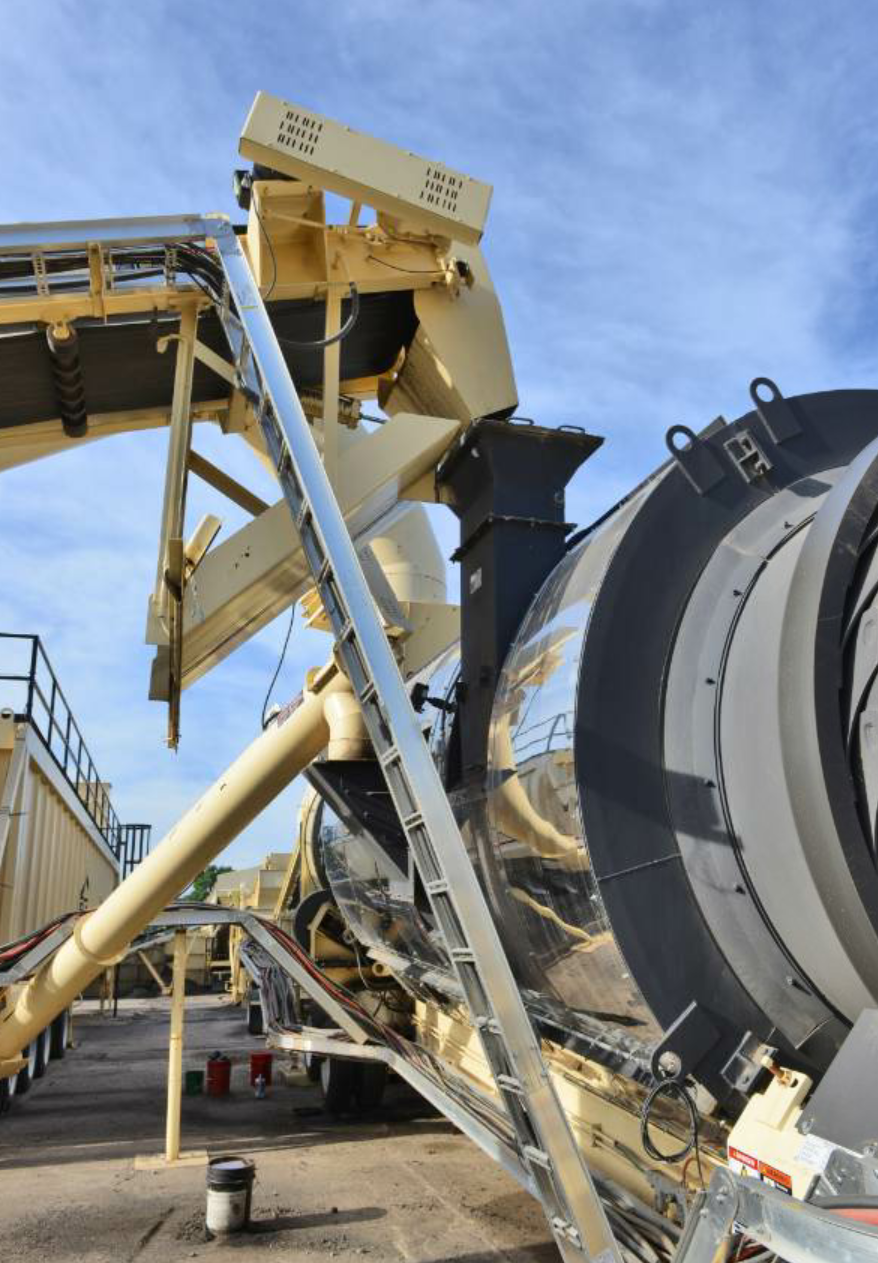
Blackstone management purchased two RAS bins from Astec—one for each plant—late in the winter of 2016 to get them up and running for the 2017 paving season. Mlakar explained the Astec bins are specifically designed to weigh and convey the light-weight shingle material. The Astec RAS bin has four load cells that measure weight depletion and integrate the measurement into the controls and production process.

Blackstone management purchased two RAS bins from Astec—one for each plant—late in the winter of 2016 to get them up and running for the 2017 paving season. Mlakar explained the Astec bins are specifically designed to weigh and convey the light-weight shingle material. The Astec RAS bin has four load cells that measure weight depletion and integrate the measurement into the controls and production process.

While that’s pretty cool, there was more to shingle stockpiling than keeping the colors separated. “In general, we receive shingles and produce a weigh ticket recording each load,” Mlakar explained. “As part of my air permitting compliance, I require the roofer to independently test and certify the shingles as asbestos-free. I keep a ‘certified’ pile separate from the receiving pile so it was easy to separate the school’s shingles. We did get indications from the school district in the spring of 2017 they intended to put some parking lots out for bid in the summer, so early on in the process, we had the vision we could actually grind their shingles, which would give us a cost advantage, and put them back into their own parking lots.”

Mlakar gave the breakdown of materials: “We received about 120 tons of shingles from the district’s roof project. We produced about 900 tons of hot mix for Center Valley and about 400 tons for London Elementary. We ran 20 percent RAP and about 1 to 2 percent shingles. So we put about 20 tons of shingles into the mix. That’s 20 tons of shingles that didn’t go to the landfill.”

“This was the first time the school used that recycle,” Hiegel said. “It was not mandated. We wrote the bid as recycled was encouraged. They [Blackstone] still had to be the low bidder to get the job.”

The Russellville School District stays on top of new things. First of all, Morgan Barrett of the civil engineering and consulting firm Barrett & Associates, also of Russellville, is on the school board. Hiegel explained that Barrett didn’t want to be paid for his work, so Barrett merely coached and advised the architect and contractor on the mix design that would incorporate RAP and RAS. Blackstone made the mix design. Specifically, Jackson Beehrle, the lab tech for Blackstone, made the mix design.

Mlakar described him as a super young man. “He walked in as a green 20-year-old,” Mlakar said. “I noticed he had a great attitude, and I picked him off the crew to put him in the plant. We threw him in drinking from a fire hose.”

Beehrle got his certificates and became a skilled lab tech as well as a backup plant operator for Blackstone. When the Russellville School District project came up, he was ready for the challenge.

“We hit him with a tight window on this project, but he’s one of those guys who will come in early and stay late,” Mlakar said of Beehrle. “He’s a responsible young man. He did an excellent job of delivering the new mix design on a short timeline. Without his efforts, we wouldn’t have produced the product.”

Professional Paving

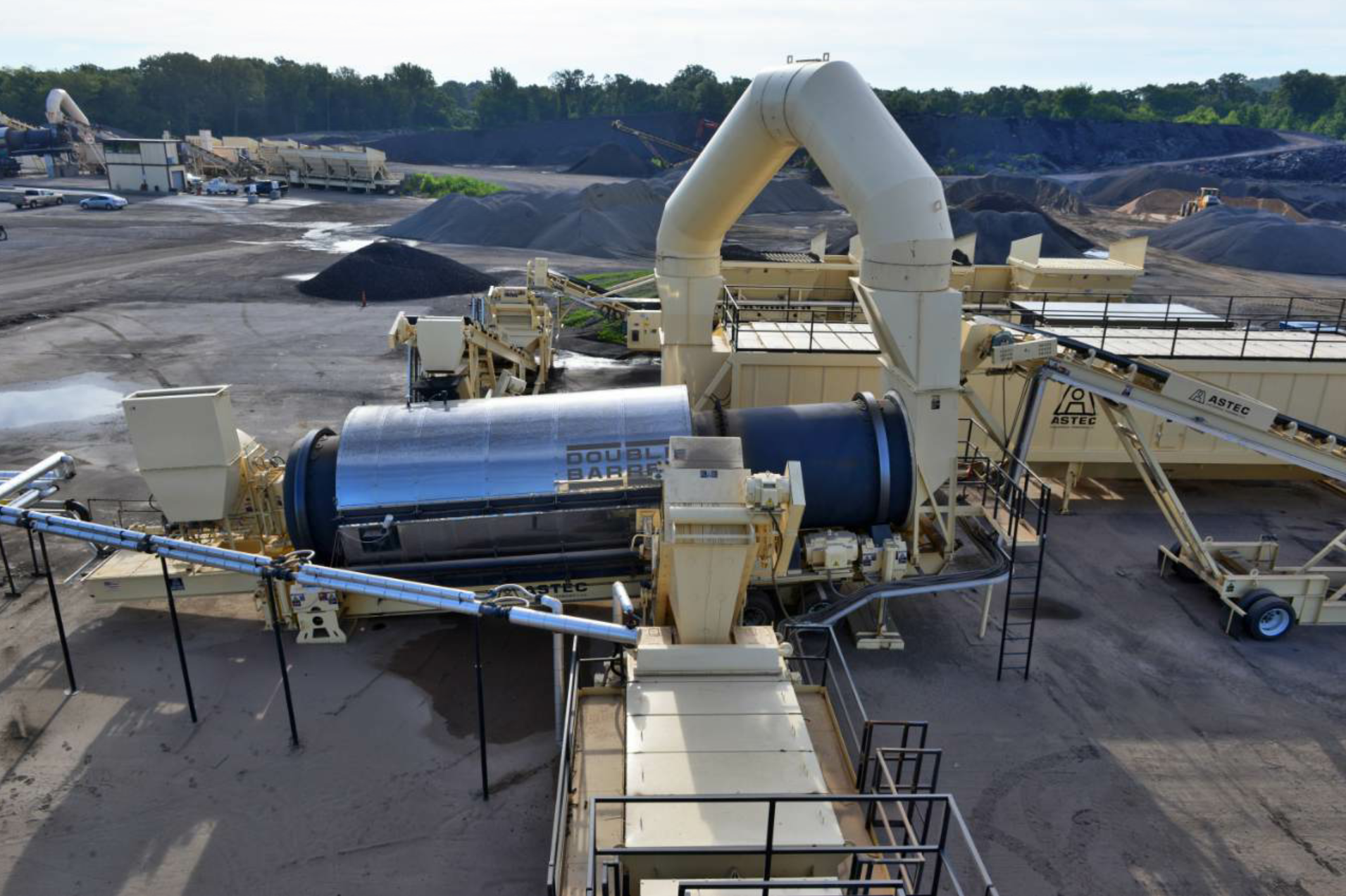
Paul Mlakar shared: “Our new plant has the Astec Double Barrel extended drum capable of 40 percent RAP. We think recycling is not only good for the environment, but also a way for us to achieve a sustained competitive advantage.” Caption for image saved as 7300 Bins OperationThe Blackstone crew keeps material separated cleanly for optimum quality control.

Paul Mlakar shared: “Our new plant has the Astec Double Barrel extended drum capable of 40 percent RAP. We think recycling is not only good for the environment, but also a way for us to achieve a sustained competitive advantage.”
Caption for image saved as 7300 Bins OperationThe Blackstone crew keeps material separated cleanly for optimum quality control.

With mix design in hand, Blackstone crew members were ready to begin. Hiegel explained that they decided to break the project into two parts due to the timing. Both school parking lots had to be completed before the start of fall 2017 classes, of course.

The Center Valley Elementary School parking lot renovations included 840 square yards of perimeter milling, 400 linear feet of trench repair, a couple concrete slabs, some backfill and grading, 10 tons of asphalt leveling course, and 830 tons of Type 2 asphalt. The London Elementary School parking lot renovations included 996 square yards of perimeter milling, 54 linear feet of trench repair, a couple concrete slabs, 3 tons of asphalt leveling course, 435 tons of Type 2 asphalt and additional asphalt for a walking trail. “One crew could easily have handled it, but because of time constraints, we split it up,” Mlakar said.

For the majority of the Center Valley portion, Foreman Gary Foshee’s crew took care of business.

“He’s done it all,” Mlakar said of Foshee. “He’s a longtime industry guy who’s been here since the company started. He’s worked the plant, the lab, the paving crew. If you cut him, he’ll bleed asphalt. He stays after it. He’s our interstate, high-production guy.” For the majority of the London portion, Foreman Tim Koffman’s crew handled the details.

“He has about six years total with the company,” Mlakar said of Koffman. “He had his own small paving business. We approached him when we got to the right size and brought him on board. He’s got a real good knack for your parking lot and commercial work.” The two foremen head up the crews that can handle different “types” of work for Blackstone’s paving business. Mlakar said he can put Foshee’s crew on state or heavy highway projects, and Koffman’s crew on commercial and residential projects because they’re talented paving professionals with specialized skill sets. But he also feels comfortable switching them back and forth when needed, as the most recent Russellville School District project proved.

Planning Ahead

It took the whole team to bring the sustainable project together. As mentioned above, Mlakar takes care with the shingles coming into his operation. His team uses a Doppstadt AK 230 grinder, which he described as “a smaller machine” from a German manufacturer. The smaller machine required less capital investment up front, is portable and gives Blackstone room to grow. He only grinds shingles as they’re needed to minimize issues of agglomeration and moisture buildup.

“Our DOT only allows manufactured shingle waste in their mixes, so the only opportunity for me to use our shingles is in private mixes,” Mlakar shared. “We purchased two RAS bins from Astec—one for each plant—late last winter. We installed and certified the bins this spring in preparation for this paving season. The Astec bins are specifically designed to accurately weigh/convey the shingles. Historically, the shingles are so light and are conveyed at such a small percentage—slow speed—that it’s hard to use a conventional volumetric feeder bin and maintain proper accuracy. The Astec RAS bin has four load cells that measure weight depletion integrating this into the controls and the production process. The preliminary results are good. We did have to do some de-bugging and trouble-shooting, but once we cleared those hurdles, it appears to work well. The accuracy is consistent.”

The decision to add RAS bins and increase RAS use is a strategic one. Mlakar explained that even though the price of oil has been relatively flat in 2017, thus the payback has been slow; he knows the price of a barrel will go back up. Mlakar also considers the optimism he sees in the industry and politically. For example, Gov. William Asa Hutchinson II (R-Ark) recently re-allocated funds to match money from the Federal government.

“We’re hedging off optimism,” Mlakar said. “Our company made a strategic move last winter and the RAS bins are just a part of the direction we’re headed. In addition to the new RAS bins, we purchased two new Astec RAP bins and our new plant has the Astec Double Barrel extended drum capable of 40 percent RAP. We think recycling is not only good for the environment, but also a way for us to achieve a sustained competitive advantage. By engaging in this long-term strategy and vision, less material is hauled to the landfill, we buy less AC, we consume fewer hydrocarbons, and ultimately we gain an advantage at the bid table. It’s the proverbial win-win. To me it’s proof that industry can co-exist with the environment. It doesn’t have to be a zero sum game. We just have to commit to work together.”

Another aspect to this “early” commitment is educating employees. Mlakar pointed out that with any new technology or new equipment, there’s a learning curve. “We’re getting our ducks in a row now,” he said. “It may be two or five years [before everyone else is investing in RAS again], but let’s get the learning curve out of the way, and under our own timeline.”

The Russellville School District has benefited right now from Blackstone’s cooperation with Hiegel and Barrett, and the team’s desire to be environmentally friendly. Through it all, the school district has maintained its excellent standing in the state. Hiegel pointed out that of the 430 schools in the state, London Elementary School ranks fourth for taking care of its facilities.

“We fix these things,” Hiegel said. He described the pavement distresses of the parking lots prior to the repairs as “most of it was moderate,” but the school board has to work proactively. “We have to schedule it a year or two in advance for budgeting and getting the money approved,” Hiegel said. “The school is proactive on these matters.”

Not only the school, but the contractor nearby is proactive. Blackstone Construction’s planning for environmental sustainability puts them on the leading edge of recycling efforts going forward.