Mid-Ohio Paving Grows its Hot Mix Goals
When Jim Nichols first purchased a parallel flow asphalt plant in 2008, he thought he was in over his head. But he also knew it was a necessary risk. Larger companies in the area that could produce their own asphalt were bidding on the jobs Jim wanted. He knew he needed his own plant to be competitive. Plus, he had his sons, Chase and Skyler, urging him to make the move.

Both of Jim’s sons had been helping him pave throughout high school. When Skyler graduated in 2008, the whole team was ready to go.

“My brother and I decided that hot mix was going to be our future, so we decided to put all our blood, sweat and tears into it,” Chase said. So, in 2008, they drove to New Castle, took down the plant, trucked it to Centerburg, Ohio, and began making their own hot mix.

Ultimately, it was an investment that paid off.

Now, the Nichols’ paving company, Mid-Ohio Paving, is making 50,000 tons of hot mix a year, putting down 35,000 on its own, and completing large-scale commercial and industrial jobs and small town municipal paving projects.


A Decade of Immense Growth

When Jim was a kid, his father had around 20 dump trucks and decided to start a tar chip business. Then in 1986, Jim’s father started Mid-Ohio Paving with his brother and cousin, and later that year, Jim took over the business.

“From there, we started paving driveways and began evolving to where we are today,” Jim said. Although the timing of purchasing an asphalt plant in 2008 wasn’t perfect, Jim couldn’t have asked for a better location.

In 1970, Jim’s father bought a piece of property 20 miles north of the outer belt of Columbus. At the time, no zoning was in effect, but the property was later zoned industrial.

“That was a blessing that no one was really aware of at the time it was zoned,” Jim said, adding that his community has been very supportive of the asphalt plant. “I grew up in this community, so everyone knows me. For the first 20 years we were in business, we didn’t even have a sign out front.”

And, it just so happens, the north and east sides of Columbus is booming.

“The local economy has been very, very good,” Chase said. “The city is growing towards our plant.” Additionally, Chase said the more rural areas to the north of Centerberg are just beginning to develop “to the point where hot mix is an option.”

As we speak, he’s sitting in a Kroger parking lot that wasn’t there 10 years ago. “You’d have to go another 10 miles to get to a commercial area like this,” he said. “I remember watching this project get paved and dreaming of one day doing jobs of this size. Now, when this job gets re-done, I’ll probably be the one doing it.”
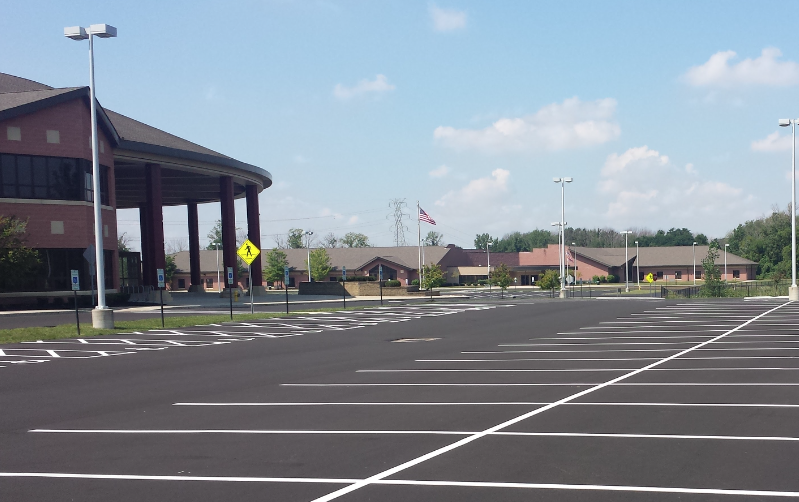
 

Sixty-five percent of Mid-Ohio Paving’s work is large-scale commercial, and 35 percent, townships.

Sixty-five percent of Mid-Ohio Paving’s work is large-scale commercial, and 35 percent, townships.

Overcome Doubts, Tackle New Challenges

When the plant was first purchased, Chase remembers his dad thinking it would take decades before the company produced 40,000 tons a year.

“We’ve only had it for 10, and our production has grown an outrageous amount.” In fact, gross sales have almost doubled in only two years. “Every year for the past 5 years has been a record year for us. And that’s across the board: sales, tonnage, everything.”

During the plant’s first year of operation in 2008, the Mid-Ohio Paving plant was producing around 20,000 tons—all laid by its own crew. Next year, Chase expects the company to produce 100,000 tons, receive certification to make DOT mixes, and start competing for state and county work.

Chase said having the plant has also given him the opportunity “to play with companies hundreds of times our size” when it comes to paving, as well as a significant cost advantage—he estimates $10 per ton.

“The market is pretty controlled here,” Chase said. “Most of the companies I compete with don’t have their own asphalt plant. If you aren’t buying from us, Kokosing, Shelly or Mar-Zane, then you’re not getting asphalt.”

It’s hard to believe that when Chase began working for the Centerburg, Ohio-based company—tamping driveway edges the summer after eight grade—hot mix jobs were such a small portion of the company’s focus. Most of its jobs were large chip sealing jobs and cold mix paving, with some smaller hot mix jobs like driveways. The average job value was between $5,000 and $10,000.

During the company’s best year prior to purchasing the asphalt plant, Chase estimates shooting 250,000 gallons of chip seal; now, they’re shooting around 75,000. “I’d rather see the mix coming out of my silo,” Chase said.

Now, 65 percent of the company’s work is large-scale commercial, and 35 percent, townships, and the company regularly competes for $200,000 paving jobs.

Jim said as the company continues to evolve, his sons will be ready for it. “They’re always encouraging me to keep expanding and take on bigger jobs,” he said. “Without them, I wouldn’t be where I am today. I’m blessed to have them as sons, carrying on the torch.”


Mid-Ohio, Today

The company now employs 25 people at its plant, on its crew and in its office during the paving season.

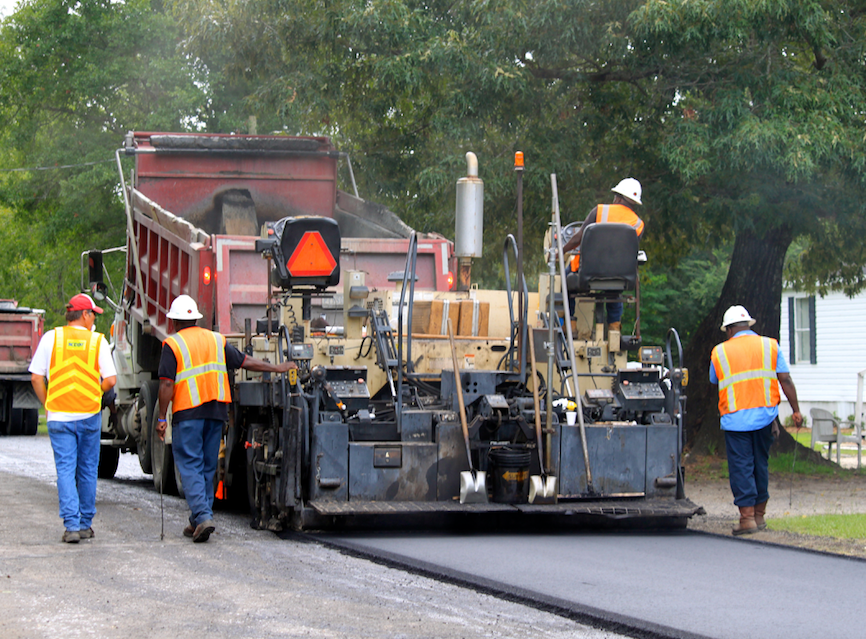
Its eight-person paving crew runs a 1999 Champion PRO-PAV 780W with an 8- to 14-foot screed and a Barber Green paver with a screed range of 10 to 20 feet. The company also has a 1995 Ingersoll-Rand 575T with an 8- to 12-foot screed, a 6-ton Hyster 330B static roller, a Hyster 350 static roller and a 4-ton vibratory roller from Caterpillar, as well as two Case skid steers.

All but one employee at Mid-Ohio has been trained by Chase, Skyler or Jim Nichols.

“You could say our entire crew has been Nichols-trained,” Chase said. And each one started with absolutely no experience. For the past three years, the crew has remained unchanged, allowing them to form a cohesive and effective team.

The crew has remained the same over the past three years, which has allowed them to form a really strong bond.

“One of my guys, Curtis Waggoner, said, ‘I spend more time with you guys than I do my family,’” Chase said. “In a way, we are a family. And we’re a family that gets along.” The crew even spends time together outside of work. Later this summer, the entire crew will be going on “the first-annual Mid-Ohio Paving rafting trip” on its last weekend off until Halloween. Chase also makes a point to take the crew to World of Asphalt each year, which started when the trade show was in Cincinnati in 2010.

“I just saw how much we gelled on trips like that, so now we can’t get enough. It’s incredible to have a team like the one we have,” Chase said. “I just call the plays. My team deserves the credit for executing them.

Chase would also like to thank his family for supporting every decision, and the Erie Group and its employees.

“I’m so grateful for all the people who stuck by me when I kept saying, ‘Give me one more year, give me one more year,’” Chase said. “It’s an incredible feeling to not have to say that anymore, because I feel like we have made it.”

“After this winter, I plan on paving a lot of 20-foot wide roads on a new paver with a state-approved asphalt plant, and I want to be making 100,000 tons,” Chase said. If history is any indication, this lofty goal will be well within reach for Mid-Ohio Paving.



Every single employee at Mid-Ohio has been trained by Chase, Skyler or Jim Nichols.

Every single employee at Mid-Ohio has been trained by Chase, Skyler or Jim Nichols.

Mid-Ohio’s Crew

At the plant: Operator Clinton Horlachor, Brian Dunno and Loader Man Phil Perry

On the paving crew: Chase Nichols, Skyler Nichols, Jordan Nichols, Curtis Waggoner, Skyler Eplar, Rusty Webber, Chris Creech and Phil and Dean Bowers

In the haul trucks: Don Nicholson, Dick Nichols, Dana Parker, Dave Tobin, Rodney Barracks, Don Landis, Dan Mattney and Gary and Greg Boother

In the office: Charlie Stewart, Janice Schaefer

Mechanics: Duke Severns and Cody Burnworth


Cover Worthy

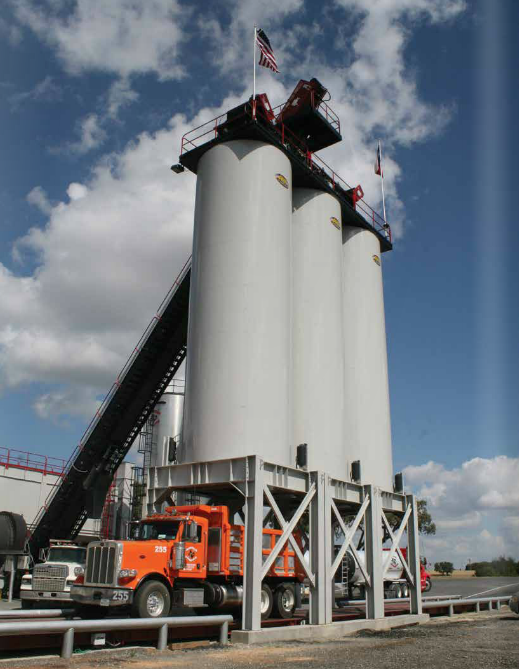
Mid-Ohio Paving showed company and industry pride during and after the World of Asphalt 2016 Show & Conference and AGG1 Aggregates Academy & Expo in Nashville. Not only did members of the Mid-Ohio Paving crew show up in force for the cover photo contest at the AsphaltPro and PavingPro magazine booth, the company got the word out for voting on their images afterward. Check out their winning combination of photos in front of a Gencor asphalt plant, a Heatec vertical tank farm, and a Roadtec Shuttle Buggy.

The magazine booth was swamped with WOA attendees taking pictures in front of additional innovative equipment from participating companies Astec Inc., Carlson Paving, CEI, Eagle Crusher, KM International and Meeker Equipment. A big thanks goes out to those companies who made this contest possible, and a big congratulations goes out to Mid-Ohio Paving for their win.
Palmetto Corp Finds Success in Independence

The story of Palmetto Corp, Conway, S.C., runs three generations deep. In the 1960s, Mack Godwin began offering asphalt patching and driveway paving as part of his company, Godwin Construction. In 1987, his son Marshall struck out on his own to offer these services on a larger scale and Palmetto Corp was born. Marshall’s son, Shawn Godwin, who is now the CEO of Palmetto Corp, came on-board in 1993 and transitioned the company into municipality work. They took on more roadway, residential street, subdivision, city streets and government jobs, including DOT and airport work.

“We’re the only company among our competitors that does everything in-house,” Shawn said. Palmetto Corp offers grading, crushing and other services in addition to asphalt paving and maintenance. Shawn said offering these services in-house gives the company more flexibility.

“Our project managers’ goal is to get their projects finished quickly with the highest quality possible,” he said. “If we subcontracted work out, our schedules would be more dependent on our subcontractors’ schedules….Having crews in-house, they can get work done when they need to.”

Shawn estimates that 80 percent of the company’s business is asphalt paving.

Palmetto crew

Having hired 80 new employees in 2015, Palmetto is always looking for opportunities to promote crew leaders from within.

“When you have asphalt manufacturing plants, you’re naturally going to do larger projects,” Shawn said. “Some of our jobs don’t require grading or concrete. The dollar amount of asphalt resurfacing projects allows us to do volume very quickly.”

Offering such a variety of services means Shawn has to find project managers that have specific experiences and skill sets, whether that’s in paving or reclamation, etc., “and let them lead the charge.”

To empower his project managers, Shawn has a weekly conference call with all of them, who are often spread around the state of South Carolina, every Monday at 10 a.m. The group reviews the past week and talks about upcoming projects. They are encouraged to ask for help when needed, whether that means adding another crew or a piece of equipment. “It’s key to open that line of communication.”

As the company’s average project size and client list continues to grow, Shawn has had to find qualified employees quickly. In 2015, Palmetto hired 80 more employees; its total employee roster now reaches more than 350 people. Most new hires are recommended by current employees.

“We get the word out that we need more people, and the word just gets around to all our staff,” Shawn said. “We’ll probably continue expanding, so we’ll need to be creative on how we find that workforce and improve our training system.”

Beyond word of mouth, an active HR department and attendance at job fairs and college fairs, Shawn said promoting from within will also help recruit good employees who will see the potential for advancement.

“I want to be able to take crew leaders, put some good people around them, and create new crews,” Shawn said. Currently, Palmetto has 24 crews—each of which may be working on a different job each day.

Shawn’s favorite projects are those that require one of each type of Palmetto’s crews, six of which are paving crews. Recent examples include widening a 5-mile section of road from two lanes to five lanes on Highway 76, near Timonsville, and widening 8 miles from two lanes to four near Darlington.

“Anything that pulls in the whole team is what I like,” Shawn said. But, he said, his favoritism tends to lean toward asphalt projects. “I enjoy when we take existing concrete roads, repair them and then overlay them with asphalt. Once it’s covered with asphalt it will always be asphalt.”

Palmetto

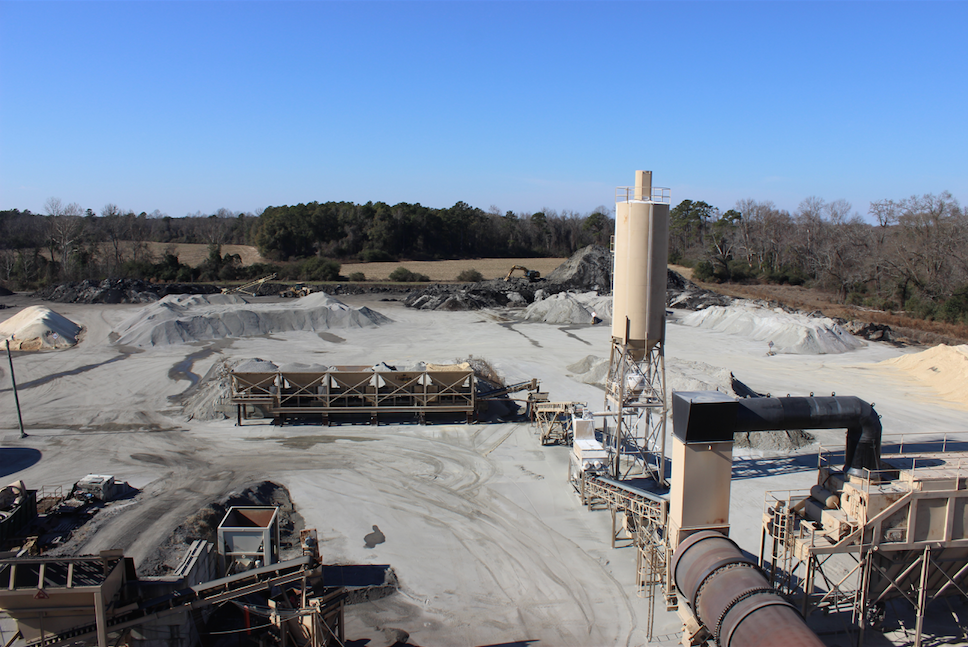
Palmetto Corp acquired its first plant when the owners purchased Godwin Construction in 1987. Today Palmetto Corp has three asphalt plants—one in Conway, South Carolina, one in Bishopville, and one in Florence. Photos courtesy Palmetto Corp.

Plant Independence

Not only does Palmetto’s size and variety of services provide the company greater independence, but the company also owns three asphalt plants.

“If you want to expand to where you’re not just doing patching, driveways and parking lots, but also doing roadwork, you need more asphalt,” Shawn said. “To be competitive in that business, you have to have your own plant.”

When Palmetto Corp began in 1987, the company already had its own asphalt plant; it had kept the plant originally purchased by Godwin Construction.

“Having our own plant makes scheduling more efficient and easy,” he said. “There are headaches in it as well, in maintaining it and finding people to run it, but for larger projects you have to have it to be competitive in our area.”

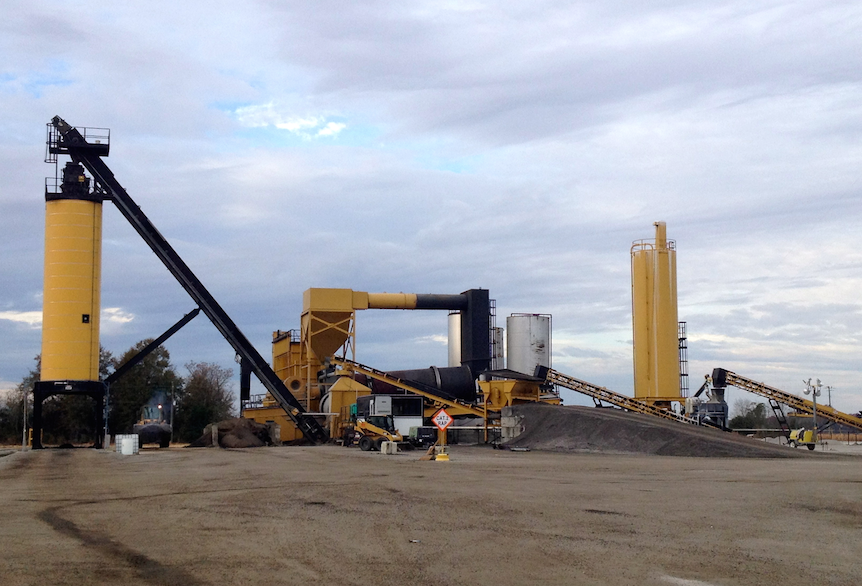
Now the company owns three asphalt plants at the company’s headquarters in Conway, and also in Bishopville and Florence. All three are drum mix plants and make more than 20 types of base, intermediate and surface mixes not only for Palmetto projects, but also for other customers.

Each plant is also home to a satellite office. The main office is home to accounting, estimating and other business services, and the satellite offices attached to the asphalt plants also help maintain equipment. Most of the company’s projects are within 60 miles of each of its asphalt plants, so the plant offices also act as a hub for those regions.

“If you have to buy asphalt from someone else, you’re on their time schedule,” Shawn said. “You can say you need asphalt, but if they’re not running that day, if they’re making asphalt for their own projects, or if they have a bunch of other buyers, it can be hard to get what you need.”

Palmetto Crew2

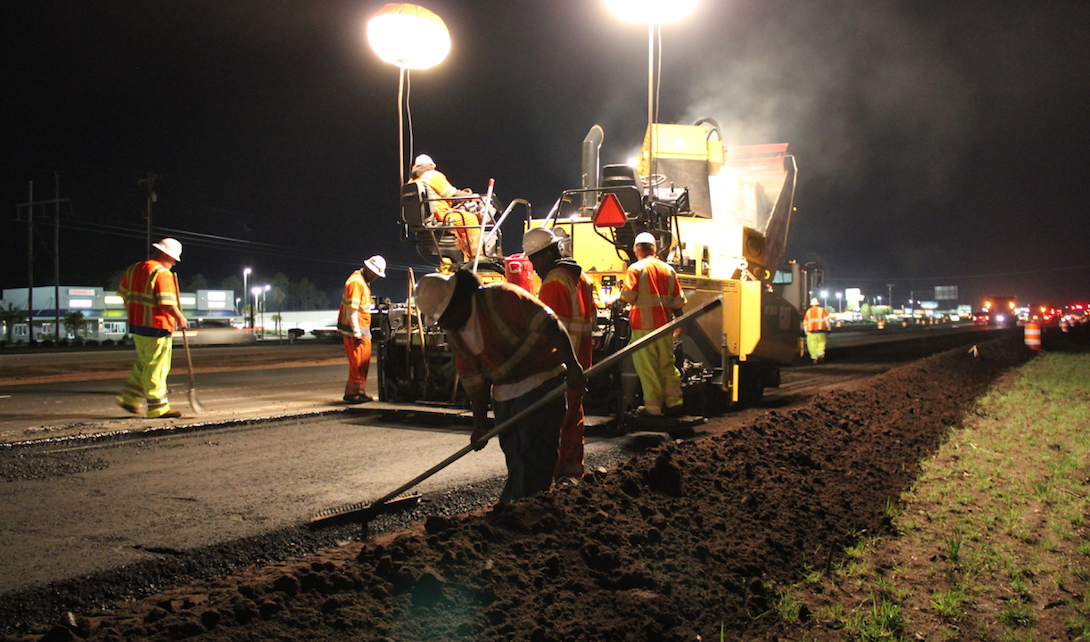
Five of Palmetto’s 24 crews are paving crews.

Stand Out

One trend Palmetto Corp sees is South Carolina DOT’s interest in reclamation services, which Shawn estimates has quadrupled compared to just four years ago.

“South Carolina has a lot of random roads in the middle of nowhere that are used for farming that don’t get much traffic, but the traffic they do get is heavy truck traffic,” Shawn said. “You have all these trucks going in and tearing up roads that weren’t built for this heavy traffic.”

Many of these roads needed to be repaired at the same time.

“Lots of these roads had more than 15 percent in need of repair,” Shawn said. “These roads have so many spots in need of repair that patching wasn’t an option.”

Rather than removing what’s there and bringing in new mix, Palmetto will perform in-place recycling. A crew takes a reclaimer to the project to grind what’s there, blend in cement and water, and repave the roads with that.

“We’ve been doing reclamation for years, but the DOT has only recently gotten into it a bit more.”

“I wish I could say we’re a really creative company, but there’s nothing we do that other contractors don’t do,” Shawn said. “The key is doing what you do well and efficiently, while taking care of your equipment and your people.”

“The better your maintenance procedures, the longer things will last,” Shawn said.

Palmetto Plant

Palmetto Corp acquired its first plant when the owners purchased Godwin Construction in 1987. Today Palmetto Corp has three asphalt plants—one in Conway, South Carolina, one in Bishopville, and one in Florence. Photos courtesy Palmetto Corp.

One solution he’s found is to stay consistent with which crews have which pieces of equipment. “The more you run it around between crews, the more opportunity there is for potential failures. If the same guy is running the same piece of equipment every day, he’s going to know when something sounds weird and ask that someone look into it. If you’re not used to the equipment, you’re not going to notice when it starts doing something strange.”

Shop Foreman Rod Tall says taking care of your equipment begins with routine care. “We service our equipment every 250 hours,” he says. That includes pressure washing and cleaning, an oil change and a full inspection, in addition to monthly pressure washing and steam cleaning the engine and parts regardless of hours in service. “We try to catch it before it becomes a problem.”

Each of Palmetto’s five paving crews has a paving machine, two double drum rollers, a rubber tire roller, a broom tractor, a tack truck and an emulsion truck. Palmetto also has a couple spare pavers, some milling machines and grading equipment to maintain in their paving division alone. To efficiently manage the equipment, employees operating the machines fill out daily tracking sheets with the hours each piece of equipment was used.

“Routine maintenance helps you see things before they become a problem,” Tall said, “so stay on top of your maintenance.”

How to Inspect the Drag Slat Conveyor

Your conveyor has served you well all season, but it’s been a few years since its last rebuild. Now you need to balance your seasonal downtime schedule and component replacement costs with the chance for chain failure next season. Here are a few basic guidelines to help you decide what to do.

While you still have the conveyor in operation, use an infrared thermometer to take temperature readings of all bearings, the motor and gearbox. High temperatures indicate excessive wear. If you are in doubt about a temperature reading, contact the manufacturer for a recommendation.

Now stop.

It’s time to lock out and tag out the drag slat conveyor before your ground personnel go any further. The remaining steps take place while the plant is out of operation.

The drag chain is generally the first determining factor when deciding to rebuild. There are several indicators of remaining chain life.

First, take a look at your records to determine the tons of material that the chain has conveyed, and compare that to the average life reported by the manufacturer. Second, make a thorough inspection of the chain rollers. As the rollers wear they take on a saddle shape, as most of the wear is in the center of the roller. Chains can be run until the point the rollers begin cracking and even breaking apart, but you do not want to go into a new season with any cracked rollers.

Additionally, as chain wears it elongates, which some personnel refer to as “chain stretch.” The chain doesn’t actually stretch, but as the pins and bushings wear, each chain joint is allowed to pull further apart. If a chain has 3 percent elongation it must be evaluated closely, and probably replaced. If it has 5 percent elongation it’s gone. If you keep accurate track of the number of links that have been removed, you can calculate the amount of elongation. Few people, however, have that kind of accuracy in their records. Therefore, the best thing to do is remove a pin and check for wear.

You will notice that the removed pin only wears on one side—or half of its circumference. The depth of hardness varies by pin size, but if you contact your supplier, the company should be able to give you that information—it will typically be something less than 1/8-inch.

If you show more than 50 percent wear on the depth of hardness you will want to replace the chain because, once it wears through the hardened surface, it fails rapidly. Sprockets are similar to chain in that they are surface-hardened. Once you wear through the hardened section—typically about 1/8-inch—the sprocket wears very rapidly. The most common mistake made by contractors is not changing head shaft sprockets frequently enough, as worn sprockets greatly accelerate chain wear and can even result in chain failure.

Slats must be checked for wear and for bending. Any bent slats should always be replaced. Normal slat wear occurs mostly on the ends, and results in material build-up in the conveyor box. Again, excessively worn slats should be replaced.

The final inspection for a conveyor rebuild is the floor plate. In our industry chrome carbide overlay plate or NiHard castings are the standard. Chrome carbide is the easiest to check because you can see if any areas have worn through. NiHard will crack and break long before it wears through. Some manufacturers provide wear indicators cast into the plate to let you see how much wear is left. If you don’t have wear indicators your best indicator will be the tonnage that you have run compared to the average wear life offered by your supplier. If in doubt, replace the floor plate before installing a new chain.

Northeastern Pavers is a Family Affair

Armed with a new plant, the Barrington family has dramatically increased production while securing long sought-after business

Aside from his faith, nothing is more important to Shane Barrington than family. The owner of Northeastern Pavers, Granbury, Texas, got his start in the asphalt business working for his father, eventually teaming up with him to form a start-up paving operation in the northeast Oklahoma town of Colcord. More than 35 years later, that company employs about 120 people in peak season and counts all four of his sons among its senior staff. Each of the young men excels at a different facet of the operation; each is committed to the business his father loves. With the replacement of an ADM 250 ton per hour (TPH) plant with a new one providing more production capacity, the entire Barrington clan is seeing Texas-sized rewards for their efforts.

Intro to Asphalt

Shane Barrington’s first encounter with asphalt production came in 2003 when, after years of working with his father and as a subcontractor to several area firms, he decided to strike out on his own.

“Throughout the 1980s, during which time we relocated to Granbury, Texas, I had been working hard to build up the business and to establish a solid reputation,” he said. “One of the firms we were subcontracting to had us provide sealcoat work for TxDOT and, by 1993, I decided that was what I really enjoyed doing. Working with TxDOT provided a lot more stability and a whole lot less chasing people to get paid.

“During this period, we enjoyed tremendous growth. But my dad decided that, largely because of the quick pace, it was time to back off and let me take the helm, so to speak. Though he was no longer with the company, he left behind a legacy that hard work and perseverance will always provide good results—a work ethic that I embraced than and continue to do so today.”

From 1995 to 2003 the company grew in sales from $1 million a year to more than $12 million. During that period, the scale of work changed as well, with the sealcoat operation being complimented by more and more hot mix work.

“To supply the hot mix operation, we worked with asphalt suppliers all around Granbury; all the large producers have a number of plants in any direction for 50 miles. As the paving operation grew, we were buying anywhere from 100,000 to 150,000 tons of mix a year from those companies. By 2003, I just felt we needed to look into buying a plant of our own. As luck would have it, I found a used plant in Houston, which one particular owner had purchased but never erected because of permitting issues. So, along with a friend of mine who had recently retired from asphalt production, I drove down to Houston to see if it would work for us.”

The plant they found in Houston was a 1997 model MileMaker 250 from Asphalt Drum Mixers (ADM), Huntertown, Ind., which Barrington says could easily have been mistaken for new. Shortly after it had been purchased and erected in Kentucky, circumstances forced a change in that company’s business strategy and a subsequent sale to the Houston organization.

“When we got there, we found that it had all the books, all the plans, everything; it was like that plant had just come from the factory,” Barrington said. “I made him an offer, he accepted and not long after, we were back down there hauling nine truckloads of asphalt plant back to Granbury. Understand that, at this point, we’d laid a lot of asphalt but had never made any—much less erected a plant. We brought it to a 10-acre site we owned and literally laid it all out on the ground in preparation for assembly.”

It’s worth noting that before they got the plant erected, one of the largest asphalt producers in the region contacted Barrington to offer him $7.50 off every ton he bought from them. Despite the more than $1 million annual savings he could realize, he turned that down.

“I know that as long as I had large projects, my trucks would be first in line to get material from them,” he said. “However, I also knew that as soon as I had a small project and someone else had a large one, I’d get pushed to the back of the line and run the risk of not getting mix at all. I grew up dealing with that and did not like it. We pushed forward with our plant construction and had the whole process, from foundation work to startup, completed in about 60 days.”

Screen Shot 2016-02-05 at 2.09.10 PMStart of Something Big

With the introduction of the new plant in 2004, things continued to improve as Barrington’s company, in addition to doing a limited amount of private work, began running TxDOT mix. When the company won the bid to produce mix for TxDOT’s maintenance projects, Northeastern Pavers hit its stride.

“Between our own projects and the TxDOT work we had an outstanding first year, producing just over 150,000 tons,” Barrington said. “In subsequent years since then, we’ve made additional equipment purchases—a new paver, a Shuttle Bugger, etc.—which, while allowing us to tackle some really high production work, also made us realize how undersized our plant had become. We did things to try to maximize production, we upgraded our drag slats; we did everything but touch the bag house. We’d maxed it out and had to face facts: we needed to upgrade.”

The relationship Barrington had developed with ADM since buying the used plant put the Indiana company at the top of the list of manufacturers Northeastern would consider. While others came in with very impressive proposals, he said it was ADM’s willingness to work with them to make the deal happen that secured it for them.

“Maybe it’s because that’s the way I like to do business,” he said. “I want my customers to be fully satisfied with what we bring to the table and ADM did the same for us, both in terms of price and in addressing an extremely tight window to startup. When all was said and done, we chose one of their newest models, a 400 TPH EX Series with capabilities for running RAP and RAS, which figure largely in TxDOT’s paving plans.”

Northeastern’s EX Series plant features three 200-ton storage silos, five 30-ton bins for material ranging from fill sand to 1-inch minus; a pair of 20-ton recycle bins and ADM’s unique single-drum counterflow technology, which uses separate drying and mixing zones to maximize heat transfer and fuel efficiency. Barrington said the manufacturer offered a number of add-ons during the purchase process that seemed minor at the time, but have since come to be key for them.

“ADM said they would include drag slat heat and silo heat, which, because we are in Texas, I really didn’t think we’d ever use,” he said. “However, I was wrong; we’ve found the silo heaters to be excellent for holding material overnight and we’ve seen virtually no increase in our electric bill. We run the material, put it into the silo, and then turn the heat on at the end of the day—so it’s not really building heat, it’s just maintaining it. It’s a really economical storage solution that we never anticipated.”

According to Barrington, the drag slat heat has also proved a nice plus. Realizing that the drag slat generally has a tendency to wear out the quickest, he has his crew turn the slat heat on for a couple hours before they are ready to start up, then shut it off at startup. “Because all the components are warm, there is literally no drag going on,” he said. “That is a benefit that all our counterparts up north have and we’re finding it to be one of the smartest things we could have done.”

One of the biggest surprises Barrington has realized is the overall efficiency of the new plant. Shortly after startup, he said, he had real suspicions that something was wrong. Based on production figures they were getting, he felt there was no way they could be running a plant of that size for so little cost in fuel and electricity.

“Compared to the old plant, we’ve seen a 30 percent increase in fuel consumption,” he said. “But, because the EX Series plant is twice the size of the previous one, we can run it half as long to get the same volumes of material. Also, the fact that my crews now consistently get material when they order it, means paving overtime has disappeared. There are savings in just about every facet of the business.”

Embrace Recycling

Recognizing the inherent value and benefits of using recycled asphalt pavement (RAP) and recycled asphalt shingles (RAS) in its mix designs, Northeastern Pavers had the EX Series plant designed with that recycling component in mind. For the RAP, Barrington said they grind up overlay material from their projects and bring it back to the yard for subsequent processing. RAS on the other hand, is purchased from Thelin Recycling in Ft. Worth.

“While Texas is generally known to use high ratios of RAP, we ourselves, do not. Our mix designs with TxDOT are at 12 percent on RAP and 3 percent on RAS,” he said. “We feel that, when RAP levels get to a certain level, the existing asphalt in the material becomes brittle and prone to excessive cracking; we are finding a similar issue with the RAS. We recently started to use a latex injection system adding 1 ½ to 2 percent latex into these materials. We feel the latex can add enough elasticity back into it that cracking will no longer be a problem. In my mind, there’s no doubt that RAS is important. It’s a replenishable commodity; there are roofs coming off every single day, every hailstorm. What better place to put it than in our roads?”

The specialty mixes have not affected overall production. In fact, Barrington said they recently set a personal single day record, producing 2,920 tons.

My Four Sons

By nature, Shane Barrington isn’t easily impressed. But he admits to being impressed when his second son Cody came into his office a few years back and said: “I found the woman I’m going to marry and I want to be in business with you.” Three years into a business degree, he left school to join Northeastern and, like his brothers, has made his mark in the organization.

“I’m one of the luckiest men in the world,” Barrington said. “Every day I can come to work to a job that I love and share my workday with all of my sons. My oldest, Marc, 30, is a partner and junior vice president and oversees the hot mix paving operation. At 27, Cody, also a partner in the company, is the Northeastern’s chief estimator and manages the sealcoat facet of the business. Caleb, age 24, handles all of our quality control and does it so well that we never miss a bonus and I can’t remember what a penalty is.”

Barrington had another reason to be proud recently when, shortly after startup of the new plant, ADM called him to say that his youngest son, Casey, 21, the plant operator, was a superb asset to the company. “There’s no better compliment a dad can get,” he said. “My sons have all been key to the success we’ve enjoyed over the years and I couldn’t be happier.”

Far from the small startup they once were—Northeastern did gross sales of about $50 million last year—Barrington and his sons are all in agreement that they might want to level off at this point for a bit rather than continue the upward trend.

“But we have a great team in place and a plant that thrives on production,” he said. “So you just never know.”