Eurovia Atlantic Coast Implements Apex

Northeast Paving is a division of Eurovia Atlantic Coast LLC, headquartered in Virginia. The division operates 14 stationary asphalt plants, several portable plants and 12 quarries, and runs between 15 and 20 paving crews (two in Pennsylvania, three in Massachusetts, one in New Hampshire, and nine in Maine).

In 2022, the division decided to invest in Apex, a quarry and plant automation software from Command Alkon, Birmingham, Alabama. The division had been using Command Alkon’s Libra platform to automate load out and ticketing, when it decided to invest in a more robust solution that integrated with other technology the division had deployed and offered additional features into which the company could grow.

Eurovia can also use Apex to glean data from all its plants for more informed decision-making.

“Load out and printing tickets were the only functions we were using our old solution for,” said Division Vice President Brad Regner, adding that the data was then uploaded to Eurovia’s internal enterprise resource planning (ERP) software for billing. “We needed a solution that could perform that basic function, while bringing more value through integration with some of our other platforms.”

Eurovia Atlantic Coast has also recently implemented a carbon tracking software. “One of our goals as a company is reducing our carbon footprint. We’ve set some lofty goals for ourselves. Now, we need to track them as we strive to meet them,” Regner said. The software has already been rolled out at some Eurovia U.S. locations, and the company plans to have achieved full implementation by 2024. “The software will give us real time data on energy consumption at our asphalt plants. The ability to track and analyze that data is going to help us through that carbon reduction process.”

Command Alkon Apex Scale Ticketing Software

Apex for Northeast Paving

Apex offers a number of site automation features, from automatic truck recognition, video verification of scale loading, driver kiosks and display, remote print enclosures and antitheft modules to wireless loader systems and more. The platform also aims to be a central data source for sales, dispatch and back office staff to ensure an accurate flow of information and streamlined invoicing and billing.

“Apex’s biggest benefit is simply integrating all that functionality into one place,” Regner said. Before integrating Apex at all its plants and quarries ahead of the start of the 2023 season, its staff was using one platform to send a quote, manually entering that information into its plant automation platform when the customer picked up the mix, then loading that information into its ERP platform to make sure everything matched up. “Being able to integrate multiple steps into one platform saves us a lot of manual entry. From the time we send a quote to a customer, that’s already in Apex. When we get an order from a customer or from our own crews, it’s already in Apex.”

Regner has also appreciated the ability to integrate Apex with Eurovia’s third-party truck tracking software. “Having all that data being shared across multiple platforms in real time is an unbelievable advantage and brings so much value compared to what we had been doing before,” he said.

According to Regner, Apex has saved the division a significant amount of time and effort. “Now, when we have a customer come in, we have all the necessary information already loaded,” he said. “We’re not having to call people to figure out what job this is for, what the price was, etc.”

The system has also led to a reduction in errors that may arise from manual data entry. “When you bill a customer incorrectly, someone has to go into the system, credit that invoice, create a new one,” Regner said. “And it’s a hassle for our team and a hassle for our customer. The ability to eliminate those errors has been a huge benefit.”

Regner has also appreciated the ability to integrate Apex with Eurovia’s third-party truck tracking software. “That flexibility is one thing I really liked about Command Alkon,” he said. “They were willing to share that data to our logistics software provider and work through that with them so we didn’t have any gaps on that front. Having all that data being shared across multiple platforms in real time is an unbelievable advantage and brings so much value compared to what we had been doing before.”

Benevento Enhances Asphalt Operations with HaulHub, CONNEX

Eurovia can also use Apex to glean data from all its plants for more informed decision-making. “Before, our data was housed on a bunch of individual servers in various places, based on the geographic locations of all our plants,” Regner said. “With Apex, all that data is available on the cloud. It’s simpler to access, simpler to import that data into our ERP, simpler to do all the things we need to do to bill our customers.”

Regner also appreciates the ease with which it’s possible to access the right data in a variety of ways. “Now, all our data is available to us instantaneously and we can filter and sort it in a number of ways to better understand what we’re doing and what we need to do,” he said. For example, if Regner wants to see how many tons have left a certain plant on any given day, he can. If he wants to see tonnage for the entire division over the course of a week, he can do that, too. “With just a couple of clicks, we can parse the data in many different ways to have a better look at our operations, make decisions and manage our business from a higher level.”

Another major selling point of the Apex solution was that it was compatible with 95% of the division’s existing plant automation hardware. “We’d been using e-ticketing and silo cameras with our previous automation platform at some of our locations and the hardware we had to replace was minimal,” Regner said. However, when the division implemented Apex, they expanded e-ticketing to all its plants and quarries.

Implement Wisely

According to Regner, the implementation process from the end of the procurement stage to Apex going live at the division’s first plant was three or four months. “From there, we worked through implementation at the rest of our 14 asphalt plants and 12 quarry sites,” he said. “The Command Alkon team did a fabulous job guiding us through that process. We were ahead of schedule pretty much the entire time.”

A key component of the implementation process was the testing phase. “Having a robust testing phase in a non-live environment is one of the most important lessons I’ve learned in all my years of implementing new technology,” Regner said. “We’ve rolled out new technology [without that] quite a few times in the past and it hasn’t gone nearly as well.”

The testing period gave Northeast Paving’s employees the chance to experience the technology firsthand and troubleshoot potential issues before they could arise in a live environment where issues could be costly. “Ample testing is critical,” Regner said. “It gave our team the ability to see what this system can really do, ensure it’s giving us the results we thought we’d get and troubleshoot anything that isn’t working properly before we go live.”

Northeast Paving operates 14 stationary asphalt plants, several portable plants and 12 quarries, and runs between 15 and 20 paving crews.

Regner recommends getting a broad variety of employees involved in the testing phase. “Having people from different levels and functions of your company test the software makes all the difference,” he said. “Get the plant operator into that testing environment. Get someone from accounts receivable in there. Get someone in there that might have a very different perspective from an IT person. Let them kick the tires, play around, ask questions.”

“Getting people involved also lets you push the limits of the platform,” Regner said. “I wouldn’t say they’ll try to break it, but they’ll definitely try to do things you never anticipated.”

Despite the launch of an entirely new system, Regner said he hasn’t received much feedback from customers. “Most of our customers didn’t even know we did it,” Regner said. “That shows just how well the transition went. We saw minimal to no disruption in our billing process and the ticketing process to our customers, which is key because we wanted it to be seamless.”

Doing so also offers the ancillary benefit of reducing resistance to change. “When a new technology gets rolled out wrong and ends up making employees’ lives harder, even temporarily, it seems like they retain those negative feelings about it even after it starts to work correctly,” Regner said. “When you let people be a part of the change, it creates buy-in and makes the process a lot simpler.”

Plant Upgrade helps Blythe Construction Meet Sustainability Goals

Even during the testing phase, Regner received positive feedback on the system from employees with many different job functions. “They shared their thoughts on the dashboard, which reports they found most useful and how the platform helped them do their job more effectively,” he said. “Even in the testing phase, people saw that they could use the platform to make their jobs easier.”

Not only does this approach change the attitudes of the employees that participated in the testing phase, but it can also improve the opinions of other employees. “When a plant operator who wasn’t involved in the testing process starts using the system, they know they can call one of their fellow plant operators,” Regner said. Not only for help, but also for an unbiased opinion on the new system. “When that operator says how great the system is, that’s way more valuable than me saying that from my office.”

When it came time to roll Apex out in a live environment, Regner didn’t need to think twice about which plant they’d try first: the Springdale Plant in Pennsylvania. “[Springdale] is our most complex because we sell to a lot of different customers and also use that plant to supply our own crews,” Regner said. “And we sell a lot of different products [at that plant], including products outside of what goes through the hot mix plant and just come across the scale. I figured if Apex could work at that plant, all our other plants and quarries would be easy by comparison.”

From there, the division rolled Apex out across the 14 asphalt plants and 12 quarries within its region, completing the full implementation in time for a successful 2023 season start up and a streamlined paving season.


From Base to Bolt-Ons & Beyond

In the future, Northeast Paving plans to implement additional solutions within the Command Alkon portfolio. When deciding which features were most important from the beginning, Regner said the process was a back-and-forth with Command Alkon. “They were very flexible with what we wanted to do,” Regner said. “We wanted to start off with an upgrade to the base functionality of what we had before. We didn’t want to overwhelm our teams with too many changes at  once. When they’re familiar with the Apex software, it’ll be much easier to bolt on additional features in the future.”

Two of the features Regner already has his eye on are Command Alkon’s dispatch module and credit card processing feature. “[Credit card processing] is one of the first things we’re going to investigate once we’ve got the basics down,” Regner said. “It would be nice to integrate credit card processing into the platform rather than having to do a separate transaction elsewhere and then put it into the platform.”

The ability to add features as the division is ready was a chief benefit of the Apex solution. “We liked that Apex wasn’t all or nothing,” Regner said. “We were able to pick the things we wanted from an automation perspective while retaining the flexibility to add more features as we go forward. This way, we aren’t stuck with something we can’t upgrade in the future. Apex is something that can grow with us.”
Harding Group Invests in the Future

Evolution is the life blood of every organization. This concept is a core principal of Harding Group, an asphalt and concrete company based in Indianapolis, Indiana. Harding Group has been a part of the Indianapolis roadbuilding community since the 1960s. In 2018, the company went through an ownership transition where Shelby Howard IV became the owner of Harding Group.

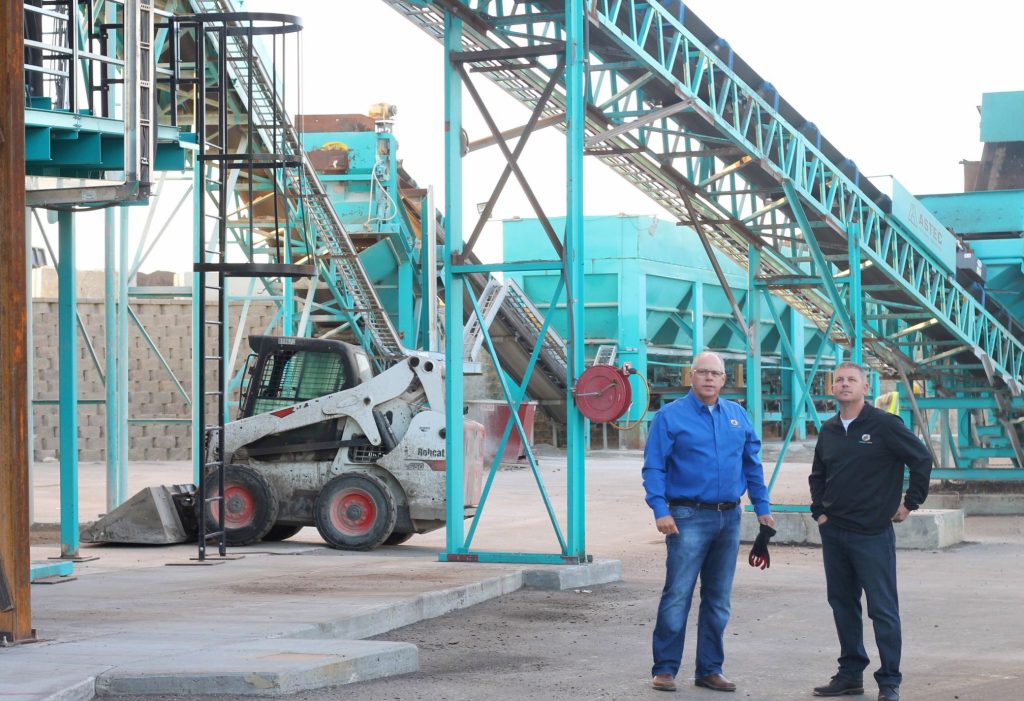
Shelby Howard IV (right) is pictured here with his Dad, Shelby Howard III (left), as they visit the Harding North Plant.

A Background in Business

Shelby IV grew up in his family commercial vehicle dealership business working his way up from the parts room. His father, Shelby Howard III, purchased his first dealership in 1992 and grew that dealership into a network of dealerships throughout Indiana and the contiguous states. In 2014, the dealerships were acquired by a national company. For the next five years, Shelby Howard IV stayed in the dealerships and became general manager for the Indianapolis and Gary locations which were two of the highest performing dealerships in the portfolio. Shelby IV wanted to transition back into a family business and made his investment in Harding Group shortly after.

COVID Encourages E-Ticketing

Shelby Howard IV learned that the keys to success in the growth of his dealerships was having strong communication between employees as well as having industry leading technology. It is anecdotally said the construction industry is a laggard in adoption of technology. Harding Group historically fell in this category; however, Shelby IV has made significant investments in use of technology in a short time.

Bring Technology to the Forefront

“In today’s environment, you have to always be looking for ways to improve your business efficiencies to stay best in class,” Shelby Howard IV said. “Technology is one tool that is always advancing. We try to stay in front of our competitors by fully embracing the tools that are at our fingertips. This allows our employees to strive and at the same time, it makes it easier for our customers to do business with us.”

Operating multiple hot mix asphalt plants, Harding Group identified multiple opportunities to upgrade its communication with its own paving crews and its outside customers. Beginning in 2019, Harding Group began electronically sending invoices and tickets daily for all its transactions. The primary reason for this was to eliminate the many hands a paper ticket must go through prior to a customer entering an invoice and the corresponding tickets in its accounting system.

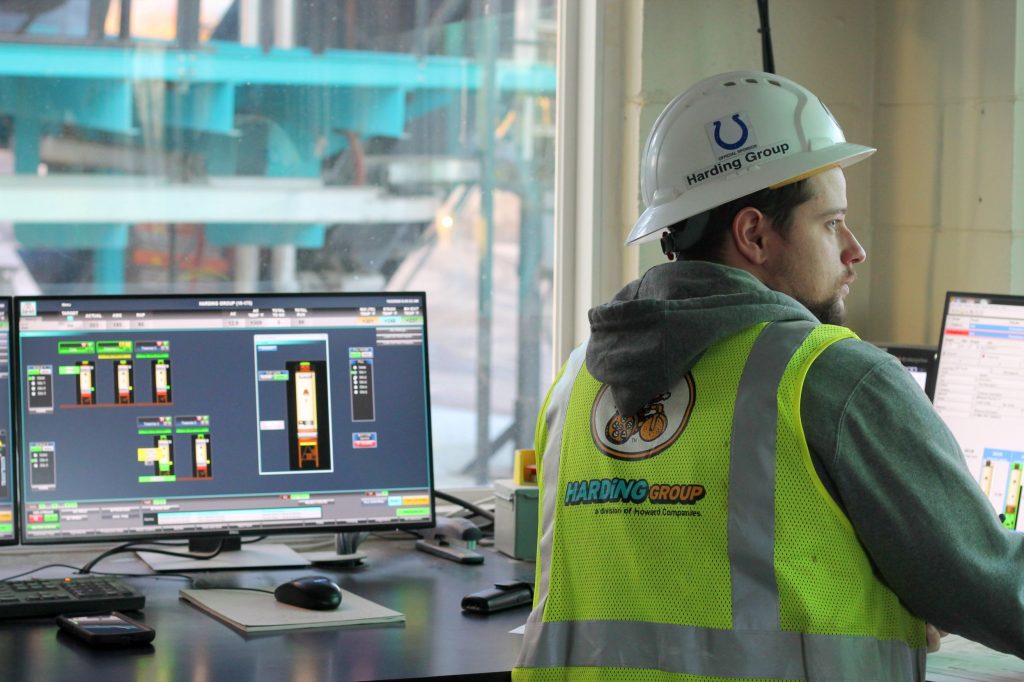
William Jacobs, a Plant Operator, is shown here in the control room at the Harding Group North Plant.

Asphalt professionals know that prior to 2020, paper tickets were often printed at asphalt plants and handed to the hauler, then to the foreman on the job site, then to an office employee and so on. Harding Group was ready to streamline this process.

“Our E-ticketing process is an internally developed process as we use both Libra and Astec loadout software at the plants to generate the tickets,” Shelby Howard IV said. “We felt it was important to have one unified delivery system of invoices and tickets when using multiple load out software partners.”

Command Alkon and Libra Systems, Inc. Team Up to Serve Heavy Construction Materials Suppliers

In changing the way Harding Group communicates its invoices and tickets to its customers, it eliminates the need for the paper ticket. This is one less thing the paving foreman needs to worry about and allows him to focus on paving and not collecting paperwork to send to the office.

“For our triaxle trucks, we have invested in GeoTab, a GPS integration technology with the triaxles. GeoTab allows us to not only monitor the location of the triaxles but certain key safety metrics, which we incorporate in our overall Key Performance Indicator model. Our crew foremen all have access to see real-time the GPS of the triaxles, whether milling or paving that day, in an effort to gauge the correct speed for paving to ensure there is no waiting in between trucks and we can pave a continuous mat.

Braen Stone Leverages Libra Systems Integrated GPS and Plant Management Tech

“Our operations team is also able to view the truck flow from the office, and communicate with the crew foreman whether or not we have the right number of trucks on the job for the day. This flexibility has allowed for significant operations improvements for the company by knowing and understanding where our assets are at all times and ensuring there is constant communication between the plant, field and office on a daily basis.”

The company found that sending this information daily allows its customers to provide feedback immediately. Harding Group discovered daily invoicing to be a key performance indicator metric for the accounting team in providing management with timely and accurate financial data as part of daily dashboard reporting of the asphalt plants.

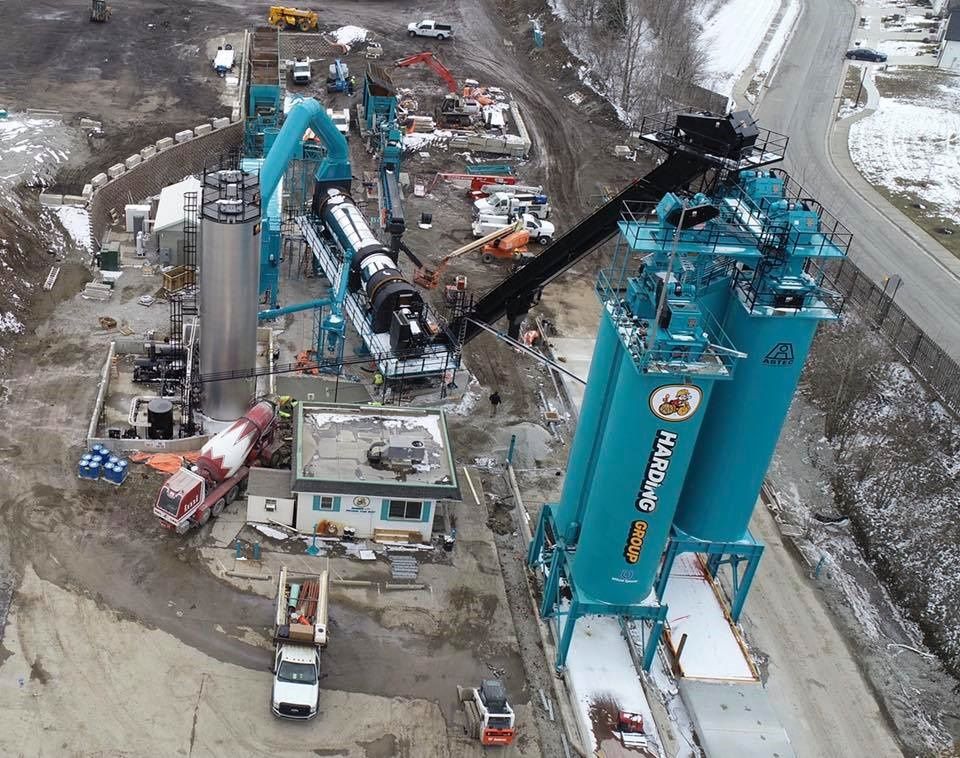
Both plants with upgrades complete fired up within an hour of each other April 1, 2020.

“This further allows the plant to understand real time what the daily production demand is to ensure a proper continuous flow of production. We are able to create digital copies of the tickets at the time of loadout. We’ve further internally developed the reporting ability to compile data and through proprietary software are able to send an invoice matched with the corresponding tickets sorted by job to each customer for the day.”

In 2020, a shift in Indiana came by requiring paperless ticketing on certain projects. With the onset of COVID-19, Harding Group was prepared to handle these requests without any change in its standard operating procedure.  During the COVID-19 peak shelter in place orders, the accounting team at Harding Group was able to work remotely while still delivering daily reporting to its customers on asphalt purchases.

Having improved the communication from the asphalt plant load out to invoicing portion of a transaction, Harding Group then shifted its focus to the front end of asphalt production: the ordering process. Servicing multiple asphalt crews from various scheduling managers presented a challenge to ensure daily production was scheduled in the most efficient manner. During the winter of 2019-2020, Harding Group took to the drawing board and reinvented its daily ordering process.

With the help from a developer and the leadership of Shelby Howard IV and Chief Financial Officer Sean Rizer, the company developed an online ordering tool which allows customers to place orders a day in advance or a week in advance. The orders are gathered and reviewed by the plant manager which allows him/her to modify the order if necessary. This tool allows for flexibility in scheduling so if a rain-day hits the plant operator can send a message to all customers such as, “due to weather conditions all orders are being pushed back a day.” Harding Group put security measures around the platform to ensure only authorized users are placing orders. Utilizing this tool improves the communication from the paving schedulers to the plant manager and operators.

Sean Rizer, CFO of Harding Group, works on the development of their new app.

With this new system, orders can be placed from smart phones, tablets, or computers in real time. Through implementation of this tool, the company no longer worries about a missed phone call or a missed opportunity to fill an order. This has improved the plant’s ability to increase sales by not missing orders and has increased customer satisfaction and improved communication and product availability.

Bring in a New Plant

In summer of 2019, Shelby Howard IV realized Harding Group needed to increase its investment in its asphalt plants.

“The key to making a consistent product is having a consistent manufacturing process.”
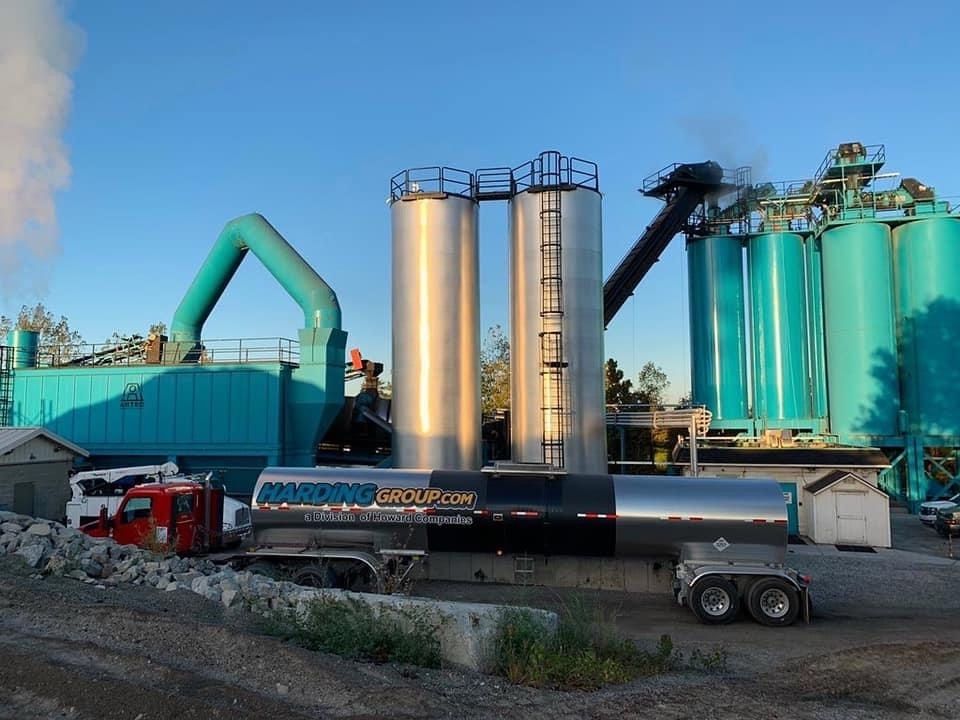
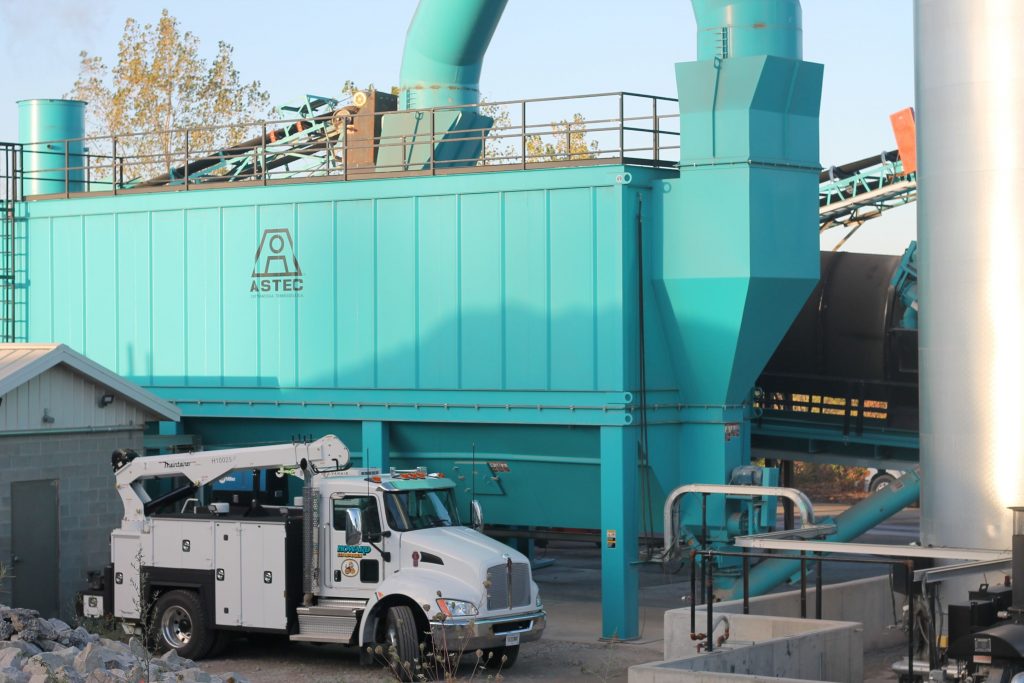
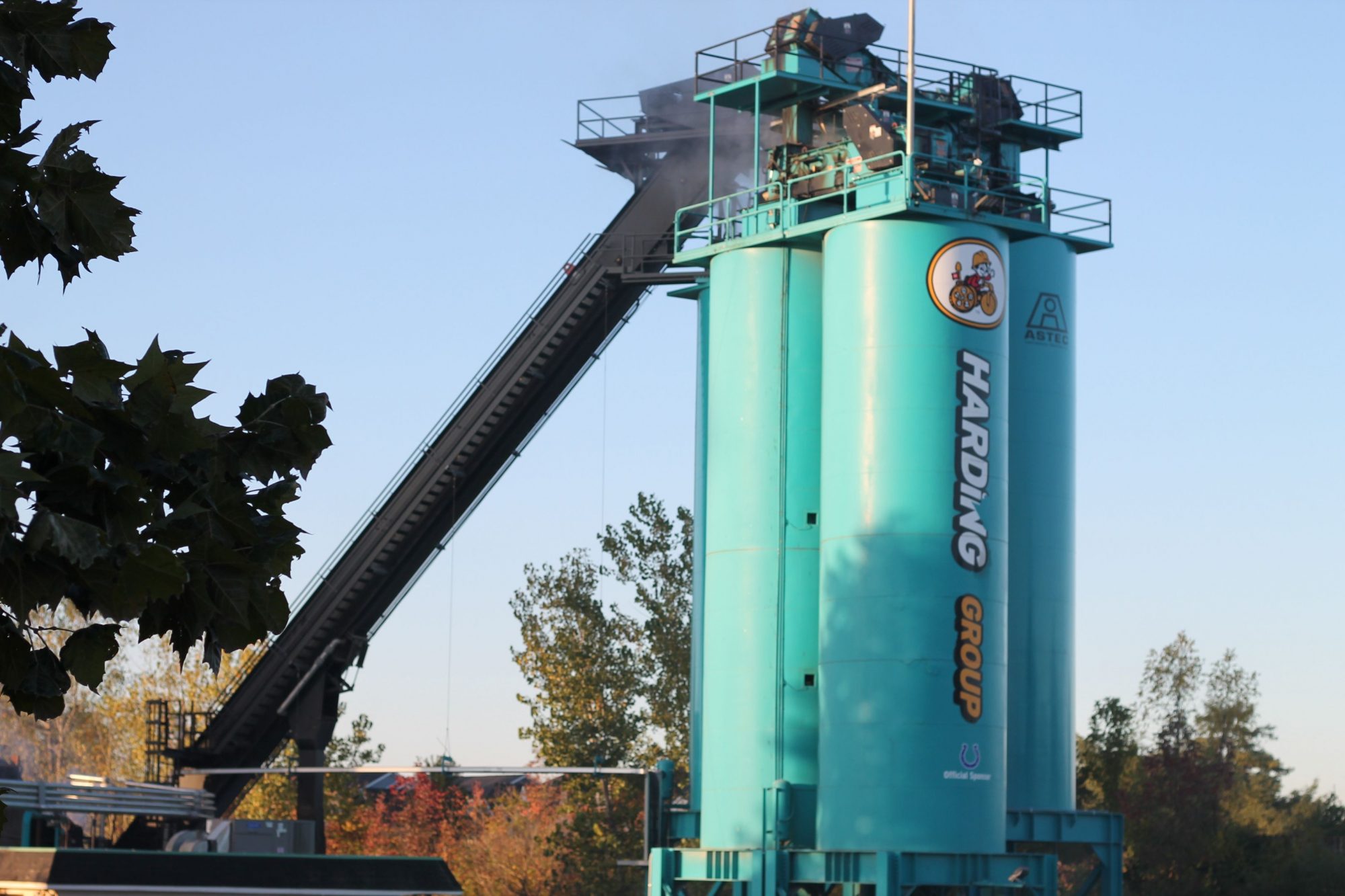
Harding Group partnered with Astec Inc., Chattanooga, to make significant upgrades to its existing asphalt plants. The two plants had very different set ups and this created additional challenges for the quality control team from a consistent manufacturing standpoint.

One plant was a batch plant retrofitted several years ago with a separate dryer and mixing drum system; the other was a prototype drum and dryer combination.

In 2019, Shelby Howard IV decided to make upgrades to two asphalt plants, enlisting the help of Astec Industries and his own knowledgeable team members. The retrofit batch plant received several upgrades including baghouse, drag slat conveyor, replacement silos and control system.

Through several discussions with Astec and the opportunity to tour its facilities in Chattanooga, Harding Group decided to upgrade both plants during the winter of 2019 with the Astec Unified Drum System. The retrofit batch plant also received several other upgrades including baghouse, drag slat conveyor, replacement silos and control system. The team at Harding Group worked countless hours during the winter on the installation with the assistance of Astec’s team.

“Some of the main initiatives of upgrading the two asphalt plants in one winter offseason were being leaders in doing our part of recycling (See this article, “Asphalt Producers Are Among Nation’s Top Recyclers”) and consistency of asphalt product from both plants. The largest challenges of getting the plants ready for the 2020 paving season were coordination of efforts and construction schedule. Indiana weather is famous for 30 plus degree swings in the same week. However, Harding Group was able to manage the construction schedule to ensure cranes and parts were on site and the necessary crew was on hand. Harding Group’s own employees did the vast majority of the construction with the assistance of Astec. There were many cold long days spent ensuring all parts were set with exact specification.”

Asphalt Producers Are Among the Nation’s Top Recyclers

Both plants fired up within an hour of each other April 1, 2020, a huge undertaking, which was well worth the investment.

“I knew heading into the 2020 paving season we were going to have to make significant upgrades to our asphalt plants to stay competitive in our market,” Shelby Howard IV said. “We know the asphalt plants are the heart of our operations and without a reliable asphalt plant, it makes it challenging to successfully bid work and retain asphalt plant customers as well. We’ve seen already this investment has been a ‘no brainer’ as it has allowed us to retain and grow our employee base and had no layoffs due to COVID-19, which is a testament to what we are trying to do in being a sustainable company in our local market.”

In the ever changing landscape we are all in, it is important to focus on constant improvement and looking for the next opportunity. By doing so, you can differentiate yourself from the competition and streamline processes. Harding Group is planning to accomplish this by looking ahead and planning for the future through implementation of new technology.

Highway Materials Inc. Shares Total Control Shift

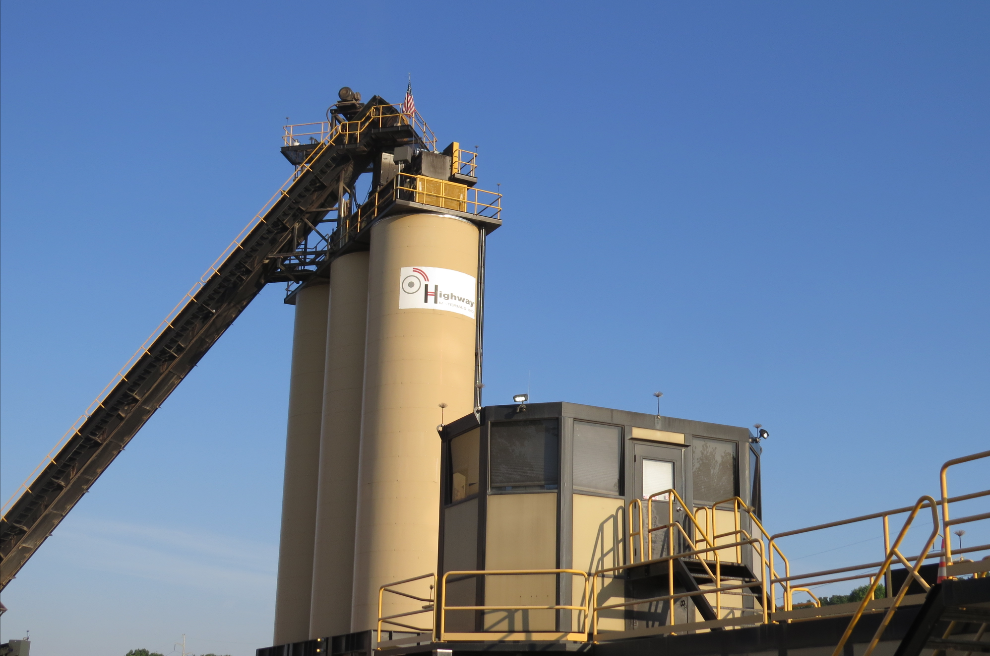
When its plant at Plymouth Meeting, Pennsylvania, had reached the ripe old age of five years, management at Highway Materials Inc. (HMI) a division of The DePaul Group, Blue Bell, Pennsylvania, revamped its inner workings. The hybrid ALmix/Meeker dratch plant had served them well, producing mix at up to 500 TPH with 900 tons of storage capacity for company crews and customers. The products the plant makes include: five PennDOT approved Superpaves and three Marshall designs; commercial mixes for base, intermediate and surface courses; pervious asphalt mixes; curb mixes; and even a cold patch (PSP485). HMI has a dedicated mix design specialist who works in the design lab at the Malvern Asphalt location in addition to the testing labs at each asphalt plant location, which means they have no fear of trying new mixes and letting their plants earn their mettle, as the Plymouth Meeting facility has done.

Jeff Meeker, president of Meeker Equipment Co., Belleville, Pennsylvania, explained that the Plymouth Meeting plant caters to large highway and airport projects, while also providing quality mixes to specialty projects through its batch tower portion of the plant. By 2015, it was time to safeguard all of that a little differently.

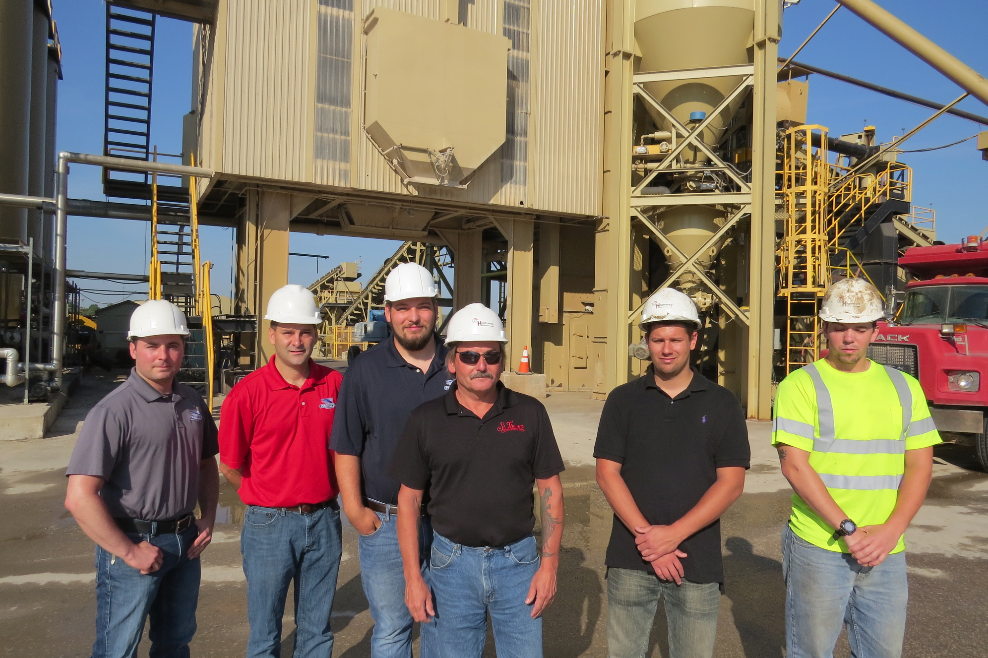
From left, Steve Lowrey, Jason Benner, Kevin Wilson, Steve Fox, Gary Berkenstock and Tyler Fuhrman.

From left, Steve Lowrey, Jason Benner, Kevin Wilson, Steve Fox, Gary Berkenstock and Tyler Fuhrman.

Steve Fox is the asphalt general manager for HMI, and he shared what was going through his mind. It started with location. The Plymouth Meeting plant is situated near the intersection of four major thoroughfares, adjacent to the oldest continuously operated limestone quarry in North America. During season, it runs almost non-stop.

“This plant cannot go down or there’s a ripple effect in the area,” Fox explained. Smaller plants nearby would suddenly become overloaded if the Plymouth Meeting plant had unplanned downtime.

After location, consider ease of repair. The original configuration of the high-production dratch put all controls in one plant-wide programmable logic controller (PLC).

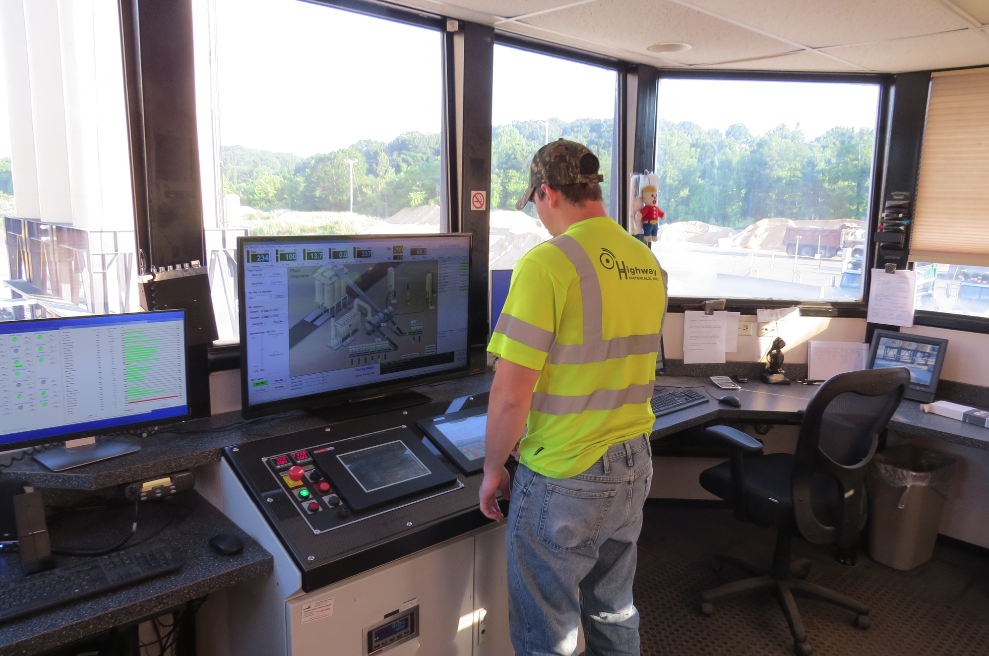
The new Libra automation system provides Plant Operator Tyler Furhman with an immediate understanding of the plant’s operation and any alarm conditions that need attention. Photo courtesy Jeff Meeker of Meeker Equipment.

The new Libra automation system provides Plant Operator Tyler Furhman with an immediate understanding of the plant’s operation and any alarm conditions that need attention. Photo courtesy Jeff Meeker of Meeker Equipment.

Meeker spelled it out: “The industrial PLC was stored in their modern control center. Through it, all motors were started through the PLC logically. All burner control functions were controlled by the PLC. All valve controls, blending controls, baghouse controls, sensors, limit switches and timing were done through one PLC. The real benefit of this type of control is that all drum and batch plant functions are funneled through one control and are able to be shown to the operator on one screen. Troubleshooting the PLC was done at one spot on the plant because all control wires essentially went to one location on the plant.”

Meeker also spelled out the paradigm shift that he’s seen not only at HMI, but in the industry at large. “Over time, one PLC also became a liability,” Meeker shared. “As a society, we’ve come to expect that computers and electronic devices have a short shelf life. PLCs are no different. Various parts and pieces to the PLC become obsolete. In the case of HMI, getting the parts and support they needed to run a high-volume plant became more and more difficult.”

Fox took his worries to the general manager/principle of The DePaul Group, Tony DePaul, who is his direct boss. “I was explaining to him that we were one lightning strike away from being down for a week in our busiest location,” Fox said. “If something went bad, you didn’t know where to start looking. If you lost power, you lost the whole plant. We got frustrated after about a year and then put in a Gen3 for the batch and to communicate with the main office.”

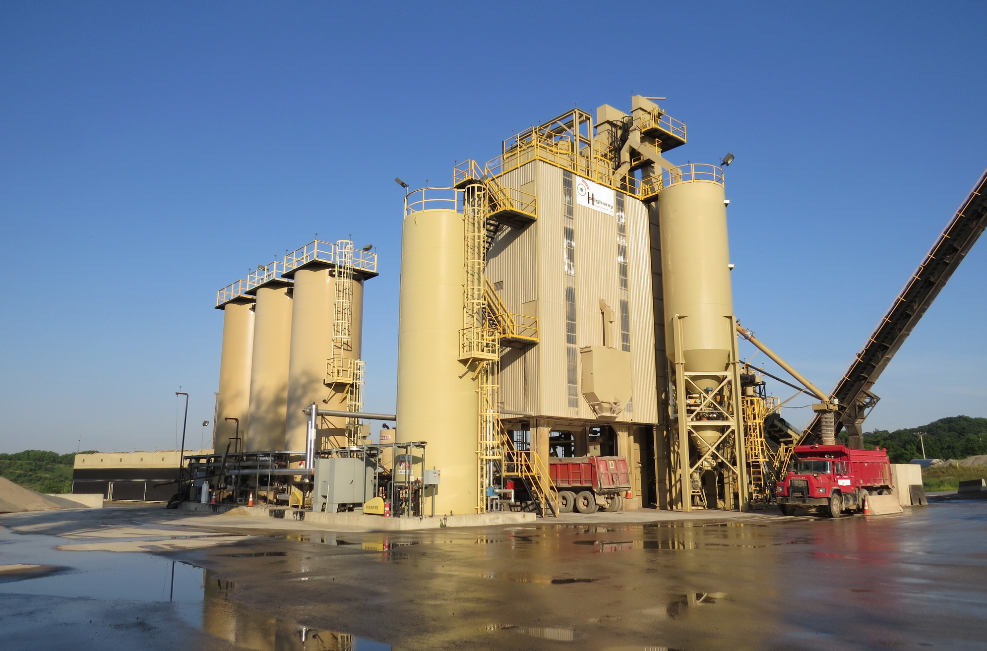
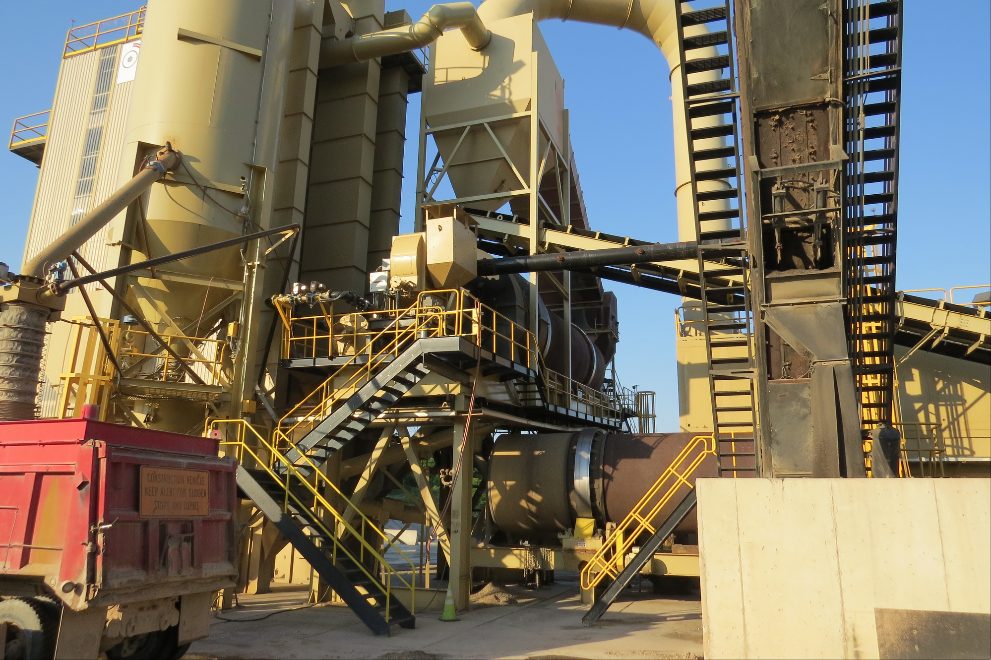
A picture like this shows just how congested a dratch plant’s footprint can be. Plant Superintendent Gary Berkenstock said working at the Plymouth Meeting facility is very different from working at the Malvern location where he started. “The Malvern location has a 6-ton batch plant with two storage silos. There were some days when we’d do 2,000 tons, but we’d have slow days, too. Here, there are no slow days. This plant never stops running.” As a testament to Berkenstock’s skill, Asphalt General Manager Steve Fox has no doubt that he can handle the pace. “Gary’s my protégé. He was a plant operator at Malvern for about eight years. He doesn’t get all wound up about the commotion. He takes it all in stride.” Photo courtesy Jeff Meeker of Meeker Equipment.

A picture like this shows just how congested a dratch plant’s footprint can be. Plant Superintendent Gary Berkenstock said working at the Plymouth Meeting facility is very different from working at the Malvern location where he started. “The Malvern location has a 6-ton batch plant with two storage silos. There were some days when we’d do 2,000 tons, but we’d have slow days, too. Here, there are no slow days. This plant never stops running.” As a testament to Berkenstock’s skill, Asphalt General Manager Steve Fox has no doubt that he can handle the pace. “Gary’s my protégé. He was a plant operator at Malvern for about eight years. He doesn’t get all wound up about the commotion. He takes it all in stride.” Photo courtesy Jeff Meeker of Meeker Equipment.

Fox has been with HMI for about 38 years and explained that the company purchased one of the first loadout systems Libra Systems Inc., Harleysville, Pennsylvania, made in 1978. “We have Gen3 loadouts at all nine locations,” Fox said.

Having one item on its own control system didn’t give Fox the complete comfort level he wanted. After discussing it with DePaul and figuring the bottom line, Fox received the clearance to move forward with some fixes at the Plymouth Meeting plant. He reached out to Libra and others to change the plant’s configuration to a modular one.

“Libra has been proud to partner with HMI on their automation and business integration requirements for over four decades,” Ken Cardy, the president of Libra Systems, said. “While Libra’s systems are used around the globe, a unique bond is formed with a client that is practically in your back yard. I’ve known Steve Fox for 20 years, and he is on a first-name basis with most of our production and service staff. Steve is remarkably adept at streamlining operations and leveraging new technologies into profitability for HMI.”

From the control house, plant operators Tyler Fuhrman and John Minnick can see the drag slat conveyor, loadout area, and all manner of components of the Plymouth Meeting facility at a glance. Photo courtesy Jeff Meeker of Meeker Equipment.

From the control house, plant operators Tyler Fuhrman and John Minnick can see the drag slat conveyor, loadout area, and all manner of components of the Plymouth Meeting facility at a glance. Photo courtesy Jeff Meeker of Meeker Equipment.

Meeker shared: “Libra Systems, Hauck Manufacturing and Meeker Equipment collaborated to offer HMI a modular design, or a way for them to divide the plant up in components or functions.”

This approach allowed HMI to automate the plant in such a way that when a specific part becomes obsolete or difficult to replace in the future, management isn’t forced into a wholesale change of the entire control. Rather, it allows them to save time and money by repairing or replacing only the components that are in need of an upgrade.

Gary Berkenstock is the superintendent for the Plymouth Meeting plant. While his journey with HMI began as a loader operator in 2009 at the Malvern Asphalt location, he worked his way up to mixer man at the Plymouth Meeting location in 2015. The revamp of the plant’s controls was his first project as superintendent. “I sat with Steve [Fox] and Libra and Dave Hane [HMI’s chief electrician] through a few meetings to go through the lists of what needs to be controlled.”

The team split the plant into four functions: process control, burner control, liquid tank control and silo loadout/point of sale control. Each OEM to assist shared information about the project.

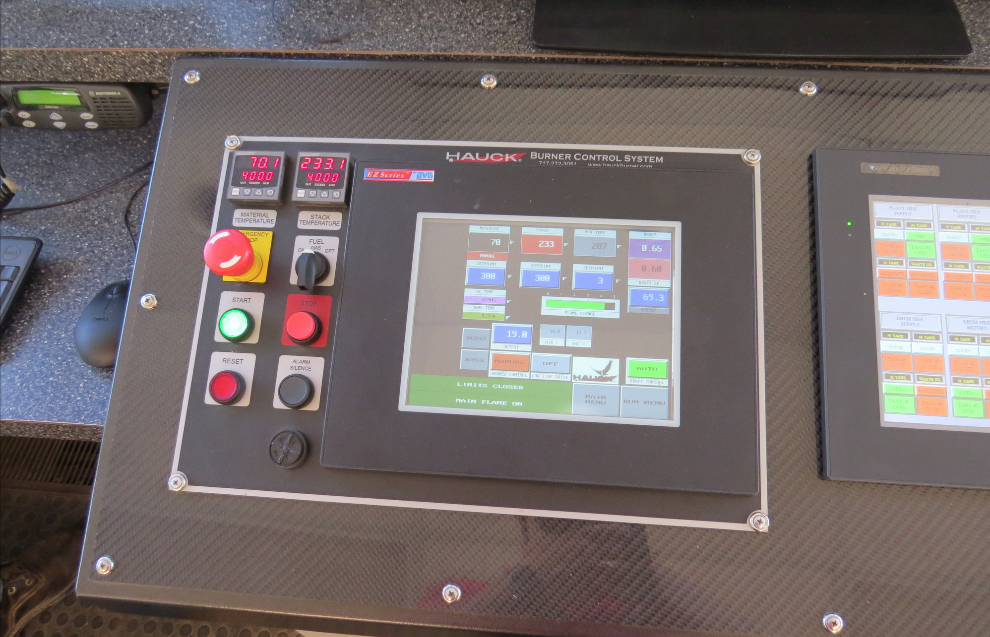
Hauck BCS 7000 control system operator interface shows the critical burner data/functions. Photo courtesy Jeff Meeker of Meeker Equipment.

Hauck BCS 7000 control system operator interface shows the critical burner data/functions. Photo courtesy Jeff Meeker of Meeker Equipment.

Process Control:

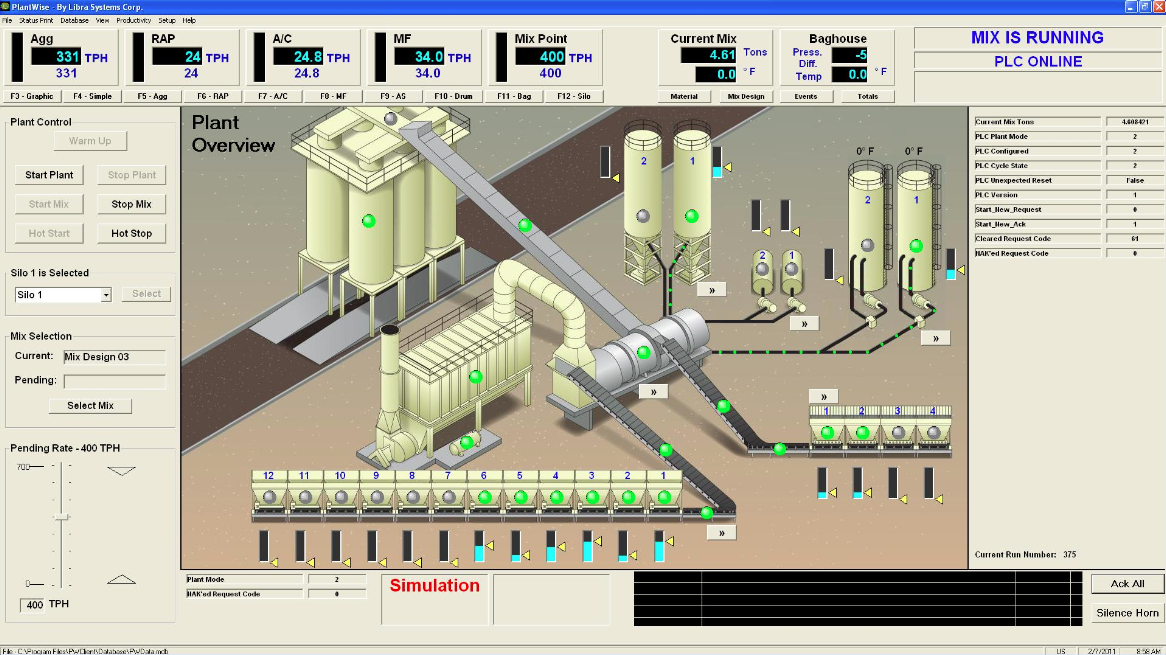
Libra Systems handled the process control. “We offered our PlantWise control for the dratch plant,” Cardy shared. “The PlantWise control handled all the starting and stopping of motors on the plant whether the plant was in drum mix mode or batch plant mode. PlantWise interfaced very nicely to the existing Allen Bradley motor control center and all the existing plant sensors, such as encoders, no-flow switches, limit switches and scales. PlantWise also controls the drag slat conveyor, reject chute, transfer-transverse conveyors and silo batchers.”


Burner Control:

Hauck Manufacturing took responsibility of the burner control function. “We supplied our new BCS 7000 drop-in panel for the burner control function. The BCS 7000 works particularly well because the HMI screen fit perfectly in the existing sloped panel of the control center. The control uses valve characterization for the burner, meaning that the 7000 panel enables the air and fuel ratio to be manipulated as the burner modulates. In other words, when the burner is firing at a low tons per hour, the air and fuel ratio may not be exactly the same as needed when running at high tons per hour. On a dratch plant, this becomes very important, as this style of plant has a wide range of production rates. The BCS 7000 control enables the operators to truly run in an automatic mode.”


The Libra PlantWise Drum Mix Control System features a fully graphic operator interface to provide complete plant status at a glance. The system’s highly configurable design allows the producer to design custom software switches, create reports, and adapt to the current and future plant control requirements. Photo courtesy Ken Cardy of Libra Systems.

The Libra PlantWise Drum Mix Control System features a fully graphic operator interface to provide complete plant status at a glance. The system’s highly configurable design allows the producer to design custom software switches, create reports, and adapt to the current and future plant control requirements. Photo courtesy Ken Cardy of Libra Systems.

Liquid Tank Control:

Meeker Equipment handled the liquid tank control. “We supplied our Liquid Vision tank valve and level control. All the liquid asphalt tank valves were controlled by the Liquid Vision. Logical valves control enable the operators to pull liquid from one tank and normally return the liquid to the same tank. Sometimes that isn’t practical, so the control also enables the operators to override the system to return AC to a different tank. Liquid Vision is smart enough to know that if a tank is full, an operator can’t return the liquid to it, nor can a driver try to fill the tank. It simply won’t allow it. The system also watches level in each tank and transmits that information to the unloading station and to the plant operator.”


Silo Loadout Control:

Libra Systems also handled the silo loadout—or point of sale—function. “We installed the Generation3 batching and silo loadout control to the plant. All loadout and batching functions can be handled by one person or the functions can be distributed to two people if plant volume requires it. The system also allows for a third party or another truck scale operator to queue trucks into a line as sometimes orders are placed externally to the plant. In the case of Highway Materials, they also own Libra’s Enterprise Information Server (EIS), which automatically uploads plant transactions into the main office, and features a bi-directional interface with their accounting software. This allows single point-of-entry and accurate billing. The EIS also serves as a central database for all of HMI’s plants so that customer, job and product information is managed at the office by the people responsible for the data. In this way, invoicing errors are reduced and plant operators can concentrate on making quality mix, rather than acting as billing clerks.”

The HMI crew that pulled all of this together worked diligently through the 2015-2016 winter off-season to put the new configuration in place. They worked under the management of Fox, Hane and Berkenstock, who had the arduous task of tagging, labeling and relanding more than 5,600 wires.

“As with any project of this magnitude, Hane painstakingly worked through each function methodically and carefully to make sure all control functions were handled with the new system,” Meeker said. The electrical contractor, Response Electric, sent in Kevin Wilson and Ken Swain to work under Hane’s direction, working countless hours alongside Fox, Hane, Berkenstock and the rest of the Plymouth Meeting plant crew.

“Highway Materials now enjoys a state-of-the-art automation center that will serve them for years into the future with minimum maintenance,” Cardy shared.

Fox echoed these sentiments. “Basically, I got the best control for every portion of the plant. Now, if we lose a power supply, we don’t lose the whole plant.”

Berkenstock said they started running with the new system right on schedule March 7, 2016, with a commercial mix.


The Nine Producers

All nine of HMI’s asphalt plants are fully automated with a test lab for quality control and PennDOT approval. That’s no simple task; it takes commitment to quality. The plants also produce porous asphalt for pervious pavement applications, including parking lots and driveways for effective storm water management. That shows commitment to environmental sustainability.

Downington Asphalt

  • Located at Boot Road & Quarry Road
  • Accepts clean asphalt for recycle
  • 5-ton Barber Greene plant rated at 320 TPH

Lititz Asphalt

  • Located on Woodcrest Avenue
  • Accepts clean asphalt for recycle
  • McCarter batch plant rated at 300 TPH with 400 tons storage capacity

Malvern Asphalt

  • Located on Route 29 north of Route 202
  • Accepts clean asphalt for recycle
  • 6-ton McCarter batch plant
  • This location includes a specialties garage, an equipment garage and a design lab.

Nazareth Asphalt

  • Located on Tatamy Road
  • Accepts clean asphalt for recycle
  • McCarter batch plant rated at 250 TPH

Perkiomenville Asphalt

  • Located on Crusher Road off Route 29
  • Accepts clean asphalt for recycle
  • 5-ton Gencor plant

Plymouth Meeting Asphalt

  • Located near the Blue Route, the Northeast Extension, the Pennsylvania Turnpike and the Schuylkill Expressway
  • Accepts clean asphalt for recycle
  • Hybrid Almix/Meeker dratch plant rated at 500 TPH with 900 tons storage capacity

St. Thomas Development

  • This used to be the old Plymouth Meeting plant
  • 6-ton McCarter plant

T.D.P.S. Materials

  • CMI plant rated at 300 TPH

Wrightsville Asphalt

  • Located in York County
  • Accepts clean asphalt for recycle
  • Astec Six-Pack plant rated at 350+ TPH