What You Need to Know About Burner Size and Performance
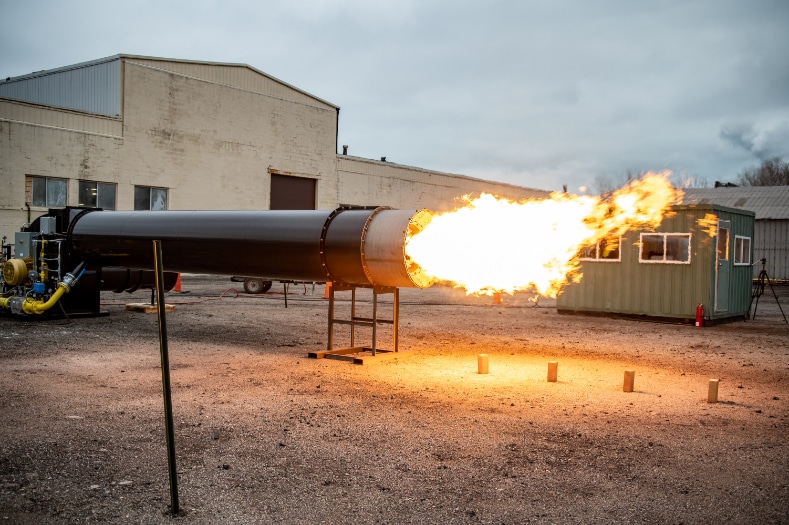
Here’s how your aggregate dryer size affects performance and production at the HMA plant

Editor’s Note: For 2024, AsphaltPro Magazine allows experts in the industry to share how to expand your operations to the next phase of business. Are you ready to start making your own hot-mix asphalt? Let’s turn to some professionals who have equipment, services, software and tenure to help you expand efficiently to mix design, production, hauling and more. This month’s installment from Detroit Stoker Company delves into the mechanics of sizing the aggregate dryer properly for your intended HMA production plant.

Properly sizing your aggregate dryer burner for optimum plant production should be a straightforward exercise; however, in many cases the burner is sized for significantly more than typical plant operating practices or even production capability. This can lead to multiple performance-related issues, reduce both burner and overall dryer efficiency, and reduce equipment lifespan.

Let us first explore why or how a burner gets over-sized. This typically happens one of two ways. One, an existing burner gets moved from one plant to another by the owner or via a used equipment sale. Although the plant may only require a 100 MBtu/hr burner, the next larger size (or two) may be the only unit available on the used equipment market and/or from a different plant in the owner’s fleet and that burner gets applied to the system. Second, when purchasing a new burner, the customer tends to “over-spec” the burner such that it is sized for the maximum tonnage rate the plant could ever produce in addition to very high maximum material moisture percentages.

Revisit the article “Mix-and-Match Asphalt Plants” by Malcolm Swanson in the December 2023 issue for a deep dive.

Let’s look at a simple example. A customer is purchasing a new 400 TPH counterflow drum mix dryer with the following specifications:
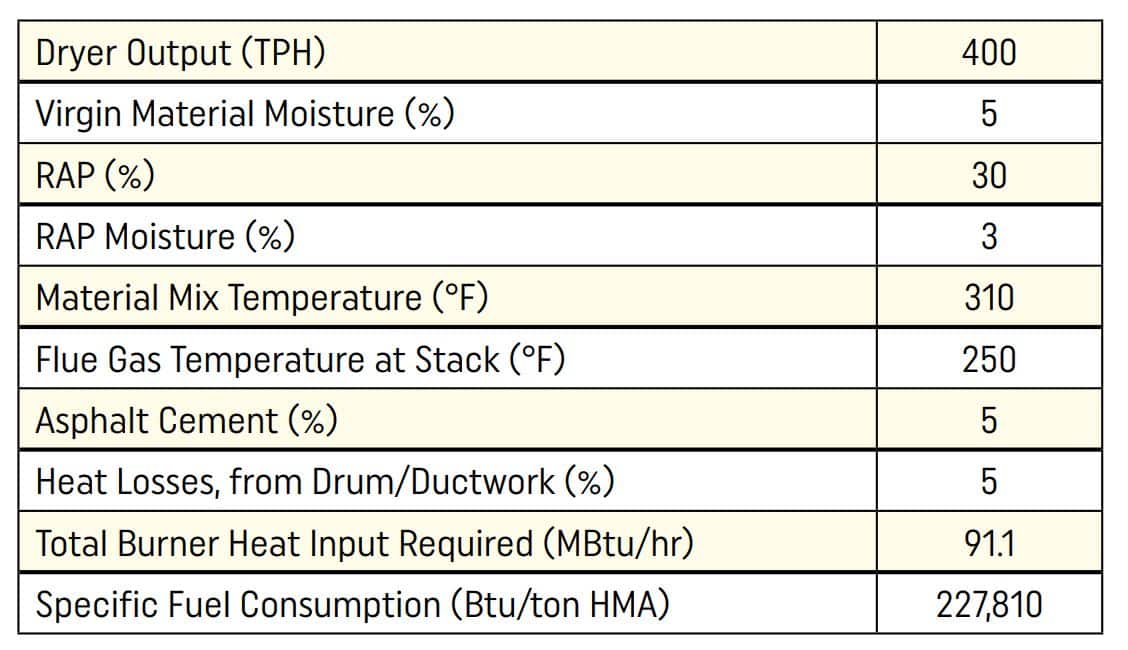
The above example yields a required heat input of 91.1 MBtu/hr with a specific fuel consumption of 227,810 Btu/ton of material. Because the nearest available burner is rated at 100 MBtu/hr, the customer wishes to go up a size for “safety” reasons and selects a 125 MBtu/hr rated burner.

Now let’s look at typical plant operation. The plant runs on average at 250 TPH production with 3% moisture in the virgin material. The heat balance now looks like this:
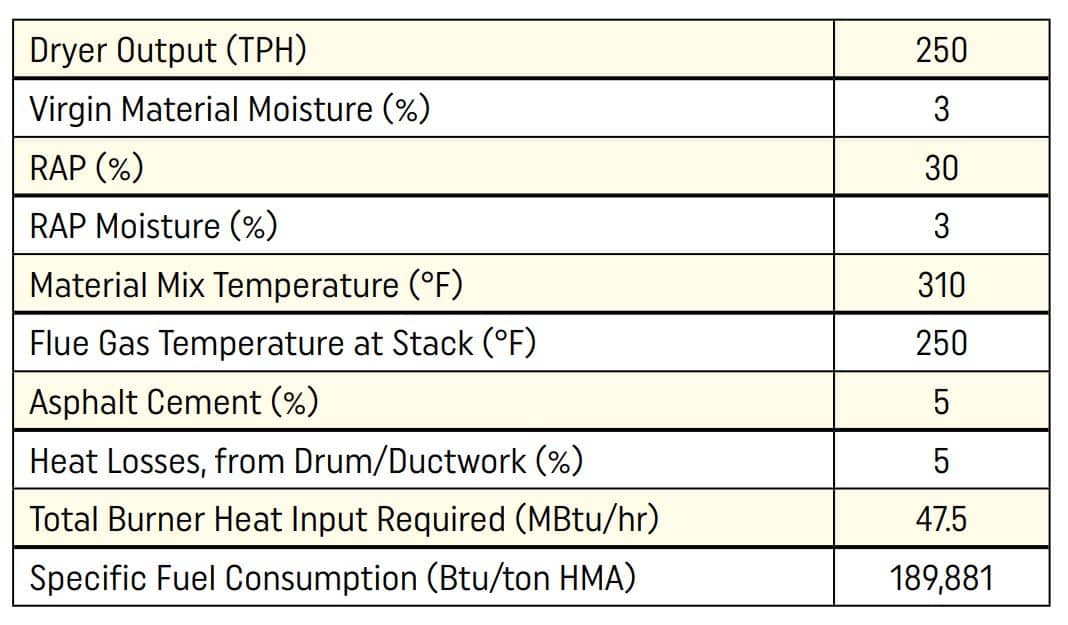
In this example, we now have a burner that typically fires at 38% (47.5/125 x 100) of its rated capacity. We’ll see why this is a big deal as we look at burner design.

A burner is a fixed orifice (both air passages and gas passages are of set design or dimensions), which is sized for at least the maximum rated capacity of the unit (plus some safety factor to ensure the burner does not blow-out or the flame lift off at or near the maximum capacity). This means with the above 38% output a few things are happening. The airflow and fuel flow are now exiting the burner at approximately a third of the maximum design velocity.

Mix-and-Match Asphalt Plants

The burner’s function is to stabilize the flame and to properly and thoroughly mix the air and fuel to ensure complete combustion. In a rotary dryer, that combustion must be completed as quickly as possible in the limited combustion zone length. You may recall from high school physics:

KE = ½ M x V2

(Kinetic Energy = ½ Mass x Velocity2)

Assuming a Detroit® HADES burner (each burner make and model will result in different values, but the overall reduction in KE will be the same), the HADES-100 burner is designed for a peak KE at maximum firing rate of:

KEdesign = 5,586 ft-lbs/s

Note: this is technically “rate of change of Kinetic Energy” or “power.”

The HADES-125 example burner selected (for “safety” sizing purposes) is being fired at 47.5 MBtu/hr at 250 TPH production rate or:

KEactual = 315 ft-lbs/sec (assuming we could fire at the same 25% excess air level)

The over-sized 125 MBtu/hr rated burner is now firing at approximately 6% of the optimum discharge energy design point. This has a significant impact on air/fuel mixing, emissions and ultimately dryer performance.

Use Low NOx Burners to Decrease Emissions

The burner almost certainly must now operate at significantly higher excess air levels to get some of that lost air/gas mixing (kinetic energy) back. So instead of firing at optimum design point of say 25% excess air, we now must tune the burner for say 50, 60% excess air or more at this lower load (and larger size burner) to get sufficient air/gas mixing to ensure complete combustion—minimum Carbon Monoxide (CO) emissions.

Assuming 60% excess air, the overall loss in combustion efficiency due to heating up this additional airflow results in fuel consumption increase of 2.3%. Further, even with the additional excess air to drive mixing, it still often leads to additional CO emissions as the added excess air quenches the flame. Excessive CO emissions often coincide with unburnt fuel, which means HydroCarbons (HC) out the stack, which are typically not measured by most portable combustion analyzers. An increase in CO emissions alone of 200 ppm (CO has a higher heating value of 321 Btu/scf) will result in 52,240 Btu/hr of lost fuel (not accounting for additional HC losses).

Sustainability Tips for Asphalt Plant Dryer Burners

The above simplified example demonstrates how over-sizing the burner can easily cost a plant 3% or more in additional fuel costs per ton of asphalt. Additional potential problems include:

  • Tuning the burner to meet more stringent NOx and CO emissions requirements or permit limits can be substantially more difficult if not impossible to achieve. Decreasing CO emissions through tuning will typically increase NOx and vice-versa.
  • Material temperature can fluctuate widely as small percentage changes in burner output cause relatively large changes in fuel flow as only a small band of the actual burner output range is being utilized.
  • If a burner fires at very low output (and correspondingly excess air is not high enough to drive the air/fuel mixing process) it is common to find burner front end over-heating damage. Warped and/or overheated burner parts can be costly and time consuming to replace and will decrease burner combustion efficiency and performance as the deterioration worsens.
  • Combustion flight damage could also occur resulting in costly and more frequent flight replacements.
  • Additional performance related issues with balance of plant equipment operation can occur depending on drum, baghouse and exhaust fan sizing to name a few.

A corollary to burner sizing is air/fuel ratio control. The burner control system must be able to keep the air/fuel ratio optimized at all firing rates or burner efficiency will suffer for the same reasons cited above. Linkage-less control with direct coupled fuel flow valve/actuators and direct coupled air dampers/actuators or better yet, air flow control via variable frequency drive (VFD) is the best solution when properly integrated with a PLC based combustion control. The PLC control is designed to provide a tuning curve to enable optimal adjustment of the air/fuel ratio at all firing rates.

Enhance EPDs with Burner Tech

Note there are a lot of assumptions involved in this simplified example not the least of which is material moisture, percentage of RAP in the mixture as well as overall RAP moisture, etc. These are especially important considerations when sizing the proper burner. The burner manufacturer should be consulted early in the burner specification stage to ensure the plant needs are being properly met with a correctly sized burner for peak operating efficiency.

While over-sizing the burner may seem to be the right decision for future big jobs or anticipated growth, it can be a costly one, perhaps avoided by better plant operations including silo storage and truck load out to the job site, etc. Properly sizing the burner from the start can pay for itself in fuel efficiency gains in relatively short order.


Jim Feese, P.E., is the director of the burner group for Detroit Stoker Company, Monroe, Michigan.
Attain Quality Production

Process Heating Company Designs Lo-Density® Hot Oil for Auto Control, Even Temp

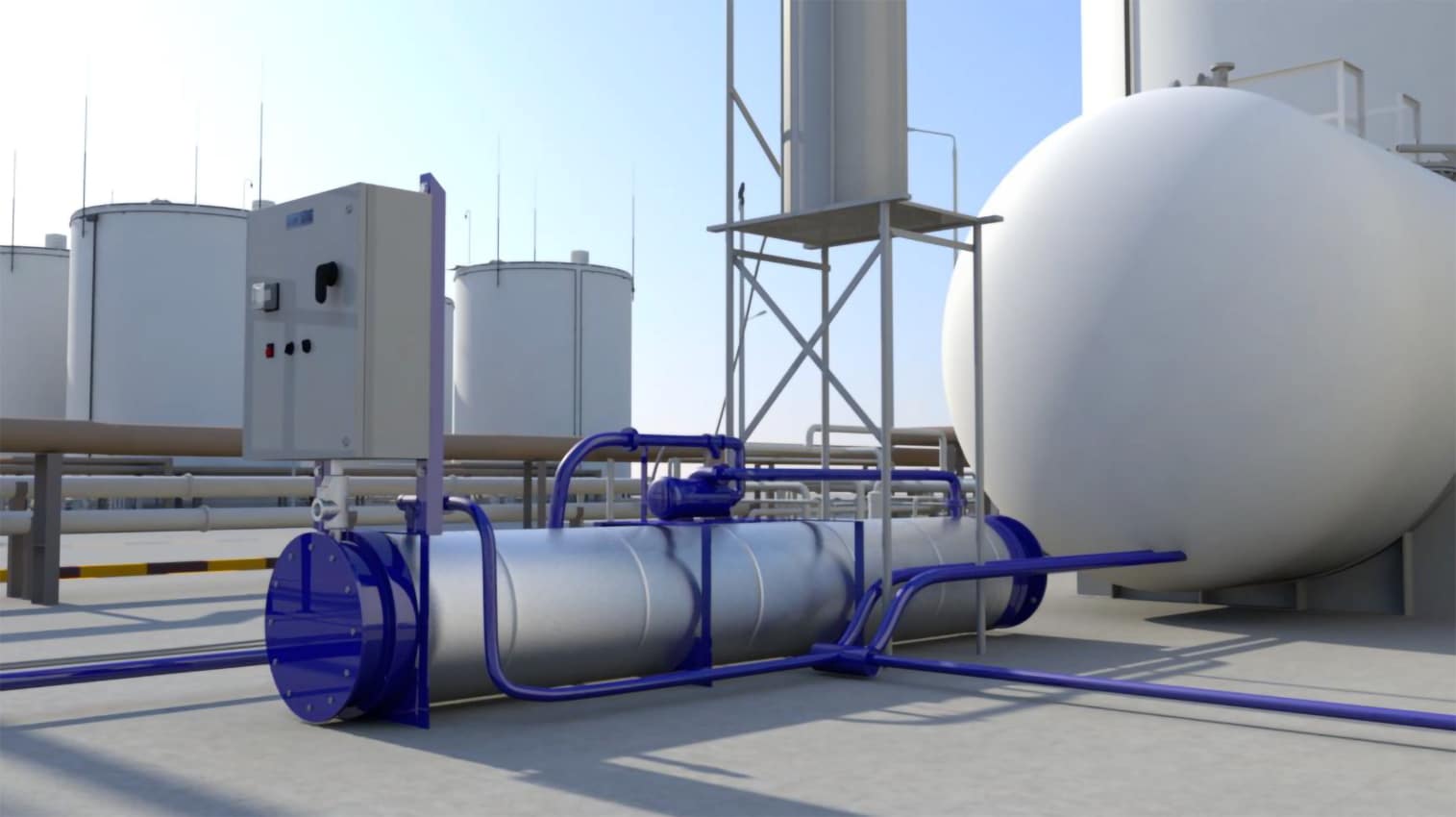
Process Heating Company (PHCo) Lo-Density® Hot Oil Circulating Heater systems are designed to provide automatically controlled, even-temperature heat-transfer fluid. With the PHCo indirect heating systems, heat from electric energy is transferred to the oil, which then carries it to the area or process where it is needed. Using PHCo’s unique Lo-Density® patented Coil-Lock-design heating elements, which reside within a drywell, the units dissipate controlled heat as low as 8 watts per square inch on the heater’s sheath, eliminating coking or carbonization of the transfer oil. Because the drywell-style elements are accessible from outside of the system, they also may be serviced without draining the heater.

Each Hot Oil Circulating Heater is a complete system that includes a properly sized, vented expansion tank with a sight glass and a low-level shut-off switch. Like all fluids, heat transfer oil expands when heated. The expansion varies with the temperature to which it is heated. For example, 100 gallons of oil at 50° F will expand to 114 gallons when heated to 450° F. The expansion tank permits expansion of oil as it is heated, without exposing hot oil to air. It functions as an oil seal to accommodate the increased volume of expanded oil in a quantity of colder oil, which comes into contact with a limited amount of air. The low temperature of the oil seal will contribute to the long service life of the oil. A secondary function of the expansion tank is to provide a means for the escape or intake of air as the oil level in the tank rises and falls.

The system also includes an exchanger built to ASME standards, covered with high-density insulation and an aluminum jacket. There is a motor-driven, special high-temperature centrifugal pump for circulating heat transfer oil, and a UL-listed industrial control panel in a weatherproof enclosure, with standards that include a programmable time clock for early morning startup, main indicating controls, and over-temperature controls.

Also contained in the package are additional convenient features on these heaters, including a strainer for easy cleaning, shut-off valves for the system and the fill lines, and strategically located air purge valves to assist in filling the system. PHCo Hot Oil Circulating Heater systems are completely pre-wired, pre-plumbed and ready for installation.

With fluctuating energy prices, efficiency becomes critical to the cost of doing business. Electric heat offers 100% energy efficiency throughout the lifetime of the heater, since all the energy is used to heat. This is compared to the inefficient burning of fossil fuels, which operate at only 85% efficiency when new. One PHCo customer, F&R Asphalt of Easley, South Carolina, replaced its diesel-fired hot oil with a PHCo electric hot oil heater several years ago. The diesel system had burned 800 gallons of fuel per week, and F&R Asphalt was paying $4 per gallon, resulting in weekly fuel costs of $3,200 (an annual cost of $166,400). After switching to the PHCo electric hot oil heater, the customer was able to reduce heating costs to $210.10 daily, for an annual cost of $76,686, and an annual savings of $89,714. Given today’s energy costs, with diesel fuel at approximately $4 per gallon in March 2024 and industrial electricity costs nearly the same as 10 years ago, the data is still relevant.

For more information, call 866-682-1582 or visit www.processheating.com.

How to Be the Plant Everyone Buys From

Editor’s Note: For 2024, AsphaltPro Magazine allows experts in the industry to share how to expand your operations to the next phase of business. Are you ready to start making your own hot-mix asphalt? Let’s turn to some professionals who have equipment, services, software and tenure to help you expand to mix design, production, hauling and more. This month’s installment looks at the best practices you can employ with the storage silo to offer customers quick, quality asphalt mix for their paving projects.

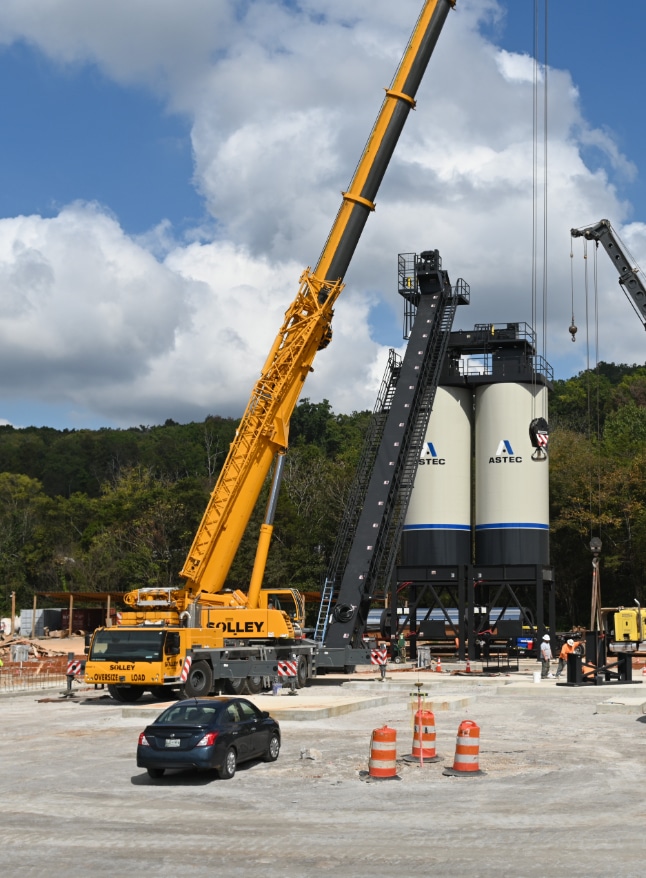
If you’re in the hot-mix asphalt (HMA) industry, you know one of the game-changing inventions of last century was the storage silo. During his “Asphalt Plant Efficiency” presentation during a World of Asphalt People, Plants and Paving session in Nashville in March 2024, Greg Renegar, the vice president of customer success for Astec Industries, Chattanooga, discussed the benefits of planning ahead with your storage silos in mind.

If your “why” is to provide mix for both customer and in-house crews, you’ll want to plan ahead for overnight storage of appropriate mixes as you build your new plant. During his presentation to the World of Asphalt audience in March, Astec’s Greg Renegar reminded attendees the plant that can start loading out customers first thing in the morning will be the plant everyone flocks to.

As he explained, even if you have older components you’ve been unable to update the past few years, you can operate efficiently if you maintain those parts, tighten up your environmental footprint, and follow best practices, such as optimizing the use of storage silos.

Notice that’s “optimizing” the use of storage silos. Not every mix design is ideal for the suggestions to come, and we’ll talk about those.

“If you are using very low absorption aggregates, it may lead to a high film thickness and the mix is more prone to drain down.”—Steve Jackson

Solve Asphalt Plant Odor Issues

Store It for Fast Startup

Renegar’s presentation included a side-by-side comparison of operations you might be able to share with your production team to showcase what’s optimal and what’s not.

Amazing Producer ABC

Using old technology

  • Starts loading out of prefilled silos at 6 a.m.
  • Starts up the plant at 8:30 a.m.
  • Runs two to three mixes on various jobs, with enough trucks for the day
  • Runs all day with changeovers but no mid-streams
  • Fills the silos at the end of the day for tomorrow’s early customers

Expand into Production: Plant Ticketing Software Basics

Struggling Producer XYZ

Using new technology

  • Starts making mix at 6 a.m.
  • Runs two to three mixes on various jobs, short of trucks
  • Mid-streams at 8:30 for 45 minutes
  • Runs another 300 tons and finishes for the day!
  • Cleans out
  • Gets a call at 10:15 a.m. for a 150-ton parking lot job
  • Fires back up at 11 a.m., runs 147 tons, then mid-streams while paving foreman figures the last bit needed

One of the two producers in our examples is using new technology for its efficiency and sustainability but isn’t using best planning strategies. Renegar shared plants that start and stop more than three times per shift use up to 20-35% more fuel than they do when they run steadily. These percentages are published in the National Asphalt Pavement Association (NAPA) publication QIP-132.

You can probably monitor the effect of starting and stopping on your own fuel use. By using the storage silo to take up the slack and prevent starts and stops, you keep a steady, even production. Renegar stated Astec’s most successful customers are the ones who use long-term storage capabilities to become more profitable.

Think about it.

Because 95% of breakdowns occur at startup, you have a leg up on the day even if unplanned downtime hits you at first light. You also have a leg up on your competition on the other side of the county if your plant already has mix in the silo while Producer XYZ is still getting fired up.

Renegar explained it this way: “Storage in multiple silos plus planning allows FOB customers to get in and out quickly in the morning. Serving the FOB customers better than your competition will result in more business.”

Expand Into Production: Navigate the Permit Process

Design Your Storage

This isn’t rocket science. But it does require forethought. Renegar cautioned producers on some reasons you might not want to store mix overnight. For example, lack of planning from your customers could result in wasted mix. There’s no point in producing a hundred tons of state mix at 300 degrees if your top five customers will show up wanting a less-pricy mix produced at 340 degrees.

If you don’t have proper heating systems in place, you run the risk of losing mix temperature. There are companies making electric heating elements that can be placed in silo cone packages to take the fear out of overnight storage. These entities might not make the silo itself, but are experts in the manufacture of electric heating components and provide these to OEMs like CWMF Corp., Waite Park, Minnesota, who then assemble the complete silo.

Even with the concern of temperature under control, you want to consider the mix design you’ll store. Renegar listed the “fear of storing polymer” as one of the reasons producers shy away from filling up the silo overnight or over a weekend. Folks in the field echo his concern when it comes to open-graded mixes due to a phenomenon known as drain down. This is when gravity pulls the liquid asphalt cement (AC) away from the aggregate and down toward the silo cone.

Steve Jackson, the vice president of plant operations and sustainability for NB West Contracting, Pacific, Missouri, spoke of this phenomenon in stone matrix asphalt (SMA) mixes. “The worst mix that I have seen for drain down is SMA,” Jackson shared. “That is why some agencies are reluctant to remove the cellulose fibers even when you add ground tire rubber or reduce the mix temperature.”

He gave an example. “I remember an SMA project where we filled a silo, and that was all the mix that we made for the night. The first sample, from the bottom of the silo, had high AC and 1.5% air voids. The second sample, toward the top of the silo, had low AC and 7% air voids. We made the mix extra hot because it was going to spend a long time in the silo.” The expensive lesson he shared was having to mill out that tonnage and replace it.

How to Become Your Own Hot-Mix Supplier

“SMA, open-graded friction course and other gap-graded mixes are the worst for this phenomenon,” Jackson continued. “They also usually have specified minimum asphalt contents. If you are using very low absorption aggregates, it may lead to a high film thickness and the mix is more prone to drain down. When Joe Schroer (NB West’s construction materials engineer) worked at MoDOT, he evaluated some of those mixes, and started calculating the volume effective binder, and approved some of the SMA mixes with less than the minimum spec requirement AC content of 6.0%.”

In other words, there’s hope for “fixing” the gap-graded mix so it can be stored overnight for quick loadout in the morning, if you’re willing to work with it.

Malcolm Swanson, industry consultant and president of e5Engineers LLC, Chickamauga, Georgia, shared his thoughts. “Coarse graded mixes, SMAs, any mix with little surface area will tend to drain down. That is a major reason for adding fiber to a mix. Fiber adds surface area without changing gradation. The added surface gives the AC a place to hang on.”

“If the state allows the contractor to design their own non-gap-graded mixes, then the mix has the absolute minimum asphalt content, so they are less likely to drain down,” Jackson said. “If there are mixes that specify a minimum asphalt content, then I would be careful. Take a look at the aggregate absorption as well. We typically use aggregates with 1% or lower water absorptions in our high type mixes, these are mixes that we try to drop the mix temperature as low as possible to prevent drain down.”

For producers looking to optimize the use of the storage silos, it’s possible to adjust the mix design and temperature to ensure you have exactly what your customers are looking for first thing in the morning. It might take a little forethought and planning, but the producer who plans ahead is the producer who can optimize all the components for a tight environmental footprint, an efficient operation and a plant that all the customers flock to.

Relieve These Top 8 Pain Points When Laying Out Your New Plant

Editor’s Note: For 2024, AsphaltPro Magazine allows experts in the industry to share how to expand your operations to the next phase of business. Are you ready to start making your own hot-mix asphalt? Let’s turn to some professionals who have equipment, services, software and tenure to help you expand to mix design, production, hauling and more. This month’s installment from CWMF takes an overarching look at the plant footprint.

If you’re considering or planning on building a hot-mix asphalt (HMA) plant or expanding on your existing operation, you likely have a question or two. Or maybe a couple hundred. That’s because it’s complex and highly specialized. And not everyone who recognizes the marketplace opportunities of asphalt and paving is necessarily already an expert in what it takes to build an efficient asphalt production facility. Getting this massive undertaking right requires vast experience and deep expertise. Here are a few things to consider when you start planning your new asphalt plant.

1. Stationary or Portable and Tons per Hour (TPH).

The choice between a portable and stationary asphalt plant depends on various factors, including project size, duration, location, environmental regulations and mobility requirements. Stationary plants are best suited for large, long-term projects, while portable plants offer flexibility and mobility for shorter-term, varied, or remote projects. You will also need to determine how many tons per hour your market requires. Bigger isn’t always better when considering the overall investment.

Expand into Production: Plant Ticketing Software Basics

2. Equipment Placement.

Determine the optimal arrangement of key equipment within the plant. When designing an asphalt plant, two crucial factors demand careful consideration.

Available Real Estate for Stockpiles

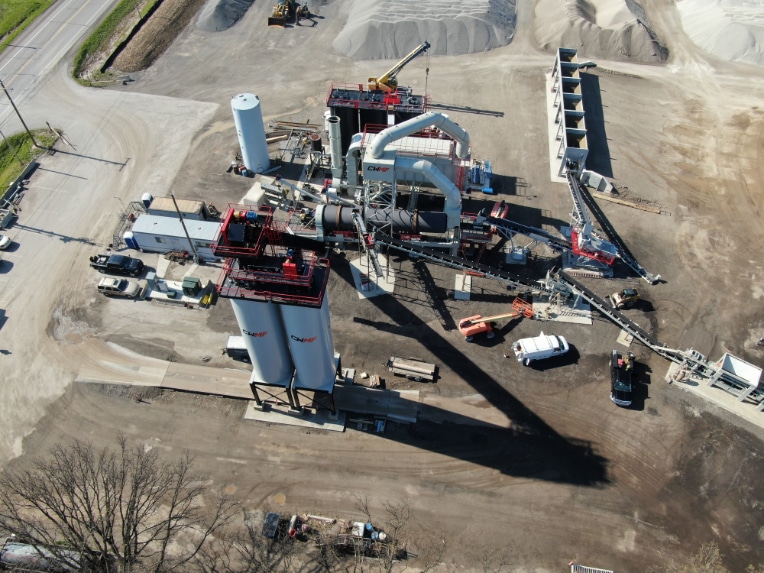
The extent of available property plays a pivotal role in determining the layout of the plant. To optimize both cost and efficiency, it is essential to focus on key features such as minimizing the distance and ducting required between the drum and the baghouse. Additionally, when positioning the asphalt cement (AC) tank package, minimizing the amount of piping that needs heating is paramount for enhanced efficiency.

Truck Traffic Flow in the Yard

Determine the optimal arrangement of key equipment within the plant. The goal is to minimize the distance virgin and recycled materials must travel through the plant and ensure efficient material flow.

When planning for current and future cold feed and recycled asphalt pavement (RAP) bins, it is imperative to be mindful of the traffic flow. The available real estate will dictate the optimal angle and configuration for the plant.

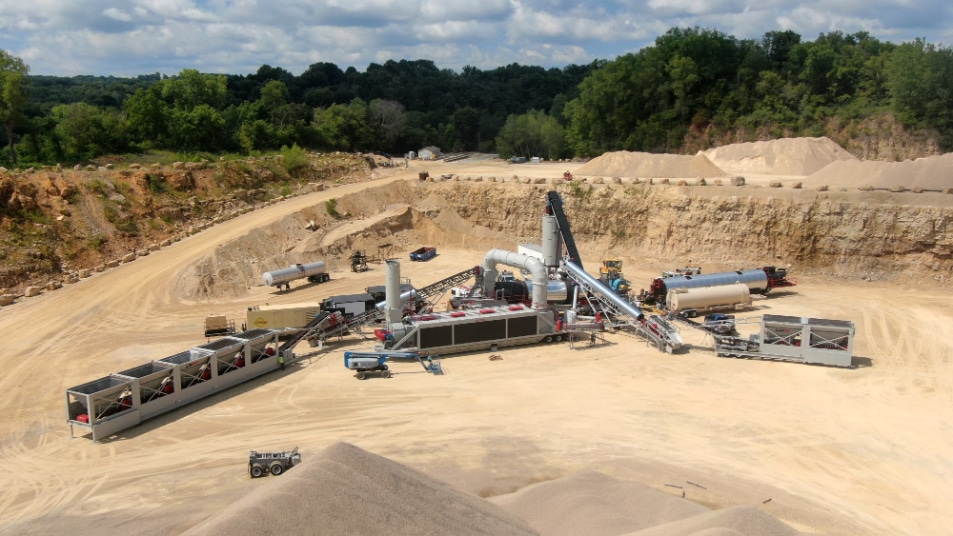
Even if you have plenty of real estate to spread out plant components for optimum visibility and multiple stockpiles of on-spec material, you want to focus on such things as minimizing the distance and ducting required between the drum and the baghouse. Keep these efficiencies in mind when designing your layout. Photos courtesy of CWMF Corp.

3. Control Room.

Design a control room with a clear view of the entire plant operation. This allows operators to monitor equipment, adjust parameters and respond to issues. CWMF offers integrated industrial automation and control solutions for asphalt plant equipment. We can provide the engineering, manufacturing, installation, start-up, and training to get you up and running at peak efficiency.

4. Install Electric and Plumbing.

Establishing the required equipment for your plant is one thing, but defining your needs to get it up and running is an entirely separate process that requires significant planning and preparation. Be sure to team up with an equipment manufacturer that can walk you through each step of the process.

Plan Ahead! Implement safety measures, such as clear traffic patterns, proper signage and emergency response plans. Getting the right signage in the right places is part of your successful plant layout plan, not only for traffic flow and proper stockpile management, but also for emergency preparedness.

5. Environmental Impact Assessment.

Evaluating the potential environmental impact of your new asphalt plant is critical. You’ll need to make sure you are following the local environmental regulations and obtaining the necessary permits. Consider implementing a pulse jet or reverse flow baghouse, such as CWMF’s Dust-Eater.

The baghouse dust collector is considered the “lungs” of a plant. When the plant cannot breathe effectively, it negatively affects production. This is an essential part of asphalt plant operations, along with the dust control system employed upstream to help retain and return usable dust particles back into the drum mixer rather than putting them immediately into the exhaust airstream.

Expand Into Production: Navigate the Permit Process

6. Zoning, Land Use Regulations and Permitting.

Understanding the local zoning laws, land use regulations, and permitting that govern where industrial facilities like asphalt plants can be located is incredibly important.

7. Safety and Emergency Preparedness.

Prioritize safety for both employees and the surrounding community. Implement safety measures, such as clear traffic patterns, proper signage and emergency response plans. Ensure that fire protection systems, hazardous material handling, lockout/tagout, and confined space entry procedures are in place.

How to Become Your Own Hot-Mix Supplier

8. Replacement Parts.

Once your plant is up and running, are you prepared for untimely breakdowns? Team up with a company you can trust to get you the replacement parts you need ASAP. The CWMF sales and service teams are ready to work through determining what you need to get your plant up and running, whether for the first time, during scheduled maintenance, or after unplanned downtime. Never underestimate the importance of the parts that make up the whole or the value of the professionals who go the extra mile to keep your plant online.

CWMF has been a trusted company in the stationary and portable asphalt industry for decades. As a full-service manufacturing company, we engineer all our products to order, allowing us to serve as a full-service, end-to-end provider of asphalt plant solutions. We have the machinery and equipment you need, and a confident team working together to make this happen. This provides an exceptional experience for our customers, and for the dedicated team standing behind their products. We work hard not only to retain our reputation but to stay current on the latest industry trends and technologies.

Wally Olson is CWMF Corporation’s sales manager. For more information, contact him at (320) 251-1306 or visit cwmfcorp.com.

Mix-and-Match Asphalt Plants

Seasonal maintenance offers prime time to assess sizing the puzzle pieces of optimum, efficient production

I have been to hundreds of asphalt plants and helped design and build even more, but I have never owned one. I have often thought I would like to own a brand-new counterflow drum mixer plant. I think I could make some great mix and a lot of money with that kind of plant. There is just one little problem. I seem to be a few million dollars short of the price tag. I guess everyone would rather have a brand-new plant but there is a significant capital cost advantage to piecing a plant together with good used equipment, if you know how to go about it.

If I were going the mix-and-match route to a well-functioning plant, how would I do it? It isn’t easy to get it right. There are many considerations. Some of these are the same whether the plant is to be new or composed of used equipment.

  • Market size
  • Site location
  • Zoning
  • Emission limits
  • Plant type (batch or continuous, portable, relocatable, stationary)
  • Production capacity, and so on.

These things must be addressed regardless of whether you opt for new or used. Then there are things that would have to be addressed specifically because of trying to mix and match equipment that did not all originally belong to the same plant. This approach can save a lot of money or, if not done right, it can lose a lot and result in a plant that performs poorly.

I have recently been helping a major contractor to upgrade an existing plant by modifying some components and replacing others. Some of the replacements have been new and others have been “experienced.” Some of the pre-owned equipment was not quite right for the plant. There is no shortage of pitfalls in this approach to upgrading a plant, but it can be done successfully.

Some Mistakes to Avoid

The “trust-the-nameplate” mistake. I am not going to say anyone made deficient equipment for our industry on purpose, but we have learned a lot more about how to make well-performing equipment over the years. The contractor I mentioned above brought a used pulsejet baghouse from another of their plants because the smaller existing baghouse was a bottleneck to the process. The production goal was 400 tons per hour (TPH). This rate typically calls for about 68,000 cubic feet per minute (CFM) of exhaust system capacity. The used baghouse nameplate capacity was considerably higher than that. However, the bags were 16 feet long, which was a red flag, based on some previous unpleasant experiences.

I ran a few calculations and found the air-to-cloth ratio (exhaust gas velocity through the cloth) to be fine but interstitial velocity (upward velocity between bags at the plane of the bottom of the bags) was too high. High interstitial velocity prevents the bags from being cleaned properly, which results in reduced production capacity. In this situation, the cleaning air pulse knocks the accumulated dust off of the bags, but the high interstitial velocity picks it up and puts it right back on the bags. To solve the problem and salvage the baghouse, I recommended replacing every other 16-foot-long bag with an 8-foot bag. Calculations indicated that air-to-cloth ratio, though higher, was still okay and interstitial velocity came down enough to allow proper cleaning.

The “bigger-is-better” mistake. Another common mistake is to think that a component is okay to use if it isn’t too small or doesn’t have too little capacity for the application. Oversizing. That kind of sounds right, but it’s not.

A baghouse is a good example of this one, too. An oversized baghouse may work okay but it usually comes with an exhaust fan that matches the baghouse capacity. An oversized fan can easily and unintentionally be used to pull in too much air. Too much air can cause a whole host of problems:

  • Poor cleaning
  • High burner excess air (which results in poor drying and excessive fuel consumption)
  • Excessive dust carry-out from the dryer
  • and a few others.

Also, the oversized baghouse may not be so good for the application for lack of good circulation. Areas in the baghouse may not get enough flow to stay hot and may then get wet and muddy. When bags become wet, they are effectively disabled. Wet walls and structure tend to corrode.

Consider a burner as another example of the “bigger-is-better” mistake. Suppose you have determined that your burner is the bottleneck that is preventing the plant from achieving the production rate you want. For example, you have a plant that is capable of 300 TPH except for the burner. Let’s say the existing burner is rated at 60 MMBtu/hr. For a 300 TPH capacity, you really need 75 MMBtu/hr.

You know there is a good used burner at another of your company’s plants that is not being used and it has a nameplate capacity of 100 MMBtu/hr. Should you use that burner? The answer is no. It is too big for several reasons.

First, most operating equipment has a sweet spot that is near 80% of its maximum operating rate. Because 80% of 100 is 80, the 100 MMBtu/hr burner will not be able to operate in a 300 TPH plant at a rate where it runs best. Fuel efficiency and emissions will suffer—and those emissions matter.

Failing a stack test because of an oversized burner is a real risk. Most of the burners used in the asphalt plant dryers are of the aerodynamic mixing type. They are commonly referred to as nozzle-mix burners. This type of burner, unlike premix burners, depends on violent turbulence to mix air and fuel. The turbulence that is needed is caused by high air velocity at the nose of the burner. Of course, the lower the firing rate, the lower the air velocity and turbulence. In our example, the flame diameter will probably be too big for the drum, too. Oversize flame diameter can cause damage to combustion flights and the drum shell.

Many burners are also good examples of the “trust-the-nameplate” mistake. Most plants are burning natural gas now. Many of the used burners out there were built when oil was the fuel of choice. Gas was added as an afterthought, and it wasn’t always done very well. Some of the most popular burners in the industry (avoiding naming names) will perform at about 80% of nameplate capacity when burning natural gas. There is no way you can tell which ones perform at this rate. You just have to know or know someone who does.

Consider the Whole

So far, what I have given you are a few mix-and-match issues to avoid. To upgrade a plant, you need to take a holistic approach. This simply means that all plant components must be able to support your goals for the plant.

The first step is determining the goals. This should come from market data. For example, if it is determined that a plant, which produces 300 TPH and can produce mixes with up to 45% recycled asphalt pavement (RAP), is right for the available market, that is a starting place. That plant will need a 7- or 7.5-foot-diameter counterflow dryer and a baghouse with about 52,000 to 58,000 CFM capacity. Matching components must make logical sense.

Including a 68,000-CFM baghouse in a plant with a 7-foot-diameter drum might work but it makes no logical sense and will not work as well as it could. Having a competent engineer run a few basic calculations to determine which existing components do not match your goals for the market will save time and money and go a long way toward assuring a good outcome of the project. A good approach is to select an appropriately sized, existing major component and redesign the plant as necessary around that component. Once you have selected the key component, all other components must be chosen to have a little more capacity than that one.

Having said that a 300 TPH plant needs a 7- or 7.5-foot-diameter dryer drum, be aware that the drum diameter isn’t all there is to it. The flight system is critical. Most existing flight systems out there will struggle to accommodate 45% RAP and many struggle at lower RAP percentages. A good flight system and a variable frequency drive (VFD) are necessities in most markets. There are great flight systems available today that will comfortably produce mixes with 60% RAP and with the flexibility—with the VFD—to produce 100% virgin mixes without anyone going in the drum to adjust, add, or remove flights.

With this knowledge, a mix-and-match approach to upgrading a plant can be completely successful. Assuming the condition of the equipment is correctly assessed, the greatest threats to success are hidden deficiencies—like overstated nameplate ratings mentioned above. To determine whether a nameplate rating is right will require someone with enough experience to know, or with the ability to investigate and calculate, or test.

Mix and match isn’t for everyone. Doing it this way requires the willingness and resources to do the homework. When buying a new plant, you generally are dealing with a manufacturer that knows its business. That isn’t necessarily the case when you are employing used equipment.

Whether you are putting a whole plant together, upgrading an existing one or just replacing an aged or worn component, these same principles and practices can be applied to ensure a good result. If yours is a big company with many plants, you may have good equipment that has been set aside and can be reemployed. If you have a smaller company, you are more likely to have to search and find good used equipment or introduce a new piece into the existing plant. In any case, getting a correct match of real capability is the key thing. Applying the appropriate expertise is critical to getting a good outcome. That may come from inside or outside your organization, just as long as it is the right expertise.

Malcolm Swanson is the proprietor of e5 Engineers LLC, Chickamauga, Georgia. For more information, contact him at (423) 667-6781 or malcolm@e5engineers.com.