NB West Wins with Smooth Asphalt Results, Again

Balancing GTR, RAP, WMA over failing concrete proves successful for Missouri taxpayers

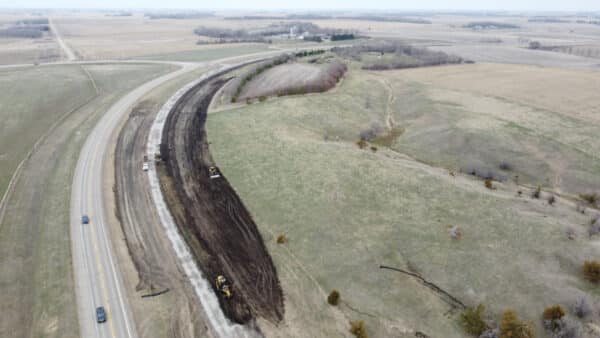
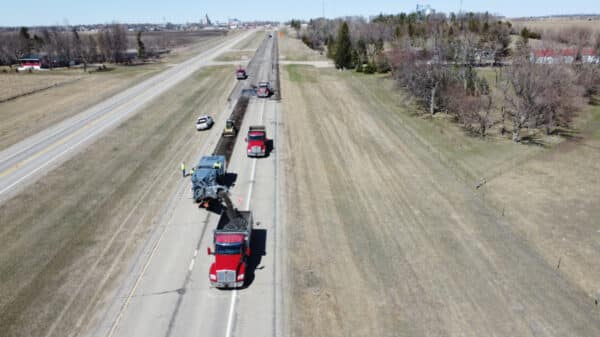
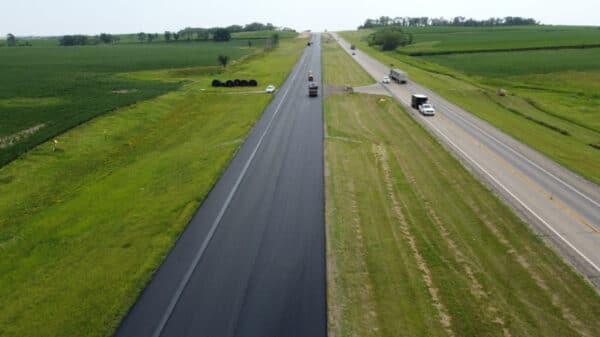
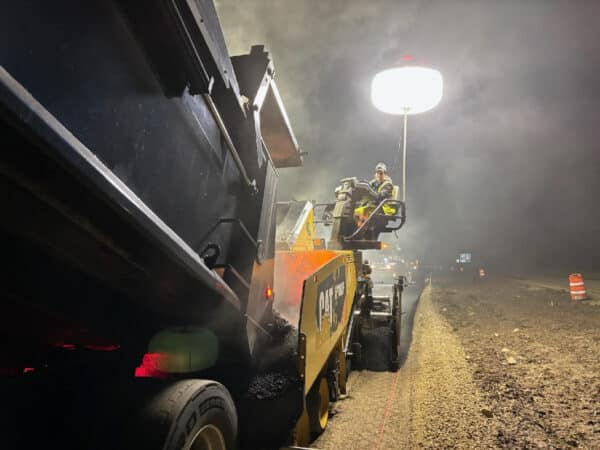
Early June 2023, the team at NB West Contracting, headquartered in Pacific, Missouri, began work on a complex overlay. The main goal was to cover up a 15.3-lane-mile, potholed, concrete section of Route 63 in Maries County and make it a smooth, safe driving surface for the taxpayers. The Missouri Department of Transportation (MoDOT), Ingevity, National Center for Asphalt Technology (NCAT) and NB West partnered to exceed that goal.

Steve Jackson, the vice president of asphalt plant operations and sustainability for NB West spoke of combining ground tire rubber (GTR) and 20% recycled asphalt pavement (RAP) as one aspect of the warm-mix asphalt (WMA) project.

Jackson took infrared images of the project to double-check consistency of mat temperatures and confirmed that consistency coming from the plant to the jobsite.

“It was a balanced mix design, performance spec, SP095C (9.5-millimeter,) Superpave with ground tire rubber and RAP, warm mix, placed through a spray paver, and bonding to a concrete pavement,” he said. He listed off all those moving parts of the project like it was business-as-usual for the production and paving personnel. For a team that’s been on the scene since 1956, it almost is a walk in the park, yet they pulled out the quality control/quality assurance (QC/QA) and safety best practices to make sure everything flowed smoothly for an award-worthy project. In the end, they garnered the Missouri Asphalt Pavement Association (MAPA) 2023 award for a primary route under 50,000 tons. Here’s how they accomplished it.

Familiar Parameters

In 2012, NB West had successfully performed a project bonding an asphalt layer to concrete with the company’s Roadtec spray paver, and saw an opportunity to apply that technology again. Jackson explained the DOT originally was letting the project with the 19.0 mm mix and a 12.5 mm mix for the surface layer, but his team wasn’t excited about that because both layers would have been placed at less than four times the nominal maximum aggregate size.

“The thickness of the layer didn’t allow for the 12.5 mm to work smoothly,” he said. “In 2012, we’d done something similar bonding concrete with the spray paver, so after we were awarded the [Maries County] job, we did a value engineering proposal to bond to the concrete. We suggested two lifts of 9.5 mm Superpave with an overall reduction of 1 inch in the overlay. We’ve been trying to get back to realistic lift thicknesses that can get good compaction and DOT agreed with that.

The Relationship Between EPDs, BMD, RAP & Plastic

“We also proposed using ground tire rubber to delay the cracking coming back through the mix. The other reason for the GTR is we were doing our performance tests, and when we’re using the GTR in those mixes, our IDEAL-CT numbers have just been off the charts. Our performance tests are the IDEAL-CT and the IDEAL-RT.”

Good Numbers: For the Maries County project, the team saw an average CT-Index of 168, an average RT-Index of 77 and Hamburg rutting result of 7.0 mm.

The unconfined joints were on the outer edge of a concrete roadway that had a rock shoulder. The NB West crew paved the mainline and used a non-Superpave asphalt layer over the rock to cover up the shoulder.

Making Mix

Jackson credits the elasticity of the GTR for aiding in pavement performance. “We’re putting the ingredients back in that gives it a little flexibility.”

To add the GTR, NB West uses the dry process, adding Elastiko® engineered crumb rubber asphalt (ECR) manufactured by Envirotx and supplied by Asphalt Plus. N.B. West’s Joe Schroer, P.E., materials and support engineer, explained the dry process is considered mixture modification. Performance testing measures the interaction of GTR, aggregates and binder as a system, and allows a more innovative approach to designing asphalt mixtures, he shared. Additional enhancements to mixture performance can be made by adjusting the grade of the binder.

A groundman brings the 2,000-pound tote of Elastiko material to the feed bin of a modified Hi-Tech Fiber machine with a forklift. From the bin, the machine feeds the material to a 6-inch-diameter flexible hose and to the portable Astec Double Barrel.

Balance Your Mix Design for Asphalt

“We blow it right into the drum,” Jackson explained. “The control unit’s inside the control house and it’s tied into the tons per hour you’re producing.” In this manner, the plant controls the addition of the GTR product as it would cellulose fibers being fed in.

This project ended up with a variety of additives in the production process, but Jackson said it was business as usual for the team. “We had the normal challenges. This still had our normal Superpave testing in it; we were still running volumetric testing and adding in the performance testing. So, it was a lot of testing.”

Jackson shared a testing tip for working with GTR. “When you’re making pucks up, if you put a weight on your mold top (with the GTR in there), it keeps the GTR from rebounding while cooling. If you don’t do that, you get some kinda strange results.”

The unconfined joints were on the outer edge of a concrete roadway that had a rock shoulder. The NB West crew paved the mainline and used a non-Superpave asphalt layer over the rock to cover up the shoulder.

Smooth Quality

In the field, the crew worked with temperatures below 300 degrees F. Even with the Evotherm WMA additive in play, they elected to have temperatures closer to HMA to accommodate the Elastiko. “The manufacturer told us not to go below 280 with the GTR,” Jackson said. “We went down to 270 and didn’t have any problems.” A longer haul—approximately 40 minutes from the plant—for this project allowed a longer dwell time for interaction of the GTR with the binder at the reduced temperature, according to Schroer.

Jackson took infrared images of the project to double-check consistency of mat temperatures and confirmed that consistency coming from the plant to the jobsite. “I took my FLIR camera out there…the good thing is I think the ground tire rubber holds the heat in the mixes. It was about 40 minutes to the job, and we were on a two-lane road where we had to flag the traffic, so it was challenging getting the trucks in and out. But we didn’t lose a lot of heat in the mixes.”

One of the best practices Jackson recommended was staying on top of the rolling pattern. “We were keeping our rollers right up on the screed. Because we were already dropping our temps below 300.”

The mix design used all the moving parts. “We used 20% RAP in this mix and 10% by weight of AC was the asphalt plus Elastiko product. The idea was that we had our baseline AC, which was a 64-22 and 10% of the Elastiko was in there to bump it up to a 76-22. It was the same mix on both lifts.”

Is Your Lab Ready for Balanced Mix Design?

The Missouri DOT allows whatever percentage of RAP the contractor wishes to use and still meet performance specs. “Technically, there’s no limit,” Jackson said. “Our problem is availability. We can’t run maximum RAP in our mixes because we don’t have it. There was nothing to mill on this project, so we had to bring RAP from other locations to put in this mix.”

For the NB West team, that’s just one more solvable problem. Jackson spoke of the “can do” willingness to put a puzzle together when it comes to the crew, starting with Plant Operator Clay Pitts.

“Number One is just the general attitude of not saying ‘we can’t do that.’ Yeah, we’ll try that. That’s huge. Clay’s great about that. Always willing to try something new and make it work.

“Dustin Hollis was the foreman and Juan Marquez was the general superintendent; they manage several jobs at a time.”

Jackson also described the effort the quality control/quality assurance (QC/QA) team had to put forth, given the changes to the contract after it was bid.

“Our quality control dept came up with these mixes and tried new things and really kind of pushed the envelope. The performance testing, the way we did this, that wasn’t set up in the contract, so we still had to do all the volumetrics testing and add the performance on top in a BMD situation. We’ve never run this mix so we were going live on the road with what looked in the lab like it would run well and do its performance testing. We had to go behind the spray paver and dig a sample behind the screed in a mat that has a polymer in it. It was a monumental challenge for our QC team.

“We have our plant people and our QC people coming up with this crazy stuff and then we go execute it and we still have to make money at it. I think we did a slight tweak to the mix after the first day or two to take advantage of the performance test because we could reduce our air voids using the performance test.”

The final result gave an average international roughness index (IRI) of 32.

“On concrete pavement that they didn’t have enough pavement repairs for, to come out like that, I think it was great,” Jackson said.

Not only did the project win a MAPA award, the traveling public noticed the good work. Jackson has received unsolicited comments about the work. “I’ve had somebody call and say, ‘that rides real good.’ People see that [kind of result] and they’re more likely to support the gas tax.”


Balancing Mix for Optimum Density

One of the reasons NB West uses a warm-mix additive in every mix they can is to get the compaction aid assistance.

“We run Evotherm in every mix that we have to get density on,” Jackson said. “We don’t run it on Novachip, but every other mix, we’re putting it in there.”

One of the factors that changes when developing a balanced mix design (BMD) and doing your performance testing is the number of gyrations.

“You’re dropping your gyrations,” Jackson said. “You’re making a mix that’s got more AC in it. So, you can take advantage of some of those mixes then of making them more compactible in the lab so when you go to the field, it’s easier to get compaction.”

Take a typical interstate mix as an example.

“We started off at 125 gyrations on interstate mixes. When you’re trying to compact that, you’re breaking rock trying to get density. Then we backed off to 100 gyrations, then to 80. I think we’re at 60 with BMD.

“To keep your voids in mineral aggregate (VMA), you end up putting some more AC in it. So, you have a mix that will compact, and it’s got binder to hold it together. Now instead of breaking rock to get to 92%, you’re rolling this and getting 96%. That’s what FHWA wanted: higher density. We get higher density by going to balanced mix design.”


Learn More

Step 1: The forklift brings the tote of ground tire rubber product to the bin.


Step 2: The GTR product is fed through the 6-inch-diameter, flexible hose.


Step 3: The plant’s controls meter the product just as it would any cellulose fiber being fed to the Astec Double Barrel drum.
APS Makes Winter Work Work

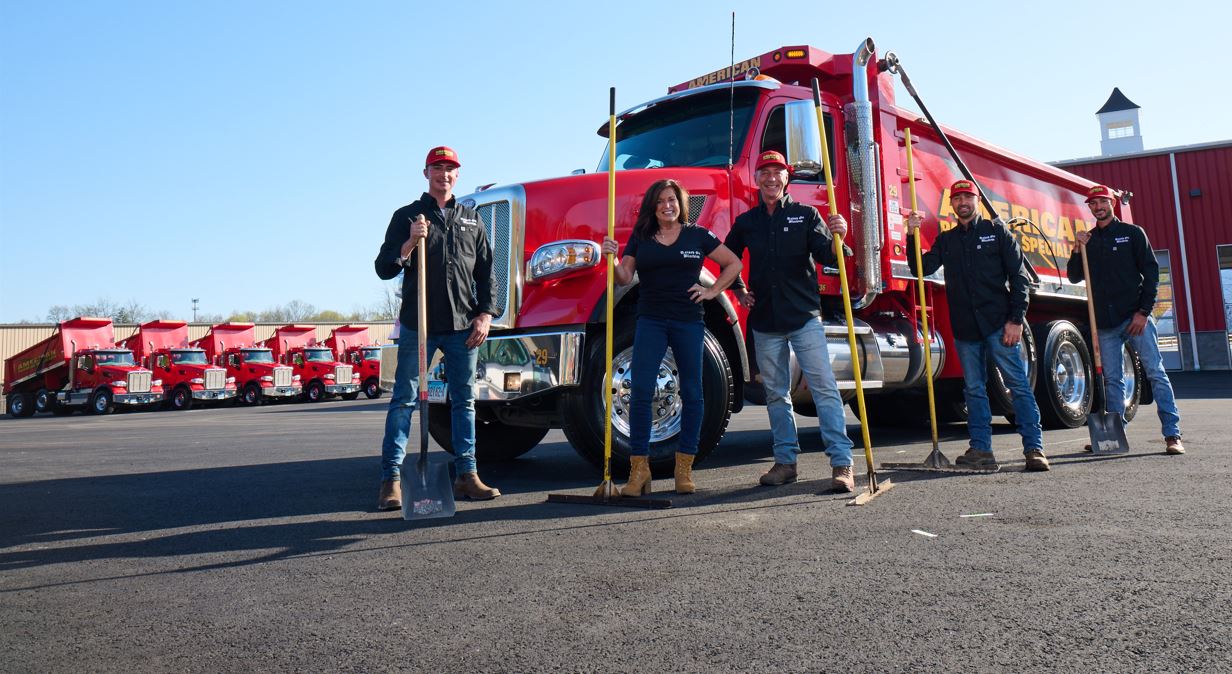
It was more than a decade ago when Bill Stanley, owner/operator of American Pavement Specialists (APS), Danbury, Connecticut, walked into Edward Erhbar Equipment looking to buy two Bagela BA10000 asphalt recyclers.

The event stood out to Greg Harla, partner at Bagela USA/Pavement Recyclers, for two reasons. The first was because this sale would make APS one of the first companies in the United States to own and operate two BA1000s. The second was because of the four young men Bill brought in tow: his sons, Bill Stanley III, 39, Jack Stanley, 37, Josh Stanley, 33, and Matt Stanley, 31.

Harla had been a yellow page ad rep in the early ’90s and called on a very young APS to advertise. Bill’s wife, Colleen, was his main point of contact. “Every time I called on her, it seemed there was one more little one playing with toys on the floor,” he said. “Fast forward to 2010 and Bill walks in with those four little guys—only they weren’t so little anymore.” All four were grown and all four had joined the family business. “[Bill] said, ‘Greg, all I want to do is keep my boys busy in the winter.’”

One catalyst for investing in an asphalt recycler from Bagela was to keep the APS crews busy year round. The inability to keep every member of the crew employed year-round meant more employee turnover for the company. “Across America, the fact most paving companies have to lay off employees in the winter directly affects the quality of laborers and operators we as an industry attract,” Matt said.

According to Bill, there were several reasons behind his decision to expand into asphalt recycling—among them, a way to make use of the company’s millings after it purchased its first milling machine in 2010. However, he added, “The first and most important was year-round work.”

Historically, APS’s region of the northeast experiences up to 16 weeks of winter shutdown. “The industry’s shutdown is definitely the most difficult part of being a paving contractor,” Bill said, adding that to make ends meet paving contractors often must do A.F.B. work (Anything For a Buck). “For APS, nothing was ever enough to make a real profit and hold onto our crews all year round, which has always been our goal.”

Additionally, the inability to keep every member of the crew employed year-round meant more employee turnover. “Every spring feels like we are re-hiring, retraining, re-building, re-starting with a lot of hoping and praying that we can make a solid go of the season,” Bill said. “Fall quickly approaches and you literally have to make everything happen, from making a profit for the season to completing every project to keep your customers happy. Then all in one fell swoop, December rolls around and it’s over.”

American Pavement Paves the Way for Amazon

Although APS wasn’t in a position to change the way the Connecticut asphalt industry operates in 2011, the company was in a position to change the way it operated by turning asphalt recycling into one of the company’s winter services—and a successful one at that.

Today, not only does APS sell hot patch throughout the winter, but it sold hot patch nearly every day of 2024 at press time. And, the company just produced mix for and placed a 250-ton hot patch for the city of Danbury in the middle of January.

Quality In, Quality Out

In January the city of Danbury had a water main break on Mountain Road, which had just been paved the previous year. The city, APS’s hometown and longtime customer, contacted the company to purchase roughly 250 tons of asphalt to place a temporary patch along a 2,000-foot-long, 4-foot-wide trench.

Matt Stanley is the founder of the Raised on Blacktop brand. He says a core component of the brand is inspiring the new and next generations of asphalt professionals. “Having a brand that represents the common contractor can not only draw the next generation into the industry but also provides our industry with better representation throughout the construction industry as a whole,” Matt said.

“A temporary patch would mean having to pay a contractor to rip it all out and repave it in the spring/summer,” Bill said. “We felt this was a large purchase to call temporary, so we sold them a permanent patch using 100% recycled asphalt, delivered with our auger truck and professionally installed as if it were July and not January.” (For more information about the sustainability of the project and process, check out the sidebar “Green, Lean Recycling Machine”).

Such a robust claim relies on the expertise and equipment to back it up. This begins with replacing the two older Bagelas with a new machine in 2024.

As with any asphalt, the quality of the hot patch APS produced for the project depends heavily on the quality of the material with which it is produced. APS opts to make its hot patch from virgin material left over from the paving jobs it performs in the warmer months.

How Asphalt Companies Can Leverage Social Media

“As the guy on the paver, sometimes you order that last load and you end up having a couple tons left over,” said Matt Stanley, Bill’s son and the founder of the Raised on Blacktop brand. “It isn’t ideal to have mix left over, but when it happens, we can recycle it come winter.”

APS dumps the leftover mix into a series of 2-ton piles, breaks it up once the material hardens, tarping it when necessary to minimize moisture. “[The Bagela] can produce 8 tons an hour in winter, 10 to 12 in summer,” Matt said, adding that it’s important the material is dry. “If that material is wet, it cuts our numbers in half.”

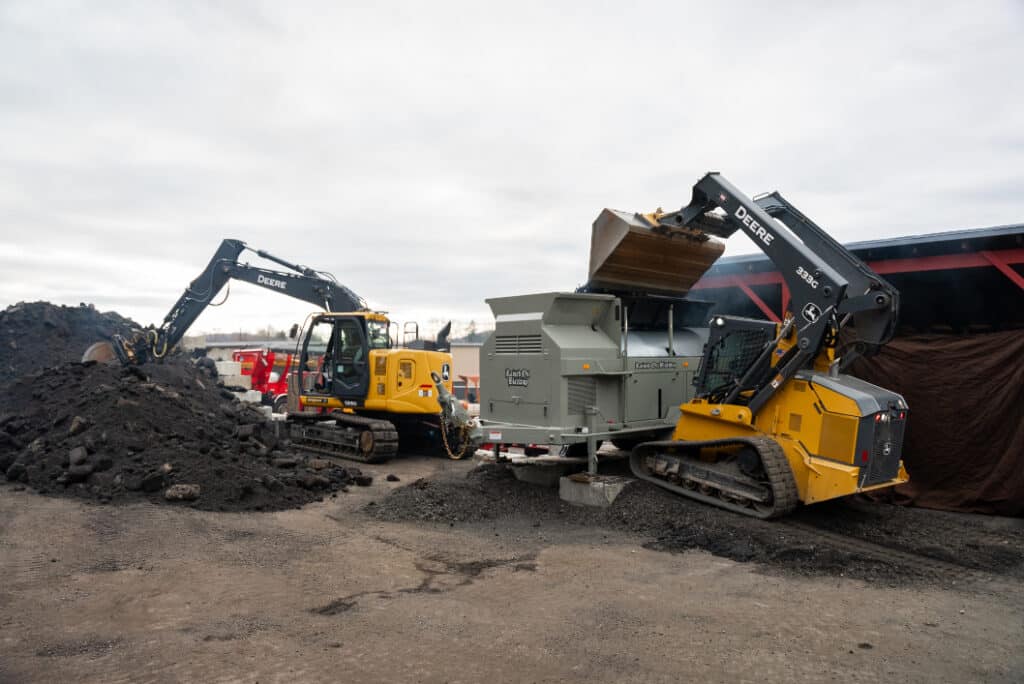
Matt said elevating the recycler off the ground and its location partially enclosed in APS’s old shed also improves the quality of the mix by retaining more heat. APS loads the machine with its John Deere 310 SL and John Deere 333G track loader, checking the temperature regularly with a temperature gauge. “I want around 300 to 350 degrees Fahrenheit,” Matt said. “Once I get below 300, I stop adding material because I want to let that material inside heat up.”

As material is produced, it is weighed with a scale and bucket and loaded into APS’s custom Trout River auger trucks. (Read more about these trucks in the sidebar, “Partnering on the ‘Perfect Truck’”). “If we load out around 300 to 350 degrees, we figure it’ll be around 275 coming out of the truck [at the job site].”

The new 10-ton trucks played a key role in the success of the Mountain Road trench and other cold-weather repairs. “The tarp system on these trucks is superior to any tarp system I’ve seen on the market,” Matt said. During the 2023 paving season, APS consistently saw mix from the Trout River trucks arrive at the job site a full 10 to 15 degrees warmer than its other trucks.

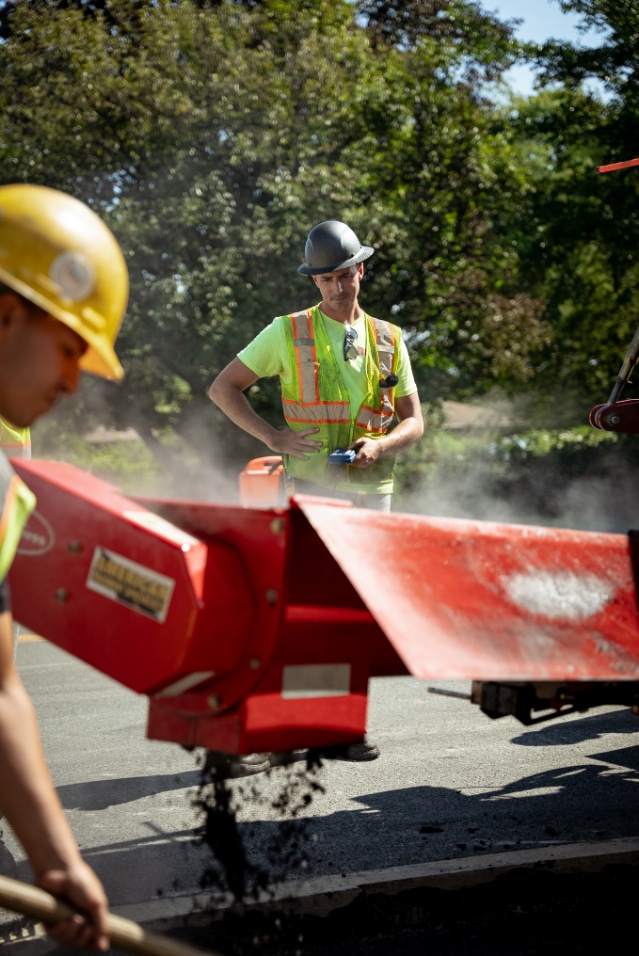
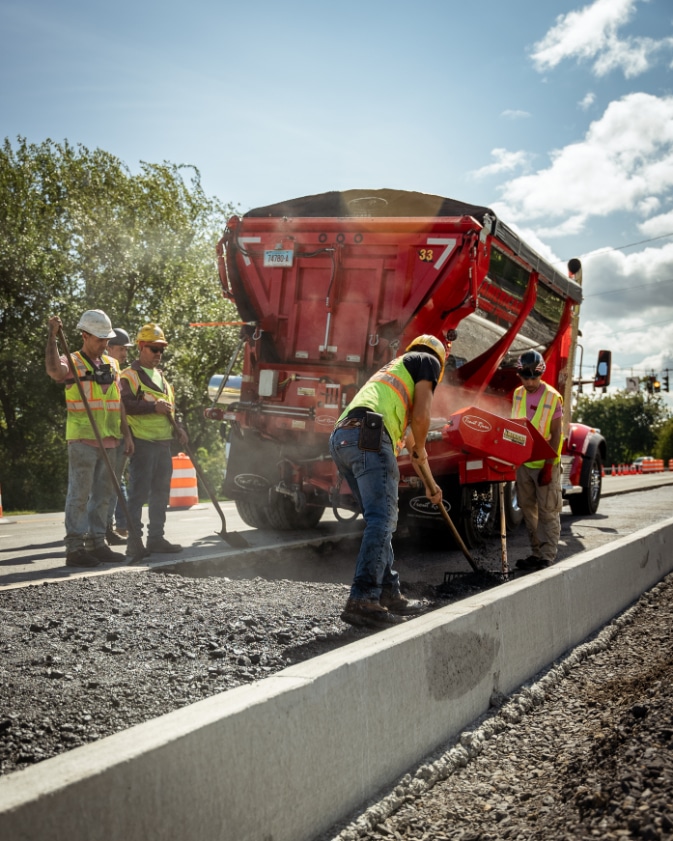
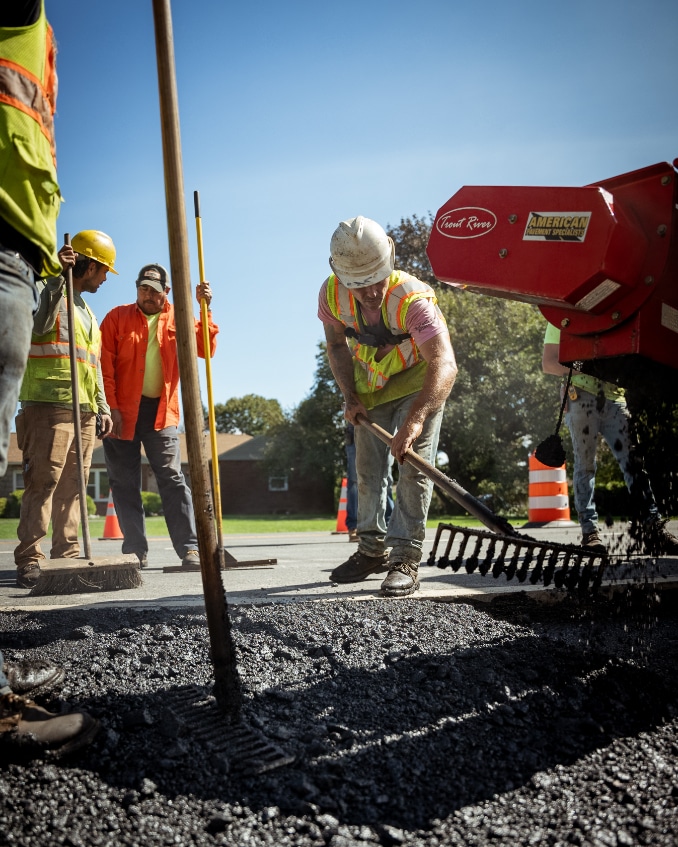
But, retaining heat when patching in winter means more than tying down the tarp. The live bottom trucks are equipped with augers and a conveyor at the back to directly deliver mix to the patch. “We aren’t dumping it on the ground, we aren’t handling it too much; the mix goes right from truck to patch,” Matt said.

In 2024, APS replaced its two older Bagelas with a new machine. The company sold hot patch all winter long, including using 250 tons of the mix for its trench project in Danbury, Connecticut, in January 2024.

The efficiency of this process also makes it less labor-intensive, he added. “When we deliver [hot patch] for our customers with these trucks, they might have six or seven laborers waiting to rake the asphalt,” Matt said. With the auger truck, jobs often require only one person raking.

Bill said the auger trucks were a perfect fit for the company’s trench job on Mountain Road. “The delivery is so quick, we got the job done in just two and a half days,” he said. “This is the 21st Century way to put asphalt into a trench.”

Cold-Weather Quality

Although the Trout River trucks were critical to the success of the project, APS had to prioritize quality every step of the way. The city repaired the trench and placed gravel one week before APS came out to pave, but did final preparations immediately ahead of the crew. “They took off the mud and frost, not exposing the gravel we were paving on until that morning,” Bill said.

The crew placed between 3 and 4 inches of asphalt into the trench. Normally, they’d put that down in two courses, but decided one course would help retain heat and therefore improve compaction given the 45-degree temperature on the days of paving.

It was also important to keep moving. “With winter paving, you have to pave fast and roll it immediately,” Bill said. The haul truck driver managed a consistent speed, closely watching the crew placing the asphalt in the rearview mirror. On the ground behind the truck, Bill controlled the conveyor speed to ensure material flow. “Since this trench is the same width and thickness, we barely had to do anything,” he added.

During the 2023 paving season, APS consistently saw mix from the Trout River trucks arrive at the job site a full 10 to 15 degrees warmer than what was delivered in its other trucks.

Immediately behind the truck came APS’s Hamm HD12 roller. “It’s not easy to pave in winter,” Bill said, “but we took our time, brought in our two Trout River trucks, extra laborers and a 3-ton roller (not just a plate compactor).”

Also ahead of paving, APS sprayed hot tack on the sides and bottom of the trench. “Our biggest concern on this job was raveling, so we did everything we could to help prevent that,” Bill said. “This job shouldn’t have any structural problems, so as long as it doesn’t ravel, our guys won’t have to do this all over again come spring.”

So far, the trench is holding up well—and that’s saying something. “We had a hell of a test on this project,” Bill said. “We finished the project on a Friday. On Saturday we had a Nor’easter with 4 inches of wet, heavy snow. The road was plowed and sanded. Then, Sunday it warmed up to 50 degrees, the snow melted, the ground was saturated and we got another 4 inches of rain. That’s bad for any pavement, but especially fresh pavement.”

However, when Bill rode the project a few weeks after paving, there were no defects. “With how it held up, you would never guess this was paved in January with recycled asphalt,” he said. “We’ll revisit it in the spring and take care of any defects, but we hope that if it’s good after what it’s already been through that it’ll still be good come spring.”

On the Mountain Road project in January 2024, APS used its custom Trout River auger trucks. Although APS uses the trucks on projects throughout the paving season (as seen here), the new 10-ton trucks played a key role in the success of the Mountain Road trench and other cold-weather repairs.

Room to Improve

Despite the success of the project, Bill identified one way it could have gone better: “If we had hot mix asphalt.”

“If this same repair happened a few years ago, it would definitely have stayed gravel all winter or maybe they’d put in cold patch,” Bill said. “Hot patch gives us an alternative to those methods, but I think it would have gone even better with HMA.”

Back when APS purchased its first two Bagelas in 2010, the company wasn’t in a position to change the industry. Now, it’s one of the most popular social media influencers in the asphalt industry, with nearly 300,000 followers across all platforms for APS and Raised on Blacktop, and Bill wants to use that position to effect change.

“Contractors like us have to have access to quality hot mix asphalt year-round,” he said. “The fact that we’re making and selling hot patch all winter long, that we’re laying quality 250-ton projects in January, that New York City one hour away from us has HMA plants running year-round illustrates that there’s plenty of need.”

“Completely shutting down all winter is 20th Century thinking,” Bill said, adding that excavators, frost blankets, improved heating elements and other innovations have made quality more achievable for winter work.

Of course, he acknowledges that winter work will be more costly, slower, and with less margin for error. “There are a thousand reasons why people say you can’t pave in cold weather—and they’re all to some extent true,” Bill said, adding that there are many projects he’d never consider paving in winter. “However, there are circumstances where people need asphalt in winter and there are days in winter where we can and should be working. This [Mountain Road] project is living proof.”

Whether or not the industry answers Bill’s call, APS will continue to produce hot patch year-round. “We’re not getting rich off this; to me, it’s about answering the call from our customers,” Bill said. “When they ask if we can make blacktop in winter, our answer is going to be ‘Hell yeah’.”

Over time, Bill anticipates the shutdown season in colder climates will get shorter and shorter as technology continues to improve. “I truly believe it won’t be long before winter will merely be a ‘slow season’ and there will be more opportunity for asphalt to become a four-season business.”

Bill Stanley, right, hopes the success of American Pavement Specialists’ recent winter trench project in Danbury, Connecticut, will encourage the industry to change with the times and provide access to hot mix asphalt year round.

Making a Movement

It’s a sentiment shared by his son Matt, who in addition to working at APS founded the brand Raised on Blacktop. “By sticking our necks out to experiment with new practices, we’ve shown our customers and municipalities that paving in the off-season is possible,” Matt said.

APS has long been an industry trailblazer on social media, starting its account when the demand for asphalt-related influencers had yet to be proven. They see trailblazing on this effort as no different.

“We’ve really leaned into our role [as trailblazers] over the past 10 years we’ve been on social media,” Matt said. He hopes the success of APS’s hot patch operation in general and the Mountain Road project in particular will improve stability in the asphalt industry, “especially for young business owners, where long off-seasons could kill a company,” he said. “But even more so, [I hope it stabilizes] the labor force.”

“Across America, the fact most paving companies have to lay off employees in the winter directly affects the quality of laborers and operators we as an industry attract,” Matt said. Inspiring the next generation of asphalt professionals is a core component of the Raised on Blacktop brand.

“Seeing the look on a kid’s face when they’re wearing a brand that represents them or what their parents do for a living is what fuels me,” Matt said. “Having a brand that represents the common contractor can not only draw the next generation into the industry but also just provide our industry with better representation throughout the construction industry as a whole.”

Harla with Pavement Recyclers has seen the evolution of Raised on Blacktop, from watching little boys playing with toy trucks to witnessing grown men helping design better haul trucks. “They’re bringing efficiencies and profitability and new ideas to the next generation. …They’re bringing solutions to our industry,” he said. “Raised on blacktop is a movement.”


Partnering on the ‘Perfect Truck’

Green, Lean Recycling Machine

Bowes Construction Regrades, Rubblizes for a Smoother, Safer Ride

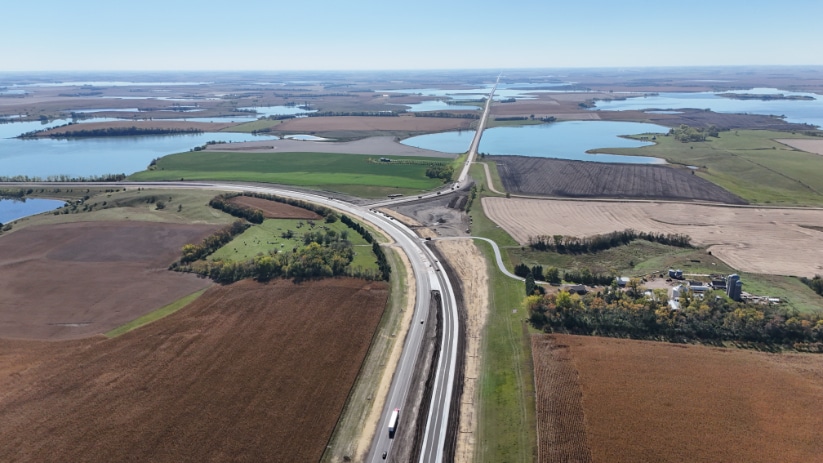
Surrounded by the vast prairies, rolling plains and fertile farmlands that pepper eastern South Dakota is the intersection of highways 14 and 81, just a couple miles south of the community of Arlington.

Joe Gilsdorf, project estimator for Bowes Construction, Brookings, characterized Highway 14 as “your standard rural South Dakota highway,” accommodating both daily commuters to nearby Brookings and recreational visitors drawn to local lakes and hunting areas. “It’s also a heavy agricultural corridor, so there are a lot of trucks running with grain, cattle, etc.”

Since Bowes completed the project Oct. 27, 2023, “we’ve heard from some local farmers and truck drivers who have said how much better the intersection is now,” Gilsdorf said. “By widening that [curve] with the paved median, it’s easier to make that left handed turn north on 14. Those changes have made it a much safer intersection for the traveling public.”

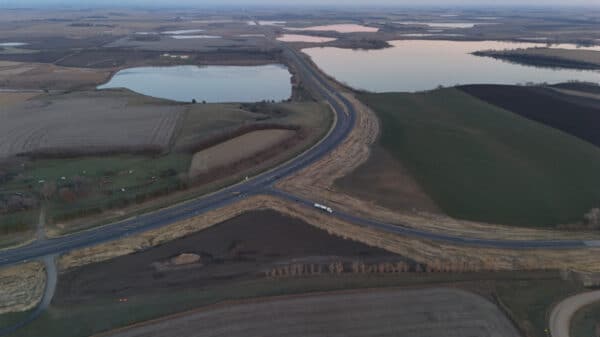
Highway 14 runs north-south out of Arlington before cutting east-west at Bangor Township, where Highway 81 meets 14 at a 45-degree angle in the middle of that 90-degree turn. “Highway 14 was a four-lane divided highway with a divided median, which didn’t leave the trucks with a whole lot of space,” Gilsdorf said. “If a truck had to sit in the median to make a left handed turn to head north to Arlington, they were kind of sitting in the eastbound lane a bit.”

That’s why the South Dakota Department of Transportation decided to replace the divided median with a paved median, readjust the grade for a ¾-mile section of Highway 14 and realign Highway 81 leading into the curve. In addition to the realignment, the DOT decided it was time to rehabilitate roughly one mile of Highway 14 on each side of the realigned curve. “The existing roadway was starting to get rough,” Gilsdorf said. “There were areas where the state had patched the lanes several times over.”

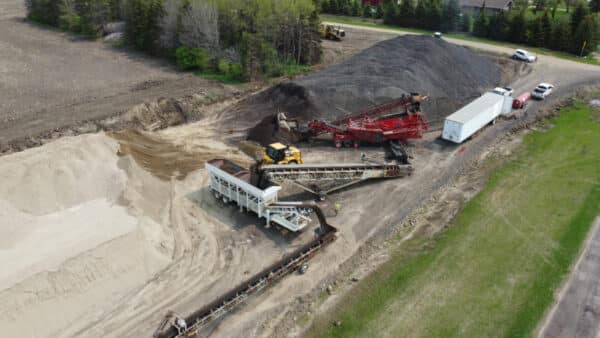
The company set up a stockpile site near the project for the asphalt millings for later use as base course on the realignment portion of the project.

The state opted for rubblization, which fractures the underlying concrete into small pieces (usually 2 to 6 inches) before applying an asphalt overlay. “Breaking up the concrete aims to reduce any reflective cracking that could come up through the asphalt,” Gilsdorf said. “By rubblizing the concrete, you’re basically turning it into gravel that can be rolled to lock together just like any other base material.” The process was selected for its cost-effectiveness as a result of recycling the existing road materials.

“I think the driver of this project was the realignment with 81, but [rubblization and paving an asphalt overlay] also provided a way to improve the condition of the road while we were at it,” Gilsdorf said.

Bowes produced the mix for this project from its batch plant near Brookings. The project required 39,556 tons of Q3R HMA.

Resilient Infrastructure Raises the Grade

From Bid to Built

Bowes Construction bid on the Highway 14 project in October 2022. “What caught our eye was that this was a multi-faceted project that used many of our different divisions from crushing and grading all the way up to asphalt,” Gilsdorf said. “That, and it was a pretty significant asphalt paving project.”

Bowes started work on the project in April 2023. It moved all traffic head-to-head onto Highway 14’s eastbound lanes and began milling the asphalt off the existing westbound lanes. “The plans called for 4 inches of milling, but there were some sections where the asphalt was 6 to 7 inches thick because of the amount of patching that had been done out there,” Gilsdorf said.

The company set up a stockpile site near the project for the asphalt millings for later use as base course on the realignment portion of the project. The remainder of the millings went back to Bowes’ batch plant in Brookings to be used for the asphalt overlay. “South Dakota DOT projects like this specify that the millings coming off the project have to be reused in the material you produce,” Gilsdorf said. “You can’t use RAP out of an existing stockpile that you may have already had; we have to use the RAP that comes off the job.”

Bowes started work on the project in April 2023. It moved all traffic head-to-head onto Highway 14’s eastbound lanes and began milling the asphalt off the existing westbound lanes.

After the asphalt had been milled on the westbound lanes, Bowes used a concrete breaker to break up the concrete along the ¾-mile curved section that was to be realigned, then removed the concrete before undercutting, regrading and compacting the curve. “Then, we brought in a crusher to crush the asphalt millings in our stockpiles and then we blended those into a base course on the newly graded section,” Gilsdorf said.

On each side of the newly realigned section, Bowes’ subcontractor, Antigo Construction, Antigo, Wisconsin, came in to rubblize the existing concrete. “Having never done rubblization before, I really leaned on the expertise of Antigo,” Gilsdorf said.

Rubblization #1

“One aspect that made this project unique for us was that it was the first rubblization project our company has ever done,” Gilsdorf said. Although this made the project exciting, it also presented a bit of a learning curve. “We weren’t exactly sure how the paving was going to go.”

“We were concerned that concrete chunks might cut through that lower lift,” Gilsdorf said. The original specs on the project called for 1 ½ inch lower lift and a 2 ½ inch upper lift. “We worked with the state to change the cross section to two 2-inch lifts, because we thought a 2-inch lower lift would create less opportunity to pick up a chunk of that concrete and drag it under the screed.”

Pave Resiliently

The project also specified rolling the rubblized material with a large steel-drum roller before paving. Bowes opted to do this twice, the second time immediately prior to paving to compact any material that might have been loosened up by the belly dump trucks delivering material for the pickup machine.

Even with these changes, “we had to be prepared to pick up the screed in order to meet our efficiencies if we had issues with drag,” Gilsdorf said. “Thankfully, we didn’t have any issues with that so the change proved successful.”

To ensure densities were achieved, Bowes Construction—with the help of Forester Testing—utilized a nuclear density gauge to immediately test density behind the rollers.

“That way, we had real-time insight on where we were at and could change our processes if needed,” Gilsdorf said. “Ultimately, we never had any issues reaching our densities, but we were certainly prepared to adjust rolling patterns as needed.”

Ultimately, Gilsdorf said the company went into its first rubblization project as prepared as possible and ready to make adjustments as needed. “With a lot of preemptive planning, looking at the processes and thinking through potential causes and effects, we had solutions for what we thought our challenges might be before we even got started,” he added.

“The plans called for 4 inches of milling, but there were some sections where the asphalt was 6 to 7 inches thick because of the amount of patching that had been done out there,” Gilsdorf said.

Another challenge the crew faced was tying together the asphalt overlays for the regraded section and rubblized section. Bowes Construction had to be very strategic with each lane pull, as the regraded portion called for an initial 5-inch lift, and the rubblized needed an initial 2-inch lift. This required different pull sequencing so the final 2-inch lift could be paved in continuity. “It really came down to sequencing each lift with the paver,” Gilsdorf said.

Once all paving was complete on the westbound lanes in August 2023, Bowes had to repeat the entire process on the eastbound lanes—with the additional challenge of allowing traffic from Highway 81 to cross the eastbound lanes to the completed westbound lanes that were now carrying dual direction traffic.

“We couldn’t shut down that 81 intersection because we were working on this project in the middle of harvest season and that’s a very busy intersection for that agricultural traffic,” Gilsdorf said. The solution was to ready the new tie-in then build an efficient diversion to move traffic off of Highway 81 to the westbound lanes of Highway 14—and plenty of flagging.

“Thankfully, because we had already done the westbound, the eastbound ran a bit smoother because we’d just done the same thing on the westbound,” Gilsdorf said. “Even though we had that traffic to deal with, we were able to make it work.”

North Dakota to Deploy Autonomous Attenuator Trucks

Get Results

The company was also concerned with achieving rideability on the project, given that it wasn’t able to use the automatics on its Cat 1055 paver for the first lift on the rubblization section. “The rubblized concrete won’t necessarily be uniform in elevation,” Gilsdorf said. “It’s not like the graded sections where you come through with your grading equipment and it’s all uniform. You have variances throughout the entire rubblized section that make it more of a challenge.”

Given the realities of that first lift on rubblized concrete, Gilsdorf said the first lift of asphalt “gets you coverage and density and provides a good base for the second lift.” However, the South Dakota ride spec is based on the number of attempts the contractor has to achieve the ride spec.

Bowes used a CBA Cat roller to compact the rubblized concrete ahead of its Barber Green BG650 pickup machine and Cat 1055 paver, equipped with Cat automatics. This was followed by three CB4.4 Cat rollers.

“When you have two lifts, the DOT considers that a two-pass opportunity and with three lifts, that’s considered a three-pass opportunity,” Gilsdorf said. “The first lift on this project really only covered the rubblized concrete, which meant we only had one opportunity to meet the ride spec using our automatics on the paver during the second lift, but we were held to a two-pass opportunity on the job spec.”

However, Bowes’ crew was able to achieve an average IRI of 45.0 on the project. “We met all the state ride specs and achieved a ride incentive bonus,” Gilsdorf said. In addition to meeting or exceeding the DOT’s specs, those driving the road seem to be pleased.

Since Bowes completed the project Oct. 27, 2023, “we’ve heard from some local farmers and truck drivers who have said how much better the intersection is now,” Gilsdorf said. “By widening that [curve] with the paved median, it’s easier to make that left handed turn north on 14. Those changes have made it a much safer intersection for the traveling public.”

Meet a Woman of Asphalt: Rock Road’s Wendy Lou Bloedow

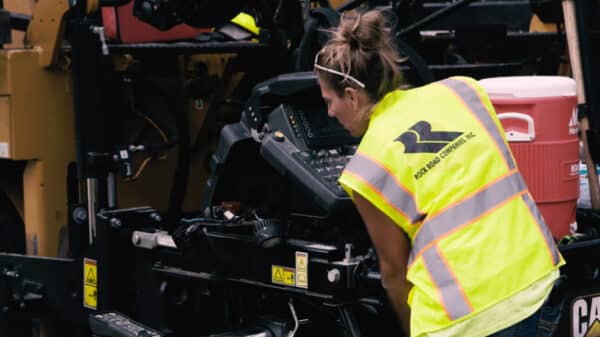
Wendy Lou Bloedow started her construction career as a laborer in the Operating Engineers Local 139’s operating engineer program and worked her way up to join the asphalt industry in 2009. She dove in as a paver operator and also hauled equipment for Rock Road Companies Inc., Janesville, Wisconsin. Now she’s a paving foreman for Rock Road and took some time from those responsibilities to share her story as a woman of asphalt.

AsphaltPro: What about that first position as a paver operator with Rock Road was “most cool” to you?

Wendy Bloedow: All of it! Being able to see the operation of what’s ahead of you, going on right there at the paver and the operations behind you.

Meet a Woman of Asphalt: Modern Hydrogen’s Emily Houston

AsphaltPro: Could you share with the readers your career trajectory since high school and what challenges you’ve overcome along the way? (What part of your education relates best to the career track you’ve been on?)

Wendy Bloedow: I started as a laborer in union trade and worked my way up. I was given the opportunity to join Operating Engineers Local 139. Through the operators, I went through their apprenticeship program.

AsphaltPro: What did you find most valuable about the apprenticeship program?

Wendy Bloedow: The operating engineer program is great, especially for those already in the construction field. I was able to learn how to weld, get familiar with equipment I had never been given an opportunity to operate before, and learn to identify, set and lay grade.

AsphaltPro: Could you share with the readers what your job as a paving foreman for Rock Road requires of you for the asphalt team? (And what are some of your daily responsibilities, too?)

Wendy Bloedow: Paving foreman responsibilities include setting up your daily jobs as far as equipment and employees and trucking. Providing quality production. Training of some of the new hires. Making sure productivity is where it should be in a safe working environment.

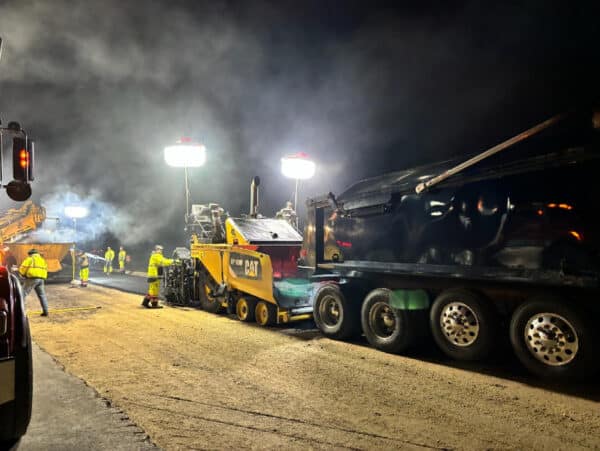
On this night paving project, Bloedow is in the paver operator seat as the team paves in echelon for a seamless longitudinal joint.

AsphaltPro: Why did you become a paving foreman? What about that position attracted you?

Wendy Bloedow: I had operated the paver for roughly 13 years and was looking for a new challenge. I guess you could say I was intrigued at seeing if I was capable of all the responsibilities and if I succeeded, to be able to look back at the accomplishments of one’s crew.

AsphaltPro: What do you think is the most important skill you’ve brought to your position as a paving foreman in the asphalt industry? (and how would you encourage other women entering the industry to hone a similar skill to be any kind of foreman or lead operator they want to become?)

Wendy Bloedow: Positive attitude, optimistic outlook and good work ethics along with a sense of pride in workmanship. Encouragement by always working hard.

Never be afraid to fail. If you don’t fail or make mistakes, you’re not learning. Our world is more accepting of everyone than it has been in the past. Just work hard and show your good qualities. It will be noticed by management.

Meet a Woman of Asphalt: Jim Reynolds Asphalt Contractor’s Chelsea Ellis-Hogan

AsphaltPro: What would you say was the most challenging “obstacle” you, as a female on the asphalt crew, had to overcome in the past 14 years, and how did you overcome that obstacle? How do you think other women in the industry can incorporate that skill or habit into their workdays?

Wendy Bloedow: There can be many obstacles in paving! The job itself can be challenging. The biggest obstacle would be facing and dealing with people who don’t believe in you or your abilities nor giving you a chance. You just have to keep trying and work hard. “Broad shoulders and thick skin” so to speak. It’s a challenge for us all. Know the difference between constructive and negative criticism; brush off the negative criticism.

AsphaltPro: What is something you never thought you’d get to do that you’ve experienced because of this career in asphalt?

Wendy Bloedow: Well for one, I never really thought I’d be a foreman, nor be chosen for the Women in Asphalt segment two years ago and now this interview. It is all rewarding! I am excited to do more training this coming spring and see where this asphalt road takes me.

On this night paving project, Bloedow is in the paver operator seat as the team paves in echelon for a seamless longitudinal joint.

AsphaltPro: Let’s talk about teamwork. What is the most challenging project you’ve been a part of and how did you and the Rock Road crew overcome the challenge?

Wendy Bloedow: Every project has its own challenges. Might be weather, density or segregation. As a crew, we might change up rolling patterns, or make adjustments with the paver. Constant communication is key with plant and lab techs. Adjustments can be made accordingly and quickly.

AsphaltPro: Let’s talk about perceptions. What do you think is an incorrect perception that we, as an industry, can re-educate young people about to encourage more women to consider a career in the asphalt business? What is something you would tell a young lady to encourage her in this industry?

Wendy Bloedow: This industry is more than just operating equipment. It’s working together as a crew shoveling, raking, compacting, etc., whatever it may take to achieve a job well done. It’s a career choice that one has to have the drive for hard work and long hours. And it is also rewarding on many levels.

Meet a Woman of Asphalt: WAPA’s Deb Schwerman

AsphaltPro: What is the most rewarding aspect for you of being in the asphalt business?

Wendy Bloedow: Being able to look back at our crews’ accomplishments of jobs we’ve paved. Also the amount of things I’ve learned and am still learning every day. It’s endless!

AsphaltPro: Will you tell us about a person who served as a mentor for you and how this person encouraged you? Is there a piece of advice you can pass along?

AsphaltPro: Could you share with the readers what your job as a paving foreman for Rock Road requires of you for the asphalt team? (And what are some of your daily responsibilities, too?)

Wendy Bloedow: Paving foreman responsibilities include setting up your daily jobs as far as equipment and employees and trucking. Providing quality production. Training of some of the new hires. Making sure productivity is where it should be in a safe working environment.

AsphaltPro: Why did you become a paving foreman? What about that position attracted you?

Wendy Bloedow: I had operated the paver for roughly 13 years and was looking for a new challenge. I guess you could say I was intrigued at seeing if I was capable of all the responsibilities and if I succeeded, to be able to look back at the accomplishments of one’s crew.

AsphaltPro: What do you think is the most important skill you’ve brought to your position as a paving foreman in the asphalt industry? (and how would you encourage other women entering the industry to hone a similar skill to be any kind of foreman or lead operator they want to become?)

Wendy Bloedow: Positive attitude, optimistic outlook and good work ethics along with a sense of pride in workmanship. Encouragement by always working hard.

Never be afraid to fail. If you don’t fail or make mistakes, you’re not learning. Our world is more accepting of everyone than it has been in the past. Just work hard and show your good qualities. It will be noticed by management.

AsphaltPro: What would you say was the most challenging “obstacle” you, as a female on the asphalt crew, had to overcome in the past 14 years, and how did you overcome that obstacle? How do you think other women in the industry can incorporate that skill or habit into their workdays?

Wendy Bloedow: There can be many obstacles in paving! The job itself can be challenging. The biggest obstacle would be facing and dealing with people who don’t believe in you or your abilities nor giving you a chance. You just have to keep trying and work hard. “Broad shoulders and thick skin” so to speak. It’s a challenge for us all.

Know the difference between constructive and negative criticism; brush off the negative criticism.

AsphaltPro: What is something you never thought you’d get to do that you’ve experienced because of this career in asphalt?

Wendy Bloedow: Well for one, I never really thought I’d be a foreman, nor be chosen for the Women in Asphalt segment two years ago and now this interview. It is all rewarding! I am excited to do more training this coming spring and see where this asphalt road takes me.

AsphaltPro: Let’s talk about teamwork. What is the most challenging project you’ve been a part of and how did you and the Rock Road crew overcome the challenge?

Wendy Bloedow: Every project has its own challenges. Might be weather, density or segregation. As a crew, we might change up rolling patterns, or make adjustments with the paver. Constant communication is key with plant and lab techs. Adjustments can be made accordingly and quickly.

AsphaltPro: Let’s talk about perceptions. What do you think is an incorrect perception that we, as an industry, can re-educate young people about to encourage more women to consider a career in the asphalt business? What is something you would tell a young lady to encourage her in this industry?

Wendy Bloedow: This industry is more than just operating equipment. It’s working together as a crew shoveling, raking, compacting, etc., whatever it may take to achieve a job well done. It’s a career choice that one has to have the drive for hard work and long hours. And it is also rewarding on many levels.

AsphaltPro: What is the most rewarding aspect for you of being in the asphalt business?

Wendy Bloedow: Being able to look back at our crews’ accomplishments of jobs we’ve paved. Also the amount of things I’ve learned and am still learning every day. It’s endless!

AsphaltPro: Will you tell us about a person who served as a mentor for you and how this person encouraged you? Is there a piece of advice you can pass along?

Wendy Bloedow: Where do I begin? There have been many throughout my career. From the first day of paving, first day operating a paver, roller, road widener, shuttle buggy to where I am now. It’s hard to choose just one.

My advice to anyone that has the drive to be in the asphalt industry is to be a trainable person. Be willing to work hard, ask questions, listen and never give up. I’ve worked under many foremen and supervisors that could see that drive and they were more than willing to teach me. They want to see you succeed just as much as you want to succeed. You’ve got to want it!

Wendy Bloedow: Where do I begin? There have been many throughout my career. From the first day of paving, first day operating a paver, roller, road widener, shuttle buggy to where I am now. It’s hard to choose just one.

My advice to anyone that has the drive to be in the asphalt industry is to be a trainable person. Be willing to work hard, ask questions, listen and never give up. I’ve worked under many foremen and supervisors that could see that drive and they were more than willing to teach me. They want to see you succeed just as much as you want to succeed. You’ve got to want it!

CIR Revitalizes Colorado Mountain Pass

Jones Pass is a mountain in north-central Colorado that reaches an elevation of 12,454 feet at its peak. Nestled in the Arapaho National Forest, Jones Pass Road is the primary route for visitors to Jones Pass and also for traffic to and from the nearby Henderson mine. The Henderson mine, owned by Freeport-McMoRan, has produced molybdenum since 1976 and is North America’s largest producer of the mineral.

“Throughout the week, Jones Pass Road is used for mining operations and on the weekends, for recreational use,” said Reed Poleszak, project estimator for Coughlin Company, St. George, Utah, adding that many years of heavy traffic had resulted in severe age-related distress. That’s why Clear Creek County solicited bids for cold in-place recycling (CIR) and asphalt overlay in the summer of 2023.

The CIR portion of the project comprised 24,000 square yards of material, while the overlay required a total of 6,802 tons of HMA produced at APC’s plant in Golden, Colorado. Photo courtesy of Coughlin Companies

“The condition of Jones Pass Road prior to the project would be considered severely distressed with potholing, alligator cracking as well as transverse and longitudinal cracking,” said Stoy Streepy, an engineer with the county. “The CIR process seemed like a good fit for rehabilitating this road based on the condition of the road before this project as well as the cost savings and the reduction in material import/export compared to a full reconstruction project.”

Although the county only has rough estimates from 2020 to illustrate cost savings, it estimates a $19 to $35 cost reduction per square yard of roadway surface between CIR and full depth replacement.

However, it was the first time the county would be using CIR, so it was important that they bring in the necessary expertise. The county hired Atlas, Austin, Texas, for engineering and design; Coughlin Company, a SurfaceCycle company, for the CIR; and APC Construction, a CRH company, to perform the paving.

Wisconsin Job Compares Cold In-Place and Pulverize/Relay

CIR to Spec

CIR is a pavement rehabilitation method where the existing asphalt surface is milled, pulverized and mixed with a stabilizing agent before being repaved and compacted. The recent project on Jones Pass Road comprised a 4-inch CIR followed by 5 inches of new hot mix asphalt (HMA). “There’s quite a bit of traffic coming in and out of that mine, so such a robust structural section makes sense for this road,” Poleszak said.

APC Construction, the general contractor on the project, bid for the job in August 2023 and the CIR portion of the project began in October 2023. Although APC has done work for Clear Creek County in the past, this was one of its first CIR projects. The company brought in its sister company, APC Southern, to pave the project since it had experience with CIR and had also previously worked with the CIR subcontractor, Coughlin Company.

Behind the CIR portion of the project, the APC Southern crew placed a 3-inch lift and a 2-inch lift of asphalt (Grading SX with PG58-28). Photo courtesy of APC

Although Coughlin’s parent company SurfaceCycle operates in the milling, CIR, soil stabilization and reclamation space, SurfaceCycle Chief Commercial Officer Roman Lopatko said “Coughlin is probably the company with the most legacy [with CIR] in our portfolio.”

Coughlin has been involved in a number of CIR projects in Colorado, mostly for the Colorado Department of Transportation, including a 43-mile section of Colorado’s State Highway 149 between Creede and Lake City previously reported by AsphaltPro Magazine. “That was one of the biggest CIR projects ever let in Colorado,” Poleszak said. Although the Jones Pass Road project was quite small—one lane in each direction 1 ¾ miles long—the company was able to bring decades of experience across scores of projects big and small to the project.

The CIR portion of the project comprised 24,000 square yards of material, while the overlay required a total of 6,802 tons of HMA produced at APC’s plant in Golden, Colorado. Photo courtesy of APC

“We relied on Coughlin for their expertise with CIR, because they are very much an expert with that process,” said APC Project Manager Keary Brown. “We really enjoyed the collaboration we had with Coughlin. This was a really good team effort.”

Also key was the role Atlas played in the CIR mix design and acceptance testing for Clear Creek County. Atlas has significant experience in quality control for CIR projects, frequently working with Coughlin Company when it picks up CDOT jobs, said Atlas Quality Assurance Manager Davis Quinn. “CIR is not hugely popular in Colorado, with most agencies preferring full depth reclamation,” he said. However, Quinn said, this road presented an ideal opportunity to use the process given the significant surface degradation and cracking paired with the good condition of the underlying material.

Clear Creek County uses cold in-place recycling for the first time ever on Jones Pass Road. Photo courtesy of Coughlin Companies

According to Dan Shellhammer, who is responsible for SurfaceCycle’s CIR projects across the nation, the Jones Pass Road was simplified and streamlined by Colorado’s existing CIR spec. “Colorado has a great CIR specification,” he said. “Coughlin Group, along with some other folks in the industry, was instrumental in helping them get that written.”

Having a solid standard to rely on made the CIR portion of the project run smoothly. “We basically came in and performed the work to specification,” Poleszak said. “It was a very straightforward job for us.”

Due to cold weather, Coughlin ended up starting a bit later in the day than it otherwise might have so it could operate during the warmest part of the day. Photo courtesy of Coughlin Companies

Easy CIR

The CIR portion of the project began in early October and was completed within two weeks. Coughlin milled to a depth of 4 inches—a total of 24,000 square yards of material—with its Roadtec RX900e rotomill followed by its Roadtec RT500 recycling train, utilizing Suncor for the emulsion and Lhoist for the lime mineral filler.

Coughlin utilized Suncor’s CSS Special emulsion formulated for cold recycle work injected at 3.5% and Lhoist’s hi Calc Quicklime Fines to slurry for the 1.5% mineral filler additive according to Atlas’s mix design.

“We essentially just mixed it and put it in a windrow for [APC Southern] to pick up and pave,” Poleszak said. The most significant challenge during the CIR process was the weather.

Clear Creek County estimates a $19 to $35 cost reduction per square yard of roadway surface between CIR and full depth replacement. These photos show the road prior to and after the CIR was completed. Photo courtesy of APC

“Ahead of this project, we were busy finishing up a CIR project in New Mexico and APC was busy paving Berthoud Pass,” Poleszak said. Then, a cold front moved in just as Coughlin mobilized its equipment for the Jones Pass Road job. “With CIR, you’re putting quite a bit of water into the mix and if it’s too cold that is not going to get out of that mix as quickly as what would be desirable.”

NCAT Offers Cold Recycle Mix Design

The company discussed with the county and Atlas some additive options that they’ve used in the past to help material cure more quickly under similar conditions (higher elevation, colder temperatures) in its home state of Utah. “We’ve had some success introducing cement into a mix design in other climates with cold weather,” Poleszak said, as the Portland Cement reduces the water demand for the CIR mix. “Now, it’s become our standard for these cold weather temps to help get traffic back on here with minimal raveling and distresses.”

However, the county opted to utilize its existing design given the body of testing data it had on lime and emulsion. And, ultimately, the original mix design ended up working out well.

Coughlin ended up starting a bit later in the day than it otherwise might have so it could operate during the warmest part of the day. Everyone involved ensured all testing requirements were met. “We really relied on Atlas on site to ensure all material was meeting the specifications,” Poleszak said. “Had we not met the specifications, with the cold weather and everything else, we wouldn’t have continued. But once we saw we were meeting spec, we just rolled right through it and got it done.”

After CIR began, Coughlin hit an unexpected snag—literally. “We ran into paving fabric within the 4-inch depth of the recycle that was not in the bid documents,” Poleszak said “We were still able to meet our production rates, but we had to have a couple guys yanking fabric out of the screen deck full time. It was just one of those things that happens sometimes.” Photo courtesy of Coughlin Companies

“After Coughlin performed the CIR, we followed behind, paving and rolling what they left for us in a windrow,” Brown said. Then, the APC Southern crew placed a 3-inch lift and a 2-inch lift of asphalt (Grading SX with PG58-28).

The CIR portion of the project comprised 24,000 square yards of material, while the overlay required a total of 6,802 tons of HMA produced at APC’s plant in Golden, Colorado.

“The only other challenge we faced would have been the distance from our plant up to the project which was approximately 40 miles, but we overcame that with adequate trucking,” Brown said, adding that the company had more than 30 haul trucks dedicated to the project. “We used best practices to retain heat every step of the way.”

After CIR began, Coughlin hit an unexpected snag—literally. “We ran into paving fabric within the 4-inch depth of the recycle that was not in the bid documents,” Poleszak said “We were still able to meet our production rates, but we had to have a couple guys yanking fabric out of the screen deck full time. It was just one of those things that happens sometimes.”

The 40-mile haul from the plant to the project presented a challenge APC was able to overcome with adequate trucking. The company had more than 30 haul trucks dedicated to the project. Photo courtesy of APC

Care Gets Results

“We are pleased with the completed project and hope to have extended the service life of the road surface by another 20 years,” Streepy said. Coughlin and APC share this sentiment.

“We were pleased enough with it to submit it for a sustainability award with the Colorado Asphalt Pavement Association,” Brown said. “We decided to submit this in the sustainability category because that was one of the reasons the county decided to do this type of pavement application up there. They wanted to try to utilize the existing materials that are there and incorporate them back into the project, as opposed to milling and hauling the millings away and then overlaying.”

Wisconsin Job Compares Cold In-Place and Pulverize/Relay

“This project was a good candidate for CIR and it came out well,” Poleszak said. “If you have a good candidate for a CIR  project, they sell themselves. You’re saving a lot of money and getting quite a lot of structural section back out of the road.”

Although Streepy said the tight curves and steep grades of most of the roads in Clear Creek County don’t allow for the long vehicle trains required for CIR, he said the county looks forward to the opportunity to utilize CIR in the future when the road conditions allow.

“This is an exciting first for the county,” Brown said, “and we can’t wait for them to see the results of this project and how CIR will help in the longevity of the road.”

For more information on, visit SurfaceCycle’s website.


The Rise of CIR

According to Shellhammer, SurfaceCycle has seen a growing interest in cold in-place recycling in the Colorado region in recent years.

“CIR is an alternative to conventional construction that could drastically reduce carbon emissions, so I think the state and the counties in the state are seeing that as a much more viable option,” he said. “There’s been a lot more interest in CIR as Colorado comes out with some initiatives related to tracking emissions and things like that.”

Shellhammer said he’s been seeing greenhouse gas reductions of up to 90% comparing CIR to conventional processes. “We’ve seen individual projects where they’ve reduced their CO2 output by up to 3,000 metric tons on one job.”

However, just as important to the growth of CIR has been innovations in equipment and quality control. “CIR has been around for decades, but the really great thing that’s happened in the last decade or two is the equipment industry has modernized a lot of tools that we use,” Poleszak said.

For example, grade and slope control systems available on today’s milling machines. “We are milling for depth, but we are also trying to get some of those bumps and dips out the road while we’re doing that,” Schellhammer said.

Also, the closed loop screening system on recycling trains. “That’s a machine control feature that’s been put in place to ensure 100% of that RAP is sized appropriately,” Schellhammer said. As the material goes into the pugmill, an inline weighbridge monitors the weight of the RAP. “That’s tied to an onboard computer that then meters the amount of emulsion that’s being added back as a percentage by weight. Those are all going through very accurate calibrated pumps, so we’re able to make a very consistent cold mix.”

“In the past, there was none of that,” Shellhammer said. “There wasn’t a weighbridge. There wasn’t an onboard computer. All it was was basically a dial on the side of the machine you turn up or down for adding more gallons per minute versus less.”

Before these equipment innovations, roughly one to two decades ago, Shellhammer said the industry struggled with material consistency. “With the advancements that have been made, NCAT is actually testing to see if they can increase the structural value of cold mix. Because it is more consistent now, they may not need to be as conservative in the design phase when looking at a job.”

P&S Scores Statewide Award on I-4

When P&S Paving Inc., Daytona Beach, Florida, was founded by Tim and Todd Phillips a little more than 30 years ago, the company had just one employee and one piece of equipment. The company’s three decades of operation have been marked by a number of milestones, from growing to employ more than 250 people and performing jobs valued at up to $75 million.

In 2023, P&S achieved another major milestone. The company was recognized with four Florida Pavement Excellence Awards from the Asphalt Contractors Association of Florida (ACAF). Not only was P&S awarded two special project awards and a third award for the best project in Florida’s District Five, but the company’s District Five project was also recognized with the A.P. Bolton Award for the Florida Road Builder of the Year.

The A.P. Bolton Award is ACAF’s highest award, named in honor of one of the association’s charter members with a reputation for high quality work. “A.P. Bolton was such an influential figure in our industry that it makes sense for him to be associated with the project that stood above all others in the state,” said P&S Quality Control Manager Tim Carter.

P&S Paving Warms Up Quality on I-95

The award-winning statewide project is selected from award-winning district projects, including new construction, reconstruction or major overlays on interstate or multi-lane primary highways requiring at least 30,000 tons of asphalt.

“This was the first time we’ve ever won a statewide award for any of our projects,” Carter said. “When they said our name at the ceremony, I almost couldn’t believe it. For a 250-employee company with just one asphalt plant to win that award out of all the fantastic paving companies in the state is amazing.”

The Florida Pavement Excellence Awards have been recognizing and honoring the best in pavement construction in the state of Florida since 1979.


All Eyes on I-4

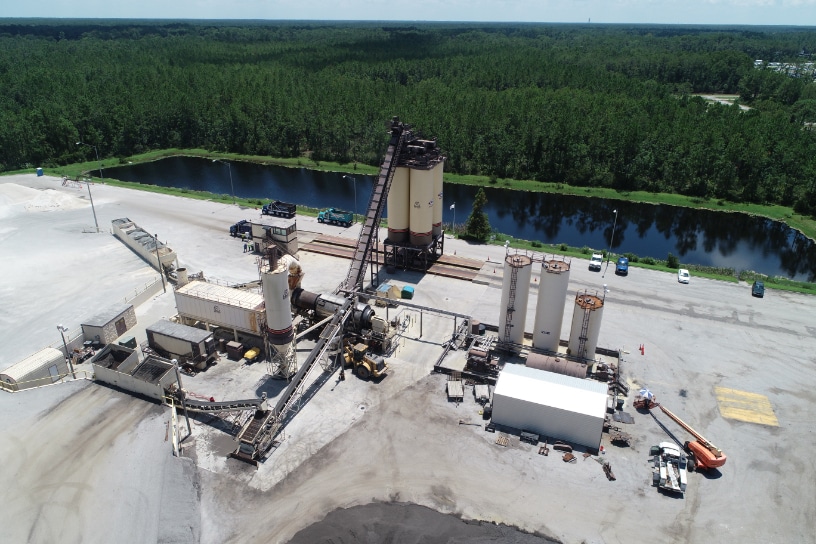
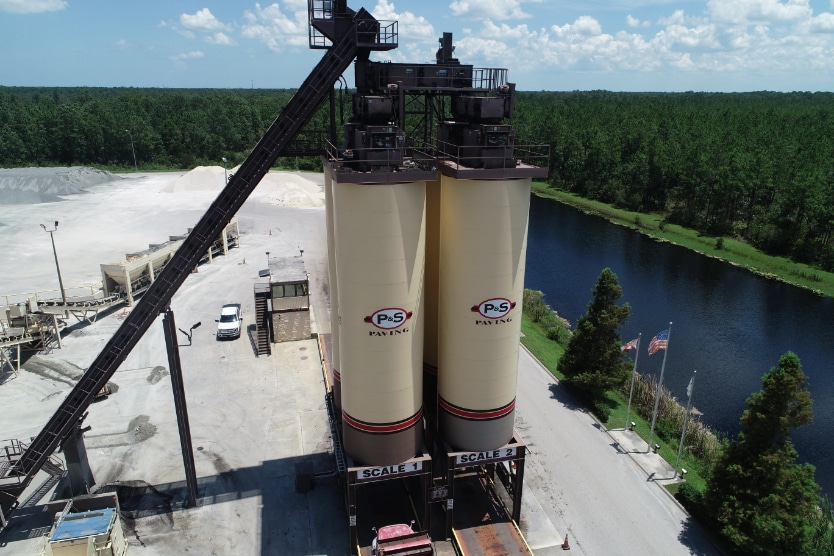
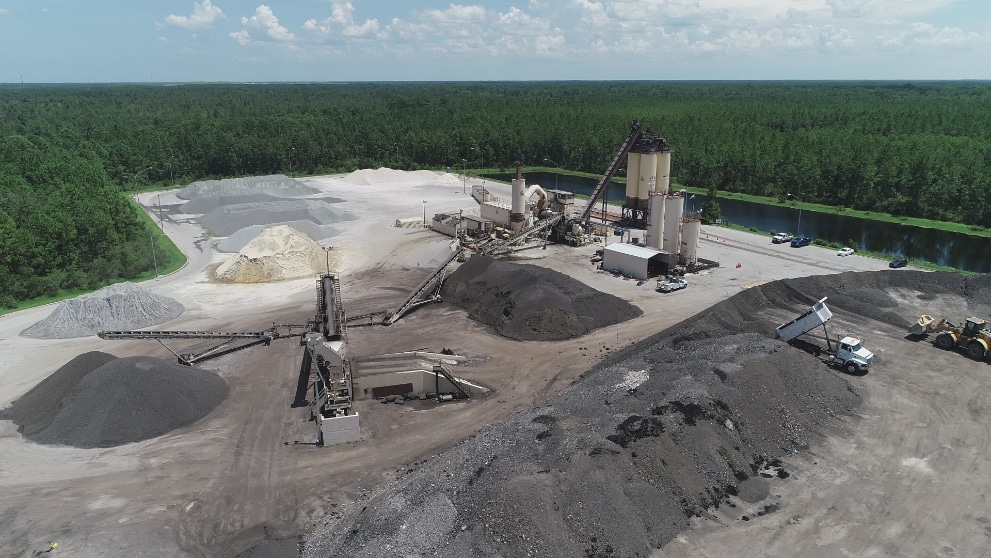
One of the aspects of the I-4 project that stood out to P&S Paving was its proximity to the company’s asphalt plant just 10 miles from the project.

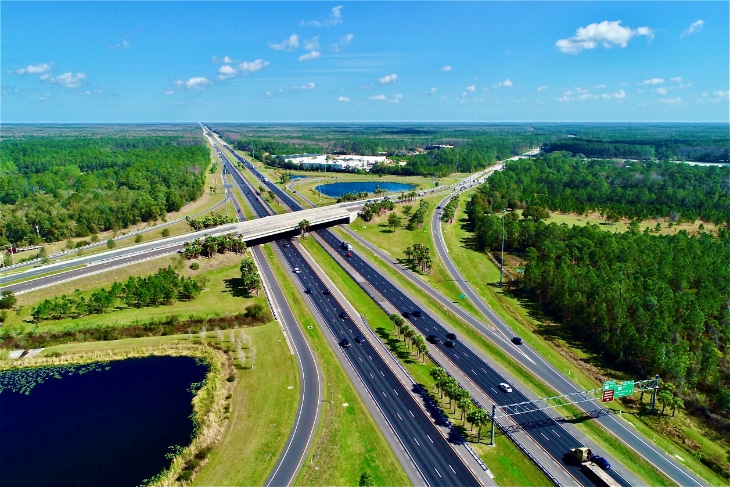
The A.P. Bolton Award-winning project stretched along 10.25 miles of Interstate 4 in Florida’s Volusia County, from west of County Road 4139 to State Road 44.

“I-4 is a highly traveled major artery that connects Tampa to Daytona,” Carter said, adding that it’s a common route not only for the transport of goods and services from one side of the state to the other but also for traffic to and from Florida’s theme park attractions. “Everybody in this area who goes anywhere and does anything, whether it’s work or weekend, travels on I-4.”

This, Carter added, includes many district and DOT employees. “It was a very high-profile project,” he said. It’s also along the route Carter travels to and from work each day. “Let me tell you, it was horrible. I couldn’t wait for it to be fixed. So, I was pretty excited when we won the contract to do it.”

According to Carter, the pavement had reached the end of its service life. “It had a rough texture, a lot of surface cracking, some rutting, loss of retroreflectivity of striping—those types of things,” he said.

The Florida Department of Transportation (FDOT) opted for full-depth repairs of a crack running the entire length of the project before milling and resurfacing the existing roadway, as well as pavement widening and improved traffic signalization.

This Too Shall Pass

“Mill and resurfacing was the most reasonable approach to rehabilitate this roadway,” Carter said. But before the road could be resurfaced, P&S had to repair that crack. “When the road was widened years ago, the joint between the existing pavement and the widened section turned into a huge crack running for miles in both directions. There had been some attempts to patch along some of the crack to try to mitigate further damage, but the patching was almost as bad as the crack itself.”

To repair the crack, P&S milled 2 feet on either side of the crack to a depth of 8 inches a full 10.25 miles and paved back two 3-inch lifts and one 2-inch lift of asphalt before milling and resurfacing the entire stretch of roadway.

“When we bid on the job, the first thing that caught my eye was its proximity to the plant—less than 10 miles,” Carter said. The second thing that caught his eye was the crack. Several years ago, P&S performed a very similar job on an adjacent section of I-4 in Volusia County.

“With the success of the previous project, I think that gave the department confidence to utilize that process again,” Carter said, adding that P&S’s past experience gave the company an edge over other bids. “We had already done something similar on I-4, so we knew we were capable of it, equipped for it, and had the knowledge and experience to perform that job.”

Time to Trench

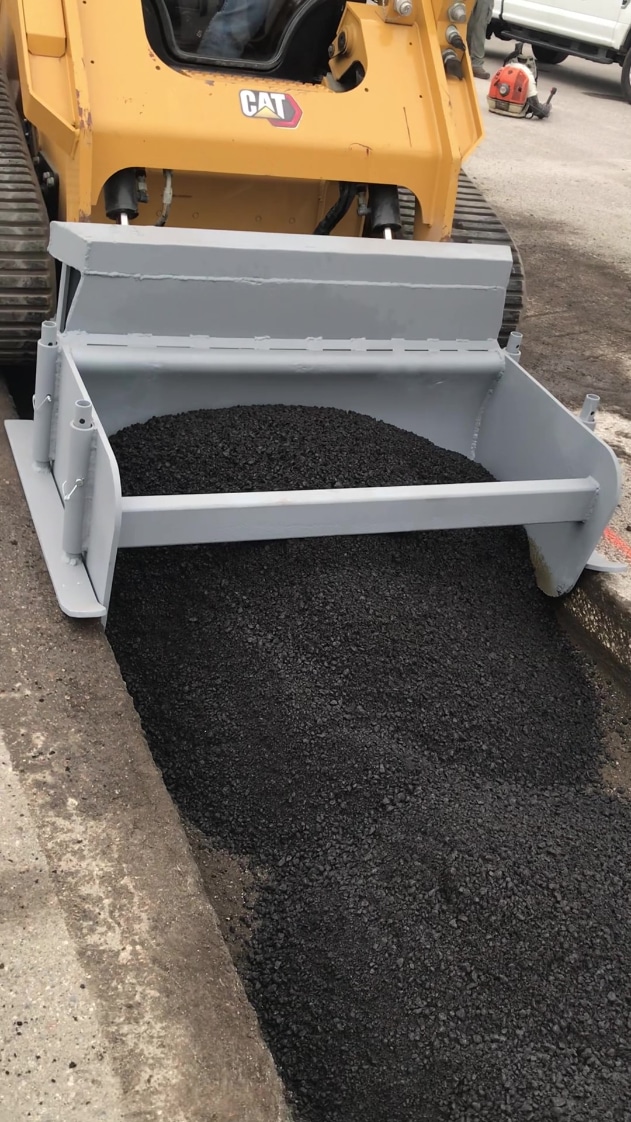
The I-4 project required P&S to mill a 4-foot-wide trench along a crack running the length of the project. To introduce material into the trench, P&S devised and fabricated an attachment for the front of a skid steer that would feed material down into the trench. Prior to the I-4 project, P&S milled and filled a 4-foot trench at its main office to test and tweak the device.

P&S bid the project in 2020, began construction Nov. 21, 2021, and completed the project Nov. 13, 2022. The first 42 days on the project were devoted exclusively to the trench repair along the crack.

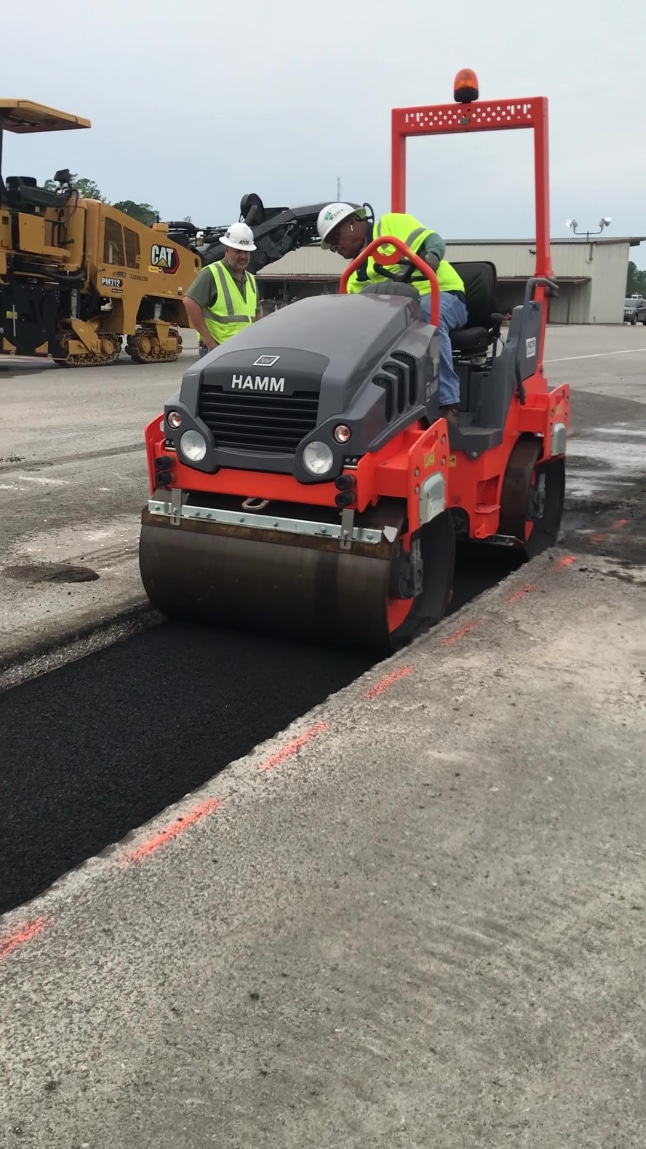
“When you’re paving a trench, you have to take your time,” Carter said. You also need to have the right equipment, he added. This includes a 4-foot milling machine, a 4-foot roller and some kind of device to get material into the trench. “If you have the right equipment and you take your time to get it right, by the time you’re ready to pave, you’ll have a solid base on which to pave.”

To introduce material into the trench, P&S devised and fabricated an attachment for the front of a skid steer that would feed material down into the trench. “There was nothing on the market we could buy off the shelf, so we had to bring everyone together to brainstorm and make our own.”

P&S Paving Puts Down Dry Process Plastics Pilot

To test and tweak the device, P&S milled and filled a 4-foot trench at its main office. “Once we got the device right, we invited the DOT officials out to the plant to demonstrate how we planned to execute the project,” Carter said. “Not only did that illustrate the spirit of partnership we have with the DOT, but it also put everyone’s minds at ease before we got out to the project.”

According to Carter, this quick ability to problem solve is where P&S’s smaller size is an asset. “It’s easier to create a culture of communication and innovation in a smaller company,” he said. “There’s not a lot of red tape if you need to get something done. If we need to order something, we order it. If we need to make something, we make it.”

The I-4 project required P&S to mill a 4-foot-wide trench along a crack running the length of the project. To introduce material into the trench, P&S devised and fabricated an attachment for the front of a skid steer that would feed material down into the trench. Prior to the I-4 project, P&S milled and filled a 4-foot trench at its main office to test and tweak the device.

Once the trench was milled out and refilled, P&S milled the entire span of pavement (including the new trench) before resurfacing. “Some of the repair efforts of the trench were sacrificed to make a smooth ride all the way across the pavement so you’d never know there was a repair underneath,” Carter said.

“Other than the trench, this was a fairly standard mill and resurface project,” Carter said. “That said, there are some basic tenets that go along with any successful mill and resurface project.”

Among these best practices, Carter stresses the importance of taking time to mill properly. “A smooth ride doesn’t start at the top, it starts at the bottom,” he said. Consistency is key, from keeping a consistent milling speed to a consistent flow of trucks and a consistent paving speed.  “If you limit the amount of times the paver has to stop then you will limit the possibility of bumps and joint issues.”

This also requires consistency at the plant. “The best way to keep your paver moving is to control your trucking and keep your plant production rates consistent,” he said. “And the best way to make consistent mix is to consistently make it; don’t stop and start and stop and start.”

Paving Weather

In total, the I-4 project required 58,000 tons of asphalt: 48,000 tons of Superpave 12.5 mm Traffic Level D HMA for the trench and 1 ½-inch surface course (with PG76-22 polymer modified AC) and 10,000 tons of open graded friction course (OGFC) FC5 HMA with PG76-22 for the ¾-inch friction course.

In total, the I-4 project required 58,000 tons of asphalt: 48,000 tons of Superpave 12.5 mm Traffic Level D HMA for the trench and 1 ½-inch surface course (with PG76-22 polymer modified AC) and 10,000 tons of open graded friction course (OGFC) FC5 HMA with PG76-22 for the ¾-inch friction course.

“Whenever you’re making OGFC in the winter, it’s a challenge—even in central Florida,” Carter said. The I-4 project had to be paved at night and FC-5 HMA has a minimum laydown temperature of 65 degrees Fahrenheit in Florida. “We can often get down below that between midnight and 5 a.m.”

Carter’s decision to use a warm mix additive in all of its mixes, including hot mix, was particularly useful for this project. “We don’t necessarily make warm mix designs with them, but we use Ingevity’s Evotherm product in everything, typically as a compaction aid,” Carter said. This means that even when placing HMA, the asphalt is workable at lower temperatures than it would otherwise be.

P&S also uses Evotherm as its anti-strip additive. “Everyone here is required to use a liquid anti-strip in all mixes, so it doubles to fill that role,” Carter said. “Why wouldn’t I use a product that also allows me more compaction at lower temperature without having to do anything differently?”

FDOT allows FC-5 to be placed at 60 degrees Fahrenheit when approved by the engineer, based on the contractor’s demonstrated ability to achieve satisfactory surface texture and appearance. For mixes containing PG76-22, the minimum average temperature may be further reduced to 55 when using a warm mix technology, if agreed to by both the engineer and the contractor.

“We were able to use Evotherm to our advantage to meet our production goals and avoid the loss of production days due to weather,” Carter said. “And the results speak for themselves.”

Hat Trick

According to Carter, P&S scored very well on mix production for the I-4 project. “We did well in all three categories; it’s a great looking project, it rides great, and it paid well,” he said.

Even before P&S won the A.P. Bolton Award, the I-4 project was a success. “We had a lot of district folks call up to let us know we were doing a great job on I-4,” Carter said. “I can’t tell you how many people called to tell us how good it looked, how well it rides, that we did a great job. That speaks volumes to the quality.”

The judges for the Florida Pavement Excellence Awards—including both FDOT district employees and ACAF staff—must have agreed. Projects are judged based on a number of factors, including technical scores for mix production, rideability score from a profiler test, and a visual score.

“The judges ride each lane of the road to check joint construction, edge of pavement, texture and surface anomalies, etc.,” Carter said. “The joints on our I-4 project are practically indiscernible, the texture of the OGFC was super consistent, the lane lines are symmetrical. It looks like we laid out that asphalt mat like a black carpet.”

But appearance wasn’t the only area in which the I-4 project scored well. It also achieved an International Roughness Index (IRI) of 31—the best IRI score P&S has ever received. “Most highways like this score anywhere in the 40-50 range,” Carter said. “That 31 isn’t the lowest score in the state, but it’s among the lowest. I think that’s what pushed us over the edge to win the statewide award over some of the bigger contractors in the state who had really constructed some outstanding projects that same year.”

P&S also received bonus composite pay factors for the surface level and friction course. “We scored very well on mix production here at the plant and on our densities, and we got incentives for those as well,” Carter said. “We did well in all three categories; it’s a great looking project, it rides great, and it paid well.”

Carter attributes the smoothness to the expertise of the crew to use the automatics on its Roadtec RP190 paver. “The pavement equipment is naturally a big part of that, but having the expertise and the skill to use the automated electronics is key,” Carter said. “It’s one thing to have them, but it’s another thing to know how to use them and use them well. If you can use automatics well, this is what you get.”

P&S has established a training process to ensure its crew knows how to best utilize the automatics on its equipment. The company regularly sends its mechanics and paving crews to Roadtec’s training program in Chattanooga, Tennessee.

“Success comes down to discipline,” Carter said. “Do you keep your folks well trained, your equipment in good working order, and your morale high?” Keeping morale high, he adds, includes ensuring every employee feels as though their opinions matter, their good work is appreciated, and they are full participants in their employers’ victories.

“When we won these awards, we really shared that victory with everybody,” Carter said. “When we received the incentives from the ride bonus, the owner chose not to pocket that money but instead shared it with all the people involved in that project because they did such a great job. I’ve never worked anywhere where someone did that.”

Carter said everyone at P&S was at peak performance on the I-4 project, but that the company’s success isn’t a matter of performing on one single job. “Our guys perform every single day,” he said. “Not once or twice a week, but all five days of the workweek, week after week. That’s the real trick. Anybody can do something well once, but can you repeat that over and over again?”


Smoother AND Safer

The I-4 project also included widening of the shoulders. “If you drive around Florida, you’ll see that many of our shoulders are up to 10 feet wide,” Carter said, adding that FDOT has been adding that to many contracts in the past few years. “The DOT makes extensive use of the Road Ranger program, and they want to make sure these contracts are designed to maximize safety for those guys out there helping motorists.”

An intelligent transportation system (ITS) was installed at the intersection of State Route 44, another major corridor that runs north-south through Volusia County. “The Volusia County Fairgrounds are about 1/4 mile from that intersection, and there’s a lot of activity at the fairgrounds throughout the year, so they upgraded the traffic signals to make traffic there more efficient and safer,” Carter said.

“Ultimately, this project enabled FDOT to repair that crack while giving this piece of roadway some new life with the resurfacing part of the project while also improving safety by widening the shoulders and adding some signalization to improve traffic flow.”


Three Projects, Four Awards

Caption: Space Coast Regional Airport is the nearest airport to Kennedy Space Center, one of the 10 field centers belonging to the National Aeronautics and Space Administration (NASA).

In addition to the two awards P&S received for its I-4 project, the company also received two Florida Pavement Excellence Awards in the special projects category. One of the awards was for the milling and resurfacing of runway nine at Space Coast Regional Airport.

“It’s a really old regional airport, so the project wasn’t without its challenges,” Carter said. P&S used machine control guidance through the milling phase to get the proper cross sections, then placed the P401 wearing course.

The second project for which P&S received a special projects award was the reconstruction of the running track at Embry Riddle Aeronautical University in Daytona, a world-renowned aviation school.

“They have a pretty robust sports program there at the university and host international track and field events,” Carter said. P&S was chosen to full-depth mill the oval running track and pave back 1 ¼ inches before the specialty contractor could come out to apply a rubberized surface course.

“The paving of the underlying asphalt is key for the specialty contractor who will be placing the rubberized materials on top,” Carter said, given the tight specs they must meet to ensure no competitors are given an unfair advantage. “When the paving is done, these guys typically have to grind out some areas and fill in other areas. The more of that they have to do, the worse the paving job was.”

After the track was completed, P&S received a letter from the specialty contractor’s field superintendent that said, in his opinion, “the work by P&S couldn’t have gone better. In fact, it was probably the best paving job I’ve seen in 10 years.”

The superintendent told Carter they sometimes use 25 to 35 barrels of filler material to even out the pavement, but this job required only two and very minor grinding. “That goes back to the discipline that our guys use when they’re paving these high spec projects,” Carter said.