CWMF Launches Portable, Stationary Recycled Asphalt Crushing Systems RAP Boss and RAP Boss Jr.

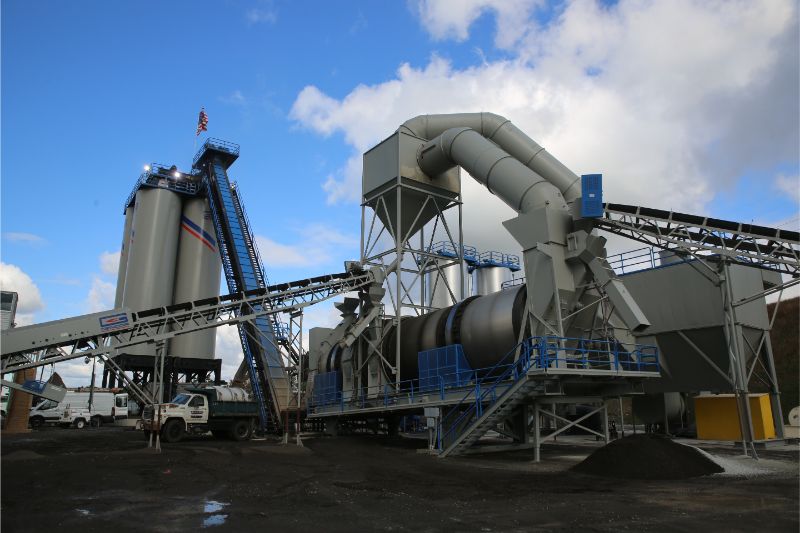
CWMF, St. Cloud, Minnesota, has launched the portable and stationary recycled asphalt crushing systems RAP Boss and RAP Boss Jr., building on the reclaimed asphalt pavement (RAP) equipment Honey Badger hammermill RAP crusher and Tremor Shaker™ scalping screen.

The difference between the RAP Boss and the RAP Boss Jr. is size, scale and price. Both are portable or stationary, efficient, and make the most of recycled asphalt for optimal sustainability, according to the manufacturer. This heavy-duty industrial equipment manufactured by CWMF is designed to process milled and recycled asphalt that mixes with liquid asphalt cement (AC) and other aggregates to make high-quality asphalt for paving.

The RAP Boss and RAP Boss Jr from CWMF are available in portable or stationary configurations and incorporate the Honey Badger hammermill RAP crusher and Tremor Shaker™ scalping screen.

“Our RAP Boss and RAP Boss Jr. recycled asphalt systems allow hot mix and crushed asphalt producers to minimize material handling, reduce or eliminate RAP crushing costs, and reduce RAP product moisture,” explained CWMF Sales Manager Wally Olson. “Sustainability and cost efficiency are important to everyone, and these new systems streamline the production process for both plant development and ongoing operations.”

For more information, visit https://cwmfcorp.com

Peckham Quarries the Surface, Crushes Underground

Peckham Industries, Brewster, New York, has been operating its quarry in Wingdale, New York, for 27 of the company’s 99 years in business. According to Peckham Director of Technical Services Jason Kappel, the quarry is not only an important operation for the company but also for the regional economy.

“[Our Wingdale quarry] is one of the only sources of non-carbon, high-friction aggregates on the east side of the Hudson River,” Kappel said. The Wingdale quarry supplies Peckham’s five hot-mix asphalt plants serving the New York City suburbs and Westchester County.

In 1994-95, the quarry underwent a significant change when its operations went underground. Doing so not only resulted in improved material quality, but also helped mitigate issues with limited water supply during some parts of the year, as the former surface quarry could be used as a reservoir for process water to support underground operations.

“Many underground facilities have stopes, but the connection to the surface and that the stope is 230 feet deep made this quite a project.”—Kevin DeSilva

However, Kappel said, the primary reasons for moving quarrying operations underground were to minimize environmental concerns, mitigate potential complaints from the community, and expedite the permitting process.

Over the next two decades, Peckham developed two of the four 188-acre levels it was permitted for, converted from flat roofs to arched roofs, and developed a series of stopes to allow for material transfer from level two to level one.

Palmer Sand & Gravel Wins Safety Gold

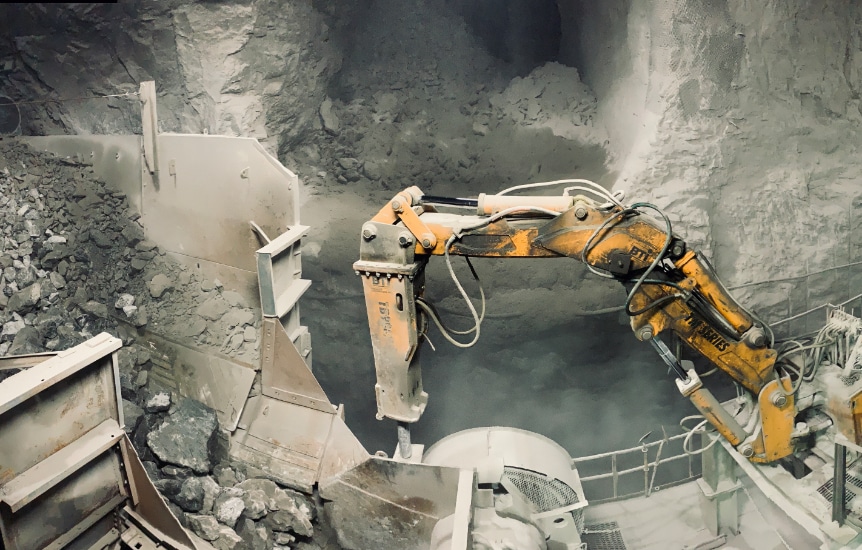
“In 2006, we brought the primary and secondary crushers underground, which was a key development [for our later plans], though we didn’t know it at the time,” Kappel said. “We’re always looking to reduce the cost of production at this facility, and continuing to crush underground is a very efficient process for us and enables us to eliminate trucking and other development costs.”

But, as Peckham’s underground blasting moved south of a fault line running through the facility, the company began to receive complaints from neighbors. “When we were on the other side of the fault, we’d have people feeling it from 1.7 miles away,” Kappel said. “I sat at a residential property 1.7 miles away on a concrete front stoop to feel what people were feeling and it was really unbelievable. It just happens to be the way the faults are in our area.”

That’s when the company decided to move its quarrying operations back to the surface. Peckham hired both Kappel and Kevin DeSilva as consultants to help them do so, and later, hired them both full-time.

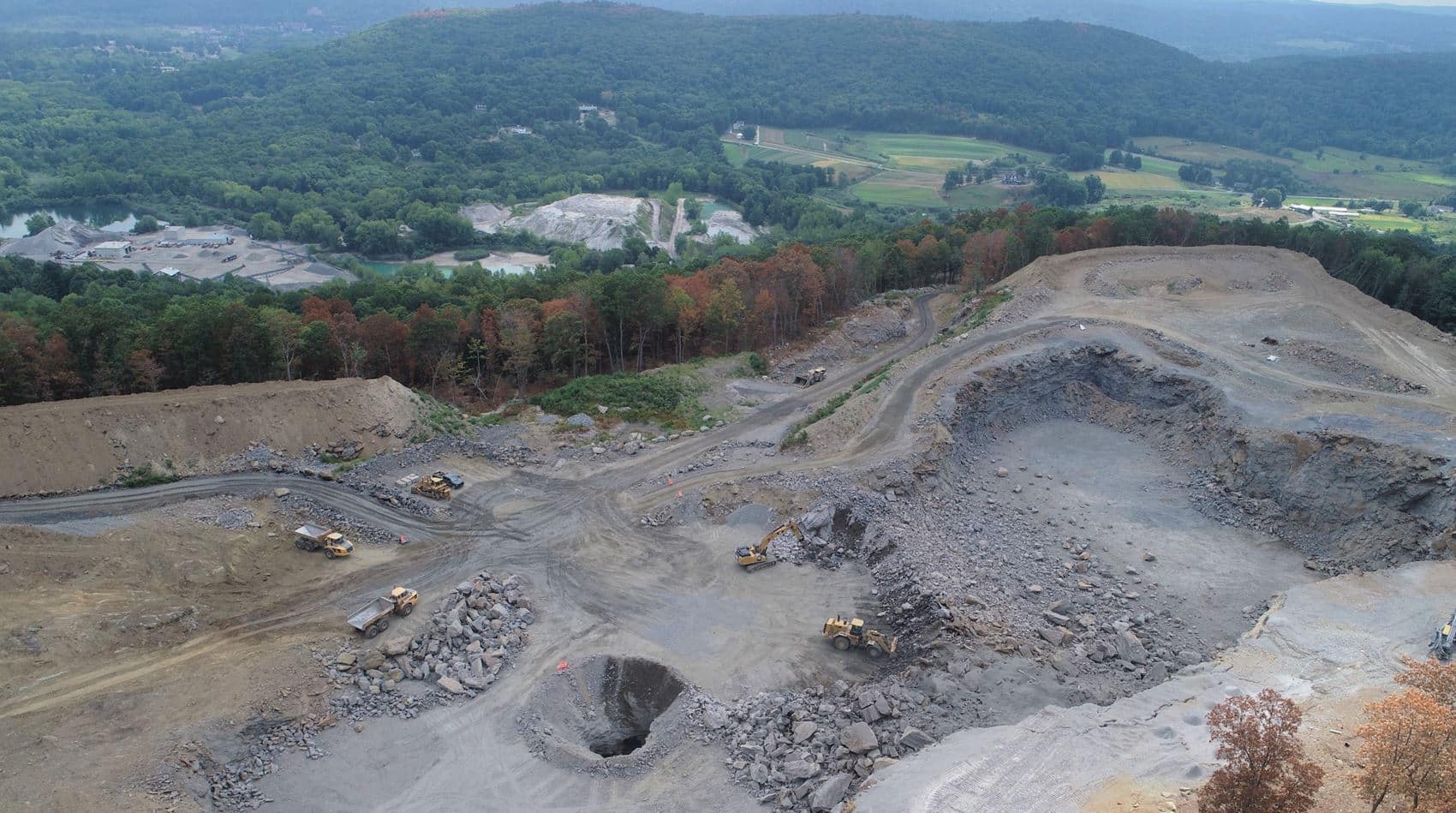
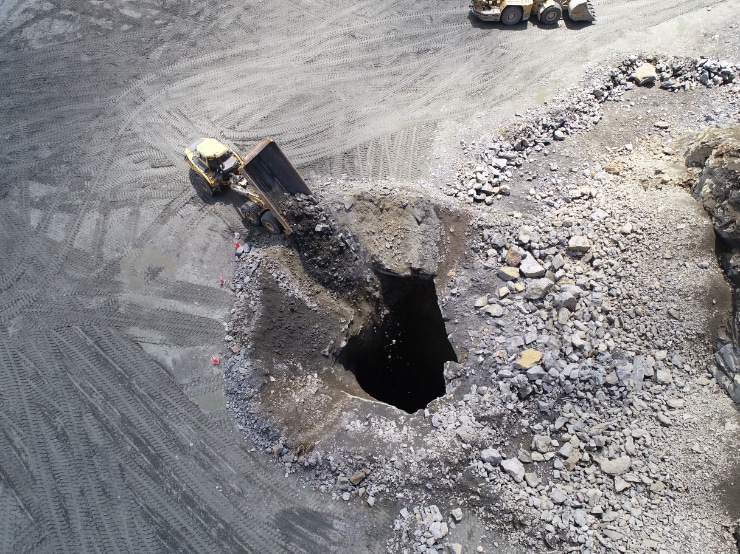
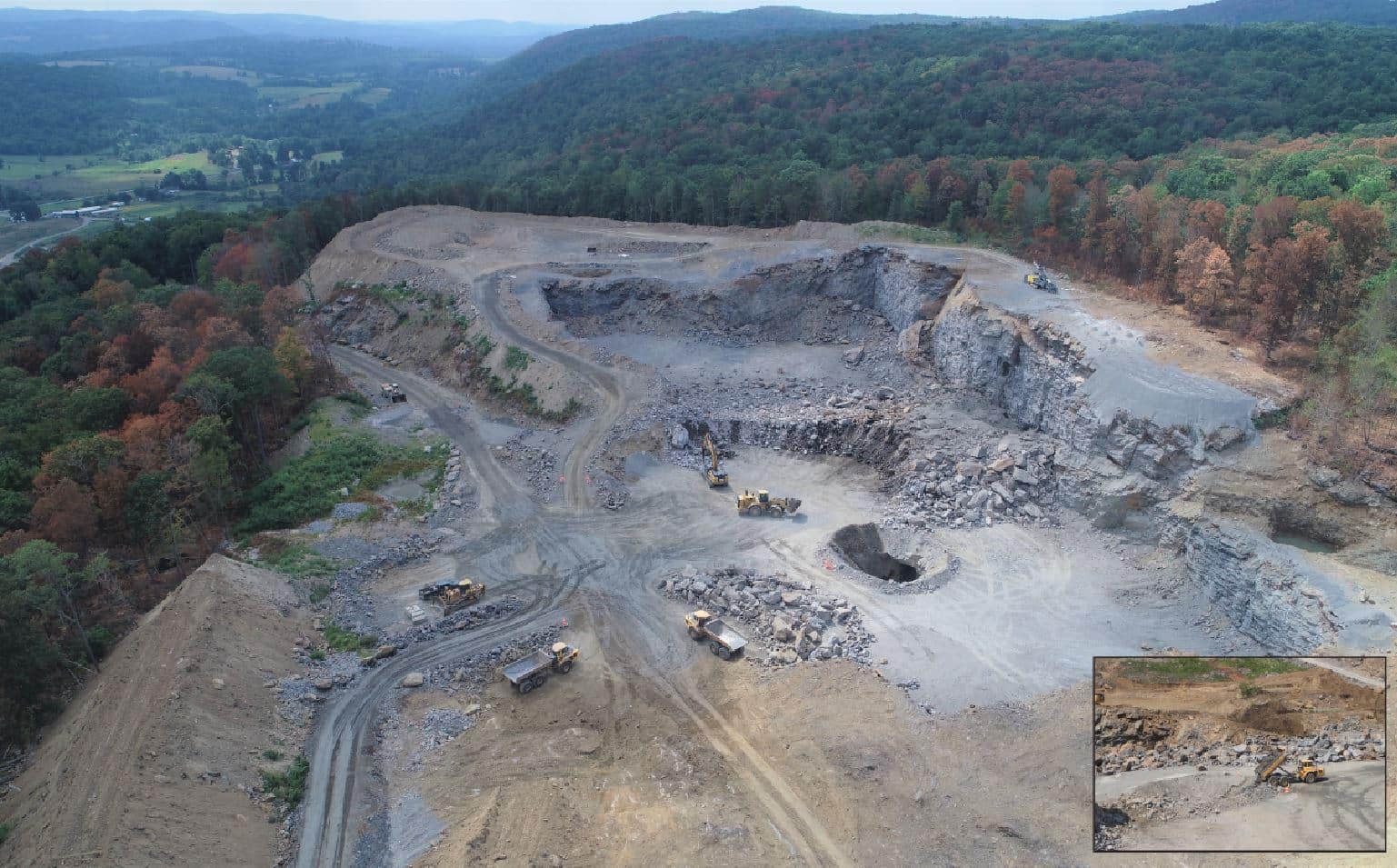
In addition to moving the quarry operations to the surface, DeSilva and Kappel brought an innovative solution to the table. “We thought, ‘If we can stope between level one and level two, why can’t we stope from the surface down?’” Kappel said. The company created a 230-foot stope, into which it feeds aggregate from the surface to its primary and secondary crushers underground and then conveys it back to the existing surface processing plant.

“To our knowledge, this is the only stope of its kind in the country,” DeSilva said. “Many underground facilities have stopes, but the connection to the surface and that the stope is 230 feet deep made this quite a project.”

In the fall of 2022, the National Institute for Occupational Safety and Health (NIOSH) Mining Program, in conjunction with the Essential Minerals Association, the National Mining Association, and the National Stone, Sand and Gravel Association, recognized Peckham Industries with a NIOSH Mine Safety and Health Technology Innovations Award in the stone, sand, and gravel category for its implementation of the stope. “It is a benefit to the entire mining industry to have such innovative approaches tackle both new and persistent challenges,” said NIOSH Associate Director for Mining Jessica Kogel, Ph.D.

Peckham feeds aggregate from the surface down a stope 230 feet deep. The material is crushed underground and then conveyed back to the existing surface processing plant.

Big Benefits

Ultimately, the new process is estimated to save the company significant production cost and offers a number of benefits. Among them, a significant increase in tonnage, up to 70,000 tons a day from as low as 1,100 tons a day during underground quarrying (since much of the material had to remain underground for safety reasons).

As a result of the increased efficiency, the crew works shorter hours and has a better employee work/life balance. Furthermore, Peckham has been able to reduce the underground crew size from 12 to four, improving both safety and morale. There are also fewer ground control and stability issues to manage as a result of the smaller underground operation.

“Moving the quarrying above ground helped get more employees out from underground, which is a challenging situation with more risks compared to the surface,” said Steve Benton, corporate safety director for Peckham. Crushing the materials below ground is also for improved safety, he said. “It’s been good from a community relations standpoint. We’ve been able to reduce the burden on our neighbors to the point that they don’t even know we’re there. It’s made our operations quieter and less dusty.”

CIR Project Sets Northeast Standard

According to DeSilva, now Peckham’s Environmental Compliance Manager, the quarry hasn’t received any complaints since its return to the surface with continuation of underground crushing. Ultimately, the company has been able to eliminate community concerns over noise and dust, improving its relationship with nearby residents.

“We’ve been able to reduce the burden on our neighbors to the point that they don’t even know we’re there.”—Steve Benton

These changes also made it possible for Peckham to eliminate six pieces of equipment, resulting in less fuel use and reduced emissions. This included two double boom horizontal JH Fletcher drills, two Cat 2900 load haul dump rubber tire loaders, one Cat 980 rubber tire loader and one Ackerman rubber tire excavator. Now, the only equipment underground are the primary and secondary crushers and a frontend loader used to feed the primary.

These changes have also resulted in improved air quality underground and reduced electrical consumption due to reduced ventilation fan use. “We were able to reduce the footprint of our underground mine and really focus our ventilation efforts around our processing area here,” DeSilva said.

By delivering rock mined in the surface quarry to be crushed underground via the stope, Peckham has eliminated long haul distances on steep grades, left a scenic ridge untouched, and realized efficiencies in equipment, fuel and time, among other benefits.

Overcome Obstacles

Despite its many benefits, these changes were not without their challenges. The creation of the stope to the surface changed the pressure underground and the company began to see freezing occur underground that it had not previously seen.

“We knew the ventilation was going to change, but it was hard to predict how it would change,” DeSilva said. Peckham hired Appalachian Mining & Engineering, Inc. to perform a ventilation study with the stope completely open, which resulted in changing the orientation of the fans and placing curtains to isolate the crushing areas. Once aggregate reached the collar of the stope, Peckham performed a second ventilation study that showed when the stope is full of stone, ventilation conditions return to pre-stope conditions.

“With those two ventilation studies, we have bookends from which we can optimize ventilation,” DeSilva said, which includes fan orientation and direction of flow as well as placement of brattice cloth to help direct clean air to work areas. “We also try to balance what we draw from the bottom with what we feed from the top, because it helps with ventilation challenges.”

NSSGA’s Safety Award Recipients Announced

Satisfy DEC

When Peckham began investigating how best to return its quarry to the surface, it had considered locating the processing area west of the current location and making a key cut through a ridge that runs across the property. Ultimately, the company decided to maintain the ridge and instead improve its whole haul road to get its equipment up to the surface quarry.

“We were able to eliminate any concerns from the community by hiding our operations behind the ridge,” DeSilva said, adding that the preservation of the ridge also reduced noise.

Despite the gains in efficiency, improvements to employee safety and wellbeing, and the preservation of the ridge, it still took the state of New York almost five years to permit Peckham’s surface quarry.

One of the DEC’s concerns was the forest habitat near the quarry, which it claimed to be a habitat for bats. However, U.S. Fish and Wildlife agreed with Peckham’s biologists that the company’s presence wouldn’t impact the bat habitat as bats don’t live above an elevation of 1,000 feet and the lowest elevation in question is 930 feet. “But, the DEC had an analyst who didn’t agree,” DeSilva said.

By moving its quarrying operations to the surface and maintaining just crushing operations below ground, Peckham has been able to reduce the underground crew size from 12 to four, improving both safety and morale.

Ultimately, Peckham converted a piece of land elsewhere on the property at a lower elevation into an ideal bat habitat. The company also worked with the Army Corp of Engineers to develop a three-acre wetland to mitigate the loss of one acre of wetland for the quarry. “That alone was almost a million-dollar project,” DeSilva said.

“Most of the property remains wooded, and we’ve committed to only clear five acres of trees annually to maintain that forested area,” DeSilva said. “The development of the property in a very slow, methodical manner helped mitigate their concerns about habitat loss.”

Peckham also agreed to reclaim the majority of the surface quarry as a lake (±85.5 acres) and above water table benches as forest (±26.7 acres).

“We were very thoughtful [with this solution],” DeSilva said. “I’m not saying it’s a model everyone can use, but it certainly solved a lot of our problems. We’re very proud of it.”

How to Calculate Stockpile Density

The team at Stockpile Reports uses a blend of knowledge and electronic platform to help aggregates managers measure the true size and volume of stockpiles. As conical or radial stackers, loader operators, and haul truck drivers move material on any given day, the size and shape of a stockpile changes. As it must.

To track what you have on hand reliably, the savvy aggregates manager can use a blend of knowledge and mobile apps to measure specifics. The team at Stockpile Reports offers the following steps to use an iPhone app, such as the Stockpile Reports iPhone App for On-Demand Measurement, to calculate the densities of your aggregates stockpiles.

For a stockpile that is 50 cubic yards or greater:

Step 1.

Take three samples of material with the full capacity of the wheel loader bucket.

  • Have the wheel loader approach the stockpile in line with the stacker to take the first sample.
  • Have the wheel loader approach the stockpile at a 90-degree angle to the left of the stacker for the second sample.
  • Have the wheel loader approach the stockpile at a 90-degree angle to the right of the stacker for the third sample.

Step 2.

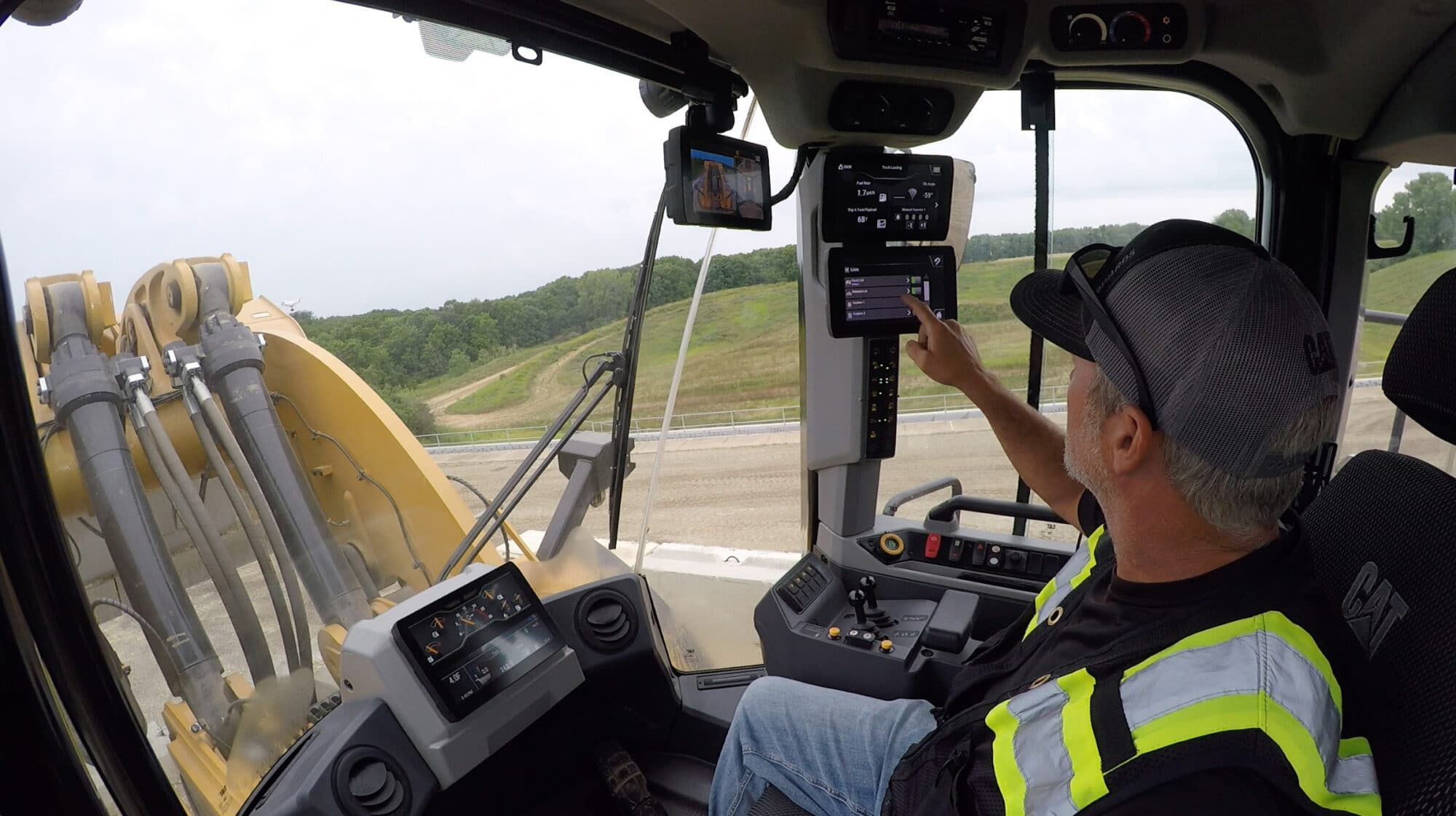
Weigh each bucket load with the wheel loader’s onboard loader scales. For example, Cat Payload with Assist from Caterpillar is designed to provide accurate weighing of bucket payloads as you work. With this “smart machine” technology, which is now standard on Cat wheel loaders, data is displayed in real time on a screen in the operator’s cab for the purpose of improving your productivity and loading accuracy, but you can, of course, use this technology when calculating your stockpile densities.

If you have an older model machine with no scale, you can place all three loader bucket loads in a haul truck whose current tare weight you know, and then weigh it at a truck scale when loaded. Write down the weight of the three sample loads combined.

While most OEMs offer such weighing options with loaders these days, aftermarket options are available such as those offered by MOBA Corp., Peachtree City, Georgia.

Step 3.

Place the three loads in a “conical-shaped” pile away from any other material.

Step 4.

Use an iPhone app or drone to determine the sample pile’s cubic yards.

Step 5.

Divide the tonnage (weight of the three samples) by the cubic yards (volume).

The number you reach in Step 5 is your aggregates stockpile density at a given point in time. (You will use this number as your conversion factor for tons per cubic yard.)

You will want to measure multiple loads and stockpiles to calculate compaction changes as more material is added to the stockpile. If the stockpile you’re working with is less than 50 cubic yards, you can use the iPhone app exclusively to get your measurement, without creating a sample pile.

For more information, contact the Stockpile Reports team at (425) 428-5266.

9 Tips for Asphalt Plant Maintenance

To give hot-mix asphalt (HMA) producers a primer on current upkeep options, we’ve assembled a handful of priority maintenance items that original equipment manufacturers (OEMs) and service providers were willing to outline. The following concepts walk you through the basics of greasing, silo wall monitoring, odor reduction installation, recycled asphalt pavement (RAP) system maintenance, trunnion adjustment and more.

In alphabetical order by OEM, the following topics will help you get your winter maintenance program planned.

1. Ammann Group Suggests Protecting the Plant with Greasing
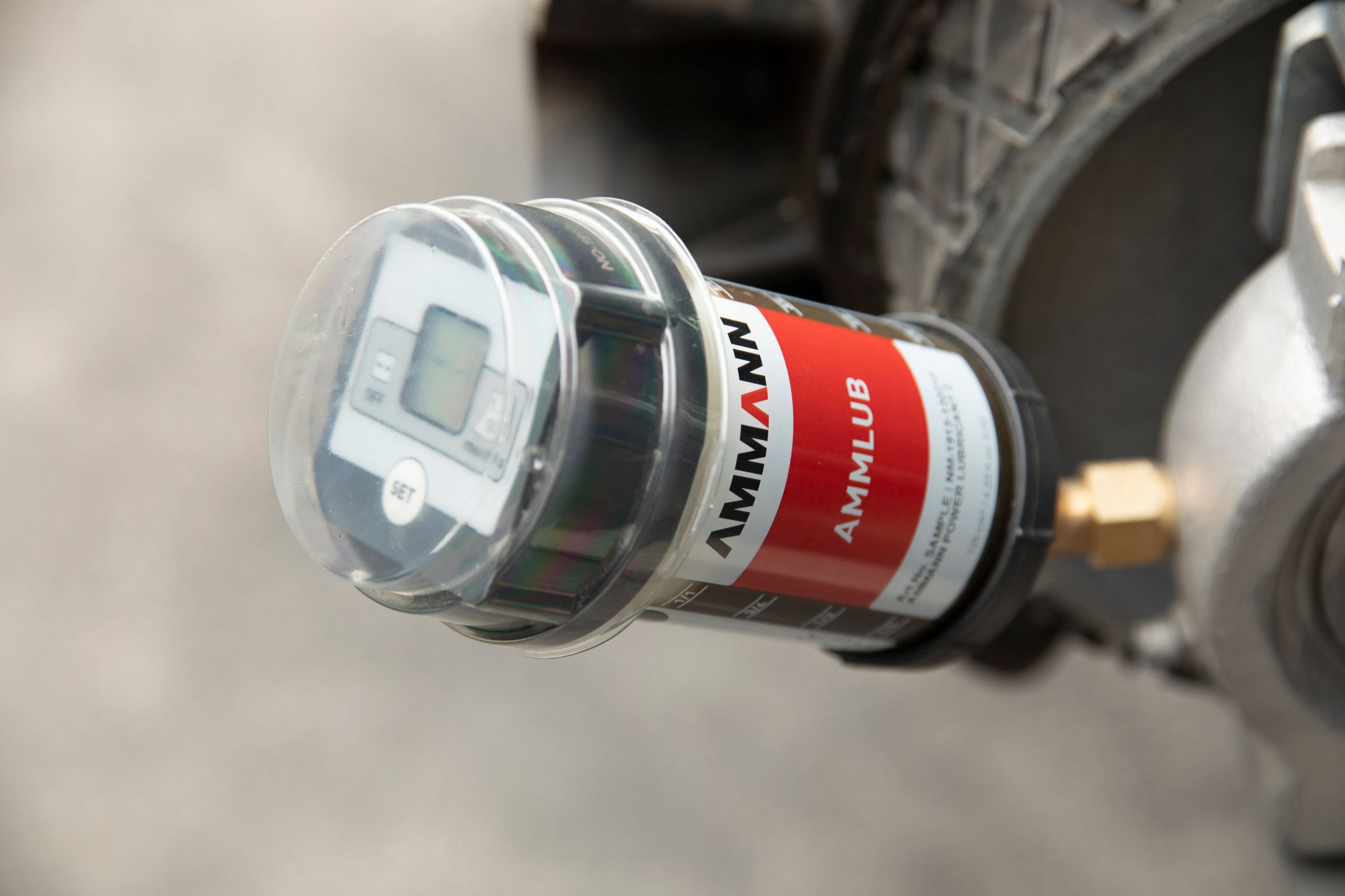
The Ammlub device from Ammann Group is mounted directly on the plant’s lubrication points.

All asphalt production businesses want to minimize the cost of ownership. The lower those expenses, the more competitive asphalt prices can be—and the higher profits can go. Ammann’s efforts to reduce asphalt operating expenses include Ammlub, which is Ammann’s automatic lubrication system, designed to provide three key benefits: longer plant life, reduced fuel costs and improved safety.

Traditional lubrication methods can be a struggle. They often require that technicians stretch and strain to reach extremely tight spaces—and that they fight dust, dirt and heat in the process. There also is the question of when to grease and how much grease to apply.

The labor-saving Ammlub system is mounted directly on the plant’s lubrication points. It automatically applies lubricants at scheduled intervals, ensuring that the process is done on time—every time. In addition, Ammlub eliminates downtime.

Fix a Torn Conveyor Belt

The lubricant applications can occur while the plant is running, enabling completion of the routine maintenance without a drop in productivity.

An immediate benefit is fuel savings, which can be reduced as much as 10 percent when all parts and components are working harmoniously.

With appropriate lubrication, those parts and components will also last longer, providing further savings. Because this system also locks out contaminants, plant life is extended, too.

Workplace safety is improved as well. Technicians no longer need to lug tools and fluids with them to access difficult-to-reach service points. These service points typically include all components along the process flow, starting with the cold feeder and ending with the discharge shoot.

For more information on the Ammlub product, contact simone.franz@ammann.com or visit www.ammann.com.

2. Astec Walks You Through Silo Maintenance Service

Inside this silo, a large hole is forming directly above the ceramic tiles. Areas like these were found along the entire circumference of the silo. Photo courtesy of Astec Industries

The team at Astec saw the need to make silo inspections safer and developed the SiloBot inspection device—a robot that is placed inside a silo by a trained inspection technician who then stays safely outside of the silo while performing a thorough inspection of the silo interior. A SiloBot inspection takes less than two hours to fully inspect all silo welds. With regular inspections, you can perform preventative maintenance that extends silo life.

Astec Engineering recommends having full silo inspections performed every two years, minimum. For high production facilities and silos that are 10 years or older, it is recommended to inspect annually.

Four Steps for Cleaning Disc Springs

Astec offers a recurring inspection plan for every 1-2 years that will allow us to provide the customer with comparative data. This data will help customers forecast wear in their silos so that preventative maintenance can be performed, giving them the ability to avoid spending unnecessary funds on more severe failures. Inspections can still be given on a one-time basis, as well.

Along with non-destructive thickness measurements, the SiloBot inspection device also checks for missing ceramic tiles, weld seam separation, damage to liner sections, holes in silo walls, batcher gate issues and other issues resulting in acute wear inside the silo.

One technician travels with two SiloBot inspection devices, software, a winch and mount, tools required for SiloBot device maintenance, and a truck with a mounted scissor lift in the bed. Customers are not required to rent manlifts.

The technician inserts the SiloBot through the mouth of the silo using a winch that is mounted on top of the silo (used as a safety tether and connected to the bot at all times) and the scissor lift mounted in the back of the truck. The incredibly strong natural magnets in the wheels allow the bot to traverse over ceramic tiles and onto the silo wall.
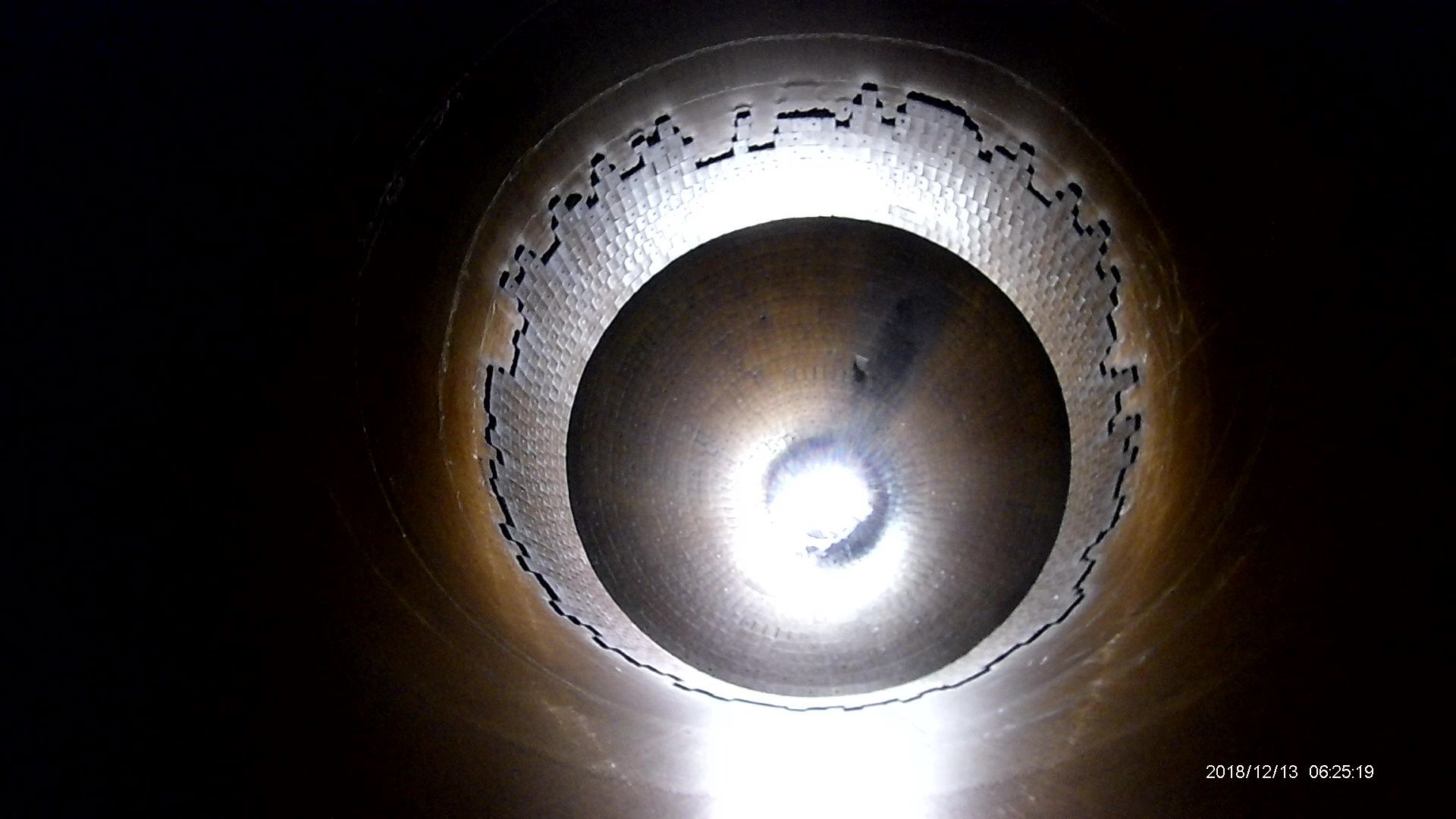
The large amount of missing ceramic tiles from the silo wall has allowed mix to wear the silo metal acutely in many areas. Multiple holes were found in this silo. Photo courtesy of Astec Industries

The SiloBot inspection device gathers data by utilizing a steel brush and motor to clean the silo wall prior to taking measurements with an ultrasonic thickness gauge. The data is then sent via a telemetry system linked to the technician’s laptop computer. This data is transmitted in real time, allowing the technician to view the results and fine tune the inspection as he goes.

Inspections range from 30 minutes to one hour, depending on the size and condition of the silo. The customer receives full 1080p HD video of each silo inspection on the day of inspection. The final report, delivered via e-mail in an average of 7-10 days, will include the raw data points, a graph that illustrates the location of these data points, and a written report with pictures that reference issues noted in the report. The report also features specific recommendations for repair.

SiloBot inspections can only be performed by a trained Astec technician due to the sophistication of the device and its components. Astec SiloBot Technician Alex Harrison said, “For customers with many plants, we devote ample time to get all of their inspections completed before moving to the next customer.”

If repairs are necessary, the repairs can be scheduled through the Astec Service Department or the customer can perform the repairs themselves.

To get information on the SiloBot inspection service, call on your regional Astec Parts or Capital Salesperson, or contact Alex Harrison directly at (423) 356-4791.

3. Brock Tells You When It’s Time to Change the Bags

While Nomex bags are most common for HMA plant operations, the industry veterans at BROCK recommend an analysis of the plant’s overall operation and mix designs to assess the right bag for the application.

There are a lot of factors that affect the life of a baghouse bag and factors will likely be different at each plant site. Bag material, operation temperature, gas stream content, dust size, air-to-cloth ratio, cleaning effectiveness and bag fit all contribute to how long bags might last and when it is time to change them out.

The team at BROCK recommends inspecting baghouse bags at least once per year, but preferably two to three times per year. We especially recommend checking bags as frequently as reasonable when the operation uses—or changes to using—diesel or heavy fuel oil in their drying process, as the lack of atomization in the burning process can lead to oil in the dust and, eventually, on the baghouse bags.

Things we advise to look for, bag wise, are change in bag color, visible changes to the outside texture of the bags, holes in the bags, and shrinkage in the bags. One key data point operators can use to measure the overall effectiveness of the baghouse, along with the bags themselves, is to measure the differential pressure in the baghouse. It can be a leading indicator of bag and/or dust system issues. Of course, dust coming out of the baghouse stack is the easiest to see with the human eye as a key indicator of bag issues.

Solve Asphalt Cement Tank Wear

There have been several bag types introduced to the industry over the last 30 years and the technology behind them has made great strides in that time in an effort to keep up with the changes in mix designs. Changes in mix designs include increased RAP percentages, stone matrix asphalt, open graded mixes, asphalt rubber, glass, roofing shingles (RAS) and warm mix, among others. These all affect plant operating temperatures, dust types and dust volumes the baghouse experiences.

Bags that are commonly found in today’s hot-mix asphalt production world include 14 oz. Nomex, Nomex singed, micro denier, hydro entangled, and P84, for higher temperature applications. Nomex singed is the bag we have seen that fits the most common needs of plants; however, we do recommend an analysis of the plant’s overall operation and mixes produced to assess the right bag for an individual plant.

For more information about plant assessments, contact Travis Sneed, vice president of sales and operations, BROCK, at tsneed@brock.industries or visit www.brock.industries.

4. Butler-Justice Shares Blue-Smoke Elimination
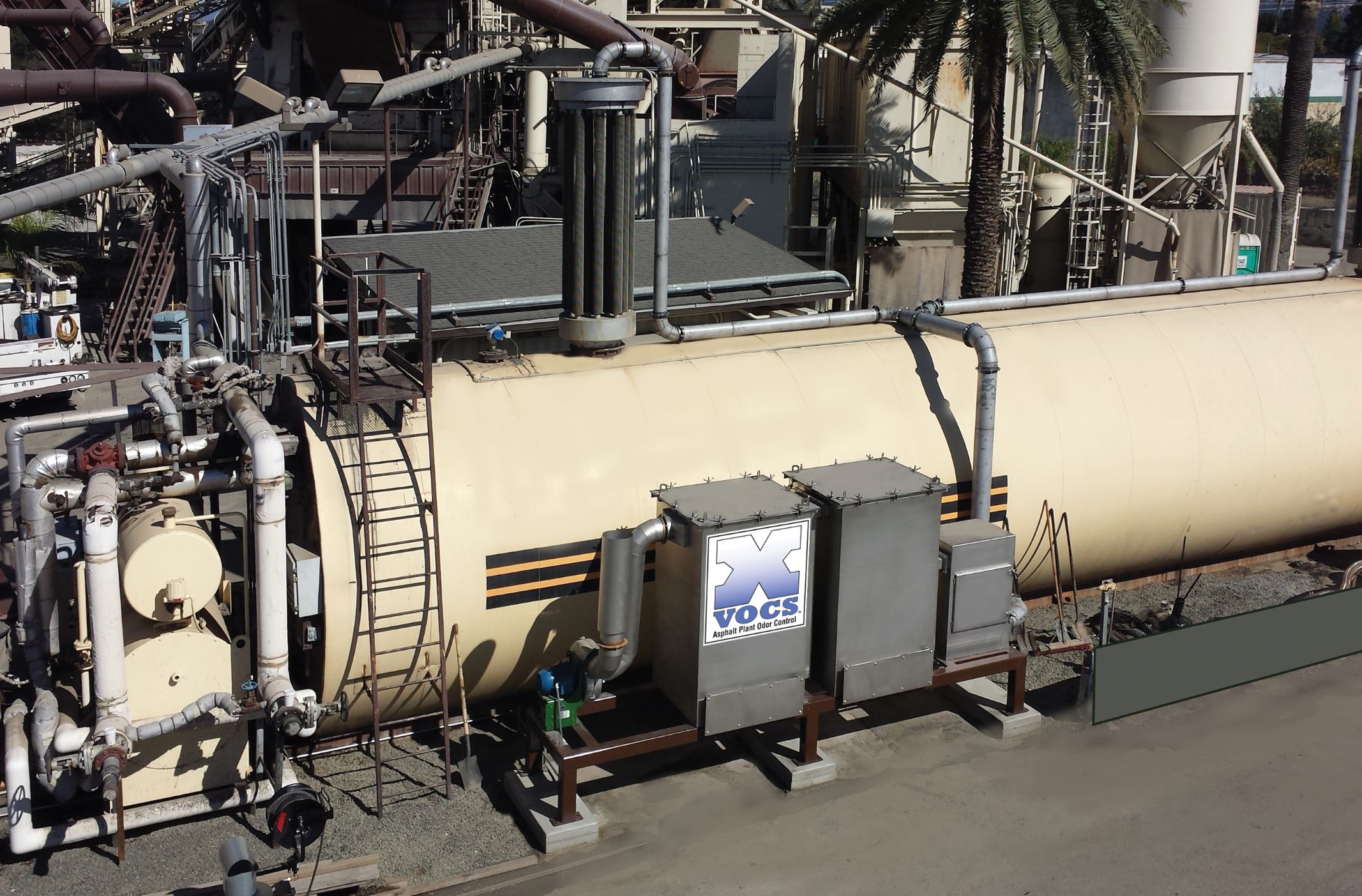
The X-VOCS system from Butler-Justice

As plants move toward the winter season, right now is an ideal time to assess any impacts from blue smoke and odors. Emissions from plants—both the classic, visible blue smoke and invisible volatile organic compounds (VOCs)—can cause challenges for producers, ranging from regulatory requirements to overt opposition from neighbors. Blue Smoke Control, a division of Butler-Justice Inc., Anaheim, California, offers two systems that, between them, is designed to eliminate both issues.

According to Mike Butler, president of Butler-Justice, “The addition of RAP, rubberized asphalt and polymer blends into asphalt mix designs has led to higher emissions due to higher mix temperatures.” His company now provides environmental control devices that can be installed at the asphalt plant to remove up to 99.9 percent of blue smoke, as well as the odors associated with asphalt production. Here’s how:

The Blue Smoke Control system captures blue smoke from emission points in the asphalt production process. Because blue smoke is essentially vaporized oil at high temperatures, Blue Smoke Control’s ducting system bleeds ambient (outside) air at key points. Seven stages of filters help to coalesce the tiny oil vapor droplets and aerosols into larger droplets that can be filtered out by the blue smoke collector. The oil droplets drain from the filters via gravity to a collecting sump.

Train New Operators to Unplug Screens

In addition, the company offers its X-VOCS system, which features proprietary carbon absorption technology designed to filter and remove up to 99 percent of odors and VOCs, such as Hydrogen Sulfide (H2S), from the hot asphalt storage tanks. The X-VOCS incorporates a five-stage filtration system. In the first three stages, a series of filters remove more than 95 percent of targeted particulates down to 0.3 microns. In the final two stages, carbon filtration beds remove remaining odors and volatiles.

When the X-VOCS technology is coupled with the Blue Smoke Control system, emissions from HMA plants can be reduced to nearly zero, providing owners with the means to achieve the highest level of environmental stewardship.

Implementation of this technology has been proven to virtually end calls from nearby neighbors regarding odor and visual emissions. Both the Blue Smoke Control and X-VOCS systems can be incorporated into new plant designs, and they are also easily retrofitted into existing plant operations, with minimal modifications to the plant.

For more information on the X-VOCS system, contact mikeb@butlerjustice.com or visit www.bluesmokecontrol.com.

5. CWMF Offers Tips to Care for Your RAP System
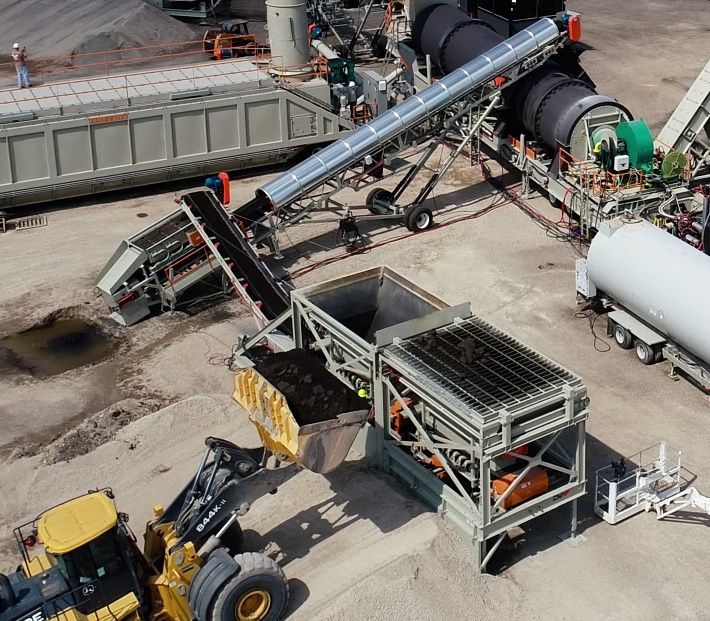
Make sure seasonal maintenance includes a close look at your RAP system. Photo courtesy of CWMF

You can take preventative measures during the winter season to ensure a smooth process in the spring. Being proactive saves money and headaches when it’s time to start back up. Executing a preventative maintenance schedule for your RAP System in the winter, can lead to smooth sailing in the spring. Maintenance looks different for everyone, so here are some generalized tips to help reduce problems when it’s time to start running again.

The main components of a RAP system consist of the bins, collector belt, Tremor Shaker, Honey Badger hammermill, and scale conveyor. As a reference, the team at CWMF suggests looking through your manufacturer’s manual for specific maintenance recommendations. Additionally, you can follow these tips to help create your maintenance schedule.

Start by checking the obvious. Are your belt idlers functioning properly? Inspect the belt scraper, checking to see if the blades need replacement and if they’re set at the proper tension. Check for any tears in the belt splices and determine whether they should be repaired or replaced. Inspect all flashed or sealed-in areas to see if they are worn or need to be replaced. Check the shape of the screen cloth. Is it worn? Does it need replacement?

How to Unclog the Asphalt Silo Safely

If you’re using a Honey Badger hammermill for oversized RAP, the consumables should be inspected, including hammers and liners. Look at wear life for both, and if replacement is needed. All drives should be checked for fluid levels in the reducers, and the shape of the v-belts. Make sure guards are intact.

The belt scale should be inspected and calibrated (go through the calibration process to verify proper function prior to startup). An accurate belt scale results in a quality mix.

Finally, check all electrical switches, i.e. limit switches and e-stop cable pulls for proper function.

This maintenance may seem small or tedious, but in the long run these are the things that tend to get overlooked, causing delays in the startup process resulting in costly downtime. Be sure to take time and follow your preventative maintenance schedule. Maintaining the proper functioning of your RAP system will help ensure your startup runs smooth like a freshly paved road.

For more information on the RAP system from CWMF, contact Travis Mick at sales@cwmfcorp.com or visit www.cwmfcorp.com.

6. Gencor Makes You an Energy Star

As Dennis Hunt, vice president of Gencor Industries, Orlando, Florida, often says with regard to anticipated performance of a hot mix asphalt (HMA) plant in response to design and operational changes, “it depends.” This very much applies to plant energy efficiency and fuel consumption. Per Hunt, there are numerous operating variables affecting energy efficiency and fuel consumption. These include: moisture content of the virgin and recycle feed stocks, counter-flow dryer virgin material veiling pattern, main exhaust temperature (waste heat), and use of warm-mix systems. While Gencor Industries works with its customers to optimize system performance, ultimately it is the responsibility of the end-user to run the plant in an energy-efficient manner.

One energy-efficiency measure that can, and is, integrated into HMA plants by the original equipment manufacturer (OEM) is insulation. Baghouses are insulated to prevent undesirable water condensation. Storage silos are insulated to keep the product mix at the required load-out temperature. Jacketed asphaltic cement piping can—and should—be insulated for both energy efficiency and worker safety purposes.

Another piece of equipment where insulation has become the norm rather than the exception is the counter-flow dryer.

The shell temperature of an uninsulated counter-flow dryer will range anywhere from less than 300⁰F at the ends (virgin aggregate feed breeching, and mix discharge to the finished product, or slat, conveyor) to perhaps more than 600⁰F in proximity to the combustion zone. Convective and radiant heat loss from an un-insulated dryer shell can be significant.

Solve Blue Smoke from High RAP

Insulation on a typical Gencor Industries counter-flow dryer covers approximately 75 percent of the surface area of the drum. The temperature of the insulation skin on a counter-flow drum will be in the range of 100 to 150⁰F. A substantial reduction in temperature that translates into, not only improved worker safety, but reduced energy requirements. A rule-of-thumb historically employed by Gencor is that insulating a dryer will reduce energy requirements by approximately 3 to 8 percent. Actual improvement in energy efficiency and associated payback period of the investment in insulation, of course, “depends.”

For more information, visit www.gencor.com or theasphaltpro.com/articles/how-to-be-an-energy-star/.

7. Haver & Boeker Helps Analyze Vibrations

Pulse vibration analysis technology can be used to evaluate vibrating screen performance. The team at Haver & Boecker Niagara, St. Catharines, Ontario, now partners with maintenance managers and plant managers to analyze screening processes, helping them meet production goals and overcome challenges with its Pulse Vibration Analysis Service.

Wilm Schulz, Haver & Boecker Niagara’s parts and service manager, explained: “Our Pulse Vibration Analysis Service offers more than just technology. We want to help our customers by serving as an extension of their maintenance teams, bringing the knowledge of an OEM to help support their operation.”

Lock Out/Tag Out For Safe Plant Maintenance

The service uses the company’s Pulse Vibration Analysis software to examine the health of a vibrating screen. Pulse detects irregularities that could translate into diminished performance, decreased efficiency, increased operating costs and imminent breakdown. This gives producers advanced notice so that their operation can plan preventative maintenance programs to avoid premature wear, downtime and additional expense.

The service program includes a complete vibrating screen inspection by a Haver & Boecker Niagara certified service technician. Following the inspection, customers receive a Pulse Diagnostic Report, which provides an analysis of their vibrating screen and detailed recommendations to prevent downtime. All Pulse Diagnostic Reports are stored in an online asset management system, giving customers access to a complete record of their vibrating screens’ service and performance histories.

For more information about Haver & Boecker Niagara’s Pulse Vibration Analysis Service Program, contact Kristen Randall at k.randall@haverniagara.ca or visit www.haverniagara.ca.

8. Kenco Advises for Longer Component Wear Life
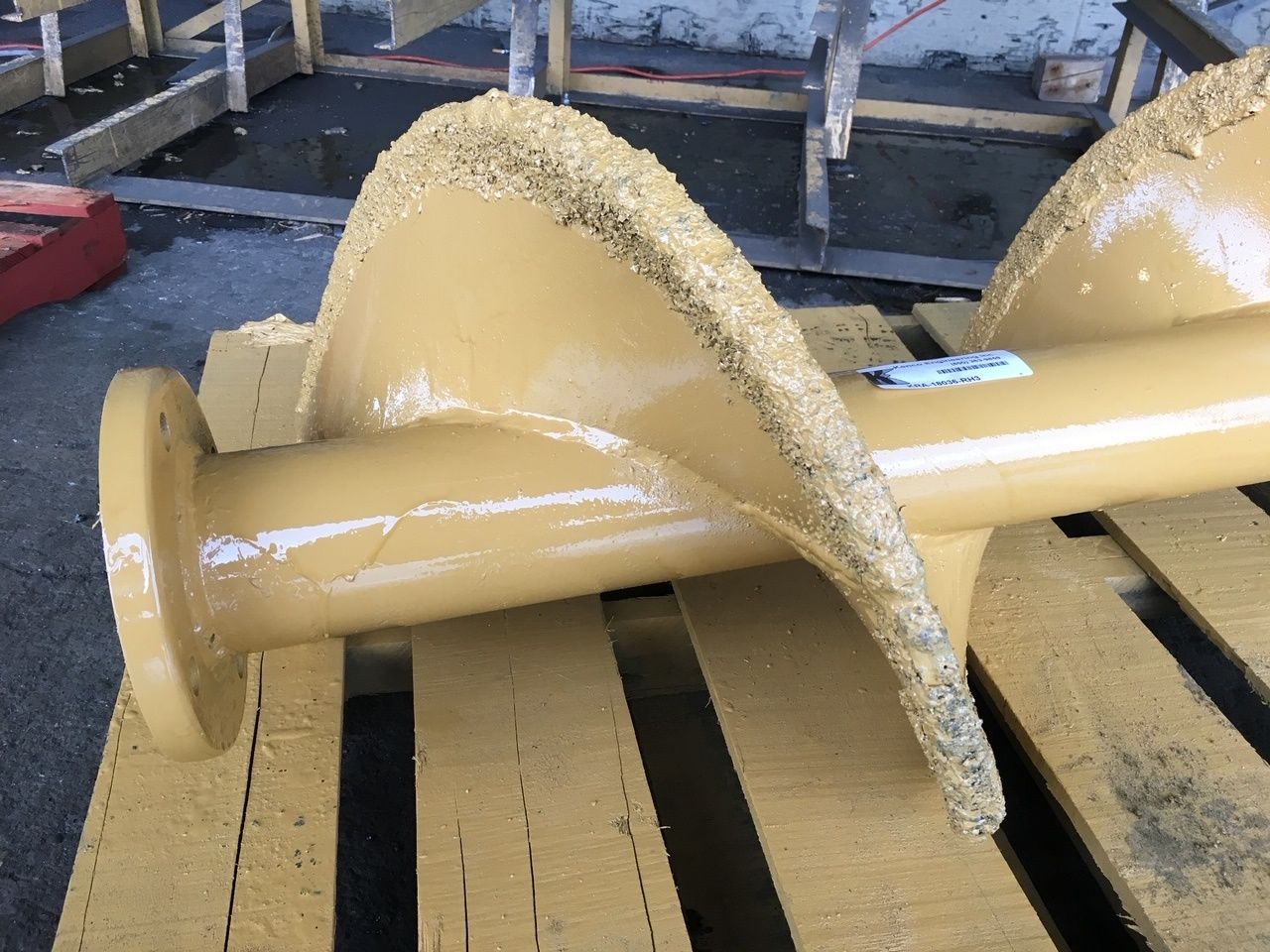
This photo shows the Kenco Engineering TCI steel strips installed on an auger.

Kenco Engineering Inc., Roseville, California, has been working to extend the life of augers for decades. At first, we developed the cast, bolt-on, auger shoe. This shoe incorporated a “lip” that wrapped over the outer edge of the auger to prevent the most common type of auger wear—diameter shrinkage.

In many cases, an auger running in an abrasive material will wear from the outer edge toward the shaft, thus reducing the diameter of the auger, more than on the face of the auger. This diameter shrinkage dramatically reduces efficiency of the auger and its ability to transfer material.

Over the last few years, however, we have learned that using our Tungsten Carbide Impregnation (TCI) process to protect augers can perform even better than the cast shoe around asphalt plants, especially the dust fines reject auger.
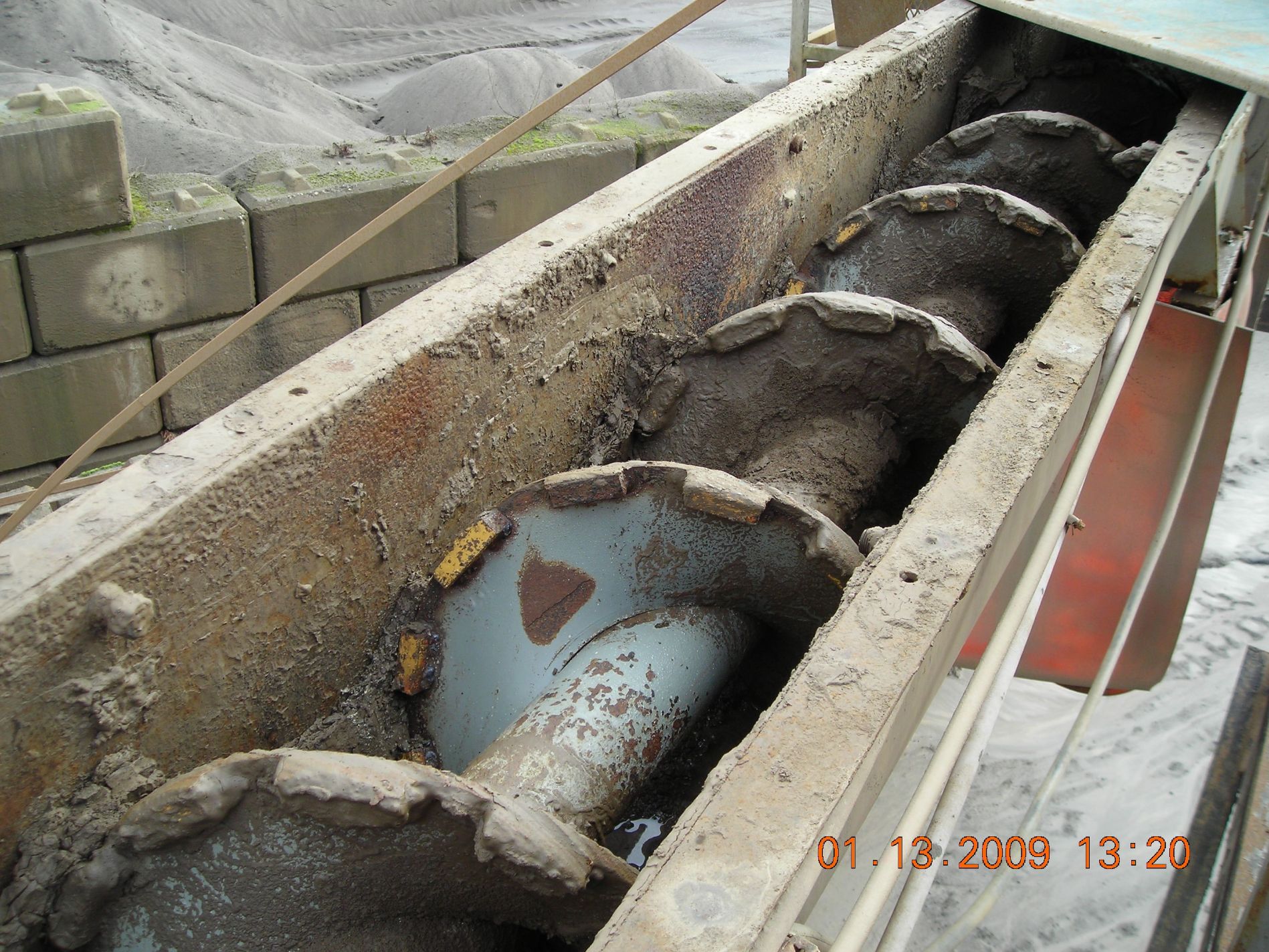
This photo shows a fines reject auger that, for many years, had averaged losing 1 inch of diameter per month. This photo was taken at five years of service with no loss of diameter during that period.
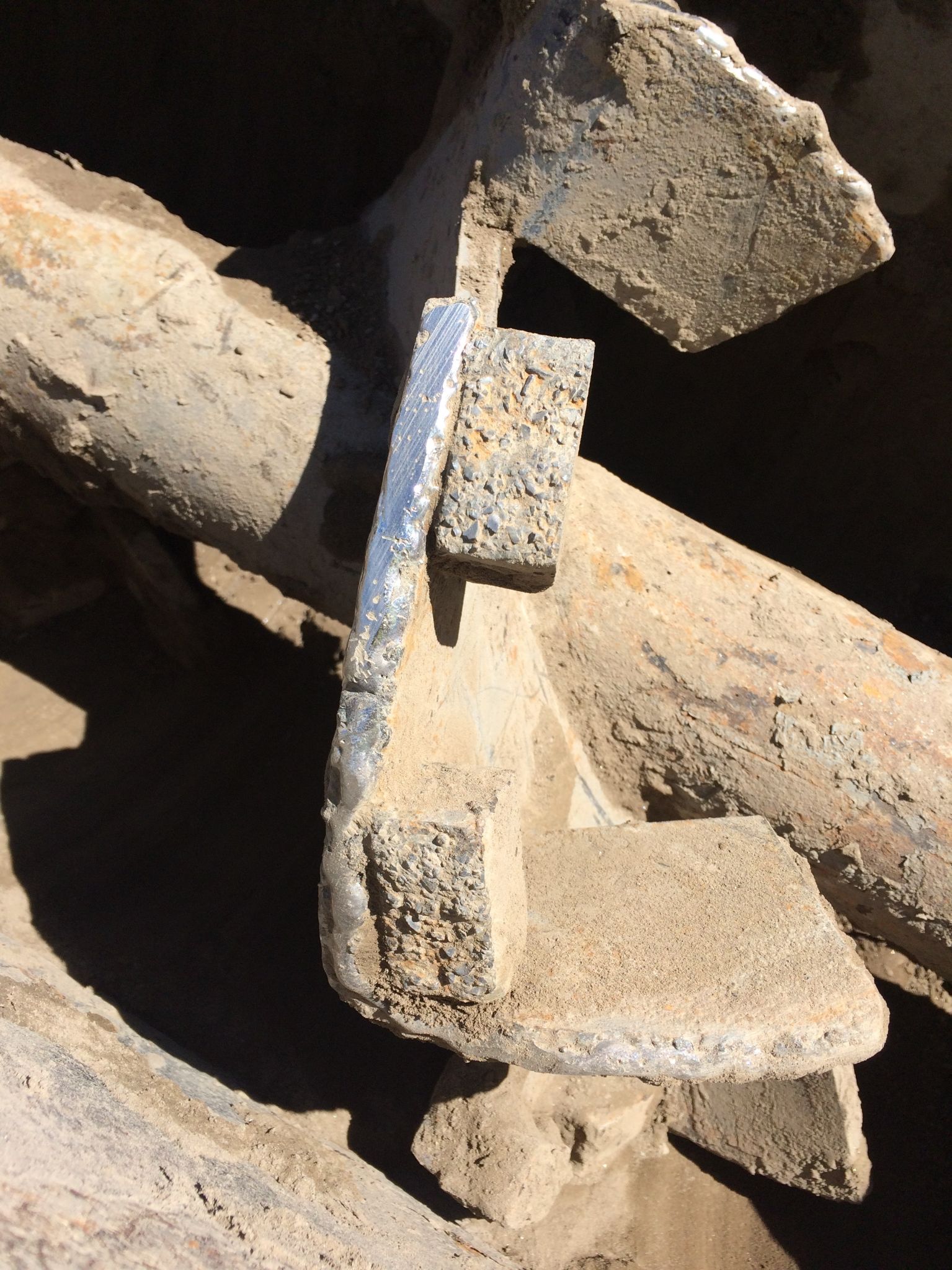
This next photo shows the use of our TCI bars on a “cut and folded” style dust auger. This customer had been changing out this auger half-way through each season. This photo was taken in the third season and the auger is still going strong.

The exceptional wear life of our TCI products comes from multiple factors. First is the hardness. At 90 Rockwell A, the hardness of Tungsten Carbide inherently makes it more wear resistant than even the hardest of AR steels. Next, with the rough texture of our TCI product, it traps material and helps create the cheapest of all wear products, material on material.

The versatility of our TCI product also enhances its usefulness around an asphalt plant. These two photos show the use of wear strips where Kenco impregnates our TCI into mild steel strips. These strips are then cut to size by the plant mechanic for installation on the auger or anywhere else wear is an issue. Due to their mild steel base, these strips can be welded with most common wire or electrodes for easy installation. As a final option, Kenco can manufacture a completely new auger with TCI protecting the outer radius as well as some portion of the face.

For more information on TCI protection, contact Brian Handshoe at brian@kencoengineering.com or visit www.kencoengineering.com.

9. Stansteel Tracks Your Trunnion Adjustment
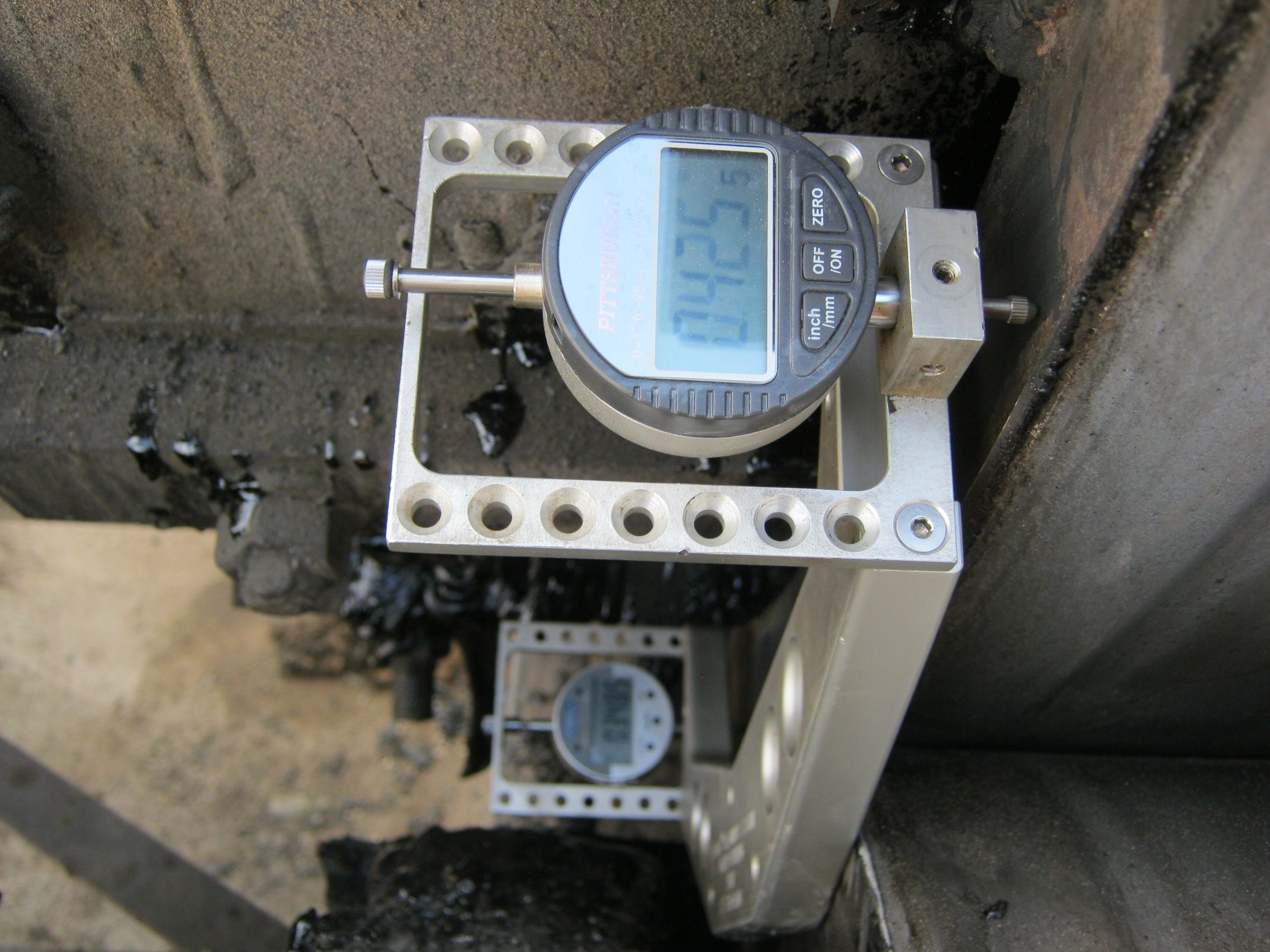
Depending on what stage of the adjustment process you’re in, you may want to see the numbers on the front and back displays be the same so the drum is not running uphill or downhill. Photo courtesy of Stansteel/Hotmix Parts & Service

Correctly adjusted trunnions reduce maintenance cost and plant downtime. Incorrectly adjusted trunnions cause a significant amount of abnormal wear and a multitude of premature failures that include broken thrust rollers, uneven tires and trunnions, and failed bearings. Precision adjusted trunnions maintain the plant’s tires and trunnions throughout the life of the drum and/or dryer.

There are many methods to adjusting trunnions. One common method is the use of a laser level and tape measure or other measuring device. This method is simple but not precise. While the laser beam is accurate, the width of the laser beam is not. Another attempt to keep trunnions properly aligned and skewed is to provide a measuring display on each trunnion base, but even this is not precise enough to prevent failures. The most precise and efficient method we’ve found for adjusting trunnions is our T-Trac Trunnion Alignment Tool by Stansteel and Hotmix Parts & Service. The T-Trac allows you to square the trunnions and tires within 100/1000th of an inch in precision.

In order to use the T-Trac correctly, lockout procedures need to be observed while working in contact with the equipment.

Once locked out and guards removed, the sides of the trunnions and tires need to be cleaned from dirt and grease.

The T-Trac consists of a magnetic base with dial indicators attached on each end facing the tire. Calibrate the dial indicators to the base with the included calibration blocks and the T-Trac is ready for use. Place the T-Trac on the side of the trunnion with both dial indicators on the side of the tire. Each of the four trunnions must be adjusted to the neutral position, meaning there is no longer uphill- or downhill-thrust. Adjust the trunnions to achieve a neutral (zero) delta between the two indicators, meaning that the trunnion is perfectly parallel with the tire.

The same method is performed for all four trunnions. Once all four trunnions are in a neutral thrust, the T-Trac can be used to skew each trunnion for the correct skew and thrust.

The trunnion adjustment methods of using a laser can take up to four to five hours to properly adjust your system. When using the T-Trac, precisely adjusting trunnions and tires can take as little as an hour and a half to complete the process for all four trunnions. The Stansteel & Hotmix Parts service technicians can visit your plant and demonstrate the T-Trac and adjust and skew your trunnions for you, ensuring precision accuracy of the adjustments.

For more information, visit stansteel.com.

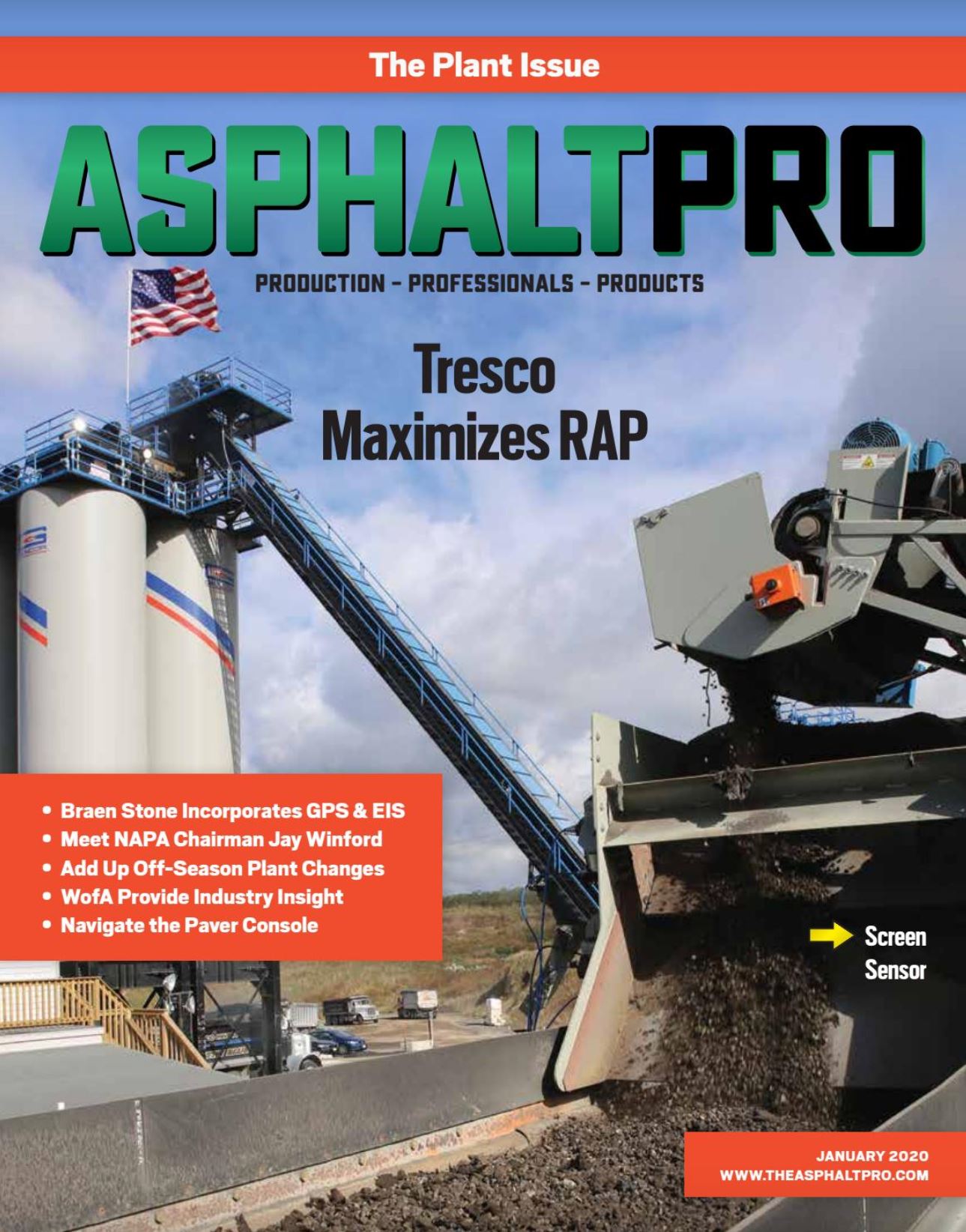
Tresco Companies Expands its Production Capacity with Maximum RAP

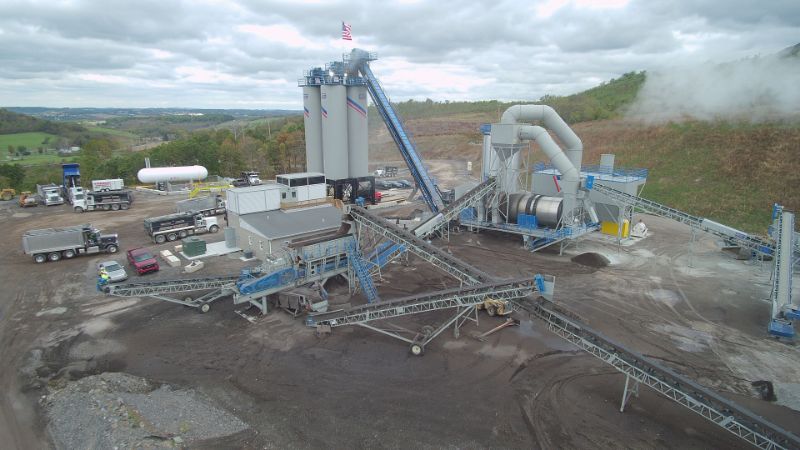
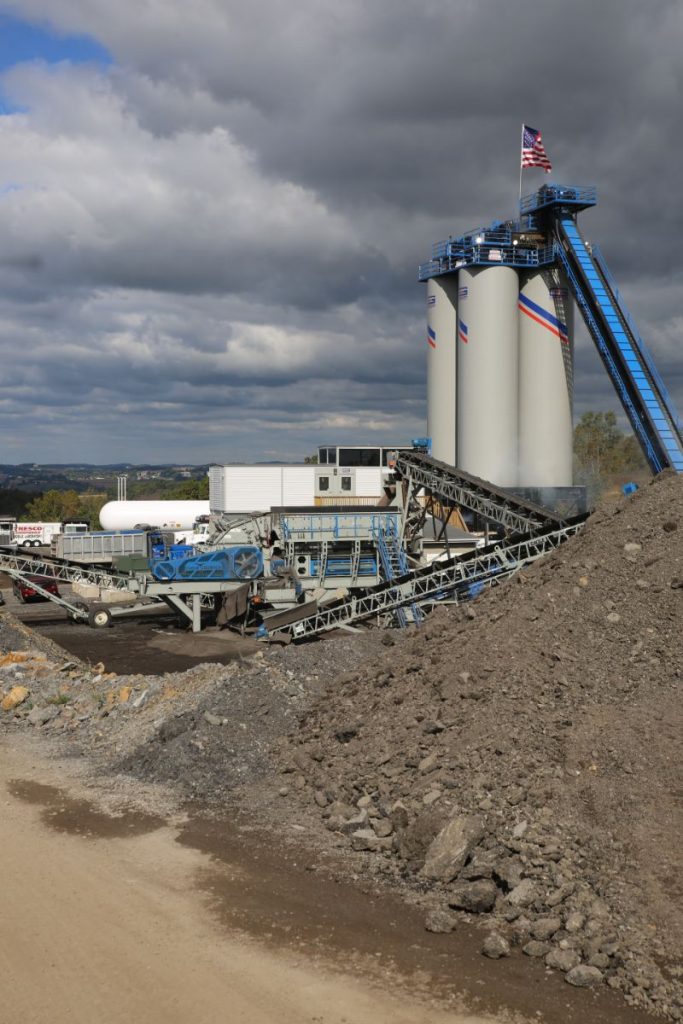
When it came to selecting the right crushing and screening equipment for processing reclaimed asphalt pavement (RAP) at Tresco Companies’ newly expanded Mount Pleasant, Pennsylvania, hot-mix asphalt (HMA) facility, President Sonny Tresco knew where to turn. He’s been in business for a long time.

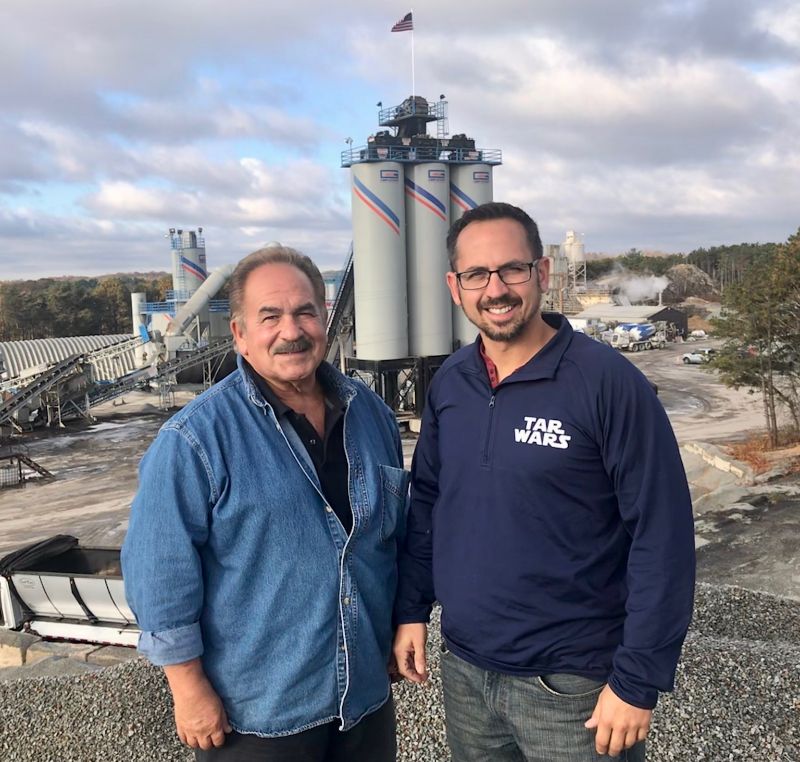
Left to right: Sonny Tresco, president, and Vince Tresco, vice president, of Tresco Companies, are proud of their Mount Pleasant, Pennsylvania, HMA facility.

Tresco Companies, family owned and operated for more than 40 years, operates four companies in the construction industry under its parent umbrella. These include Tresco Paving, TPC Asphalt Supply, Tar Wars Trucking and Tresco Concrete. As a Pennsylvania Department of Transportation (PennDOT) business partner, Tresco Paving performs heavy/highway construction and supplies mix for major roadway projects throughout Allegheny, Westmoreland, Armstrong and Indiana counties, as well as municipal work in the surrounding boroughs and townships.

With the help of the MaxRap, Tresco Companies reports production has increased by more than 100 percent. Vince Tresco shared that they typically run 15 percent RAP in the mixes. “We have the ability to run more, but we do our best trying to keep the quality of the mix high.”

In other words, Sonny Tresco is no stranger to the asphalt pavement industry. He understands the dynamics that make the crushing and screening of RAP different, and he knew what he wanted in a crushing and screening plant for this HMA operation.

“Buying equipment is no small investment, and it was crucial for us to make a purchase with a quick return on our hard-earned dollars,” Tresco said. “Just as important, we wanted a RAP crushing and screening plant that was highly efficient.”

AMAP RAP Study Results

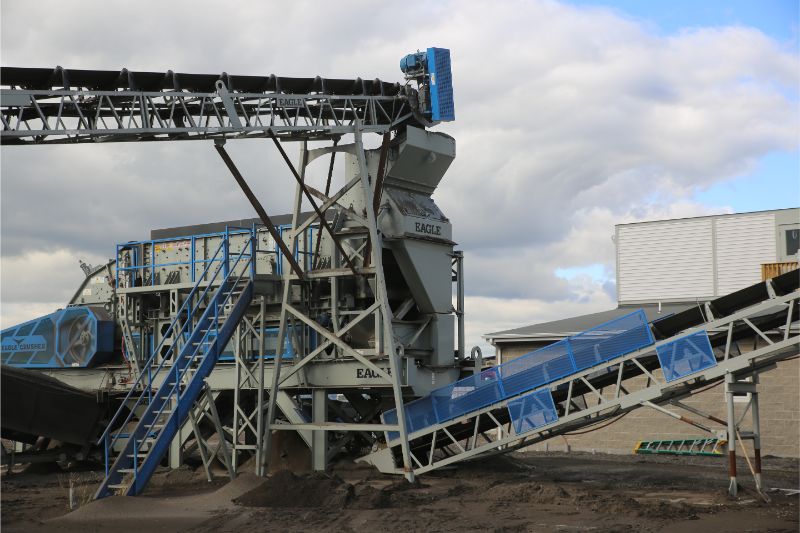
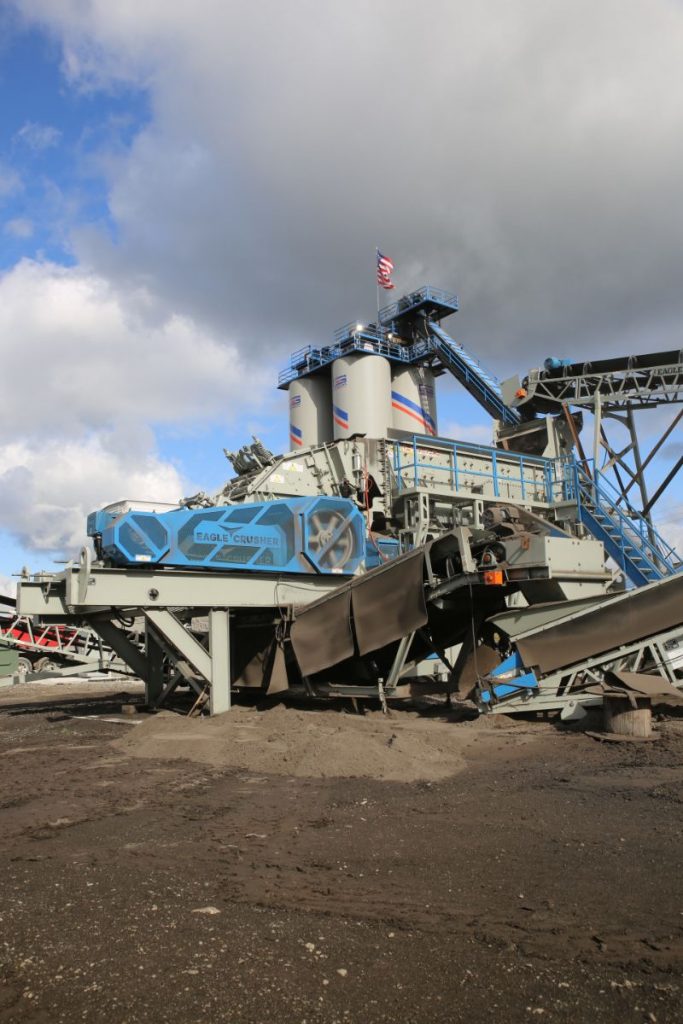
Tresco decided on the Eagle Crushing MaxRap®, equipped with the UltraMax® skid-mounted UM-25 impactor and 6 x 20 screen. MaxRap is designed for use with a 600 TPH asphalt drum-mix plant, which Tresco purchased at the same time as the MaxRap. The plants were installed together March 1, 2019, with a collaborative process between Gencor (the manufacturer of the drum-mix plant) personnel and Eagle Crusher personnel to make the installation go as smoothly as possible.

Tresco said, “We chose the Eagle Crusher MaxRap because, while it wasn’t the cheapest on the market, the long-term investment was well worth the short-term cost. We purchased MaxRap because it gave us the flexibility to process materials quickly and efficiently, as opposed to conventional methods for RAP processing, involving the use and purchase of separate units.”

Read the full January 2020 issue of AsphaltPro here.

“The crushing and screening efficiency achieved with the MaxRap allowed us to consistently hit bonus incentives with PennDOT,” Tresco continued. “Quality asphalt production is a top priority with us, and the MaxRap is paying for itself by helping us achieve these incentives.”
Tresco relayed that he had good experiences in the past with Eagle Crusher and uses their impactors at his other facilities.

According to Tresco, Eagle Crusher has experts who consult and direct customers to the right plant for their particular operational need, as well as having service people and installers who go the extra mile. He spoke highly of Eagle Crusher’s Mark Simon, who went above and beyond in getting the MaxRap installation completed.

Another consideration in choosing the MaxRap, according to Vince Tresco, vice president of Tresco Companies, is that asphalt producers and the pavers they supply can’t afford shutdowns.

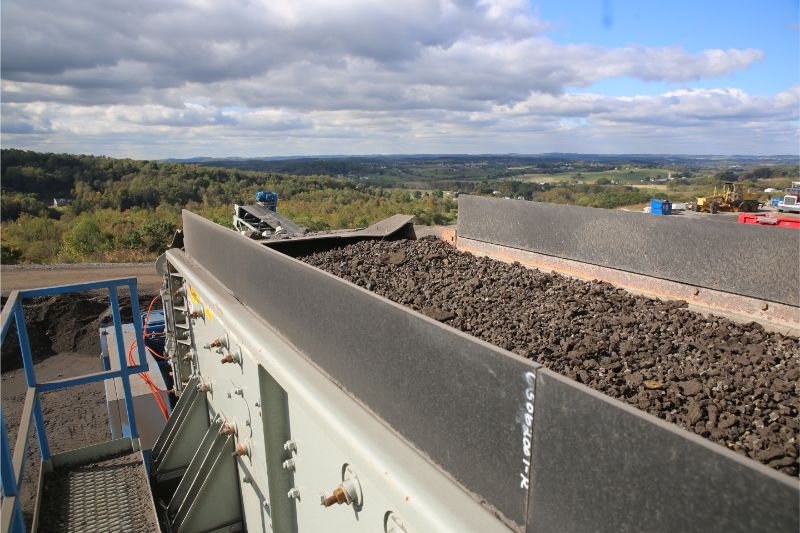
As the impactor separates the binding matrix, the material is aired out, moisture is released and a drier material goes into the hot mix. And everybody knows, drier material saves energy at the asphalt plant.

Vince Tresco said, “If a situation happens where the impact crusher on the MaxRap stops for any reason, all we have to do is push a button for the screen to bypass the oversized material out to the pile, and we can run that product back through at a later date. We don’t have shutdowns with MaxRap, and because of this, we don’t experience the extreme havoc shutdowns can wreak on profits.”

Best Practices for Crushing, Screening RAP for HMA Production

Vince Tresco also relayed that producers can’t afford the time and expense of white rock, which was another reason the company chose an impact crusher over jaw or cone crushers. Jaw and cone crushers are highly effective in crushing hard rock, but because RAP is softer, the repeated actions of jaw and cone crushers as they crush and re-crush the RAP can strip it of the asphalt, resulting in white rock and requiring the extra step and extra expense of recoating.

The force of the blow bars explodes the raw material, launching it into the primary curtain at the proper angle, then whacks the material again with the secondary curtain liners to prepare the RAP for its final reduction. There is a minimum of white rock and a minimum of fines produced by the impactor, and a more structurally sound product.

Producers who have always used other crusher types for RAP processing may wonder exactly how impact crushers work to provide so many efficiencies and quality product. The answer is in the impact crusher’s design. The force of the blow bars explodes the raw material, laughing it into the primary curtain at the proper angle, then whacks the material again with the secondary curtain liners to prepare the RAP for its final reduction.

The RAP, impacting into the curtain, separates the binding matrix, knocks off the arrowheads, and cubes up the product, providing the benefits of the original virgin aggregate. There is a minimum of white rock and a minimum of fines produced by the impactor enabling producers to output high quality and consistent cubical product.

“If a situation happens where the impact crusher on the MaxRap stops for any reason, all we have to do is push a button for the screen to bypass the oversized material out to the pile, and we can run that product back through at a later date.”—Vince Tresco

Cost savings are realized as the impactor separates the binding matrix because, during this process, the material is aired out, moisture is released, and a drier material goes into the hot mix. Drier material saves energy.

The actuated chute work of the MaxRap allows several usage options, all of which Tresco utilizes on a daily basis to make products for projects as simple as a driveway all the way up to DOT specs. With the help of the MaxRap, Tresco Companies has increased production by more than 100 percent. The company operates three HMA facilities in Pennsylvania and has a number of awards to its name.

Conveyor Safety Best Practices Prevent Accidents

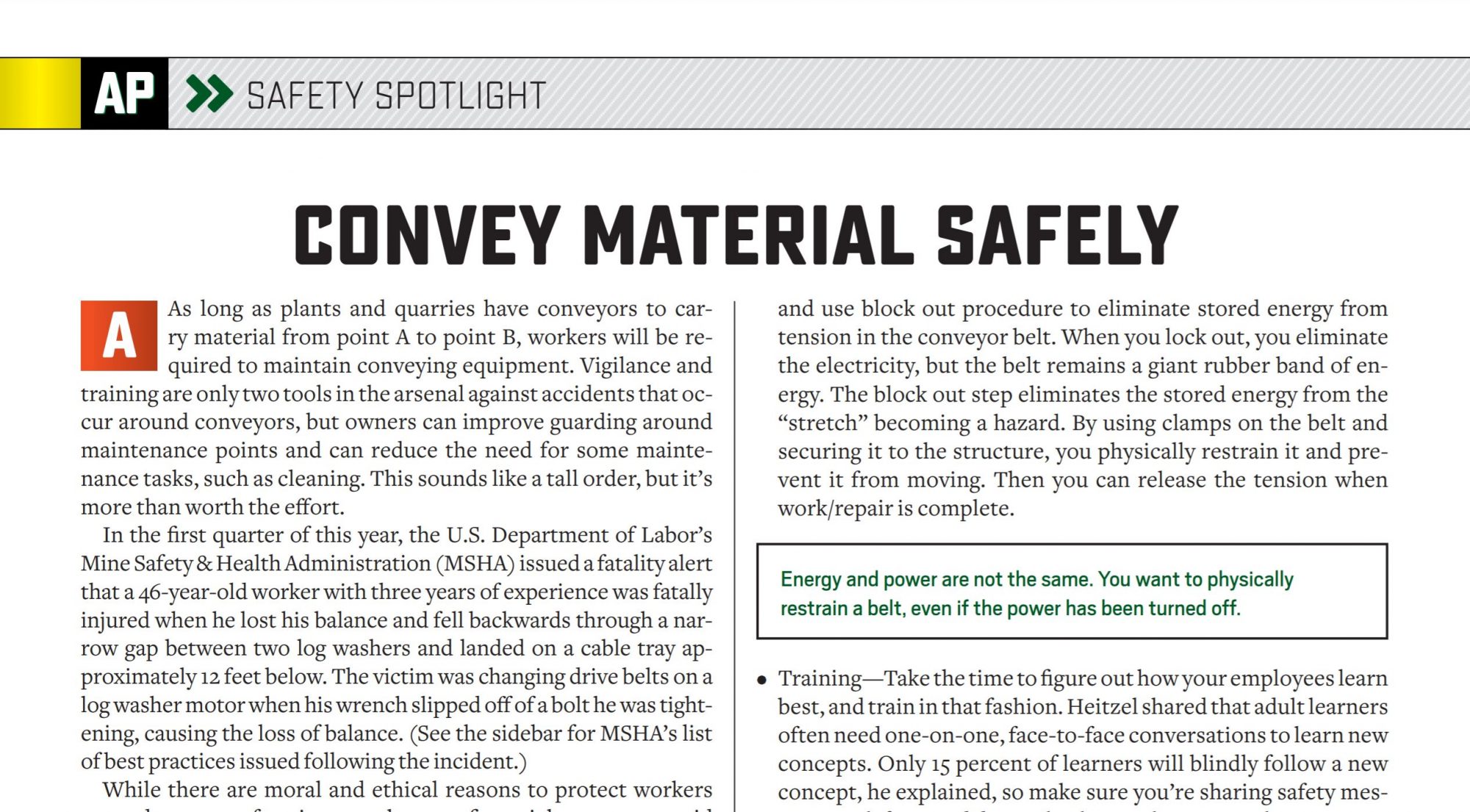
As long as plants and quarries have conveyors to carry material from point A to point B, workers will be required to maintain conveying equipment. Vigilance and training are only two tools in the arsenal against accidents that occur around conveyors, but owners can improve guarding around maintenance points and can reduce the need for some maintenance tasks, such as cleaning. This sounds like a tall order, but it’s more than worth the effort.

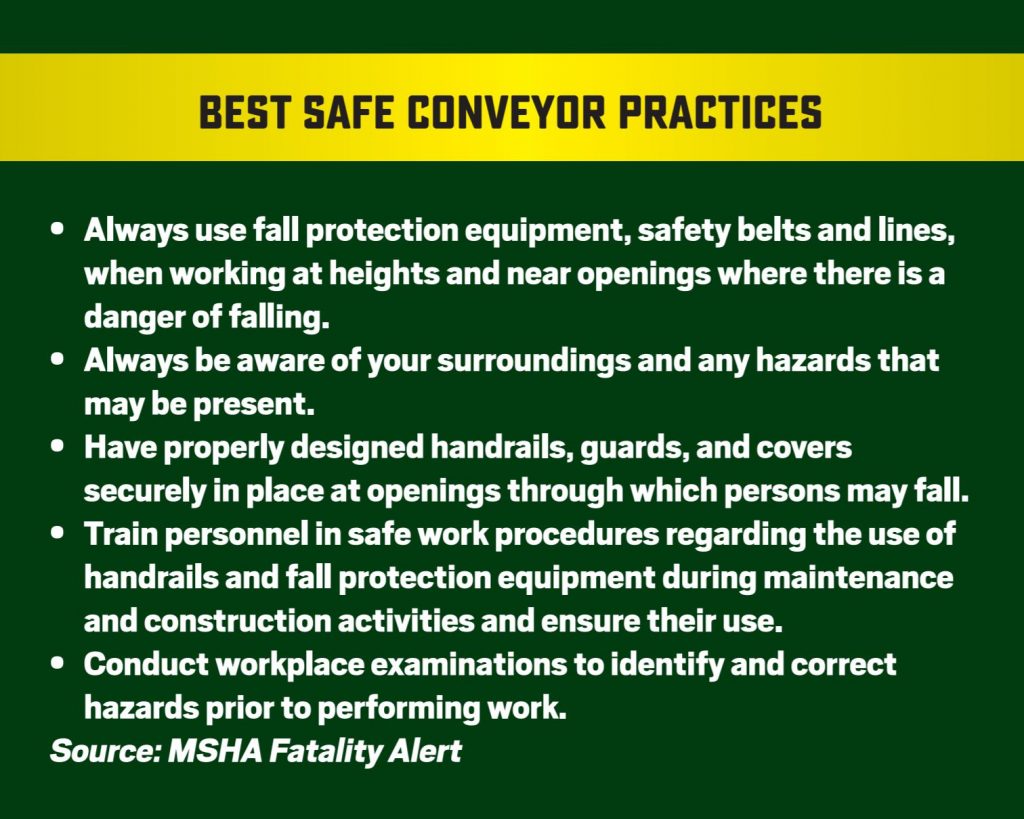
In the first quarter of this year, the U.S. Department of Labor’s Mine Safety & Health Administration (MSHA) issued a fatality alert that a 46-year-old worker with three years of experience was fatally injured when he lost his balance and fell backwards through a narrow gap between two log washers and landed on a cable tray approximately 12 feet below. The victim was changing drive belts on a log washer motor when his wrench slipped off of a bolt he was tightening, causing the loss of balance. (See the sidebar for MSHA’s list of best practices issued following the incident.)

While there are moral and ethical reasons to protect workers around any type of equipment, there are financial reasons to avoid injury for individual companies and the industry overall. During a conveyor safety webinar sponsored by Martin Engineering of Neponset, Illinois, Jerad Heitzler shared some hard truths.

Lock Out/Tag Out For Safe Plant Maintenance

“Whenever we have a conveyor accident, we have the risk of changing regulations for guarding conveyors,” he explained. “We see increased citations. We see increased attention from governing bodies. We see increased documentation. We see upgrades to lockout/tagout enforcement. We see upgrades to training plans. And we see lowered employee retention and morale. When we subject employees to accidents, it’s difficult to attract and keep skilled workers.”
Heitzler shared the story of a worker whose arm was broken in a pinch point while cleaning a conveyor belt. The workers’ peers went to visit the injured employee in the hospital and the scene was like a company meeting but “with an overwhelming feeling of dread.”

Companies combat such horror with a robust safety culture, and with top safety tactics that include a clean work site.

Energy and power are not the same. You want to physically restrain a belt, even if the power has been turned off.

Best Practice Tactics

Heitzler listed four main areas of best practices when working around conveyors, belts, rollers and return conveyors, etc., that we’ll discuss here.

  • Proper PPE—While the company is responsible for providing personal protective equipment, each employee is responsible for using it. When working around conveying equipment, employees can’t wear baggy clothing or jewelry. Long hair should be confined.
  • Policies, Procedures & Protocol—While the company must have policies in place, it is up to each employee to use procedures correctly. It’s wise to enforce more than lockout/tagout. Heitzler listed: Lock it out; tag it out; use test out procedure; and use block out procedure to eliminate stored energy from tension in the conveyor belt. When you lock out, you eliminate the electricity, but the belt remains a giant rubber band of energy. The block out step eliminates the stored energy from the “stretch” becoming a hazard. By using clamps on the belt and securing it to the structure, you physically restrain it and prevent it from moving. Then you can release the tension when work/repair is complete.
  • Training—Take the time to figure out how your employees learn best, and train in that fashion. Heitzel shared that adult learners often need one-on-one, face-to-face conversations to learn new concepts. Only 15 percent of learners will blindly follow a new concept, he explained, so make sure you’re sharing safety messages with facts and data to back up “why” your policies, procedures and protocol are vital.
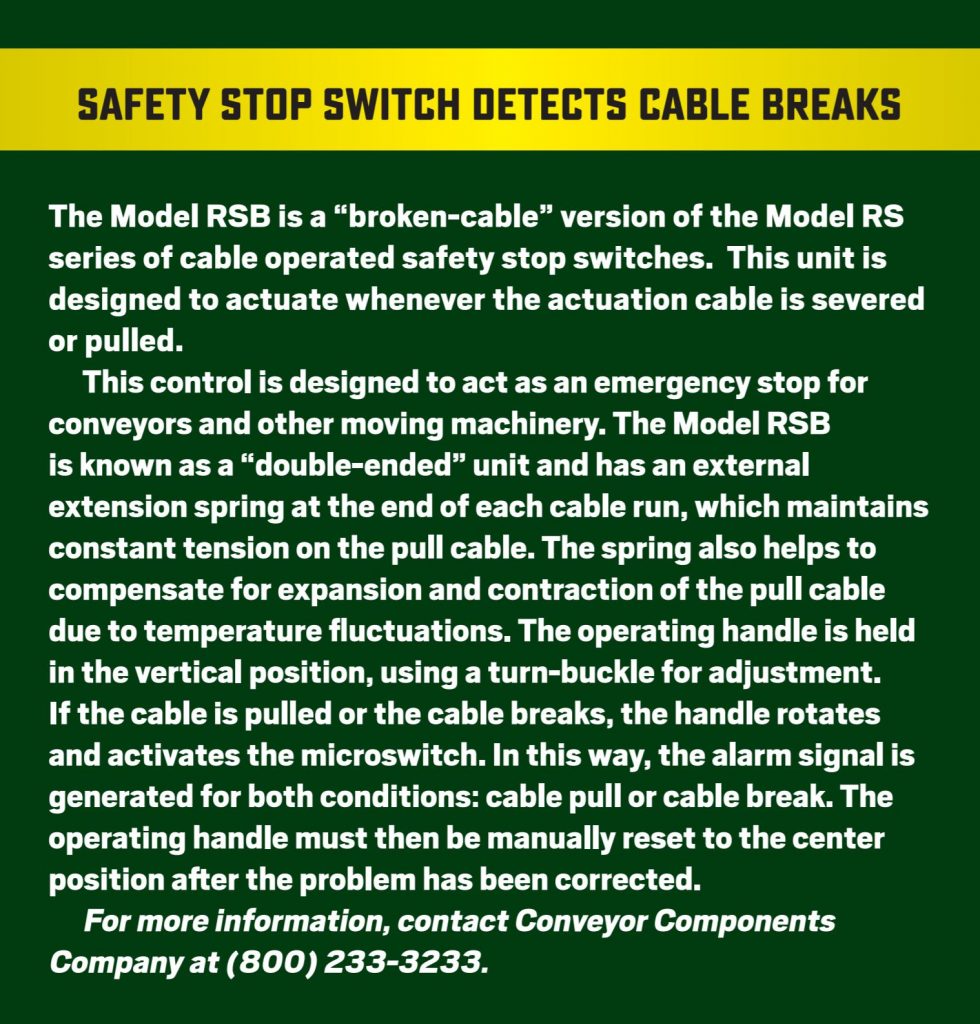
  • Safety Equipment—When training safety concepts, the proper use of safety equipment is vital as well. For example, emergency stop switches can’t be used as the only line of defense at the conveyor belt. The emergency stop switch needs to be tested for slack (you want no more than 12 inches of slack, Heitzel shared) in its cable. The cable de-energizes the conveyor, but the conveyor continues to move until the cable runs out when the switch is tripped. Do your employees understand that hitting the switch doesn’t bring about an immediate stop? When testing the switch, measure, record and report the runout. Inspect the cables and clamps. Inspect the length and location of the stop.

Other safety equipment that can save a life is the guard. The guard around conveyors should have no sharp edges and should have no pinch point at the hinge. You want the guard to be removed only with a tool to access the belt for maintenance. It has to stand out in color from the equipment it’s “guarding” and it must be a proper distance from the hazard, opening or rotating piece of equipment. Heitzel reminded the audience to test the guard with the acronym A.U.T.O. You should not be able to reach: around, under, through or over a guard.

Keep it Clean

Eliminate the hazard by eliminating the need to climb onto equipment for cleaning. Heitzel shared the story of a worker simply sweeping the floor around an elevated conveyor component. The worker slipped and fell 60 feet to his death. Another terrible fact is that workers shoveling fines have had shovels get stuck in pinch points; before anyone could hit a stop switch, the force pulled the workers to a horrible end. Our industry must adhere to dust mitigation rules and regs, so reducing these accidents begins with reducing the need for cleanup. As an industry, we can do a better job of keeping dust from piling up. Heitzel suggested aggregate managers look into the following areas where technologies exist.

  • Reduce carryback
  • Install proper belt cleaning
  • Reduce dust around the belt
  • Use skirting, but don’t over-rely on it alone
  • Reduce belt sag with proper support
  • Maintain wear liners

It’s possible to mechanically control dust to prevent build-up. By limiting dust, we can reduce the opportunities for maintenance and cleaning-related accidents around conveyors.