
Feb 12, 2026
Communication for Safer Workforce Growth
BY Sandy Lender
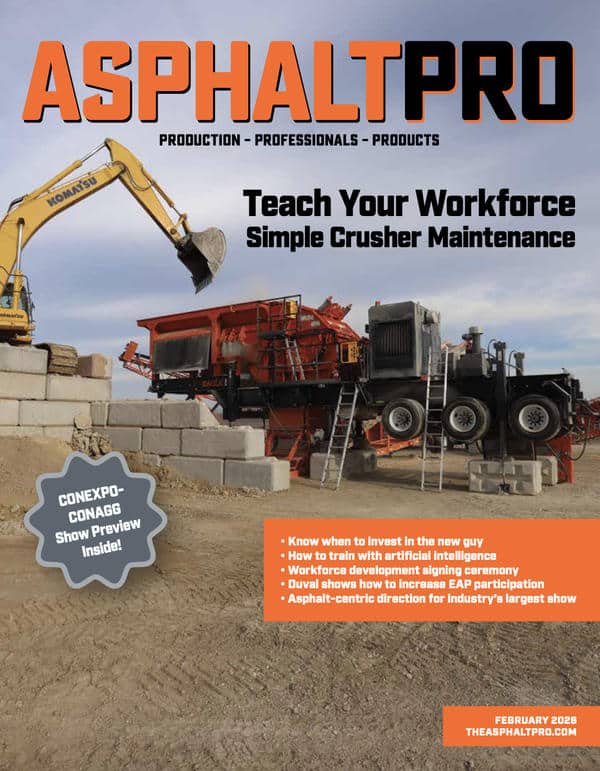
As a child, I read a book about a boy who refused to go to school. He refused to learn how to read or count, so when his mother sent him to the store to pick up ingredients for a recipe, he walked part-way down the road before he became lost. He couldn’t read the signs to navigate his way to town. Once someone helped him find the store, he needed help with basic tasks, including counting money to pay for his items. (Imagine that kid trying to attend CONEXPO next month!)
Fast forward to today and consider the situation on our nation’s interstates. We have a percentage of over-the-road truck drivers piloting 18-wheelers at 55 and 70 mph without the ability to read the highway signs.
According to Reuters, Secretary Duffy had informed the Minnesota Department of Public Safety in December 2025 that it would need to evaluate its commercial driver’s license (CDL) rolls and revoke any CDLs improperly issued to individuals who are “non-domiciled.” An audit, Reuters shared, suggested one-third of the non-domiciled CDLs reviewed by the Federal Motor Carrier Safety Administration (FMCSA) in Minnesota had been issued illegally. If the department fails to perform its evaluation, the state stands to lose access to $30.4 million in federal highway funds.
Since that edict, other issues have come up for the state, but the point I’d like to make is basic language skills provide more than public safety.
The ability to speak to workers in the construction (or trucking) industry is more than a safety issue, although I think we can all see the importance of being able to quickly communicate that a component is faulty, or a mix is hot enough to harm a person. We work in an industry where using and understanding language is critical.
Using language that all members of the crew understand is also respectful. I’m not suggesting everyone on a crew must adapt and learn a language foreign to them to accommodate one new person who speaks Arabic, Hindi, Spanish or something else. What I’m saying is there are ways in this modern age to interpret, not just translate, so a new crew member feels included and safe. We have an article from a language expert on this on page 14.
Do you have fellow crew members who can serve as interpreters and intermediaries to help keep each member of the crew safe? You may have someone who is gifted at learning new languages or who already speaks more than one language on the crew. If we think back to the children’s story I read some 50 years ago, a person who could read road signs was able to help the kid reach the store. The lad received help to accomplish his task and get home safely—learning a lesson about the importance of education along the way. Such helpers can be hired as consultants or found among your workforce already.
As our construction workforce changes and companies seek new and innovative ways to keep skilled workers throughout their careers, communication will be at the forefront of conversations. Perhaps that pun is intended. When learning how a worker communicates, you also learn how to safeguard, train and retain that worker.
I look forward to communicating with you at the upcoming CONEXPO-CON/AGG in Vegas. Stop by the AsphaltPro booth GL30901 to talk asphalt and share ideas for a safe and growing workforce. And check out the asphalt-centric show preview starting on page 37.
Stay Safe,
Sandy Lender