
L.F. Mahoney Streamlines Timecards
BY Eric Christensen

Maryland Contractor Streamlines Timecard System
For asphalt contractors, timecards and payroll are always a challenge. Crews rarely work a standard schedule. Weather delays, night paving and emergency utility work mean start and stop times keep shifting. Hours often end up written on scraps of paper, phoned in or remembered days later. By the time everything gets collected, staff are left re-entering data and fixing errors.
But the problem isn’t just administrative. When records are scattered, accountability suffers, and questions about hours create headaches for both the office and the field.

Now that L.F. Mahoney uses digital timecards, workers’ hours are no longer written on scraps of paper or written on a dry-erase board after an exhausting night shift.
The Scattered System of the Past
For L.F. Mahoney, Baltimore, Maryland, the process looked much the same.
“We had everything from our superintendent saying what time crews got in, to people texting their hours, to a whiteboard process,” said Patrick Mahoney, third-generation owner. “It was all pretty scattered.”
For more than 62 years, L.F. Mahoney has provided paving, concrete and equipment rental services around Baltimore for governments, utilities and contractors. Now in its third generation of family ownership, the company works on both public roadways and private projects.
Maryland Asphalt Association Awards CJ Miller for Top Quality
When Patrick and his brother Dennis entered the business a few years ago, they quickly saw how much timekeeping could be improved.
“People were either texting their hours or writing them on a board. It worked, but we thought it could be more efficient.”
An early attempt with a payroll-processor app required every employee to clock in individually. Adoption stalled almost immediately.
“We got a lot of pushback and resistance on that,” Patrick Mahoney said. “We found it easier to put the accountability on the foremen. They’re already responsible for their crews, so it made more sense than having 50 workers logging in separately.”
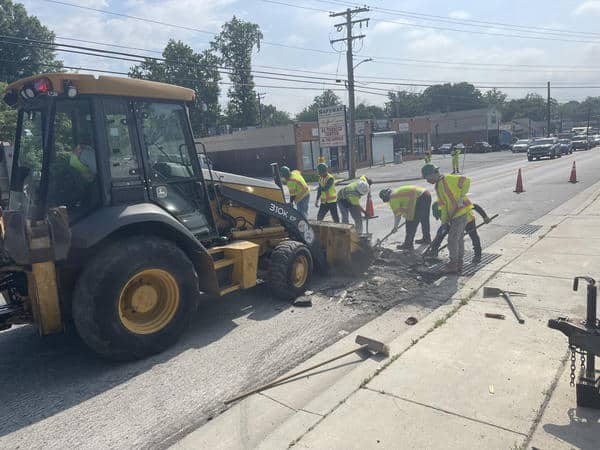
With the new TimeVO system, L.F. Mahoney is better able to track the often-changing schedules inherent in asphalt paving and maintenance work.
Going Digital
After a demo of TimeVO from IVO Systems showed how it could fit their workflows, L.F. Mahoney decided to move forward with digital timecards.
“We did an initial call, got to see how the system worked, and decided to start with just timecards,” Mahoney said. “We rolled it out slowly with a couple of foremen, and within a couple weeks we were up and running. We’ve seen good benefits so far.”
That early approach kept the rollout simple. Instead of managing resistance from dozens of employees, accountability shifted naturally to foremen who were already tracking their crews.
Pleasants Construction Uses Sustainable Asphalt Innovation on Maryland’s MD 650
“The rollout was much easier than trying to herd 50 people into a new process,” he said. “Everybody’s on their phone anyway, and this gives us better functionality and efficiency.”
Timekeeping systems built for heavy civil contractors can also connect timecards with project data such as bid items, cost codes, or equipment and employee information when paired with other tools such as equipment tracking and crew scheduling.
L.F. Mahoney began with time entry, knowing IVO Systems could grow with them to improve more of their operations over time.

For L.F. Mahoney, digital timecards have turned what used to be a scattered process into a single source of greater accountability.
Impact on Payroll, Future
Once the system was in place, payroll became less time-consuming.
“You could save 5 to 10 hours a week,” Mahoney said. “Before, I had to track everything in Excel, then go back over it on Wednesday before payroll. Now I can just approve submitted hours quickly and have it roll into a sheet. It’s half a day or even a full day of work saved on payroll.”
Over the course of a season, those weekly savings add up to hundreds of hours that can be put back into the business.
The time savings were clear, but the move to TimeVO also reflected how the next generation of leadership wanted to run the company.
“My father and his partner are very old school,” Mahoney said. “He’s 70 years old and doesn’t mind entering hours into Excel. But as my brother and I are taking more control, we want to move from analog to digital.”
Resistance to change is common in this industry, but Mahoney believes digital systems are becoming the norm.
“People don’t want to punch timecards anymore, but everybody’s on their phone,” he said. “When you put the power back in their hands to enter their own hours, it’s a win-win for everyone.”
For L.F. Mahoney, digital timecards have turned a scattered process into a single source of truth. The result is fewer hours lost to paperwork, greater accountability in the field and better visibility for leadership.
“For me it’s peace of mind and accountability,” Mahoney said. “Everything is neatly in one space and traceable. You can audit it without going back through text messages or looking for things that were erased from a board.”
The next generation of leaders is already moving to smarter timecards, and L.F. Mahoney has shown why.
Eric Christensen is the founder of IVO Systems.