
How StaCool and ColdVest Gear Support NEP Compliance
BY Sandy Lender

Vests provide preventive and emergency heat protection to cool workers for NEP Heat Standard safety
While asphalt professionals implement safety measures to protect workers from extreme heat and the effects thereof, heatstroke is still a danger to watch out for. If you see the signs of heatstroke in a co-worker while in the field—or at the plant, etc.—don’t hesitate to act. Call for help and get the affected worker to a shaded or sheltered area.
The Korey Stringer Institute provided, “Heatstroke is a multi-system illness caused when heat accumulation outpaces heat dissipation.” Researchers at the institute, specifically CEO Dr. Douglas Casa, spoke of an emergency device to assist workers who are overcome by heat.
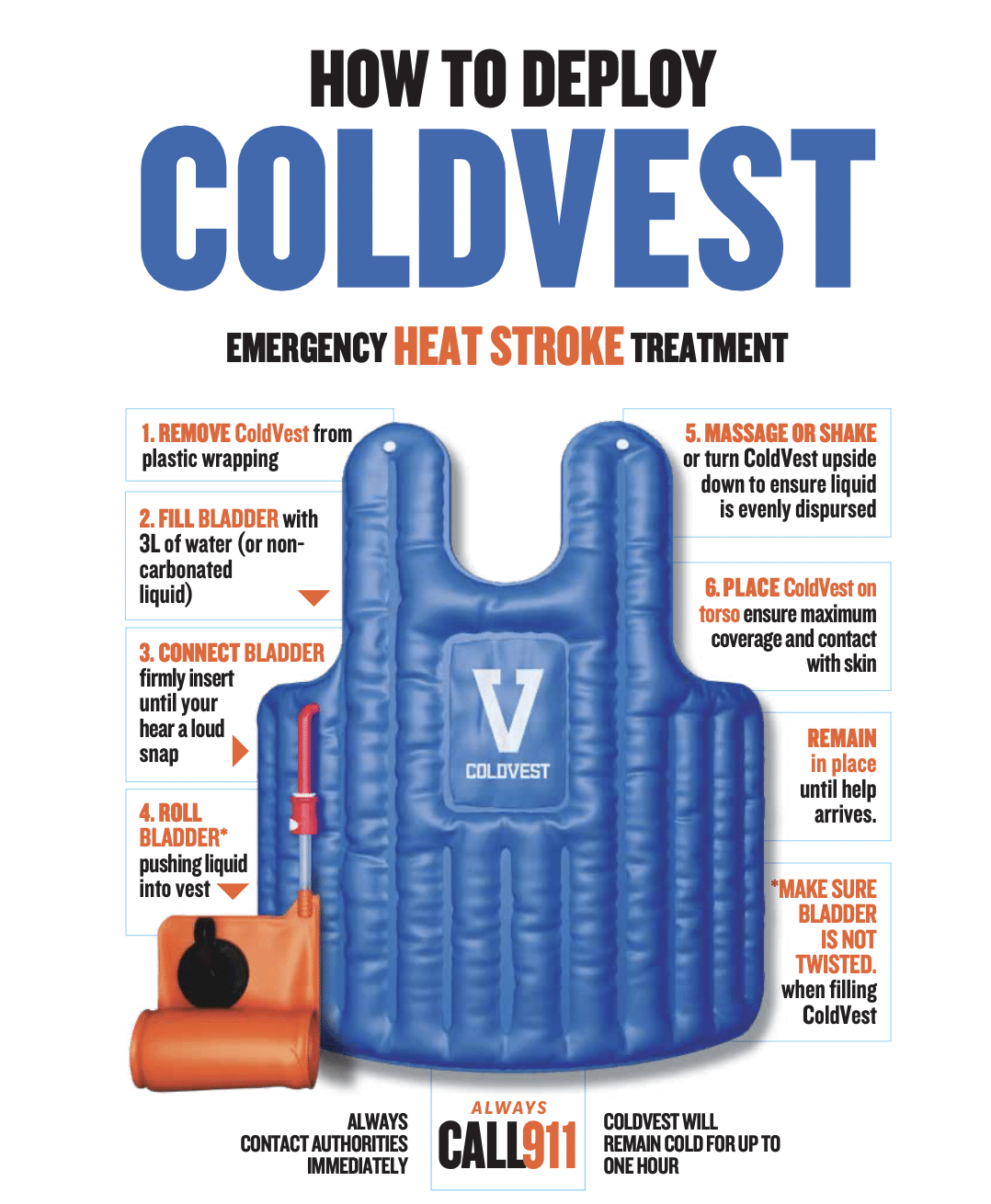
The ColdVest is to be used in times of heat emergencies.
“ColdVest is a viable treatment option for rapid cooling during transport or in remote work situations when cold water and ice are not available,” Casa said.
His team studied the ColdVest emergency product from the company ColdVest. It’s designed to support compliance with the Occupational Safety and Health Administration’s (OSHA) National Emphasis Program (NEP) on Heat Standards.
Another way to stay in compliance with the NEP is to prevent overheating. Sylvia Allen, founder and CEO of StaCool Industries Inc., Lecanto, Florida, designed and manufactures the StaCool Vest™ Body Core Cooling System, which is designed to be worn while working for prevention of emergencies. Her invention incorporates the use of frozen gel packs inserted into vest panels to help maintain safe body temperature while working.
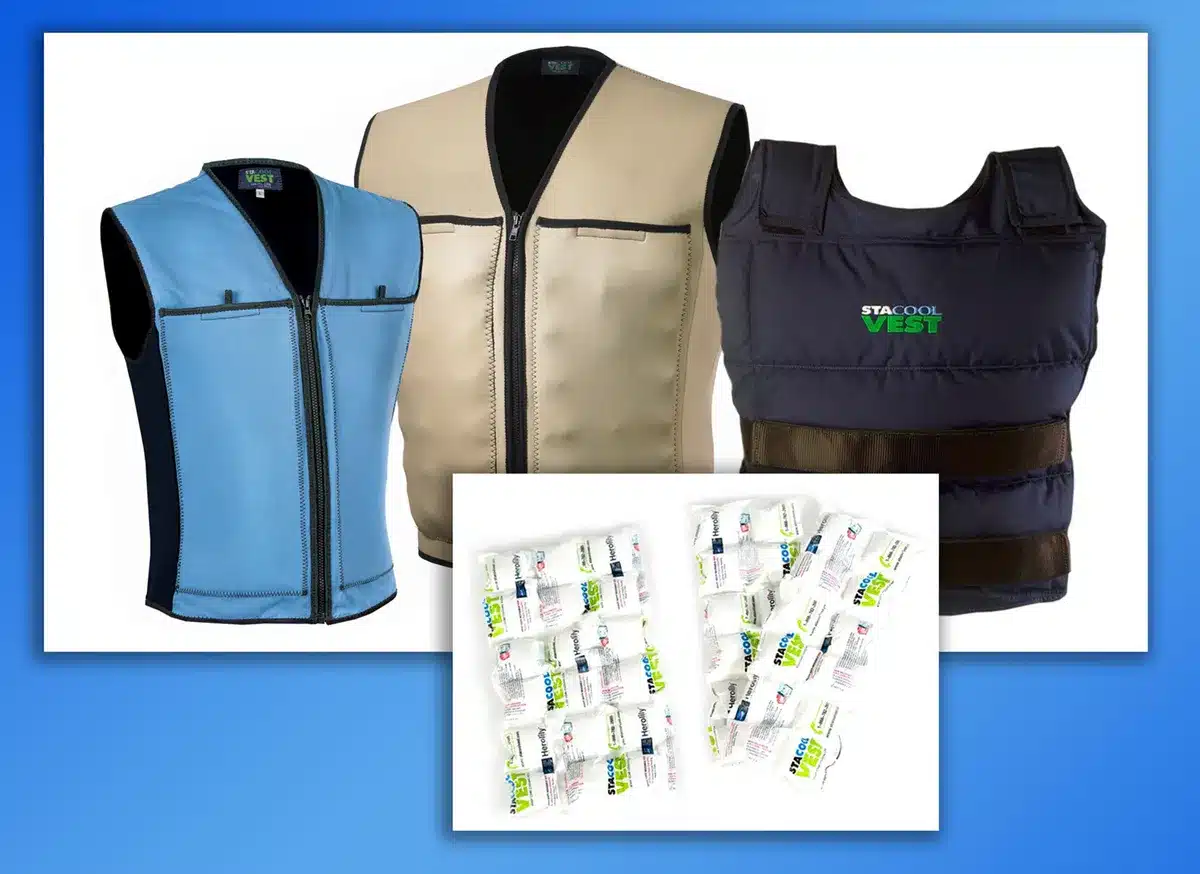
The StaCool Vest from StaCool Industries is designed to be worn as a preventive measure.
She shared, “The StaCool Vest is worn while working to help prevent the need of the ColdVest. The StaCool Vest can be worn so that the body temperature is kept at a comfortable level, not reaching the point of heat exhaustion. Wearing the StaCool Vest while working also helps with symptoms prior to heat exposure such as weakness, fainting, etc., which then could result in the possibility of more extensive injuries, not only to the person affected but to others as well.”
Allen’s vest is designed to be worn over and over again, with removable gel packs to freeze overnight and re-insert at the beginning of a new workday. As a preventive measure, it helps keep the worker from going into an emergency situation.
“The ColdVest is a great concept for those that reach that stage of heat exhaustion or other heat-related issues,” Allen said. “Wearing a StaCool Vest while working will help to prevent the need for use of the ColdVest; however, with that said, there is always that possibility, even while wearing the StaCool Vest, if not changing out ThermoPaks in a timely manner or if any other health issues or emergencies arise, having the ColdVest on hand and available while waiting for additional help to arrive would be a great addition to the safety equipment. Our summers are getting hotter and that is the new normal now, so any additional cooling equipment that can help prevent serious injury is always welcome.”
Comply with NEP: Tips to Keep Workers Cool, Safe and Your Company in Compliance
A colleague in distress isn’t always noticeable. “Commercial contractors have numerous people working on a project at a time,” Allen reminded readers, “so to be able to watch each and every person working and be able to notice the signs of heat exposure and exhaustion is almost impossible unless the person is able to bring it to someone else’s attention. Unfortunately, with heat stress, that rarely happens because the person affected does not notice the signs themselves until it’s too late. Individuals working with heavy equipment such as what’s used in the asphalt industry are also susceptible to heat exposure beyond just the physical work; this I would consider extremely dangerous to those around them.”
“I really like the idea of the ColdVest to have on hand in emergencies, again anything that can help prevent prolonged heat exposure and can rapidly cool down the core body temperature until help arrives is always a good thing.”—Sylvia Allen, Founder, StaCool Industries
If you see the signs of heatstroke in a colleague—which the Mayo Clinic lists as a core body temperature of 104°F or higher, confusion, agitation, slurred speech, delirium, nausea and vomiting, flushed skin, rapid breathing, racing heart rate, and headache—immediately call 9-1-1 and help the affected worker get to a shaded area. If you have a ColdVest on hand, the steps for its use are outlined in the sidebar. If you don’t have a ColdVest on hand, Mayo Clinic recommends removing the victim’s excess clothing and spraying them with cold water. Place ice packs or cold, wet towels on their head, neck, armpits and groin. Check out the more in-depth article “Comply with NEP” for additional guidance.
How to Deploy ColdVest in an Emergency
Step 1. Remove ColdVest from its plastic wrapping.
Step 2. Fill the bladder with 3 liters of non-carbonated liquid.
Step 3. Connect the bladder by inserting the tube to the vest’s red receptacle until you hear a loud snap.
Step 4. Roll the bladder like a toothpaste tube, pushing water into the vest. (Note: Make sure the bladder isn’t twisted when filling the vest.)
Step 5. Massage, shake or turn the vest upside down to ensure water is evenly dispersed.
Step 6. Place the ColdVest on the victim’s torso; ensure maximum coverage and contact with skin. Remain in place while waiting for emergency personnel to arrive. ColdVest is designed to stay cold up to one hour.