
Set High Standards for Haul Truck Drivers
BY Bill Stanley
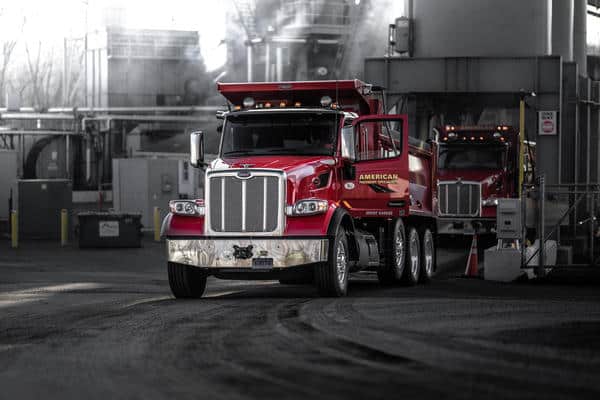
Haul trucks carry more than mix. They carry liability, timing and the success of the paving train. Here’s how American Pavement Specialists manages that responsibility.
Everybody thinks they’re a good driver. Clean record. Years behind the wheel. No tickets. I’ve had plenty of people walk into the shop with that résumé.
But on a paving crew, the truck isn’t just transportation. It’s part of the operation. If the trucks aren’t moving the right way, at the right time, in the right place, the whole job feels it.
That’s why we don’t treat mix delivery like a side detail. If you want better paving results, start with how the trucks move. Here are the rules we follow.
A clean CDL and 10 years on the road doesn’t automatically make someone a good driver for a paving operation.
Paving Isn’t a Route Job
A lot of truck driving jobs are route-based. You leave the yard, you run your stops, you come back. You’re on your own all day. You control your routine. Whether you’re a subcontractor or an employee, it can feel like you’re your own boss.
Paving isn’t like that. On a paving crew, you’re not operating independently. We tell you where to stage, when to pull up, and when to back into the machine.
That direction isn’t micromanaging. It’s how the job runs. We’re working in tight spaces, often next to live traffic, with limited real estate and a paving train that depends on timing. If a driver can’t take instruction and adjust to the rhythm of the crew, it doesn’t matter how many miles they’ve logged somewhere else.
We’re Hiring More Than a Driver
One thing I can’t stand is when drivers separate themselves from the crew. You’ll see it at the shop in the morning—operators and laborers on one side, drivers off in their own corner like they’re a different department. That doesn’t fly with me.
We’re not hiring a driver. We’re hiring a team player.
In any paving operation, there’s bound to be some downtime—holds at the plant, waiting on traffic, waiting on mix. The drivers who last on our team are the ones who get out and help. They direct traffic, clean their truck, check fluids, grab a shovel if needed.
Trucks break. If all you can do is drive truck seven from A to B, what happens when it’s in the shop? The drivers who can step in anywhere are the ones who become valuable.
360-Degree Awareness
A good haul truck driver has 360-degree awareness before they even move the truck. They’re looking for soft ground, exposed structures, trenches, equipment, and laborers working nearby because they understand the site changes by the minute.
You can tell quickly who has that awareness and who doesn’t. If someone runs through a pile of material, takes out a mailbox along the edge of a road job, or sinks a tire into ground that was never meant to carry that weight, that’s not bad luck. It’s a lack of attention.
On a paving job, alertness isn’t optional. It has to be constant.
Don’t Just Hand Them the Keys
We don’t put a new driver straight into the rotation. They start with ride-alongs with our best drivers, then move to following those same drivers. How long they stay in that phase depends on how they perform.
When they begin running solo, we ease them in. We start with lighter loads because a fully loaded truck handles differently and leaves less room for error. We avoid steep hills early on for the same reason. Control and judgment have to come first.
Training doesn’t stop once they’re alone in the cab. We’re still paying close attention. We use Fleetmatics across our fleet, and it gives us a clear window into how new drivers are performing. We can see speeding, hard braking, and driving patterns that may need correction.
The Route Isn’t Random
On bigger paving jobs, I don’t leave the truck route to chance. I lay it out myself, often driving the route ahead of time so I know exactly what we’re dealing with.
My first rule: big truck, big road. If we can keep heavy trucks off small side streets, we do. Beyond that, the fewer surprises, the better. I’m paying attention to commuter traffic, school release times, tight intersections, and grades. Every decision is about reducing exposure. The more opportunities there are for something to go wrong, the more liability we’re carrying.
I’m also picky about making sure every truck runs the same route. If one driver decides to try a shortcut, whether it works or not, your timing is off. Now you’ve got trucks stacked on the job or you’re starving the paver. Either way, the rhythm is broken.
We use the Reveal app to track location and ETA so we can see how loads are moving and keep that rhythm intact.
Own the Trucks, Own the Outcome
We run our own fleet—12 trucks—and we try to keep it that way.
When you bring in outside trucks, you can run into problems. They take their own route. They clean out in the wrong place. They spill in front of the paver. Sometimes the truck isn’t set up right for your machine—tailgate height, lip, whatever it is—and that can get ugly fast.
We will sub a few trucks when we absolutely need to. When we do, one of our best drivers meets them at the plant and walks them through exactly how we operate—where to go, where to stage, how we dump, what we expect.
But if I can help it, I’d rather take an extra day and use our own drivers. It may look slower, but when everyone knows the system and follows it, the job ends up running smoother—and usually faster.
Conclusion
You don’t pave without asphalt, and you don’t move asphalt without trucks. If the trucking isn’t right, nothing else is.
I’ll be honest—when we’ve got loaded trucks on the road, my heart beats a little differently. Backing trucks, running in traffic, working tight job sites—that’s serious risk. The liability is real. One mistake can shut a job down in a New York minute.
That’s why we take it seriously. Training matters. Route planning matters. The right drivers matter. You can’t treat haul trucks like an afterthought on a paving job. They’re not just delivering mix. They’re carrying a hefty responsibility for the whole operation.
The Big Red Target | You might have seen on our social media—we drive big, shiny red trucks. That puts a target on our backs for the traveling public to blame us for their bad driving. We’ve had drivers accused of rocks hitting cars when we weren’t hauling rocks, blamed for mailboxes getting knocked over, and accused of cutting people off when there was no truth to it. That’s why our drivers are trained to operate like everyone’s watching, because they are. This is also why we have dashcams in our trucks, so we can know what really happened when accusations are made against our drivers.