10 Screed Setup Steps for Better Mat Control
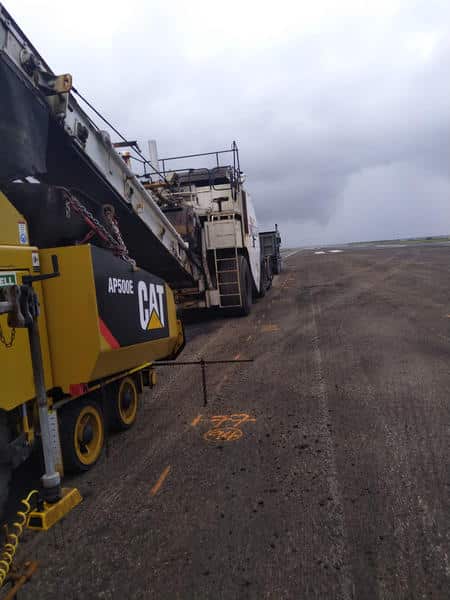
These are my 10 steps for screed adjustments that can influence the head of material and angle of attack for the better. I’ve assembled these set-up steps from a variety of sources over the years and augmented them with my experience for you to use before pulling off the transverse joint.

1. Install the correct length auger extensions and guards for the width being paved: 18 inches is a typical rule of thumb from end of auger shaft to inside of endgate.

2. Ensure the entire screed plate is heated to match the temperature of material being placed. If it’s not, the screed will immediately dive after leaving the starting boards and pave thin.

3. Determine thickness of starting plates or boards. You want them to be 20-25% above compacted mat depth depending on the mix, as a general guide. For example, for a 2-inch compacted depth mix, place 2.5 inches loose for 25% roll-down.

4. Position the paver correctly, then lower the screed onto the starting boards/plates: ensure the screed switch is in the “float” position.

5. Pull the paver forward 2 inches to take up slack at the tow point. (Quick Tip: Make sure you factor in this important step when positioning the paver and before you set the screed down to go.)

6. Lower the augers to appropriate height relative to loose mat thickness. Example: position bottom of auger flight 2 inches above loose mat when paving up to 3 inches loose mat depth. Above 3 inches loose mat depth, add an extra inch to auger height.

7. Raise or lower each tow point such that it is parallel with the screed pivot point. (Note: Check with each screed model OEM for specific procedures, as this may differ.)

8. Null first one thickness screw, then the other so the screed is completely relaxed. If the screed is not equipped with depth cranks, follow the manufacturer’s recommendations. Example: Set tow points such that they are on the same plane as the screed pivot points with the screed set up to the desired uncompacted depth. Then, adjust the screed turnbuckles to achieve a +1/8-inch to ¼-inch “nose up” attitude.

9. Take up screw slack one side at a time. Usually it will be just enough to put tension on the depth cranks, but enough to pitch the leading edge of the main screed plate up so that it is 1/8-inch to ¼-inch higher than the rear of the main when on the starting blocks. (Raise or lower the extensions as required in order to allow the above adjustment.)

10. Slowly, and at low engine RPM, fill each auger chamber one side at a time. Do not overfill. Set the head of material such that each auger shaft is 50% covered with material along full length. Turn on automatic feeder sensors and fine tune/adjust as necessary during paving to maintain this depth. Aim to run auger speed at 20-40 RPM. Augers must rotate continuously 100% of the time and not be “stop-start.”
Build Stronger Asphalt Joints with Proper Endgate Control

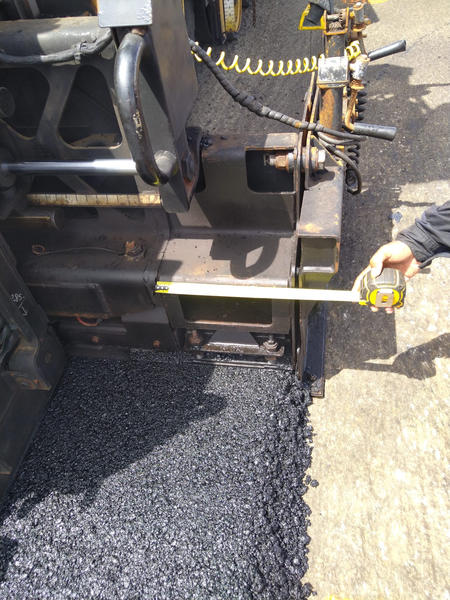
This picture shows the endgate lightly floating on the existing surface or grade. Consultant John Ball also describes it as “gliding” on the grade, which is a good analogy. Basically, the side plate or endgates need to lightly (but positively) contact the grade. This is to confine the unsupported edge, and it helps to build a nice, strong, square edge. We need that to build quality joints.

If you pave with the endgate raised up, what happens is the longitudinal joint becomes weak, segregated and it rolls over under the compactors. When you confine the edge by putting the endgates down, you build in some density and uniformity because there’s a wall there that defines the edge of the mat. When you match a hot joint, you also want the endgate down, lightly gliding on the previously placed hot mat you are precisely matching.

3 Key Points

1. Don’t force the endgates down “hard” on either an existing grade when placing the leading edge (the first pass or the open longitudinal joint) or when doing a hot joint match on a previous pass. Be sure it’s floating nicely.

2. Leave some room in the endgate springs so it has a couple of inches of float or travel to move up or down as the grade changes or you have a variable depth. If you have too much down-pressure on the endgate springs, it can interfere with the screed’s job of floating on the mat. That’s why it needs to gently glide.

3. On a hot joint match, you will soon figure out how much the sweet spot is for your down-pressure. If it’s down too hard it will dig into your uncompacted hot mat and scar it; if it’s not down enough you will get excess material bleeding out, creating a lot of unnecessary hand work to fix that excess up, not to mention likely a nasty line of bones.

Blue Diamond Launches HDX Grapples for Mid-Size Equipment

Blue Diamond Attachments, Knoxville, Tennessee, launced in June a new addition to its lineup of HD and severe duty grapples—the HDX series grapples. The new units are designed for mid-size skid steer loaders, CTLs and tractors up to 75 horsepower and include root grapples and grapple buckets for land clearing, landscaping, debris removel and storm cleanup. The new HDX Series open to 32 inches, are 37 inches deep from front to back and have 72 inches of working width.

Thunder Creek Expands Dealer Network in WI and MN

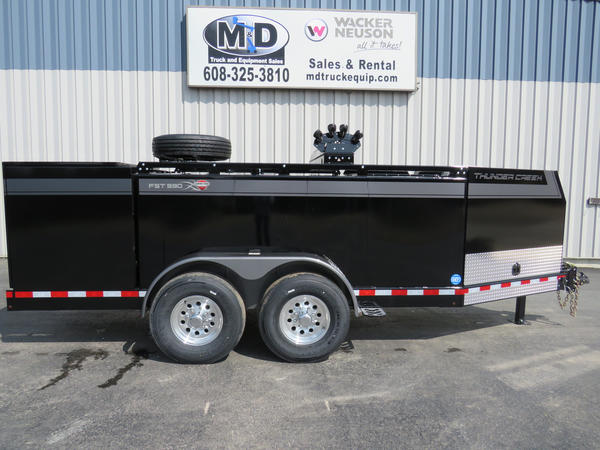
In April, M&D Truck and Equipment, Monroe, Wisconsin, added the Thunder Creek lineup of field fueling and service solutions to its product offering of construction, agricultural, turf and support equipment. The company specializes in the resale of heavy, compact and support equipment into a variety of industries throughout southwestern and central Wisconsin.

Then in June, Rollie’s Sales & Service, Osakis, Minnesota, added the Thunder Creek lineup to its offerings, including Thunder Creek’s original No CDL, No HAZMAT fuel and service solutions, as well as the bulk agricultural fuel trailers that first featured the manufacturer’s proprietary diesel exhaust fluid (DEF) delivery technology.

Aidan Lambert, sales manager of M&D Truck & Equipment, said, “We are at a unique area in the state of Wisconsin where we have demand for heavy construction and agricultural equipment, as well as landscape and site development contractors who need a diverse equipment offering. The addition of the Thunder Creek field and fueling solutions provide our partners with an entirely new way to view how they look at field fueling and service—driving efficiency both in fleet management and site operations.”

Bobby Volesky, owner of Rollie’s Sales & Service, said, “Minneapolis and the surrounding region represent a unique collision of construction and agricultural demands that makes the Thunder Creek product a no-brainer—and adds extreme versatility and scale to our broader offering of fuel and lube equipment solutions. Whether off-road, in the city or on a big commercial job site, we have the solutions to meet anyone’s fuel and fluids equipment needs.”

For more information, visit ThunderCreek.com.    

BOMAG Debuts BD 2000 Asphalt Distributor in North America

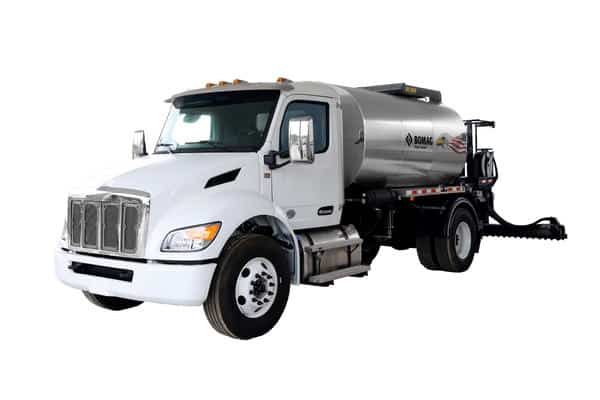
New to the BOMAG, Ridgeway, South Carolina, offerings, the BOMAG BD 2000 asphalt distributor features an automatic burner for efficient heating and intuitive computer-controlled distribution for exceptional accuracy and comfortable, one-person operation. The BD 2000 integrates a 2,000-gallon insulated tank, and its hydraulically extending/ retracting spray bar features flat nozzles spaced every 4 inches for optimum spray coverage across its 15.7-foot maximum width. The flexible distributor boasts a main, 7.5-foot bar that extends hydraulically up to 4.1 feet on either side to offer infinitely variable spray widths from 7.5 to 15.7 feet.

Tom Schanz is the new sales director, dealer channel for the eastern United States.

In additional news, BOMAG Americas, a FAYAT Company, announces the appointment of Tom Schanz as the new sales director, dealer channel for the eastern United States. Schanz will collaborate with the U.S. dealer network and BOMAG territory managers to support market awareness, increase product knowledge and expand training, providing more value for customers. Schanz brings nearly 15 years of sales and divisional leadership experience to the BOMAG Americas team.

For more information, visit www.bomag.com/us-en

ShoulderMaster ASB2400 Angle Broom Fits Any Skid Steer

ShoulderMaster, with global headquarters in Wauchope NSW, Australia, offers the ASB2400 angle broom, which is a forward sweeping angle broom attachment. The manufacturer states it is compatible with any skid steer with no modifications required. It has hydraulic driven rams controlled by an in-cab electronic switch. Its overall width is 8 feet, 11 inches with a sweeping width of 6 feet, 10.48 inches. The brush diameter is 28 inches. Its features and benefits are listed as:

  • Open-face broom with direct-drive brush
  • Square drive motor
  • Weight of 1,234 pounds
  • Available in two sizes of 92 inches and 82 inches
  • Continual spiral one-piece brush
  • In-cab hydraulic angle change
  • Greasable strong articulation knuckle
  • Available in poly/wire combinations
  • Bolt-on replaceable stone guard

For more information, visit www.shouldermasterus.com or contact Tommy Tomlin at (515) 520-0653.