Straighten Up Your Lines with Better Guides
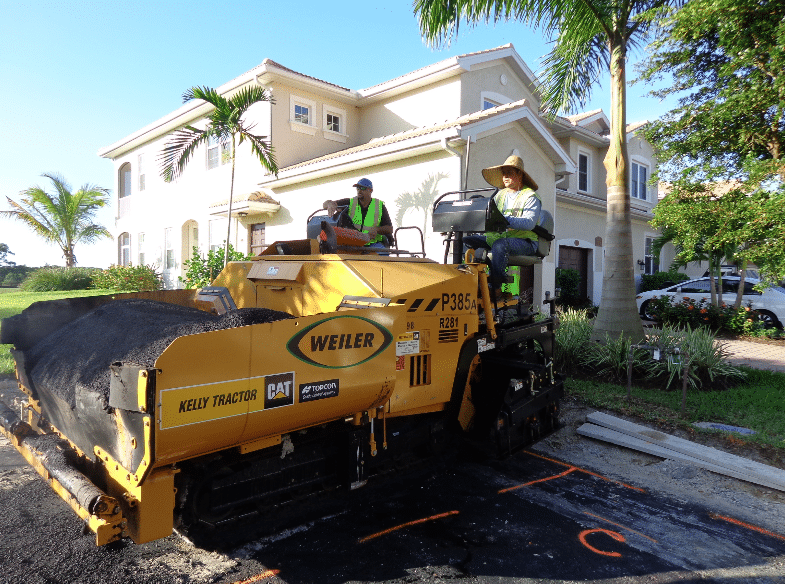
When you get down to it, the paver operator’s job is to drive the tractor in a straight line. Yes, he must keep up with the production coming from the asphalt plant; sometimes he’s filling in for the dump man; he’s always communicating with the truck drivers; he’s tracking yield along with the foreman at times; and he’s tackling a thousand more tasks, but he has to do all of this without wobbling down the lane. Each pass with the paver must match to the joint he created with the pass before it.

To help him, make sure the paver is in optimum condition and check the guide bar on the front of the tractor.

Clean the guide bar. Straighten it if it’s bent or warped. Paint (or repaint if it’s gotten chipped/worn) the end of the bar to make it more visible. If you’re paving at night, put a light on the end for safety and visibility. Many companies make magnetic lights you can move around to get the beam to shine right on the end of the guide bar. It seems a simple device, but it can make the difference for the operator.

All the equipment operators benefit from clean and well-maintained equipment when they’re paving for pay. If you want bonuses and repeat customers, make sure crewmembers have these basic concepts working in their favor.


Get tips like this delivered to your inbox each week when you subscribe to our Toolbox Tips newsletter.


Trimble Launches Materials Software to Streamline Purchasing

Trimble, Westminster, Colorado, announced in May the launch of Trimble Materials, which is an end-to-end purchasing, inventory and accounts payable software solution. It is designed to help contractors gain control over material costs with enhanced budget and inventory tracking. Through its office and mobile applications, the solution connects the office, field teams, warehouse teams and suppliers to centralize and streamline the contractor’s entire purchasing and materials management process.

“Managing numerous material orders from various suppliers amidst volatile pricing and availability presents significant challenges in the construction sector,” said Lawrence Smith, vice president and general manager of construction management solutions at Trimble. “Trimble Materials offers a cohesive solution by connecting material ordering, inventory and accounting, which is especially valuable in the face of potential changes in tariff policy. This digital streamlining empowers contractors to mitigate risks, control costs and gain a competitive edge in an evolving economic landscape.”

Trimble Materials integrates with Trimble ERP solutions, including Viewpoint® Spectrum® and Viewpoint Vista™ to provide connectivity for contractors to develop more efficient estimating, operations and accounting management ecosystems. Trimble Materials complements Trimble’s existing construction supply chain workflows that automate the exchange of material pricing between suppliers and contractors and facilitate ordering from preferred suppliers.

With Trimble Materials, field users can search for and request materials, view inventory, record received materials and communicate with the office. Office users, such as project managers and purchasing teams, can more efficiently control, approve and process orders, view inventory, generate RFQs, compare quotes and reconcile invoices. A comprehensive view of these purchasing activities and spend analysis is created in one place.

Pavewise Launches SpecChat AI for Fast Spec Book Answers

Pavewise, Bismarck, North Dakota, has introduced SpecChat AI as a tool to deliver instant answers from any state’s construction spec book.

Built for contractors, project managers, and DOT teams, SpecChat AI is an assistant that simplifies your workflow by providing fast, reliable information—right when you need it. SpecChat AI is trained on up-to-date spec books from every U.S. state, so you can search and get accurate results in seconds—saving time and improving compliance across your projects.

Key features of SpecChat AI include:

  • AI-Driven Search: Instantly pull answers from official state spec books.
  • State-Specific Accuracy: Delivers precise responses tailored to each state’s standards.
  • User-Friendly Interface: Simple, intuitive chat-style design makes it easy for anyone on your team to get answers.
  • Streamlined Workflows: Cut hours of research down to seconds, simplifying compliance.

SpecChat AI turns complex spec books into quick, actionable answers—helping you cut through confusion and keep your projects on track. With instant access to critical, state-specific information, your team can work faster, avoid costly delays, and stay fully aligned with requirements every step of the way.

For more information, contact info@pavewisepro.com.

Meeker Spotlights Electric Heater & UL‑142 Tanks at World of Asphalt

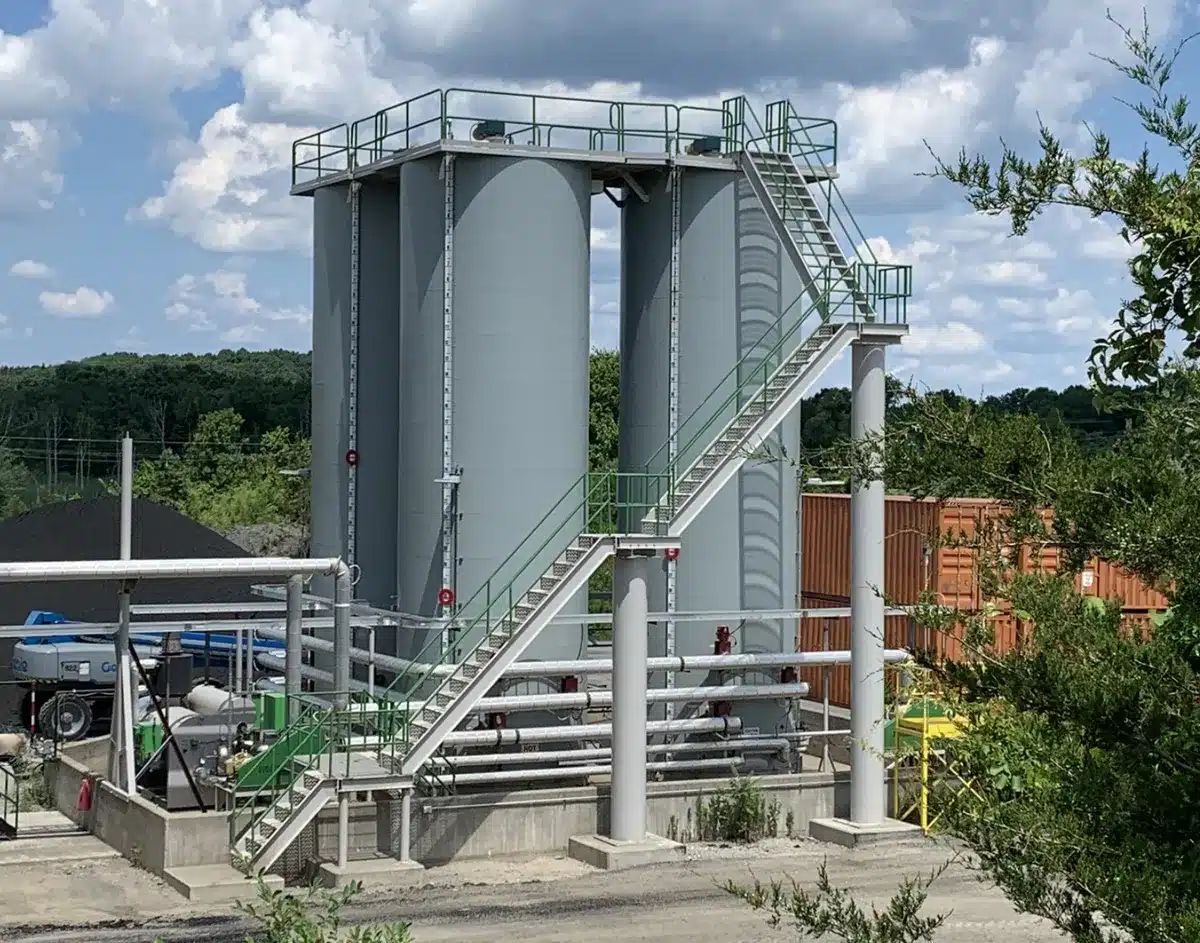
If you stopped by the Meeker Equipment booth during World of Asphalt, you would’ve seen the Patriot-E electric hot oil heater on display as well as a walk-in size tank. The large tank taking up half the booth’s footprint showed off the company’s commitment to industry’s need for storage that meets specific requirements. Meeker, headquartered in Belleville, Pennsylvania, manufactures UL-142 asphalt tanks, which means every UL-142 asphalt tank is assigned a specific number and that number gets registered with Underwriters Laboratory.

“We are a UL-142, ASME section VIII and API approved tank manufacturer,” the company shares on its website. “Our facility is quality control inspected by Underwriters Laboratories four times per year. We are a licensed manufacturer for the Steel Tank Institute (STI). We are the recipient of STI’s Quality Award 16 consecutive years and inspected two times annually.”

All asphalt storage tanks from Meeker are built to the UL-142 construction code and the company keeps records of the steel purchases, welding practices, pressure tests and other quality control measures. They use 6-inch insulation on the top and sidewalls of the tanks. The bottom of the tanks are insulated with foam glass block. All shell joints are double butt-welded and nozzle joints are seal-welded inside and out. You can watch an emulsion tank being erected at the Meeker YouTube channel here.

For more information, visit https://www.meekerequipment.com/productDetails-46

Permitting Reforms Needed to Speed Up Transportation Improvements, Tennessee Contractor Tells Congress

Tony Boals, a vice president with Tennessee-based Wright Brothers Construction, today called on Congress to make three commonsense reforms to the National Environmental Policy Act (NEPA) that could help speed up delivery of transportation improvement projects.

Boals represented the American Road & Transportation Builders Association (ARTBA) at a House Natural Resources Committee hearing on federal permitting issues.

“Transportation improvements and environmental stewardship are not mutually exclusive,” Boals testified. “In fact, their synergy can yield significant benefits such as reduction in traffic, protecting wetlands and waterways, and improved environmentally focused design.”

However, Boals noted that current inefficiencies in the federal permitting process, particularly on transportation projects, can create uncertainty that leads to potential project delays and threats of litigation, all of which translate into increased costs and diluted public resources.

Boals called NEPA “a procedural tool meant to promote harmony between development and the environment” and outlined three specific reforms to bring the law back into balance:

  • Empower more states to take on NEPA responsibilities by standardizing the application process, making NEPA assignment permanent after an initial audit, and offering more federal resources to cover any associated costs. Eight states—red and blue—have taken on the NEPA assignment.  They report millions in annual cost savings, while shaving months off the environmental review process, Boals said.
  • Properly enforce One Federal Decision (OFD) to ensure lead agencies meet required timelines and page limitations. Despite bipartisan action codifying OFD, the time it takes to complete an Environmental Impact Statement remains double the intended two-year target—and is typically much higher for complex highway projects, he added.
  • Increase the federal funding threshold for categorical exclusions from $5 million to $10 million to reflect the post-pandemic increase in construction costs.

“With thoughtful, targeted reforms, Congress won’t just improve timelines—it will improve outcomes and help deliver transportation enhancements that communities need,” Boals concluded.

Read the full written testimony.

New 1200‑CC From Eagle Crusher Speeds Setup With Hydraulic Additions

Eagle Crusher, Galion, Ohio, offers its next generation 1200-CC portable crushing and screening plant. The 1200-CC’s new features include a redesigned return conveyor, a new fully hydraulic side discharge conveyor, a self-lowering control panel, and an available onboard cross-belt permanent magnet that stays on for transport.

The redesigned return conveyor allows quicker setup without having to attach parts after extension. The new, fully hydraulic side discharge conveyor makes setup and teardown easier. The self-lowering control panel no longer requires additional equipment to remove from the plant.

For more information, visit https://eaglecrusher.com/