Cover the Load for Quality, Safety

As parts of North America begin to cool down this month, paving foremen will keep a closer eye on mix delivery temperatures. Depending on what state you operate in, the haul truck bringing mix to your site is already required to use a tarp to cover the load. Now consider a way to close that tarp down.

When the haul truck driver exits the loadout area at the asphalt plant, he will immediately cover the new load of material to hold heat in. Some tarp systems are on rails that hold the tarp close to the truck body. When the canopy is closed, it almost seals the truck bed closed, forming a sort of “container” that holds the perishable mix and its heat inside.

By using a canopy that’s on rails, the driver has eliminated the flapping and tearing of tarps that hang above the mix, and has eliminated the passage of cool autumn air that gets in under the tarp. That wind cools the top of the mound(s) of material, creating a shell of hardened mix. A shell of cooler material represents temperature segregation for the paving crew to deal with; it can also represent chunks of material segregation.

You may want a material transfer device in front of the paver or remixing system in the paver hopper to help with minimal crusting. Or you may want to give your foreman the authority to send a poor-quality load back to the RAP pile.

QUICK SAFETY TIP: 

While several tarping systems now feature remote functions that let the driver move the tarp to cover and uncover the load from inside the cab, there are still systems that require the driver to get out and move the tarp by hand. Keep in mind, if you do exit the cab to manipulate a tarp, you must wear your PPE. Please wear a hard hat to protect yourself in the event of an emergency. Always stay aware of your surroundings and don’t dilly-dally. You’re not on a break. You’re getting the tarp in place, or out of the way for dumping, and then getting yourself back to the safety of the cab.


Get tips like this delivered to your inbox each day when you sign up for our Toolbox Tips newsletter. 

Can That Crack be Sealed?

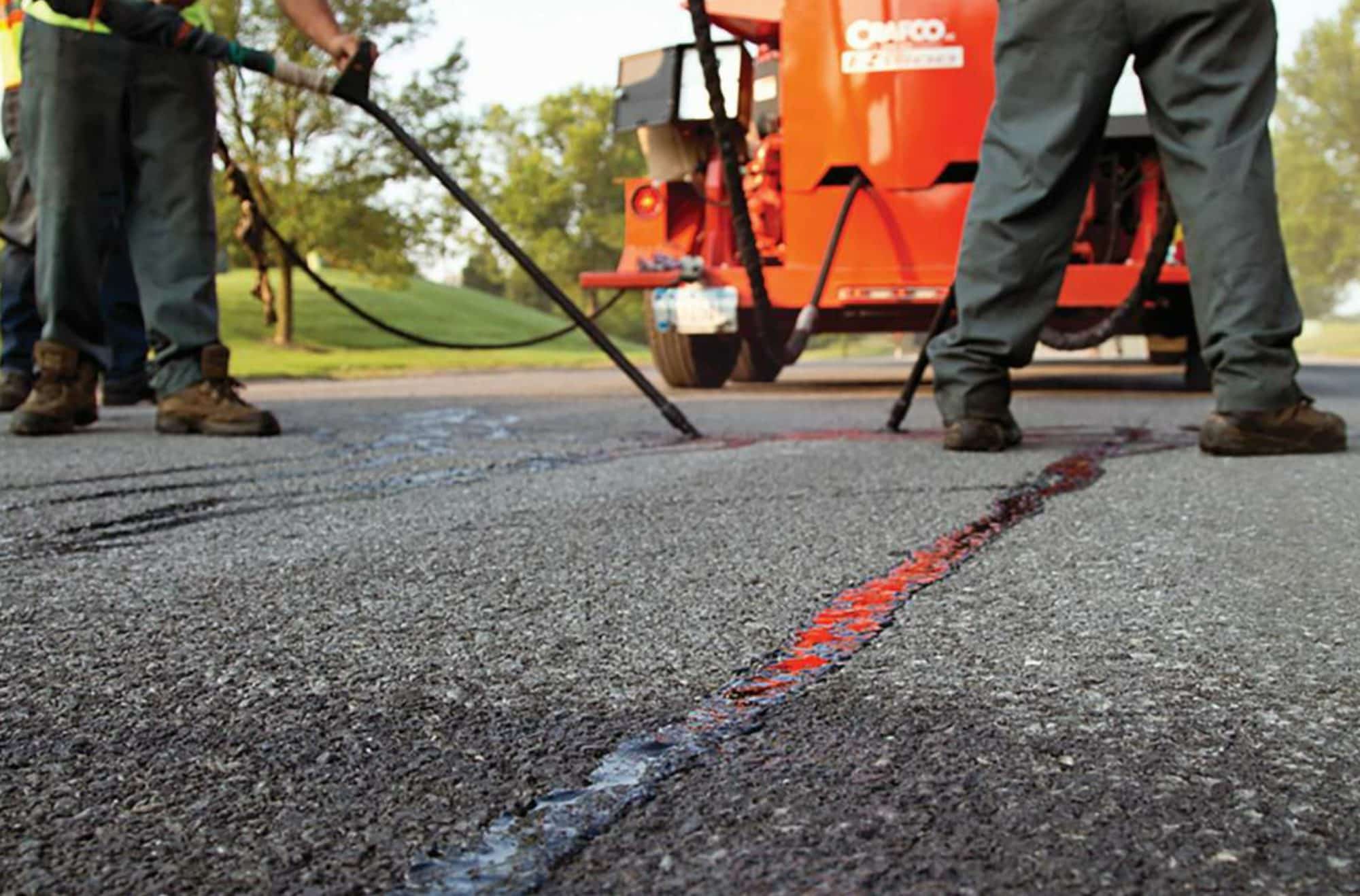
Crack sealing is a cost-effective pavement preservation treatment that can slow a pavement’s deterioration and extend pavement life by three to five years, according to the research. But not all cracks can, or should, be sealed.

Cracks should be wider than ⅛ of an inch, but no wider than 1 ½ inches for the sealing method of repair.

This includes block, edge, longitudinal, reflective, thermal and transverse cracking. Alligator cracking may not be a candidate for crack sealing, as the alligator cracks indicate failures requiring repair beyond crack sealing. For this distress, you will likely be asked to saw cut and remove the area for patching. And that’s another tip for another day.

If the crack is a candidate for sealing, it’s important to perform the work as soon as possible, before the pavement becomes too distressed.

According to the Pavement Preservation & Recycling Alliance’s roadresource.org, 75% of unsealed cracks develop into potholes within three years, while only 1% of sealed cracks develop into potholes in that same timeframe. This proves you want to pounce on the problem and solve it early!


Get tips like this delivered to your inbox each week when you subscribe to our Toolbox Tips newsletter!

Worker Fatalities, Injuries in Highway & Bridge Construction Sector Decline

The highway and bridge sector is making measured progress in reducing worker deaths and injuries compared to the broader construction industry, according to an analysis of U.S. Bureau of Labor Statistics data released April 23 to coincide with National Work Zone Awareness Week (NWZAW).

The analysis, conducted by the American Road & Transportation Builders Association (ARTBA), reveals that between 2011 and 2023 (the most recent years available), fatal injuries in the Highway, Street, and Bridge (HSB) sector declined 15 percent, while fatal injuries for the rest of the construction sector jumped 41 percent. Non-fatal injuries and illness for the HSB sector also declined, with the number of cases per 1,000 workers decreasing 46 percent.

“These numbers demonstrate that public and private sector efforts to help improve jobsite safety through training and public awareness are having a positive impact,” said ARTBA Senior Vice President of Safety & Education Brad Sant.

While the number of deaths among workers is still unacceptably high – 88 in 2023 alone – Sant believes the downward trend reflects the collaborative spirit between public agencies, industry organizations, and transportation design and construction firms to address safety risks and hazards.

As examples, Sant cited the many organizations working together to promote NWZAW, along with resources provided via the National Work Zone Safety Information Clearinghouse, which offers free online training and public awareness tools.

The Clearinghouse, a three-decade partnership between ARTBA and the Federal Highway Administration, is the world’s largest online information source on roadway construction zone safety issues.

Last year alone, the Clearinghouse provided free safety courses to 3,000 workers and distributed over 8,000 safety-related documents to key stakeholders.

“To continue reducing worker fatalities and injuries, we need to keep doing what we are doing – and do more of it,” Sant adds.

The theme of this year’s NWZAW, which kicked off in Raleigh, N.C., this week is, “Respect the zone so we all go home.”

ARTBA is a co-sponsor of the event hosted by the North Carolina Department of Transportation.

FHWA Final Rule Repeals CO₂ Emission Target Mandate for State DOTs and MPOs

The Federal Highway Administration (FHWA), under the U.S. Department of Transportation, has issued a final rule repealing the requirement for State Departments of Transportation (DOTs) and Metropolitan Planning Organizations (MPOs) to set and report on declining carbon dioxide (CO₂) emission targets for the National Highway System (NHS). The rule, published under 23 CFR Part 490 [Docket No. FHWA-2025-0001], becomes effective May 19, 2025.

Key Takeaway:

The rule removes a performance measure aimed at reducing tailpipe CO₂ emissions from on-road sources on the NHS—essentially nullifying a regulation that had never taken effect due to ongoing litigation and questions of statutory authority.

Background and Purpose

The repealed requirement stemmed from a 2023 FHWA rule that attempted to reintroduce a greenhouse gas (GHG) measure originally proposed in 2017 and repealed in 2018. The GHG measure mandated State DOTs and MPOs to:

  • Set progressively lower (declining) CO₂ emission targets.

  • Measure annual on-road CO₂ emissions.

  • Report progress and develop corrective plans if targets were unmet.

FHWA now states that repealing this measure is not only consistent with judicial rulings, but also a necessary action to align federal regulations with existing statutory authority and remove regulatory burdens without measurable benefit.

Judicial and Legal Context

The 2023 GHG rule was challenged in court by 22 states, leading to rulings in Texas and Kentucky that concluded the rule:

  • Exceeded FHWA’s authority under 23 U.S.C. 150(c)(3).

  • Was arbitrary and capricious.

  • Could not be legally enforced.

With those rulings now final and unappealable, FHWA determined it had no discretion to maintain the GHG measure, eliminating the need for public comment under the Administrative Procedure Act.

Implications for States and MPOs

  • No Requirement to Set CO₂ Targets: States and MPOs are no longer obligated to track or reduce CO₂ emissions under federal performance metrics.

  • Voluntary Participation Permitted: They may still choose to assess emissions and set their own targets independently.

  • Regulatory Relief: FHWA describes the repeal as a deregulatory action, aligning with Executive Orders promoting reduced federal oversight and streamlined governance.

Policy and Environmental Considerations

FHWA reiterated that:

  • The statutory framework of 23 U.S.C. 150(c) does not explicitly include GHGs in its performance measure requirements.

  • Including such a measure would require clear Congressional authority, which FHWA believes is currently absent.

  • This repeal helps return the Code of Federal Regulations to its proper scope, without unintended or unauthorized expansions.

Despite environmental concerns around transportation emissions, the repeal signals a shift in focus back to traditional infrastructure performance metrics such as safety, pavement condition, and freight movement.

Administrative and Procedural Notes

The rule was issued without the standard notice and comment process due to a “good cause” finding. FHWA asserted that:

  • The repeal has no effect on the public, since the 2023 rule never took effect.

  • Courts have already invalidated the rule, making its implementation legally impossible.

Conclusion

This latest rulemaking represents a significant development in the ongoing debate over the role of federal transportation agencies in climate policy. While the GHG measure’s repeal removes a federal mandate, it leaves room for state-led or voluntary initiatives to monitor and reduce CO₂ emissions from transportation sources.

For further information, stakeholders can contact:

  • Gary A. Jensen, FHWA Office of Natural Environment – (202) 366-2048

  • Lev Gabrilovich, FHWA Office of the Chief Counsel – (202) 366-3813


Read the full document here

How Asphalt Companies Attract New Clients on Social Media

In today’s digital landscape, asphalt companies are increasingly turning to social media as a tool for attracting new clients. An AsphaltPro survey of industry professionals reveals that 76.5% of asphalt companies use social media to attract new business, while 94.1% use it to showcase the quality of their work. 

More than half of respondents said they ‘sometimes’ bring in new business from social media. One quarter said they bring in new customers from social media ‘rarely’, and one quarter said they attract new business via social media ‘often’ or ‘always’. 

Despite its potential, many companies still question how effective social media can be for generating new leads. In this article, we’ll explore how asphalt businesses are successfully using social media to grow their client base and stand out in a competitive market.

Showcase quality—for free

Many asphalt companies use social media as a way to showcase the quality of their work, which can attract new clients. “My primary goal with social media is to showcase and highlight our quality workmanship,” said Pat Ferry, owner of Aztec Paving Inc., San Diego, California. “Social media offers a valuable opportunity to showcase the quality of our work to a wide audience—at no cost.” 

Show—and sell—materials

On the production side, Kesmond Willert, marketing manager at Bowes Construction Inc., Brookings, South Dakota, echoes this approach. “We like to post close-up content showcasing our materials,” he said. By posting images of aggregates and products on Facebook Marketplace, the company has been able to reach both private consumers and contractors. Willert explains that younger clients, who prefer messaging over phone calls, often send orders via social media, a shift that reflects changing communication preferences in the industry.

Develop subcontractor relationships

Social media is also a valuable tool for networking within the industry. Matt Stanley of American Pavement Specialists, Danbury, Connecticut, and founder of Raised on Blacktop, highlighted how social media has allowed his company to form connections with contractors they hadn’t worked with before. 

“Contractors are constantly looking for quality subcontractors,” he said. “On social media, they’re able to see the quality of our work day in, day out. It’s not just about driving past one of our jobs—they see it every day and become more familiar with our business as a whole.”

The benefits of other construction companies being familiar with the quality of your work don’t stop at the sale. “When we show up on job sites, even if we’re working for a larger company, their foremen are already familiar with us from social media,” he said. “They know we do good work and trust we’ll do the job right.”

Get referrals

Social media also provides opportunities for local engagement that can directly lead to new clients. Stanley shared the example of his brother’s residential paving company, which receives a substantial amount of business from Facebook groups. “A lot of people in local mom groups on Facebook will ask for recommendations for a driveway contractor, and his company will be one of the top responses,” he said. 

Close the deal

While social media can drive new business, it isn’t always the immediate sales tool some may expect. Jake Fragale, the fourth generation behind J. Fragale & Sons Paving Inc., Torrington, Connecticut, said that while he’s still figuring out the exact impact of social media on their sales, he sees his company’s investment in social media not as a method to attract business but to close existing deals. “Social media isn’t doing the ‘initial outreach’ for us, but it is helping people who may be on the fence about hiring us see our work, get more familiar with us, and ultimately choose us over a competitor.”

Conclusion

For asphalt companies, social media offers an array of benefits that can help them attract new clients. Whether it’s showcasing the quality of their work, networking with other contractors, or engaging with local communities, social media is a powerful tool that can help asphalt companies grow their business. While it may not replace traditional methods entirely, its ability to build relationships, showcase expertise, and connect with potential clients makes it an invaluable asset in today’s competitive market.

Prove Your Off-Highway Equipment is CARB-Compliant

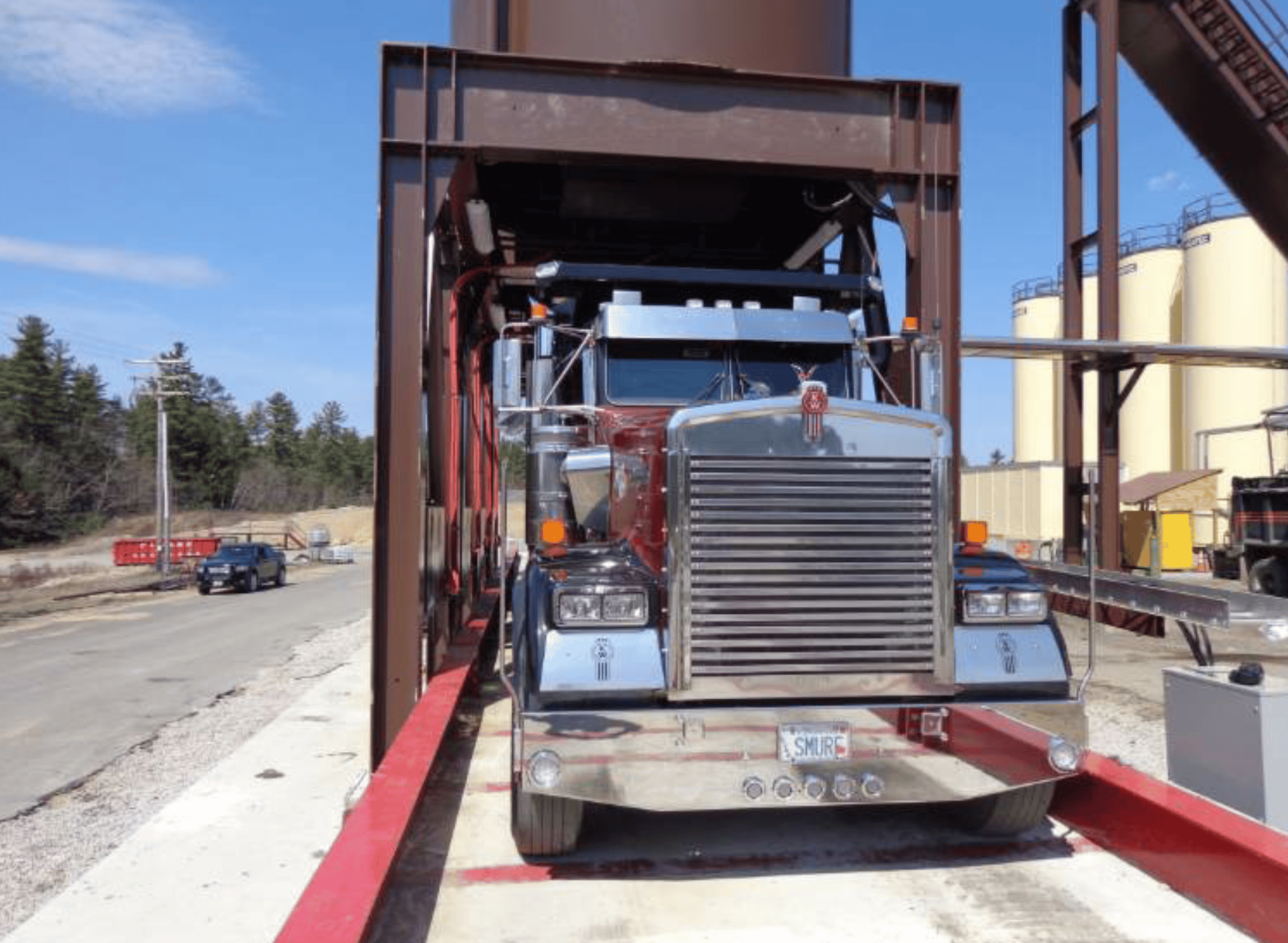
Even off-highway equipment that enters California, such as construction or agricultural vehicles, must adhere to California Air Resources Board (CARB) rules if they meet Gross Vehicle Weight Rating (GVWR) thresholds or if they operate near regulated areas, such as ports, rail yards, truck scales and so on. With fines reaching $10,000 per vehicle per day for failing to comply with regulations, asphalt professionals are wise to assess their equipment and set up a maintenance plan to keep all vehicles in compliance.

When perusing the 17-page white paper “Getting Your Fleet CARB-Compliant” from Geotab Inc., we see that it’s all about lowering greenhouse gas (GHG) emissions and proving that you’ve done so. Here are the key elements and takeaways from the white paper that affect the asphalt professional who wants to keep his mixed fleet in compliance. Geotab recommends:

  • First, you want to evaluate your off-road equipment. Look at the weight of your loaders, pavers, material transfer vehicles and so on. If they’re less than 14,000 pounds, check the applicability of the regulations in your county. Your 83,000-pound cold planer, even with a Tier 4 Final engine, probably requires emissions monitoring, and its use on an airfield puts it firmly in a regulated area.
  • Second, check how you can integrate compliant diagnostic tools.
  • Third, use legally sanctioned telematics devices for emissions data gathering.

For asphalt professionals with a mixed fleet of off-highway heavy equipment, a mixed approach to CARB compliance is in order. Geotab has identified—and listed in the paper—four CARB-approved emissions data submission methods for on-highway trucking fleets, which our industry can adopt.

  1. Use certified testing facilities
  2. Use portable emission acquisition systems (PEAQS)
  3. Use in-house OBD scan tools
  4. Use continuously connected telematics devices

By blending the use of these collection and submission methods along with external testing for older or specialized equipment, the asphalt professional can prove his compliance with CARB (and other) emissions regulations.

While the white paper referenced herein was prepared specifically for the on-road trucking industry, elements can be extrapolated for the wider heavy vehicle fleet in California. A short list of “heavy-duty vehicle types” were listed as exempt from CARB regulations, and asphalt haul trucks were not among them.

Ensure any off-road equipment entering California or operating near regulated facilities is audit-ready so you can prove your commitment to environmental sustainability and CARB compliance. Asphalt professionals in the state can reach out to Geotab for the full white paper here.