John Deere Commemorates 75 Years of Dozer Innovation

John Deere commemorates its 75th year in the dozer market. Beginning production in 1949 in Dubuque, Iowa, the John Deere line-up of dozers has evolved throughout its 75-year history.

“This important 75-year milestone of dozer manufacturing recognizes the tremendous teamwork of everyone involved including our factory teams, engineers, and our dealers that support our customers every day,” said Matt Costello, product marketing manager, dozers, John Deere. “We’re incredibly proud that this lineup has continued to provide the durability and performance that our customers rely on to work smarter and more efficiently getting the job done right the first time.”

Looking back at key milestones for its dozer family, John Deere debuted various industry-leading solutions and breakthrough designs that paved the way for today’s models.

1949 John Deere began manufacturing MC Dozers in Dubuque, Iowa.

1958 – The 440 Crawler Dozer entered the market as the first all-yellow machine built specifically for industrial applications. This model stood out as the industry’s first all-hydraulic bulldozer with 6-way power-angle-tilt blade, leading the charge with its ground-breaking design.

1965 – John Deere introduced dozer T-Bar blade controls, as well as the first integral machines with the new industrial model numbers. These models included the JD350 and JD450 crawlers, which were configured distinctly as dozers or loaders.

1976 – John Deere became the first North American manufacturer to utilize dual-path hydrostatic drive on its dozer line-up.

1988 – New full powershift transmission models were introduced, including the 400G, 450G, 550G and 650G models, which offered four forward and four reverse speeds, expanding capability on the jobsite.

1999 – Dual path hydrostatic drive was introduced on the 450H, 550H, 650H models and continues to date in the full John Deere dozer lineup.

2001 – John Deere introduced its largest dozer ever with the roll-out of the 1050C. The 1050C led the way for the updates and innovations you see in the 1050 P-Tier today.

2010 – John Deere unveiled the industry’s first 764 High Speed Dozer the first new machine form in decades, boasting travel speeds of up to 16 mph.

In the last decade, John Deere has elevated its line-up with ground-breaking innovations that have helped shape the current state of the construction industry. Through its investments and developments in productivity-enhancing technologies, jobsite safety solutions and comfort improvements for operators, the current state of the dozer market has been strongly influenced by the milestones met in recent years.

2016 – John Deere introduced factory-integrated 3D grade control, SmartGrade™ on the 700K model. This factory integrated solution is equipped on over 20 models in the Deere lineup today.

2017 – The 950K with SmartGrade became the industry’s largest power-angle tilt (PAT) blade configuration.

2020 – John Deere introduced its Slope Control feature to assist operators in maintaining the mainfall and cross slope while grading.

2021 – The new suspended double-bogie undercarriage made its debut on the 1050K, offering a reduction of peak vibrations in the cab by up to 75%.

2023 – John Deere rolled out its innovative EZGrade feature, which aids operators
in manually grading smooth finish passes by making small blade corrections automatically.

2024 – The 1050 P-Tier model was upgraded to feature the new JD14 (13.6L) engine, enabling enhanced power and operation on the job.

2024 – John Deere expands its Dozer SmartGrade offerings with the Next Generation of SmartGrade into the 450 P-Tier and 550 P-Tier and updated on the 650 P-Tier. This will provide SmartGrade offerings on the 450-950 size Dozers going forward. The Next Generation of SmartGrade is John Deere designed and supported and can soon be equipped with either Topcon or Leica.

In recognition of its 75th year in the dozer market, John Deere will begin decaling its dozer line-up with a commemorative badge. This badge will be available on all Dozers built for the remainder of 2024 and 2025.
How to Charge the Hopper

One of the basics for asphalt paving is getting the mix from the haul truck to the paver’s hopper, which is referred to as “charging the hopper.” It takes a gentle touch and careful release of tension when it comes to the truck’s brake. Follow these steps for your best chances at a smooth process.

  1. Have the haul truck driver locate the dump person upon arrival at the work zone.
  2. Back the truck to the paver and stop when the dump person signals that the truck’s back tires are within an inch or two of the paver’s push rollers. Then firmly push your foot down on the brake pedal.
  3. Have the paver operator gingerly drive forward so the push rollers are kissing the truck’s back tires. This should be a gentle touch.
  4. With your foot still on the brake pedal, release the tension just a bit as you feel the paver engaging you forward. Let the paver drive and push the truck forward.
  5. The dump person will signal for the haul truck to begin raising the truck body to discharge material in a consistent, even flow into the hopper. It is important for the truck driver to maintain “even” pressure on the brake pedal! That surge of material will try to push the truck out of the hopper and away from the paver, resulting in a mess for the crew to clean. (Even if you had the emergency brake on, that sudden surge if the bed was raised too high too quickly would push the truck out, so make sure you don’t raise the bed too high too soon.)

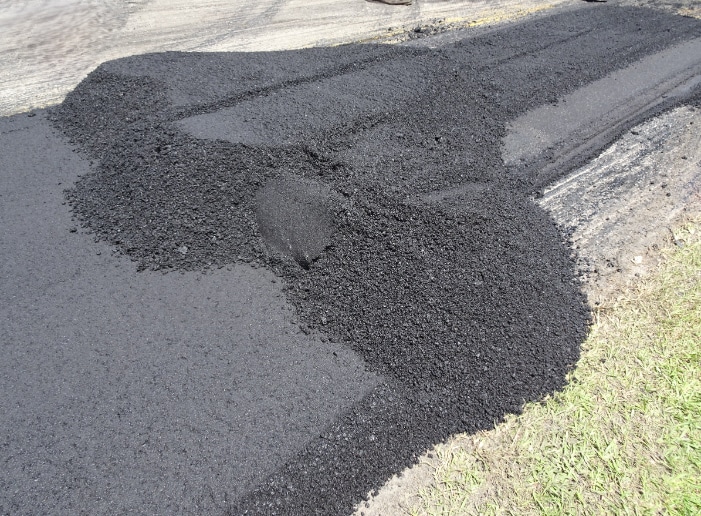
In the event of a spill, it is vital for the crew to hop into motion and get the mess cleaned up. The crew can’t be lazy and leave a pile of material for the paver to try to drive over, as you can see was attempted in this photo.

Jump into action and clean up the material using a skid steer so you don’t have temperature segregation and mounds of mess getting caught up in the paver’s track or wheels.


This article originally appeared in the October 2024 issue of AsphaltPro, alongside this article, “Prevent Fatalities with Better Truck Driver Training, Best Practices.”

Winter Shutdown Is Prime Time for Hot Oil Heater Maintenance

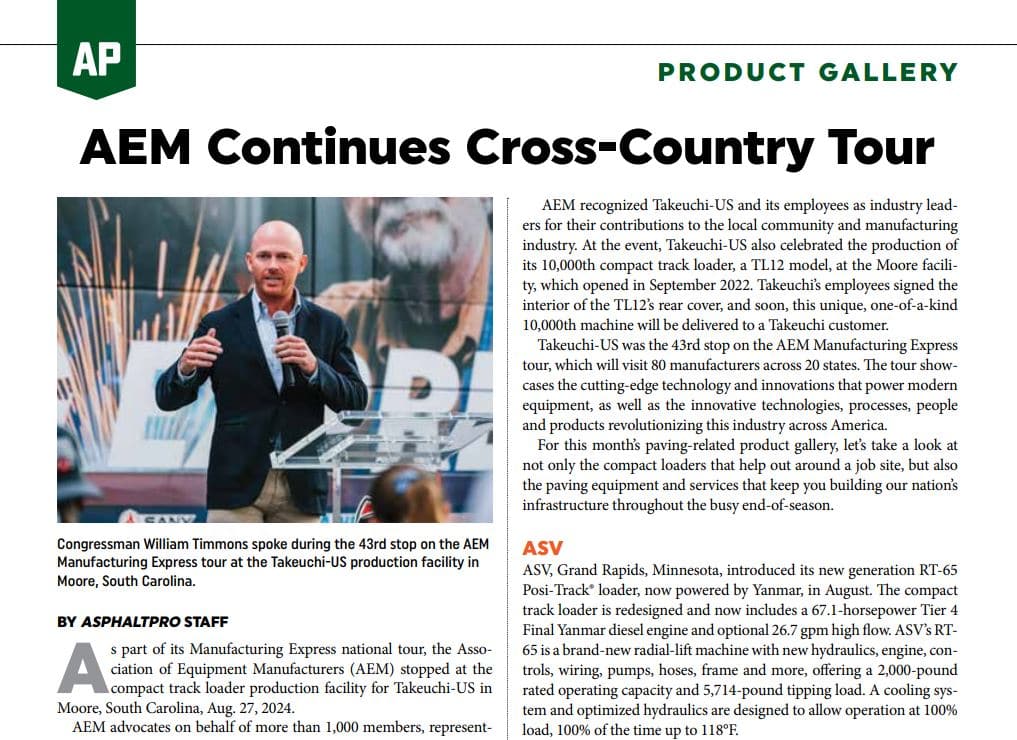
As production slows and you ready your plant for winter shutdown, now is the ideal time to think about removing any sludge buildup and replacing the heat transfer fluid in your hot oil circulating system. Experts agree that this oil should be changed every five to seven years, maximum.

Here are a few tips:

  1. Drain as much existing oil as possible from all points in the system.
  2. Fill heater and all parts of the system with a recommended flushing fluid.
  3. Run the pumping system. Turn the temperature control to lowest possible setting. (There is danger of fire or explosion if heat is applied.)
  4. Circulate the fluid through the system, checking the strainer at regular intervals. Clean the strainer as required. While this process typically takes a minimum of four hours, you can judge from the fluid’s appearance how long to continue circulating the flushing fluid.
  5. Drain as much flushing fluid as possible from all points in the system.
  6. Refill the system with heat transfer fluid.
  7. Circulate and check the strainer, as you did in step 4 (minimum of one hour, recommended).
  8. Check the strainer regularly for the first few days of operation, as loosened sludge and debris may continue to collect in the strainer.

This week’s tip is courtesy of Process Heating Company Inc.


Subscribe to get tips like this delivered to your inbox each Monday.

Train Drivers to Watch Where They’re Going

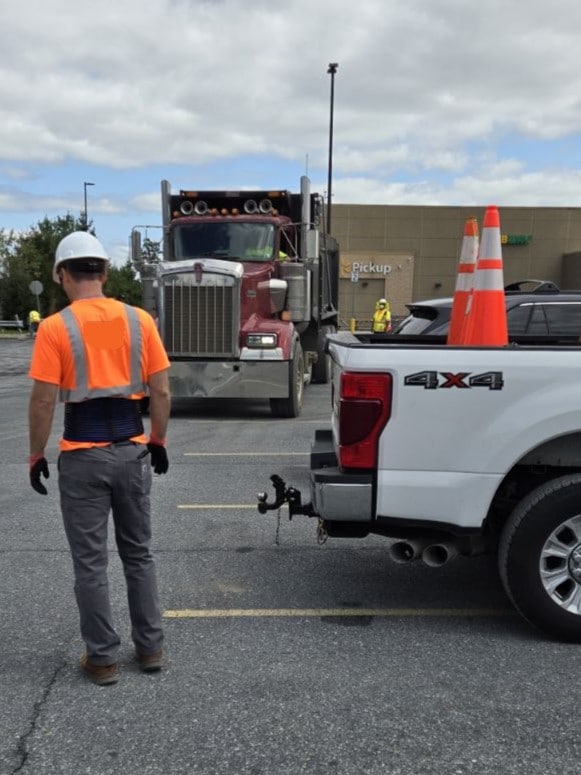
Shouldn’t it be obvious that a driver must keep his or her eyes on the road when driving a 50,000-pound haul truck? Sadly, attention can get divided on the job site and this is where we need clearly defined rules and roles for drivers, ground personnel and safety buddies as well as the use of proximity alarms, whistles, headsets and other safety equipment that can prevent accidents and/or sound the alarm when something is about to go terribly wrong.

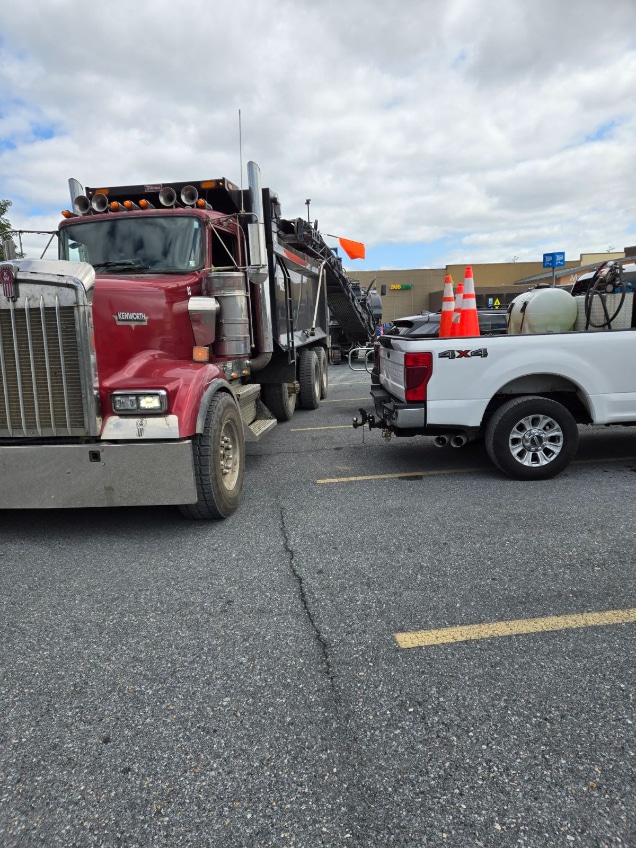
In the example I’ll outline here, a subcontracted driver in control of a 10-wheeler backed to the mill on a parking lot project. He watched that piece of equipment out the right-hand side mirror. Moving forward slowly, he continued to keep his eye on the mill, continuing to monitor the right-hand side mirror.

The groundman was also on the right-hand side of the mill, directing the operation.

From half the parking lot away, I realized, too late, that the driver wasn’t going to notice his truck getting dangerously close to parked vehicles. I couldn’t shout loud enough to get his attention before he hit the parked work truck’s pendle hook (trailer hitch) and dragged the work truck about 2 feet into the neighboring parking stall before noticing me yelling and waving and the crunching sound beside him.

To make the situation worse, after hitting the tow hitch and dragging the work truck a few feet into its neighboring parking stall, the haul truck driver backed up and continued working as if nothing had happened. If not for me waving at him and calling for someone to assess any damage, he wouldn’t have alerted anyone to the problem. We must work together in the field for accountability and safety.

Thank God no one was unloading the back of the work truck. Thank goodness this truck belonged to the boss and not a litigious member of the traveling public.

It takes training and all hands on deck to avoid pricy mistakes like this. If I’d had a safety whistle around my neck that morning, I could’ve blasted the shrill sound to get the driver’s attention—of course, the driver would have to know that the sound of the whistle means to stop in your tracks and look for the safety problem. If the team had assigned safety buddies at the start of the job, someone would’ve been looking out for the driver. Someone would’ve been keeping an eye on the mill operator. Someone would’ve been keeping an eye on the groundman beside the mill. Someone would’ve noticed the truck veering too close to parked vehicles.

Luckily, this is the kind of accident that only damages equipment and results in a few minutes of delay. It’s something the crew can learn from and then move on with the day, working smarter and with heightened senses. But it’s the kind of accident we can avoid if we train truck drivers to pay close attention to their driving skills when on the job. If your foot isn’t on the brake, your truck is moving. Watch where it’s going.


This article originally appeared in the October 2024 issue of AsphaltPro, alongside this article, “Prevent Fatalities with Better Truck Driver Training, Best Practices.”

Dynapac Launches Custom-Wrapped CA2500 for Auction to Benefit Dream On 3 Charity

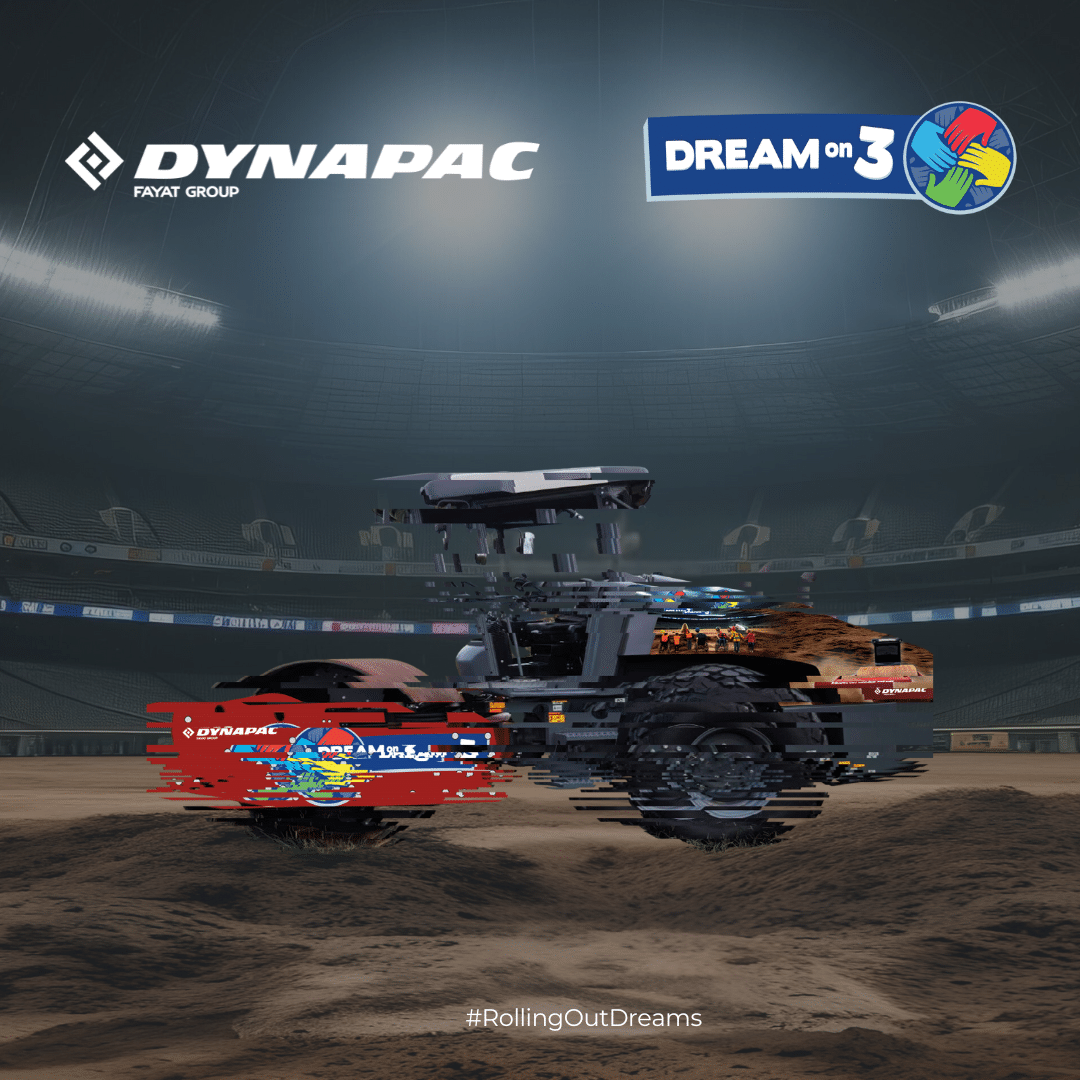
Dynapac has announced the launch of a custom-wrapped CA2500 soil roller, featuring a mural aimed at supporting the sports aspirations of children with significant health challenges.

This unique machine will be available for online bidding through Dynapac’s partnership with Purple Wave Auction, with bidding starting October 28th on purplewave.com. The online auction will close at 2 p.m. on November 5, with in-person bidding to resume later that evening at the Dirt World Summit, starting from the highest online bid.

All proceeds from the auction will go toward Dream On 3, a nonprofit organization dedicated to making sports dreams a reality for children with life-altering conditions.

About the Dynapac CA2500 Soil Roller

The Dynapac CA2500 is a heavy-duty, vibratory soil compactor designed for long-term, demanding construction applications. Equipped with an 84-inch drum and a 1.4-inch-thick drum shell, this machine is designed to withstand challenging environments while achieving optimal compaction on large-scale projects. The CA2500 also features SEISMIC technology, which adjusts to the compaction frequency of the material automatically, delivering precise energy output to improve compaction efficiency.

Symbolism in the Design

The CA2500’s custom wrap depicts a scene blending construction and sports, showing the Dynapac roller working in a stadium. The mural illustrates the contributions of the construction industry to the mission of Dream On 3, as the roller prepares the ground for the dreams of children in the program. The foreground features seven children standing beneath a Dream On 3 sign, a symbolic portrayal of the organization’s work to inspire hope and opportunity for young sports fans facing difficult medical challenges.

A Partnership for Impact

“This collaboration emphasizes the role of design and engineering to inspire and support communities,” said Dormie Roberts, Marketing Manager at Dynapac. “It reflects our commitment to innovation and to community engagement alongside Dream On 3, whose work aligns with our goal of making an impact.”

The custom CA2500 soil roller will be officially unveiled on November 5th at the Ariat Dirt World Summit. The proceeds will directly support Dream On 3’s mission, underscoring Dynapac’s focus on both innovative design and positive community impact through its partnership with Dream On 3.


Place your bid on purplewave.com.

Product Gallery: Reynolds Warren Becomes New Municipal Dealer for Kärcher in Georgia

The Reynolds Warren Equipment (RW) team announced in August that it is the new municipal dealer for Kärcher Municipal North America (KMNA) for the state of Georgia. KMNA is the official, exclusive, North American importer and distributor of Holder brand tractors and Kärcher brand sweepers produced by the German-based Kärcher Municipal GmbH.

The RW team stated in a press release: “As with all equipment RW provides, quality and customer experience are of utmost importance. KMNA demonstrates similar values by producing municipal equipment through innovative technology and advanced solutions. This shared passion will have a significant impact on Georgia municipalities.”

“We at Kärcher Municipal are thrilled to announce our new partnership with Reynolds Warren, a leader in the asphalt paving and concrete contractor industry in Georgia,” said KMNA vice president of sales, USA, Noah Knoble. “This collaboration is a natural fit, as Reynolds Warren’s strong focus on infrastructure aligns perfectly with our advanced sweeper and implement carrier solutions. By joining forces, we’re enhancing the range of services Reynolds Warren can offer to their already impressive customer base, providing even more comprehensive solutions for municipal projects. We’re excited to work closely with Reynolds Warren and look forward to supporting this partnership as we grow our mutual business in the municipal market.”