Maintain Winter Equipment While It’s Still Snowing

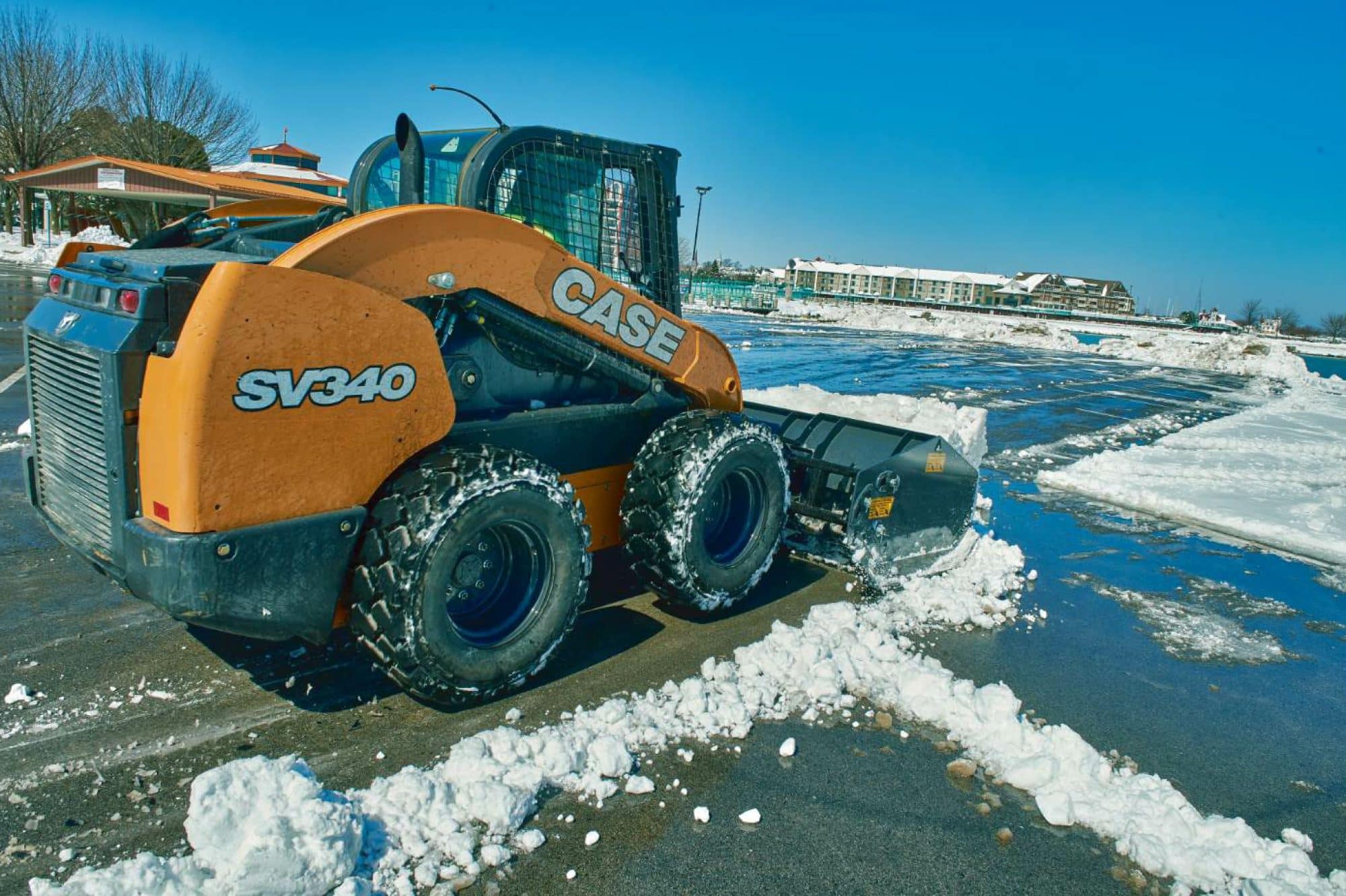
This time of year, you might still be performing non-paving-related activities in parts of North America. You might still be on snow-removal or ice-mitigation duty for the county or DOT. This can lead to corrosion and early wear on boxes, augers and the undercarriage of vehicles during (and after) winter work.

You work to mitigate corrosion by cleaning equipment regularly. Also, remind personnel to re-use wash water from trucks. You can turn that into brine instead of paying disposal fees.

For additional anti-corrosion ideas, train personnel to monitor what’s happening under the truck. Is slush building up and threatening electric components? Maybe you want to install a blade that regularly “wipes” under the truck to sweep nasty material buildup away.

You can also install sensors that alert you when corrosive material has started to eat away at sensitive areas of equipment. You can incorporate a load cell to weigh material during distribution so you can monitor material movement within hoppers correctly.

Whatever methods you put into practice, make sure you have a way to maintain your “winter” equipment so it’s ready for spring startup activities.


Subscribe now to receive tips like this directly to your inbox each week!

Innovate Morally with A.I.

Since we all know I lean toward cautious Luddism, let’s begin with a disclaimer. I recognize some positive uses for artificial intelligence (A.I.) programs to return information for businesspeople seeking ways to automate their repetitive tasks.

With that out of the way, let’s get on with my horror at the idea we’re allowing our brains to atrophy in favor of a $20/month program that can do our thinking for us. I’ll go a step further and suggest we’re giving up the creative and fun side of entrepreneurship because an A.I. can return answers really fast—and that’s super cool to the Silicon Valley bros who play with it at 3 a.m.

Of course, I’m being snarky. Like I said above, there will be instances where getting that answer from a machine in the back office can be a lifesaver. For example, during the National Pavement Expo (NPE) in Tampa, Jan. 24, Ari Bleemer of ONECREW led a morning huddle titled “A.I. in the Paving Industry” where the audience discussed solving problems in the back office. One member of the audience quoted a co-worker’s wise saying to “automate the grind, free the mind.” That’s a brilliant way to approach the use of databases that analyze patterns, predict results and offer answers for the paving contractor. It makes perfect sense to gather your data, feed it to a system that can interpret it “smartly,” and help you use it more efficiently for estimating, bidding, reporting, re-ordering materials or what have you.

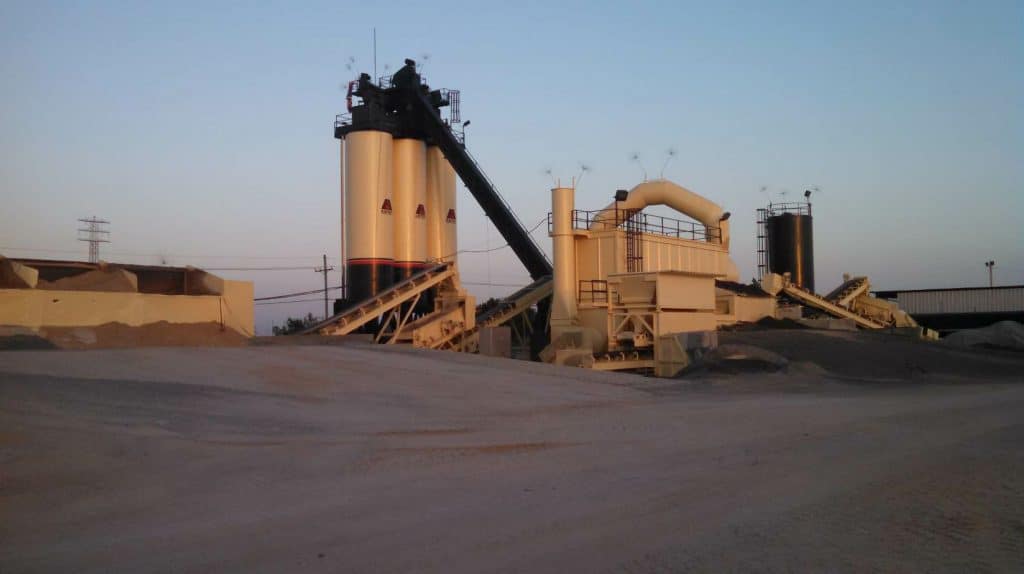
What worried me that morning was the discussion veering into the realm of creativity and marketing, wherein audience members and the leader suggested allowing an A.I. to generate copy, text and headlines for communicating messages to the world. The consensus was it’s better to have an A.I. create low-quality language for us humans to tweak than to pay a professional copywriter or public relations professional who studied marketing to create campaigns for the contractor. Try that before your next town hall where the neighbors are up in arms about odors coming from your asphalt plant. Go ahead. I’ll wait for the result.

What we humans need to recognize is there are tech bros like Benji Smith among us who don’t quite grasp the sensitivity behind creativity. Smith is the creator of Prosecraft and a problematic company called Shaxpir, for which he (allegedly) illegally uploaded 25,000 published manuscripts from the web into his database. Without getting too deep in the weeds here, I’ll explain he promised a way to evaluate authors’ books for number of adverbs, tone of voice, passive versus active voice, and so on with this database. When some big-name authors noticed their titles were in this database, being used without their permission, the question of piracy came up (among other problems).

And that’s how I view most of the A.I. platforms available to the public. It does not please me that we’re normalizing the pirating of creative work—whether that’s been happening for years in other ways—in the name of making current-day systems more efficient or cheaper for big companies. I don’t consider it “fair” when someone takes my work and makes money from it without my permission.

Now, it does please me to see leaders like Bleemer promoting the concept of individual companies putting their own data into their own databases to create their own models and questions to return their own results. That? That’s responsible and legal innovation and I’m excited to see where that can take a contractor in the future. I’m excited to see how that can help contractors build better estimates, win more lucrative bids and create more substantive employee assistance programs. I’m excited to see them manipulating A.I. morally.

New ARTBA Website is Hub for Infrastructure Law & Transportation Policy

ARTBA.org Built for Association Members, Congressional Staff
and News Media

The American Road & Transportation Builders Association (ARTBA) has launched a redesigned flagship website to showcase how its members are using 2021’s Infrastructure Investment and Jobs Act (IIJA) to improve and revitalize communities across America.

With more than 50 written stories and a dozen videos of projects moving forward with help from the IIJA, artba.org also provides valuable information on legislative, regulatory, legal and safety policy issues impacting transportation development.

The site’s expanded resources highlight the economic impacts of infrastructure investment, including state- and congressional-level data on transportation investment and spending, the scope of each state’s network, an interactive dashboard that illustrates how each state is investing its IIJA funds and on what projects, and ARTBA’s frequently cited annual bridge condition report.

“The content presented on this new digital home supports the association’s ongoing efforts to demonstrate the value and economic impacts of federal transportation investment and is consistent with the goals in our strategic plan,” says 2024 ARTBA Chair Tim Duit, president of Duit Construction in Oklahoma.

“If you are a Hill staffer or a reporter looking for stats about the transportation network or the number of projects moving forward in a particular state or congressional district – this is the place to go,” added ARTBA Vice President of Communications Beth McGinn. “The new site has significantly improved navigation and users will also discover robust search functions to help them quickly find relevant content.”

Adjust Tire Pressure to Influence Mat Quality

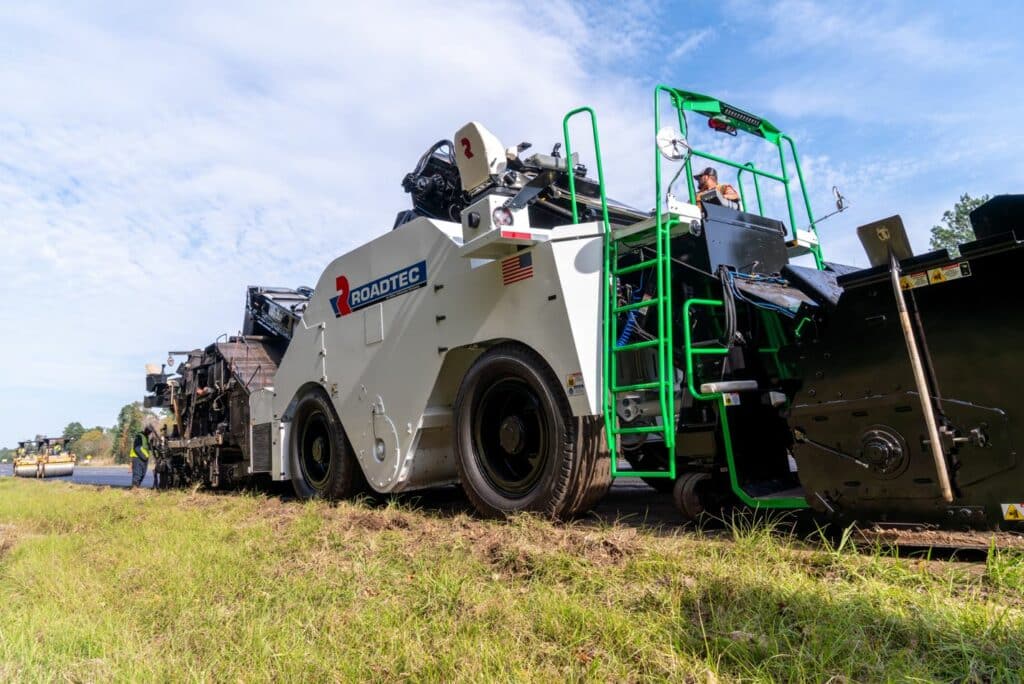
Let’s start with something obvious: During echelon or offset paving with a material transfer vehicle (MTV) charging the paver, the C3 conveyor’s end hovers above the hopper insert. This is a given. If the conveyor rests against the hopper insert, you’ll have its weight influencing the down-pressure of the screed plate and the angle of attack. This is physics.

To keep the conveyor from causing the screed to dig and drag, make sure you have it raised properly. If the conveyor is at its maximum height, yet still touches the hopper insert, look at the MTV overall. Look at the tires affecting the machine’s height. Do you have them inflated properly? That seems like such a minor detail that it might be easy to overlook, but having tires inflated at half or 75% of the manufacturer’s recommended pressure is asking for trouble. The PSI should be listed right there on the tire and your mechanic should inflate them to that ideal number.

Then you’re ready to raise the conveyor, feed the hopper properly and pave for quality.


Subscribe now to receive tips like this directly to your inbox each week!

Stop Live-Bottom Segregation Danger

If you’re using live-bottom trucks to deliver mix to your project, you’re probably doing so for a number of reasons including minimizing segregation. Here’s a tip to keep cold-material segregation from creeping into the paving operation and leaving ugly drag marks in your mat.

Establish a rule that live-bottom trailers are loaded with the three-drop method at the plant. Make sure the driver and plant operator get the timing right and line up properly under the silo gates for each of the three drops.

Here’s why you can’t get away with two huge drops in a 25- or 30-ton live-bottom trailer.

That trailer has three support bars along the top where piled material builds up and cools. The cold residue might not break off and find its way into your hopper on the first trip to the job site, but you can bet it’ll get knocked into the mix on subsequent trips. Those chunks represent material and temperature segregation that drag lines down your new mat.

By loading in the three-drop method, your plant operator can load between the frame supports and can keep each pile lower than the bars, thus keeping mix from building up on top of them.


Subscribe now to receive tips like this directly to your inbox each week!

2024 Construction Workforce Shortage Tops Half a Million

The construction industry will need to attract an estimated 501,000 additional workers on top of the normal pace of hiring in 2024 to meet the demand for labor, according to a proprietary model developed by Associated Builders and Contractors. In 2025, the industry will need to bring in nearly 454,000 new workers on top of normal hiring to meet industry demand, and that’s presuming that construction spending growth slows significantly next year.

“ABC estimates that the U.S. construction industry needs to attract about a half million new workers in 2024 to balance supply and demand,” said Michael Bellaman, ABC president and CEO. “Not addressing the shortage through an all-of-the-above approach to workforce development will slow improvements to our shared built environment, worker productivity, living standards and the places where we heal, learn, play, work and gather.”

ABC’s model uses the historical relationship between inflation-adjusted construction spending growth, sourced from the U.S. Census Bureau’s Value of Construction Put in Place Survey, and payroll construction employment, sourced from the U.S. Bureau of Labor Statistics, to convert anticipated increases in construction outlays into demand for construction labor at a rate of approximately 3,550 jobs per billion dollars of additional spending. This increased demand is added to the current level of above-average job openings. Projected industry retirements, shifts to other industries and other forms of anticipated separation are also embodied within the computations.

Based on historical Census Bureau Job-to-Job Flows data, an estimated 1.9 million construction workers will leave their jobs to work in other industries in 2024. This should be offset by an anticipated 2.1 million workers who will leave other industries to work in construction. These frictional interindustry transfers are estimated exogenously and serve as inputs to the model.

The U.S. construction industry unemployment rate averaged 4.6% for the second straight year, matching the second lowest level on record, while job openings remained historically elevated at an average of 377,000 per month through the first 11 months of 2023. As a result of labor shortages, contractors laid off workers at a slower rate than in any year between the start of the data series in 2000 and 2020.

“Broadly, there are two factors shaping the interaction between construction worker supply and demand,” said ABC Chief Economist Anirban Basu. “There are structural factors, including outsized retirement levels, megaprojects in several private and public construction segments and cultural factors that encourage too few young people to enter the skilled construction trades. There are also structural factors, including those related to interest rates, consumer sentiment and general economic performance.

“Over the past two years, cyclical influences have helped diminish the gap between construction worker supply and demand,” said Basu. “Though nonresidential construction spending has continued to surge, homebuilding segments have felt the impact of higher borrowing costs more intensely. With interest rates set to decline in 2024 and 2025, the expectation is that construction worker shortfalls will remain elevated. Among other things, that would delay the rebuilding of American infrastructure and the creation of new domestic supply chains. It would also tend to drive up the cost of construction service delivery, impacting American enterprise and taxpayers alike.

“Meanwhile, structural influences persist,” said Basu. “More than 1 in 5 construction workers are 55 or older, meaning that retirement will continue to contract the industry’s workforce. These are the most experienced workers, and their departures are especially concerning.”

While construction employment is growing, it is not growing fast enough to meet the demand to complete the work on the books for 2024,” said Bellaman. “To address this shortage and grow the construction talent pool, ABC has a network of more than 800 apprenticeship, craft, health and safety and management education programs—including more than 450 government-registered apprenticeship programs across 20 different occupations. ABC chapters also have 323 entry point programs in place nationally to welcome all to begin a career in construction. To address workforce demand that drives the U.S. economy, Congress must also look toward much-needed reforms to our legal immigration system and provide high-demand industries, like construction, with access to new or expanded visa programs.”

“Exclusionary policies and programs that do not welcome all to compete to build our public works projects, such as project labor agreement mandates, will further exacerbate this shortage and undermine significant investments made by taxpayers in infrastructure, clean energy and manufacturing projects,” said Bellaman. “Taxpayers and workers are best served by inclusive, win-win policies that create a level playing field for all contractors to compete to build public works projects.”

View the methodology of ABC’s 2024 construction workforce shortage model.