Only the Paranoid Survive

I’m willing to bet this has been the title of an editor’s note from me at some other point in the past 25 years. Let’s walk down Memory Lane together for a second. Back in 1998, Entrepreneur Bill Neeley owned a publication for which I was promoted to editor. He turned me on to a book titled Only the Paranoid Survive by Andrew Groves. I happen to have that book on a shelf in my den to this day and it’s a mantra for me.
Fast forward to the Nov. 29, 2023, announcement by The Washington Post that three chemical manufacturers—DuPont, the Chemours Co. and Corteva Inc.—are required to pay $110 million in a settlement to the state of Ohio for environmental damages resulting from Per- and Polyfluoroalkyl Substances (PFAS) in West Virginia. Yes, it’s complex. But it relates tangentially to the asphalt industry in the second of the allegations mentioned in the settlement.

The Post writes that the settlement “also resolves claims relating to the manufacture and sale of PFAS-containing products and claims related to firefighting foam containing PFAS.”

The firefighting foam mentioned in the lawsuit and settlement has been known to be used in fire training exercises, where the chemicals have—allegedly—found their way into paved surfaces. Consider also the use of firefighting foam at the scenes of accidents on roadways, and regulatory agencies are champing at the bit to imply downstream harm for milling subcontractors.

Think about it. If something harmful is in the surface layer of the pavement and you mill it up and take it to the stockpile at your facility, what happens to the harmful chemical compound? The answer’s currently up for debate, but contractors and material suppliers can safeguard themselves as innocent actors in the PFAS debacle. Jorge Caspary, senior principal at Montrose Environmental, will discuss that exact topic in our Fireside Chat at the National Pavement Expo (NPE) this month.

AsphaltPro-sponsored Fireside Chat with Jorge Caspary of Montrose Environmental takes place Wed., Jan. 24, from 4-5 p.m. on the exhibit hall floor. Use code MIPMEN100P to register for free at nationalpavementexpo.com.

True to its nature, the asphalt industry isn’t standing quietly by when there’s an opportunity to help solve an environmental problem—even though our industry had no hand in creating it.

The last time I operated a milling machine, the industry hadn’t yet come up with the robust systems for suppressing silica dust that we have today. Of course, the cold planer possessed a watering system—the drum was rotating all those teeth against an unforgiving surface, after all. But the more complex concept of directing dust via airflow and collecting the microparticles of silica in filters had yet to become a point of concern. Members of the asphalt industry from original equipment manufacturers (OEMs) and contractors proactively teamed up to figure out the best way to protect workers from a potential hazard prior to its governmental regulation.

We, as an industry, were proactive in protecting the health of workers and bystanders.

We, as an industry, have an opportunity again in the litigious environment surrounding the probability of PFAS in specific airport (and formerly burned) pavements. Let’s chat about it in Tampa. I look forward to seeing you there!

Stay Safe,

Sandy Lender

P.S There’s an “intro to PFAS” video from the Washington State Department of Health that takes only 3 ½ minutes of your time.
Dress for Safety, Warmth During Plant Repairs

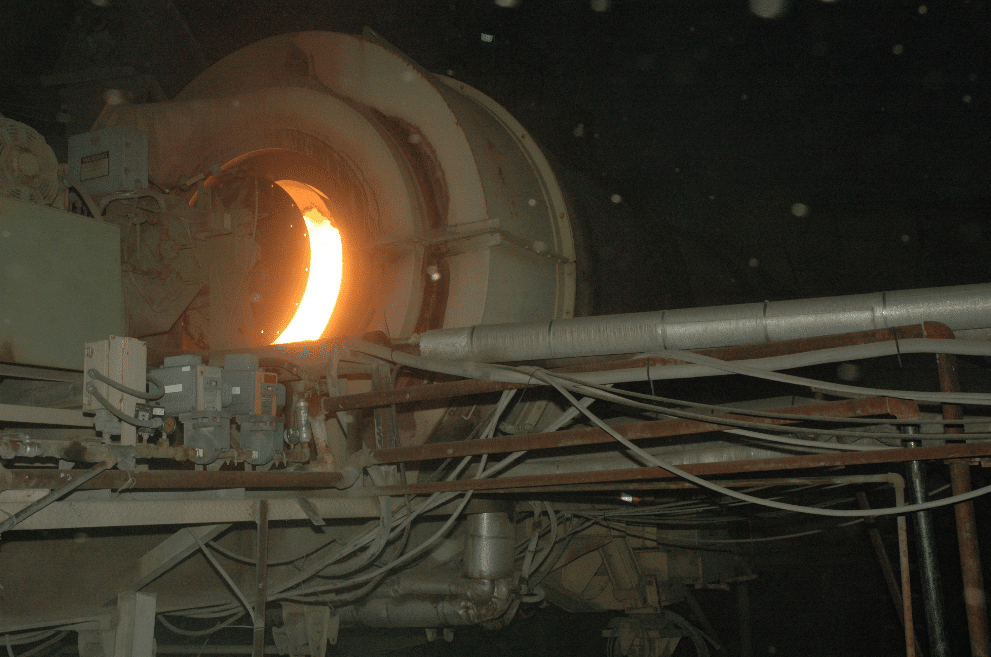
For off-season plant repairs, the team is outdoors in what could be blustery weather. Ice and snowpack make for slippery surfaces that require caution and appropriate footwear with good traction. (We’ll assume you have a protocol for removing ice from work platforms.)

Have you made sure each person on the ground crew has good boots for the job? Are the boots “roomy” enough to provide good circulation even with bulky socks keeping feet warm? Even though these are adult workers who can take care of themselves, supervisors and managers can show they care by asking a question or two before sending a fellow out to work a four-hour shift where knees and ankles are bent in ways that restrict blood flow in already cold conditions.

Look at the gloves your workers bring to the job. Are they going to get caught in components? If your crew practices proper lock-out/tag-out/block-out procedures, the danger of losing a finger to a violent rip of the conveyor belt should be minimal, but will the loose threads of an improper glove tangle around wires or metal that causes other injury? Make sure your workers have work gloves that protect against icy winds and horrible injuries.

Look at the coats and vests they wear. Are they zipped up in a way that prevents clasps and lapels from getting caught on equipment? Again, adherence to lock-out/tag-out protocol should safeguard workers from unexpected startups that could catch a sleeve or turned-out pocket, but the chain reaction of an accident can be stopped in its tracks if personnel remember “no loose clothing” applies to winter coats and stocking caps.

If you notice yourself or one of your crew members bundled up to work on repairs and upgrades, please take the time to double-check all safety protocol. Just because the plant is down for seasonal maintenance doesn’t mean it’s any less dangerous for the workers on the ground. Please make sure you include a reminder of lock-out/tag-out/block-out procedures in the morning tailgate talk or safety huddle before work begins. Make this a happy holiday season with everyone getting home safely to start the New Year.

Whatever your celebration entails these next couple of weeks, your staff at AsphaltPro wishes you the very best this season has to offer. Stay safe out there and have a joyous holiday!


Subscribe now to receive tips like this directly to your inbox each week!

Volvo Construction Equipment to Divest ABG Paver Business to the Ammann Group

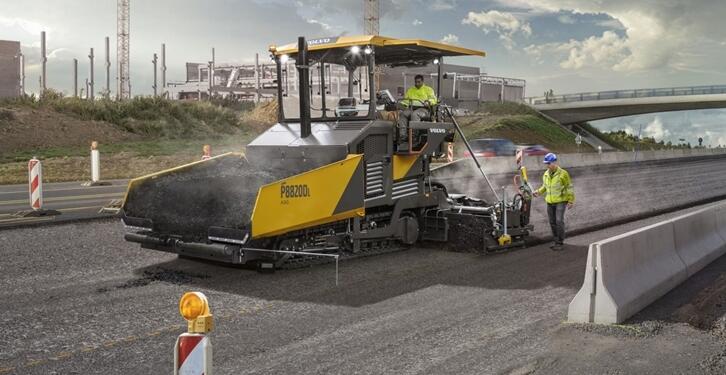
Volvo Construction Equipment (Volvo CE) and the Ammann Group have reached an agreement whereby the Ammann Group will acquire Volvo CE’s global ABG Paver Business including ABG in Hameln, Germany.

  • Volvo CE has reached an agreement to divest the ABG Paver Business to the Ammann Group.
  • The Ammann Group intends to expand their business and invest in ABG Pavers.
  • The divestment includes the ABG Paver production and technology center in Hameln, Germany, and will ensure the availability of the range and full support through the Ammann Group distribution channels and selected Volvo CE dealers.
  • Volvo CE and the Ammann Group see this as the best way to maintain and develop the long established ABG heritage in the paver business for relevant customers, dealers, suppliers and employees.
  • As a consequence of the divestment, production of Volvo CE compaction equipment in Hameln will be phased out over time.

The agreement will benefit both companies by strengthening the product portfolio and distribution network of the Ammann Group, while allowing Volvo CE to continue to focus on developing sustainable solutions and future technologies and services, in line with the company´s strategic direction.

The Ammann Group is a Swiss-based, family-owned, world-leading supplier of mixing plants, machines and services to the construction industry with core expertise in roadbuilding and transportation infrastructure, which they intend to develop further through the ABG Paver business expansion.

The number of employees impacted as a result of this announcement is approximately 400.

Customers will continue to still have access to the ABG Paving range, as well as aftermarket and other services, through the Ammann Group dealer network and some selected Volvo CE dealers.

The transaction is subject to regulatory approvals and works council consultations, and closing is anticipated in the first half of 2024.

Conveyor Chain Stretch Will Drag Profits Next Season

For the toolbox tips while it’s too cold to pave, plant repairs come to mind. The tip this week isn’t all that “quick,” but should help you assess the drag slat conveyor and chain now, so you have optimal production next spring.

The phenomenon of stretching is what happens when pins and bushings wear enough to give extra space and elongation in the chain. When you lose the efficiency of the chain, you lose profits. Start your maintenance of the conveyor and chain by locking out and tagging out. Take the stored energy of the conveyor into consideration, as well. Make sure you block out the conveyor so it cannot move on you.

Now you’re ready to remove a pin and check it for wear. One side will show more wear than the other. If it’s showing 50% wear depth, you need to decide (before season startup) if you’ll replace the chain. (Hint: you want to do that now as opposed to during the height of production.)

Next, look at sprockets. You can check with the OEM’s specs to see what the original thickness of sprockets was and what the OEM says is reasonable wear and acceptable thickness. A change-out now saves a breakdown next summer.

Look at the slats for thickness as well. Also check them for bending. You want to replace bent slats.

Then the final piece of the conveyor to assess is the floor plate. You’ll want to replace or rebuild any worn areas.


Subscribe now to receive tips like this directly to your inbox each week!

Susanne Cobey and Akio Takeuchi Inducted into AEM Hall of Fame

During the final evening of the Association of Equipment Manufacturers (AEM) Annual Conference in Ft. Lauderdale, two trailblazing figures who revolutionized product segments in the equipment manufacturing industry were inducted into AEM’s Hall of Fame. Akio Takeuchi, the visionary behind Takeuchi Manufacturing, and Susanne Cobey, the driving force as president and CEO of Eagle Crusher. Both are credited with spearheading innovative product segments.

“AEM takes great pride in welcoming Susanne Cobey and Akio Takeuchi to our Hall of Fame roster of esteemed industry leaders,” said AEM President Megan Tanel. “They both serve as inspiration for the next generation to cultivate and pursue transformative ideas for the industry and the betterment of all.”

“Akio Takeuchi’s strategic leadership within the compact equipment market, coupled with his attentive approach to customer needs and product development, has notably pioneered a distinct industry segment,” continued Megan Tanel. “Similarly, Susanne Cobey, confronted with challenges in the crusher industry during the 1980s, ingeniously used Eagle Crusher’s technology to spearhead the pavement recycling sector, contributing significantly to concrete and asphalt waste reduction.”

For a full story on both Takeuchi and Cobey, see the announcement video here.

Akio Takeuchi (1933-) Founder, Takeuchi Manufacturing

Akio Takeuchi has been part of the construction equipment industry for six decades. In 1963, at the age of 29, Takeuchi founded Takeuchi Manufacturing. Early on, he learned the value of listening to customers and understanding their needs. When a local business partner asked Takeuchi to create a new machine that would help his employees do their jobs faster, easier, and with less manual labor, he listened. The result was the world’s first compact excavator. Since then, Takeuchi Manufacturing has presented more innovations, including the first offset boom excavator and the first compact track loader.

The Takeuchi Way embraces the spirit of creation, challenge and cooperation. To this day, Takeuchi listens to the ideas and opinions of the people who are closest to the end user. Takeuchi has always recognized the power of teamwork, believing there’s virtually no limit to what dedicated people can accomplish together.

Today, Takeuchi Manufacturing continues to offer equipment designed to make short work of tough jobs. And Takeuchi still believes that when you put your customers’ needs first, sales and profits will follow. He has not only built a solid, quality-driven compact construction equipment company, he has also built a legacy.

Susanne Cobey (1951-) CEO, Eagle Crusher

Susanne Cobey joined Eagle Crusher Company, Inc. in 1970 as Parts Manager, and quickly advanced through multiple ranks to become President and CEO in 1990.

Eagle Crusher has always been a leading manufacturer of heavy-duty crushing and screening equipment. But when significant industry changes in the 1980s impacted Eagle Crusher, Cobey spearheaded the commercial recycling industry in the United States, building the first U.S. commercial recycling plant, Eagle Crusher’s Jumbo 1400, in 1984. Her innovations created a new product line for Eagle Crusher, and a new American industry.

Under Cobey’s bold vision, the plant took crushing to a new level with its abilities to process high volumes of aggregate, concrete, and RAP. These improvements saved innumerable tons of concrete and asphalt from landfills. A whole line of portable horizontal impactor plants soon followed, creating a boon for the aggregate crushing, the recycled concrete, and the RAP markets.

A female pioneer in a male-dominated industry, Cobey has dedicated herself to helping other women in the industry succeed. She has addressed the topic of women in the industry in numerous videos and news articles and serves as a key-note speaker and role model at many commencement addresses. She hopes that her experience inspires a new generation.

The AEM Hall of Fame has been recognizing luminaries in the agriculture and construction equipment manufacturing industry since 1993, and includes such names as Benjamin Holt (Caterpillar), Joseph Cyril Bamford (JCB), Jerome Increase Case (CNH Industrial), John Deere (Deere & Co.), Gus Ramirez (HUSCO International) and Mary Andringa (Vermeer). The induction of Takeuchi and Cobey brings the total number of inductees to 69.

The Association of Equipment Manufacturers (AEM) Hall of Fame recognizes the pioneers whose inventions, ideas, leadership and courage have built, fed and powered our modern world. To learn more about the AEM Hall of Fame and its members, visit the website here.

Slow Down for Safe Plant Repairs this Month

For the toolbox tips this December, plant repairs will take center stage, but your team at AsphaltPro would like to offer a simpler message this week. Many companies and crews might be taking the end of this month off to spend time with family. Travel is probably on everyone’s list. If you have some last-minute tasks to finish up around the plant before taking some well-deserved vacation time, make sure safety stays top of mind.

Your quick tip this week concerns safety.

If you notice yourself or one of your crew members in a rush to complete a repair and then jet off to a family function, please take the time to slow down and double-check safety protocol. Everyone’s in a hurry this time of year. It’s as if the holiday hustle has seeped into all aspects of life. Please make sure you include a reminder of lock-out/tag-out/block-out procedures in the morning tailgate talk or safety huddle before work begins. Make this a happy holiday season with everyone getting home safely to loved ones and friends.


Subscribe now to receive tips like this directly to your inbox each week!