Word of Mouth

I hope you won’t find this first note of the year to be too self-serving, but we have business to discuss. AsphaltPro readers, who typically understand the importance of sharing information and growing business alongside one another, will track with me easily here.

I’ll start by explaining something many of you know: I do a side hustle where I write wacky stuff about dragons and strong female characters who overcome adversity to save worlds from evil. Even with independent publishers doing the mechanics of publishing the books (there are no Big Five publishing contracts or advances in my impatient life), it takes word of mouth to let other humans know my titles are available for reading. It requires marketing, promotion, reviews on any review site we can find and so on.

Let me tell you how that relates to the asphalt industry.

In the asphalt world, we have a good, environmentally positive story to tell. We’re still innovating ways to reduce emissions that are already low. We’re still innovating ways to build pavement systems that will outlast our competition, thus reducing future materials use. What we need to do is be sure we’re marketing and promoting this good news to people who might not know it. Let’s leave some reviews of each other in good, positive terms that showcase how we’re saving the planet instead of backbiting on social media platforms. It would be in our collective best interest to nurture members of our crews into say nice things online.

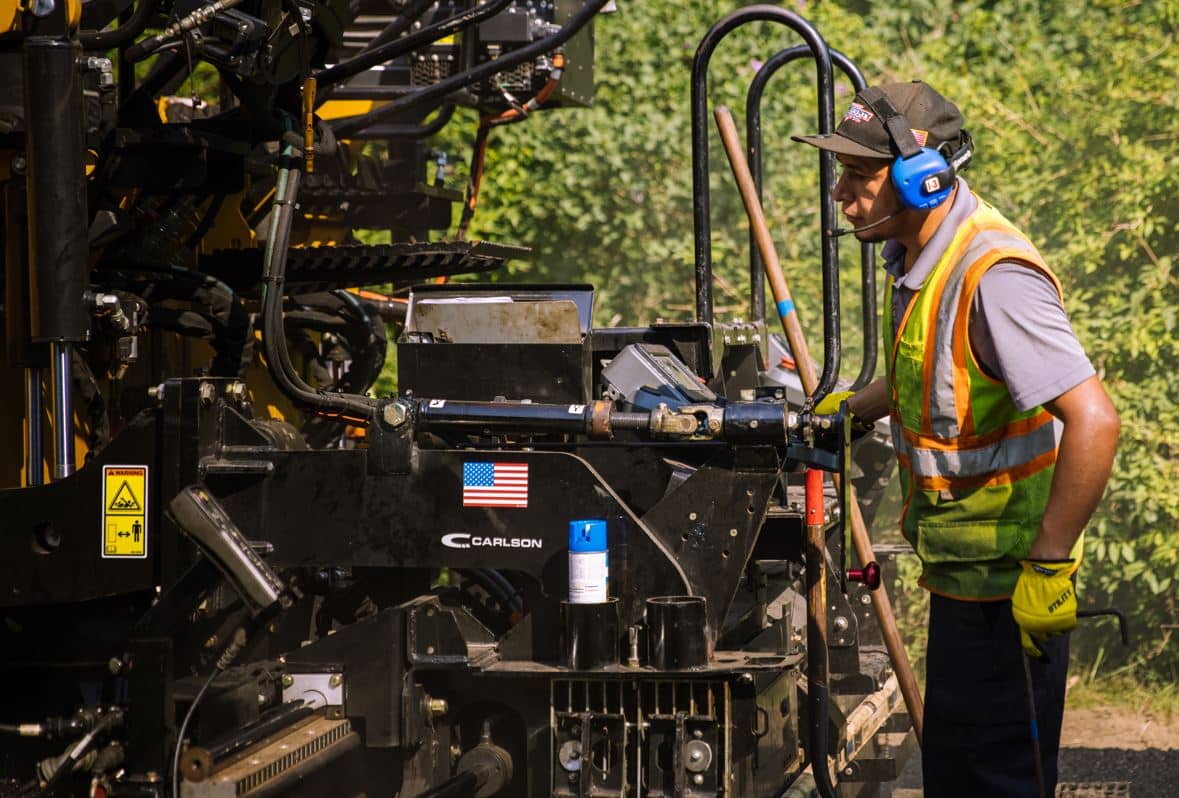
Here’s an example. When your paving foreman sees a post online with a “smaller” paver, rather than pouncing on the opportunity to complain about his experiences with a similar model from that OEM, teach him to type in something about the warm-mix asphalt (WMA) being fed through the paver as an environmental win for that neighborhood. Is that cheesy? Of course, it is. Is that spreading better news for our industry? You better believe it is.

We also have an opportunity in front of us to increase our emissions-reduction practices with financial assistance from the Department of Energy (DOE). I invite you to read Advanced Energy Property Deployment Part 1 in the December 2022 issue and Part 2 for more information on the tax incentive and grant funding fog descending around us. Even if government guidance is still forthcoming, the concept of someday receiving a rebate for environmental excellence is enticing.

Keep your receipts.

Keep in mind, the reason we’re innovating advanced technology for asphalt plants and fleets is to continue improving. The goal is to make our industry the cleanest it can be. But don’t forget to share with friends and neighbors the continuing positive strides in your business. Don’t forget to tell OEMs you saw their information in AsphaltPro Magazine. Don’t forget the value of word of mouth.

I think that’s enough topics for one note. Dragons—which probably affect climate change—and defeating evil leading into marketing our good name leading into increasing our good name together. I think we’ll call that enough to lead us into a positive 2023. I wish all of you a safe, clean and productive upcoming construction season!

Stay Safe,

Sandy Lender
Both Image and Mix Blend Online for PR

Contrary to social media conditioning, you can throw out the first load without announcing it to the online world.

Random workers who post frustrating pictures with rudimentary questions online betray a company’s professional image. Maybe your asphalt company puts new hires through many hours of training before putting them in the field, but the plethora of basic, can-you-believe-this-newbie problems hitting the Internet for people who may not be friendly to our industry to see is both staggering and unacceptable.

Here’s an idea for at least keeping the mix from embarrassing you right out the gate.

When the plant starts up—whether that’s first thing in the morning or firing up for night paving—the first load through the system should be viewed as “practice.” (Of course, your plant operator isn’t really “practicing” how to run a drum mix operation with a DOT-specified material, or with a high-volume customer’s pricy surface course material. But you want to view the first load as the load that warms everything up and gets the chunks and clunks out of the way.)

If mix has been sitting in the silo cone overnight, do you consider it good enough to go in a truck and out to a highway project where your crew will try to manipulate it?

No. The answer to that is no.

Take the first one or two loads of the shift—which should empty the silo cone—and drive it directly to the RAP pile. Do not pass “GO.” Do not collect $200. Just take it to the RAP pile, consider it highly valuable recycle material for another day, and move on with the next load. The next load should be ready to go to the crew in the field.

As for the other problems your crewmembers are sharing with the Internet—that’s something for your public relations officer to address. You are welcome to forward this email to that person or to any other worker who needs to see this tip!

NSSGA Applauds Congressional Passage of Water Resources Development Act

The National Stone, Sand & Gravel Association’s Vice President of Government and Regulatory Affairs Michele Stanley issued the following statement after Congress passed the Water Resources Development Act of 2022.

“The Water Resources Development Act (WRDA) of 2022 is essential for all aggregates producers. NSSGA member companies across the country are directly involved with water infrastructure projects. Aggregates producers work to improve ports; develop flood control systems; reinforce shorelines; and maintain the waterways for the movement of goods and resources. The passage of WRDA creates certainty and funding with project planning, which is necessary to supply the building materials for these vital water infrastructure projects. NSSGA would like to thank both the Republicans and Democrats in the Senate and House for working together to pass this important legislation.”

Get More Energy Savings with Smaller VFDs Around Your Plant

If you already have variable frequency drives (VFDs) on your feeders and exhaust fan, then you’ve seen the savings these drives offer on utility costs. You don’t have to stop the technology there.

Over the past two decades, these drives and their motors have become smaller, more efficient, and “easier” to install and get good results for our industry than their predecessors. Consider their use on drums and drag slats, burners and pumps.

By varying your draw on the power grid, you not only improve your energy costs, but you also improve your environmental footprint. This is a win for the power company, which may offer a rebate to your asphalt company for your proactive efforts.

You can read a full article about setting up VFDs and motors successfully and about getting those rebates from your utility company at the linked article below.


To receive tips like this each week, subscribe to AsphaltPro‘s Toolbox Tips newsletter today! 

American Rental Association Rental Hall of Fame inductees announced

Each year, the American Rental Association (ARA) honors individuals for outstanding service to the association and the rental industry. This year, two longtime rental industry leaders will become the newest inductees into the Rental Hall of Fame and will be honored at The ARA Show™ February 12-15, 2023, in Orlando.

The Rental Hall of Fame was created in 2000 to honor those individuals who have changed the trajectory of the equipment and event rental industry. Each year, nominations are accepted to recognize outstanding industry leaders who have made a substantial and lasting impact on the industry’s success and growth at the national and/or international level.

“The Rental Hall of Fame is ARA’s most prestigious award. This year, we are honored to recognize two individuals whose vision and leadership has made a significant impact on the equipment and event rental industry. Their dedication has been felt across the rental community and I would like to personally thank and congratulate them,” says Tony Conant, ARA CEO.

Doron Broadfoot, The Rent-It Store, Saskatoon, Saskatchewan, Canada

Doron Broadfoot has been a member of the rental industry for more than 50 years. It all started in 1972 when he started working for his father at The Rent-It Store in Saskatoon. In 1974, he invested in a business owned by Acklands-Grainger. When the company decided to close — leaving employees out of work — Broadfoot and his business partner, Doug Mitchell, decided to postpone their retirement and purchased the business in 2005.

Throughout his career, Broadfoot always has encouraged both employees and business partners to get involved with ARA and the Canadian Rental Association (CRA). He is being recognized for his leadership and long-term dedication and service to ARA, CRA and the ARA Foundation.

Broadfoot was CRA president from 1989-1990 and then served as the ARA Region 10 director from 2000-2003. He is a huge supporter of the ARA Foundation both as a volunteer and a donor. He served on the ARA Foundation board of trustees for two terms from 2009-2014 and sat as the chair of the board in 2011 and 2012. He established the Region 10 Doug Mitchell scholarship in honor of his late business partner in 2014. In recognition of his philanthropic efforts, he has received the ARA Foundation James Keenan Award five times and the 1976 Club Award 10 times.

James “Jim” Ziegler, Rental City, Boulder, Colo.

Jim Ziegler started his career in the rental industry in 1969 when he bought an A-Z Rental franchise in Boulder — which would eventually become Rental City. Ziegler built Rental City from the ground up and turned it into a thriving business. After 30 years, he sold the company to NationsRent in 2000. Ziegler also was the CEO of RenTrain, a business he developed to help reduce insurance costs and improve operating techniques through educational programs for rental equipment dealers and provide websites for small businesses.

Ziegler has been actively involved with ARA and the ARA of Colorado for years having served on the ARA of Board of Directors from 1988-1992 and as the 29th ARA president in 1990. While on the ARA of Colorado board, he also served as president.

ABC: Construction Materials Prices Down 1% in November, Still Up 40% Since February 2020

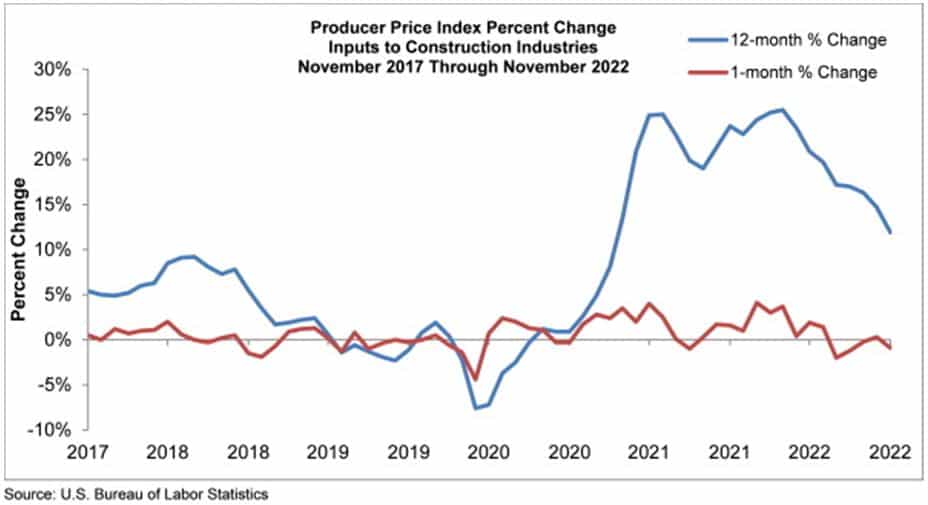
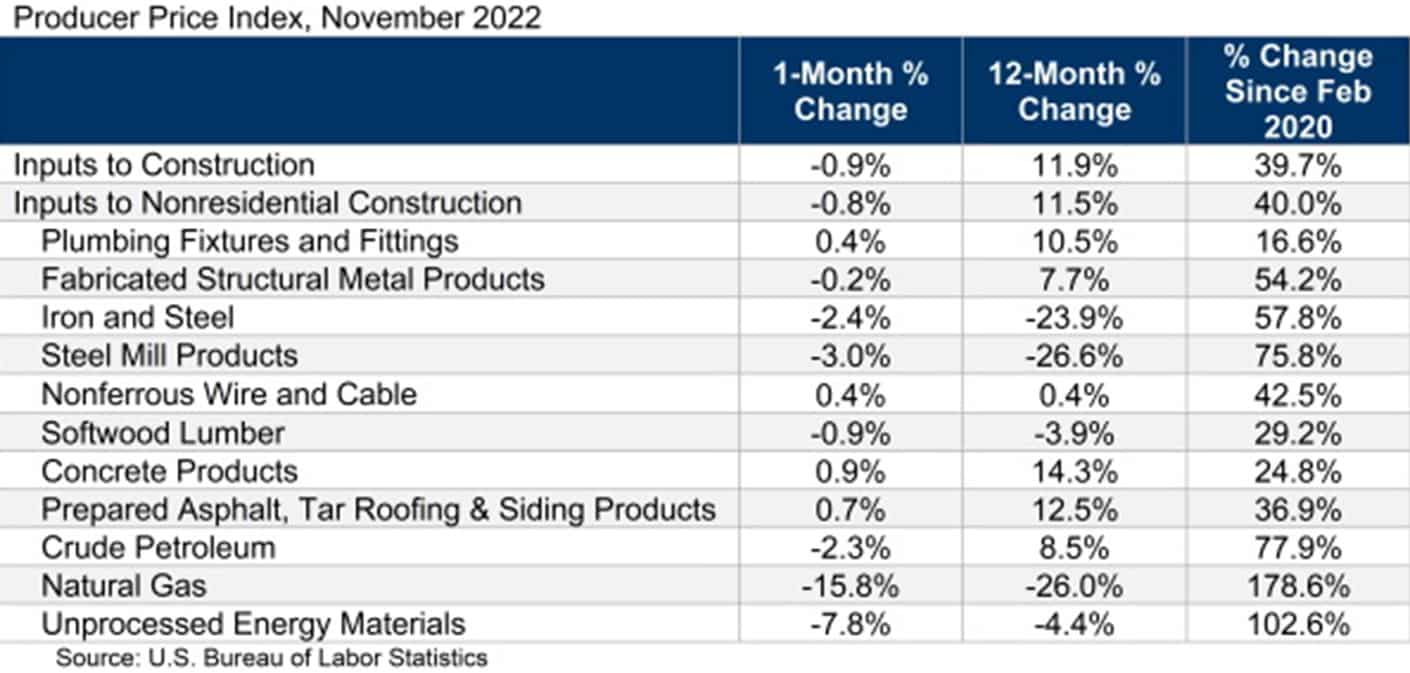
Construction input prices declined 0.9% in November compared to the previous month, according to an Associated Builders and Contractors analysis of U.S. Bureau of Labor Statistics Producer Price Index data released today. Nonresidential construction input prices fell 0.8% for the month.

Construction input prices are up 11.9% from a year ago, while nonresidential construction input prices are 11.5% higher. Input prices were up in only four of the 11 subcategories on a monthly basis. Natural gas experienced the largest decrease in prices, falling 15.8% in November. Unprocessed energy prices declined 7.8%, while crude petroleum prices were down 2.3%.

“The decline in wholesale prices for many construction inputs is generally positive news,” said ABC Chief Economist Anirban Basu. “Increasingly, we are receiving news that construction input inflation has peaked as supply chains continue to normalize despite a range of geopolitical stressors. In November, much of the relief emerged from lower energy prices. According to ABC’s Construction Confidence Index, contractors are already expecting growth in sales and employment levels over the next six months; this report will do little to curb that optimism.

“As always, there is more to this report than meets the eye,” said Basu. “Prices for various economic services grew faster than expected, a reflection of a still very strong labor market associated with substantial compensation growth. Therefore, while supply chains may be improving, helping to moderate the price of physical inputs, contractors will continue to face elevated and rising human capital costs. This may explain why just as many contractors expect profit margins to decline over the next six months as expect them to expand.”