Set Constant Temperatures for Paving QC/QA

There are some temperatures you will want to attain, and some you will want to avoid, to get a bonus-worthy mat. Of course, each temperature you consider depends on a host of variables. In the old days, contractors were advised to lay asphalt when ambient temperatures were 48 degrees F and rising. With the advent of warm-mix asphalt (WMA) designs, cooler ambient temperatures are not as detrimental to success as they once were. Let’s look at the constants.

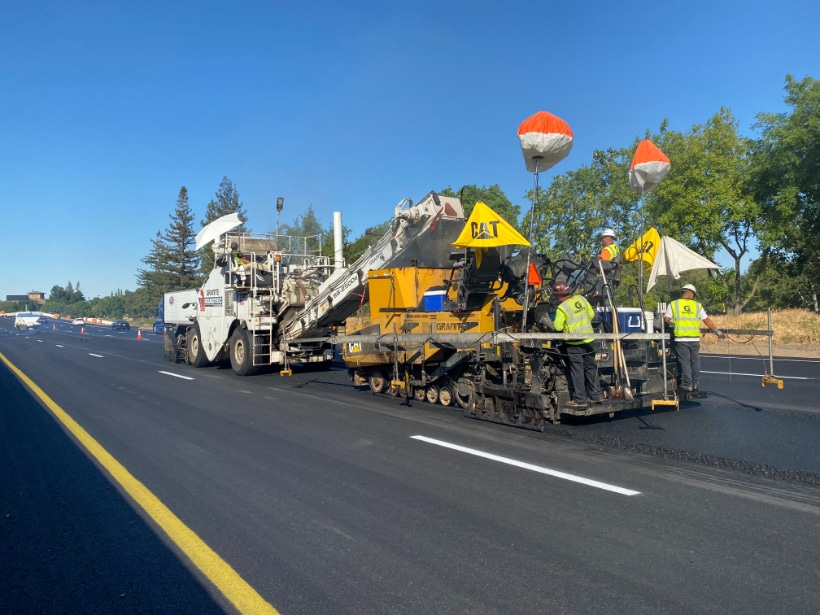
When you heat the screed at the beginning of the shift, you typically want it to reach 300 degrees F to match the arriving mix temperature. Use a temperature gun to check at least three points across the full width of the screed plates so you know the screed is heating evenly and none of the elements are malfunctioning.

Here’s a moving constant for you. The temperature of the mix coming from the plant should not vary more than 20 or 25 degrees from truck to truck. Use a stick thermometer to determine exact temperature of the delivered mix. The best hole in the truck bed to use for this is the one that is two-thirds of the way from the back because it will measure the temperature from the second drop during loadout. (Here’s an article about the three-drop method.)

If the second truck to the job measures 260 degrees F, then you want to see each truckload after that measuring no less than 235 degrees F. (Remember that the first truck on the job is probably delivering mix that was waiting in the silo cone, and it may be 10 to 20 degrees lower than the temperatures you’ll expect from the subsequent trucks.)

If there’s a sudden difference beyond 20 to 25 degrees, find out what that specific truck driver did differently during his route. If the truth is “nothing different,” then call the plant operator to find out what’s going on.


Sign up now for our Toolbox Tips newsletter get tips like this delivered to your inbox each week!

Tax Deductions in the Ash Clouds 

At press time, I couldn’t find reliable stats on the amount of methane being released from the alleged sabotage of Nord Stream 1 and Nord Stream 2. Suffice it to say, the bubbling gas devastating marine life in the Baltic Sea was probably more than your properly operated, Tier IV Final wheel loader at the asphalt plant. I can’t say if the pipelines’ greenhouse gas (GHG) or particulate matter emissions rival the collective emissions from Stromboli, Erta Ale, Nyiragongo, Piton de la Fournaise, Dukono, Ibu, Krakatau, Merapi, Semeru, Lewotolo, Popocatepetl, Santiaguito, Fuego, Masaya, Nevado del Ruiz, Reventador, Sangay, Sabancaya, Nevados de Chillán, Mount Erebus, Kilauea, Yasur, Shiveluch, Ebeko, Sakurajima and Suwanose-jima, considering those volcanoes currently erupt at different rates of spew. 

Until our global elite focus on the big emitters of GHGs (whether naturally occurring or based in China), it is criminal that our industry continues to be targeted, maligned and forced to comply with ever-narrowing regulations. When a state agency dictates private business owners can no longer purchase robust pieces of machinery for infrastructure construction and/or maintenance, it irks me. When an unelected agency dictates to the asphalt industry, which has been ratcheting down its emissions numbers and carbon footprint on its own, that we have a new, magic number to attain instead, it makes me wonder about the reading comprehension skills of the person at the top. 

Any CEO worth his or her salt will tell you to lean on your employees’ strengths. Bring them to the table to explore attainable solutions together. Instead, the elitists have come up with random numbers, stapled money to the clouds around the ash plumes of the above-listed volcanoes, and demanded of us, “Meet this target next.” 

Before this note becomes too negative, let me say the construction industry overall has an opportunity to grab some of our country’s recently printed dollars waving above the ash plumes. 

Take the tax credit bribes for purchasing equipment with batteries comprised of Rare Earth Minerals as an example. Your electric vehicle (EV)—depending on its gross vehicle weight rating to battery capacity ratio—could be tax deductible. 

On page 34, I’ve included another installment of the series on upcoming grant monies through the dubiously named Inflation Reduction Act (IRA). With the Advanced Industrial Facilities Deployment Program, the Department of Energy (DOE) is making available $5.8 billion in rebates for facilities that can prove a 20% reduction in their GHGs with installation of advanced technologies. The Internal Revenue Service (IRS) is expanding its credits for purchases of “clean” equipment. In fact, if you look at Section 45 of the IRA, not only will you develop a migraine, but you will also get a sense that the IRS will reward you with tax incentives for purchasing EVs and advanced technologies. 

I’m not a tax advisor. Please take that whole section to your tax professional. 

But examine the concept behind Section 45W, where it is implied the electric off highway vehicle doesn’t have to be sourced from North America. Again, let a tax professional read it more thoroughly and advise you on the specifics. 

Let me finish by saying, installing advanced technology to lower emissions at any facility is a responsible move. If it’s possible to cut extra emissions from an operation, that’s a laudable goal. If the DOE is willing to hand you a 50% rebate for achieving the goal, that’s even better. If the IRS is willing to extend an extra tax credit to you for the business expenditure, why not take advantage of that while it’s available? 

So far, the asphalt industry has been making these strides out of a desire to be good stewards of the land and a willingness to placate homeowners who built right up to our property lines. It’s nice to think future strides come with a side of rebate from Uncle Sam. What has me a little on edge is the idea that government entities and agencies are demanding lower numbers from an industry that’s already lowered its numbers. We can’t single-handedly make up for the 26 volcanoes currently erupting around the globe. Honestly, I don’t think it’s fair to ask us to. 

Have a Safe and Lovely Holiday Season, 

Sandy Lender 

You Don’t Have to Freak Out About WMA Temps

Asphalt mix producers still have an uphill battle when it comes time to educate fly-by-night contractors. You may feel it’s not worth the trouble; let those turkeys find a different plant to buy mix from and complain about.

But here’s the thing—a paying customer is difficult to turn away. If the business down the street from your plant hasn’t heard of warm-mix asphalt (WMA) or cold patch by now, here’s a handful of links to help them understand you’re not only offering an environmentally positive pavement design, but you’re also extending the paving season for them and aiding in good compaction results with warm-mix additives or foamed product out the gate.

Here’s Why WMA Works

Benefits from Increasing WMA Use (updated for 2022)

WMA Facilitates Fibreless SMA

Another way to help the paving crew in the field work with WMAs is to make sure they’re monitoring temperature. Remind contractors to stick a thermometer in the truck bed portal and aim a temperature gun at the mounds of mix as haul trucks arrive on site. If they’re seeing a discrepancy of more than 20 degrees between trucks, then, yes, they have a beef worth looking into. Anything from driver behavior to moisture content at the plant could be causing a problem to be solved.

What’s NOT a problem is the warm mix itself. The industry has been paving with it for years and achieving excellent pavements like the concept discussed in this week’s clickable article right here.


Subscribe to our Toolbox Tips newsletter today to receive tips like this to your inbox each week.

Caterpillar and Axenox Strike Intellectual Property Acquisition Agreement for Oxclaw® and Bullox®

Caterpillar Inc. announces the company has entered into an agreement with construction solutions supplier, Axenox Inc., to acquire the intellectual properties of two of the company’s asphalt paving screed products. Under the agreement, Oxclaw® textured screed plates and Bullox® modular screed plate system will be available options exclusively for Cat® asphalt paving customers.

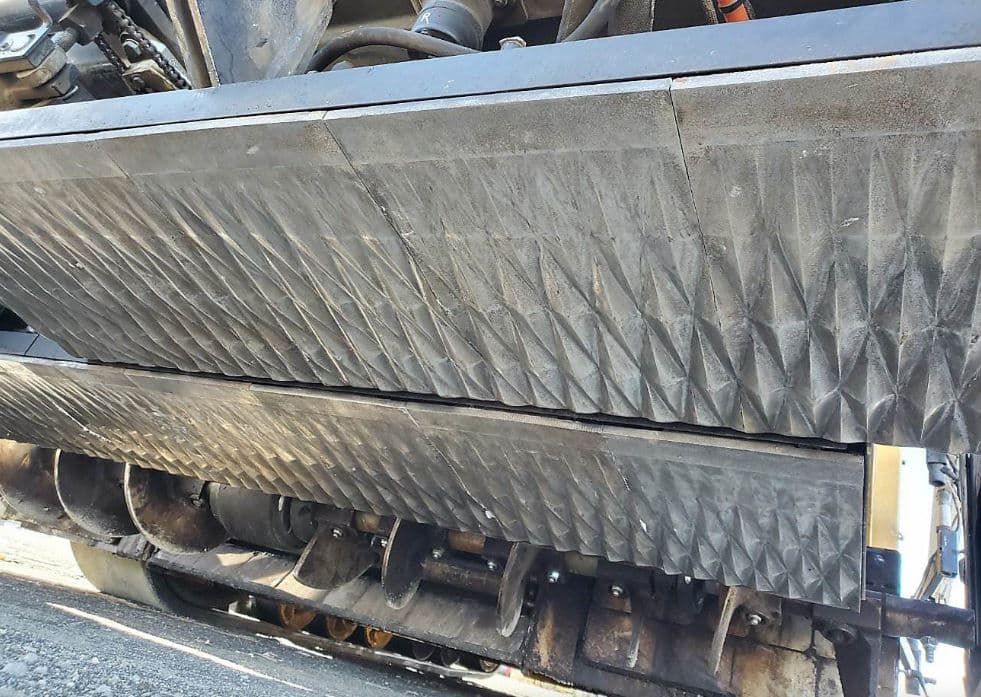
A significant departure from the industry standard, Oxclaw’s innovative three-dimensional textured screed provides lateral compaction confinement to asphalt material. This improves mat density and smoothness as well as density at the joint to reduce compaction expense and improve chances of achieving pay bonuses. Screed cast plates are made with high strength chromium carbide, delivering high wear resistance and longer life in the field.

A revolutionary new way to secure the plate to the screed, the Bullox system reduces screed plate change time up 80%, from days to less than four hours, lowering costs and maximizing paver uptime availability. After a one-time installation of the insulated conductor plate, simple screed plate changes are completed using a patented lock-and-go system, eliminating the need to access and remove the nuts and bolts.

The Axenox® screed system will be exclusively available for Cat customers and supported by the extensive Cat dealer network.


To learn more about the Axenox® screed system, check out these articles:

Shilling Construction’s Proven Screed

Patterned Screed Plate, Smooth Mat

25,000 Transportation Projects Started in Year-One of Infrastructure Law, New Report Shows

States leveraged their fiscal year 2022 federal highway formula funds to jumpstart nearly 25,000 new improvement projects in communities across America during the first year of the Infrastructure Investment and Jobs Act (IIJA), a review of U.S. Treasury Department data through August 31 shows.

“A key takeaway from the Treasury data is that the bipartisan infrastructure law is working in year one as intended, with state transportation departments disbursing their funds and projects breaking ground,” said American Road & Transportation Builders Association (ARTBA) Chief Economist Dr. Alison Premo Black, who reviewed and compiled the data for the report.

President Joe Biden signed the IIJA into law Nov. 15, 2021. Nearly 90 percent of IIJA’s highway funds are dispersed by existing formula to states, with the remainder distributed through discretionary grant awards and other allocated programs.

The 20 largest IIJA projects supported by formula funds to date are:

  1. Texas –Expanding Loop 1604 on I-10 in San Antonio – $291 million
  2. Texas –635 East Project in Dallas – $225 million
  3. New York –Van Wyck Expressway Capacity & Access Improvements to and from JFK International Airport – $211 million
  4. Arizona –Roadway Widening on I-17 Split – $200 million
  5. Texas – I-35 Widening in Travis County – $192 million
  6. South Carolina – Phase 1 Carolina Crossroads I-20/26/126 Corridor Improvement Project – $145 million
  7. Ohio – I-70/71 Downtown Ramp Up Project in Columbus – $123 million
  8. California –Rehabilitation of Pomona Freeway between the Long Beach and San Gabriel River Freeways – $121 million
  9. California –Route 46 Corridor Improvement Project in San Luis Obispo – $119 million
  10. Illinois –Interchange Reconstruction and Bridge Replacement on I-57 at I-74 Interchange in Urbana-Champaign – $107 million
  11. Georgia – State Road 2/State Road 515 Roadway Reconstruction Project in Northern Georgia – $104 million
  12. California – State Route 55 Improvements Project in Orange County – $101 million
  13. California – Rehabilitation of Route 10 Near Coachella – $100 million
  14. Tennessee –Interchange Modification on I-55 at Crump Boulevard in Memphis – $99.6 million
  15. Texas – Widen Loop 375 in El Paso – $95 million
  16. New Jersey –Route 18 Drainage and Pavement Rehabilitation in East Brunswick – $91.7 million
  17. Tennessee –Improvements at I-75, I-24 Interchange near the Tennessee-Georgia Border – $91.2 million
  18. South Carolina –Phase 2 Carolina Crossroads I-20/26/126 Corridor Improvement Project – $90 million
  19. California –SAC 5 Corridor Enhancement Project in Sacramento – $88 million
  20. Texas – Irving Interchange Project in Dallas – $80 million

ARTBA has created a digital tool, artbahighwydashboard.org, to provide national and state-by-state information on the projects and more specifics on how IIJA funds are being invested. The association is sharing this resource with members of Congress and their staffs, and with administration officials.

Don’t Leave Footprints in the Mat

No Joke: I’ve seen actual paving crewmembers type out snarky comments about footprints in the hot mat making no difference to pavement quality. For the love of all that is good in this world, teach your foremen and other crew members to fix that mindset.

During any kind of weather, you don’t want workers walking across the hot, uncompacted mat, leaving footprints and cut marks. This becomes even more important when cool ambient temperatures make the roller operator’s job more time-sensitive than usual.

The worker who walks immediately behind the screed not only leaves tracks in the non-compacted mat, but he also leaves miniature dips that no steel drum can roll out. The drum bridges these indentations as he rolls. Proper compaction is missed.

To prevent this problem, teach workers to walk along the screed platform or to cross the mat only on the coolest portion after the breakdown roller has achieved a high percentage of density. Remind workers that they don’t want to walk in front of the paver for safety reasons; that’s a “no-go” zone where haul truck drivers do not expect to find foot traffic. The area in front of the paver may be tacked as well; you don’t want anyone tracking tack around the jobsite.

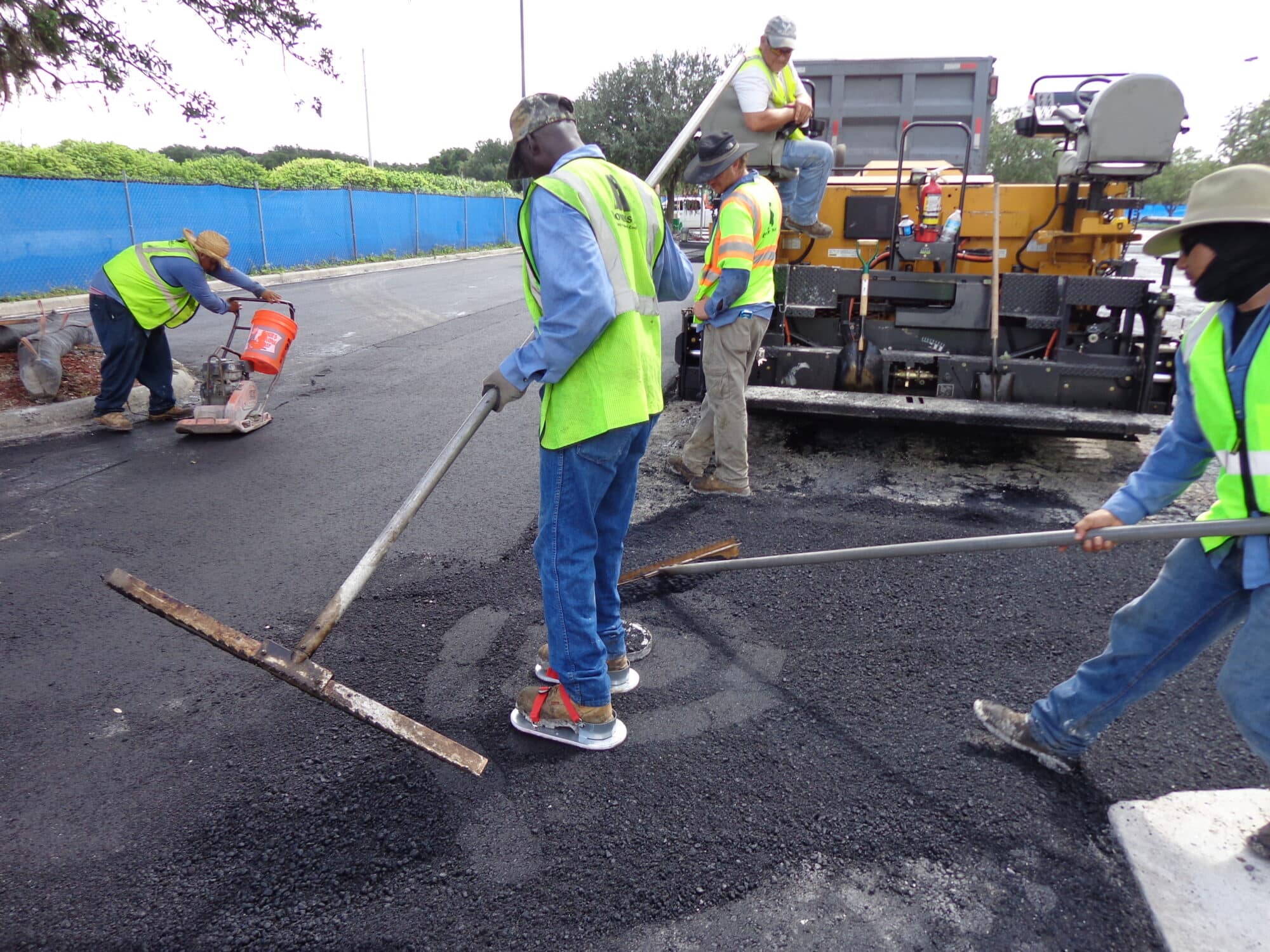
Also encourage laborers to wear tamp shoes that spread their weight to help prevent deep indents. Make sure they know how to lift their feet to prevent cut marks.

Quick Fix Tip: 

If workers have left tracks, you can prevent potholes from forming in those spots by filling the dents quickly. Have one laborer grab a shovel full of mix to cast into the footprints. The lute man will work this mix into place and scrape away the excess. This operation will take on greater urgency as temperatures drop. Because you want to keep handwork to a minimum during cool/cold weather paving (remember: each time you “fluff” mix, it loses heat to the air around it), prevention is the cure.


To get tips like this delivered to your inbox every week, sign up now for AsphaltPro‘s Toolbox Tips newsletter.