This Too Shall Pass

After preparing a handful of angst-filled editor notes detailing the effects precision schedule railroading (PSR) has on the supply of diesel exhaust fluid (DEF) and petroleum, flipping out about a government to our south preventing aggregate production for Summit Materials, and suggesting a federal gas tax holiday gives us no actual relief now in exchange for big problems later, I recognized I was being a bit too negative. I was debating whether to quote Otto Von Bismarck. You all know I’m getting into dark and foreboding territory when I’m quoting the first chancellor of the German Empire amid it all.

We have enough negativity without a magazine editor pointing out challenges.

What I’d like to do here is remind professionals in the asphalt industry: this too shall pass. That’s not a trite expression from a Southern Belle or someone’s grandmother. It’s a truism I’d like to hear more of us put on repeat.

The asphalt industry has seen ups and downs in prices of materials—some of those highs have been in recent memory. I’ll point to the summer of 2008 and quickly move on. We’ve fought multiple battles in Washington for transportation bills to become law for the survival of not just our industry, but also our infrastructure system. Our proactive task forces have engineered safeguards that protect workers from fume and silica dust at the job site. We’re not strangers to adversity.

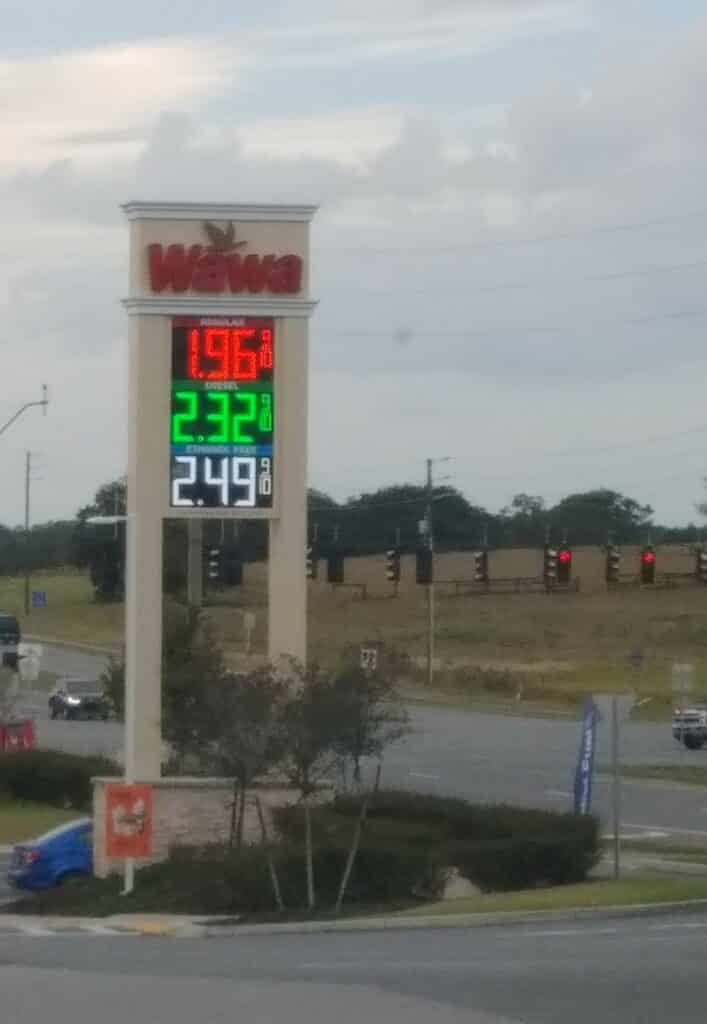
Editor Sandy Lender snapped this photo of her local WAWA gas price signage and saved the photographic evidence for posterity. This is in Citrus County, Florida, Wednesday, Nov. 4, 2020.

We’re problem solvers.

Allow me to pull one sentiment from the notes I prepped for this aggregates issue of AsphaltPro and share how the state of Florida is showing off its problem-solving chops. During spring 2022, it became “difficult” to acquire a reliable stream of aggregate for projects in different portions of the state. One producer shared that it felt like playing a game of whack-a-mole to get the railroads to deliver rock and lime in a timely fashion.

The problem, which Tim Carter, director of quality control at P&S Paving, Daytona Beach, stated succinctly, is the supply chain issues we’re facing nationally have manifested in the inability to sustain regular, reliable shipments of aggregates into the state. One solution, Carter shared, is the cooperation of industry and Florida DOT.

For example, the DOT is allowing up to 45% RAP in polymer-modified mixes as of press time, which lessens the burden of acquiring virgin materials. Carter told me the state association and DOT work together, “throwing mud against the wall” to see what sticks and to come up with ideas that will lessen pain for the contractor while safeguarding quality for the taxpayers.

That kind of cooperative spirit showed up in the price escalators built into contracts “back in the day” and continued today for many states. That kind of cooperative spirit sees co-workers carpooling to work and job sites to save on fuel; sees plant managers developing creative conveyance systems to ensure material gets from Point A to Point B most efficiently around the quarry and plant; sees trucking foremen planning routes so mix is delivered with least fuel consumption; and so on.

Like I said above, this industry is made up of problem solvers who have seen and survived difficult times. The good news is the cooperative and creative businesses will make it through again. Those owners know, this too shall pass.

Stay Safe,

Sandy Lender

Calibrate on Time for Quality Control

Calibrating lab equipment should be second nature to your team members.

Calibration is a vital step to get repeatable and accurate test results, thus states have specified different criteria for it on different devices.

Now take a look at the equipment you use in the field.

Calibration is a process where you compare the accuracy of a measuring instrument against a standard. For the nuclear density gauge—used to “document” sections of the asphalt mat for pay factors—for example, you want to ensure it’s reading accurately, so you will, of course, have it calibrated on a regular schedule. Your gauge manufacturer or other nationally accredited calibration lab can perform this as required by the National Institute for Standards and Testing (NIST), ASTM, or AASHTO, and can then set a regular schedule for you.

The non-nuclear density gauge—also used to “document” sections of the asphalt mat for pay factors—will require calibration on a regular schedule but doesn’t have the same hazardous material concerns that a nuclear density gauge does. The gauge manufacturer will assist in calibration.

Smart levels and temperature guns, while not necessarily directly affecting pay factors, are part of your quality control/quality assurance methodology, and they also need calibration to ensure you’re using good tools to get accurate measurements each and every day of paving.

The point is to make sure you adhere to this practice. You don’t want to purchase a density gauge and forget the steps for its proper care and maintenance. Today’s tip is your reminder that the gauge may be “up” for calibration for its best and most accurate quality assurance performance.

Do you need to share this tip to your foreman or QC/QA manager?


Get tips like this to your inbox each week! Sign up for our Toolbox Tips newsletter now.

Tips for Minimizing the Impact of Rising Fuel Prices

No one in the construction industry needs to be made aware of rising diesel prices over the past year. They’ve felt the pain. Through the first week in July, the average price of diesel fuel was nearly 70% higher than the year prior. There’s no single magic bullet to reduce fuel costs, improve fuel efficiency or help you navigate through these unprecedented times; however, a group of strategies can certainly help.

1. Shop around for fuel, insist on transparency

Roberta Wright, CEM and Fleet Coordinator for the City of Lynchburg, Va., has learned to shop around when it comes to fuel prices. In 2018, when she discovered she could get a better price from other vendors than the vendor on contract, she broke the contract and started to get quotes for every load of fuel. The net savings added up to more than $103,000 over 5 years.

With an increasing number of supply chain issues, this year Wright has returned to contract purchasing, but with a twist. She asked participating vendors to show documentation of what they paid for the fuel, plus their constant, delivery fees and the total price per gallon of fuel for each load. “It’s not that I am trying to undercut everyone. It’s my job to get the lowest price.”

While your business may not have the buying power of a municipality, the point is to keep vendors honest by keeping the fuel pricing transparent. “Anyone can do it,” says Wright.

If you’re fueling at retail, several apps can help you identify the lowest price for gas and diesel near you such as Gas Buddy and Drivvo.

2. Track fuel costs with fleet management software

Wright highly recommends fuel management software to help managers keep an eye on costs. Reports from FuelMaster software show the vehicle number, who fueled the vehicle, the number of gallons, date, time, pump, and product. She adds in the fuel costs which change every time they load their two on-site tanks. “Having some type of monitoring system reduces theft,” says Wright. When she sees fuel efficiency decreasing, she can have the maintenance team identify any issues.

3. Dig into telematics

Telematic data offers valuable insight into fuel efficiency and machine utilization. “Across the industry, telematics data is often underutilized,” says Larry Herman Jr, Telematic Support Supervisor at RDO Equipment Co., which represents CONEXPO-CON/AGG exhibitors John Deere and Vermeer.

According to Herman, many factors can contribute to fuel burn rate and excessive fuel consumption. “Telematics systems, like John Deere’s JDLink, can track utilization data including idle time, fuel consumed while in idle, and compare that data across the fleet to identify opportunities for improvement,” says Herman.  JDLink’s Machine Analyzer tool allows managers to compare data for the entire fleet, specific groups of equipment, or machine types.

Another area to focus on are the gears or modes the machine is being operated in. “If a machine isn’t being operated in the optimal mode (eco, production, etc.) or in the optimal gear, it won’t achieve maximum fuel efficiency,” says Herman.

According to Herman, John Deere’s JDLink system allows managers to see where their machines are hitting key utilization on job sites. This is based on machine load factors, engine loads, and gearing. ‘Too much hard utilization and you are wearing the machine and burning more fuel,” says Herman. “Too Low utilization and you are burning excessive fuel where a smaller machine could better perform that work.”

With telematics data in hand, managers and foremen have the information they can use to coach their operators to maximize productivity with utilization.

Herman encourages managers to sit down with a specialist at the dealer who can offer in-person or remote support to help customers delve into their data and capabilities. The answers aren’t always clear-cut.

“Auto-idle/shutdown can be beneficial in some situations, but not every situation as each business and use-case is different,” says Jacob Koon, an RDO telematics consultant based in Texas.  “For example, an excavator on a pipeline job may be continually digging and have relatively low idle. That machine may be a good candidate for auto-shutdown because its job is to be constantly “working.”  However, another excavator on that same job may have very high idle because it’s being used to hold the pipe in place while it’s being attached.”

4. Be transparent with customers when implementing a fuel surcharge

California-based, Graniterock burns through approximately 3 million gallons of diesel fuel each year, producing and delivering concrete and other materials to customers in the San Francisco Bay area. “We pride ourselves on setting a price and sticking to it,” says Rich Sacher, Executive Vice President of the Materials division. “However, this year, we could never keep up with the velocity of change.”

As a result, the company did something it has never done before– it instituted a fuel surcharge. The fuel surcharge is based on a publicly available data source and adjusted monthly.

According to Sacher, Graniterock chose a fuel charge, because they believe it is the fairest option that offers full transparency to their customers. To ease the burden, they stood behind customers with long-term commitments.

“Anytime you have a challenge in a supply relationship or a contractual relationship it forces you to reach out and challenge each other,” says Sacher. “Customers appreciate that the fuel surcharge is something they can clearly show to their own customers.” The company announced the surcharge in a letter to customers and explained the decision in both a video and podcast.

Across the industry, fuel surcharges have become more common. In some cases, contractors and government agencies are delaying projects and/or spreading out work over a longer time period in the hopes that fuel prices drop and work can be completed more efficiently.

5. Convert trucks to compressed natural gas hybrids

With compressed natural gas (CNG) priced at $2.52 per gallon, converting your trucks to run on CNG and gas, or CNG and diesel can bring significant savings, all while reducing emissions. Conversion kits from Green Energy Solutions effectively convert your trucks to dual-fuel hybrids, running approximately 20-30% CNG.

According to Business Development Manager Kyle Flint, one of their clients, Oklahoma-based B&H Construction, has seen fuel costs go from $11,600 per employee to $4,800 per employee after converting most of their truck fleet. “Everything more than a half-ton has been converted,” says Flint.

Conversion kits are easily installed and include a tank package suited to the vehicle, plus hoses, tubes, fittings, pressure regulator fuel delivery system, sensors, and processors. The cost for a diesel assist kit is approximately $15,000-$20,000, while the cost for a gas kit is $13,500-$15,500. There are a number of government incentives for organizations that convert their vehicles to CNG because it is a renewable, clean-burning biofuel. Green Energy Solutions will have products on display at CONEXPO-CON/AGG 2023.

6. Don’t overlook machine maintenance

It’s never a good idea to skimp on machine maintenance, especially those tasks with a direct impact on fuel efficiency. According to RDO’s Herman, air filters should be cleaned daily and changed regularly. Fuel filters should be monitored for water or sediment that could lead to poor fuel economy. Lastly, be sure track tension and tire pressures are set to the proper points to avoid overworking your machines and burning more fuel than is necessary.


Call 988 to Reach U.S. Suicide & Crisis Lifeline

On July 16, 2022, the United States transitioned from the 10-digit National Suicide Prevention Lifeline to 988 – an easy-to-remember three-digit number for 24/7 crisis care. The lifeline, which also links to the Veterans Crisis Line, follows a three-year joint effort by the U.S. Department of Health and Human Services (HHS), Federal Communications Commission (FCC), and the U.S. Department of Veterans Affairs (VA) to put crisis care more in reach for people in need. This initiative is part of President Biden’s comprehensive strategy to address our nation’s mental health crisis, and is identified by U.S. Health and Human Services Secretary Xavier Becerra as a top priority at HHS. Since January 2021, the Biden-Harris Administration has made unprecedented investments to support the 988 transition, investing $432 million to scale crisis center capacity and ensure all Americans have access to help during mental health crises.

The National Suicide Hotline Designation Act, signed into law after the passage of bipartisan legislation in 2020, authorized 988 as a new three-digit number for suicide and mental health crisis. All telephone service and text providers in the United States and the five major U.S. territories are required by the FCC to activate 988 no later than July 16.

“988 is more than a number, it is a message: we’re there for you. Through this and other actions, we are treating mental health as a priority and putting crisis care in reach for more Americans,” said Secretary Becerra, who has been meeting with states across the country about the transition to 988 as part of HHS’ National Tour to Strengthen Mental Health. “There is still much work to do. But what matters is that we’re launching, 988 will be live. We are looking to every governor and every state in the nation to do their part to make this a long-term success.”

The Biden-Harris Administration increased federal investments in the 988 Suicide & Crisis Lifeline by 18-fold – from $24 million to $432 million — to scale up crisis centers and back-up center capacity, and to provide special services, including a sub-network for Spanish language speakers.

The $432 million included $105 million in grant funding to states and territories, provided by the American Rescue Plan, to improve response rates, increase capacity to meet future demand, and ensure calls initiated in their states or territories are first routed to local, regional, or state crisis call centers. Prior to this investment, the Lifeline, which has existed since 2005, had been long unfunded and under-resourced.

The 988 Suicide & Crisis Lifeline is a network of more than 200 state and local call centers supported by HHS through the Substance Abuse and Mental Health Services Administration (SAMHSA).

“Recent investments made in the Lifeline have already resulted in more calls, chats, and texts answered even as volume has increased, but we know that too many people are still experiencing suicidal crisis or mental health-related distress without the support they need,” said Miriam E. Delphin-Rittmon, Ph.D., the HHS Assistant Secretary for Mental Health and Substance Use and leader of SAMHSA. “Over time, the vision for 988 is to have additional crisis services available in communities across the country, much the way emergency medical services work. The success of 988 depends on our continued partnership with states, as the federal government cannot do this alone. We urge states and territories to join us and invest further in answering the call to transform our crisis care response nationwide.”

FCC staff first proposed 988 in a report to Congress in August 2019 as the nationwide, easy-to-remember, 3-digit dialing code for individuals in crisis to connect to suicide prevention and mental health crisis counselors with the National Suicide Prevention Lifeline. On July 16, 2020, the FCC adopted rules designating 988 for this purpose. Recognizing the need to better support at-risk communities in crisis, including youth and individuals with disabilities, the FCC adopted additional rules in November 2021 to expand access to this important service by establishing the ability to also text 988.

“All across our country, people are hurting.  They need help.  The good news is that getting that help just got a lot easier.  Starting tomorrow, 988 will be available nationwide for individuals in crisis, and their loved ones, to reach the 988 Suicide & Crisis Lifeline more easily,” said FCC Chairwoman Jessica Rosenworcel. “This cross-government effort has been years in the making and comes at a crucial point to help address the mental health crisis in our country, especially for our young people.”

VA administers the Veterans Crisis Line exit disclaimer icon through the Lifeline’s national network. Because of VA’s partnership with the Lifeline, the Veterans Crisis Line is affected by this transition to a new number. Veterans and their loved ones can now Dial 988 then Press 1 to reach the Veterans Crisis Line.

“988 has been a long time coming and will serve as a critical resource during a crisis when every second counts. The new, shorter number will help ensure Veterans have easier access to the Veterans Crisis Line,” said VA Secretary Denis McDonough. “This launch is a whole-of-government approach in line with the President’s call to prioritize mental health by strengthening access to crisis services, and preventing Veteran suicide, our top clinical priority.”

In 2021, the Lifeline received 3.6 million calls, chats, and texts. That number is expected to at least double within the first full year after the 988 transition.

The United States had one death by suicide every 11 minutes in 2020, according to the Centers for Disease Control and Prevention. Suicide was the second leading cause of death for young people aged 10-14 and 25-34. From April 2020 to 2021, more than 100,000 people died from drug overdoses. Studies have shown that after speaking with a trained crisis counselor, most Lifeline callers are significantly more likely to feel less depressed, less suicidal, less overwhelmed, and more hopeful.

The 10-digit Lifeline number 1-800-273-TALK (8255) will continue to be operational after July 16 and will route calls to 988 indefinitely. Veterans, service members, and their families can also still reach the Veterans Crisis Line with the current phone number 1-800-273-8255 and Press 1, or by chat exit disclaimer icon or text to 838255.

More information on 988 is available at www.samhsa.gov/988 and https://www.samhsa.gov/find-help/988/faqs.

Fix the Line Behind the Screed

When we’re talking about quality control/quality assurance during paving operations, one of the most obvious signs of a problem is a line (or two) in the mat. Here are a few common “lines” and common causes with quick cures.

If you see an area about a foot wide (more or less) of different-sized rock in the center of the mat, you may have worn reverse augers in the center of the auger assembly. You may also have the auger assembly set too high. Do some troubleshooting to assess what’s taking place at the auger and fix any worn or broken pieces.

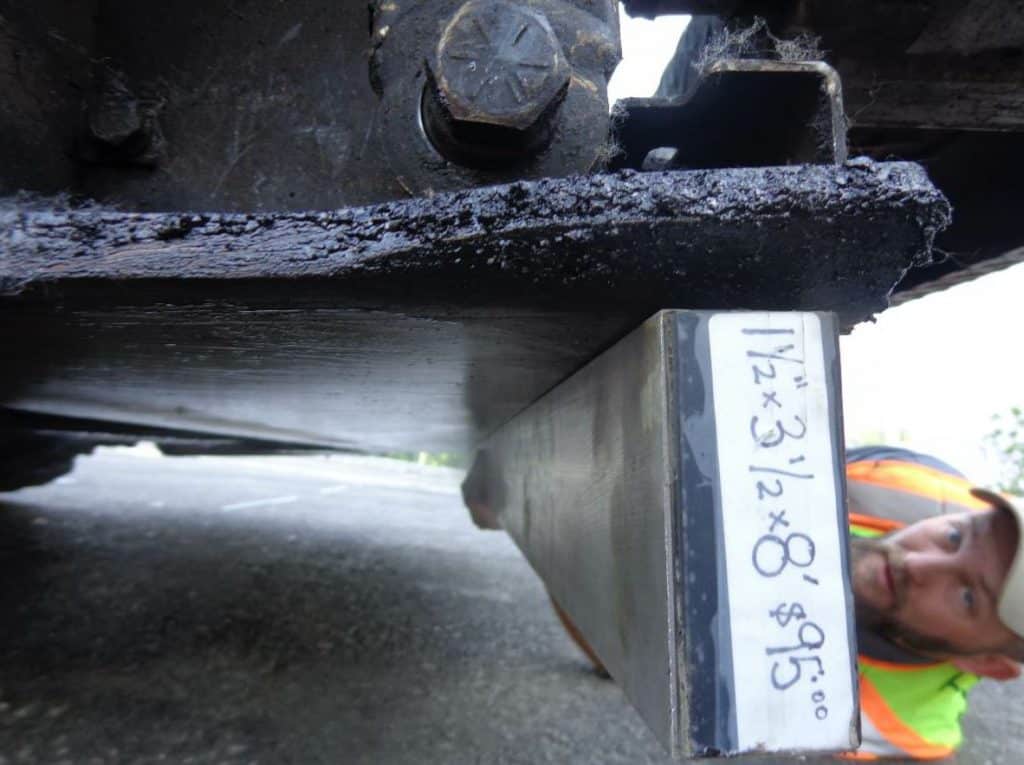
If you see a line (or gouge) trailing behind the right or left side of the main screed plate, check the height (and slope) of your extensions. You want the extensions to be perfectly lined up with the main screed to avoid a divot that the roller operator will have a devil of a time trying to get density with.

If you see the left or right side of the pavement dragging or looking like a rough line of rock while the rest of the mat is a smoothly buttered lane, check your temperatures. The section of the screed where the line’s coming from might have a broken heating element or the temperature might be set wrong, etc. Use a temperature gun to measure multiple points across the screed to ensure the whole plate is the same, correct temperature.


Subscribe now to receive tips like this to your inbox every week.

Safety Culture in the Workplace: How Generational Differences Present Challenges, Opportunities

How do you create an effective safety culture in the workplace when you have an employee base that is so diverse?

It’s an important question for equipment manufacturers to ask and answer, and the latter can’t really be accomplished without a better understanding of what “culture” refers to and how it impacts organizational goals and priorities.

“Culture is what we learn from our people, and it’s specific to the group you belong to, and – as I said, it’s all learned,” said Elaine Cullen Vandervert , PhD, president of Prima Consulting, and a presenter at AEM’s recently held Product Safety & Compliance Seminar. “Culture tells you what is going on, how you should feel, what you should do, and how you should go about doing it. It tells you how to operate in that group we are talking about.”

It’s obvious everyone belongs to – and participate in – a variety of cultures. A person’s nationality, gender and religious belief (or lack thereof) all contribute to how they present themselves. In her presentation to Product Safety & Compliance Seminar attendees, Vandervert emphasized the impact of culture in determining how employers can and should go about creating a safe and productive workplace.

One component of organizational culture that employers absolutely cannot afford to overlook is the wide range of ages of their respective workforces and its impact on the development and refinement of safety culture.  For the first time ever, there are five generations that can currently be found in the workforce. Baby Boomers, once upon a time, used to comprise the largest section of the workforce by a fairly comfortable margin. That’s starting to change, however, as they continue to retire in greater and greater numbers.

Unfortunately, there’s a significant consequence to Boomers leaving the workforce: They are taking with them a wealth of knowledge, skills and wisdom that only comes from significant experience. A study cited by Vandervert found it takes 8-10 years on average for an employee to be able to develop a certain level of experience that allows them to administer on-the-job teaching and training. It’s a sobering statistic, especially when considering what it takes to establish an effective safety culture within an organization.

“You need to be able to know what to do when things go wrong from a safety perspective,” said Vandervert.

It’s impossible for a person or group to participate within an organization’s culture if they are unwilling – or unable – to embrace its norms. Cultures change slowly, however, and patience is required. And it all comes down to people themselves, said Vandervert, and how they’re managed. With so many generations in the workforce right now, managing them effectively is a task that’s easier said than done.

“A study we conducted showed there are five variables related to work that are different across generations,” she continued. “How they approach it, what motivators they have, how they view professional growth, and the attitudes they have about learning within that work environment. And if you step into a workplace with all five generations, you will see conflict.”

Those five generations, as described by Vandervert, are:

  • Traditionalists – Born between 1927 and 1946, traditionalists are quite obviously no longer very prevalent in the workforce. However, those who remain are best described as dependable, respectable and loyal. More than anything else, however, traditionalists believe they have earned the right to be respected largely based on their lengthy track record of experience.
  • Baby Boomers – Born between 1946 and 1964, Baby Boomers, once upon a time and not all that long ago, dominated the workforce. Known as the optimistic and loyal generation, Boomers committed themselves to changing the world. On the other hand, though, they tend to be workaholics who were perhaps too often willing to make personal sacrifices in exchange for success.”
  • Generation Xers – Born between 1964 and 1980, members Generation X are known as the first “latchkey kids.” Skeptical and independent-minded, Gen Xers tend to value work-life balance more so than any other generation in the workforce.
  • Millennials – Born between 1981 and 1994, millennials can best be described as competitive, open-minded and very open to personal opportunities. In addition, they are known for their desire to be part of a team, having fun at work, and for their tendency to seek out (and embrace) new professional opportunities as they become available.
  • Generation Zers – Born between 1995 and 2010, Gen Z members tend to think more in global terms than many of those who came before them. They are dependent on digital devices and, thus far, have been – generally speaking – more apt to experience mental health issues.

All of this is to say when members of these five groups come together in the workforce, things can get a little complicated. That’s because, in many cases, people tend to operate very differently within professional environments based on the rituals, behaviors and norms associated with the generation from which they come.

So, culture is an incredibly important consideration when looking to establish a safe and productive workplace, because employers must be able to determine exactly what will make workers choose to act safely and productively and – perhaps more importantly – find a way to all those widely varying factors work within the confines of their own organizational structures.

“Because, ultimately, culture is the glue that holds everyone and everything together,” said Vandervert.