How to Win Government Contracts and Build the Right Relationships
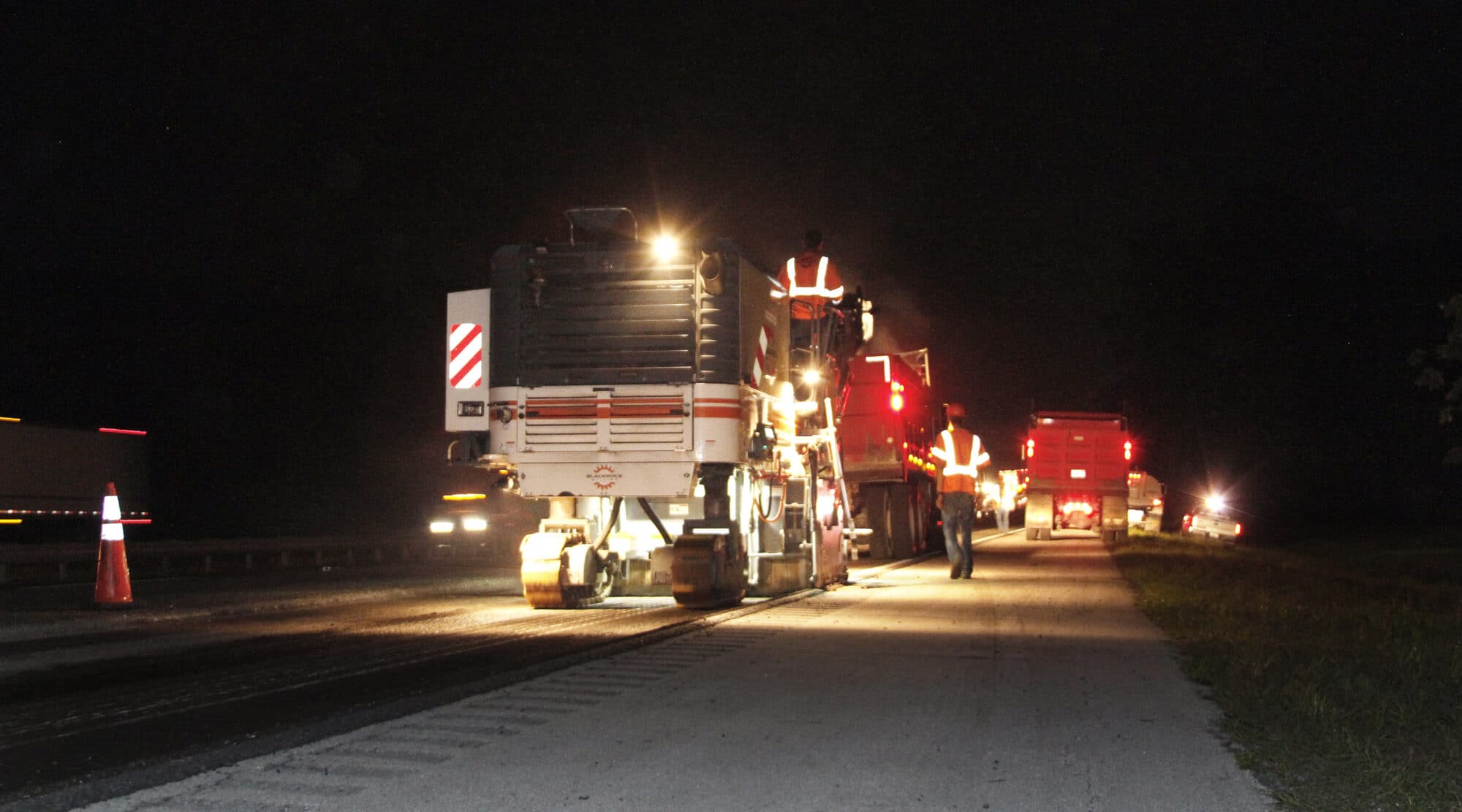
When the U.S. Congress passed the Infrastructure Investment and Jobs Act in 2021, it committed to a once-in-a-generation investment in the nation’s infrastructure. Departments of Transportation (DOTs), municipalities, public works departments, and other government agencies will increase the number of tenders put out to contractors, and contractors are trying to be selected for as many of them as they can.

However, the key to increasing the number of government contracts your company wins may not be what you think; it isn’t the product your company delivers or even your company’s performance, but it’s the relationships your people have with key decision-makers.

According to the Federal Government, this bipartisan infrastructure act, combined with the Build Back Framework, will add on average 1.5 million jobs per year for the next 10 years.

Departments of Transportation (DOTs), municipalities, public works departments, and other government agencies will increase the number of tenders put out to contractors, and contractors are trying to be selected for as many of them as they can.

However, the key to increasing the number of government contracts your company wins may not be what you think; it isn’t the product your company delivers or even your company’s performance, but it’s the relationships your people have with key decision-makers.

“There are a couple of different plates to spin here, but what it really comes down to is developing sophisticated relationships with the decision-makers,” says Richard Krolewski, Founder, Regulatory Resources, LLC. His company works with construction businesses and suppliers to build relationships with government agencies, such as departments of transportation.

Krolewski also facilitates the DOT Advisory Board through his Regulatory Resources company. Additionally, he serves as the CEO of the FRP Institute for Civil Infrastructure, a trade group formed last year to promote the use of non-corrosive reinforcement in transportation projects.

“Generally, inside the materials office of a DOT is its tactical arm in the sense that all specifications that revolve around projects come specifically from that office. Getting ahead of the curve by having positive relationships with people working in those offices is very valuable because it helps you stand out from being just another contractor,” Krolewski says.

And, when DOTs put out their memorandums for upcoming new projects, having a positive relationship with people in the DOT will increase your chances of learning about them sooner than the competition. You won’t be informed ahead of it going public, but they may reach out to you, specifically, after it has been made public.

“Bidding isn’t always about cost; it’s not about being the cheapest,” Krolewski says. “For contractors, it almost always comes down to price, but the quality is a more important factor in establishing relationships with project owners. You want to be known in the industry as a quality producer or supplier who works with quality vendors. And then you need to be able to back that up with first-class service. We work as a liaison between the industry and the DOT, which enhances the opportunities for our clients.”

All government agencies have approved lists of suppliers/vendors they use for various projects, so it’s incumbent on the contractor to know who those people are as well. Then it would be beneficial to take a step further and learn about how these products work and how they can benefit the project that the contractor is trying to obtain.

How to Connect with Decision-Makers

“The whole idea is to take yourself out of the realm of just being another contractor,” says Krolewski. “Why scour around looking for projects? It makes more sense to go right to the source.”

According to Krolewski, contractors who want to increase the number of government contracts they win must do work that demonstrates their company is a quality organization that understands the use of the desired materials and technologies. If the decision-makers are confident in your company, that goes a long way to choosing your company.

Besides cold calling and cyberstalking, there are four ways of building relationships with these decision makers:

  1. Speak at conferences.People at DOTs and other agencies attend conferences and trade shows to gain a greater understanding of topics that affect infrastructure. By presenting at a conference, you demonstrate your company employs experts and that you want to share that knowledge.

“It’s all about the correct exposure to your customer and putting yourself out there as an expert in what you are doing will instill confidence in your services as they recognize how your organization stands above the average,” says Krolewski.

  1. Get involved, particularly with organizations and trade associations that support specification development, product approval, and product demonstration.

“It’s critical to be in the know in terms of what are the upcoming technologies and what is the latest and greatest,” says Krolewski. “For example, DOTs are moving in the direction of replacing traditional materials like steel reinforcement with non-corrosive materials, such as fiber-reinforced polymers. Getting ahead of that curve will help you stand out.”

  1. A sophisticated website.Your website should communicate with words, pictures, and video your company’s experience, expertise, values, and commitments to safety and quality.

“The days of doing business driving around your truck, shaking hands, and going for drinks is over,” says Krolewski. “You don’t have the opportunity to develop interpersonal relationships the way you could have 5-10 years ago, so having a sophisticated web site with a clear message is critical because more business is being done electronically than ever before.”

  1. Active social media. While a website gives decision makers a snapshot of your company when they’re reviewing your company while examining your bid, social media is the modern “drop in and say ‘hello’”.

“Building that kind of infrastructure into your contracting organization is absolutely critical,” says Krolewski. “Social media allows you to put your company in front of decision makers on a regularly; it really has become the greatest means for regularly connecting with people.”

No matter the size of business, winning government contracts is a big deal and can be essential for long-term success. While these are not easy to secure, particularly in the beginning, building relationships is the best way to get a foot in the door.

Is This Still Asphalt?

The preface for this month’s note is that I do in fact understand the need to placate climate change advocates to continue doing business in today’s world. One example out of the multitude I can offer is that of shareholder advocacy group Majority Action filing an exempt solicitation mid-March for the board to remove Lead Director Ronald Sugar and CEO Michael Wirth from Chevron for failing to do “enough” to curb Scope 3 emissions. This issue will go to press before the vote in late May, but information is archived here: https://www.sec.gov/Archives/edgar/data/0000093410/000138713122003291/cvx-px14a6g_030822.htm

An example that may hit closer to home for readers is the spate of state legislative actions introducing “buy clean” language that attempts to set unattainable benchmarks for construction materials. Luckily, the asphalt industry has a history of encouraging environmental stewardship and, as an industry, now has a mission of The Road Forward, launched at the National Asphalt Pavement Association (NAPA) annual meeting January 2022. As part of The Road Forward climate stewardship mission toward net zero carbon emissions, NAPA listed the third industry goal would involve developing a net zero materials supply chain by 2050, putting an emphasis on upstream Scope 3 emissions, such as those created or emitted by vendors who supply liquid asphalt binder or asphalt binder replacements.

Ted Christian and Sandy Lender talk about WEM Automation controls for asphalt plants at WOA 2022. Photo courtesy of WEM

One of the companies offering to replace a portion of liquid binder in asphalt mix designs is Stora Enso, a provider of renewable products in packaging, biomaterials, wooden construction and paper, headquartered in Helsinki. Its biomaterial offering comes from lignin—one of the main building blocks of a tree. It’s an intriguing concept, complete with data to fit into your environmental product declaration (EPD) to support your mix for buy-clean parameters. See the article on page 38.

Separate from the kraft lignin discussion, I’d like to posit: At what percentage of binder replacement does a mix design become a lignin pavement with asphalt additive, rather than an asphalt pavement? Imagine my horror at hearing an asphalt industry member suggesting to a group that we might meet high standards with full binder replacement.

Lately, well-meaning conservationists have suggested any number of additives to “turn roads into the new landfills.” I shudder at that language. But at what percentage of replacement does a mix design become a plastic road merely with asphalt binder additive? I fully agree that ignoring plastic pollution in our world would be irresponsible, but I’m not yet sold on the idea of putting that pollution into mix designs. I’m not a scientist, thus I will reserve judgment and offer a more educated and informed opinion when science is further along in that arena.

For now, I ask if we are, under the guise of lowering the construct of “carbon footprint,” removing asphalt roads in favor of tree, plastic or fad-of-the-moment roads? And should replacing asphalt be the mission the Asphalt Industry undertakes?

Stay Safe,

Sandy Lender

How to Keep Lines Out of the Mat

For the seasoned paving foreman, staying off a hot mat is second nature. You know better than to track your footprints across the fresh lift directly behind the screed. How many new members of your crew know why those size-10 dents are a problem? As you start the paving season, make sure one of the toolbox talks includes a discussion of mat integrity.

After your team has gone to great lengths to get the right mix delivered at the right temperature to and through the paver so that it’s placed beautifully behind the screed, the last thing you need is some kind of cut mark from a bad rolling job or dent from a dropped tool. Protect the mat with best practices such as putting an experienced roller operator in the breakdown position. Make sure the breakdown passes are complete before someone walks from the left side to the right, but the best way to keep footprints at bay is to keep laborers on their designated side of the lane as much as possible.

Of course, that’s for one of those ideal paving days that only exists on paper. When laborers on the project need to move around, make sure they’ll be wearing tamp shoes for the day.

The process for keeping cut marks out of the mat isn’t difficult. Teach roller operators to slow their roll as they come to a stopping point, and to turn gently to a curved, non-vibrating stop. Then reverse along the same pass. The roller will roll out the curved stop mark on its next pass beyond the mark.

There are more ways to keep workers from marring a freshly placed asphalt mat. Let’s share a few on the AsphaltPro Facebook page.


Subscribe now to receive Toolbox Tips like this by email each week!

CalAPA Establishes California Branch of Women of Asphalt

On Mother’s Day, CalAPA announced it has formalized its longtime advocacy for women in the asphalt pavement industry by establishing a California branch of the national “Women of Asphalt” organization.

The group seeks to highlight the contributions of women to the success of the industry, encourage more women to consider careers in asphalt, and elevate those working in the industry.

CalAPA’s former technical director, Rita Leahy, Ph.D., P.E., was previously recognized by the national organization as the “original woman of asphalt” in its Top 100 list of prominent women in the industry. Leahy recently shared her thoughts with Asphalt Insider on the difficulties women continue to face in entering and succeeding in the asphalt industry.

“A woman cannot be average in the asphalt industry,” Leahy said last week. “She has to be above average, the equivalent of a No. 1 draft choice.” Leahy also offered the following advice: “Do not confuse your life with your career. Your career is what you do. Your life is who you are.”

CalAPA has organized numerous events over the years to highlight and elevate women in the industry, including fun and educational events. The events have ranged from a panel discussion of prominent women leaders in the industry at a Fall Asphalt Pavement Conference in Sacramento in 2018, moderated by Leahy, to whimsical hat contests at CalAPA’s annual “Day at the Races” event at Del Mar.

The formal connection with the national Women of Asphalt group will facilitate coordination and amplification of activities. The mission statement of the national Women of Asphalt group is “empowering women in asphalt industry careers.” The goals of the group are to increase awareness of opportunities in the industry, elevate knowledge through education and resources, and provide platforms to create supportive relationships and growth.

NSSGA Supports House Transportation & Infrastructure Committee’s 2022 WRDA

The National Stone, Sand & Gravel Association (NSSGA) Vice President of Government and Regulatory Affairs Michele Stanley issued the following statement in support of the House reauthorization of the 2022 Water Resources Development Act. The Committee announced a markup of the bill will be held on Wednesday, May 18.

 “The National Stone, Sand & Gravel Association (NSSGA) thanks the leadership of the House Committee of Transportation and Infrastructure Chair Peter DeFazio (OR), Ranking Member Sam Graves (MO), along with the Chair of the Subcommittee on Water Resources and Environment Grace Napolitano (CA) and Ranking Member David Rouzer (NC) for introducing the bipartisan legislation, the Water Resources Development Act (WRDA) of 2022.

“This two-year legislation, traditionally passed with bipartisan support, is critical to our entire country’s communities. It provides the investment to modernize and build up our water systems, from ports and inland waterways, to flood control systems and other water resources infrastructure. Additionally, for our members in the aggregates industry, it gives two-years of certainty for funding that allows producers to supply the critical building materials that goes into each of these projects. We thank the Committee leadership for this first step in advancing WRDA 2022 and urge every member of Congress to move this legislation forward.”

ARTBA Foundation Announces Financial Assistance to Seven Children of Fallen Highway Workers

Seven children of highway workers who were killed or permanently disabled on the job will receive post-high school financial assistance for the 2022-23 school year from the American Road & Transportation Builders Association Foundation’s (ARTBA-TDF) “Lanford Family Highway Worker Memorial Scholarship” fund.

Now in its 23rd year, the scholarship program was established with a gift from two Roanoke, Virginia, highway contractors and their companies—Stan Lanford (1999 ARTBA chairman) of Lanford Brothers, and Jack Lanford (1991 ARTBA chairman), with Adams Construction Company. Over 100 highway workers are killed annually in roadway construction and maintenance accidents, and thousands more are seriously injured.

Scholarships have been given to students from 33 states to pursue undergraduate and graduate courses as well as technical training. To make a tax-deductible donation or to share the name of a new student who could be eligible for the program, contact Melanie Laird at 202.683.1029 or mlaird@artba.org.

The 2022 class includes:

Payton Alcon, Elon, N.C.

Payton’s father, David, was killed by a machine rollover in 2014 while working for Delta Contracting, Inc.  Payton will be a freshman studying nursing at Alamance Community College in Graham, North Carolina.

Willie Blevins, Athens, Ga.

Willie’s mother, Kathy Blevins, worked for the Gwinnett County Department of Transportation. She had just finished painting turn-lane lines when her vehicle was struck and she was killed in 2004. Willie recently graduated with his bachelor’s degree in mechanical engineering from the University of Georgia and will be pursuing post-graduate studies at the same university.

Amy McNeil Graves, Lumberton, Texas

Amy’s father, Jeffrey McNeil, was killed in 2005 while working for the Texas Department of Transportation. Amy recently graduated with her bachelor’s degree in nursing from Lamar State College and will be pursuing her master’s degree in nursing from the University of Texas, Arlington.

Katie Hutt, Cleveland, Tenn.

Katie’s father, Chris, was struck and killed in 2006 by a passenger vehicle while installing signage for United Rentals in a highway work zone. Katie will be a sophomore studying architecture at the University of Tennessee, Knoxville.

Jenna Jares, West, Texas

Jenna’s father, Gregory Jares, was killed in 2001 while working for the Texas Department of Transportation special crews. Jenna is a senior studying occupational therapy at the University of Mary Hardin-Baylor in Belton.

Breana Jones, Gaston, S.C.

Breana’s father, Standra Jones, Sr., died in 2007 after being struck by a vehicle while at work for the South Carolina Department of Transportation. Breana will be entering her freshman year at Winthrop University studying graphic design.

Joann Jones, Bluffton, Ind.

Joann’s father, Dale, was struck and killed in 2009 while working for the City of Anderson Street Department. Joann will be a junior studying biology at Case Western Reserve University in Cleveland, Ohio.

The Foundation is also pleased to share the recent academic achievements of four of the scholarship’s multi-year recipients:

Andrea Pair Winters, Spiro, Okla.

Andrea completed her Doctor of Pharmacy degree at Harding University’s College of Pharmacy.

Stan Jones Jr., Gaston, S.C.

Stan graduated with a master’s degree in landscape architecture from Clemson University.

Hadley Voudrie, Trussville, Ala.

Hadley graduated with a bachelor’s degree in elementary education from the University of Montevallo.

Carolyn Lillis, Philomath, Ore.

Carrie graduated with a bachelor’s degree in physical therapy from Oregon State University.