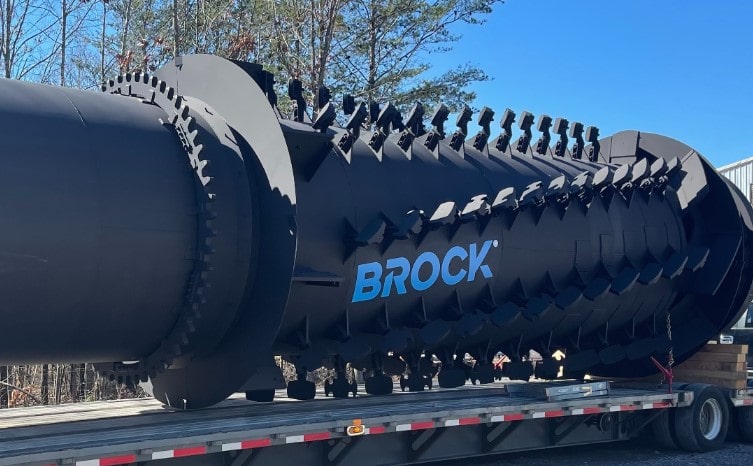
Prep for Consistent Baghouse Temperatures

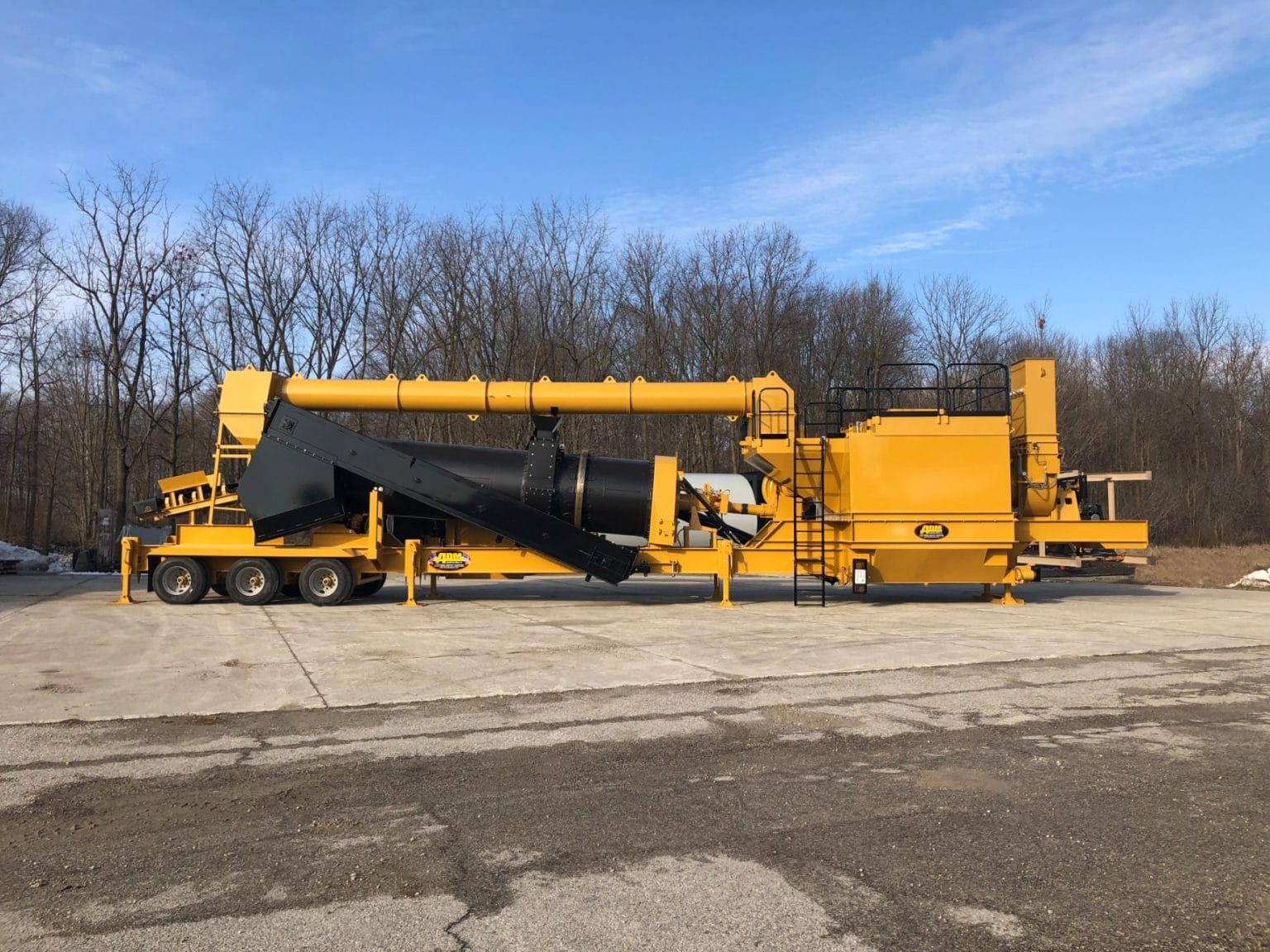
During this down season, prepare to strike a balance between fuel efficiency and baghouse dewpoint with proper adjustments. It might be something before, in or beyond the drum that gives you your most accurate temperature readings at season start-up.

  • Start by tuning the burner before season start-up.
  • Train the loader operator to pull material from the driest portion of the stockpiles.
  • Consider setting up a system that will heat and dry material on its way into the drum.
  • Adjust flighting within the drum to your operation’s optimum parameters and then leave it alone to do its job. Watch flights for wear, of course, but use caution when changing flighting arrangements.
  • An adjustment in rotation speed, thus dwell time, may be the solution to getting material dried optimally without blowing up your baghouse.
  • Keep track of flop doors. You may need to add more counter-weight to them.
  • Repair/replace seals around the high-speed slinger conveyors to ensure you have an accurate reading of dyer exit gas temperatures.

What other ideas do you have? We’ll share ideas to build a conversation on our Facebook page!


Sign up now to receive tips like this to your inbox each week!

American Rental Association Launches Prioritize Safety Video Series

The American Rental Association (ARA) has announced the launch of its Prioritize Safety monthly video series focused on essential safety tips for the equipment and event rental industry.

“The goal of the program is to make learning rental specific topics quick, easy, and fun,” reads ARA’s press release about the program.

Each video is no longer than two minutes and covers safety topics ranging from personal protective equipment (PPE) and chemical safety to defensive driving.

After an employee views the video, they will be presented with two questions to test their knowledge on what they just learned. The entire Prioritize Safety series is available in both English and Spanish.

The first video covers basic PPE, the importance of wearing it, and the consequences of not wearing it. The video can be accessed at ararental.org/rentalu after signing into RentalU.

Each month, a link to the new video will be sent out by email To subscribe, email education@ararental.org.

“We are very excited to launch the Prioritize Safety monthly video series,” said ARA Director of Education Lauren Watts. “These videos offer training that is easy for employees to access, takes only minutes to complete, and offers an entertaining spin to make the content more engaging.”


OSHA Withdraws Vaccination/Testing ETS, Effective Jan. 26, 2022

The U.S. Department of Labor’s Occupational Safety and Health Administration is withdrawing the vaccination and testing emergency temporary standard issued on Nov. 5, 2021, to protect unvaccinated employees of large employers with 100 or more employees from workplace exposure to coronavirus. The withdrawal is effective January 26, 2022.

Although OSHA is withdrawing the vaccination and testing ETS as an enforceable emergency temporary standard, the agency is not withdrawing the ETS as a proposed rule. The agency is prioritizing its resources to focus on finalizing a permanent COVID-19 Healthcare Standard.

OSHA strongly encourages vaccination of workers against the continuing dangers posed by COVID-19 in the workplace.

Visit OSHA’s website for further information.

2022-23 ARTBA Highway Worker Memorial Scholarship Opportunities Available

The American Road & Transportation Builders Association Transportation Development Foundation (ARTBA-TDF) is seeking eligible students for its 2022-23 “Lanford Family Highway Worker Memorial Scholarship Program.”

Applications are due by Friday, April 15, and can be found online at www.artbafoundation.org.

Established in 1999, this first-of-its-kind scholarship fund provides post-high school financial assistance to the children of highway workers killed or permanently disabled on the job. More than 200 scholarships have been awarded to worthy students from 32 states to pursue post-high school education.

Students must attend a post-secondary institution of learning that requires a high school diploma or its equivalent. This could include any public or private four-year accredited college or university; two-year accredited college; or vocational-technical college or training institution. Graduate students who meet the eligibility criteria are also able to apply. Scholarships have a value of up to $5,000 annually.

For more information, or if you have a lead on a student who might be eligible, contact ARTBA’s Manager of Safety and Foundation Programs Melanie Laird at mlaird@artba.org or 202.683.1029

Resilient Planning Engages Recycled Asphalt 

The recently released “World Green Building Trends 2021” SmartMarket Report from Dodge Construction Network offers data related to strategies architects, builders, investors, and others use—or plan to use—to improve sustainability in the design and construction industry. The report dissects the attitudes and plans of construction industry members from around the world. 

 I’d like to zero in on the “Design for Disassembly” section. The report states: “A critical way to reduce carbon and waste in the built environment is to have building products and buildings designed so that the various components can be reused when the building reaches the end of its lifecycle.” 

While the report speaks to vertical construction, I wish to apply to pavements the concept of planning during the design and construction phase for disassembly and recovery. In fact, this is a concept with which the asphalt industry is already familiar. As a member of the asphalt community, you should be able to easily share the fact that asphalt pavement is the most recycled product in America. Let’s look deeper. 

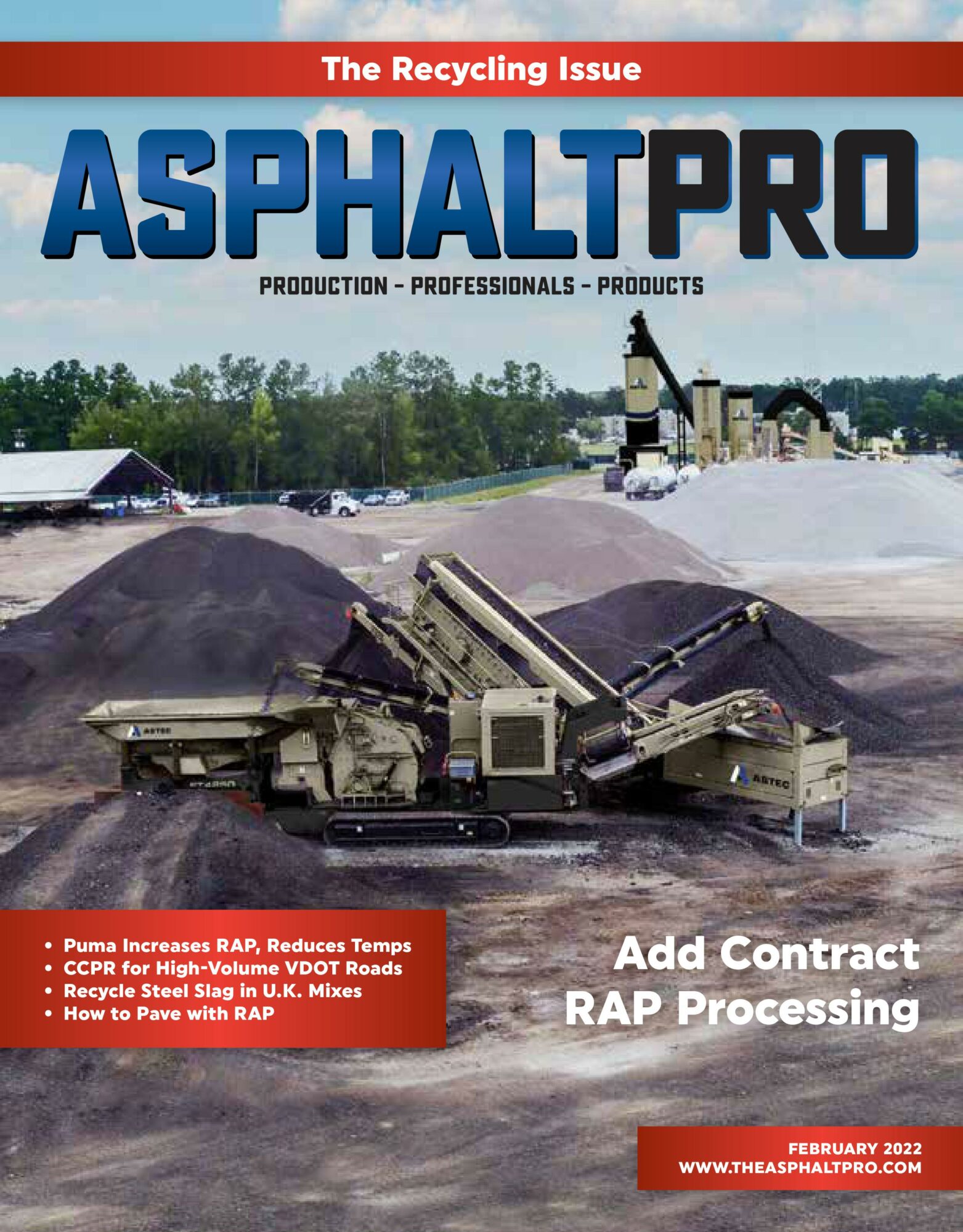
Asphalt pavements can be milled (disassembled) and the components (asphalt binder and aggregate) recovered for reuse in a new pavement. There are ways to perform this recycling in place or with recycling plants located near the paving site (check out this cold central plant recycling story). 

Central Plant Recycles it Cold

Using reclaimed asphalt pavement (RAP), recycled asphalt shingles (RAS), warm-mix asphalt (WMA), Ultra Lo-NOx burners, and other environmentally sound practices to design and produce asphalt pavement mixes adds “green” value to whatever rating system a construction project might be working within. The “World Green Building Trends 2021” report showed “a slight decline in the share of green projects that use a rating system” but still used nearly 80 pages to discuss the importance the construction industry places on the use of green practices, which, when applied to a rating system, increase the builder’s social score. 

Most of us have heard of LEED Certification, which focuses quite solidly on buildings. Many moons ago, before AsphaltPro posted its content online, we wrote about using WMA in constructing parking lots to increase a prime contractor’s LEED score. This is still a good idea, but I now posit LEED isn’t the place to focus attention. 

LEED is one blip on the radar where we can use the scientific given that the asphalt industry lowers your urban heat island score if you pave with heat-absorbing—rather than heat-reflecting—surfaces around your buildings. Albedo matters, after all. But does an asphalt contractor make enough money off a parking lot job to justify the marketing hassle of convincing project owners to use WMA around their new construction? Maybe. The better place to harness goodwill for the asphalt industry appears to be with other rating systems such as ENVISION® or ENERGY STAR®. 

We can do much in the march toward net zero when we focus efforts on rating programs that assist in lowering energy consumption at the HMA facility, hauling, and so on. No matter which green rating system you find easiest to navigate, they are typically designed to offer ideas for lowering your carbon footprint while third-party certifying your successes. 

As NAPA’s Richard Willis shared with me recently, the Federal Highway Administration (FHWA) isn’t looking at what entities have done in the past to green up their industries. The fact that the asphalt industry lowered its emissions by 97% while increasing its production by 250% from 1970 to 2001 is laudable, yes, but, in the eyes of FHWA, it’s also forgettable. It’s nice that the asphalt industry is extremely clean. Now what have we got planned for tomorrow and how will we employ our provable green practices to improve not just pavement lifespans, but our industry’s resiliency? 


Stay Safe, 

Sandy Lender 

Address Drum Interiors Now to Prevent a Breach During Production

Last week, we looked at the exterior of the drum. Let’s face it; if this component fails during spring 2022, you might have a long wait-time replacing it. That means you want to use this season to get the drum conditioned for a smooth and prosperous 2022 construction season.

A point you want to remember is every repair should be made according to Occupational Safety and Health Administration (OSHA) lockout/tagout regs. Because we’re talking about the interior of the drum, you also have confined spaces regs to work within.

Don’t take shortcuts. Please be safe. Please make a safety mindset your constant mindset, and check out the related article about Oldcastle’s safety line system before you make interior drum inspections or repairs.

What else do you need to check regarding the interior of the drum? Your OEM will have a checklist in your maintenance manuals. If you lost track of that booklet, you can probably find a pdf on the OEM’s website. Consultants and parts manufacturers are another good resource to assist, but here’s a good list to get you started:

  • Look at flights for excessive wear, heat curling, cracking
  • Look for air leaks around the knockout box and ductwork
  • Check the rakes at the mixer discharge for damage, bending
  • Check the liners on the discharge collar
  • Does the AC injection tube have wear on the end? Gotta fix that.

Now is the time to repair or replace faulty iron, seals, and the like. This is when you take care of all the elements that you might only “patch” during the height of construction season. When you’re in the drum, take advantage of the downtime to correct anything and everything to ensure a stellar start to 2022.