Top 10 Reasons Your Foreman Would Rather be Fishing

Asphalt paving and maintenance professionals have important and gratifying careers. But, let’s face it, there are some days that could be better. Hidden within the list below are some truths to think about for making a paving day better. Here are the top 10 reasons your paving foreman would rather be on vacation.

  1. Some random electric vehicle is stalled in the designated truck clean-out area.
  2. That’s only a partial concern because there happen to be zero haul trucks in the work zone at the moment.
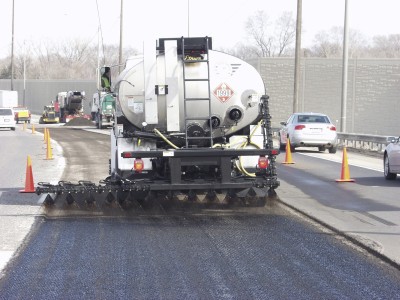
  3. But there is a 4-ton pile of mix in front of the paver.
  4. Three of your laborers have started shoveling the cooling mix into the hopper.
  5. The breakdown roller’s water tank is empty. So is the water truck, which you can blame on vandals from overnight.
  6. As you walk toward the parked breakdown roller sinking into the surface course, you notice what looks like a company-issued smartphone mashed into the new mat.
  7. When the paver operator yells, “The plant’s back up! They’re sending the rest of the trucks,” it’s the first you’ve heard of the plant being down.
  8. You realize “the rest of the trucks” means 200+ tons is on its way.
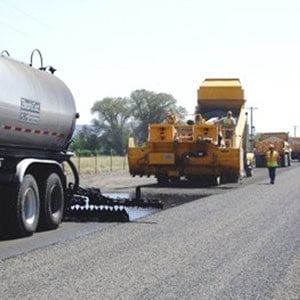
  9. The tack truck, which could easily hold the 2,000 gallons you requested for the day, came to the job with a mere 100 gallons, which have already been applied. (The driver is currently live streaming the shoveling operation to Facebook.)
  10. A motorist who just entered your work zone is the state inspector for the job. (Aaaand he drove through the wet tack.)

Is That Safe?

Let us begin this month’s Editor’s Note with a blast from the past. In the middle of my career, I spent two arduous years with a university in Southwest Florida. At one point during that tour of duty, the university president and I were interviewing a woman who was partially qualified for the position for which she’d applied, when the learned executive asked her if she was Catholic, if she had any children, and if she was planning to have children in the next few years.

Imagine my horror.

I’m not telling industry anything new by stating hiring managers today have plenty of hurdles to overcome without involving the A.C.L.U. and litigation in the process. The paper trail required to prove you’ve trained a construction worker not to maim himself on the job is overwhelming. Yet it’s vital. We have a responsibility to the people we bring into the industry to ensure a safe work environment. That includes being safe from newbies who have no clue what it means to lock-out/tag-out.

We are in a time when we’re inviting people to join our industry because they enjoy video games that employ joystick controls similar to the controls found in the heavy equipment on the job site. Heavy equipment that can crush their co-workers to death.

Think about that.

Do you want to work alongside a machine controlled by an 18-year-old who was taught common core math? Neither do I. (Side note: I admit to having difficulty with mathematics problems since the “big” chemo treatment protocol in 2011, so I’m not a good one to hand heavy equipment training to, either.) This is why on-the-job training, earn-while-you-learn programs, continuing education, targeted apprenticeships, vocational curricula tailored to our industry, and other such education are vital to the success of the asphalt industry.

I think it’s imperative that we not only teach workers how to operate a piece of equipment to optimize its fuel use for lowest carbon footprint, but also how to operate the equipment in the safest manner possible. Every aspect of equipment operation has safety elements incorporated, from tethering before climbing atop a sweeper to clean a high windshield to placing blocks against tires in addition to activating emergency brakes, and so on.

To grow our industry, we must think outside the box and welcome a wide and diverse set of workers who can think critically and learn both big-picture and technical points. But we must train these new workers for technical as well as safe practices. We’re not just building a wider workforce. We’re building a wider workforce with a safety culture ingrained.

If we’re doing it right.

Stay safe,

Sandy Lender

Comply with FMCSA Training Provider Registry by February 7, 2022

Under a new federal rule, all providers of entry-level commercial driver’s license (CDL) training must be listed on Federal Motor Carrier Safety Administration’s (FMCSA) Training Provider Registry (TPR) by February 7, 2022.

To be listed on the TPR, the lead trainer at each location must certify that the location meets these requirements:

  1. Follows a training curriculum that meets specific criteria for theory and behind-the-wheel training.
  2. Utilizes facilities, vehicles, and instructors meeting federal requirements.
  3. Meets federal record-keeping requirements.
  4. Complies with any applicable state laws and regulations.

To help transportation agencies comply, the Clear Roads pooled fund has developed free, downloadable CDL training materials for both instructor-led classroom and behind-the-wheel training. The resources aim to allow Clear Roads member agencies to provide entry-level CDL training that complies with 81 FR 88732, 84 FR 8029, and 49 CFR 380; and (2) to develop and document a process for member agencies to follow in order for each of their training locations to be added to the FMCSA TPR by February 7, 2022, and to comply with all federal requirements to remain on the TPR.

The resources include the following:

  1. Complete curriculum to meet the FMCSA requirements for the instructor-led classroom and behind-the-wheel components of the entry-level driver training rule, focusing on obtaining an initial Class B CDL, upgrading from a Class B CDL to a Class A CDL, and obtaining the hazardous materials endorsement for the first time;
  2. All training materials and resources necessary for states to execute the training program
  3. Train-the-trainer materials to assist agencies in implementing the training program; and
  4. Fact sheet and timeline to help agencies ensure that all of their training locations are added to the TPR before February 7, 2022.

Clear Roads is making the training materials available free of charge to any public agency, including local and county highway departments. Please complete the request form to access the materials.

Quick Winter Paver Storage Tips

Last week we looked at preparing your spraying equipment for winter. Now what about the paver?

Before you store your paver for the season, there are things you can do to ensure it will have a healthy spring start. Aside from a thorough cleaning with a biodegradable release agent to get any and all debris and asphalt off all moving parts; and extra greasing on chains, sprockets, and exposed cylinders, there are some basic steps to remember.

  1. Drain, fill and flush. Drain the fuel tank and refill it with a winter blend to prevent the fuel from turning to sludge at cold temperatures. Do not leave the tank empty, as it will be prone to rust. Also drain the fuel/water separator. Drain the spray-down system, mixing system, lines and nozzles of water, and flush them with antifreeze.
  2. Secure all panels and lock the hopper in transport mode.
  3. When the paver is put away, make sure the screed is propped off the ground to avoid moisture/condensation.
  4. Cover the fume extractor and seats to prevent weathering.
  5. While the paver is stored, it is critical to start it and move it at least monthly. Drain and refill the lines of antifreeze, remove the blocks and uncover the fume extraction system. Starting the machine and moving it a bit will charge the battery, move the fuel and hydraulics through the system, and help prolong the life of the tires or tracks.

John Deere to Acquire Majority Ownership in Kreisel Electric

Deere & Company has signed a definitive agreement to acquire majority ownership in Kreisel Electric, Inc. (“Kreisel”), a battery technology provider based in Rainbach im Mühlkreis, Austria. Kreisel develops high-density, high-durability electric battery modules and packs. Additionally, Kreisel has developed a charging infrastructure platform (CHIMERO) that utilizes this patented battery technology.

Since 2014, Kreisel has focused on the development of immersion-cooled electric battery modules and packs for high-performance and off-highway applications. The company has a differentiated battery technology and battery-buffered charging infrastructure offering and currently serves a global customer base across multiple end markets, including commercial vehicles, off-highway vehicles, marine, e-motorsports, and other high-performance applications.

John Deere sees demand growing for batteries as a sole- or hybrid-propulsion system for off-highway vehicles. Products in Deere’s portfolio such as turf equipment, compact utility tractors, small tractors, compact construction, and some road building equipment could rely solely on batteries as a primary power source. Deere intends to continue to invest in and develop technologies to innovate, deliver value to customers, and work towards a future with zero emissions propulsion systems.

The majority investment in Kreisel Electric will allow Deere to integrate vehicle and powertrain designs around high-density battery packs while leveraging Kreisel’s charging technology to build out infrastructure required for customer adoption.

“Kreisel’s battery technology can be applied across the broad portfolio of Deere products, and Kreisel’s in-market experience will benefit Deere as we ramp up our battery-electric vehicle portfolio. Deere will provide the expertise, global footprint, and funding to enable Kreisel to continue its fast growth in core markets,” said Pierre Guyot, Senior Vice President, John Deere Power Systems. “This is an opportunity to invest in a company with unique technology that’s designed for the demanding conditions where Deere customers work.

“Furthermore, building an electrified portfolio is key to John Deere’s sustainability goal of pursuing new technologies that reduce the environmental impact of new products and work toward zero emissions propulsion systems on equipment, while increasing our customers’ efficiency and productivity.”

Kreisel Electric will retain its employees, brand name, and trademark, and continue to operate from its current location in Austria to serve its growing customer base. The company was founded by brothers Johann, Markus, and Philipp Kreisel, and has approximately 160 full-time employees.

In a joint statement, Johann, Markus, and Philipp Kreisel said the Kreisel team looks forward to expanding its base business, leveraging the Deere channel to accelerate adoption of battery-electric vehicles and charging stations, and working with Deere’s vehicle design teams on product advancements.

The transaction requires final regulatory approval in Austria, with closing expected to take place in approximately 60 days. Financial details are not being disclosed.

Properly Shut Down the Spraying Equipment for Winter

When it comes to distributor trucks and spraying equipment, you must be self-reliant and maintain good over-wintering practices to save your spring startup.

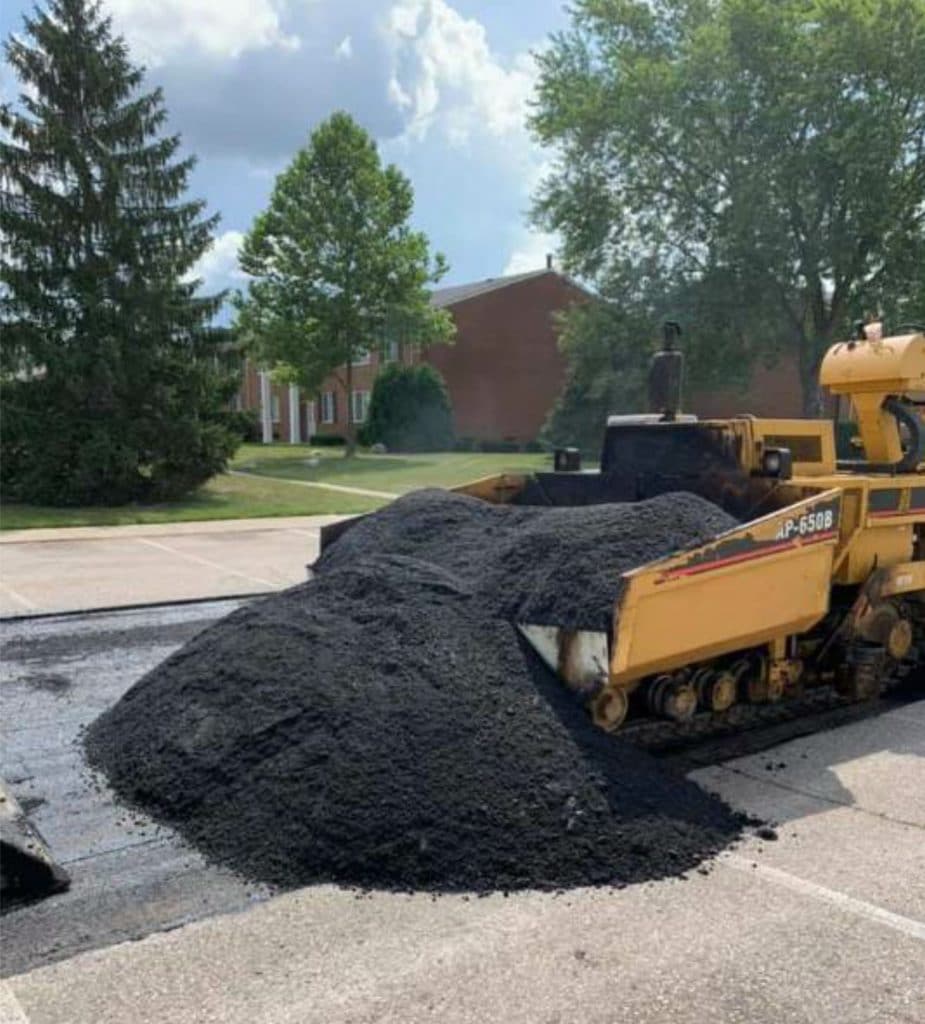
Plan for that by wiping down spray bars at the end of every shift. Before putting the machine in the company garage for winter, use a good release agent or WD-40 to wipe down each spray bar and nozzle of tack wagons and sealcoat machines. Use pumps to push anti-freeze through the bars if you’ll be housing equipment outdoors or in a spot that sees frigid temperatures.

Wipe down lights, mirrors and backup cameras so no buildup is left caked to sensitive surfaces. Put a shower cap or hair net over lights and backup cameras to protect them from dust and grime in the shop over winter.

For simple machines such as line stripers, turn the nozzle on the striper to prevent drying in the tip on a regular evening, but make sure you’ve drained the tubes completely and pushed solvent through before storing equipment for winter.

What other steps do you take to ensure your spraying equipment doesn’t clog into disarray during the downseason? You are welcome to take part in the conversation for extra ideas on the AsphaltPro Facebook page.


For more tips like this, be sure to subscribe to our Toolbox Tips weekly newsletter!