Volvo CE Unveils CX01 Single-Drum Autonomous Asphalt Compactor Concept

Volvo Construction Equipment has unveiled its CX01 single-drum asphalt compactor concept at The Utility Expo in Louisville, Kentucky.

The CX01 concept utilizes one vibratory asphalt compactor drum that’s actually two independent halves (called a split-drum) kept upright by a self-balancing control system. Capable of being operated either by remote-control or entirely autonomously, the machine is also fitted with both a diesel engine and an energy storage system, making it a flexible electric hybrid solution. It can be operated in diesel-only, hybrid or fully electric modes.

This concept machine is the latest in the Concept Lab family of prototype machines that push the boundaries of conventional construction equipment.

“While the CX01 is a conceptual product, the research and development that have gone into it will benefit customers in other ways,” said Justin Zupanc, Head of the Asphalt Compaction Development Team, Volvo CE. “It’s exciting for our engineers to push themselves to develop new and innovative ideas, and we’ve had personnel from the U.S. and Europe involved in the design, build and test phases of this concept.”

Customer-centered design

By redesigning the compactors themselves, the operator is removed from the unit — reducing exposure to vibration, noise, dust and other associated environmental conditions — and freed up to autonomously control a fleet of CX units working together to compact asphalt surfaces.

A fleet of these units deployed on larger jobs could work together and communicate not only between each CX unit but also to other pieces of equipment on the site. The machines could survey the jobsite, report on the conditions of the mat — things like density, temperature and passes — and determine when and where to compact.

Volvo CE said compaction cycles can be streamlined, costs reduced and more agile work patterns set up, thanks to the machine’s compact design and precise maneuverability. Rolling pattern, weight and number of rollers can all be adjusted to match the width, thickness and speed of paving operation — providing a complete paving solution for whatever the job might be, from light infrastructure to highway construction. The CX01 can be matched with Volvo’s existing Co-Pilot system so that all work can be handled remotely via a touchscreen interface. In addition, it uses GPS position tracking to monitor job performance and help customers better hit their productivity targets.

While the CX01 concept has been purely an exploration, some learnings could be applied to future products.

“Remote control and autonomous operations are areas of focus for us in R&D. Also, while the low-friction water reduction coating on the drum shell is theoretical, it could be a huge benefit on larger machines to decrease the amount of water needed,” Zupanc said. “It is exciting to think how the theories showcased on the CX01 could be realized on compaction production units in the future.”

Attendees of The Utility Expo in Louisville have an opportunity to see the CX01 compactor concept up close in the Volvo booth, K129 , and a machine walkaround will be held Sept. 28 as part of the company’s virtual experience .
How to Perform IDEAL-CT

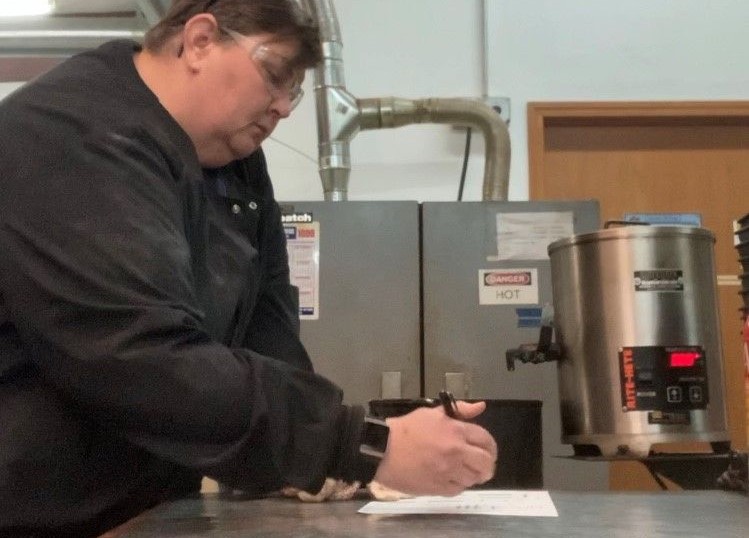
Of the cracking tests gaining popularity for their correlation to field results, the Indirect Tensile Asphalt Cracking Test (IDEAL-CT) scores near the top of the class. If your department of transportation (DOT) requires you perform this test on your balanced mix designs (BMD) or other mixes, here’s how to do it.

First, create in the Superpave gyratory compactor six asphalt mix specimens of 150 mm in diameter, 62 mm in height, with 7 percent air voids (+/- 0.5 percent). Do not notch, cut or otherwise distress the puck.

Second, age the specimens for two hours at 25 degrees Celsius.

To run the test:

  1. Begin by entering salient information in the computer software’s required fields.
  2. Place the specimen on its side in the testing equipment load frame. The test will be conducted at room temperature.
  3. Load the specimen at a constant deformation rate of 50 mm per minute of cross-headed displacement until fracture failure occurs.

The instrumentation feeds data to the computer software, which continuously records the load and vertical deformation. It automatically calculates the cracking tolerance index (CTIndex) using the software provided with the system.

The Federal Highway Administration (FHWA) Mobile Asphalt Technology Center (MATC) states this will test at least three replicates for each sample and generate a CTIndex for each sample in five minutes or less (after the two-hour aging of the sample). FHWA states the test meets ASTM D8225 standards and specifications.

The larger the CTIndex value, the better the cracking resistance.


Subscribe to receive tips like this to your inbox every week!

Expanded Measures Aim to Protect Workers from Extreme Heat Hazards

To combat the hazards associated with extreme heat exposure – both indoors and outdoors – the White House today announced enhanced and expanded efforts the U.S. Department of Labor is taking to address heat-related illnesses.

As part of the Biden-Harris administration’s interagency effort and commitment to workplace safety, climate resilience, and environmental justice, the department’s Occupational Safety and Health Administration is initiating enhanced measures to protect workers better in hot environments and reduce the dangers of exposure to ambient heat.

While heat illness is largely preventable, and commonly under-reported, thousands of workers are sickened each year by workplace heat exposure. Despite widespread under-reporting, 43 workers died from heat illness in 2019, and at least 2,410 others suffered serious injuries and illnesses. Increasing heat precipitated by climate change can cause lost productivity and work hours resulting in large wage losses for workers. The Atlantic Council’s Adrienne Arsht-Rockefeller Foundation Resilience Center estimates the economic loss from heat to be at least $100 billion annually – a number that could double by 2030 and quintuple by 2050 under a higher emissions scenario.

To emphasize its concern and take necessary action, OSHA is implementing an enforcement initiative on heat-related hazards, developing a National Emphasis Program on heat inspections, and launching a rulemaking process to develop a workplace heat standard. In addition, the agency is forming a National Advisory Committee on Occupational Safety and Health Heat Injury and Illness Prevention Work Group to provide better understanding of challenges and to identify and share best practices to protect workers.

“Throughout the nation, millions of workers face serious hazards from high temperatures both outdoors and indoors. Amid changing climate, the growing frequency and intensity of extreme heat events is increasing the dangers workers face, especially for workers of color who disproportionately work in essential jobs in tough conditions,” said U.S. Department of Labor Secretary Marty Walsh. “As Secretary of Labor, my priority is to make sure we are taking appropriate action to keep workers healthy and safe on the job.”

OSHA implemented an intervention and enforcement initiative recently to prevent and protect workers from heat-related illnesses and deaths while they are working in hazardous hot environments. The newly established initiative prioritizes heat-related interventions and inspections of work activities on days when the heat index exceeds 80 degrees Fahrenheit.

“While agricultural and construction workers often come to mind first when thinking about workers most exposed to heat hazards, without proper safety actions, sun protection and climate-control, intense heat can be harmful to a wide variety of workers indoors or outdoors and during any season,” said Acting Assistant Secretary for Occupational Safety and Health Jim Frederick.

The OSHA initiative applies to indoor and outdoor worksites in general industry, construction, agriculture and maritime where potential heat-related hazards exist. On days when a recognized heat temperature can result in increased risks of heat-related illnesses, OSHA will increase enforcement efforts. Employers are encouraged to implement intervention methods on heat priority days proactively, including regularly taking breaks for water, rest, shade, training workers on how to identify common symptoms and what to do when a worker suspects a heat-related illness is occurring, and taking periodic measurements to determine workers’ heat exposure.

OSHA Area Directors across the nation will institute the following:

  • Prioritize inspections of heat-related complaints, referrals and employer-reported illnesses and initiate an onsite investigation where possible.
  • Instruct compliance safety and health officers, during their travels to job sites, to conduct an intervention (providing the agency’s heat poster/wallet card, discuss the importance of easy access to cool water, cooling areas and acclimatization) or opening an inspection when they observe employees performing strenuous work in hot conditions.
  • Expand the scope of other inspections to address heat-related hazards where worksite conditions or other evidence indicates these hazards may be present.

In October 2021, OSHA will take a significant step toward a federal heat standard to ensure protections in workplaces across the country by issuing an Advance Notice of Proposed Rulemaking on heat injury and illness prevention in outdoor and indoor work settings. The advance notice will initiate a comment period allowing OSHA to gather diverse perspectives and technical expertise on topics including heat stress thresholds, heat acclimatization planning, exposure monitoring, and strategies to protect workers.

The agency is also working to establish a National Emphasis Program on heat hazard cases, which will target high-risk industries and focus agency resources and staff time on heat inspections. The 2022 National Emphasis Program will build on the existing Regional Emphasis Program for Heat Illnesses in OSHA’s Region VI, which covers Arkansas, Louisiana, New Mexico, Oklahoma and Texas.

39 College Students are First to Receive Scholarships from AEDF

The AED Foundation (AEDF) has announced that it has awarded scholarships to 39 students representing 13 schools across North America, totaling nearly $80,000 in scholarships.

The students are the first to receive scholarships from the Foundation, which have been funded by a generous donation of $300,000 made by The Caterpillar Foundation. The AED Foundation will use this grant to award students across North America with $2,000 scholarships to attend an AED Foundation accredited college program.

These scholarships will aid students in receiving a premium education that will ensure students are better prepared for a high tech, high demand, high rewarding, and high potential career path in the heavy equipment industry. College programs accredited by The AED Foundation stand apart from other college programs, as the AED Foundation is the only accrediting body in North America that offers an industry-based accreditation for heavy equipment technology.

Scholarship opportunities are still available for students who are interested in attending an accredited college program. To learn more about The AED Foundation/ The Caterpillar Foundation scholarship and how students can apply, click here.

Any questions on the Foundation’s scholarship opportunities can be directed to The AED Foundation’s Vice President of Education and Programming, Liz McCabe at lmccabe@aednet.org.

Train Up a Child in the Way He Should Go

Welcome to another letter from the editor where it takes a minute to get to the point. This one includes an introduction to my best friend from high school, who has zero connection other than me to the asphalt industry. I’m going to leave her name out of this to protect her identity, but rest assured, she’s awesome.

The pandemic of 2020 forced employers to try e-learning for workers, and the variety of online platforms have enjoyed a mixed reception into 2021. Ask any grade-school teacher and they’ll tell you people learn in different ways. My best friend is a Catholic school teacher who has shared anecdotes with me that would make you cry at the effort it takes to discipline and educate a mix of 26 fourth graders from varying socio-economic backgrounds while they’re in the same room with you. Yet in 2020, she successfully corralled her class to sit in front of web cameras in their own homes and learn math. (Of course, she taught all the subjects, but it boggles my mind that anyone could teach fractions to fourth graders over Zoom.)

To educate a person successfully, you must understand how that person best takes in information. As my BFF shared with me, you assess whether that person is a visual learner, an audio learner, a tactile learner, a mix of those and so on. She can give a verbal presentation with visual aids while the kids pass an object relevant to the discussion around the room to stimulate their brains, and you better believe those kids retain the information.

In our industry, we have the incredible luxury of giving presentations that can include visual and tactile aids. You can take your workers into the field—or to the plant yard—and show them how to operate a paver, wheel loader and so on. If putting a new hire on a breakdown roller makes you nervous, OEMs like Bomag, Caterpillar, CM Labs, Volvo, and others set up construction equipment simulators in their trade show booths, dealerships, training facilities, and/or at your shop to help you train your workers on machines before putting them in the field. Check out the story of the Myers Mobile Training Center from our September 2018 issue.

The good news here is you don’t have to rely on one person from your crew showing new hires how to do a specific job. The options for training new employees in this industry accommodate any number of learning styles and those options are reflected in the annual training directory supplement.

As a side note: My BFF succeeded in teaching her imprisoned students despite the obvious health and mounting mental pressures on them; meddling alternating with ambivalent parents; and ever-changing technical parameters, privacy settings, and challenges on a school’s e-learning platform. She did this on a teacher’s salary, too. Who do you think bought ring lights and microphones for teachers last year? It wasn’t our taxes. It was the teachers bowing to the pressures of parents who reported them to their principals for having “unprofessional lighting” compared to the millionaire influencers seen on YouTube.

I digress for a reason. Your employees view the training materials you offer with the same judgmental eye as the parent-with-no-more-social-activities who is sending scathing e-mails to the school principal.

Maybe I’m overthinking your employees’ penchant for judging the delivery of information, but the idea of making a good first impression is solid. When you onboard a new laborer, you don’t hand him the last guy’s torn and soiled safety vest. You give him a new one. You show him how to do his job with clean tools in good repair, not with a rusty lute, caked with material and splintering at the handle. You know which of those scenarios gives him a good impression of your company, which makes him pay attention to his trainer. And you offer him information in whatever format will stick because you need workers who know what they’re doing, know how to do it safely, and will stay with your firm for the long term.

Stay Safe,

Sandy Lender

Suicide Prevention Resources for the Construction Industry

With 53.2 suicides per 100 thousand workers, construction has among the greatest suicide rate of any industry, according to Centers for Disease Control. This suicide rate is over four times higher than the national suicide average and five times higher than all construction deaths combined.

September is the National Suicide Prevention Awareness Month- a time to exchange information and resources and reach out to those affected by suicide.

Workwear Guru has joined the call to raise awareness and spread hope to prevent suicides by interviewing several mental health experts, statisticians and health and safety professionals. The aim of the study is to educate and encourage all stakeholders to use all the resources available, familiarize themselves with the problem and better implement suicide prevention strategies.

View the full study here. Below are some additional resources from AsphaltPro Magazine.

Candid Safety Promotes Mental Health and Prevents Suicide

Prevent Suicide Among Your Construction Crew

Construction Safety’s Next Frontier: Suicide Prevention

Suicide Prevention in the Construction Industry

Build Protective Factors Against Mental Health Crises, Suicide Risk

Help Leaders & Employees Handle the Pressures of Construction