How Low Are We Expected to Go?

When people find themselves juggling too much debt, they need a strategy to get out from under the burden. Financial advisors suggest one pay off the credit card—or loan—with the lowest balance first. Then pay off the next-lowest-balance loan. And so on.

I see this happening globally with greenhouse gas (GHG) emissions and other issues. Globalists, donning the mantel of authority, have targeted the United States to lower its GHG emissions leaving the asphalt industry in this country to stare collectively at already low numbers. How much lower can they go?

It is a fact, reported in the National Asphalt Pavement Association’s 2001 Report to Members that “[e]missions from asphalt plants, including GHGs, are very low and well-controlled. Between 1970 and 1999, the asphalt industry decreased total emissions by 97% while increasing production by 250%.”

Consider those numbers. Increasing production more than 200% over a 30-year period should have increased emissions in any industry in any country, right? But not ours. The asphalt industry decreased total emissions by almost 100%. That’s commendable. GHG emission reduction has only improved in the 21 years since. We’ve paid our balance through such measures as improved baghouse technology, blue smoke capture controls, dust re-use measures, and low-NOx and ultra-low-NOx burners that we fine-tune like a concert violin.

As a conservationist, I applaud efforts to filter particulates of dubious nature out of our air and water. We all want a clean planet. There are few things as beautiful as a view of the Blue Ridge Mountains with their trees in full leaf or the Pacific Ocean where it meets the horizon about three minutes before sunset. Imposing further restrictions and regulations upon an industry that’s already done its part isn’t going to preserve those majestic views. What we need at this point in history is to educate the hysterical masses. We need to inform potential mayoral candidates in cities like Cleveland that the particulates they imagine asphalt plants pout into the environment are not the crisis.

Ignoring large polluters is the crisis.

The current Toxic Release Inventory (TRI) program from the Environmental Protection Agency (EPA) is one example of the “crisis think.” Despite EPA categorizations, political candidates and your local concerned parent think the nearby asphalt plant is toxic. We must take time out of our day jobs to explain to them that it’s not. According to the attorney NAPA engaged to review the TRI reporting obligations, “few asphalt mix plants are likely required to report under TRI.” If the phrasing “are likely required” sets you on edge, you can reach out to NAPA for help. The association will be issuing guidance for its membership shortly.

It’s laudable to continue striving toward better goals throughout our lives and careers. It’s even more laudable to set a goal of rooting out the tumor poisoning our planet. I have my opinion of which countries are to blame for many of our pollution problems—and it’s not the United States or her asphalt industry. Even if the North American asphalt industry were to reduce its GHG emissions to net zero by whatever arbitrary date the elitists set, our children can still choke to death on the poison drifting from a still-leaking Fukushima, the brine off the Salar de Atacama salt flat, or the apathetic Shanghai. The miniscule GHG emissions still present after all the scrubbing our industry does are nothing in comparison to the enormous balance coming from other parts of the globe. I think it’s time to tell the global elite to focus attention on the next-lowest-balance.

Stay safe,

Sandy Lender
AEDF Emphasizing Importance of Educating Students at the High School Level

The AED Foundation (AEDF) has announced a significant change to Vision 2025, a five-year-long campaign focused on providing industry education opportunities to reduce the workforce shortage. This transformation includes raising the goal for the number of recognized high schools from 50 schools to 150 schools. The decision comes after the Foundation surveyed industry members on Vision 2025 goals, which noted that more participation from students at the high school level is needed.

AEDF’s recognition efforts aim to provide more students the opportunity to start a career path to become heavy equipment technicians. In addition to recognition efforts, the Foundation has developed additional resources over the past year to further education opportunities, including the Construction Career Aptitude Test and AEDF’s Stackable Credentials Program, both aimed at students at the high school level.

By implementing additional school recognition efforts into Vision 2025, AEDF hopes to provide more students with the opportunity to obtain a quality technical education. This, in turn, will lead to more technicians entering dealerships, effectively reducing the industry workforce shortage. The AED Foundation’s Executive Vice President and COO, Jason Blake, states, “Recognition is a necessary step for students to become top-tier technicians upon entering the workforce. Right now, it is more important than ever to ensure schools across the country are upholding education standards that meet recognition requirements, as excellent education translates to qualified industry technicians. AEDF advocates for industry members to work with high schools in their respective areas to achieve recognition status.”

As dealership support is a requirement for high school programs to become recognized by the Foundation, AEDF recommends dealerships work with local schools to achieve this distinction. In turn, programs will be better suited to meet industry needs and provide a pipeline for students to enter careers at dealerships after completing their education. Through the support of local schools and dealerships, the Foundation is raising the standard of industry technicians across North America while combatting the workforce shortage in the process.

White House, Senators Agree On Infrastructure Funding Proposal

President Joe Biden and a group of 21 senators – comprised of 11 Republicans and 10 Democrats – agreed to an eight-year, $1.2 trillion infrastructure investment “framework” on June 24 that includes roughly $579 billion in new funding for roads, broadband internet, electric utilities, and other “traditional” infrastructure projects.

According to news reports, however, that “framework” needs the support of Senate Majority Leader Chuck Schumer, D-New York, in order to meet the 60-vote threshold for passing pass legislation in the Democratic-controlled Senate under regular order.

That $579 billion in new funding includes $110 billion for roads, bridges, and other major projects, $48.5 billion for public transit, and $66 billion for passenger and freight rail. It also includes $16.3 billion for ports and waterways, $25 billion for airports, as well as $15 billion for electric vehicle infrastructure along with electrified buses and ferries.

To pay for those investments, the so-called “G-21 framework” relies on a broad mix of revenue sources that include:

  • Redirecting unused unemployment insurance relief funds
  • Repurposing unused relief funds from 2020 COVID-19 emergency relief legislation
  • Allowing states to sell or purchase unused toll credits for infrastructure
  • Extending expiring customs user fees
  • Reinstating Superfund fees for chemicals
  • Profits from 5G spectrum auctions
  • Oil sales from the nation’s strategic petroleum reserve
  • Public-private partnerships
  • Private activity bonds, direct pay bonds, and asset recycling for infrastructure investment

In remarks following the announcement of the bipartisan infrastructure framework, President Biden said, “we made serious compromises on both ends.” However, he added that he still plans to support “dual-track” efforts in Congress to pass additional funding proposed in his $2.3 trillion American Jobs Plan and $1.8 trillion American Families Plan earlier this year.

“Republicans and this group did not want to go along with my — any of my Family Plan issues — the childcare tax credits, the human infrastructure that I talk about,” the president said in his remarks.

“And that — we’ll see what happens in the reconciliation bill and the budget process — if that — if we get some compromise there,” he noted. “And if we can’t, see if I can attract all the Democrats to a position that is there. But we’re going to — they’re going to move on a dual track. And — and that’s all I’ll say.”

“I appreciate the fact that the president came out today to express what we all believe, which is we didn’t get everything we wanted, but we came up with a good compromise that’s going to help the American people,” noted Sen. Rob Portman, R-Ohio, one of the Republican negotiators, during remarks to the press following the deal’s announcement.

“This is roads and bridges, but also lots of other kinds of infrastructure, including broadband, our water system, and our rail system, all of which is good for the economy,” he added. “This will lead to more efficiency and higher productivity, more economic growth. This is about the long term.”

Top 10 Tools Roller Operators Should Have on Them

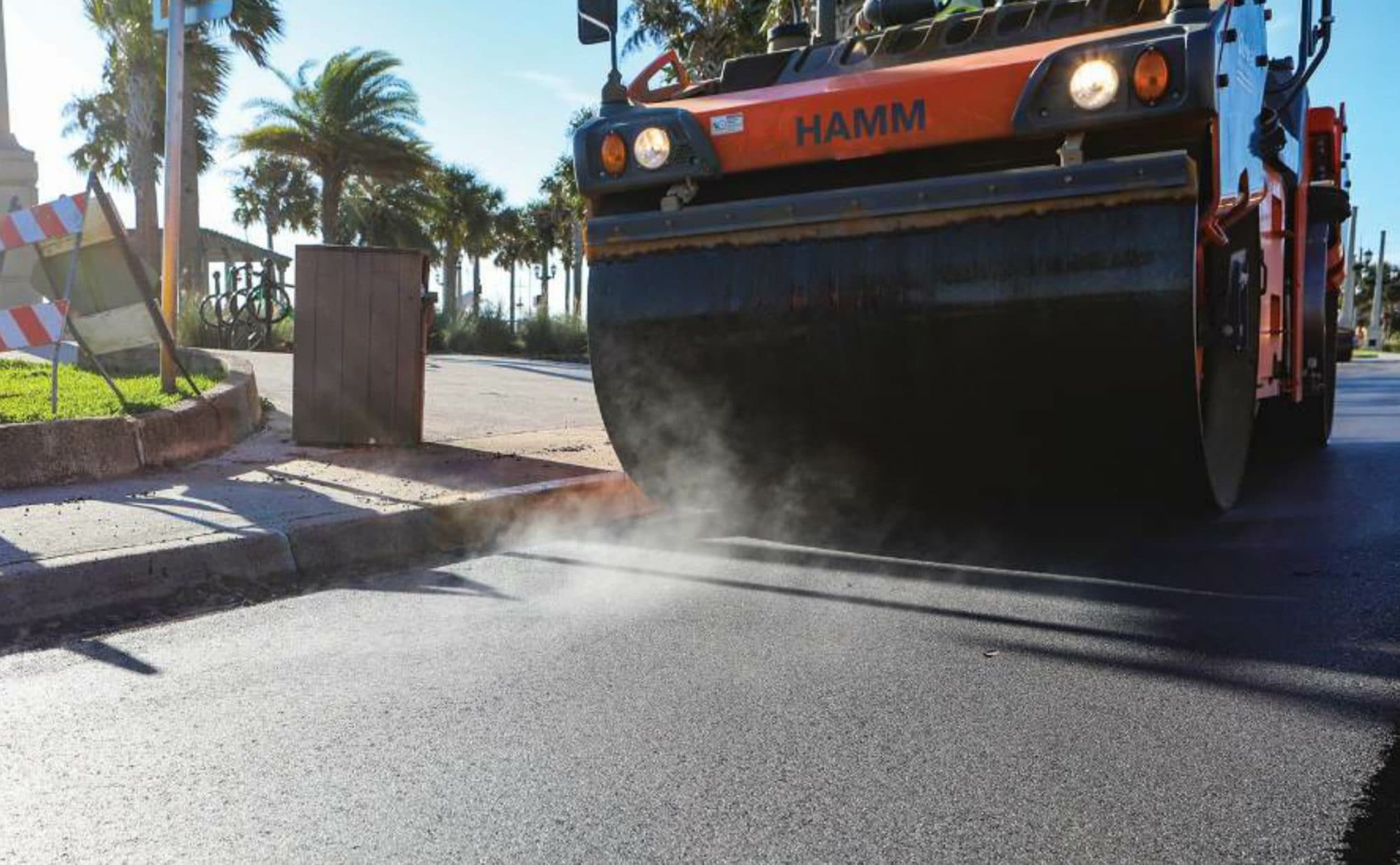
When the operator climbs into the cab of the roller, you might think he’s got all the equipment he needs. In truth, the worker who cares for his compaction equipment properly has a toolkit with the usual suspects, such as different types of screwdrivers, pliers and rags for wiping equipment. There are some additional tools he needs.

  • Temperature gun: to monitor the mat he’s compacting
  • Dawn dishwashing liquid: for cleaning filters and spray tips
  • Toothbrush: for cleaning micron filters
  • Welding tip cleaner: to clean the water nozzles
  • Putty knife: to scrape material from surfaces before build-up
  • Phillips screwdriver
  • Flat head screwdriver
  • Pliers
  • Vice grip
  • WD40

Routine maintenance of the machine is the operator’s responsibility. Quick, surprise cleaning of spray tips and filters is easier to do if the operator is prepared for the emergency. Minimize downtime by ensuring your roller operators are prepared for the routine and surprise cleaning that takes place in the field.


Sign up for our Toolbox Tips newsletter to receive tips like this to your inbox every week!

OSHA COVID Safety Rules Give Workplace Flexibility to Transportation Construction Firms, ARTBA Says

New guidelines from the Occupational Safety and Health Administration (OSHA) grant transportation construction contractors and other businesses the flexibility to adopt COVID safety protocols that fit their specific workplaces, according to the American Road & Transportation Builders Association (ARTBA). 

“Today’s OSHA announcement is a well-reasoned approach that will let the transportation construction industry continue to provide safety protections tailored to its workers as they build our roads and keep our country moving during the COVID pandemic,” said ARTBA President and CEO David Bauer. 

OSHA announced June 10 a new Emergency Temporary Standard (ETS) aimed at protecting workers from COVID-19 that applies only to the health care industry. For other sectors such as road and bridge construction, the agency updated existing guidance, enabling those sectors to continue best practices designed specifically for transportation workers.

Transportation construction workers primarily work outdoors in all kinds of weather. The new rules allow for relaxed requirements related to face coverings and other health protocols for workers who are fully vaccinated.

OSHA’s decision not to create a nationwide ETS applying to all industries acknowledges the drawbacks of a “one size fits all” approach to new COVID regulations. In a series of meetings and letters since December, ARTBA has urged incoming Biden Administration officials to “consider the specific attributes and existing safety protocols of particular industries, with the objective of not undermining those protections to the detriment of their workers.”

Several other organizations have also expressed their support for the exemption.

“We appreciate the administration’s review and thorough decision making to exclude the aggregates industry from the COVID-19 ETS,” said  Michele Stanley, National Stone, Sand & Gravel Association (NSSGA) vice president of government and regulatory affairs. “This is a positive recognition of the steps already taken by our member companies.”

“OSHA made the right decision to issue an ETS to cover tasks associated with high-exposure risk levels and not construction operations, which are generally low risk,” said the Construction Industry Safety Coalition. CISC is comprised of 30 trade associations representing virtually every aspect of the construction industry. “At the outset of the pandemic, the coalition developed an industry-wide COVID-19 Exposure Prevention Preparedness and Response Plan to provide a comprehensive approach to keeping construction workers, deemed to be essential, safe. We look forward to continuing to provide input on industry safety issues and working with the administration on other workplace safety and health priorities.”

ARTBA Foundation Announces Financial Assistance to 10 Children of Fallen Highway Workers

Ten children of highway workers who were killed or permanently disabled on the job will receive post-high school financial assistance for the 2021-22 school year from the American Road & Transportation Builders Association Transportation Development Foundation’s (ARTBA-TDF) “Lanford Family Highway Worker Memorial Scholarship” fund.

Now in its 22nd year, the program was established with a gift from two Roanoke, Virginia, highway contractors and their companies—Stan Lanford (1999 ARTBA chairman) of Lanford Brothers, and Jack Lanford (1991 ARTBA chairman), with Adams Construction Company. Over 100 highway workers are killed annually in roadway construction and maintenance accidents, and thousands more are seriously injured.

Scholarships have been given to students from 32 states to pursue undergraduate and graduate courses as well as technical training.

The 2021 class includes:

Caitlyn Rains, Proctor, Ark.

Caitlyn’s father, James “Bubba” Rains, was killed in 2013 while working in a night construction zone for APAC Tennessee. Caitlyn is studying respiratory therapy at Arkansas State University, where she will be a senior.

Stan Jones, Jr., Gaston, S.C.

Stan’s father, Standra Jones, Sr., died in 2007 after being struck by a vehicle while at work for the South Carolina Department of Transportation. Stan will be in his third year of graduate studies in architecture at Clemson University in South Carolina.

Willie Blevins, Athens, Ga.

Willie’s mother, Kathy Blevins, worked for the Gwinnett County Department of Transportation. She had just finished painting turn-lane lines when her vehicle was struck and she was killed in 2004. Willie is a mechanical engineering major at the University of Georgia.

Amy McNeil Graves, Lumberton, Texas

Amy’s father, Jeffrey McNeil, was killed in 2005 while working for the Texas Department of Transportation. Amy is in registered nursing school at Lamar State College in Port Arthur.

Jenna Jares, West, Texas

Jenna’s father, Gregory Jares, was killed in 2001 while working for the Texas Department of Transportation special crews. Jenna is a junior studying occupational therapy at the University of Mary Hardin-Baylor in Belton.

Hadley Voudrie, Trussville, Ala.

Hadley’s father, Darin Voudrie, was struck and killed while working for Jefferson County Roads and Transportation in 2015. Hadley will be a senior at the University of Montevallo, where she studies elementary education.

Carolyn Lillis, Philomath, Ore.

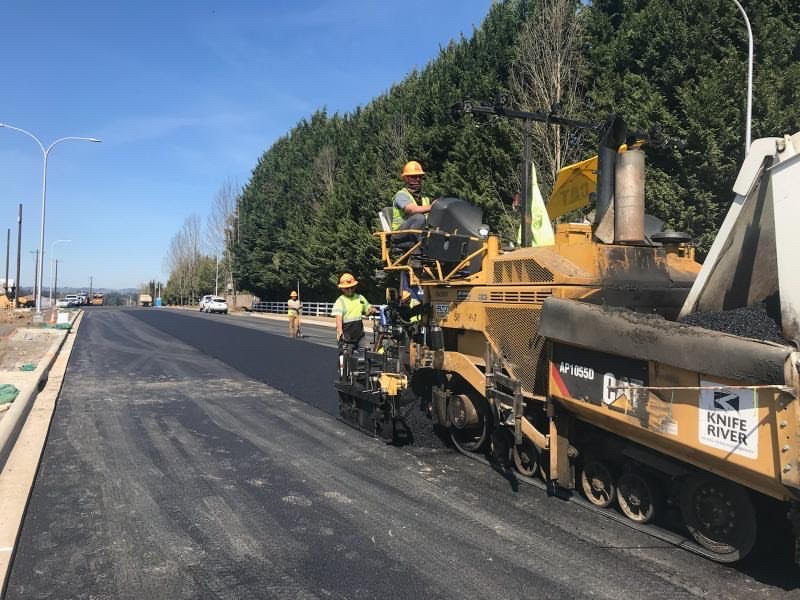
Carolyn’s father, Scott Lillis, was permanently disabled in 2015 while driving in a work zone for his employer Knife River Corporation. Carolyn will be a senior at Oregon State University in Corvallis where she studies physical therapy.

Mashawn Blubaugh, Howard, Ohio

Mashawn’s father, Shawn Blubaugh, died in 2010 while working for the Ohio Department of Transportation. Mashawn will be a senior at Kent State University and is majoring in early childhood education.

Andrea Pair, Spiro, Okla.

Andrea’s father, Shannon Pair, was struck and killed while working for Time Striping Inc., in 1998. Andrea is in her final year of graduate school at Harding University’s College of Pharmacy in Searcy, Ark.

Joann Jones, Bluffton, Ind.

Joann’s father, Dale, was struck and killed in 2009 while working for the City of Anderson Street Department. Joann will be a sophomore studying biology at Case Western Reserve University in Cleveland.

To make a tax-deductible donation or to share the name of a new student who could be eligible for the program, contact Melanie Laird at 202.683.1029 or mlaird@artba.org.