Paving Contractors that Struggle to Find Talent Need to Look at Pool Differently
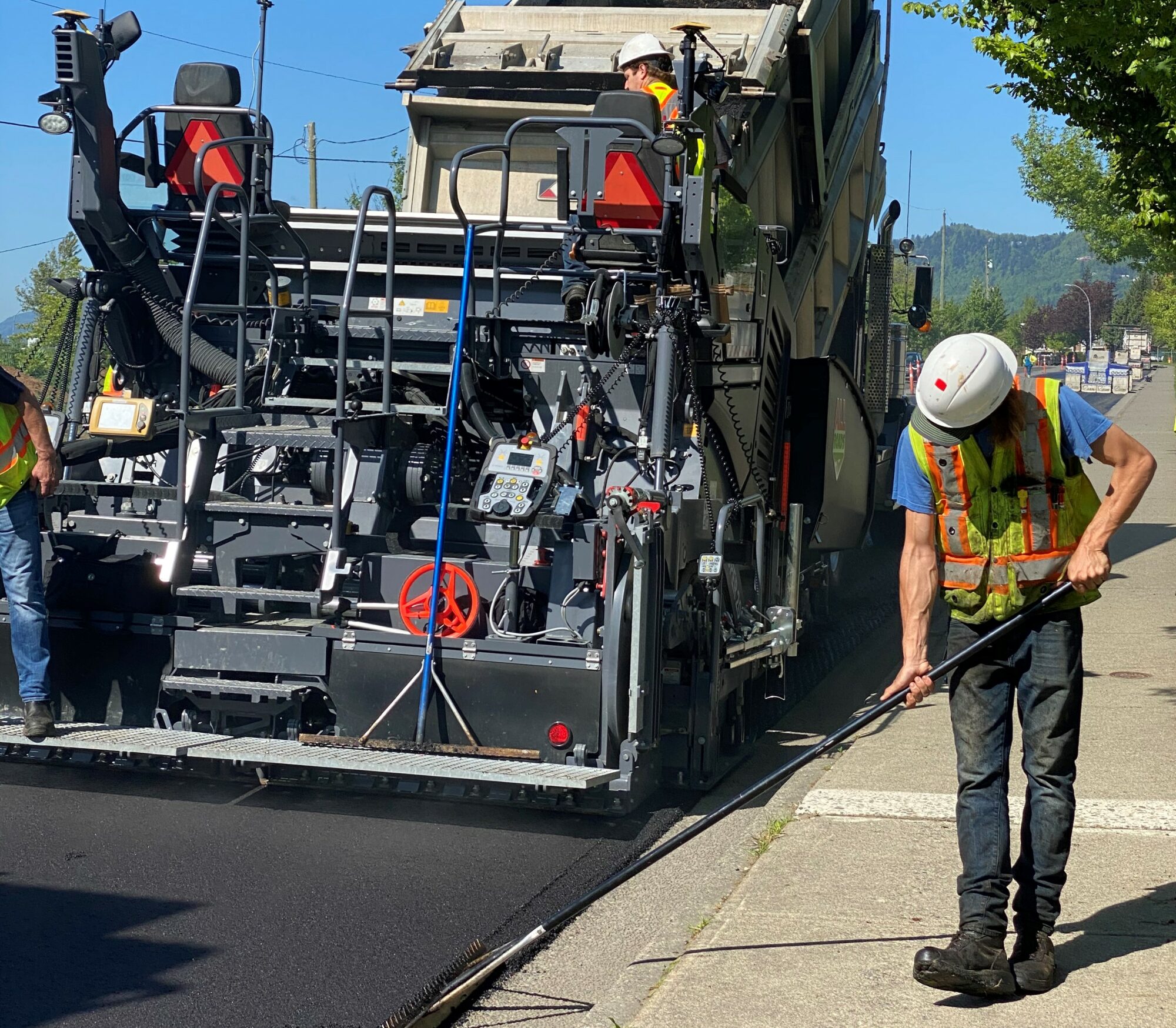
In his session for the World of Asphalt People, Plants and Paving Digital Conference (March 9-11, 2021), Buddy Hobart of Solutions 21 describes the historically unusual place paving contractors find themselves in when searching for talent.

“I don’t speak in absolutes unless it’s absolute. There have never ever been four generations of breadwinners in the workforce. It’s never happened in the history of humanity. I want you to think about that,” Hobart explains in his session that goes live Thursday, March 11. “Now there’s five. Historically there’s never been four, and now there’s five.”

Hobart explained each generation’s place in the workforce this way:

  • The Traditionalists (1922-1945), the youngest of which turn 76 this year, are still participating in the labor force. They may be running your company…or your biggest client.
  • The Baby Boomers (1946-1964) are a big cohort and are largely ‘running things’ in a lot of the economy, including the paving world.
  • Generation X (1965-1979), born at the dawn of the computing age, are bringing their classic tech savvy to higher and higher positions.
  • Generation Y/Millennials (1980-2000) are the biggest generation (yes, bigger than the Boomers), and are nearly all engaged in the workforce at this point. The youngest Millennials will be ordering their first legal beer this year.
  • Generation Z (2001-) is starting to enter the workforce in serious numbers now, making them the unprecedented fifth generation to participate at the same time.

On top of that, the mix of generations in the workforce is changing, and changing fast, meaning paving contractors are going to have to adjust even further to make sure they have enough people overall.

“There are 78 million Baby Boomers, and 60 million Gen X. It has never happened before that there wasn’t enough of the next generation to replace the retiring generation,” Hobart says. “That means we have to bring up the following generations quicker, because of the next issue: It’s a statistical certainty that Baby Boomers are going to be fully retirement-age by the end of this decade.”

Hobart, in his session, goes on to explain strategies to find the talent paving contractors need to fill their payrolls, and how to lead these diverse teams in a way that gets the job done.

Those interested in learning more can register for the People, Plants and Paving Digital Conference here, or by visiting WorldOfAsphalt.com.

2015 FAST Act Law Funded More Than 110,000 Road & Bridge Improvements, ARTBA Research Shows

State governments moved forward with nearly 111,000 new federal-aid highway and bridge projects during the past five years under the Fixing America’s Surface Transportation (FAST) Act law, new research from the American Road & Transportation Builders Association (ARTBA) shows.

“Our research illustrates tangible success stories of the federal highway program,” said ARTBA President and CEO Dave Bauer.  “Such real-world project outcomes would be even more robust under the highway and transit investment bills advanced by the House and Senate in the last Congress.”

ARTBA’s compilation of Federal Highway Administration data was released to coincide with the Feb. 24 Senate Environment & Public Works Committee hearing on the reauthorization of the surface transportation program, which is due by Sept. 30.

Between fiscal year (FY) 2016 and FY 2020, states leveraged nearly $200 billion in federal funds to support over $340.5 billion in new highway and bridge program improvements, according to ARTBA Chief Economist Dr. Alison Premo Black, who prepared the report.  States also used program revenues to continue to support projects already underway.

“This report highlights the benefits and value the federal highway program brings to communities all across America,” Dr. Black said.  “Congress and President Biden have a unique opportunity to build on the successes of the FAST Act and make significant new infrastructure investments to fuel the nation’s post-pandemic economic recovery.”

Projects moved forward in more than 3,130 U.S. counties, boroughs, and parishes.  States with the most number of projects: Texas (7,397), Indiana (6,500), Ohio (5,962), Michigan (5,715), California (5,432), New York (4,915), Illinois (4,235), Florida (4,168), Missouri (4,004), Virginia (3,626) and Tennessee (3,158).

State transportation departments prioritized major reconstruction and repair work; it accounted for an average 47 percent of the $340.5 billion investment and totaled 60,000 road and bridge projects.  Eight states spent more than two-thirds of funding on major repair work, including: Alabama (76 percent), Minnesota (74 percent), Missouri (74 percent), South Dakota (71 percent), Maine (71 percent), Connecticut (70 percent), North Dakota (68 percent), Ohio (66 percent), and New Mexico (66 percent).

New capacity on existing roadways—such as widening a lane or shoulder or adding a turn lane—accounted for 19 percent of state expenditures.

Almost all of the projects—98 percent—are expected to cost less than $25 million each, averaging $1.7 million per project.  Thirty-two projects in 17 states are moving forward at a cost of $500 million or more for each.

One-third of the investment, or $113 billion, was dedicated to highway and bridge projects on the Interstate Highway System, while another 30 percent, or $102 billion, went towards work on the National Highway System, Dr. Black says.  Other federal-aid highways accounted for 26 percent of the total, or $90 billion.

A link to the ARTBA research and the five largest FAST Act highway and bridge projects is available here.

Volvo Construction Equipment to Invest $4.3 Million in North American Training Facility

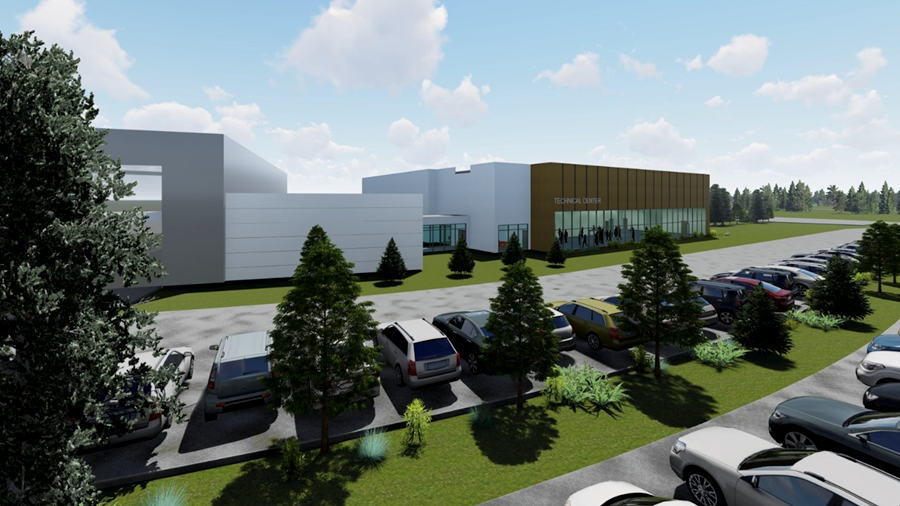
Volvo Construction Equipment (Volvo CE) is making a major investment in technical training facilities and programs with the addition of a $4.3 million training center in Shippensburg, Pennsylvania.

Upon its planned opening by the end of 2022, the facility will provide a space to develop and deliver in-person and virtual trainings and will be at the highest caliber of training sites in the equipment industry.

“This investment demonstrates Volvo CE’s commitment to our dealers and customers as well as the future of the construction industry,” said Stephen Roy, President of Region North America, Volvo CE. “Equipment and technology are constantly changing and improving. These training opportunities will help prepare new technicians for successful careers and help veteran technicians keep up with the latest developments.”

The training facility will be an extension to the Volvo CE Customer Center at the company’s North American headquarters. Opened in 2014, the Customer Center sits on 40 acres with a full machine demonstration area used for dealer and customer events.

The $4.3 million expansion will include the addition of several new machine bays, classrooms and a virtual lab used for creating and hosting virtual trainings. Training will primarily be for Volvo dealer technicians, but it will benefit customers who visit Shippensburg by providing a holistic view of what the company is doing to support their operations with training for operators and technicians, plant tours, the ability to interact with Volvo CE experts and more.

The world-class training center will include technical courses on equipment as well as productivity and uptime services, such as the Volvo Assist programs and ActiveCare Direct managed telematics program. There will also be training and demonstrations on electric machines, automation and connectivity. The virtual lab will allow for the use of video, augmented reality and other technologies to support dynamic virtual training courses for dealers throughout the U.S. and Canada.

“This investment to our Customer Center puts our training staff closer to the equipment and technologies, and it emphasizes to technicians the importance of customer productivity and uptime,” Roy said. “Today’s techs must learn both the ‘nuts and bolts’ as well as the connected systems.”

Construction is expected to begin later this year and finish in late 2022. When it is opened, the facility will be a center of competence for technical training and the cornerstone of Volvo CE’s technician training strategy.

The Shippensburg training center is part of a larger strategy to invest in in-person and virtual training throughout North America. More details on those efforts will be announced later this year.

“This isn’t just an investment in the construction industry, but also in the local communities where we’re growing and in our North American presence,” Roy said.

FHWA Announces 49 New Designations to America’s Byways Collection

Federal Highway Administration (FHWA) officials today announced 49 new designations to the America’s Byways® collection, including 15 All-American Roads (AAR) and 34 National Scenic Byways (NSB) in 28 states. This increases the number of America’s Byways® to 184 in 48 states.

“Through their many unique qualities, each of these new additions to the National Scenic Byways program helps America’s roads tell our national story,” said FHWA Executive Director Tom Everett. “These special routes offer travelers exciting new opportunities to explore the nation, from coast to coast or close to home.”

Created in 1991, the program is a collaborative effort to help recognize, preserve and enhance selected roads throughout the United States. The U.S. Department of Transportation (USDOT) recognizes certain roads based on one or more archeological, cultural, historic, natural, recreational and scenic qualities.

“Scenic roads have always been popular with travelers, and support a wide array of area businesses too,” Everett added. “Whether hotels, eateries or gas stations, Scenic Byways and All-American Roads support the nation’s small business community and are economic drivers for entire regions.”

The “Reviving America’s Scenic Byways Act of 2019,” enacted in 2019, required the U.S. Transportation Secretary to solicit nominations for designation of All-American Roads and National Scenic Byways, resulting in 63 nominations. Each application was reviewed by subject-matter experts on historic preservation, design, cultural resources, and visual impacts, tourism and economic development, highway safety, federal lands, and Native American history and culture. The U.S. Departments of Agriculture and Commerce also provided input.

USDOT urges all Americans to follow CDC guidance on safe travel during the COVID-19 public health emergency and is announcing these designations now to allow local tourism boards and small businesses to prepare for when it is safe to travel freely again. The public is encouraged to explore these newly designated distinct and diverse roads once it is safe to do so.

The following are the 2021 AAR and NSB designations:

Arkansas Great River Road National Scenic Byway AAR
California California Historic Route 66 Needles to Barstow Scenic Byway NSB
Colorado Scenic Highway of Legends NSB
Colorado Silver Thread Colorado Scenic and Historic Byway NSB
Delaware Delaware Bayshore Byway NSB
Florida A1A Scenic and Historic Coastal Byway AAR
Florida River of Lakes Heritage Corridor NSB
Florida Scenic Highway 30A NSB
Iowa Great River Road National Scenic Byway AAR
Iowa Lincoln Highway Heritage Byway NSB
Illinois Great River Road National Scenic Byway AAR
Indiana Whitewater Canal Scenic Byway NSB
Kentucky Great River Road National Scenic Byway AAR
Kentucky Old Frankfort Pike Historic and Scenic Byway NSB
Louisiana Great River Road National Scenic Byway AAR
Louisiana Boom or Bust Byway NSB
Louisiana Bayou Teche Scenic Byway NSB
Massachusetts The Battle Road Scenic Byway AAR
Massachusetts Mohawk Trail Scenic Byway NSB
Massachusetts Old King’s Highway (Route 6A) NSB
Maryland Chesapeake Country AAR
Maine Katahdin Woods and Waters Scenic Byway NSB
Maine St. John Valley Cultural Byway/Fish River Scenic Byway NSB
Maine Bold Coast Scenic Byway NSB
Minnesota Great River Road National Scenic Byway AAR
Missouri Historic Route 66 Missouri AAR
North Carolina Newfound Gap Road Byway AAR
Nebraska Sandhills Journey Scenic Byway NSB
Nebraska Lincoln Highway Scenic and Historic Byway NSB
New Jersey Western Highlands Scenic Byway NSB
New Jersey Bayshore Heritage Byway NSB
New Jersey Palisades Scenic Byway NSB
New Jersey Pine Barrens Byway NSB
New Mexico Trail of the Ancients Scenic Byway – New Mexico NSB
New York Palisades Scenic Byway NSB
Ohio Hocking Hills Scenic Byway NSB
Pennsylvania Brandywine Valley Scenic Byway NSB
Rhode Island Revolutionary Heritage Byway NSB
Tennessee Newfound Gap Road Byway AAR
Tennessee Great River Road National Scenic Byway AAR
Tennessee Sequatchie Valley Scenic Byway NSB
Tennessee Cumberland Historic Byway NSB
Tennessee Norris Freeway NSB
Utah Zion Scenic Byway NSB
Washington Cascade Loop NSB
Wisconsin Great River Road National Scenic Byway AAR
Wisconsin Door County Coastal Byway NSB
Wisconsin Wisconsin Lake Superior Scenic Byway NSB
Wyoming Flaming Gorge – Green River Basin Scenic Byway AAR

Additional information about the America’s Byways® collection can be found at https://www.fhwa.dot.gov/byways/.

Restock the Mechanic Shed

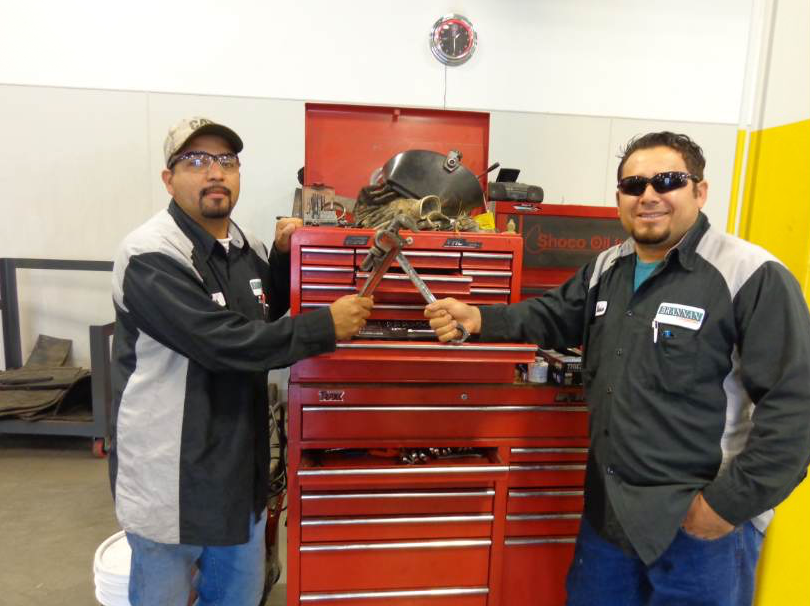
AsphaltPro has shared the most important items mechanics need to have in the maintenance truck for making emergency trips to the jobsite for those unplanned downtime moments. Right now, you may still be in the off-season where you’re located. Do you know what all your mechanic must have in the garage to perform winter maintenance projects without interruption? You’ve got a finite amount of time before spring startup; let’s make sure the mechanics have the tools to use their—and your—hours wisely.

Many companies must cut back on fulltime employees during the off-season, so one of the first aspects of off-season maintenance and repairs to consider is the workforce in your garage. Do you have the right personnel on hand to physically do the jobs in the 8-hour shifts you put on the schedule? Overtime isn’t the norm during the off-season, so check on the mechanic in charge to ensure you’ve given him or her the people they need to accomplish everything before spring start-up.

Besides the obvious grease guns and crescent wrenches, your mechanics will need spare parts depending on what equipment is in your fleet. If you have full size rollers, you’ll want nozzles for their water spray bars. If you have a highway class paver, you may want a spare heating element for the screed. Some spare parts are a bit pricy to keep on the shelf until you know it’s time for replacement, and that’s the beauty of winter downtime and planned maintenance. Make sure you’ve given your mechanics all the tools and parts they need for optimum work schedules.

Recognize a Future Engineering Leader and Nominate Someone for the 2021 SAE/AEM Outstanding Young Engineer Award

Do you know of an exceptional young engineer who is on the rise and poised to lead the way to a bright future for their industry? Nominate him or her for the 2021 SAE/AEM Outstanding Young Engineer Award.
Established in 1996, this award recognizes outstanding young engineers in the off-highway or powerplant industry. Qualified candidates should be nominated by their managers, with the nomination supported by an SAE member.

“The engineering community is full of amazing newcomers who are leading the way to a future full of endless opportunities,” said AEM Senior Director of Technical and Safety Services Mike Pankonin. “This is a great opportunity to recognize young talent for their contributions. Rewarding them for their efforts will only lead to greater success and encourage others who will strive for the same recognition.”

Nominees for the 2021 SAE/AEM Outstanding Young Engineer Award should:

  • Be noteworthy young engineers in the off-highway or powerplant industries
  • Have less than 10 years of industry experience
  • Display exceptional innovation, leadership, innovation, teamwork, integrity and community involvement
  • Demonstrate leadership capabilities through their involvement in – and support of – SAE activities.

The deadline to submit nominations is March 1.

For more information, click here, visit https://www.sae.org/participate/awards/sae-aem-outstanding-young-engineer-award-pro or contact AEM’s Mike Pankonin at mpankonin@aem.org.