Florida Asphalt Scholarship Applications Open, Due April 1

Each year the Florida Asphalt Scholarship Program collects and distributes money to students whose success would benefit the Asphalt Industry. In 2020 alone, FASP awarded over $17,000 to incoming college students.

These scholarships are available to any Florida resident who is entering college or trade school. Preferences are given to those whose parent or guardian is employed by a member of the Asphalt Contractors Association of Florida.

Please encourage your employees to have their eligible children apply for these awards before the deadline of April 1, 2021. For more information please contact the Association office.

NSSGA Supports the Saving America’s Mines Act

The National Stone, Sand & Gravel Association’s Vice President of Government and Regulatory Affairs Michele Stanley issued the following statement in support of the Saving America’s Mines Act.

“On behalf of the 400 members of the National Stone, Sand & Gravel Association, I applaud Rep. Pete Stauber (MN) for introducing the Saving America’s Mines (SAM) Act. This legislation provides needed certainty for aggregates operators who supply communities on and near federal lands with essential construction materials.

“Stone, sand and gravel are critical to the livelihoods of every American as they are the bedrock in the creation of buildings, roads, airports and bridges and are mined in 11,000 facilities across the United States. They are also indispensable in developing the infrastructure needed to access to clean water, deliver reliable energy and advance environmental stewardship. The SAM Act is the right step to help ensure sustainable access to aggregates that will help build a better America.

“NSSGA urges members to support this important piece of legislation that will positively impact all aggregates operations and the more than 100,000 highly-skilled workers they employ. NSSGA will continue to work with Congressional stakeholders on both sides of the aisle to advance safe and effective infrastructure policies for our country.”

Five Predictions for an Unpredictable 2021

What’s in store for the construction industry? How will OEMs and rental companies adapt to better serve their customers? How are customer needs changing? And in the face of a global pandemic – what does recovery look like? The even bigger question? Who will emerge stronger and how will they do it? Leading global telematics provider ZTR knows connectivity and technology adoption will play a key role.

No one predicted the onset of COVID-19 and the degree to which the pandemic would impact the industry. But in many ways, it catapulted us forward. Here’s what we predict for 2021:

1. TOUCHLESS SERVICES WILL DRAMATICALLY INCREASE.

The need to adapt and stay connected will be more readily accepted and expected. The COVID environment may persist well into 2022 and the demand for touchless functionality and associated solutions will become more widespread. More data will flow as a result of expanded services including:

  • Remote diagnostics
  • Remote control
  • Automated monitoring
  • Enhanced predictive and remote maintenance
  • More intuitive and context-driven user interfaces

Businesses that have already invested in remote connectivity enabled by telematics will emerge from the pandemic even stronger. Those who haven’t invested are going to need to catch up in 2021 and be ready for a different operating future.

2. OEMS WILL SHIFT FROM SELLING TECHNOLOGY TO UNLOCKING AND PROVIDING VALUABLE SERVICES.

Many OEMs understand the importance of technology how that translates to the addition of valuable services for the life of the equipment. Some OEMs are starting to recognize there’s a gap in the technology space that they need to fill. They’ll move beyond the technology sale to capitalize on the greater opportunity for long-term revenue. By leveraging telematics and the power of connection, they’ll provide improved machine design, greater safety, new services and expanded customer support that they couldn’t previously offer.

3. DATA BROKERAGE, PARTNERSHIPS AND APIS WILL RULE.

Businesses that embrace the power of data sharing will achieve greater maturity in their digital evolution – knowing that by doing so, everyone wins. There is a growing need for simplicity, which is possible only if implementation and integration are unlocked. Increased access to rich data insights is inevitable, and the complexity will demand a simple approach. It will be necessary for businesses to act pragmatically to serve their customers. When the industry works together, effectively combining their individual OEM, rental and general contractor strengths into a collective purpose, data sharing becomes a key model of what it means to operate stronger together.

4. SUSTAINABILITY WILL BECOME A CRUCIAL TREND.

As we continue to use up more the world’s resources, recognizing our own inefficiencies and identifying ways we can operate with greater efficacy will become a central focus and tenet upon which many companies will operate. Businesses need to embrace a global perception versus a regional one, and create sustainable products that in turn will generate revenue with sustainable services.

Data insights enable proactive equipment maintenance, fleet health monitoring and smarter machine designs. Companies will be looking to leverage telematics to reduce machine idling, better allocate resources, manage transport and service logistics and measure in-field performance data to meet elevated standards.

5.  ONLY THE STRONG WILL SURVIVE.

Established companies are moving up the digital maturity curve and face the threat of disruption from innovations offered by smaller technology companies and startups. Mature companies will need to have a team devoted to the new and innovative to stay relevant.  Successful businesses will elevate the adoption of their digital strategy and re-evaluate their future technology requirements and the need for a strong provider/partner. Choosing a trusted and capable telematics partner – one that demonstrates both expertise and vision will be crucial. Telematics providers who are investing in the future will prove their value through seamless, efficient and targeted IoT innovations that help transform their customers’ business.

WHAT IT ALL MEANS

Technology users in construction environments will see it’s is no longer enough to focus solely on the basics (run hours and location). Enhanced machine data and machine control is driving the future of the industrial IoT. The telematics industry is going beyond simple monitoring and moving faster toward configuration and control, not only to understand what’s happening, but to control it, predict it and serve customers with remote or hands-off protocols. Those who emerge stronger, will do so by recognizing that the importance of technology isn’t just about a tangible product or device, it’s what you do with it that sets you apart.


Paul Wilson is the Senior Director of Commercial Development for AEM member company ZTR’s Industrial IoT Division. ZTR is a proven off-road telematics company and leader in intelligent industrial equipment management solutions. For more information, visit www.ztr.com.

Our Industry Protects the Environment

Long-time subscribers know individual staff members of AsphaltPro magazine are committed to environmental sustainability. Along with sea turtle conservation, I personally have an obsession with planting trees and shrubberies that feed bees and butterflies. This touches tangentially on the recycling topic this month so I hope you’ll indulge me as I share some news from the Transportation Research Board (TRB) e-newsletter TRB News, first published Dec. 3, 2020.

First, for background, the U.S. Fish and Wildlife Service decided Dec. 15, 2020, not to classify the monarch butterfly as a federally endangered species under the Endangered Species Act yet. The official word from FWS is “listing the monarch as endangered or threatened under the Endangered Species Act is warranted, but precluded by higher priority listing actions.”

Transportation planning can help all the wildlife, though, no matter its status.

“Roadsides provide promising monarch butterfly habitat as they frequently contain nectar and host plants; however, they also present a range of risks, including pesticide spillover, vehicle collisions, contaminant runoff and non-native vegetation,” the December TRB e-newsletter stated. “The TRB National Cooperative Highway Research Program’s (NCHRP) Evaluating the Suitability of Roadway Corridors for Use by Monarch Butterflies provides guidance for roadside managers to determine the potential of their roadway corridors as habitat for monarch butterflies. The research topic influenced a 2014 Presidential Memorandum encouraging U.S. Department of Transportation’s Federal Highway Administration to work with state departments of transportation, transportation associations and roadside managers as part of a holistic approach within the United States to promote the health of pollinators. The report also includes several tools and decision-support mechanisms to optimize habitat potential in a manner that is compatible with the continued operation and maintenance of the roadside.

“Earlier in 2020, a TRB webinar based on the report highlighted tools available to roadside managers to assess monarch habitats. Participants also heard about management support materials and were presented with case studies regarding the success of programs in transportation departments with pollinator habitat programs.”

Here’s the rub in potentially “legislating compassion.” As mentioned in the first paragraph of this month’s note, individual members of this magazine staff—as well as members of our industry—care about the environment around them and work to preserve and safeguard that environment. Members of the asphalt industry don’t require government regulation to strong-arm us into protecting wildlife, water, air and so on.

Independence tends to go out the window when legislative bodies pass laws demanding certain percentages of plastic be included in asphalt mix designs or insanely low volatile organic compounds eek past filters in stacks. As evidenced by the preponderance of self-regulating ideas for making work sites pollution-free and roadsides hospitable for non-endangered butterflies, our industry is working on sustainability even without draconian decrees from government interference.

Our industry is made up of humans who live in the same environments and communities as the humans who are not part of the industry. From lab techs who seek viable options for increasing recycled asphalt pavement percentages in mix designs to hot-mix plant owners who build tortoise habitats on the edges of their sites to aggregate suppliers who reclaim their land into waterways for wildlife to every asphalt professional who finds a way to reduce fuel use, stack temperatures, paper tickets at loadout, and so on, this industry is finding a multitude of creative and innovative ways to save the planet we call home without legislative complications. We’ve got this.

Stay Safe,
Sandy Lender

Heavy Hauling: What to Consider When Finding a Company to Transport Your Equipment

Construction companies ship equipment from jobsite to jobsite and when they first purchase the equipment. If the company doesn’t have their own trucks and floats, then they need to contact someone to haul their equipment.

Shipping heavy equipment is expensive. You want to find a hauler that offers a reasonable rate but will also get your load to its destination safely and on time, while operating in a professional and legal manner.

“Whether you’re a small company who has purchased a used piece of equipment at an auction and need to get it home or you’re a manufacturer of heavy equipment that ships many machines every day, most of the factors regarding carrier selection apply in either case,” says Clayton Fisk, President & Chief Operating Officer, The Machinery Haulers Association, Inc.

The first step is to get informed. Find out what trailer type is needed. This knowledge will help you eliminate some haulers, because some haulers won’t have the trailer type you need. If you don’t know by the time you speak to a hauler, it will be the first question they ask you.

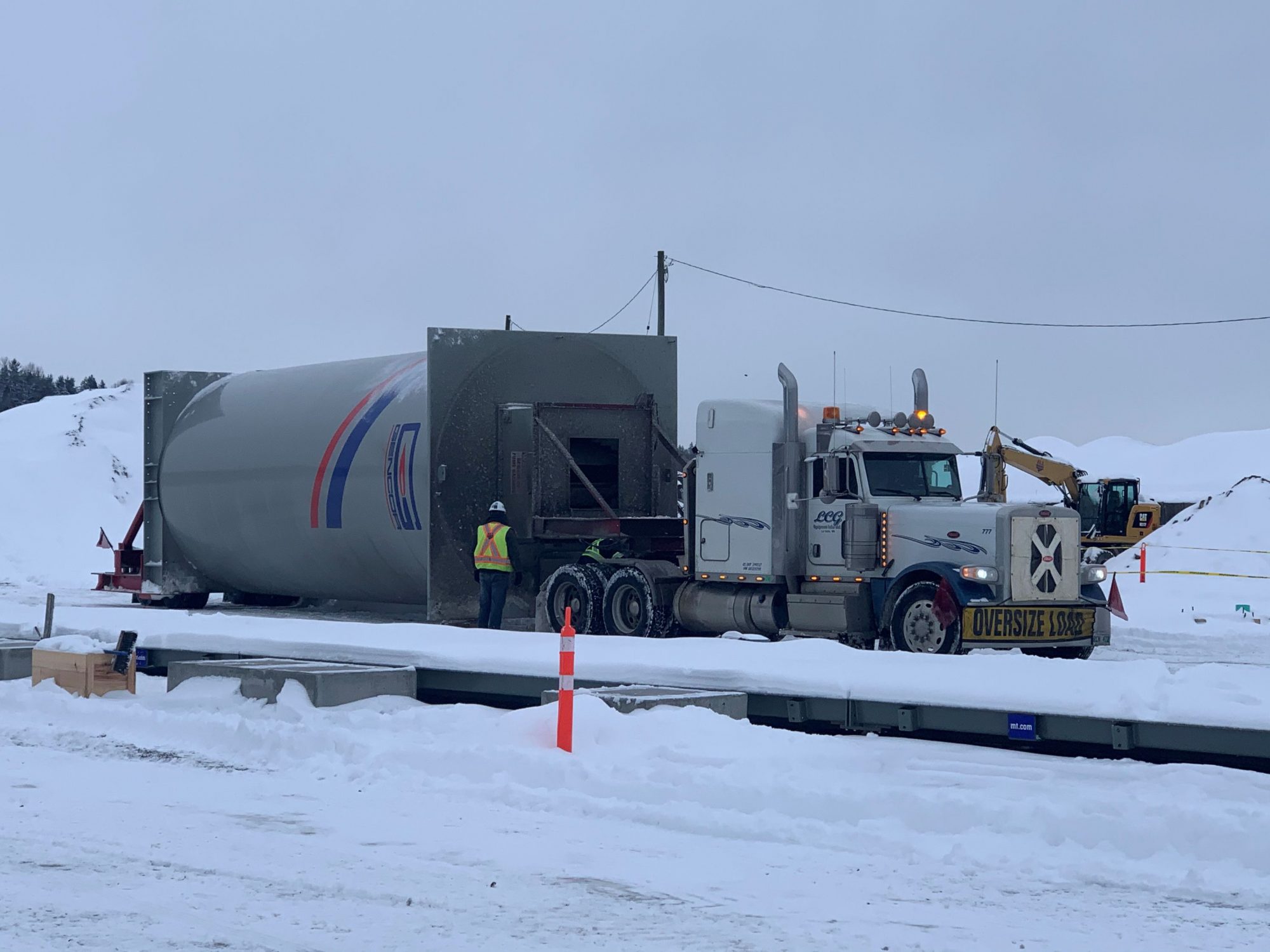
Find out if your machine qualifies as oversized. Oversized loads require special permits and extra costs, and significantly less haulers serve the oversized market, which reduces the number of potential haulers for your load.

When finding a hauling company or an owner-operator trucking company, it’s important to vet the company/driver.

You need to find out how long they have been hauling, their safety record, if they’ve hauled equipment like yours before, and if they’ve hauled in the jurisdictions in which your load will travel through and be delivered.

If possible, use your networks to ask about the carriers they use. Find out who they use and how satisfied they are with their hauler’s service.

“Go to a truck stop or rest area and take stock of the trucks that are there. Which companies are transporting equipment similar to yours? Which ones appear to be tied down properly? Which trucks and trailers appear clean and damage-free? Which drivers behave professionally? You can even approach drivers and ask them about the carriers for whom they work,” says Fisk.

Another way to find a carrier is to go to the various motor carrier trade associations and search their members. “Carriers that belong to a reputable motor carrier association are usually more concerned about operating in a professional and legal manner,” says Fisk.

Technology Disrupts Traditional Methods

These methods are the traditional ways of finding a hauler, however, technology is completely disrupting how people find haulers.

Numerous truck load boards are popping up on the web.

Truck load boards function like jobs boards. It allows shippers to post their load on a site and for haulers to peruse them and accept them or bid on them.

Truck load boards can work differently from one another. Some cater to certain markets (by geography or trailer type), some have fees for shippers, and some allow for shippers to rate the drivers.

“Shippers are starting to understand the value in this technology and how it can help them efficiently connect with the right reputable hauler,” says Dusty LaValley, Founder and CEO, Trusted Dispatch.

Trusted Dispatch is a truck load board that specializes in heavy hauling. It provides an automated shipping platform that connects shippers with qualified and reputable drivers already travelling the direction the shipment needs to go, empty with no load on their trailer. Proprietary algorithms provide the shipper with an instant cost-competitive shipping quote, which the shipper can post to the load board with the click of a few buttons. At which point, Trusted Dispatch haulers are made aware of the load and can accept it. Then it is up to the shipper to accept the driver.

The online platform and app have a truck driver rating system. Similar to using Uber, shippers can rate their drivers. Drivers with bad ratings don’t get accepted for more jobs and are eventually weeded out. And, your price is the same, no matter which carrier you choose.

“We’ve all heard scary stories of haulers who have taken a deposit and a load and then held the load hostage to negotiate for payment that is higher than what was originally quoted or of haulers who have ‘disappeared’ after taking someone’s load and deposit,” says LaValley. “Although those types of incidents aren’t common, there are a lot of drivers who will take a number of short cuts so they can offer a lower price while boosting their margins, and that hurts the shipper. For peace of mind and to help guarantee your load arrives safely and on time, use haulers who are already vetted and that you can trust.”

To learn more about the latest equipment and trends, visit conexpoconagg.com.

Sign Up for AMAP Conference to See Results in Your Operation

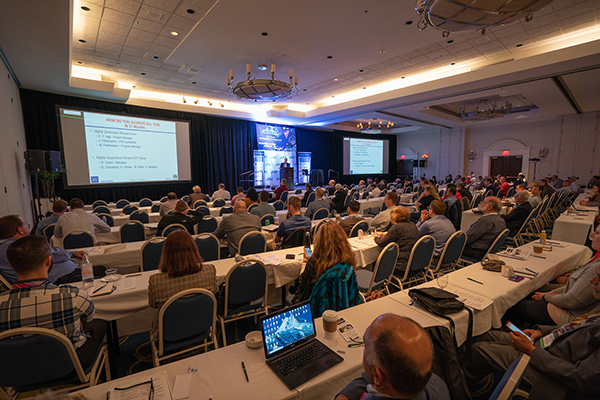
As you work through seasonal maintenance and training tasks, look to the Association of Modified Asphalt Producers (AMAP) for information on what DOTs and modified asphalt producers are preparing to accomplish in 2021. At the upcoming online conference this Feb. 9-11, AMAP will include a presentation from Brian Hirt, the managing director at CTC & Associates, on the results of AMAP’s second market survey of modified asphalt product producers and transportation agencies. Over 150 companies plus all states and provinces were invited to participate in the survey for a robust set of data.

Also at the online conference, NAPA’s Jay Hansen will share what contractors might expect funding-wise for the future, and a variety of industry leaders will report on projects from New Mexico, Florida, Nebraska, the Federal Aviation Administration (FAA), Mexico, Russia, South Africa, the Middle East, and more. This is an opportunity to glean best pavement preservation practices, tips for modified asphalt equipment at the asphalt plant, additives advancements, and more implementable information that you can share in your toolbox talks, training sessions, and project planning going forward.

Visit www.modifiedasphalt.org to get more information and to register for the conference.