Volvo CE to Divest Blaw-Knox Paver Business to Gencor Industries
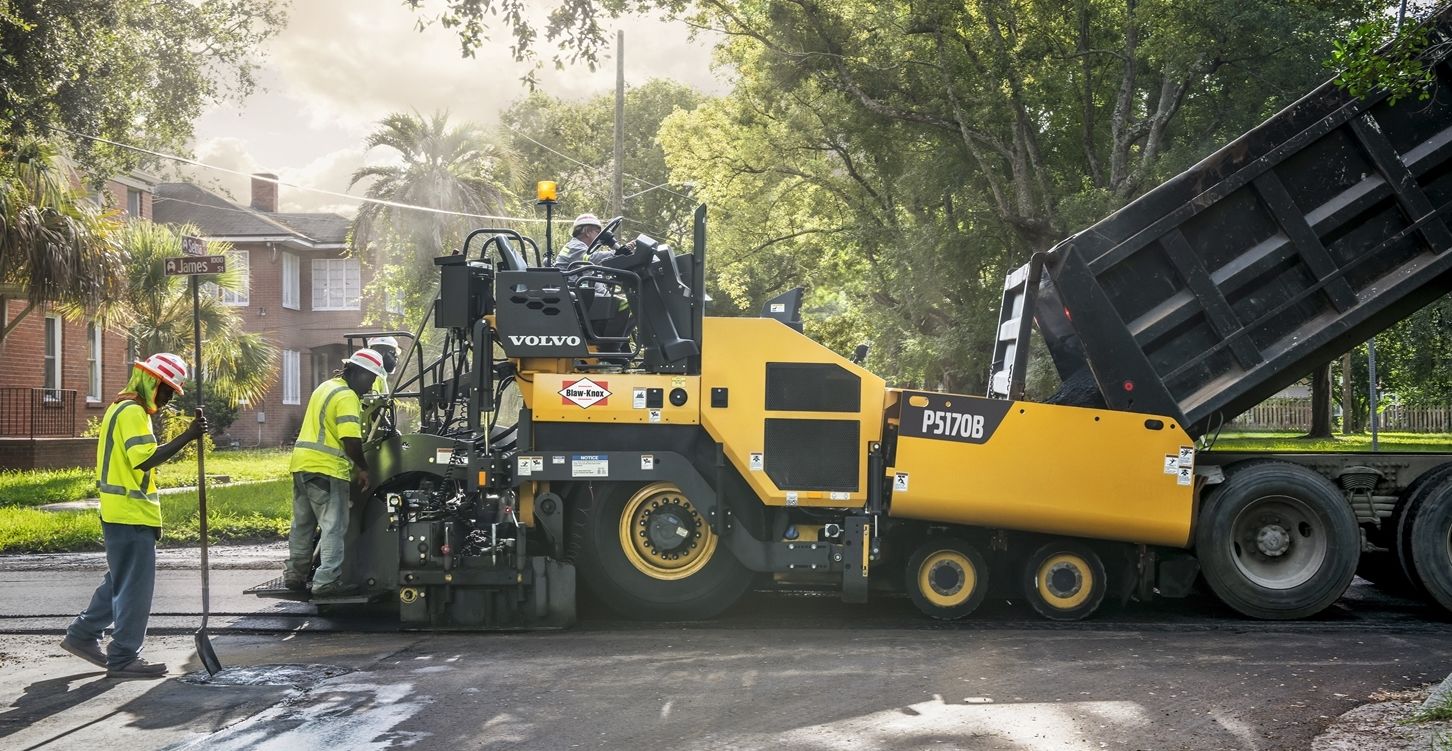
Volvo Construction Equipment (Volvo CE) has signed an agreement to divest the North American Blaw-Knox paver business and associated assets to leading asphalt equipment manufacturer Gencor Industries (Gencor).


The Blaw-Knox business and associated assets will shift to Gencor, including the transfer of the manufacturing production line currently located in Shippensburg, Pennsylvania. Gencor has announced that they plan to continue the manufacturing of the Blaw-Knox paver line in south-central Pennsylvania and move to a location in Letterkenny Township.

The deal, which is expected to be finalized in the fourth quarter of 2020, will allow Gencor to manufacture and develop Volvo CE’s current North American paver product line and market it under the Blaw-Knox brand. Gencor has announced that it will continue marketing and servicing the Blaw-Knox paver line through selected Volvo CE dealers in North America.

The Blaw-Knox brand dates back over a century when in 1917 Blaw Collapsible Steel Centering Company merged with the Knox Pressed and Welded Steel Company. The firm made its first road paving equipment in 1929 and the brand has since gone on to build an enviable reputation in the paving segment in North America.

Gencor Industries, Inc., manufactures asphalt plants, soil remediation plants, combustion systems, and heat transfer systems to the road and highway construction industry.

“Gencor is a strong player to take on the Blaw-Knox paver range, as it has extensive expertise in the asphalt industry and a good reputation for quality and customer success,” commented Melker Jernberg, President of Volvo CE. “We see this agreement as being a win-win for us and Gencor. It maintains a valuable product offer to Volvo CE customers, as well as securing dealer distribution and servicing of Blaw-Knox branded paver products in North America.”

Marc G. Elliott, President & Director of Gencor Industries, also commented, saying: “With our already strong position in the asphalt industry, this acquisition will afford Gencor access to the venerable brand of Blaw-Knox, and provide an entry into the hot mix paver segment. We are committed to the long-term growth and development of the Blaw-Knox brand.”

Western Specialty Contractors Launches Training Program to Prepare New Hires for Leadership Roles

(St. Louis, MO, July 28, 2020) The executive leadership team at Western Specialty Contractors launched a pilot program in 2019 that takes an innovative approach to training and guiding new employees for leadership positions at the company’s 30 nationwide branches. The Training Hub Program, which will have graduated nearly a dozen participants by the end of 2020, requires that new hires spend six months in St. Louis fully immersed in the company’s culture and processes.

“Our goal is to develop well-rounded employees who can better assist the branches upon graduation and to accelerate their training development plans for future leadership opportunities,” said Mary Faris, Senior Director, H.R. and Talent Development at Western Specialty Contractors. “I am not aware of any other company offering this type of program.”

Participants in the program are all graduated college seniors who have participated in Western’s College Internship Program and will be hired to work at one of Western’s branch offices.

Program participants receive six months of training, broken down into rotational learning opportunities at each of Western’s three St. Louis branches – Concrete, Masonry and Roofing – where they will shadow a superintendent, branch managers and sales project manager. Participants also learn about each of Western’s trades and about creating job estimates and proposals, billing for jobs, life cycle processes beginning with marketing, and point of sale through closure of a project. Additionally, participants work in the home office where they learn about methods/procedures, policies, and key business processes/programs to support operations across the country.

Western provides participants with temporary living arrangements in furnished apartments while enrolled in the program.

Training Hub Program Participants/Graduates

  • Ramiro Arroyo, Colorado State University, B.S. Construction Management – branch to be determined
  • Brant Attleson, University of Wisconsin-Stout, B.C. Construction – branch to be determined
  • Tyler Bishop, Indiana University, B.S. Business Management – branch to be determined
  • Dayton Bowie, Oklahoma State University, B.S. Construction Engineering Technology – hired at Tulsa, OK branch
  • Grant Holland, University of Central Missouri, B.S. Construction Management – branch to be determined
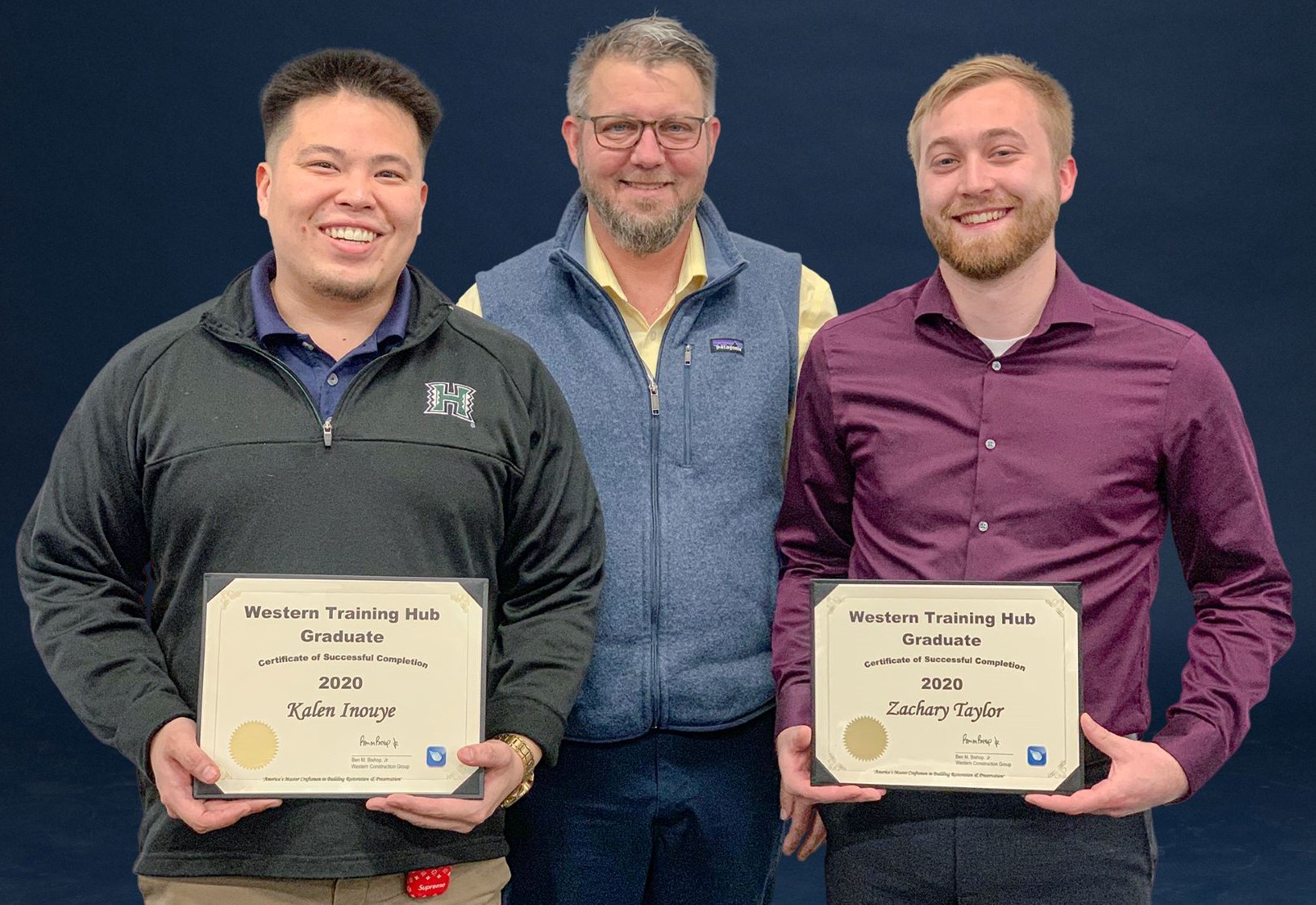
  • Kalen Inouye, Texas State, B.S. Construction Management – hired at Dallas, TX branch
  • Colton McClintock, Southern Illinois University-Edwardsville, B.S. Industrial Engineering – hired at Maryland/DC branch
  • Joey Ottovegio, Florida Atlantic University, B.S. Business – hired at Ft. Lauderdale branch
  • Sarah Ray, Louisiana Tech University, B.S. Construction Engineering Technology – hired at Charlotte, NC branch
  • Tristan Smith, University of Central Missouri, B.S. Construction Management – hired at Kansas City Roofing branch
  • Zach Taylor, Ball State, B.S. Construction Management – hired at Houston, TX branch

Surveys are provided to both the employee and the management team upon completion of the program. The feedback is then incorporated into action items to improve the program.

“The key to the program’s success has been from the strong commitment of our entire STL management team,” said Faris. “They strive to provide the guidance and training of these new employees, which is key to its success.”

Zach Taylor, a graduate of the program, was hired as a Sales/Project Manager at Western’s Houston, TX branch. He praises the program for contributing to his career.

“During my time at Western’s Training Hub Program in St. Louis, I obtained invaluable knowledge and new skills to add to my resumé. I worked with great teams at the home office as well as the Concrete, Masonry and Roofing branches. This experience was very humbling, exciting and a great opportunity to further my career development not only at Western as a Sales/Project Manager, but in building new skill sets as a person,” said Taylor.

Why Good Employees Leave & What to do About It

The impact felt when an employee leaves is exacerbated when labor markets are tight. Leaders at all levels in the organization need to be cognizant of the message their actions send to employees when someone leaves.

“Leaders are always being watched. How the leadership reacts when someone leaves is going to impact how everyone else reacts,” says Marissa Levin, co-founder of Successful Culture International, and a culture and leadership expert.

“If they are transparent, honest, and don’t act like the sky is falling, they acknowledge the loss, but pivot quickly into fill that gap, employees will take that cue, and things will go on without a glitch.” she says.

If you feel that workers today don’t have the same loyalty to employers that previous generations did, you are correct. “Younger generations definitely have less tolerance for being unhappy,” says Levin. “They are just not going to stay in a job if it’s not fulfilling a purpose that they believe in.”

So, what can employers in construction do to attract and keep employees on the job in this market? Levin offers five key strategies.

PAY ATTENTION TO EXIT INTERVIEWS

When people leave an organization, it’s critical to find out why.  According to the 2018 Retention Report from the Work Institute the top three reasons employees leave are:

  • Career Development – No opportunity to grow in a preferred job and career.
  • Work-Life Balance – Better work-life balance, which includes more favorable schedules, shorter commute times and scheduling flexibility.
  • Manager Behavior – Unprofessional or unsupportive managers.  Exit interviews can be a useful tool in identifying the reasons why employees are leaving, provided they ask the right questions.

“The goal of the exit interview should be to find out where the company did well or fell short on communication or meeting expectations,” says Levin.  While exit interviews can be a useful tool, it’s about more than just collecting data. Companies need to analyze and share the information and then follow up with action.

Levin cautions that exiting employees might not be comfortable providing answers. “If you haven’t already developed a culture of trust, when an employee leaves they are not all of sudden going to divulge everything to you,” she says.

EXAMINE YOUR MISSION, VALUES AND VISION

“Problems such as high attrition, low trust, low morale, and low engagement are all a result of a compromised culture,” says Levin.  Companies that start to deviate from their mission, vision, and values struggle.  She recommends that businesses re-engineer their hiring processes to ensure that new hires have the technical competence and are culturally aligned with the company’s core values before they begin.

“Interviewing is the key piece to ensure that you have strong retention of great people,” says Levin.

PCL Construction, ranked #98 on FORTUNE magazine’s Best Places to Work, and #7 on Engineering News-Record’s Top 400 list of general contractors, uses behavioral aptitude tests such as the Predictive Index to help gain a clear understanding of the motivating needs and behaviors of potential team members. “We use a two-pronged approach to seek out interest and if the potential candidate seems like a good fit, the next steps would include an in-person interview,” says Dianna Hemphill-O’Byrne, communications specialist for PCL.

BE PROCESS-CENTRIC, NOT HERO-CENTRIC

The more your processes are documented and employees are trained on those processes, the less risk there is to the organization when a key person leaves. Employees can then easily step in and fill the void. “When a company revolves around a handful of heroes, it can be demoralizing for the people who are not one of those heroes,” says Levin.

CHECK IN WITH EMPLOYEES AT ALL LEVELS

It’s important to know what’s happening throughout all levels of the company. “If you’re only talking with other C-level executives, you can be blinded,” says Levin.  She views companies as puzzles. “When one puzzle piece is missing, the puzzle is still incomplete,” says Levin. “Everybody matters and everyone sees the company from their own perspective.”  Leaders need to understand what motivates everyone in the organization.

LOSE THE HIERARCHY

Levin believes that the idea of coming in and paying your dues before you speak up is an antiquated view.  “From the day they start on the job you should give employees an opportunity to be valuable,” says Levin. “Creating cultures of mentorship rather than a strict hierarchy is really important,” she says.  Encourage communication and collaboration.

At employee-owned PCL Construction, all salaried employees are eligible to become shareholders and more than 90 percent choose the option.

“Employee-ownership is consistently ranked as a top differentiator for us among our competitors,” says Hemphill-O’Byrne.  Employee-ownership provides a sense of belonging and an understanding that people at all levels contribute to success. According to FORTUNE magazine, dividends for long-term employees often exceed their annual salaries.

Virtual Workforce Solutions Summit

The Association of Equipment Manufacturers, the team that produces CONEXPO-CON-AGG, is hosting a virtual workforce solutions summit targeted to c-suite and human resources professionals in the manufacturing industry. The 3-day virtual event will feature two 45-minute sessions per day delivering education and ideas on workforce solutions. While Marissa Levin won’t be part of the line-up, each day one topic will be of interest to c-suite participants and one topic will focus on HR. Participants will have the opportunity to discuss the challenges andpexe solutions for retaining and growing the equipment manufacturing industry’s workforce and ideas to build a pipeline of qualified talent for future growth.

To register or to learn more about this event (including scheduled speakers), please visit https://www.aem.org/events/conferences-and-seminars/workforce-solutions-virtual-summit/

CalAPA member Sully-Miller hosts ‘virtual’ asphalt plant tour for local air quality regulators

This article originally appeared in California Asphalt Pavement Association’s weekly newsletter, Asphalt Insider. Sign up to receive the newsletter here.


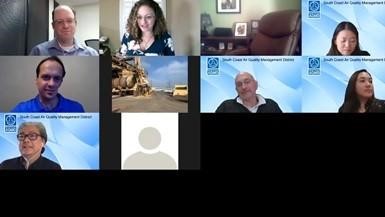
CalAPA member Sully-Miller conducted a “virtual” asphalt plant tour last week for representatives of the South Coast Air Quality Management District as regulators work on new air-quality regulations that could impact the industry.

CalAPA has helped coordinate similar tours, including one that took place on March 3 hosted by DeSilva Gates materials at their Sunol facility and attended by representatives from the California Air Resources Board and the San Francisco Bay Area Air Quality Management District.

With the onset of the coronavirus pandemic, however, in-person visits have become increasingly difficult to put on.

As CalAPA Environmental Committee Co-Chair Scott Taylor with Taylor Environmental Services, remarked, “After waiting and trying to figure out a way to conduct a site visit in person, it became obvious that South Coast Air Quality Management District (SCAQMD) was continuing with rule development and a virtual tour was the best way to provide the first-hand information they needed for their work.”

CalAPA member Sully-Miller, represented by Ken Barker and William Quach, joined Taylor and representatives of the California Construction and Industrial Materials association (CalCIMA) and the California Asphalt Pavement Association to “virtually” tour Sully-Miller’s Sun Valley plant July 22 to inform the South Coast AQMD’s proposed rule 1147.1 ‘NOx Reduction from Equipment at Aggregate Facilities’ rule-making.

As Barker used his phone to conduct a live walk-through of the plant, assisted by Quach with a camera-steadying device known as a gimbal, the regulators asked numerous questions via a chat box and had them answered in real-time by Barker and Taylor. The event took approximately one hour.

Afterward, Michael Krause, Manager of NOx/Sox/RECLAIM/Toxics/VOC Rules 3, called the tour a “shining example” of transparency and industry-regulator educational collaboration. The air district covers air quality regulation for a sprawling area that includes Los Angeles, Orange, Riverside and San Bernardino counties. Other SCAQMD staff who attended the tour included Shannon Lee, senior air quality engineer; Gary Quinn, program supervisor; air quality specialists Yanrong Zhu and Steve Tsumura and Susan Nakamura, Assistant Deputy Executive Officer.

The tour coordination team included Suzanne Seivright-Sutherland, director of local governmental affairs for CalCIMA, Adam Harper, CalCIMA’s policy director, and CalAPA Regional Director Bill Knopf.  In an after-action report, Seivright-Sutherland wrote: “This was the first virtual plant tour South Coast AQMD participated in, and their team expressed significant accolades for the excellent job the Sully-Miller team executed!”

Commented Barker after the tour: “I think we have opened up a new door with these virtual tours. We can make life easier for industry and the agencies to understand what we do and how we do it.” In addition to cutting-edge virtual technologies, Barker used an old-school pointing tool repurposed from a fruit picker pole. “We are adapting because of COVID-19,” he said. “With a pointer like that, you can make darn sure people know what you are talking about.”

New BROCK Company to Offer Known Components

JBK, now BROCK, will be led by a seasoned team of executives with deep industry experience

GEORGETOWN, Tenn. (July 16, 2020) – Ben Brock, former president and CEO of Astec Industries Inc. (Nasdaq: ASTE), Chattanooga, has acquired substantially all of the assets of JBK Enterprises Inc.

Brock is the president and CEO of the company, which was officially renamed BROCK following the acquisition. FourBridges Capital Advisors acted as exclusive financial advisor to Brock, structuring and negotiating the deal on his behalf. Baker Donelson provided legal counsel to Brock.

Owned by Lori Stafford, JBK was founded in 1990 as an equipment manufacturer and after-market parts supplier for hot mix asphalt plant owners. JBK’s office and manufacturing facility are located in Georgetown, Tennessee.

“My father, Jack B. Kibler, started JBK with a vision to provide quality equipment and parts to an industry he loved, and he was successful in his effort,” Stafford said. “With the sale of JBK to Ben, I know the company will continue to grow in the right way.”

“JBK was building a little bit of everything from buckets and drags to baghouses,” Brock told AsphaltPro. “We’ll continue to offer all those things, plus site construction services. We’ll have crews and construction services to assist with plant moves.”

He explained that, for the short-term, the company will continue to focus on the components that were JBK’s strength, but he and his team are in this for the long-term.

“It’s an industry I really love and love being a part of. Timing-wise, when you think about the pandemic, you can view it as a huge bump in the road, but it’s just that: a bump in the road. This is a long-term investment showing our confidence in the market. We’re thinking 10 to 15 years out.”

Brock has worked in the hot-mix asphalt (HMA) equipment industry since 1993. His father, Dr. J. Don Brock, was the founder, president and CEO of Astec Industries Inc. from 1972 to 2013. Ben Brock served in various roles with Astec from 1993 until 2019, when he left the company after serving as president and CEO for over five years. Prior to his role as president and CEO, Brock was the head of two different Astec divisions that supplied equipment to the HMA industry. Each division achieved record high financial results under his leadership.

“I’m very excited to be back in the asphalt industry with this acquisition. I’m also very excited about our team — a collection of successful industry veterans who have all worked together at one point or another over the years and carry a combined 178 years experience,” Brock said. “I want to thank FourBridges Capital Advisors, especially Managing Director Chris Rowe, for their guidance and assistance on this transaction. I’d also like to thank Baker Donelson, with a special thank you to shareholder Ken Beckman, for their legal work and advice on the acquisition.”

BROCK will continue to supply equipment and parts to the hot mix asphalt industry and plans to add new products and services in the future. The company is well positioned for growth through its commitment to quality products, excellent service, and long-standing customer relationships cultivated by the leadership team.

Joining the company effective July 1, 2020, are:

  • Travis Sneed, Vice President, Sales & Operations. Travis Sneed has been in the hot mix asphalt equipment industry for 33 years. He will be responsible for all company sales along with day-to-day operational input for the company as a whole.
  • Robin Leffew, Vice President, Chief Financial Officer. Robin Leffew has worked in hot mix asphalt industry accounting for 33 years. She will lead all accounting, finance, human resources and information technology functions for BROCK.
  • Anthony Caldwell, Director of Manufacturing & Construction. Anthony Caldwell has worked in the hot mix asphalt industry for 32 years. He will oversee the manufacturing facility and construction services.
  • Greg Stafford, Manager of Inside Operations. Greg Stafford has worked at JBK for 14 years. He will work with all areas of the company and customers on drawings and quotations along with vendor partners on securing outside purchase items for the company.
  • Jeff Beavers, Manager of Drafting. Jeff Beavers has worked in hot mix asphalt equipment engineering departments for 39 years. In his role, Mr. Beavers will be responsible for field measurement and drafting for component sales.

Move Material Correctly, Or Lose It in Dusts, Fines, Spillage

If an aggregate producer or plant manager moves material incorrectly, inefficiencies creep into the operation. To ensure conveyor belts stay in peak operating condition, thus move material in the most efficient manner, owners have to inspect them and perform routine maintenance on a regular basis.

These things may take time, but they make sense. You’ve got to move material correctly, or lose material in dust, fines, spillage and so on.

Let’s talk specifically about moving aggregate material along conveyor belts. We’ve already shared the safety aspects of maintaining conveyor belts and why cleanliness is an important factor in keeping workers safe (see the September 2019 issue at www.theasphaltpro.com), but there are additional reasons for keeping belts in good repair. Movement, for starters.

If the belt is not configured, installed, inspected, maintained and cleaned properly, you could be setting yourself up for early belt failures. Failures don’t have to mean cracks or tears that result in replacement or big repairs, but we’ve got an article for that if you need it (see the May 2020 issue). Failures could be something as simple, yet as devastating, as sagging. If the conveyor belt starts to sag, whether that’s due to poor belt support from insufficient planning/configuration or from improper tensioning, you’ll find entrapment of material between the belt and components. Where material gets “stuck” is where you’ll accumulate dust and material spillage and where you’ll see entrapment damage to the belt. None of these things are good.

I don’t need to tell this audience that errant dust and fines could lead to fussy neighbors and potential health worries for workers.

To reduce entrapment damage and all its accompanying problems, plan out proper belt support to move material efficiently. For example, align pulleys so you don’t necessarily require a dynamic tracker in front of the take-up pulley; this helps keep the belt tracking without giving it extra components to “touch.” Of course, the touching isn’t equal everywhere. In other words, tension on the belt isn’t equal everywhere. Under low tension, you’ll see more contact between the roller and the belt than you’ll see with high tension. A good tactic to monitor the belt tracking is to watch for and identify the low-tension rollers. If you take the time to run the conveyor while unloaded, you can check tensioning to ensure the belt is just “kissing” the rollers with gentle contact.

Your regular inspection and monitoring of belts and conveyor components goes a long way in the struggle to keeping wasted material from marring your bottom line. Trapped aggregate, dust or fines may be a financial worry that is definitely worth curbing, but these problems, depending on their severity, can also lead to air quality issues that are definitely worth preventing. With legislation that includes air quality language making its own moves through Congress at press time, it’s only wise to set yourself up for ongoing best practices with periodic checks of your conveyors and belts. Also review the information we share in the frequent production-themed issues of AsphaltPro for tips and ideas to stay in compliance and in your neighbors’ good favor.

Stay Safe,
Sandy Lender