Women of Asphalt Announces 20 Women to Watch in 2020
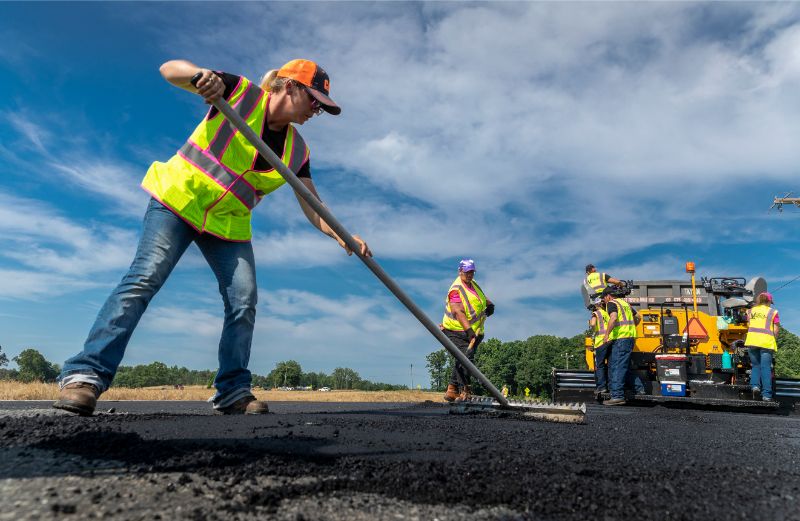
Once again Women of Asphalt® (WofA) is shining a spotlight on the ladies of our industry. A call to action was sent out this year for the WofA 20 to Watch in 2020 campaign. An overwhelming number of nominations were received for women who exemplify the values, mission, and goals of WofA.

The twenty ladies selected are industry game changers. They are in leadership positions, influencers, thought leaders, and even newcomers to the asphalt industry. All the winning nominees have demonstrated success in the asphalt industry, affected positive change, served as a mentor, and given back to their community.

WofA will be featuring one lady each day on their social media platforms and the WofA website at www.womenofasphalt.org.

The WofA 20 to Watch in 2020 are:

  • Luiza Barros — Central Design Lab Manager, TexasBit, A CRH Co. in Irving, TX
  • Jessica Blackburn — Chief Manager, Crown Paving LLC in Nashville, TN
  • Adriana Clark — Southeast Region Director Office of Small Business, SE Region, U.S. Department of Transportation in Miami, FL
  • Karen Deal — Director, Environmental & Land Use, Lakeside Industries Inc. in Seattle, WA
  • Beth Duffus — Project Manager, Granite Construction, Pacific Northwest Region in Lake Stevens, WA
  • Kristina Eiting — General Manager, Asphalt, Owens Corning in Dublin, OH
  • Kelly French — Project Manager, Brannan Sand & Gravel in Denver, CO
  • Susan Green — Paving Territory Manager, Caterpillar in Oswego, IL
  • Mary Katherine Harbin — Area Manager & EEO Officer, Maymead Inc. in Statesville, NC
  • Sallie Houston — Technical Manager, VSS Emultech in West Sacramento, CA
  • Colby Kimmel — Assistant State Roadway Engineer, Mississippi Department of Transportation in Jackson, MS
  • Amy Epps Martin – Professor, Texas A&M University & Researcher, Texas A&M Transportation Institute in College Station, TX
  • Nika Mathis — Vice President & In-House Counsel, MAGO Construction Co. in Bardstown, KY
  • Meredith Mills — Vice President of Business Development, Champaign Asphalt Company LLC in Champaign, IL
  • Tanya Nash — Pavement Materials Engineer, Asphalt Testing Solutions & Engineering in Jacksonville, FL
  • Mandy Neese — Vice President, Asphalt Paving and Concrete Construction in Peachtree Corners, GA
  • Kayla Ragsdale — Chief Financial Officer, Hutchens Construction Co. in Fayetteville, AR
  • Lindsay Wallace Smith — Safety Director, Palmetto Corp. in Conway, SC
  • Aida Valencia — Superintendent II, City of Los Angeles, Bureau of Streets LA in Los Angeles, CA
  • Ellen Voie — President, CEO, & Founder, Women in Trucking Association Inc.

Road Builders & Maymead Inc. Empower Women of Asphalt

Founded in 2017, WofA, a 501(c)(6) organization, works to foster and promote mentoring and networking opportunities for women in all facets of the asphalt industry, to create professional development opportunities for women in asphalt through education and training, to advocate for women in the asphalt industry, and to encourage other women to join the asphalt industry.

In addition to traditional board of director duties, each board member is responsible for leading a national working group and furthering mission-focused initiatives. For more information about Women of Asphalt, www.womenofasphalt.com, info@womenofasphalt.com.
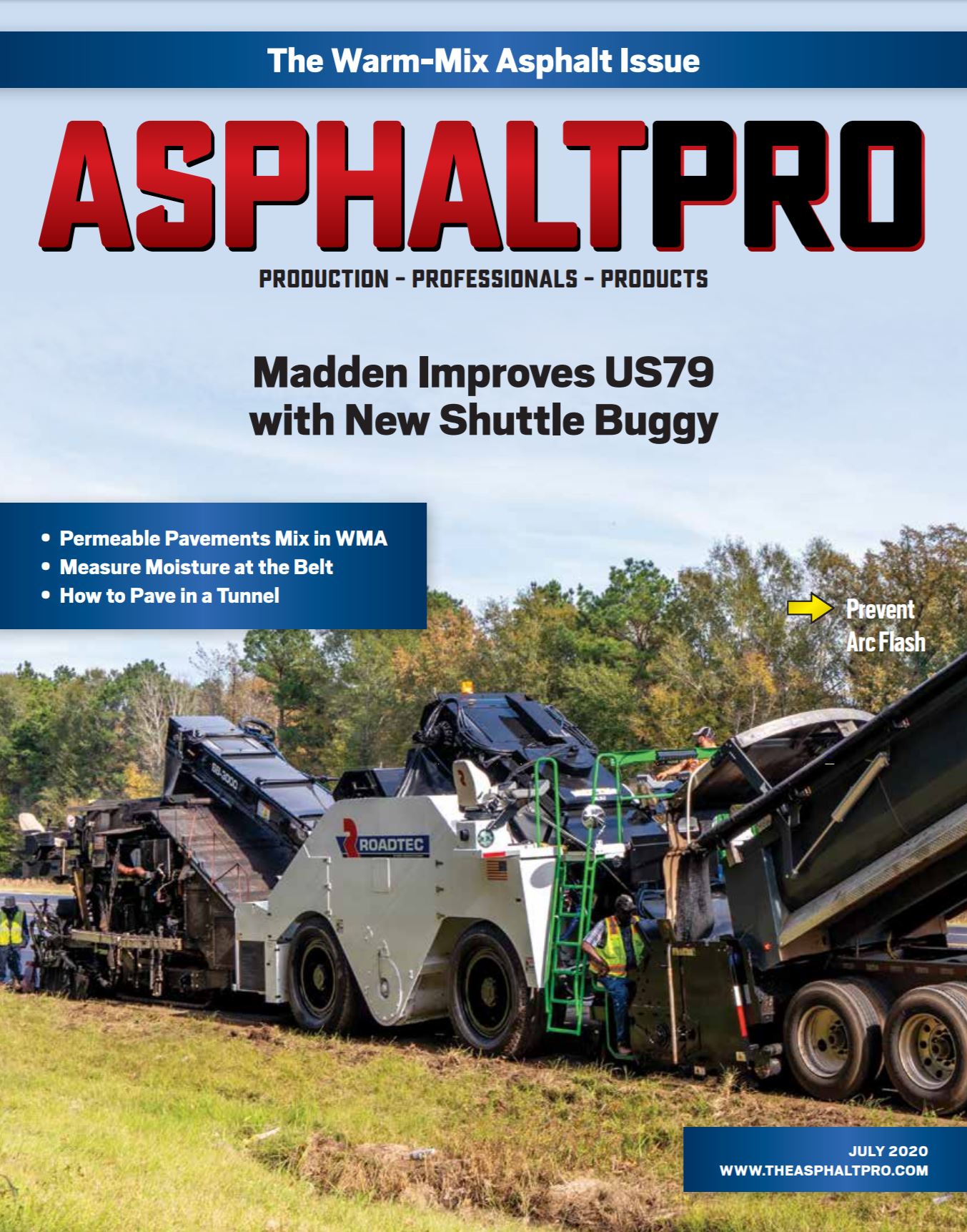

Essential Asphalt to the Rescue

Roads didn’t self-repair while 60 percent of traffic stayed home during April and May. In fact, an earthquake shook a fissure across U.S. Route 95 in Western Nevada May 15 that necessitated a detour for essential traffic, taking the nation’s vital workers 20 miles out of their way between Reno and Vegas. Luckily, asphalt crews can repair that noise in under 10 hours.

And they did.

What’s positive and hopeful in the situation outlined right there is the availability of an asphalt crew with equipment and materials to do the job. That kind of availability goes out the window if Congress can’t do its job of “building and maintaining a national highway system” with reliable funding.

We all know members of Congress spend an awful lot of time bickering these days when we’d like to see them working instead. We’re not getting good messages through if these grown men and women continue to focus on how often they can remind their constituents that an “opponent” used to sell cars.

I don’t care what someone used to do.

I care what someone can and will do right now to assist in getting this nation’s economy back on track. I care what someone can and will do right now to assist in getting our infrastructure to a safe and secure grade across the board. I care what someone can and will do right now to assist in acquiring for our industry a stable and steady source of infrastructure funding so we’re not in panic mode every Sept. 30.

At the time I sat down to write this note, the House Democratic Transportation & Infrastructure Committee leadership had just introduced the Invest in America Act. This is a five-year, surface transportation reauthorization proposal, asking for $494 billion, which represents a 46 percent increase over current funding levels. That sounds tubular.

The Senate’s bipartisan five-year, surface transportation bill, called the America’s Transportation Infrastructure Act (ATIA), asking for $287 billion, was approved by the Senate Environment & Public Works Committee last summer. It’s still waiting on other Senate panels to get their acts together.

Here’s one of the big problems: neither of these bills explains how we’re going to pay for $287 billion or $494 billion worth of projects, even though those projects are necessary for our nation’s safety. I’m ranting about this today because we, as members of the asphalt industry, can help members of Congress move forward with funding of whatever act they ultimately put forward by contacting them. Let your representative know that, yes, you’re behind them on a surface transportation bill, but you’re also behind them on fully funding the Highway Trust Fund.

Our industry is ready and able to step in and take care of business when a natural disaster reroutes essential and emergency traffic 20 miles off a highway. Our industry is critical to a safe and functioning infrastructure and economy.

Be someone who can and will, right now, assist in getting our industry fully funded.

Stay Safe,
Sandy Lender

Summary of the $1.5 Trillion ‘Moving Forward Act’

On June 22 the House of Representatives released the text of the Moving Forward Act that seeks to make $1.5 trillion worth of infrastructure investments across a number of U.S. economic sectors, such as transportation, energy, education, housing, and healthcare, among othe

That legislation includes within it the INVEST in America Act surface transportation reauthorization bill recently advanced by the House Transportation & Infrastructure Committee on June 18.

96-page summary of the Moving Forward Act breaks down the specific sector-by-sector infrastructure investments, including:

  • $494 billion in surface transportation reauthorization funding.
  • $130 billion via the Reopen and Rebuild America’s Schools Act, targeting “high-poverty” school infrastructure needs.
  • $100 billion for “affordable housing infrastructure” to create or preserve 1.8 million homes.
  • $30 billion to upgrade hospitals to increase capacity, help community health centers respond to COVID-19, and prepare for future public health emergencies.
  • $25 billion in the Drinking Water State Revolving Fund and other programs to ensure access clean drinking water and to help remove dangerous contaminants from local water systems.
  • $25 billion to modernize U.S. Post Office infrastructure and operations, including building up a “zero emissions” postal vehicle fleet plus buying modern mail processing equipment and other goods.

The House Democratic originally mapped out some of those infrastructure investment priorities in January; aiming to bring existing infrastructure across the United States into a “state of good repair,” enabling the completion of critical projects, and making combating climate change a central tenet of any infrastructure investment efforts.

Yet, while some transportation industry groups support the proposed levels of infrastructure funding within the bill, the one-sided legislative process is threatening to roll back years of bipartisan policy progress.

“With historic unemployment, tremendous unmet infrastructure needs, and less than four months before the expiration of surface transportation programs, this is no time for another partisan approach to infrastructure,” noted Neil Bradley, executive vice president and chief policy officer for the U.S. Chamber of Commerce, in a statement.

“The Senate Environment and Public Works Committee produced a bipartisan bill that drew unanimous support,” he added. “We stand ready to work with Democrats and Republicans in the House and Senate to move a bipartisan bill the president can sign into law that would revive our nation’s infrastructure.”

Jim Tymon, executive director of the American Association of State Highway and Transportation Officials, also expressed disappointment that both the surface transportation reauthorization bill and larger infrastructure package lack bipartisan support.

“While we appreciate the House T&I Committee and the House leadership for recognizing the need to reauthorize the surface transportation programs before the end of this fiscal year through floor consideration of the Move Forward Act, the proposed reauthorization contained in the INVEST in America Act unnecessarily turns back the clock on the bipartisan reforms previously agreed to by Congress,” he said.

While Tymon noted that fiscal relief within the legislation for state DOTs facing challenging financial situation due to COVID-19 is welcome, in many cases, the bill also creates or increases administrative burdens for states.

He also pointed out that the Surface Transportation Advanced through Reform, Technology, & Efficient Review or STARTER Act introduced by the House T&I committee’s Republican Minority on June 17 “focuses on formula funding programs, streamlining project delivery and ensuring state flexibility – all principles adopted by the AASHTO Board of Directors.”

“Unfortunately, these critical principles are absent in the Move Forward Act,” Tymon said. “We urge both sides of the political aisle to work together to get this much-needed surface transportation bill over the finish line [and] find bipartisan consensus on diverse issues such as maintaining the flexibility and maximizing the funding of current core formula programs, addressing climate change and resiliency, improving project delivery, focusing on bridge investments, and meeting the infrastructure needs of rural and urban areas.”

AEM Announces New “Equipped to Vote” Campaign

Nationwide Digital Campaign Will Educate, Engage, and Mobilize Manufacturing Voters

Tthe Association of Equipment Manufacturers (AEM) announced the launch of “Equipped to Vote,” a full-fledged digital campaign designed to engage, educate, and mobilize the 2.8 million men and women of the equipment manufacturing industry leading up to the general election this fall. The goal of the campaign is to educate supporters on the policies that matter to the industry, encourage greater civic engagement, and help elect pro-manufacturing candidates.

Earlier this year, AEM unveiled the “2020 Manufacturing Express,” a cross-country, campaign-style bus tour to discuss the issues critical to the continued growth and success of equipment manufacturers in America. AEM has been closely monitoring the circumstances surrounding the COVID-19 pandemic, and with the health and safety of the industry top of mind, AEM has postponed the initiative until 2021. A new launch date will be announced later in the year. The “Equipped to Vote” campaign, designed to give a voice to the 2.8 million men and women of the association during the election, will be the central focus for the association until the “Manufacturing Express” hits the road.

“The equipment manufacturing industry is the backbone of our economy and is essential to America’s post-pandemic economic comeback. During these unprecedented and challenging times, it is more important than ever that our industry comes together in support of pro-manufacturing policies and candidates,” said Kip Eideberg, AEM senior vice president of government and industry relations. “In keeping with the spirit of innovation that is at the core of America’s equipment manufacturers, AEM will leverage the latest digital tools and tactics to creatively connect with supporters in the safest and most effective way possible. This effort is vital not just to this election—but to the future of our industry and our country.”

Launching in August, AEM’s “Equipped to Vote” will highlight the issues that matter to the hardworking men and women who build, feed, and power communities across the country. Those issues include the urgent need to rebuild America’s infrastructure, smart trade deals that expand opportunities, and vibrant agricultural communities. The campaign will also serve as a call to action for supporters to engage in the electoral process and hold lawmakers accountable in November.

The centerpiece of this new effort will be an online election center with tools and resources, interactive programming, and educational games for supporters to test their knowledge about public policy and win prizes. The digital format will greatly expand the reach and impact of the campaign, and will allow more of the association’s member companies to participate in the effort. To date, more than 60 equipment manufacturing companies across the country have signed up be part of this first-of-its-kind initiative for the industry.

Equipment manufacturers support 2.8 million jobs and contribute $288 billion to the U.S. economy each year. Earlier this year, AEM released a comprehensive report on the economic impact of the industry.

More information about AEM’s “Equipped to Vote” campaign will be available on the association’s website in the weeks to come. Please follow Twitter and Facebook for the latest developments.

Teach Lab Personnel to Visualize Quality in the Lab & in the Field

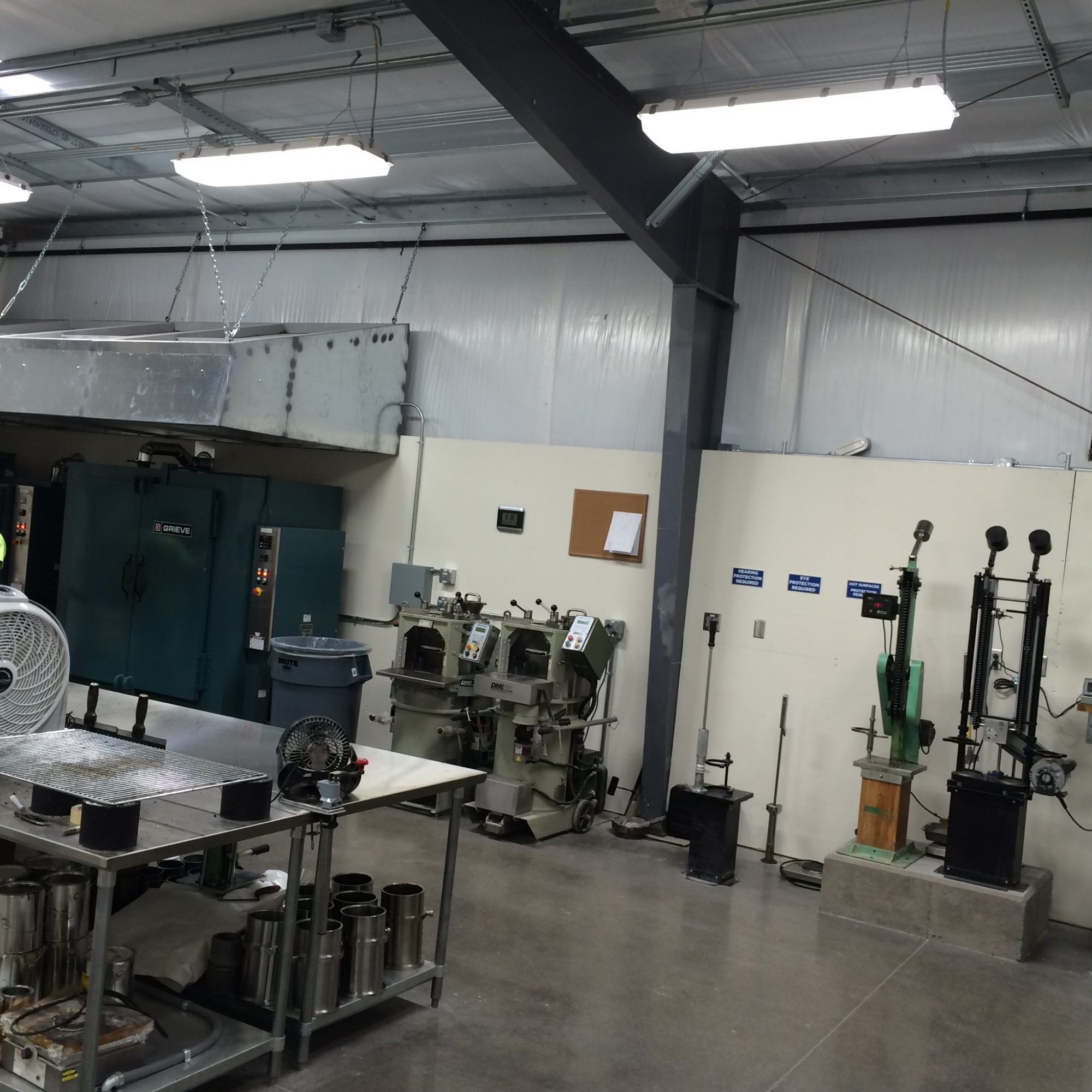
It might sound obvious at first, but visual observation in the lab offers your first line of defense for a good QC/QA program. Dr. Ray Brown, director emeritus at the National Center for Asphalt Technology (NCAT), provided a great article for AsphaltPro that you might want to share with lab techs.

Pay close attention to this concept especially:

If you test in the lab without visually observing changes and results along the way, you really mess up. You greatly reduce your ability to evaluate the overall quality of the paving in the field. And that same concept applies when QC/QA techs go to the field.

Visual observation helps you identify segregated areas or spots where a quality “problem” is about to creep into the joint construction. You want to jump on that and solve it, of course. If you aren’t watching, observing, checking for inconsistencies and/or visual clues, you could miss the beginning of a QC/QA issue. You could miss the issue that ends up costing the bonus later.

Visualize success. Check out Dr. Brown’s article.


Get tips like this to your email inbox every Monday! Sign up for our Toolbox Tips newsletter today.

TRB’s Centennial Video Wins 3 Telly Awards

The Transportation Research Board (TRB), part of the National Academy of Sciences, will celebrate 100 years of operation on November 11, 2020. TRB has been doing a number of things to celebrate, including collecting stories from people throughout the transportation industry with their “Tell Us ‘Our’ Story” campaign.

On June 15, the National Academy of Sciences announced that a video created as part of TRB’s centennial celebration had won three Telly Awards. Watch the award-winning video and learn more below.


A video created as part of the Transportation Research Board’s centennial celebration has been named the winner of three 2020 Telly Awards, which annually showcase the best work created within television and across all types of video production.

The video, titled Your Future in Transportation, highlights the excitement, challenges, and fulfillment that those who select transportation as their career can expect to enjoy.

“This is an exciting time of transformation in the transportation industry, and this award-winning video puts a spotlight on how young people have the opportunity to make a difference in the world by choosing transportation as a career path,” said Sandra Larson, transportation innovation strategies leader, Stanley Consultants Inc.; and chair, Centennial Task Force.

The video was produced as a partnership between the Texas A&M Transportation Institute (TTI) and the Transportation Research Board (TRB), a division of the National Academies of Sciences, Engineering, and Medicine.

“TTI and its transportation research experts have been active TRB volunteers for six decades, and we are pleased to have had the opportunity for our video production team to work with our partners at TRB on this award-winning production about the future of transportation and transportation careers,” said Greg Winfree, TTI agency director.

“I recommend that anyone who cares about the future of transportation, and the important role it can play in providing an equitable quality of life for all our citizens, view this video and then pass it along to their local school system with the request that it become part of their community’s STEM curriculum.” added Neil Pedersen, executive director, TRB.

“In addition to research and technology transfer, training the future generation of transportation professionals is a primary focus of TTI’s mission,” said Katie Turnbull, TTI executive associate director and a past chair of the TRB Executive Committee. “It is rewarding to know that the video will be used to encourage young people to pursue a career in the transportation field.”

For more information on the Tellys and how the video was produced, as a partnership with the Texas A&M Transportation Institute, read the full press release from the National Academies of Sciences, Engineering, and Medicine.