Plan Your 2020 Safe, Quality Training

At the BOMAG Innovation Days in October, Keynote Speaker Ryan Avery told us to ask ourselves, “Where do I need to be more courageous this year?” As a Type A personality with competitive tendencies, I took that as a challenge. Let me hand the challenge to find courageous opportunities to you as well.

Rather than bore you with some kind of push for resolutions about safety or quality, I’ll assume you already know this is the time of year to put new ideas into motion. I encourage asphalt industry members to use any excuse—even New Year’s Resolutions—to improve safety culture at their operations and lean into training workers for improved health and wellness, improved safety awareness, and improved work environments. Of course, I encourage training for improved quality of our end product as well.

All of this can be achieved by bringing consultants to your facilities or by taking your team members to the speakers at conferences and conventions.

While some safety and health training won’t necessarily require a construction focus, our specialized industry and tasks obviously necessitate experts who understand the nuances of professional asphalt production and paving.

More often than not, finding individuals who are qualified to teach your crew about safe, best practices takes as much time in research as the training itself. Enter the state asphalt pavement association (SAPA) network and similar construction-related groups that offer programs at reasonable—and sometimes free—rates.

For example, the Associated General Contractors of America, South Florida Chapter, based in Doral, Florida, offers a safety program, free to the first 30 people who sign up, each second Wednesday of the month. To make it easy to remember, they call it “2nd Wednesday Safety Session.” Another example that resonates for us this month is the Hawaii Asphalt Pavement Industry (HAPI). The attendees of the National Asphalt Pavement Association’s annual meeting will read this note while standing in the Grand Wailea, on Maui, where they’ll gather management-level information to take home. As a member of the SAPA group, HAPI offers both management- and operator-level information and training all year ’round, and AsphaltPro is proud to partner with HAPI to share some of that training in our pages. Check out the

P-401 spec change article at TheAsphaltPro, most recently.

Let’s pause there.

Learning the nuances of asphalt production and paving in such a manner as to create a safe environment for oneself and one’s co-workers takes more than one session at one tradeshow. Notice that this column has already presented a handful of good options for obtaining training in less than 500 words. Consider this: AsphaltPro magazine has a whole website filled with “how to” articles that can help you train new and veteran employees on basic to complex practices. We also have the Asphalt Paving 101 online course that offers back-to-basics workers need to hear when onboarding or returning from seasonal layoff. While the online training course comes with a price tag, it also comes with lifetime access for your entire crew; it’s one of those no-brainer additions to your training arsenal.

Spending money may be the courageous step for your company. Investing in new workers may “feel” courageous to you. But I want to challenge you to take advantage of 2020; pounce on the opportunities out there to level up your workforce for safety and quality.

Stay Safe,
Sandy Lender
AEM Announces Winners of $50,000 Next Gen Grant

Five non-profit organizations developing the future of the manufaacturing and trades workforces were awarded $10,000 each at the Association of Equipment Manufacturers’ (AEM) 2019 Annual Conference as part of their Next Gen Grant Program. The winning organizations focused on training for and encouraging careers in construction, manufacturing, technician service, and business and financial skills development.

“We knew there were a lot of organizations encouraging and preparing youth for careers in manufacturing and the trades,” said AEM Workforce Development Director Julie Davis. “All the same, we were still surprised by the degree of diversity and innovation in these programs, and how they are tackling genuinely challenging workforce development issues in their communities.”

This grant, in part to celebrate AEM’s 125th Anniversary, was available to qualifying organizations. In order to have been considered for the AEM Next Gen Grant, organizations must have been a registered 501(c)(3) organization engaged in outreach toward a K-12 audience, engaged with an educational organization (e.g. school district, tech school, college, etc.), and nominated by someone from an AEM member company.

The winners for 2019 are:

  • The Construction Forum (St. Louis): The Construction Forum was nominated by Darryl Matthews of Sunnyvale, Calif.-based technology company Trimble, Inc. The Construction Forum focuses on workforce, inclusion/diversity, regionalism, and collaboration in their effort to understand the barriers facing youth entering the workforce, and ending the cycle of poverty in St. Louis, by encouraging careers in regional construction.
  • Equipment & Engine Training Council (York, S.C.): The Equipment & Engine Training Council (EETC) was nominated by Jake Gaylord of Munich and Menomonee Falls, Wis.-based construction equipment manufacturer Wacker Neuson. The EETC was developed to address a skills gap for students wanting to repair and maintain agricultural, turf, mining, construction, and utility machines that are becoming increasingly complex. By teaching middle and high school students the basics of engines, electricity, hydraulics, pneumatics, and mechanical systems, and influencing future technicians earlier on, the EETC hopes to narrow that skills gap.
  • Junior Achievement of Wisconsin (Milwaukee): Junior Achievement of Wisconsin was nominated by Carl Jensen of Waukesha, Wis.-based component manufacturer Husco International. Junior Achievement offers financial literacy, entrepreneurship, and workreadiness programs to youth throughout the entire K-12 spectrum. Part of their curriculum, called JA BizTown, allows elementary school students to operate an entire town, including running banks, working in supply chain, checking inventory, and voting for a mayor. Around 150,000 students participate in a Junior Achievement program each year.
  • National Association of Ag Educators (Lexington, Ky.): The National Association of Ag Educators’ Curriculum for Agricultural Science Education (CASE) was nominated by Mark Core of Pella, Iowa-based agricultural and industrial equipment manufacturer Vermeer Corporation. CASE gets secondary and post-secondary students to work together with industry to increase enrollment in technician degree programs at two-year institutions. CASE has also developed a course teaching 10th through 12th graders focusing on technical skills that agricultural service technicians will need in a mechanics career.
  • Transition to Career Program (Harper, Kan.): The Transition to Career Program (T2C) was nominated by Luke Thornton of Harper, Kan.-based agricultural, turf, and landscape equipment manufacturer Harper Industries. T2C acts as a liaison between Harper County school districts and community businesses, provides speakers to area high schools to talk about careers, sets up job shadows, and supports businesses who train student interns. T2C also hosts a “Manufacturing Day” and a “Reality U” financial literacy program once each year.

The Association of Equipment Manufacturers (AEM) is committed to bringing the equipment manufacturing industry together to develop and share best practices and tools to help recruit the workforce of tomorrow. AEM is the North America-based international trade group representing off-road equipment manufacturers and suppliers with more than 1,000 companies and more than 200 product lines in the agriculture and construction-related industry sectors worldwide. The equipment manufacturing industry in the United States supports 1.3 million jobs and contributes roughly $159 billion to the economy every year.

Conveyor Chain Stretch Will Drag Profits Next Season

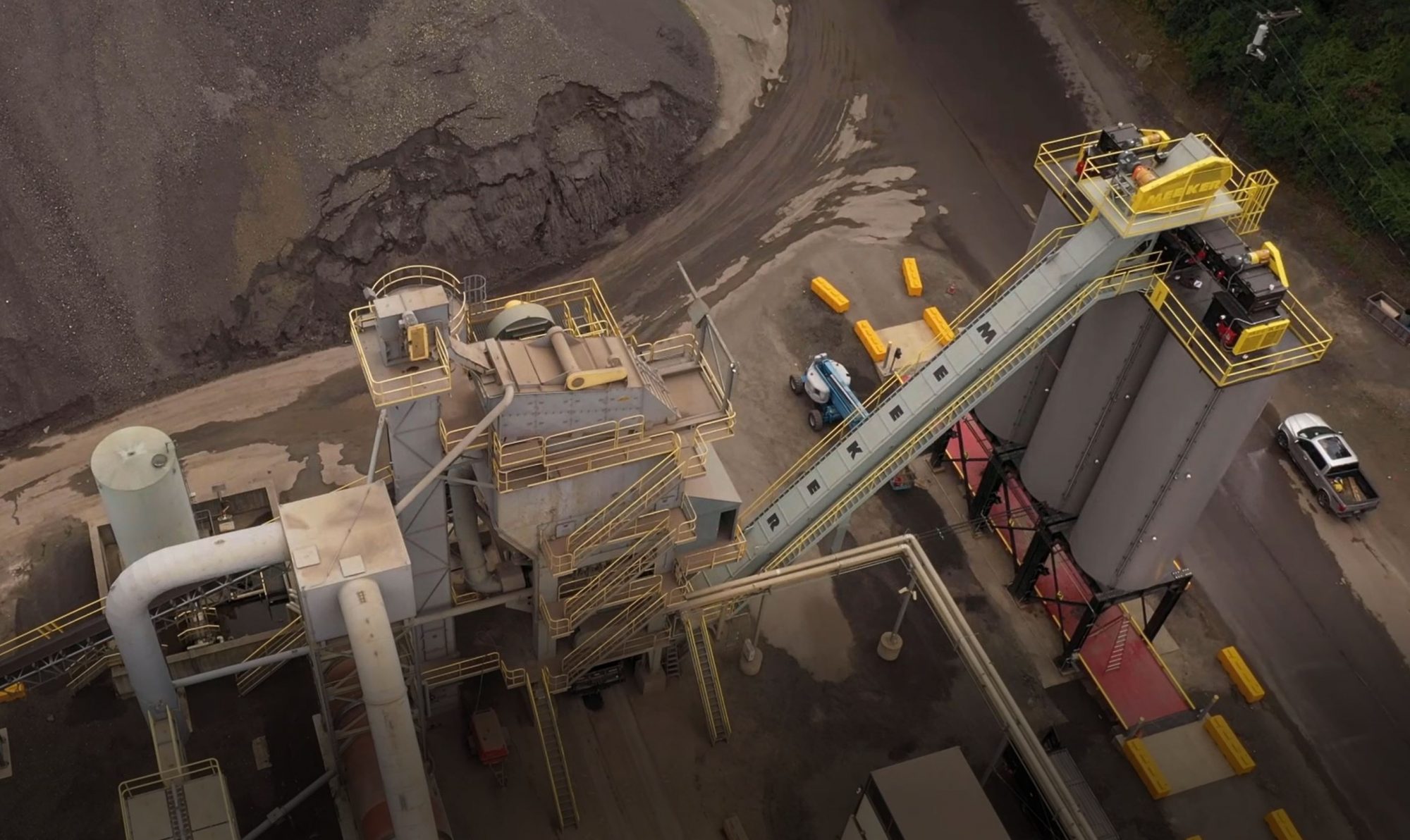
For the toolbox tips this December, plant repairs during the down season take center stage. The tip this week isn’t all that “quick,” but should help you assess the drag slat conveyor and chain so you have optimal production next spring.

The phenomenon of stretching is what happens when pins and bushings wear enough to give extra space and elongation in the chain. When you lose the efficiency of the chain, you lose profits. Start your maintenance of the conveyor and chain by locking out and tagging out. Take the stored energy of the conveyor into consideration, as well. Make sure you block out the conveyor so it cannot move on you.

Now you’re ready to remove a pin and check it for wear. One side will show more wear than the other. If it’s showing 50 percent wear depth, you need to decide (before season startup) if you’ll replace the chain. (Hint: you probably should do that now as opposed to during the height of production.)

Next, look at sprockets. You can check with the OEM’s specs to see what the original thickness of sprockets was and what the OEM says is reasonable wear and acceptable thickness. A change-out now saves a breakdown next summer.

Look at the slats for thickness as well. Also check them for bending. You want to replace bent slats.

Then the final piece of the conveyor to assess is the floor place. You’ll want to replace or rebuild any worn areas.


Sign up here to receive tips like this to your inbox every single week.

Happy Birthday to the Hard Hat! 100 Years of Safety

Can you believe it?!? The hard hat turned 100 years old this year!

Although it is now one of the most ubiquitous pieces of personal protective equipment across many different industries, hard hats were first worn by construction workers in the 1920s.

According to NIOSH, the E.D. Bullard Company, San Francisco, California, was the first to manufacture hard hats, which they called “Hard Boiled®” hats. By the mid-1930s, all workers participating in the construction of the Golden Gate Bridge were expected to wear hard hats.

Over the years, hard hats have taken many shapes and been made of various materials, including aluminum, Bakelite®, canvas, fiberglass, resin and steel. However, hard hats’ design has remained fairly consistent over the decades, including a suspension system and outer shell. By the 1960s, hard hats made of plastics were becoming the norm.

After NIOSH and OSHA were created in 1970, the use of hard hats was regulated and use of the safety device increased exponentially.

Happy birthday to the hard hat. Thank you for keeping our noggins safe for a whole century!

For more information on the history of the hard hat, check out this article by the New York Times.

The Heritage Group and the Asphalt Institute Foundation Promote New Initiative

The Heritage Group recently announced a contribution of $600,000 to the Asphalt Institute Foundation (AIF) to promote innovation in the asphalt industry.

The donation will establish the Fred M. Fehsenfeld, Sr. Catalyst for Change Initiative, honoring the late Heritage Group founder and tireless asphalt industry supporter and philanthropist who passed away in late 2018.

The new initiative will fund research and education that promotes advancement in the areas of public procurement innovation, transportation system design, asphalt pavement testing methodology, health, safety and environmental stewardship and more.

The Asphalt Institute Foundation’s 2021 Strategic Asphalt Research (STAR) Symposium will also dedicate a portion of its program to honoring Fehsenfeld Sr.’s legacy.

“The Heritage Group is a leader in cutting edge technology and world-class research,” said Amy Schumacher, President of The Heritage Group. “We can continue to honor Fred, Sr.’s innovative legacy by partnering with AIF on this important mission.”

Since 1930, The Heritage Group has managed a diverse set of business units involved in construction and materials, environmental services, specialty chemicals and energy and refining.

CONEXPO-CON/AGG 2020 Partners with Women in Construction Groups

To help highlight women as a viable force of the construction industry, CONEXPO-CON/AGG today announced a partnership with two women in construction-focused associations; The National Association of Women in Construction (NAWIC), and Women of Asphalt (WOFA).

“As the largest construction industry-focused trade show in North America, CONEXPO-CON/AGG seeks to draw attention to and celebrate the important role women play in the industry,” said Dana Wuesthoff, vice president of expositions and event services with the Association of Equipment Manufacturers and CONEXPO-CON/AGG show director. “Working together, CONEXPO-CON/AGG, NAWIC and WOFA, will not only showcase women industry leaders, but reinforce the career growth potential for women, who today represent a small percentage of the workforce and the opportunity to diversify the industry.”

The organizations plan to pool their collective influence to sponsor and engage in education and other events at the show, running March 10-14, 2020 in Las Vegas. The partnership will kick-off on Wednesday, March 11th with a breakfast event – Genders on the Jobsite. Special guests Vicki O’Leary, founder of Be That One Guy and Lorein Barlow, director and producer of Hard Hatted Women will have a candid discussion on how women experience job site opportunities and challenges and explore how everyone has a role in keeping job sites productive and safe for all workers.

“According to a Bureau of Labor Statistics survey, women make up only 9 percent of the total workers in construction,” said Chrissy Ingram, Executive Administrator of NAWIC National. “As our industry continues to grapple with a labor shortage, women are poised to help play a greater role in all areas of construction. By teaming with CONEXPO-CON/AGG, organizations like NAWIC and WOFA can help women thrive in a male-dominated industry.”
Social media influencer and construction business owner Missy Scherber will join other influencers, including Aaron Witt of BuildWitt, Keaton Turner of Turner Mining Group and Stacey Tompkins of Tompkins Excavating for a panel discussion and networking event in the Tech Experience on Wednesday afternoon. The group will answer your most pressing questions on using social media to recruit new hires, developing your corporate values and culture, taking your marketing to the next level and the changing face of the construction industry.

“Our industry and our companies all benefit from a diverse workforce,” said Amy Miller, P.E., president of WofA. “Through Women of Asphalt, we are looking to fulfill industry workforce needs by engaging with women at schools, through our podcast, and in-person events to show them all they can achieve with a career in the asphalt industry.”

Other events include:

  • Widening Your Workforce: Executive Lunch Forum on Friday
  • New Approaches to Building Female Construction Leaders
  • Gain a Competitive Advantage Through Construction Technology
  • Attracting and Training Your Workforce: Operating Engineers’ Innovative Solutions

Several Tech Talks will feature influential women in the industry, including Allie Kelly of the Ray, Lorein Barlow film maker of Hard Hatted Woman, and Desi Matel, Chief Wrangler at FIT.

These and other highlighted educational programming at CONEXPO-CON/AGG can be found here. Registration for the breakfast and lunch forum can be found here.