Encourage Battery Recycling

My first two forays into the world of lithium-ion (Li-ion) battery power to operate lawn equipment have been disappointing. Now that I’ve researched rumors about Li-ion battery production’s effect on our planet and what happens to the humans who mine the cobalt, nickel, manganese, etc. that goes into their manufacture, I’m ashamed of adding to the frenzy for electric and hybrid equipment.

As members of the asphalt road-building industry, we all want to enhance the already environmentally friendly ways we do business. We’re putting higher percentages of reclaimed asphalt pavement and recycled asphalt shingles into pavement mixes with elements that encourage performance properties to last an increasing number of years. We’re crushing up PCA surfaces to replace them with long-lasting, flexible, hot-mix asphalt and warm-mix asphalt pavements, both of which boast minimal carbon footprints from cradle-to-gate, according to research performed for the 6th Eurasphalt & Eurobitume Congress held in Prague. This commitment to sustainability is one reason why we, as an industry, collectively sat up and took notice of battery-operated vehicles and the concept of “electric” equipment around job sites.

Let’s face it; the battery-powered, remote-controlled compactor on display at the latest equipment show is a seductive piece of machinery. Everybody wants her. But what did the battery cost in terms of carbon footprint and child labor to mine and manufacture? Writing for Chemical and Engineering News’ July issue, Mitch Jacoby reported in his article titled “It’s time to get serious about recycling lithium-ion batteries,” that “mining for some battery metals requires processing metal-sulfide ore, which is energy intensive and emits SOx that can lead to acid rain.”
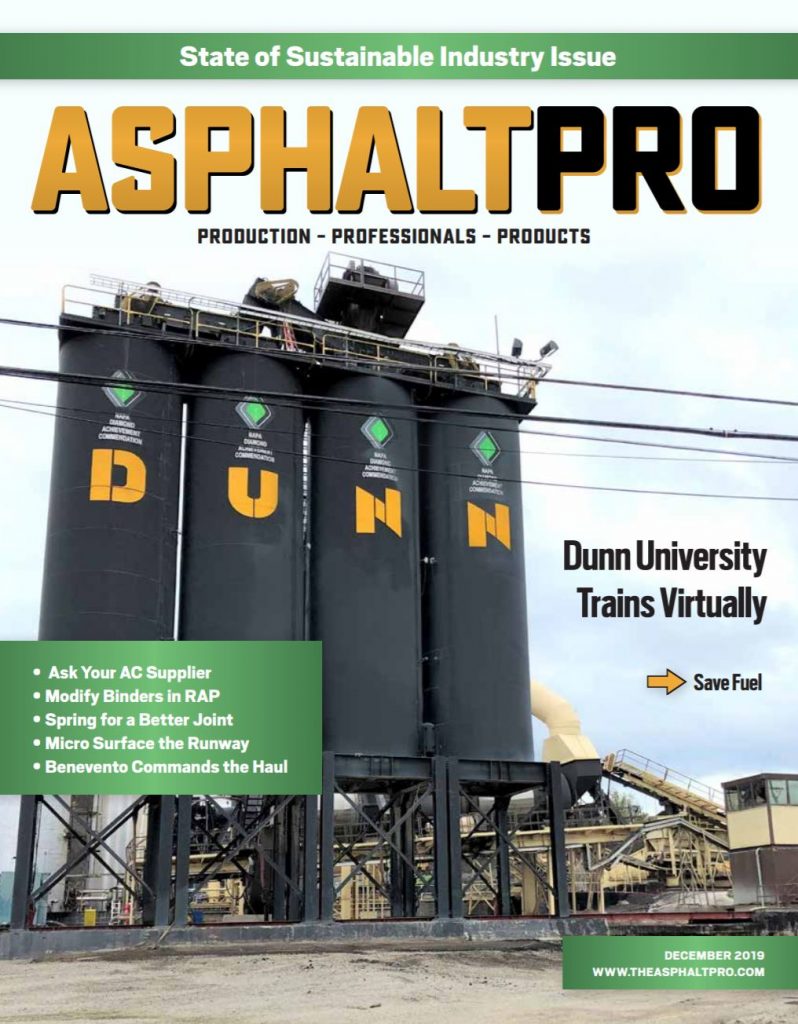
December AsphaltPro Cover

The cathode metals used in manufacturing Li-ion batteries are cobalt and nickel. Those metals are among those mined in the Democratic Republic of the Congo, where “informal” mining operations are popular. I encourage readers to do their own research on the labor practices there.

If we look past the manufacture of these batteries to the cost at the end of their lives, we see that recycling is not an easy answer yet. Recycling the batteries not only keeps them from leaching their solvents into groundwater when they pack a punch on landfill space, it offers a bite into the initial carbon footprint. The cradle-to-grave carbon footprint of the Li-ion battery can be reduced, obviously, when the battery is recycled efficiently. At this time, efficiency is lacking, but, as Jacoby pointed out in his C&EN article, post-graduate studies are now training students in battery recycling. Scientists are taking the early lack of Li-ion battery recycling know-how seriously.

Sadly, the cost of cobalt has dropped from about US$90,000 a metric tonne in mid-2018 to about US$30,000 a metric tonne in mid-2019, according to InvestmentMine, which takes the smelting process involved in recycling battery components down a less profitable path than merely making new batteries with virgin materials. (As of press time, infomine.com reported the price of cobalt at US$35,499.94 per tonne.) Hopefully, the same environmentalists who prefer Li-ion batteries to traditional power sources will forego the large profit to find a way to keep millions of tons of batteries out of landfills as the trend toward electric-powered vehicles and equipment continues.

Right now, I’m ashamed of the four Li-ion batteries in my garage to semi-power lawn equipment because I thought I was saving energy and money on gas and oil for a trimmer and lawn mower. I’m ashamed that I didn’t do more research ahead of the purchases. I’m ashamed that I contributed to the slave labor market in another country. This is my own cross to bear, but I won’t sit quietly while I bear it. I want to make others aware that we haven’t found some kind of panacea in Li-ion batteries over the internal combustion engine. Don’t be fooled by “environmentalist-speak” when it comes to these packets of power. Do your own research and make your own decisions regarding the use of battery-operated equipment.

Stay Safe,
Sandy Lender
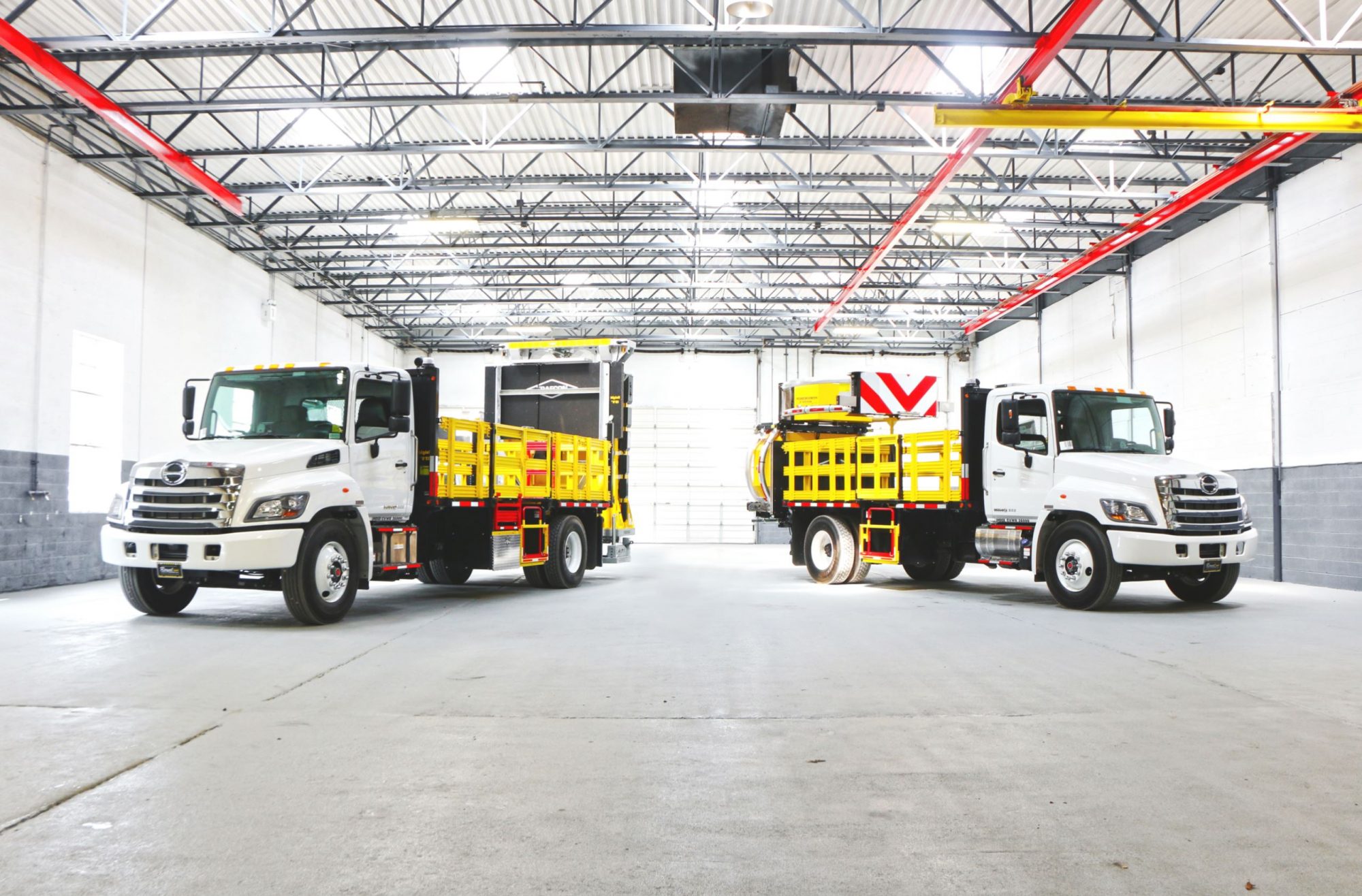
OEMs Manufacture Attenuators to Meet Modern Crash Conditions

Highway work zones are becoming an increasingly dangerous environment for highway workers. According to Federal Highway Administration, work zone crashes are on the rise due to the amount of construction work being done, more cars on the road, and especially distracted driving.

“Distracted drivers often times miss the warning signs of an approaching work zone and mistakenly enter the zone, putting the crew’s lives and their own life in danger,” said Taylor Wills, Marketing and Business Development Associate at Royal Truck & Equipment Inc., Coopersburg, Pennsylvania. Additionally, the size and weight of vehicles in general has significantly increased over time, leading to more damaging results in collisions.

“For example, the 2018 Honda Civic sedan is almost one foot longer and approximately 300 pounds heavier than the 2005 model of the car,” Wills said. “On the whole, you will see this trend occurring in almost all passenger vehicles over time.”

According to the U.S. Department of Transportation, the total number of car accidents increased by 20 percent between 2007 and 2016. Additionally, the total number of licensed drivers in the U.S. has doubled between 1970 and 2019, according to FHWA.

As a result, crash test criteria for roadside safety hardware must continuously evolve to keep up with modern challenges and modern vehicles. The American Association of State Highway and Transportation Officials first published its Manual for Assessing Safety Hardware in 2009, and updated it with a second edition in 2016.

“MASH criteria gives manufactures of roadside hardware a consistent method for evaluating whether their products perform as designed under specific test conditions,” said Kelly Hardy, Safety Program Manager at AASHTO. “State DOTs and other transportation agencies can then use the results from MASH testing to determine whether a roadside device meets their needs.”

According to MASH’s final implementation agreement, temporary work zone devices manufactured after December 31, 2019, must be successfully tested according to the 2016 edition of MASH. Devices manufactured on or before this date and successfully tested according to NCHRP 350 or the 2009 edition of MASH, may continue to be used throughout their normal service lives.

OEMs Answer the Call

MASH criteria ensure that attenuators used on TMA trucks throughout the country are engineered to safely absorb the force of impacting vehicles and protect the work crews in front of them.

“Higher standards of testing mean we’re using equipment that is proven to be safer, and we’re proud knowing the work zone is a safer place as a result,” said Michael Zolnoski, Marketing Director at Curry Supply Co., Martinsburg, Pennsylvania. All of Curry Supply’s crash attenuator trucks feature Scorpion TMAs, built using MASH criteria.

For a truck mounted attenuator to be MASH approved, it must pass tests 3-50, 3-51, 3-52, and 3-53 as outlined in the Manual for Assessing Safety Hardware.

“These tests judge how well the attenuator responds to an impact, with each test serving to replicate different real-world crash scenarios,” Wills said. “Once the attenuator passes all of these tests, the FHWA issues a letter of eligibility, thus certifying that the unit is MASH approved.”

Royal began explaining MASH requirements to its customers more than a year ago so they would understand how changing criteria would impact their businesses.

According to Wills, Royal has better-equipped its TMA trucks in a number of ways, including the use of high quality lights for improved visibility; incorporating the pulsar option, radar and messaging capabilities on TMA arrow boards; and, of course, using MASH-compliant attenuators on its trucks.

Royal began offering MASH-compliant attenuators in the second quarter of 2019 as an option to their customers. In the third quarter of 2019, they began using only MASH compliant attenuators on all of their TMA trucks. The company outfits its trucks with Verdegro’s BLADE TMA or TrafFix Devices’ Scorpion II TMA.

“By combining our rugged build construction with Scorpion TMAs, our crash attenuator trucks offer full width impact protection along the entire length of the TMA unit and redirect errant vehicles away from the rear of the truck,” Zolnoski said.

FHWA maintains a list of barrier terminals and crash cushions (including truck-mounted attenuators) that have been issued an eligibility letter by FHWA, available here.

MASH In Action

MASH’s final implementation agreement has also urged agencies to replace existing highway safety hardware that has not been successfully tested to NCHRP Report 350 or later criteria. Agencies were also encouraged “to upgrade existing highway safety hardware to comply with the 2016 edition of MASH either when it becomes damaged beyond repair, or when an individual agency’s policies require an upgrade to the safety hardware.”

The agreement also states that only safety hardware evaluated using the 2016 edition of MASH criteria will be allowed for contracts on the National Highway System with a letting date after the dates below:

  • December 31, 2017: w-beam barriers and cast-in-place concrete barriers
  • June 30, 2018: w-beam terminals
  • December 31, 2018: cable barriers, cable barrier terminals, and crash cushions
  • December 31, 2019: bridge rails, transitions, all other longitudinal barriers (including portable barriers installed permanently), all other terminals, sign supports, and all other breakaway hardware

It also states that FHWA will no longer issue eligibility letters for highway safety hardware manufactured after the above dates if they have not been successfully crash tested to the 2016 edition of MASH.

See AASHTO’s Roadside Design Guide and AASHTO’s Manual for Assessing Safety Hardware for guidance on selecting the appropriate Test Level (TL) based on traffic using the facility.

“Manufactures and state DOTs are working to develop and implement MASH complainant roadside hardware,” Hardy said. “However MASH devices suitable for all uses may not be available by the last deadline. State DOTs are focused on updating their internal policies and procedures to use MASH devices as they become available.”

NSSGA Legislative & Policy Forum a Success

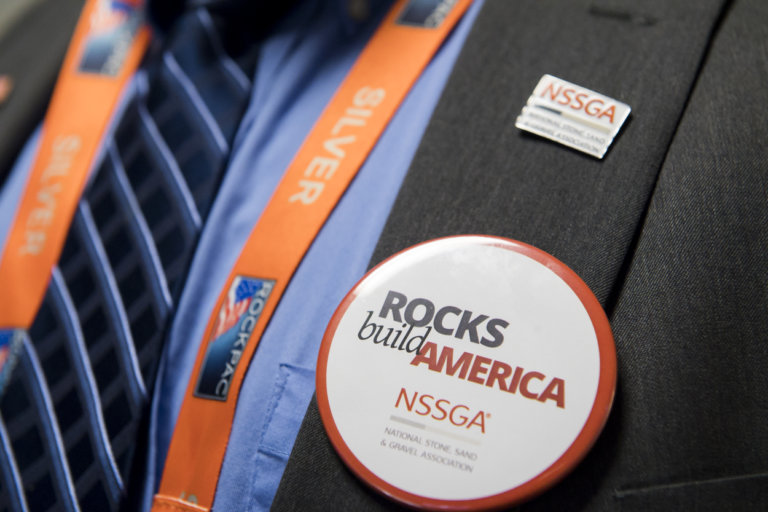
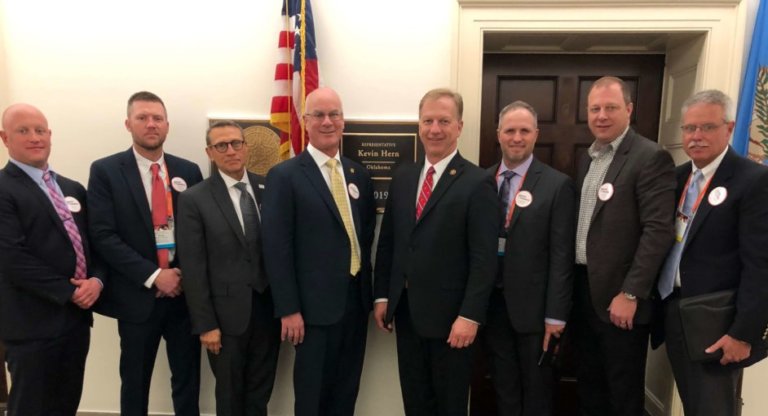
Hundreds of people from aggregates operations across the country gathered in Washington, D.C., this week for th National Stone, Sand & Gravel Association’s 2019 Legislative & Policy Forum. NSSGA members had a record 295 Congressional meetings during Hill Day and furthered relationships with a number of key lawmakers.

On the eve of NSSGA’s Legislative & Policy Forum, Reps. Greg Stanton, D-Ariz., and Troy Balderson, R-Ohio, authored and introduced the Rebuilding Our Communities by Keeping aggregates Sustainable (ROCKS) Act. The ROCKS Act supports the construction of much-needed public works projects with the access to raw materials necessary to build and revive the roads, bridges and infrastructure projects in our nation’s communities.

Listen to NSSGA’s latest podcast for details on the bill and how to ask your members of Congress to support the ROCKS Act.

During the NSSGA event, William “Bill” Childs, IV, CEO of Maryland-based Chaney Enterprises, and Ed Elliott, MSHA senior advisor, were presented with lifetime achievement awards from NSSGA for their outstanding commitment to the industry. NSSGA also announced the winners of its Bronze, Silver, Gold and Platinum Awards, among other events and achievements.

NSSGA also ran ads on the homepage of TheHill.com, which resulted in 1.9 million impressions and directed website visitors to the association’s advocacy materials outlining the policy priorities it shared with members of Congress.

NAPA, AASHTO, Others Applaud Cancellation of Highway Funding Rescission

Last week, Congress blocked a $7.6 billion highway funding rescission set to take effect in July 2020. The provision was part of a stopgap spending bill extending through December 2020. President Trump signed the bill later in the day, ahead of the previous continuing resolution’s expiration.

If the rescission had been carried out, funding to the Highway Trust Fund would have been revoked.

“While the plan for these cuts was a necessary budgeting tool to get the Fixing America’s Surface Transportation Act passed in 2015, in practice they hamper the ability of states to build and maintain the infrastructure drivers need,” said National Asphalt Pavement Association (NAPA) President & CEO Audrey Copeland. “By cancelling the rescission as part of this week’s Continuing Resolution, Congress will both keep the government open and keep state highway programs on track. NAPA urges all members of Congress to pass the CR to ensure no disruption in highway investment.”

Other industry groups, including the American Association of State Highway and Transportation Officials (AASHTO) thanked Congress and the President for their bipartisan support in eliminating the rescission.

“On behalf of the 50 state departments of transportation, as well as Puerto Rico and the District of Columbia, that unanimously supported rolling back this rescission, I extend our thanks to the leadership in the House and Senate, committee leaders and their staffs, and the President for removing the threat of disruption and potential delays in the coming construction season,” said Jim Tymon, AASHTO executive director. “The resolution of this issue comes at a time when states are preparing their budgets for the coming construction season, eliminating potential uncertainty that could have delayed important transportation infrastructure investments,” he said.

However, industry leaders recognize that there is more to be done.

“This is a positive step, but it only addresses short-term needs,” Copeland added. “NAPA urges Congress to move forward with full reauthorization of the nation’s surface transportation programs. The Senate has before it America’s Transportation Infrastructure Act, but it lacks a robust funding source. To ensure American infrastructure meets the needs of today and the future, Congress has to make passage of a robustly funded, long-term surface transportation program a priority.”

AEM Elects 2020 Officers, New Directors

The Association of Equipment Manufacturers (AEM) announces its 2020 officers as well as directors elected to the AEM Board of Directors and AG and CE Sector Boards at its recent annual business meeting.

AEM Chair Jeffrey Reed

AEM Chair Jeffrey Reed

The 2020 AEM Officers are:

  • Chair Jeffrey Reed, President & CEO, Reed International/VSS Macropaver
  • Vice Chair Steven Berglund, President & CEO, Trimble Inc.
  • Ag Chair Jerry Johnson, President Farm, Ranch & Agriculture Div., Blount International Inc.
  • CE Chair Rodney Schrader, Chairman & CEO, Komatsu America Corp.
  • Treasurer Todd Stucke, Sr. VP Marketing, Product Support & Strategic Projects, Kubota Tractor Corp.
  • Secretary Dennis Slater, President, AEM

AEM officers and directors come from an industry cross section and work on behalf of all member companies to provide strategic direction and guidance for the association’s initiatives in areas including public policy representation, market information and equipment statistics, trade shows, product safety and technical support.

“AEM benefits from the support of our member companies and the leadership talents of our Board members, and we greatly appreciate their active participation,” said AEM President Dennis Slater. “Their engagement and contributions help ensure that we deliver quality results as we continue to build momentum for the equipment manufacturing industry and offer the best possible services and programs for members.”

Directors elected to the AEM Board of Directors:

  • Ted Bojanowski, VP Sales and Marketing, Parker Hannifin Corp.
  • Grant Godbersen, VP Manufacturing, GOMACO Corp.
  • Michael Haberman, President, Gradall Industries Inc.
  • Jerry Johnson, President Farm Ranch & Agriculture Division, Blount International Inc.
  • Philip Kelliher, VP Americas Distribution Services Marketing, Caterpillar Inc.
  • Leif Magnusson, President, CLAAS of America Inc.
  • Ray O’Connor, President & CEO, Topcon Positioning Systems Inc.
  • Brad Olson, Vice President, Two Rivers Marketing
  • Austin Ramirez, President & CEO, Husco
  • Jeffrey Reed, President & CEO, Reed International/VSS Macropaver
  • Todd Stucke, Sr. VP Marketing, Product Support & Strategic Projects, Kubota Tractor Corp.

Directors elected to the AEM AG Sector Board:

  • Grant Adolph, COO, Buhler Industries Inc.
  • Kim Boccardi, VP Marketing, Titan International
  • Fernando Cuccioli, Exec. VP Cluster Americas, DeLaval Inc.
  • Charlene Finck, Div. President Producer Media, Farm Journal
  • Gene Fraser, VP Global Sales & Marketing, MacDon Industries Ltd.
  • David Gilmore, Senior VP Global Marketing, Ag & Turf Div., Deere & Co.
  • Jerry Johnson, President Farm, Ranch & Agriculture Div., Blount International Inc.
  • Darryl Matthews, Sr. VP Natural Resources, Trimble Inc.
  • Brian Nelson, President & Chairman, HCC Inc.
  • Viren Popli, President & CEO, Mahindra USA Inc.
  • James Wessing, President, Kondex Corp.
  • Jeremy Yoder, COO, DISTek Integration Inc.

Directors elected to the AEM CE Sector Board:

  • Brian Bieller, President & Regional GM, Dynapac
  • Mary Erholtz, VP of Marketing, Superior Industries Inc.
  • John Grote, Global VP, Sales & Marketing, Grote Industries Inc.
  • Willie Harbert, VP Sales, Eaton
  • Robert Mortensen, President Off Highway Div., Husco
  • Frank Nerenhausen, President, JLG Industries Inc.
  • Ray O’Connor, President & CEO, Topcon Positioning Systems
  • Rick Rodier, Group VP, Construction Businesses, The Toro Company
  • Ingo Schiller, President North America Operations, Tadano America Corp.
  • Johannes Schulze Vohren, Exec. VP Sales & Marketing, Wacker Neuson Corp.
  • David Thorne, Sr. VP Worldwide Sales & Marketing, Construction & Forestry Div., Deere & Co.
  • Patrick Weiler, President, Weiler

AEM is the North American-based international trade group representing off-road equipment manufacturers and suppliers, with more than 1,000 companies and more than 200 product lines in the agriculture and construction-related industry sectors worldwide. The equipment manufacturing industry in the United States supports 1.3 million jobs and contributes roughly $159 billion to the economy every year.

NSSGA’s Platinum Awards Recognize the Industry’s Best

The National Stone, Sand & Gravel Association today announced the recipients of the 2019 Platinum Awards of Community Relations and Environmental Excellence.

NSSGA annually presents Gold, Silver and Bronze Awards of Excellence to sand and gravel operations and quarries across the country. The Platinum Awards are the highest recognition that a single quarry can receive for community outreach and sustainable practices.

Sullivan Road Gravel Plant received the 2019 Platinum Award Community Relations Award

Sullivan Road Gravel Plant, a Central Pre-Mix operation in Spokane Valley, Wash., received the Platinum Award of Excellence for Community Relations. Central Pre-Mix is A CRH Company.

Gainesville Quarry, a Lehigh Hanson operation in Gainesville, Ga., received the Platinum Award for Environmental Excellence.

“Quarries support their local communities in many ways. A good community relations program is key to educating their communities about the importance of aggregates, the focus on safety with which our member companies operate each day and the lengths to which quarries are stewards of the environment,” said Michael W. Johnson, NSSGA president and CEO. “The teams at Gainesville Quarry and Sullivan Road Facility are excellent examples of excellent quarries.”

Gainesville Quarry, a Lehigh Hanson operation, received the Platinum Environmental Excellence Award

With a year’s worth of community outreach and support, the Central Pre-Mix team at Sullivan Road is the embodiment of corporate social responsibility. Employees raised $11,000 for the Corporate United Way Fund Drive Campaign, built homes for those in need as part of a Habitat for Humanity build and arranged for mixer trucks to block off intersections in support of public safety for the 2018 Lilac Bloomsday Run. The Sullivan Road Facility also received the Two Stars of Excellence award for earning Gold Awards in Community Relations and Environmental Excellence within five years.

The Gainesville Quarry focuses on minimizing waste to a large extent through mindful planning, careful selection of vendors and an aggressive recycling program. Stormwater and water used by the operation to minimize dust is recycled and reused daily, as the quarry also uses a 59-acre neighboring former operation for water storage and treatment. The quarry has also installed computer software, sensors and cameras to monitor all aspects of the production line.