Dr. Jon A. Epps to Receive the AMAP Lifetime Achievement Award

Dr. Jon A. Epps to Receive the AMAP Lifetime Achievement Award and Induction into the Modified Asphalt Hall of Fame

The Board of Directors of The Association of Modified Asphalt Producers announced today that Jon A. Epps, Ph.D., P.E., Executive Associate Director, Texas A&M Transportation Institute, has been named recipient of their 2020 Lifetime Achievement Award for his body of professional work and career-long accomplishments that have advanced the asphalt industry’s ability to meet ever increasing demands for better highway infrastructure.

Dr. Jon A. Epps

Dr. Jon A. Epps

Dr. Epps will be presented with this honor at AMAP’s 21st Annual Conference & Workshop, February 10 – 13, 2020, at the Omni Rancho Las Palmas Resort in Rancho Mirage, California. At that time, he will also be inducted into the Association’s Modified Asphalt Hall of Fame.

Over his 50-year career, Dr. Epps has been a tirelessly innovative researcher, authoring or co-authoring over 500 research publications in fields including soils stabilization, recycling, flexible pavements design, polymer modification, warm mix asphalt, sustainable pavements, structural testing, and many others.

As a distinguished professor at both Texas A&M and the University of Nevada Reno, Dr. Epps has inspired new generations of engineers and asphalt technologists to share his life-long passion for developing the practical tools and expanding the fundamental knowledge our industry needs to build longer-lasting, sustainable asphalt pavements.  Just as the far-reaching results of his seminal research have directly influenced the technological course of our industry for the past five decades, his inspiring vision of ever-advancing asphalt technology provides us today with a trajectory for the future.

Contributions on the scale of those of Dr. Jon A. Epps are unique and deserving of all the accolades a thankful industry can bestow on him.

How to Protect the Mat in Cool-Weather Paving

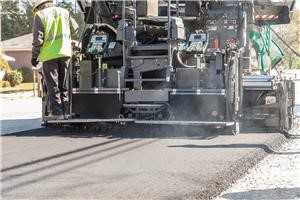
As parts of North America begin to cool down this month, equipment operators will keep a closer eye on start-up temperatures. If your night paving crew wishes to warm the paver by stopping once a portion of the mat is placed, to let all components gain heat from the hot mix, watch the screed carefully. It will settle when not in motion. If you sit for longer than seven or eight minutes, you risk creating an indentation in the mat. Instead, stay alert.

Step One: The general rule of thumb is to charge the hopper from the second truck—second load—that’s arrived onsite. It will likely be a few degrees hotter than the first load, which sat in the silo cone awaiting loadout.

Step Two: Pave forward the length of the paver and stop.

Step Three: Set your timer for five minutes to be sure you don’t sit too long.

Step Four: After four or five minutes of warming up, the paver is ready to go.

Forge ahead at 20 to 25 feet per minute, following your best paving practices.


Sign up here to receive Toolbox Tips like this to your email every Monday.

6 Ways to Manage Rising Equipment & Rental Costs

Register now to attend the education session “How To Manage Rising Equipment & Rental Costs” on Thursday, March 12, 2020 from 9:30 a.m. – 10:30 a.m. at CONEXPO-CON/AGG. 

A major challenge facing companies in today’s construction industry is how to deal with rising equipment and rental costs. One key component to this is whether to buy a piece of equipment or rent it, says Gregg Christensen, vice president, nationals account, United Rentals. Founded in 1997, the company is the largest equipment rental company in the world.

“If there is a consistent level of equipment utilization, based on future projections of workload that can be counted on – the sweet spot of utilization, purchasing is the way to go,” he explains. “If there is a roller coaster of utilization, you’re probably better off renting. Renting enables a company to augment its owned fleet with rental equipment to help smooth out workload peaks and valleys.”

Sometimes though, the buy-or-rent decision boils down to does a fleet have what it needs, when it needs it and where it needs it, he says.

A further consideration, adds Christensen, is whether a company has the appropriate staffing and transportation infrastructure in place to maintain, repair and transport its fleet of equipment. Staffing can be a challenge unto itself because of the construction labor shortage and lack of labor growth that continues to plague the construction industry.

Planning for your Project Needs

“It has been my experience that in general, construction businesses are poor planners when it comes to equipment and a need for rentals,” observes Christensen.

“At United Rentals, we try to be proactive to make sure we understand a company’s equipment scheduling and the possible need for last minute rentals. Especially for larger jobs, we work with jobsite staff to try and get an idea of ebbs and tides in their project scheduling and staffing so we can have equipment available when appropriate.”

Another way to reduce equipment and rental costs, he adds, is to appropriately service and maintain all equipment to ensure that it continues to function efficiently and properly. Equipment malfunction and failure can be costly – equipment downtime, repair expenses, idle labor and project delays, all of which have a direct impact on construction costs.

Christensen says equipment cost reductions can also be had through the use of a comprehensive telematics solution – which provides up-to-the-minute visibility into equipment health and activity – and predictive analytics.

Basically, predictive analytics uses several monitoring methods to establish regular trends and then predict the future path of those trends. With such insight, equipment owners can shift from a reactive repair-after-failure approach to a proactive repair-before-failure tactic. The end result, he says, is more efficient operations and increased fleet availability.

Christensen notes that United Rentals employs predictive analytics around major component wear-outs and failures, plus has developed effective preventive maintenance schedules. This helps avoid or reduce breakdowns, along with the expense and loss of productivity related to them.

Practical Tips for Managing Costs

To help manage rising equipment and rental costs, Christensen offers some advice.

  1. Utilization – First and foremost, project equipment utilization over 18 to 24 months. If a piece of equipment is going to be utilized over a certain percentage month in and month out, it typically stands to reason that the piece of equipment should be purchased.
  2. Equipment – Determine if you have the staff and infrastructure available to service and transport equipment.
  3. Geographic Footprint – Take into account the geographic footprint for where you might need other equipment because it is very expensive to transport construction equipment from place to place.
  4. Scope and Versatility – Think about the scope of a project, the specialty aspects of a piece of equipment and how to enhance the flexibility of equipment with attachments.
  5. Data Collection – Employ technology to track as much information from equipment as possible and learn how to leverage the data collected to boost efficiency, productivity and uptime, plus help stay on track and on budget.
  6. Working Capital – Consider whether you are better off using a line item expense for rental on your profit and loss statement versus tying up a lot of working capital in assets that you may or may not keep utilizing on a consistent and regular basis. If you have limited capital, where do you want to tie it up?


ALLU Group Supports Dozer Days KC

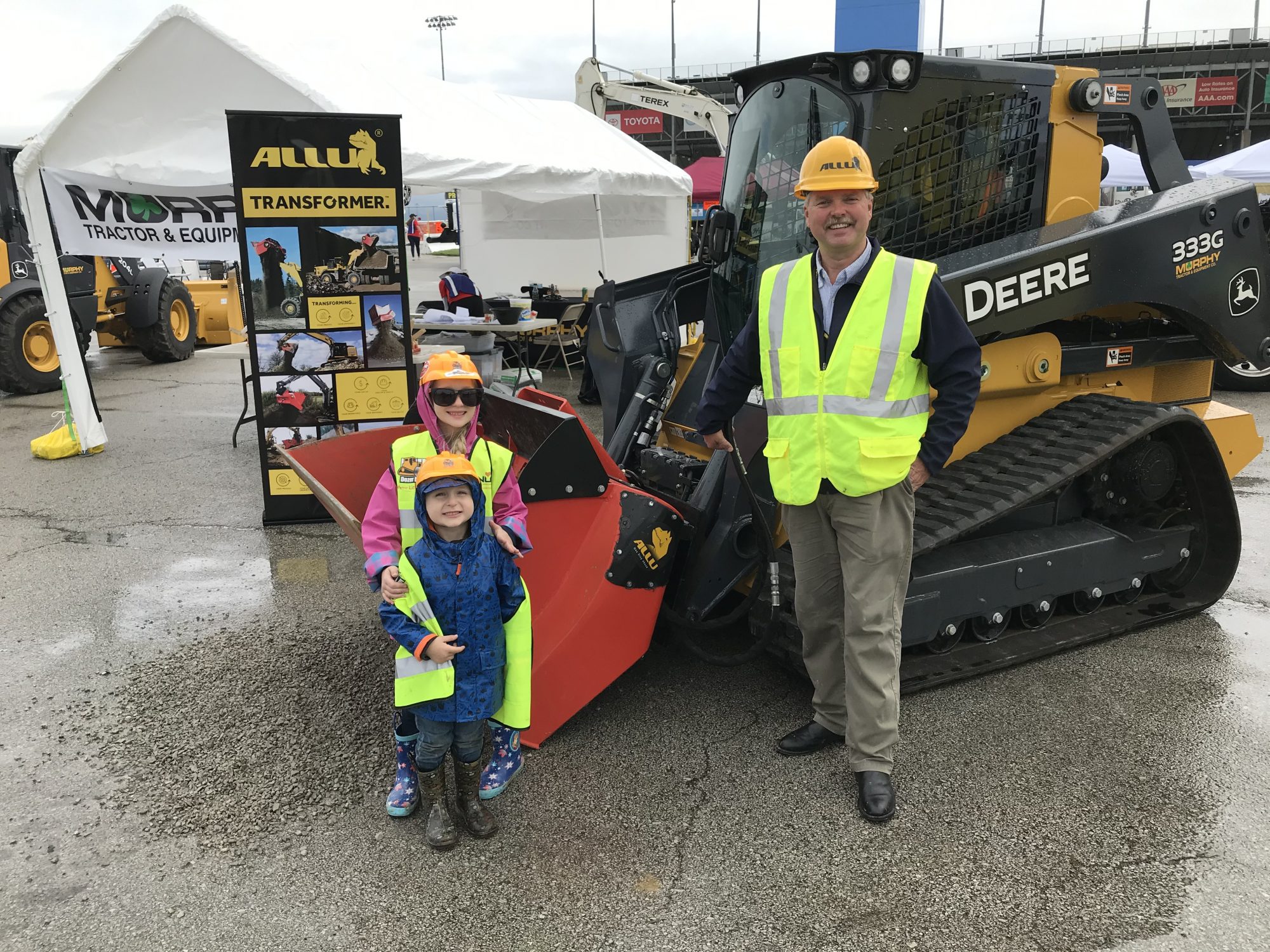
On Saturday and Sunday, October 5 and 6, ALLU Group Inc. joined dozens of construction companies, equipment dealers, equipment manufacturers, and construction associations as a sponsor of the Dozer Days KC event at the Kansas Speedway in Kansas City, Missouri. The event’s presenting partner was KC NUCA (the greater Kansas City area chapter of the National Utility Contractors Association). Along with ALLU’s local equipment dealer, Murphy Tractor, ALLU Group became a part of this event as a Gold Sponsor to help educate thousands of Kansas City kids about the value of building sustainable communities and also build awareness of careers in construction. The event also benefited local children’s charities.

Dozer Days KC created a fun, yet educational event that emulated a fair-like atmosphere, where the “rides” were actual heavy construction machines. Kids of all ages were able to climb into the operator’s cab — with certified operators at their sides — and actually drive the machines, including bulldozers, wheel loaders, excavators, and other heavy equipment. As a Gold Sponsor, ALLU had its own booth with an ALLU Transformer™ DL attachment on a skid steer.

The DL screening unit is designed specifically for use with compact base machines, such as mini excavators, small wheel loaders, skid steers, and backhoes. It is ideal for screening, mixing, aerating, and loading topsoil, peat, and compost all in one stage. The unit is designed to process wet or dry materials quickly and efficiently, reducing cycle times and resulting in increased production and substantial savings on operating costs.

ALLU Group offers a complete line of technologically advanced soil stabilizing and remediation equipment and screening, crushing attachments for the mining, aggregate, asphalt, compost, environmental, recycling, green waste, demolition and pipeline industries. For more information, visit www.allu.net or call (800) 939 2558.

Ammann Introduces ACP 300 ContiHRT Asphalt-Mixing Plant to North America

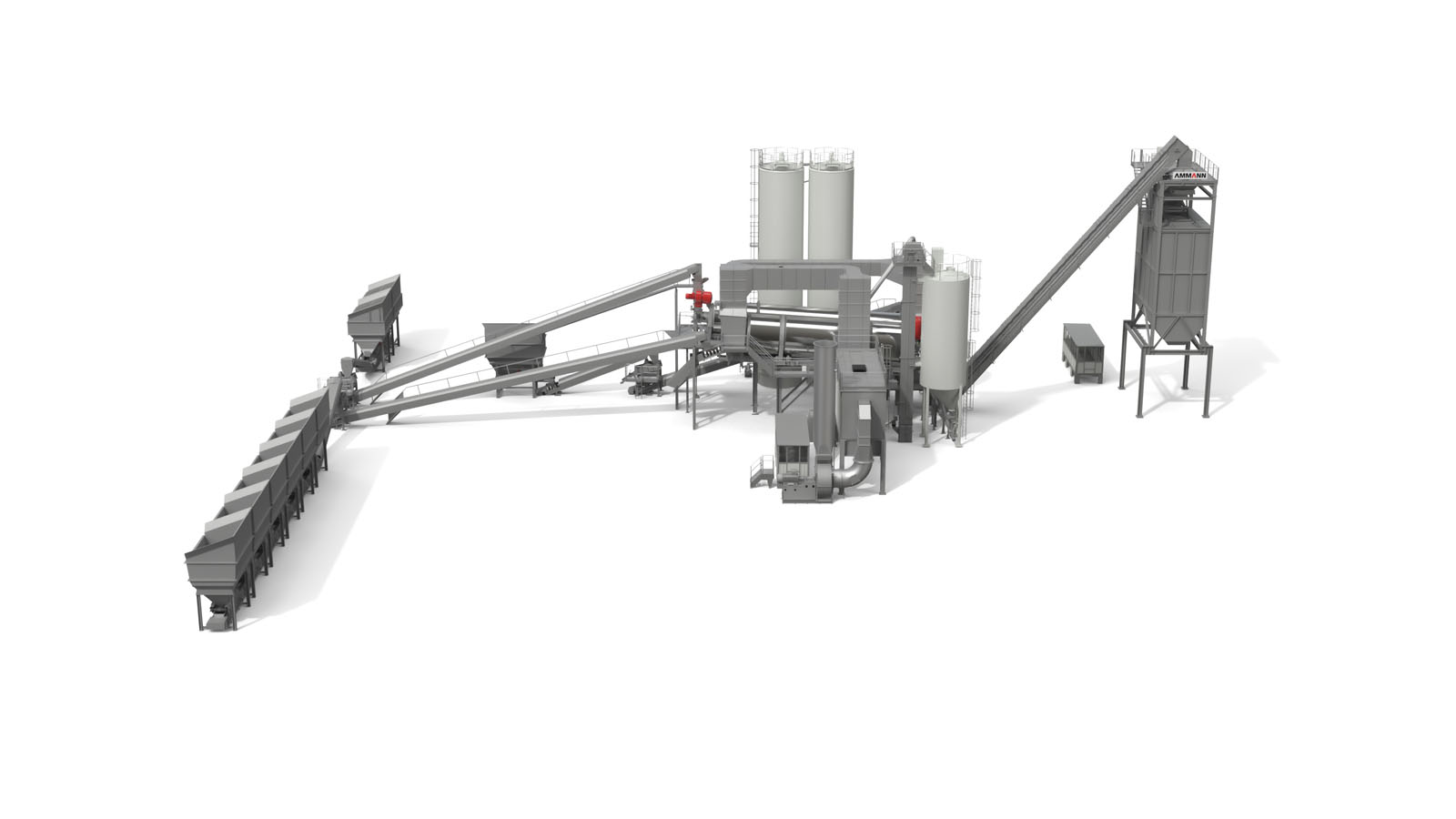
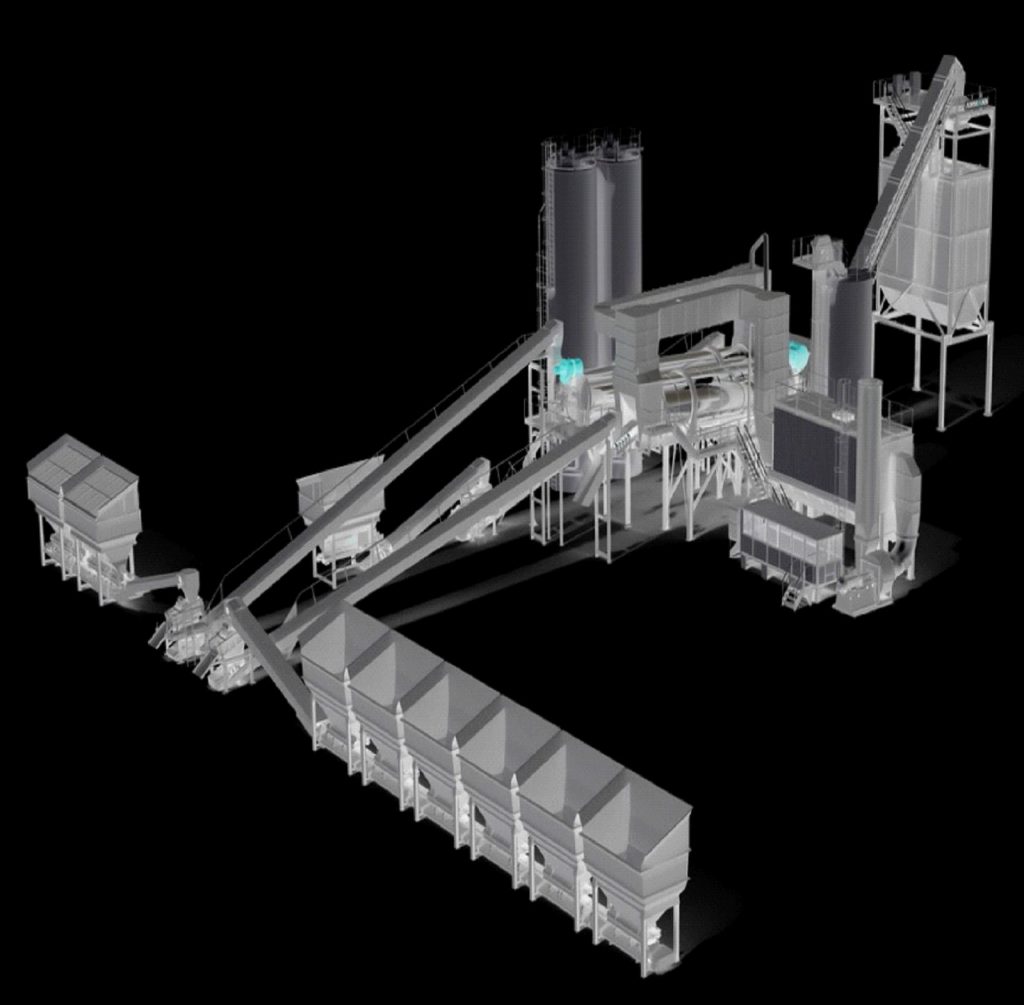
Ammann has introduced its ACP 300 ContiHRT Asphalt-Mixing Plant to the North American market. This continuous plant is capable of producing mix consisting of more than 60 percent RAP.

“We have been in the North American market for several years, learning what the customers need and then creating a product that delivers it: the Ammann ACP 300 ContiHRT Asphalt-Mixing Plant,” said Gilvan Pereira, Region Director Americas.

The new continuous plant features Ammann’s recycling technology, which maximizes RAP utilization and meets stringent emissions guidelines. According to the manufacturer, the gentle pre-heating of the RAP, compared to traditional cold feed to superheated virgin aggregates, prevents thermal stress on the asphalt concrete (AC) content and ensures a highly homogenous final mix.

“The process secures a high-quality mix – even with higher RAP rates,” Pereira said.

The plant incorporates a RAP dryer for the addition of recycled materials and a separate cold recycling feed. “Separate drying and mixing processes ensure the highest quality and versatility – even with complex designs utilizing RAP and additives,” said Gunter Tesch, Commercial Support Manager Plants.

The manufacturer also said that the High Recycling Technology (HRT) plant’s gentle preheating prevents AC oxidation, enabling both the aggregate and the coating to be reused, which reduces costs. The preheating process also minimizes fuel consumption and dramatically reduces the levels of CO2 and other pollutants.

ACP 300 ContiHRT Asphalt-Mixing Plant

The plant is capable of incorporating shingles, liquid additives, fiber granulate and foam AC, Ammann said. It can access a recycling system for RAP utilization up to 60 percent; a separate cold recycling system for 30 percent; or a combination of the two.

The ACP 300 ContiHRT can also produce high amounts of mix without any RAP. Warm mix can be produced with or without RAP. Continuous production capacity is 330 U.S. tons per hour.

“It’s highly sustainable, and that leads to cost savings,” Pereira said. “It’s the best of many worlds. The high recycling technology creates a very sustainable mix. You’re essentially turning waste into aggregate. The low temperatures reduce fuel costs – and minimize emissions, too. This provides value on many levels. You’re developing a green product and reducing costs in the process.”

In addition to its recycling capabilities, the ACP 300 ContiHRT Asphalt-Mixing Plant offers a number of other benefits including:

  • The proprietary as1 Control System, the brains of the ACP 300 ContiHRT, is operating in hundreds of plants around the world.
  • A unified service platform and stairway concept offers ergonomic access to the major asphalt components, especially Ammann core parts such as burners, drums, filters and the twin-shaft mixer.
  • The horizontal design ensures fast and easy assembly and disassembly. Optional quick cabling and steel skids further speed the relocation process.

A wide range of optional equipment is available. It includes burners for light oil, natural gas and LPG; storage silos of 330 tons in two compartments or 660 tons in four compartments, which are available as long-term storage solutions; and AC tanks with superior insulation, a filling pump and tank-to-tank pumping and circulation. Cold feed system options include additional feeders, vibrators and gravimetric dosing.

Ammann’s North American hub is in Davie, Florida. The company sells light and heavy compaction equipment in North America as well as mobile, continuous and batch asphalt-mixing plants.