CONEXPO-CON/AGG Set for March 2020

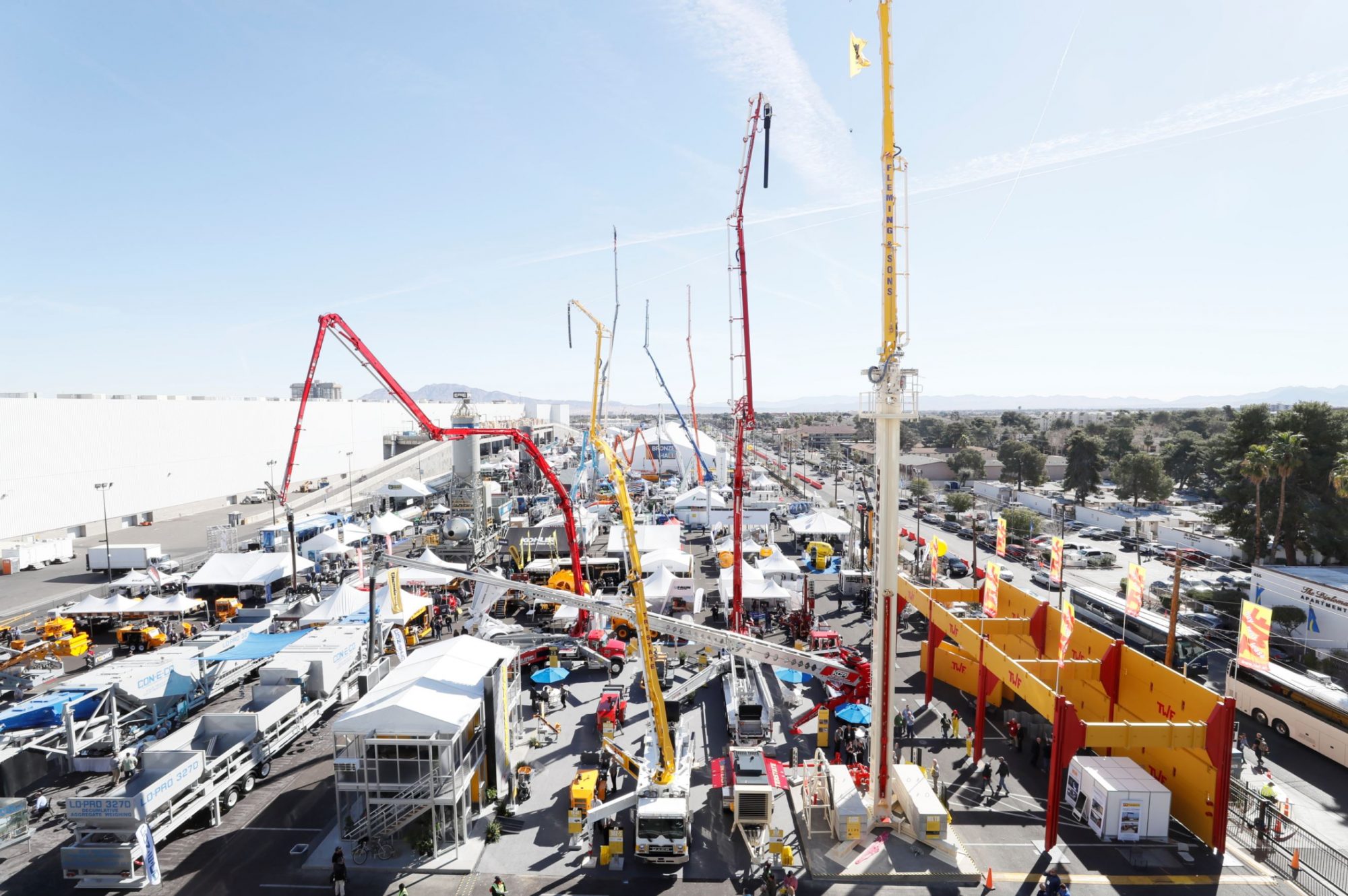
Come to CONEXPO-CON/AGG 2020! North America’s largest construction trade show representing asphalt, aggregates, concrete, earthmoving, lifting, mining, utilities and more.


CONEXPO-CON/AGG, North America’s largest construction trade show, will be returning to Las Vegas March 10-14, 2020.

“CONEXPO-CON/AGG is the international gathering place every three years for the construction industries, with a focus on construction, aggregates and ready mixed concrete,” reads the event website. “The event features exhibits of the latest technologies and innovations in equipment, products and services plus extensive industry-targeted education.”

The last CONEXPO-CON/AGG event, held in 2017, attracted more than 128,000 attendees and 2,800 exhibitors across more than 200 construction-related product categories. In total, the exhibit space exceeded more than 2.5 million square feet–that’s the size of roughly 50 football fields! The event also hosted 150 educational sessions.

CONEXPO 2020 will take place at Las Vegas Convention Center and Festival Grounds on the following dates:

Tuesday, March 10:        9:00 a.m. – 5:00 p.m.
Wednesday, March 11:    9:00 a.m. – 5:00 p.m.
Thursday, March 12:       9:00 a.m. – 5:00 p.m.
Friday, March 13:           9:00 a.m. – 5:00 p.m.
Saturday, March 14:       9:00 a.m. – 3:00 p.m.

Attendee registration will open July 23, 2019. Visit www.conexpoconagg.com for more information.
Make WMA Relatively Hot

I tend to enjoy the high temperatures in Florida. Sure, it gets hot and humid here, but my definition of hot may not be the same as someone who lives closer to the equator or in Arizona. When the ambient temperature is 95 degrees F here, my neighbors may be complaining, I’m watering plants like mad, and someone in Quito or Tucson is probably wishing for that kind of break in the heat.

It’s relative.

The same is true of asphalt pavement mix temps. If you have a plant producing mix at 230oF, someone who is not familiar with our industry might consider that hot.

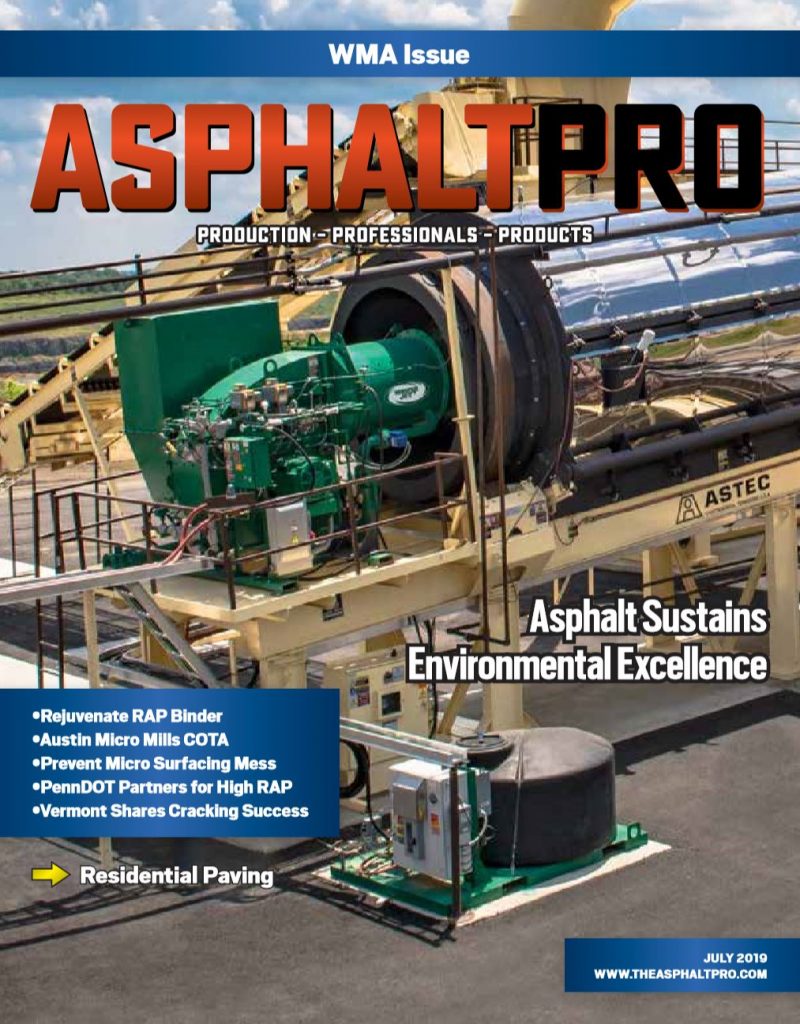
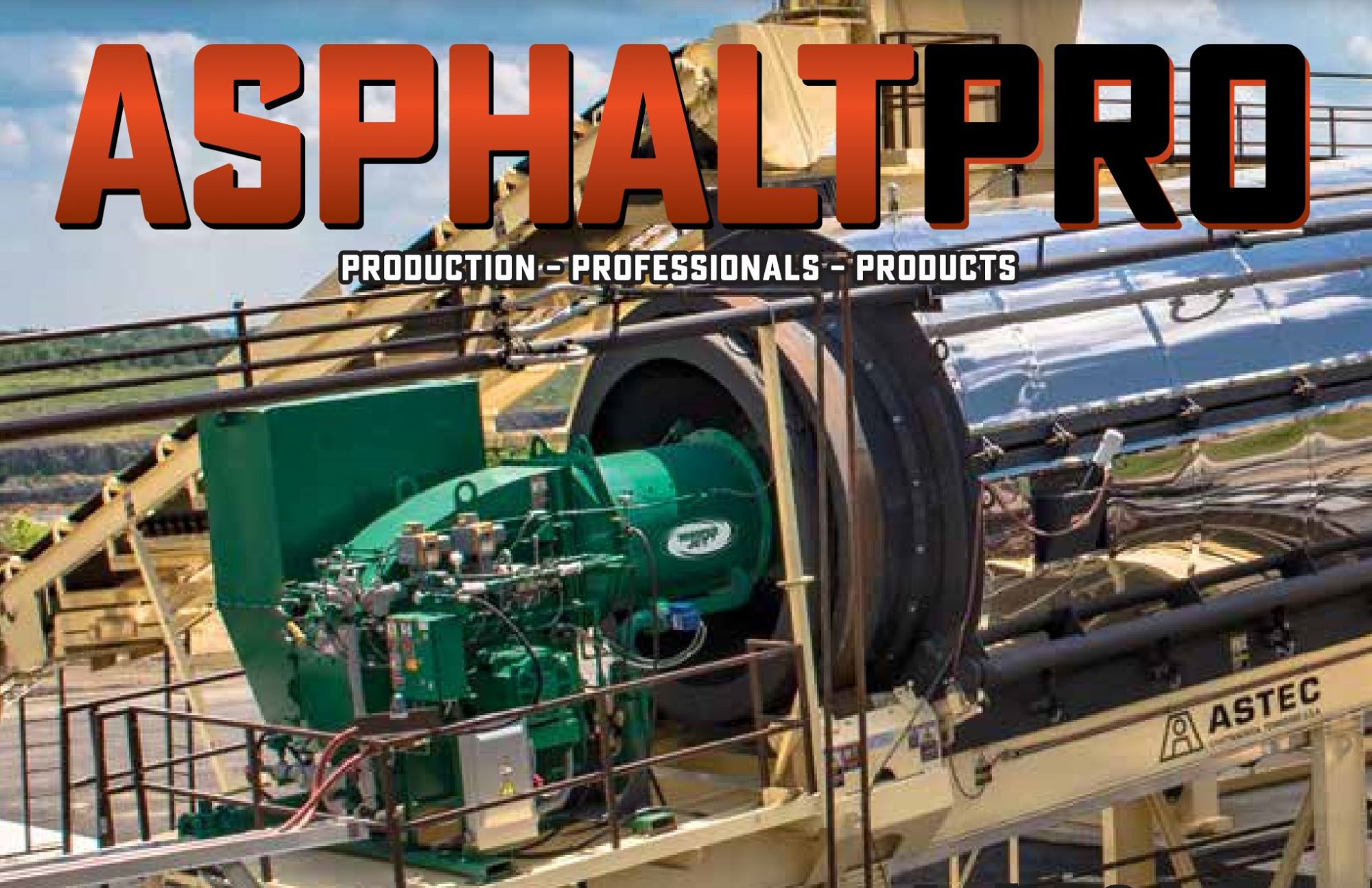
In fact, that temperature is smack in the middle of the range for a warm-mix asphalt (WMA), which is the theme of this month’s issue. If you check with the Federal Highway Administration’s Every Day Counts program, the range for WMA is 30 to 120oF lower than traditional hot-mix asphalt (HMA) temps. Other sources have a “more slender” range of 30 to 75oF lower than traditional HMA, but the point is that WMA is, by definition, made at cooler-than-traditional mix production temperatures.

Whether you produce the WMA by mechanical foaming or by introduction of a WMA additive, the definition of warm mix includes a designation of “lower” temperature. By dialing down the production temperature, the asphalt mix producer gives himself a host of benefits at the plant, including reduced fuel use and reduced stack emissions. The mix itself offers benefits at the paving site, including worker comfort and improved compaction.

Benefits get discussed throughout this edition of AsphaltPro, so let’s stay focused on temperature for this note.

If you find yourself tempted to introduce a WMA additive to your production process, yet leave your production temperature up around 300 or 310oF, you are not making a warm mix. You’re making an HMA with a WMA additive. If you find yourself tempted to foam your HMA with water or additives, yet leave your production temperature up around 300 or 310oF, you are not making a warm mix. You’re foaming HMA. You may get to enjoy compaction benefits at the paving site, but you’re not enjoying benefits at the plant, are you?

You’re not making conditions more comfortable for workers anywhere. There’s no reduced fuel consumption or reduced emissions when you’re still running at 320 and up.

The point is this: WMA is cooler than HMA.

It’s relative.

Stay Safe,
Sandy Lender

7 Hot Weather Safety Tips for Construction Workers

From Western Specialty Contractors

Summer is a great time for construction work, but a brutal time for construction workers. Excessive heat and sun exposure pose significant dangers, such as sunburn, dehydration, heat cramps, heat exhaustion and heat stroke. Every year, construction workers become ill on the job and some even lose their lives due to heat exposure.

To protect its workers from the extreme summer heat, Western Specialty Contractors manages a heat illness training program and a safety hotline for its employees.

As part of the program, training is provided to all employees and supervisors who work in high temperatures. Training topics include: how heat can affect the body, how to identify the signs and symptoms of various heat-related illnesses, and what to do if a co-worker is experiencing symptoms of a heat-related illness. Western also regulates the hotter environment by providing water and shade to workers and by having supervisors and safety managers monitor the heat index so that the proper protective measures can be taken.

Western worker staying hydrated in the heat.

“It is important particularly during the summer months that outdoor workers drink plenty of fluids to help prevent dehydration, which is the primary cause of heat cramps and heat exhaustion,” said Cameron Samuel, Assistant Safety Director at Western Specialty Contractors.

Samuel, who has training and experience managing the health and safety of outdoor workers, offers the following tips for preventing heat-related illnesses on a construction jobsite:

  • Drink water frequently and drink enough water that you never become thirsty. Drink water or other non-caffeinated, electrolytic beverages and make sure that your drinks are always cool, not room temperature. Adding a lemon slice to water can make plain water more drinkable.
  • Wear light-colored, loose-fitting, breathable clothing made from natural materials such as cotton. Avoid wearing non-breathing synthetic clothing. Wear safety glasses with UV protection, sunscreen and brimmed hard hats.
  • Gradually build up to heavy work. If possible, do the hardest work during the coolest time of the day. Workers who are suddenly exposed to working in a hot environment face additional hazards to their health and safety. New workers and those returning from time away need to be extra careful in making sure they stay hydrated.
  • Take more breaks in extreme heat and humidity. Move to the shade or a cool area such as an air-conditioned building or car when possible but try not to go in and out of air conditioning too much as it will make it harder for you to adjust to the heat. Use cooling fans whenever possible.
  • Select your lunch carefully. Junk food is high in fat and preservatives and will put a high caloric load on the digestive system. Try eating a bigger breakfast, so you’re not as hungry at lunch. Eat light lunches that include fruits, vegetables and salads.
  • Keep an eye on your co-workers and be alert for signs of heat exhaustion. Early symptoms include lethargy, disorientation, stumbling, dropping tools, slurred speech or unresponsiveness. Heat stroke is a medical emergency requiring a 911 call and immediate cooling.
  • Check your urine frequency and color throughout the day. Water intake is adequate when urine is clear or light yellow. When the desire to urinate is less than twice per day and/or you are producing a dark yellow urine, you may be dehydrated.

By training employees on the early signs of heat exhaustion, taking the proper precautions, and employing tips like the ones listed above, outdoor workers will greatly reduce the risk of heat-related dangers.

Use Density Gauges to Assess Mat Quality

When it comes to quality control/quality assurance, many workers in the field think of the rolling pattern and the density gauges that “double check” the rolling pattern. That’s fair. For this week’s tip, let’s look at what it takes to get the gauge reading.

There are two types of gauges available for getting density measurements of your asphalt mat: nuclear and non-nuclear. A portable nuclear density gauge sounds high-tech and a little “James Bond,” doesn’t it? In the United States—and provinces like Puerto Rico, the Virgin Islands, etc.—you must have formal radiation safety training to be certified as a portable nuclear gauge operator. You also need to meet the U.S. DOT training requirements for 49 CFR 172 Subpart H. If you check with your nuclear gauge OEM, it will likely have a one-day training course that you can take online or in a classroom to achieve your operator’s certificate.

Portable non-nuclear density gauges don’t have radioactive material, thus do not require the same safety training.

Both help you get readings of the densification of the asphalt mat. In other words, when you know that you’re at 97 percent density behind the breakdown roller, you know you’ve got a good mat. If you set the gauge down and discover you have 88 percent density behind the intermediate roller, you know it’s time to make some changes in the rolling pattern. Check out the rolling practices article linked below for some ideas.


Sign up here to receive tips like this delivered to your email every week.

Reports Show Construction Industry Going Strong

Things are looking up for the construction industry, according to two recent reports.

According to a new analysis of federal employment data released today by the Associated General Contractors of America, construction employment grew in 250 out of 358 metro areas between April 2018 and April 2019, declined in 53 and was unchanged in 55. AGC officials also said “construction employment in many parts of the country likely would have been higher if firms could find more qualified workers to hire.”

The Phoenix-Mesa-Scottsdale, Ariz. metro area added the most construction jobs during the past year (16,600 jobs, 14 percent). Other metro areas adding a large amount of construction jobs during the past 12 months include Dallas-Plano-Irving, Texas (9,200 jobs, 6 percent); Los Angeles-Long Beach-Glendale, Calif. (8,400 jobs, 6 percent); Atlanta-Sandy Springs-Roswell, Ga. (7,000 jobs, 6 percent) and Las Vegas-Henderson-Paradise, Nev. (6,800 jobs, 11 percent). The largest percentage gain occurred in Monroe, Mich. (26 percent, 500 jobs) and St. Cloud, Minn. (26 percent, 1,500 jobs), followed by Auburn-Opelika, Ala. (25 percent, 600 jobs) and Norwich-New London-Westerly, Conn.-R.I. (16 percent, 600 jobs).

The second report of good news comes from the Marcum Commercial Construction Index , which reported that the first quarter of 2019 had the highest levels of private nonresidential construction spending ever recorded.

“Bolstered by increasingly strong spending in manufacturing construction, private nonresidential construction spending reached $460 billion in March, on a seasonally adjusted, annualized basis,” the report read. This represented a gain of 2.1 percent from this time last year. Spending on public construction also increased, experiencing a 9 percent year-over-year increase in March, swelling to $314.6 billion. Spending in the highway and street category expanded 13.4 percent, “surpassing power as the largest nonresidential construction subsector” the report stated.

The report also addressed the addition of new jobs within the industry, and the construction workforce shortage. Nonresidential construction added 32,400 net new jobs in April and 163,000 year-over year. Additionally, the industry’s 4.7 percent unemployment rate in April was the lowest construction unemployment recorded for any April since the Bureau of Labor Statistics began reporting this statistic in 2000.

New Legislation Could Assist Apprenticeship Funding

At the end of May, U.S. Senator Steve Daines (R-MT) introduced legislation that would allow skilled workers enrolled in a registered apprenticeship program to access the same tax advantaged savings account that those attending colleges and universities receive under Section 529 of the IRS Code. The bipartisan bill, S.1623, is cosponsored by U.S. Senators Warren, Booker and Murkowski.

“We applaud Senator Daines for introducing legislation to ensure registered skilled trade apprentices may use 529 plans for life sustaining costs like housing, transportation and certifications associated with successful completion of a registered apprenticeship program,” said Sean McGarvey, President of North America’s Building Trades Unions. “This bill rightly recognizes our high-quality registered education system is worthy of higher education funding options, as our registered programs provide the most advanced skilled trades training for family-sustaining careers in the building and construction industry.”

To read the full bill text, click here.