Tips to Improve Situational Awareness on the Job Site
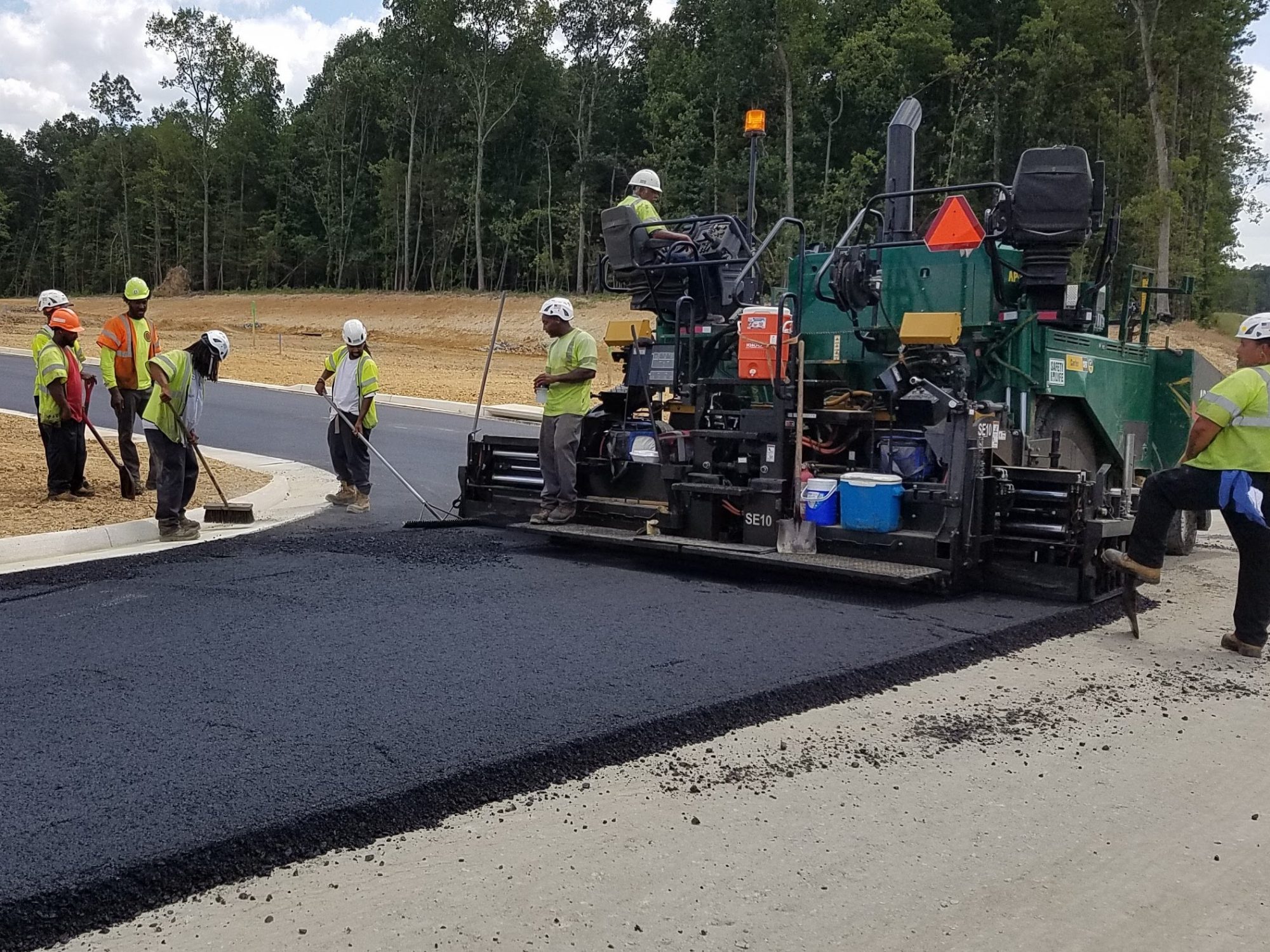
Situational awareness is integral to a safe construction site! So, on National Situational Awareness Day (Sept. 26, 2018), we thought we’d share a few tips to improve safety on the job site through improved

Tip #1: Color-Code Hard Hats to Keep New Crew Safe

Our first thoughtful tip from Superior Paving Corporation, Gainesville, Virginia.

The company has implemented color-coded hard hats so everyone on the crew knows who the new guys are. Every new employee will a hard hat of a different color than veteran employees for the first year of their employment.

“In five months into the paving season, a veteran employee might forget who’s new to the crew,” Ellis said, “but you might be going into a new environment or experiencing a unique challenge and that hard hat reminds the veteran that the rookie might need some help.”

Stay tuned for other safety-centric ideas from Superior in the October 2018 issue of AsphaltPro magazine.

Tip #2: Utilize Special Cones to Mark Overhead Obstructions

The paver operator, dump man and screed operators are tasked with watching the hopper, the head of material, the movement of mix out of the truck body, the mat behind the screed and much more. Their attention is typically focused downward, not up.

However, with dump trucks lifting their bodies to transfer mix to the paver and moving down the road at 20 feet per minute, it’s also important to pay attention to what’s going on above the mat. Like, power lines or tree branches.

Another tip to improve situational awareness is to place special safety cones beneath overhead obstructions so the whole crew knows to pay special attention to what’s going on above the paving train.

Tip #3: Improve the Driving Public’s Situational Awareness

We can, of course, do our best to maintain situational awareness within our job site. But, we also have to contend with an often distracted driving public.

How can we make sure they are also remaining situationally aware?

Although there are a number of ideas, one tech-focused solution is to improve traffic control and communication with smart safety cones. For example, Rieth-Riley Construction Co. Inc. uses iCones to measure the flow of traffic and pass information to motorists using a number of message boards that are updated in real-time directly from the information captured by the iCone.

For more information on how that works, and how to implement it into your jobs, visit this article from the September issue of AsphaltPro.

How else can we improve situational awareness on the job site? Let us know on our Facebook page!
October 2018 Letter from the Editor

Fortune Favors the Bold

I’ve mentioned before my former violin teacher instructed me to play with gusto, even if I thought I would bow a sour note. She didn’t want me to play music “weakly” and have a poor performance overall. I still love her for that advice, some 34+ years later.

Let’s apply her lesson to the Highway Trust Fund (HTF) debate.

During the Transportation Construction Coalition (TCC) Fly-in May 2018, the representatives the Florida delegation met with had similar thoughts: Suggesting we raise the gas tax is akin to waving a political white flag. Members of Congress, according to the conversations I sat in on, have no appetite for fighting an uphill battle to increase a tax during an election year. They do, however, want to hear alternate funding plans to fix the HTF.

This makes sense to me. Working adults don’t typically consider paying taxes a joyful thing. When a candidate is running for governor of a state claiming that state needs to raise taxes by several billion dollars, the typical working adult might cringe.

With these thoughts in mind, I felt myself questioning a presentation at the NAPA midyear meeting in Boston from Ed Mortimer, vice president for transportation infrastructure at the U.S. Chamber of Commerce. He told the legislative micro-session audience that his office is pursuing a gas tax increase as a fix for the HTF. He outlined the increase that would take place over each of five years as part of the Chamber’s four-point infrastructure plan. He justified it by explaining the gas tax is something representatives are familiar with.

He essentially explained that it’s easier for the Chamber to prep the language and put the proposal together, it’s easier for folks to “explain” a gas tax, which members of the Chamber are fully aware is leaking efficacy as gas revenues decline. It’s easier because the structure is already in place. It’s easier.

In my opinion, trying to force a five-year gasoline user fee increase down Congress’s throat might not be easier than trying something new, and might be a waste of time and resources.

Look at the fiasco taking place in California to see the ability of ballot initiatives to overthrow the will of the people, and you can see that gas taxes are turning into a kiss of death for representatives—and representatives know it. We need a different answer—such as a vehicle miles traveled (VMT) user fee and/or tolls and/or put-your-favorite-funding-flavor here—to offer representatives to fix the ailing HTF before 2020.

Before I leave you with the impression that I’m against a gasoline user fee increase, let me clarify my stance. I believe an increase at the federal level is a fine idea for a short-term fix, if representatives were willing to entertain it. I have no qualms paying an extra 25 cents at the pump. As Astec’s Ben Brock has pointed out to us before, we can explain to legislators that drivers can shop around for price differences to ease the pressure of 10, 12, 20 cents per gallon. I’ve seen the same phenomenon Brock has where the station on one corner has a price point 12 to 20 cents lower than the station down the street. They’re not in a war like they were in the ’70s where they’re watching each other change the signs and then adjusting accordingly. (If you’re paying attention, this is the second time in this letter that I’ve dated myself.)

The point is this: raising the federal gasoline user fee for the express purpose of padding the HTF, while long overdue, isn’t going to meet with Overwhelming Congressional Joy (OCJ). Trying to take the easy way out may not be the easy way at all. Maybe I’m wrong and this Administrative season is wacky enough that anything goes, but I’m leaning toward caution on the part of the representatives who value their jobs. The better way to get a solid, long-term fix for the HTF is to get bold.

Let’s prepare a new plan. We can, as an industry, conceive and bring forth a new funding mechanism that multiplies dollars and deposits them into the HTF coffers, earmarking them for road and bridge projects. Fortune favors the bold and the music sounds better when played with gusto. Stay Safe,

10 Ways to Keep Construction Employees Happy

When competition for an ever-decreasing number of qualified construction workers is fierce, keeping employees happy is integral to retaining your best employees.

The Association of Equipment Manufacturers has brainstormed 10 ways to keep your employees happy that go beyond competitive wages, commitment to safety, and regular work hours.

The first is to establish priorities.

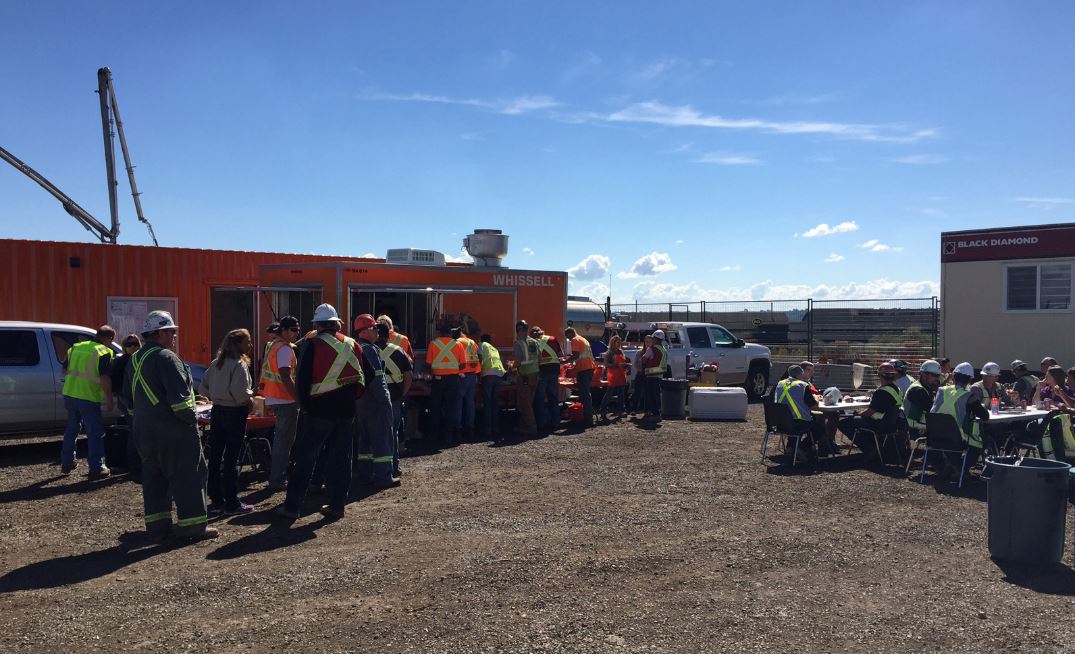
“Our company has three ‘daily pillars’: safety, followed by quality and efficiency,” said Roger Belisle, vice president of operations of Whissell Contracting Ltd. “We hold safety meetings every morning, and make sure to cover anything and everything related to our pillars affecting our work.”

Next up is to emphasize training.

“In our industry, skill is dying,” Belisle said. “You no longer can simply rely on trade schools to supply qualified workers. You have to grow from within.”

To do so, Whissell has developed an in-house training institute to better prepare its employees and give the company a competitive advantage.

The third idea to keeping employees happy is to manage their workloads effectively.

“Employee retention becomes even more difficult if your company does a lot of seasonal work, since workers are often more likely to leave when the weather changes and the opportunities dry up,” he said. So, Whissell does its best to keep its employees busy yearround. “If we can fill up their plate with work, so to speak, they’ll be less inclined to leave us in order to make a couple cents more per hour.”

Another strategy is to keep your equipment well maintained.

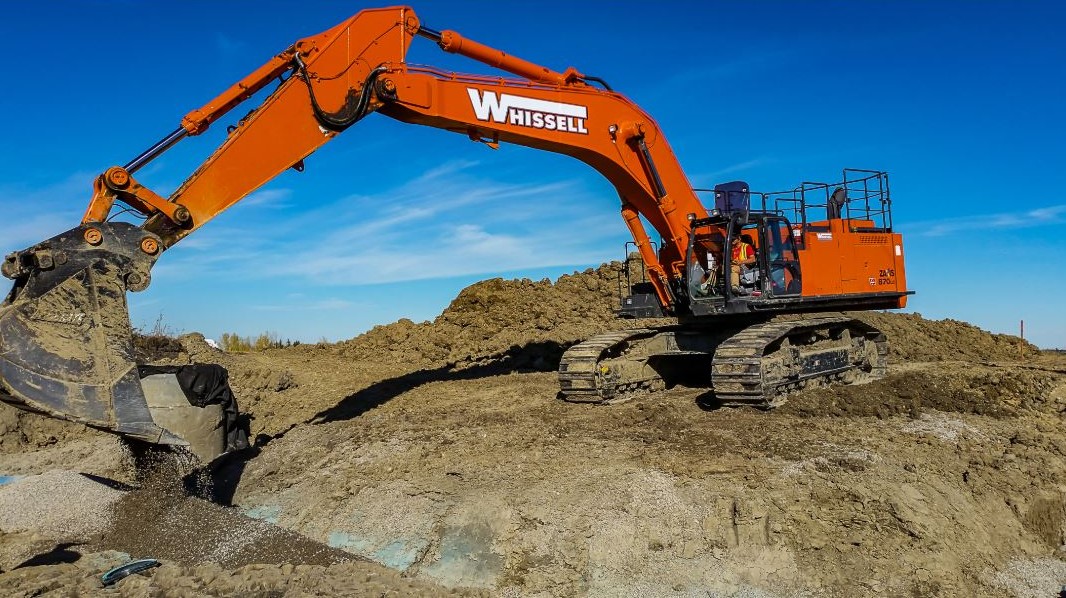
“We take great pride in keeping our fleet of machines clean, safe and running well,” Belisle said. “Quite often people tell us they want to come work with us because of the quality of our equipment. It doesn’t break down, and it has air conditioning, a radio and other amenities. Most importantly though, our equipment does its job.”

Belisle said it’s also important to be transparent with employees, which Whissell does by communicating its corporate priorities, strategies and initiatives.

“It’s important for our employees to understand where we are as an organization, where we’re headed, and what we’re trying to achieve,” ehe said. This is done through regular “town hall” meetings, Belisle adds, during which the company informs its employees of recent news and employees have the chance to ask questions and share their thoughts.

One example of Whissell’s commitment to open communication is its Speak Out For Safety program, where anyone in the company can shut down a crew’s work by pulling out a card and saying, “This doesn’t sem right. Can we review this?”

The sixth strategy to employee happiness is to stay current on the latest tools and technologies.

“Because of the diminishing skill in our industry, companies like ours have begun to lean more on technology to improve efficiency and better meet the needs of customers,” Belisle said.

Next, encourage networking and continuous learning.

Trade shows are a good example, Belisle said.

“For the last three or four times [CONEXPO/CON-AGG] has been held, we’ve sent somewhere between 30 and 40 company representatives to Las Vegas to see what’s new and bring relevant information back to our company to see if we can use it to the benefit of our clients,” he said.

Employers must also be sure to engage their employees and ensure they have a career path ahead of them, not just a job.

“We spend quite a bit of time, money and resources in developing our workforce,” Belisle said. “When employees come to work for us, they can see a career path ahead.”

It’s also important to identify opportunities and threats.

For example, Whissell recognized the growing skills gap early on and set up training programs to combat this issue early. By now, it’s a standard, repeatable process with a consistent message and successful results.

Lastly, be sure to show employees you care on a regular basis.

Annual golf tournaments, holiday parties and cook-outs offer a few examples.

“Our organization has received a lot of positive feedback, particularly from employees who have joined us after working for other construction companies, and their comments positively reinforce our efforts,” Belisle said. “It’s easy for any company to say its workforce is the top priority, but when the pressure is on, many companies don’t always treat their employees as well as they should.”

Celebrate Construction Appreciation Week Sept. 17-21

Today is the offical start of I Build America’s first-annual Construction Appreciation Week!

The campaign, which runs from September 17 through 21, aims to spotlight the American construction worker.

“Construction positively affects the lives of every American,” reads a press release announcing the appreciation week. “The strength of America’s infrastructure is built on the backs of the men and women of the construction industry.”

And so, Construction Appreciation Week aims to improve peoples’ understanding of the value of construction workers throughout the United States.

“We were surprised to learn there wasn’t a week dedicated to promoting the significant contributions the construction industry makes every day to the nation’s growth,” says Hattie Routh, marketing manager for I Build America. “With I Build America’s mission to show the value of construction and instill pride within the construction industry, we thought this was a natural fit for our organization to pioneer.”
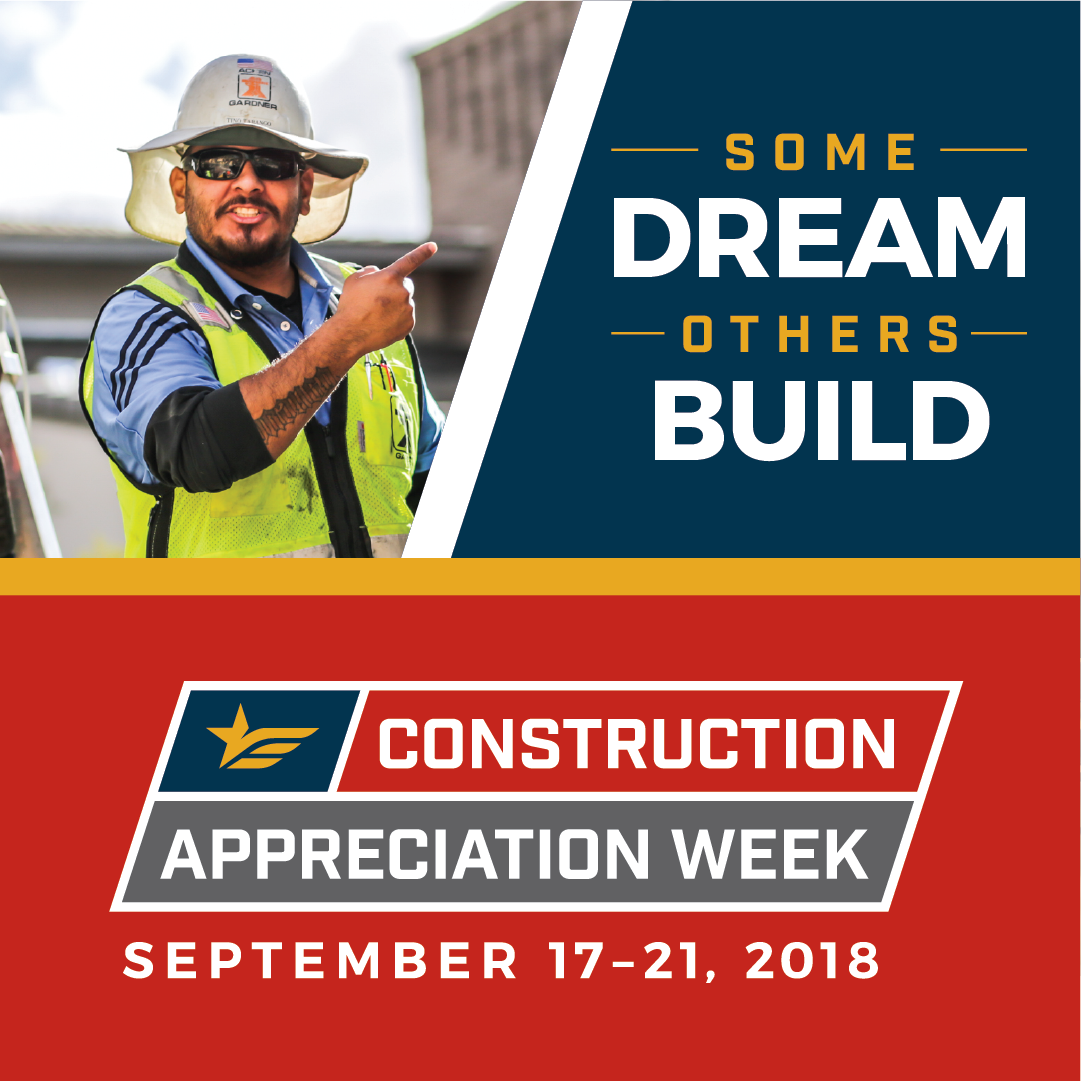

I Build America is dedicated to promoting the value of the construction industry through this dedicated week of appreciation, during which it will host national contests, social media campaigns thanking construction workers, and local efforts in the Houston area near I Build America’s headquarters.

The two national contests in conjunction with the event are Dream Builder and Kids of Construction. Dream Builder aims to chronicle stories in which a construction worker has impacted someone’s life for the better, with the winner receiving a customized I Build America Yeti cooler and a $500 gift card to Academy Sports + Outdoors. Kids of Construction asks America’s future builders–children obsessed with dump trucks, excavators, dirt and building blocks–to share a video explaining why they love construction. The winning child will receive an I Build America backpack filled with toys and a $500 gift card to Academy Sports + Outdoors.

Both of the contests will remain active throughout Construction Appreciation Week, until September 21, and can be entered by visiting I Build America’s website dedicated to Construction Appreciation Week and clicking on the appropriate contest link. Winners will be selected at the end of Construction Appreciation Week.

You can also get involved with Construction Appreciation Week by joining the festivities on social media with the hashtags #thanksforbuilding and #constructionappreciationweek. Shareable social media images are also available on Construction Appreciation Week’s website.

I Build America was launched in 2016 to show the value that the men and women in construction bring to modern life.

“Our purpose is to instill pride within the construction industry and inspire the next generation of young people by telling the story of American construction,” the announcement reads. “The buildings in which we work, play and live, as well the roads and bridges that enable people and goods to get to their destinations, depends on the development and empowerment of the construction industry workforce.”

Celebrating the life of Chuck Deahl

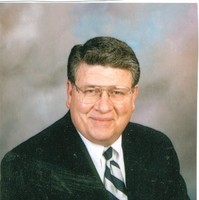
AsphaltPro is saddened by the recent passing of Charles “Chuck” W. Deahl, a lifelong leader in the asphalt community. A mentor to so many of us in the industry, Deahl will be greatly missed.


Charles "Chuck" W. Deahl

Charles “Chuck” W. Deahl

Charles “Chuck” W. Deahl, 75, of Galva, passed away on Saturday, September 8, 2018 at Hammond-Henry Hospital in Geneseo.

Chuck was born August 20, 1943, the son of William Warren and Naomi (Queen) Deahl in Peoria IL. He graduated from Peoria Central in 1961 and from Bradley University in 1965 and completed post graduate studies at the University of IL. Chuck served in the Army Reserves stationed at Fort Gordon, GA in the late 60’s during the Vietnam Era. Upon completion of his studies he was employed as a Sales Rep for Hyster Co. who were then located in Peoria.  In 1977 he came to the Kewanee Plant to be the Sales Manager, moving up to Vice-President of Sales and retiring in 2012 as National Accounts Manager. During his employment he traveled throughout the United States, Canada, and many foreign countries.

He was Past Chairman of the Associate Member’s Council of the National Asphalt Pavement Association. He was one of the original organizers of “The World of Asphalt.” He was a consultant for many State Asphalt Associations and assisted in many qualifying state projects. His nickname in the industry was “Mr. Compaction” and was highly regarded in the Paving Industry for his honesty, integrity, and knowledge of asphalt. If anyone had a problem or needed assistance they would call on Chuck. In 2016 at the National Asphalt Paving Association Convention, Chuck received the Associate Member Commendation for Exemplary Contributions to the Asphalt Industry. Chuck was a member of the First Presbyterian Church having served as an Elder, Confirmation Class teacher and youth leader. He was a member of the Black Hawk College East Foundation Executive Committee and recently served on the committee for their 50th Anniversary Celebration. Chuck was Santa’s #1 helper, visiting children in the surrounding communities and having lengthy conversations with them. Always making sure they knew the meaning of Christmas. He assisted his wife Sharon, as co-sponsor for fundraising and the silent-auction for the Henry-Stark Relay for Life. Chuck also served two terms as an Alderman for Galva City government. He loved his 1928 Model A which he drove in several Labor Day Rallies.

In 1968 Chuck married Sara Jo Carney and they later divorced. They had a son, Warren Louis (Zita) Deahl of Chandler AZ. In Nov. of 1982 he married Sharon Conner Sheets. She survives as do three step-children; Janelle (Dwaine) Ouart, Jill (Andy) Bullock and Troy (Erin) Sheets and step-grandchildren; Brooks (Bobby), Blake, Blair and Briley Bullock, Dylan and Courtney Ouart, and Nicholas, Lauren and Landon Sheets. He is also survived by a sister, Becky (Ben) Wrigley of Grand Rapids, MI and nephews, Benham (Amanda) and Bill Wrigley.

Funeral services will be held at 1:00 p.m., Friday, September 14 at Rux Funeral Home in Galva. Dr. James Breed will officiate. Visitation will be held from 11:00 a.m. until the time of the services at the funeral home. Cremation will be accorded following the services and private inurnment will be held in Parkview Cemetery in Peoria at a later date. In lieu of flowers the family asks you to consider sending a memorial to NAPA Care Emergency Benevolent Fund (a fund established to support the family of a NAPA member who suffers a fatal accident while working in the line of duty) 5100 Forbes Blvd., Suite 200 – Lanham MD 20706-4407.

To view Deahl’s obituary and service details, visit here.

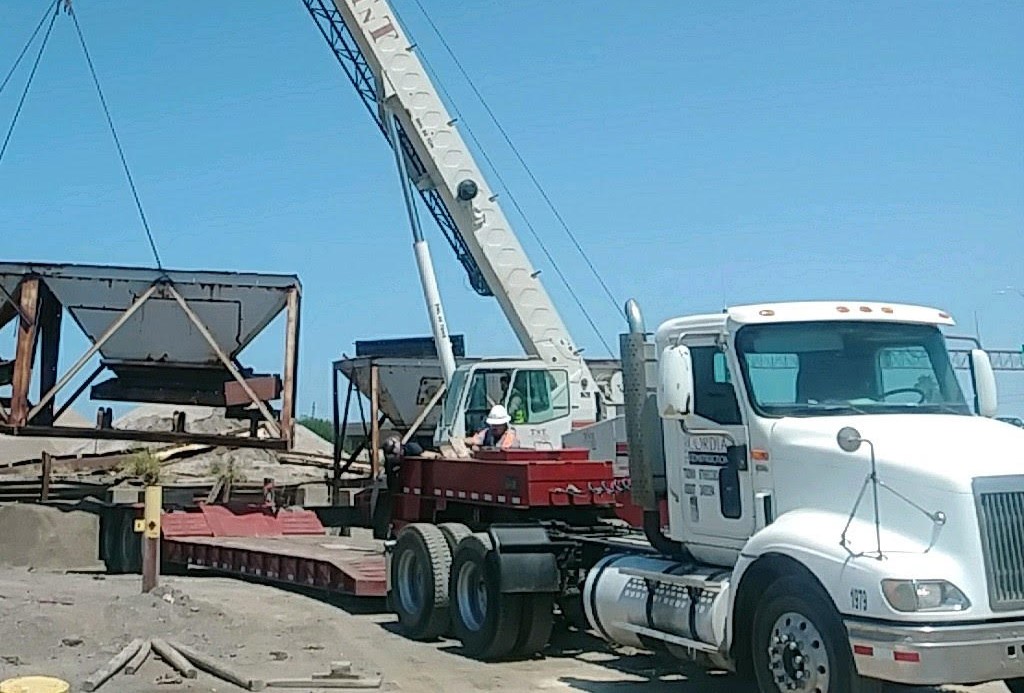
Texas Cordia Overcomes the Permitting Process

Although permitting an asphalt plant can seem scary, Texas Cordia found that with communication and persistence they could overcome any fear.

The plant permitting process can be a little intimidating, even for experienced plant professionals.

Knowing how difficult it can sometimes be, Isaac Heredia and Yara Corbitt from Texas Cordia started the process early. By the beginning of April, they were already pulling together all of the information they would need to permit their first asphalt plant.

Starting at Square One

“The most apparent first step is just to get online,” Corbitt said. She started on the Texas Commission of Environmental Quality website and remembers how easy it was to find an article titled, “So you want to start a hot mix plant?”

She and Heredia had already done some research before to ensure the property they were looking at met TCEQ’s requirements.

They began communicating directly with TCEQ out of Austin, as well as their local branch,

“When it comes to TCEQ, I’ve found that they key is actual communication,” Corbitt said. “It’s more than filling out a form. I just told them I’m no expert and they became my expert. They told me the next steps so that we could follow the process exactly as it needed to be done. The process was much smoother than anticipated.”

“They were an amazing resource,” Corbitt said. “I felt like I wasn’t going through it alone. They wanted me to do it right just as much as I did.”

Thankfully, the used asphalt plant they’d purchased in Corpus Christi, Texas, already had an existing permit. After closing on the plant, Corbitt said, all they needed to do was change the name and location for that plant and schedule its effective date for late May.

Their change in ownership from the Texas Commission on Environmental Quality was approved May 7, 2018, only one week after the request had been received.

“We understand that there will be no change in the type of pollutants emitted and no increase in the quantity of emissions,” the approval letter reads. “As the new permittee/registrant, you have committed to maintain compliance with all air quality regulations and applicable rule requirements of the Texas Commission of Environmental Quality.”

Other Permits and Procedures

“We thought we’d hit some resistance with our permits, but we’ve been very fortunate and all of our permits are moving along the right path,” Corbitt said.

She expects to have all of their permits by the end of May, including electricity, water, sewer, and building permits.  

“Honestly, the hardest part of the permitting process was getting the physical address of our property,” Corbitt said. “It doesn’t have an obvious address, so we had to talk to the postmaster to get the official address.”

This was quite a different story than what they’d heard it would be when they first began looking to start up an asphalt plant.

They’d gotten quite a bit of negative feedback prior to their purchase–comments like, ”It’s too costly, you don’t need the headache, what will you do when…?” Corbitt recalls–but they’ve already had offers to be bought out and the plant hasn’t even arrived on their property yet.

“If you have that dream to own and operate an asphalt plant, you have to remember that everything is attainable,” Heredia said. “Don’t let people scare you.”

Now that their TCEQ permit is approved, they can begin tearing down the plant in Corpus Christi to bring it to their location in south Texas–a three hour drive–and start receiving parts they’ve bought from all over the country.

“We’ll be setting it up all throughout June and July, going through trials, hauling and stocking material and having material tested by TxDOT so we can get things going for August,” Heredia said.


Stay tuned for the next chapter of Texas Cordia’s process of establishing their first asphalt plant where they share the process of bringing all of the parts of the pant together in one place.