PacCoast Smooth Ride Sentinel Blog Launches
Asphalt Pavement Alliance’s Pacific Coast Regional Council has launched a new resource for asphalt professionals from the West Coast and Pacific region, the PacCoast Smooth Ride Sentinel blog.
The blog will offer informative, interesting and educational content from state asphalt pavement associations and asphalt mix producers in the region, with the goal of helping road owners and road users alike better understand what the asphalt pavement industry is doing across the region.

“The blog gives a great overview of what asphalt paving companies are doing from Southern California to the Pacific Northwest and out into the Pacific,” said Jon Young, P.E., Executive Director for the Hawaii Asphalt Paving Industry (HAPI).

The PacCoast Smooth Ride Sentinel blog will also cover asphalt pavement innovations, sustainability efforts and career opportunities, all searchable by topic or location.

“People use asphalt roads every day, but they rarely give thought to the material beneath their wheels,” said APA National Director Amy Miller. “The PacCoast Smooth Ride Sentinel is a great tool for helping people learn more about the importance of asphalt pavements as part of our nation’s infrastructure.”

The Pacific Coast Regional Council is one of five regional councils within the Asphalt Pavement Alliance, and covers Alaska, American Samoa, California, Guam, Hawai‘i, Nevada, the Northern Mariana Islands, Oregon, and Washington State.

The PacCoast Smooth Ride Sentinel can be found here.
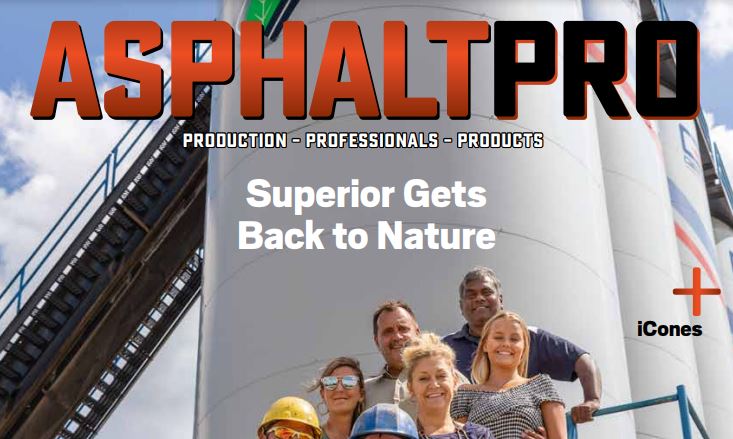
Does Domino’s Meet New QC/QA Standard?

Sometimes I use the television as background noise when editing late at night. Imagine my confusion when a brightly painted asphalt roller moved across the TV screen while an announcer talked about pizza. This caused me to pay closer attention during the next commercial break. Sure enough, one of the national pizza conglomerates is offering to patch potholes if the street upon which you drive between its establishment and your home causes you to mangle your food.

Ponder this with me.

I’m sure the corporate managers in Ann Arbor, Michigan, hire contractors local to the areas in question and purchase mix from producers in those same areas. Let’s face it: even something as simple as filling a pothole can come back to bite you. In today’s society, if a loose rock hits a windshield, someone’s getting sued for damages.

Beyond loose rocks, there’s an image to uphold. You can fill a pothole with substandard mix from some company that doesn’t know what it’s doing and suddenly all the contractors in the area get a bad name. This is one reason why our industry strives to follow guidelines and specs that improve quality overall. We want a consistently good product for the end user. We want safe and smooth roads all the time.

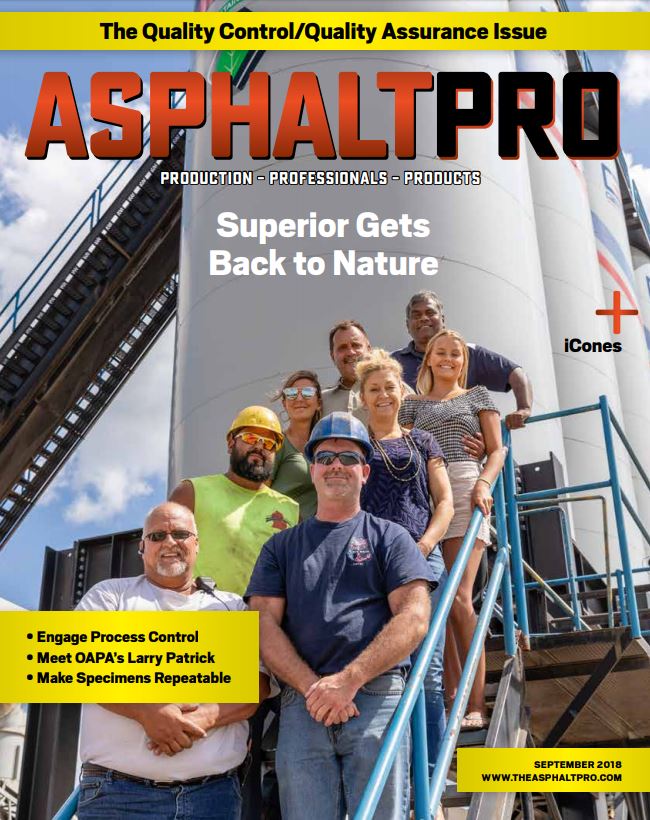
That’s the driving force behind this edition of the magazine. We’re looking in depth at quality control/quality assurance (QC/QA) because getting consistent results matters. Your Domino’s franchise owner gets the QC/QA concept when it comes to making a nice pizza for you (hopefully). Your professional asphalt mix designers, producers and laydown contractors get the QC/QA concept when it comes to formulating, producing and placing top quality pavement.

Back in May 2017, the American Society for Testing and Materials (ASTM) subcommittee D04.25 began a work item (WK58842), which was titled “New Test Method for Automated Extraction of Asphalt Binder from Asphalt Mixtures.” A work item, by ASTM’s definition, is “a proposed new standard or a revision to an existing standard that is under development by a committee.”

I’ll give you an oversimplification of the project in the interests of space. The subcommittee basically looked at the quantitative determination of asphalt in mixes using the automated extraction method by solvent, stipulating that asphalt binder could also be extracted using test methods outlined in D1856 and D5404. The subcommittee members pointed out: “This standard does not purport to address all the safety concerns, if any, associated with its use. It is the responsibility of the user of this standard to establish appropriate safety and health practices and determine the applicability of regulatory limitations prior to use.”

This disclaimer begs the question, what was the purpose then?

Efficiency, for one. Prior to committee D04’s Ballot Item D8159-2018, the extraction methods required a lot of the worker’s time and could result in exposure to chemicals if the tech wasn’t careful. Now the testing arena has a new guiding document in newly published D8159-2018. If someone presents a new test methodology that speeds up results, that’s a step in the right direction. What industry needs to ascertain is whether or not that speed also gives repeatable, consistent results.

Speed of delivery coupled with consistent, repeatable quality is a hallmark of the asphalt industry. It’s intriguing to me that Domino’s Corporate felt the need to be a part of various cities’ maintenance budgets. I’m sure the marketing move will pay off for them if they hire quality-minded asphalt professionals to do the actual work.

Stay Safe,
Sandy Lender

ARTBA Estimates Big Economic Impact for SB 1 in California

You don’t have to tell us twice that California’s Senate Bill 1: The Road Repair and Accountability Act, or SB 1, is great news.

But, now, six new reports have found that SB 1 will generate between $9.7 billion and $34.5 billion in economic activity in California’s major regions over the next decade, alongside supporting or creating tens of thousands of jobs throughout the state—with more than half coming in sectors outside of the construction industry.

SB 1 includes an additional $5 billion, annually, to invest in the state’s highways, local streets, bridges and transit systems.

The analyses were conducted by the chief economist at American Road and Transportation Builders Association (ARTBA), Alison Premo Black, and examine the impact of SB 1 on six major regions of California.

Here are some highlights for those regions:

  • In the San Francisco Bay Area, SB 1 will generate $34.5 billion in economic activity and user benefits over 10 years. This includes $9.8 billion in savings for drivers, transit riders and businesses, and $19.3 billion in economic output. In addition, the increased investment will create or support nearly 12,300 jobs per year, totaling 122,932 job-years over 10 years; these workers will earn $5.4 billion.
  • In the San Joaquin Valley, SB 1 will generate $20.1 billion in economic activity and user benefits over 10 years. This includes $4.9 billion in savings for drivers, transit riders and businesses, and $11.9 billion in economic output. In addition, the increased investment will create or support over 6,600 jobs per year, or 66,398 job-years over 10 years; these workers will earn $3.2 billion.
  • In Los Angeles County, SB 1 will generate $29.2 billion in economic activity and user benefits over 10 years. This includes $6.8 billion in savings for drivers, transit riders and businesses, and $18.0 billion in economic output. In addition, the increased investment will create or support over 9,000 jobs per year, totaling 90,161 job-years over 10 years; these workers will earn $4.3 billion.
  • In the Inland Empire, SB 1 will generate $15.6 billion in economic activity and user benefits over 10 years. This includes $3.3 billion in savings for drivers, transit riders and businesses, and $9.9 billion in economic output. In addition, the increased investment will create or support over 4,900 jobs per year, or 49,598 job-years over 10 years; these workers will earn $2.5 billion.
  • In San Diego and Imperial Counties, SB 1 will generate $13.8 billion in economic activity and user benefits over 10 years. This includes $3.4 billion in savings for drivers, transit riders and businesses, and $8.1 billion in economic output. In addition, the increased investment will create or support nearly 5,000 jobs per year, totaling 49,455 job-years over 10 years; these workers will earn $2.3 billion.
  • In Orange County, SB 1 will generate $9.7 billion in economic activity and user benefits over 10 years. This includes $2.3 billion in savings for drivers, transit riders and businesses, and $6 billion in economic output. In addition, the increased investment will create or support over 2,700 jobs per year, totaling 27,537 job-years over 10 years; these workers will earn $1.4 billion.

ARTBA had previously released a report analyzing the impact of SB  1 statewide, which found it would generate nearly $183 billion in economic activity and user benefits throughout all sectors of the state’s economy over 10 years, which would support or create more than 68,200 jobs per year, adding up to over 682,000 job-years over the next decade.

How to Recognize Heat Exhaustion

If a laborer stands to the side of the project, leaning heavily against the lute while he rubs a cramp out of his arm, and then stumbles or weaves his way back to the mat, you need to react. Someone on the crew needs to recognize and react to what’s wrong with this worker before his condition progresses. In the blazing heat of August paving, he may be suffering from dehydration and heat exhaustion; you want to help him before he succumbs to heat stroke.

While at the National Asphalt Pavement Association (NAPA) midyear meeting in Boston, a company safety director shared with me that workers rarely recognize the symptoms of heat exhaustion in themselves. It takes a colleague to see the signs and convince the worker of what’s going on.

Some symptoms of heat exhaustion crewmembers should watch for in one another include weakness, headache, excessive thirstiness, nausea (and actual vomiting), muscle cramps, dizziness, confusion, and pale and clammy skin. The foreman is typically the member of the crew who will have responsibility for the workers on site, but it is each person’s goal to watch out for his colleagues. Safety is everyone’s responsibility.

Here are some ways to help your co-worker:

– Move him to a shady (or air-conditioned) spot.
– Loosen/remove tight tool belts, etc.
– Give him plenty of fluids (not caffeine).
– Place a cool, wet towel on his neck or face.

If he hasn’t recovered in 15 minutes, it’s time to visit the emergency room.

Bonus Tip: Don’t forget the plant personnel during the dog days of summer. Make sure your plant operator knows to keep an eye out for ground workers who appear to be “weaving” when they walk or for equipment operators who have been out of sight for an extended period of time. Your plant team members should also know the signs of heat exhaustion and should be on the lookout for those signs in one another. Stay safe out there!

These symptoms and tips come from Web MD.

Texas Cordia Finances a Dream

Last month, we talked about how Yara Corbitt and Isaac Heredia from Texas Cordia found the perfect asphalt plant and property. In this month’s blog, we talk about how they established financing for their first asphalt plant.


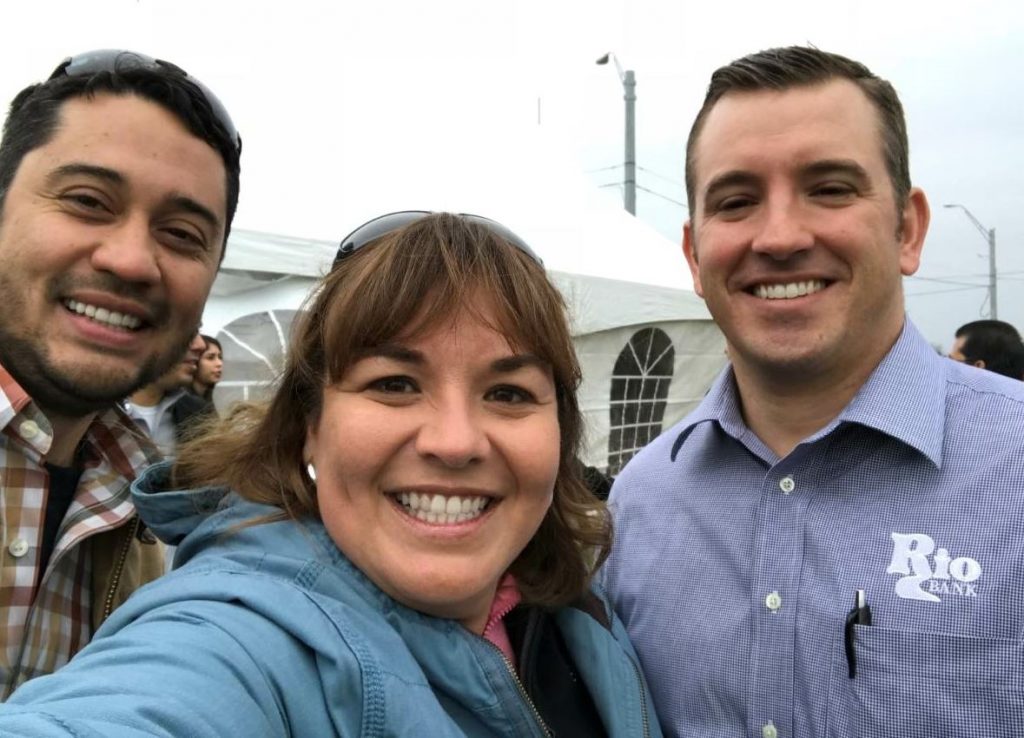
Yara Corbitt still remembers going into Rio Bank–a local community bank–back in 2011 when she and Isaac Heredia were first starting Texas Cordia.

“Our local bank has been with us since the conception of Texas Cordia and they’ve learned our style,” she said. “They’ve always had confidence in us, even when others didn’t. They know where we started from and they accepted our promise that we wouldn’t fail. Our word has carried us a long way.”

They’d actually mentioned their plans to their commercial banker at the end of 2017, Heredia said, “so this wasn’t a total surprise.”

Corbitt and Heredia had to start answering tough questions about their potential plant: Where will you put the plant? How many acres is the property? Would it be appraised at that value? What environmental permits will you need? How much would a new plant cost? What parts and pieces were included? How much would a used plant cost to buy and to repair and update? How much mix will you use for yourself? What would production cost?

“They already had our financial information because they knew our history and had watched us grow,” Corbitt said. “But, everything else needed to be covered in great detail.”

“One concern of theirs was a lot of their customers are farmers, so they were curious if our plant would have any impact on the farming community,” Corbitt said. “When they realized our plant wouldn’t have any effect on the farming community, they were on board.”

According to Corbitt, the loan application process was piecemeal. Rather than checking things off a long list, she and Heredia took it one step at a time, pulling together financials, audits and projects over the course of two weeks.

In order to process the loan application, the pair had to find a plant and a property–something they worked on alongside the loan application, which we outlined in last week’s blog. They also had to make themselves aware of the upgrades their plant would require, and what they might cost.

By the end of February, they’d submitted the loan application and were approved by mid-March. Within the next two weeks, they closed on the property and the plant they’d been eyeing.

“We didn’t have time to waste and our commercial banker, Darrell Williams, made it happen for us,” Corbitt said. “He’s done a good job in keeping up with us. We push forward, and he does, too.”

“Part of it feels like it’s taking forever,” Corbitt said. “I have to remind myself how quickly it really is moving.”


Stay tuned for the next chapter of Texas Cordia’s process of establishing their first asphalt plant, where we dig into the plant permitting process.